

A lot of families in Dallas reach the same point the same way. Anxiety gets worse, sleep falls apart, alcohol or pills start filling the gap, and suddenly there are multiple prescriptions, multiple providers, and no clear answer about what's helping and what's making things harder. The problem usually isn't a lack of effort. It's a lack of coordinated, safe, practical guidance.
That's where mental health medication management matters. For people dealing with both substance use and mental health symptoms, medications can support stability, reduce suffering, and make therapy more effective. They can also create risk when no one is looking at the full picture. Families don't need more guesswork. They need a clear process, careful monitoring, and a team that knows how detox, psychiatry, therapy, and aftercare fit together in real life across Dallas-Fort Worth.
Table of Contents
- What Is Mental Health Medication Management
- Why Medication Management Is Key for Dual Diagnosis
- Medications Used in Addiction and Mental Health Care
- Understanding Medication-Assisted Treatment in Dallas
- Strategies for Medication Safety and Adherence
- How Our Dallas Care Team Coordinates Your Treatment
- Getting Help at Tru Dallas Detox and Recovery
What Is Mental Health Medication Management
In Dallas-Fort Worth, many people first hear the phrase after a crisis. A loved one leaves the ER, finishes a short detox stay, or starts showing signs of depression, panic, or bipolar symptoms while also struggling with alcohol or drugs. Everyone knows something needs to change, but no one's sure whether the answer is a new medication, fewer medications, or better supervision.
Mental health medication management is more than writing a prescription. It's a clinical process built around assessment, monitoring, and adjustment. One clear definition describes it as a clinical approach involving careful assessment, ongoing medication monitoring, and prescription adjustments to address symptoms and improve well-being through personalized treatment plans developed by psychiatric medication providers working with other mental health professionals (medication management for mental health care).
What the term actually means
At a practical level, good medication management answers a few basic questions:
- What symptoms need treatment: Anxiety, depression, cravings, insomnia, mood instability, trauma symptoms, or withdrawal-related distress don't all need the same response.
- What's already being taken: Prescriptions, over-the-counter products, supplements, and substances all matter.
- What's helping and what isn't: A medication can be appropriate on paper and still be wrong for a specific patient.
- What needs close follow-up: Side effects, sedation, agitation, missed doses, and relapse risk all change treatment decisions.
Some families also benefit from reading a broader overview of Medication Management to understand how psychiatric oversight works outside of crisis settings.
What families should expect
A safe plan is active, not passive. It includes regular review, communication between disciplines, and a willingness to simplify a regimen when complexity is creating problems.
Good medication management doesn't chase symptoms one by one. It organizes treatment around the whole person.
For readers trying to sort out overlapping symptoms, this guide on best medication options for anxiety, depression, and ADHD can help frame the right questions to bring into treatment. In a Dallas detox center or dual diagnosis setting, the primary value isn't just access to medication. It's having one coordinated clinical process that keeps treatment grounded in safety and recovery.
Why Medication Management Is Key for Dual Diagnosis
When mental health symptoms and substance use happen at the same time, treating only one side usually fails. Anxiety can push a person toward alcohol, opioids, or sedatives for relief. Substance use can then worsen mood, sleep, concentration, and emotional regulation. Each problem keeps feeding the other.
Two connected problems need one coordinated plan
A useful way to think about dual diagnosis is two gears locked together. If one gear is jammed, the other can't move normally either. Trying to fix only the addiction while ignoring panic, depression, or bipolar symptoms leaves a major driver untouched. Trying to treat only the mental health condition while ongoing substance use disrupts sleep, judgment, and medication response leaves treatment unstable.

That's why integrated care matters so much in addiction treatment in Dallas. Medication decisions have to account for withdrawal, relapse triggers, trauma history, and the patient's actual living environment after treatment. A medication that looks reasonable in an outpatient office may need a different plan in detox. A medication that eases symptoms short term may create problems if it increases misuse risk or blunts engagement in therapy.
What integrated care changes
An integrated approach changes the sequence and the quality of decisions. Instead of one provider reacting to anxiety and another reacting to substance use, the team looks at the same patient story at the same time.
A coordinated plan often includes:
- Withdrawal-aware prescribing: Symptoms during detox can mimic or mask psychiatric conditions. Timing matters.
- Therapy-informed medication choices: If trauma work, relapse prevention, or mood stabilization is the immediate priority, the medication plan should support that work.
- Functional goals: The target isn't just “less anxious.” It's sleeping safely, attending groups, thinking clearly, and staying engaged in care.
- Family clarity: Families do better when they understand why a medication was started, stopped, or adjusted.
Practical rule: In dual diagnosis care, the best medication plan is the one that supports sobriety and psychiatric stability at the same time.
This is one reason a Dallas detox center with psychiatric oversight can be so important early in treatment. The first goal isn't to build a long medication list. It's to calm the nervous system, reduce risk, and create enough stability for accurate diagnosis and meaningful recovery work. That's what gives people a real chance to break the cycle instead of repeating it.
Medications Used in Addiction and Mental Health Care
Families often worry that medication management means adding drug after drug. In well-run care, the opposite is often true. The aim is to use the fewest medications needed, for the clearest reasons possible, while reviewing them closely over time.
The main medication categories
Different categories serve different jobs in dual diagnosis treatment. The names matter less than the purpose behind them.
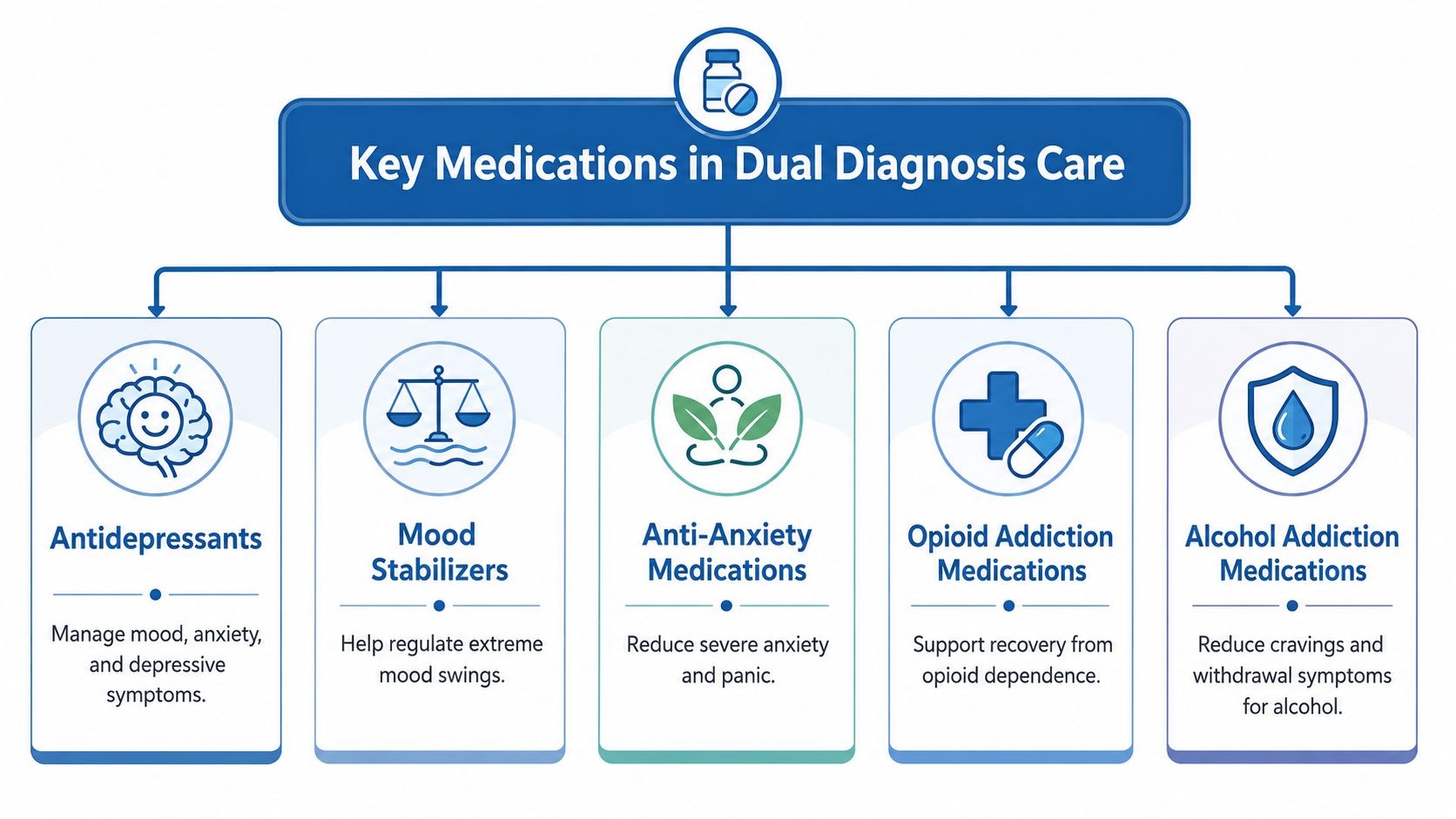
| Medication type | What it's generally used for | Clinical caution |
|---|---|---|
| Antidepressants | Mood symptoms, anxiety symptoms, and related distress | Benefit may take time and side effects need review |
| Mood stabilizers | Mood swings, bipolar-spectrum symptoms, emotional volatility | Some require lab monitoring and careful dose review |
| Anti-anxiety medications | Acute anxiety or panic in selected cases | Some options can complicate recovery if misused |
| Opioid addiction medications | Support recovery from opioid dependence | Must be coordinated with psychiatric treatment |
| Alcohol addiction medications | Help with cravings or alcohol-related recovery support | Works best when paired with therapy and follow-up |
A careful team also watches for medications that may look helpful at first but interfere with recovery goals. Sedation, emotional flattening, poor concentration, and medication overlap can all undermine progress if no one steps back to review the full plan.
Why monitoring matters as much as prescribing
Long-term psychotropic treatment requires more than occasional check-ins. Structured medication reviews are clinically mandated for patients taking long-term psychotropic drugs, especially medications with narrow therapeutic ranges like lithium. Guidance notes that lithium requires therapeutic drug monitoring, with a therapeutic concentration of 0.6 to 1.2 mmol/L, and that monitoring during stable dosing should occur at least every 3 to 6 months (structured medication reviews and therapeutic drug monitoring guidance).
That matters for families because medication safety isn't automatic. It depends on follow-through. In practice, strong monitoring includes symptom review, side effect review, lab follow-up when indicated, and clear instructions about what should trigger a call to the care team.
A simple distinction helps:
- Prescribing alone means a medication gets started.
- Medication management means the patient's response gets tracked and acted on.
For people in detox, residential care, or outpatient addiction treatment in Dallas, that distinction can change outcomes. A thoughtful medication plan is built category by category, then refined over time with structure, not guesswork.
Understanding Medication-Assisted Treatment in Dallas
Medication-assisted treatment, often called MAT, is a focused part of addiction care. It combines medication with counseling and clinical follow-up to support recovery from substance use disorders, especially opioid and alcohol use disorders. In Dallas, MAT is often one of the most important tools available when a patient has repeated relapse, strong cravings, or a high-risk withdrawal history.
What MAT includes
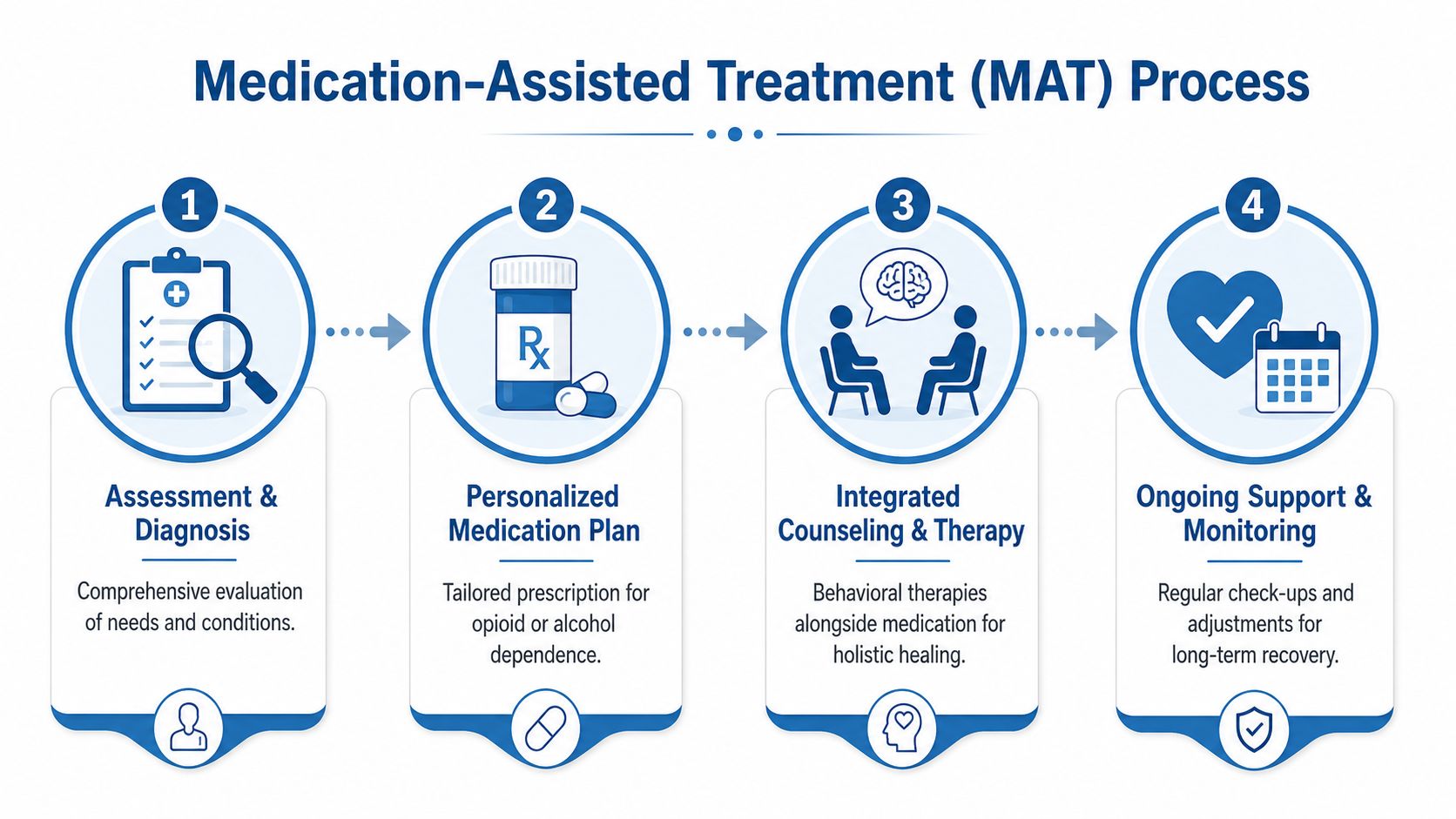
The medication is only one part of the intervention. Safe MAT also includes assessment, diagnosis, therapy, and ongoing review of what's changing in the patient's mental state and recovery environment.
A strong MAT process usually includes the following elements:
Clinical assessment
The team identifies the substance use pattern, psychiatric symptoms, safety issues, and immediate treatment priorities.A personalized medication plan
The medication choice should match the substance involved, withdrawal risk, and the person's broader psychiatric picture.Integrated counseling
MAT works best when therapy addresses behavior, stress, trauma, relationships, and relapse triggers.Ongoing monitoring
Dosing, side effects, cravings, and mental health symptoms need regular review.
For readers who want a straightforward overview, this guide to what medication-assisted treatment is offers useful context.
Where polypharmacy becomes a real concern
The hard part is that MAT rarely exists in isolation. Many patients also take medications for depression, anxiety, sleep, or mood instability. According to this review of co-occurring psychiatric treatment and opioid use disorder, over 60% of patients with co-occurring depression or anxiety and opioid use disorder are prescribed multiple medications, which raises the risk of adverse interactions and reduced treatment effectiveness.
That's where expertise matters. The question isn't whether medication should be used. The question is whether one team is managing the combined plan carefully enough to catch interaction risk, over-sedation, serotonin-related concerns, and medications that may work against each other.
Some families find it helpful to read broader educational material on support for substance use recovery to understand why medication and counseling are paired rather than treated as separate tracks.
MAT is most effective when the addiction medication plan and the psychiatric medication plan are reviewed together, not in separate silos.
For a Dallas treatment program handling fentanyl, heroin, alcohol, or prescription pill dependence, MAT should never be reduced to “take this and you're done.” It works when it's embedded in coordinated dual diagnosis care.
Strategies for Medication Safety and Adherence
Medication problems often start with fragmentation. One provider changes a dose, another adds a sleep medication, a pharmacy fills an older prescription, and the patient tries to keep it all straight while dealing with cravings, shame, fatigue, and family stress. That's not a willpower problem. It's a systems problem.
Why fragmented care creates avoidable risk
Psychiatric polypharmacy means taking two or more psychiatric medications at the same time. It's common. One review notes that psychiatric polypharmacy appears in approximately 60% of outpatients and contributes to an estimated 90,000 emergency department visits annually due to adverse drug events related to psychiatric medications (psychiatric polypharmacy and adverse drug event risk).
Those numbers explain why medication safety has to be deliberate. More prescriptions don't automatically mean better care. Sometimes they reflect thoughtful treatment of a complex condition. Sometimes they reflect a regimen that has grown too complicated to manage safely.
Practical habits that help
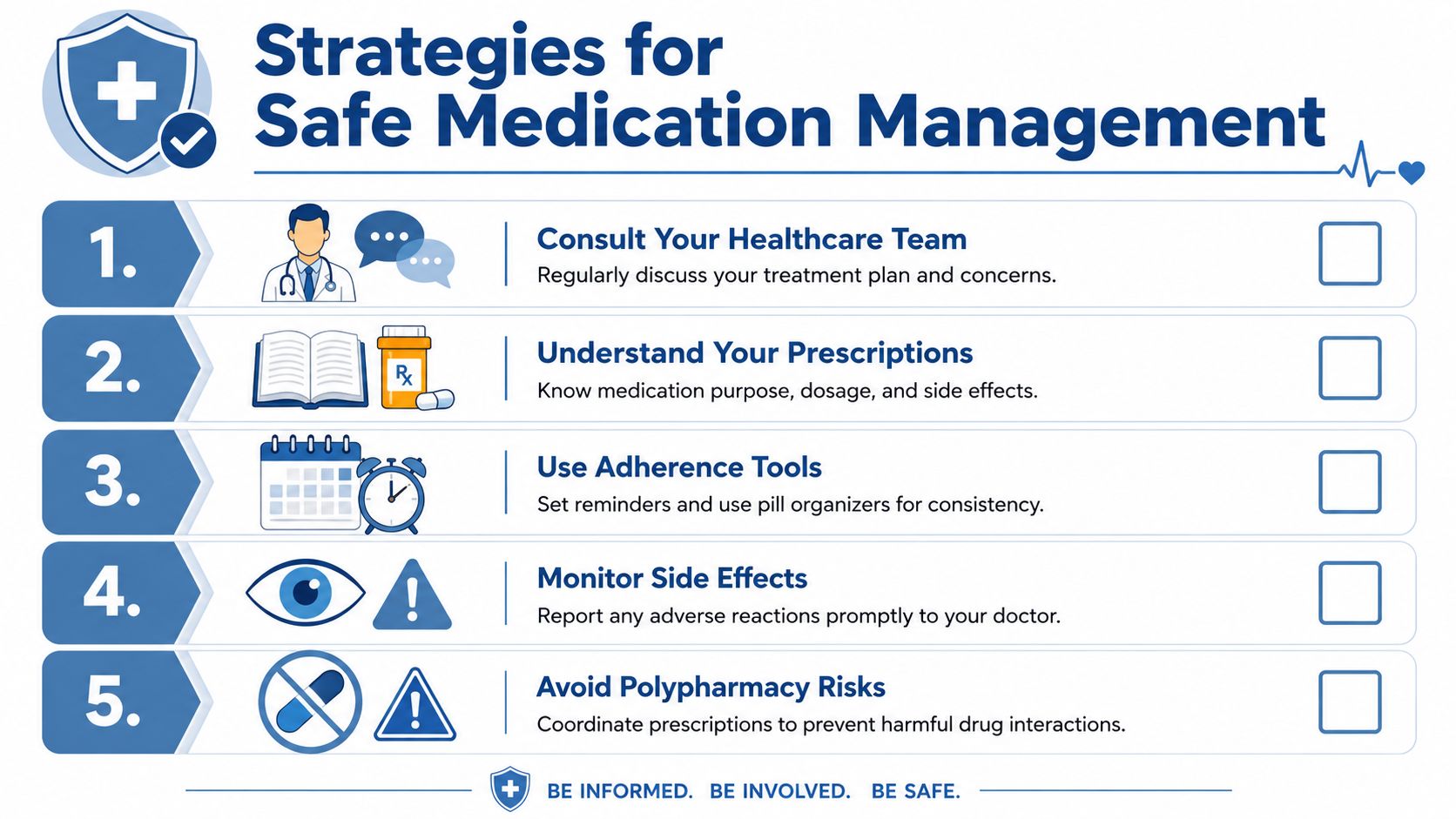
Families and patients can reduce risk by making medication management visible and organized.
- Keep one current medication list: Include prescription medications, supplements, and any recent changes. Bring it to every appointment.
- Use a single coordinating team when possible: The fewer disconnected decision-makers involved, the easier it is to prevent overlap and mixed messages.
- Set up adherence supports: Pill organizers, alarms, written schedules, and family reminders can make a big difference during early recovery.
- Report side effects early: New sedation, tremor, agitation, dizziness, confusion, or emotional blunting should be communicated promptly.
- Ask before stopping suddenly: Some psychiatric medications should not be stopped abruptly, especially during detox or early outpatient transition.
A quick safety checklist can help:
| Question | Why it matters |
|---|---|
| Do all providers know every current medication? | Hidden overlap creates preventable risk |
| Is there a written dosing schedule? | Confusion increases missed or doubled doses |
| Does the patient know what each medication is for? | Understanding improves adherence |
| Is someone watching for side effects? | Early changes often guide safer adjustments |
Families do best when they treat adherence as a support task, not a character test.
In addiction treatment in Dallas, the safest medication plan is the one a patient can follow. Clarity, repetition, and coordinated review matter more than complexity.
How Our Dallas Care Team Coordinates Your Treatment
A coordinated treatment experience should feel organized from the first call forward. The patient arrives with a history, not just a diagnosis. That history may include relapse, previous detox attempts, panic attacks, depression, family conflict, sleep disruption, and prescriptions from more than one setting. The care team's job is to turn that confusion into a workable plan.
From intake through detox
The process starts with a full review of substance use, psychiatric symptoms, prior medications, current prescriptions, and immediate safety concerns. During detox, medical staff monitor the patient closely while psychiatric needs are assessed in context. That matters because withdrawal can distort the clinical picture. What looks like a primary psychiatric symptom on day one may shift after stabilization.
In a properly coordinated program, the medication plan doesn't sit apart from therapy. Therapists, medical staff, and psychiatric providers work from the same set of concerns. If the patient is too sedated to engage, the plan needs revision. If anxiety is driving elopement risk or cravings are disrupting participation, the team responds quickly.
Key features of coordinated care include:
- 24/7 clinical monitoring during detox: Safety concerns and medication effects can change quickly in the first stage of treatment.
- Therapy integration: Medication choices should support participation in individual and group treatment, not interfere with it.
- Cross-discipline communication: The team needs one current view of symptoms, side effects, sleep, cravings, and behavior.
Discharge planning that protects continuity
The most fragile point in treatment is often the handoff out of detox or residential care. According to this analysis of barriers to mental health care in the United States, 45% of patients discontinue psychiatric medications within 30 days after leaving detox because of insurance gaps, pharmacy delays, or breaks in continuity of care.
That's why discharge planning has to start early, not on the last day. A strong transition plan confirms what medications the patient will leave with, where refills will come from, what follow-up appointments are scheduled, and how insurance issues will be addressed before they become treatment interruptions.
This part of care also depends on staffing models that support continuity. Families who are curious about how telehealth and follow-up roles are evolving may find this overview of remote NP jobs useful for understanding the kinds of clinicians who often help extend psychiatric access after discharge.
The discharge plan isn't paperwork. It's the bridge between stabilization and relapse prevention.
In Dallas-Fort Worth, patients don't just need detox. They need a handoff that protects access to medications, therapy, and follow-up while daily life starts again.
Getting Help at Tru Dallas Detox and Recovery
For people facing addiction and mental health symptoms at the same time, waiting usually makes things more complicated. Medications may be helping, hurting, or doing both. The safest next step is a professional review in a setting that understands detox, dual diagnosis care, and ongoing recovery planning.
What to do next

Dallas has a broad behavioral health network, which includes extensive psychiatric medication services. In the local system, facilities such as Parkland's Behavioral Health Clinic on Maple Avenue provide evaluations and ongoing care, which reflects how important medication management is across the region.
What matters most for families is finding one place that can assess substance use, review psychiatric medications, monitor detox safely, and build a discharge plan that doesn't fall apart after admission ends. For people exploring opioid recovery options, this page on Suboxone treatment near Dallas may also help clarify the next step.
If a loved one is struggling in Dallas, Euless, Fort Worth, Irving, Plano, or the surrounding DFW area, it's worth reaching out now. Fast, coordinated help can reduce risk, bring clarity, and create a real path forward.
Tru Dallas Detox & Recovery Center provides medically supervised detox, dual diagnosis treatment, medication-assisted treatment, therapy, and discharge planning for adults across Dallas-Fort Worth. Families can contact Tru Dallas Detox & Recovery Center now to ask questions, verify PPO insurance, and speak with a team that can help determine the safest next step.
