

Yes, you can get withdrawals from gabapentin. Symptoms can begin within 12 hours to 7 days after the last dose, usually peak between days 2 and 7, and while many people improve within 1 to 2 weeks, stopping suddenly can be dangerous and should be handled with medical supervision.
A lot of people in Dallas find themselves in the same stressful spot. They were prescribed gabapentin for pain, anxiety, or seizures, assumed it would be simple to stop, and then realized their body had become used to it. That can feel confusing, especially when the medication was taken exactly as directed.
The most important point is simple. Gabapentin withdrawal is real, and it can become serious. It isn't a matter of willpower, and it isn't something a person should try to force through alone in an apartment in Uptown, at home in Plano, or while trying to keep up with work and family anywhere across Dallas-Fort Worth.
Table of Contents
- The Clear Answer About Gabapentin Withdrawal
- How Gabapentin Causes Physical Dependence
- Gabapentin Withdrawal Symptoms and Timeline
- Who Is Most at Risk for Severe Withdrawal
- The Dangers of Quitting Gabapentin Cold Turkey or Alone
- Safe Gabapentin Detox at Tru Dallas Detox
- Take the First Step Toward Recovery in Dallas Today
The Clear Answer About Gabapentin Withdrawal
The question, can you get withdrawals from gabapentin, often comes with the hope that the answer is no. The honest answer is yes. Gabapentin can cause clinically significant withdrawal symptoms when it's stopped abruptly, even when someone has been taking it as prescribed, as described by American Addiction Centers on gabapentin withdrawal symptoms.
That matters because many readers don't think of gabapentin the way they think of alcohol, opioids, or benzodiazepines. It often sounds safer and more routine. But the body can still adapt to it, and when the medication is removed too quickly, that adaptation can show up as anxiety, insomnia, nausea, sweating, tremors, irritability, and in more severe cases, seizures.
Key point: A difficult reaction after stopping gabapentin doesn't mean a person has done something wrong. It usually means the nervous system has adjusted to the medication and now needs a careful, structured way to adjust back.
One common source of confusion is the difference between addiction and physical dependence. A person can become physically dependent without misusing the medication. Another person may be misusing it alongside other substances, which raises the stakes even more. In both situations, the safest next step is the same. Get medical guidance before changing the dose.
Families often notice the problem before the patient fully recognizes it. Someone may say they're "just a little on edge" or "not sleeping well," but over a short period they become shaky, sweaty, panicked, or mentally foggy. In a busy metro area like Dallas, it's easy to delay care and hope the symptoms settle down on their own. That's the mistake this article is meant to help readers avoid.
How Gabapentin Causes Physical Dependence
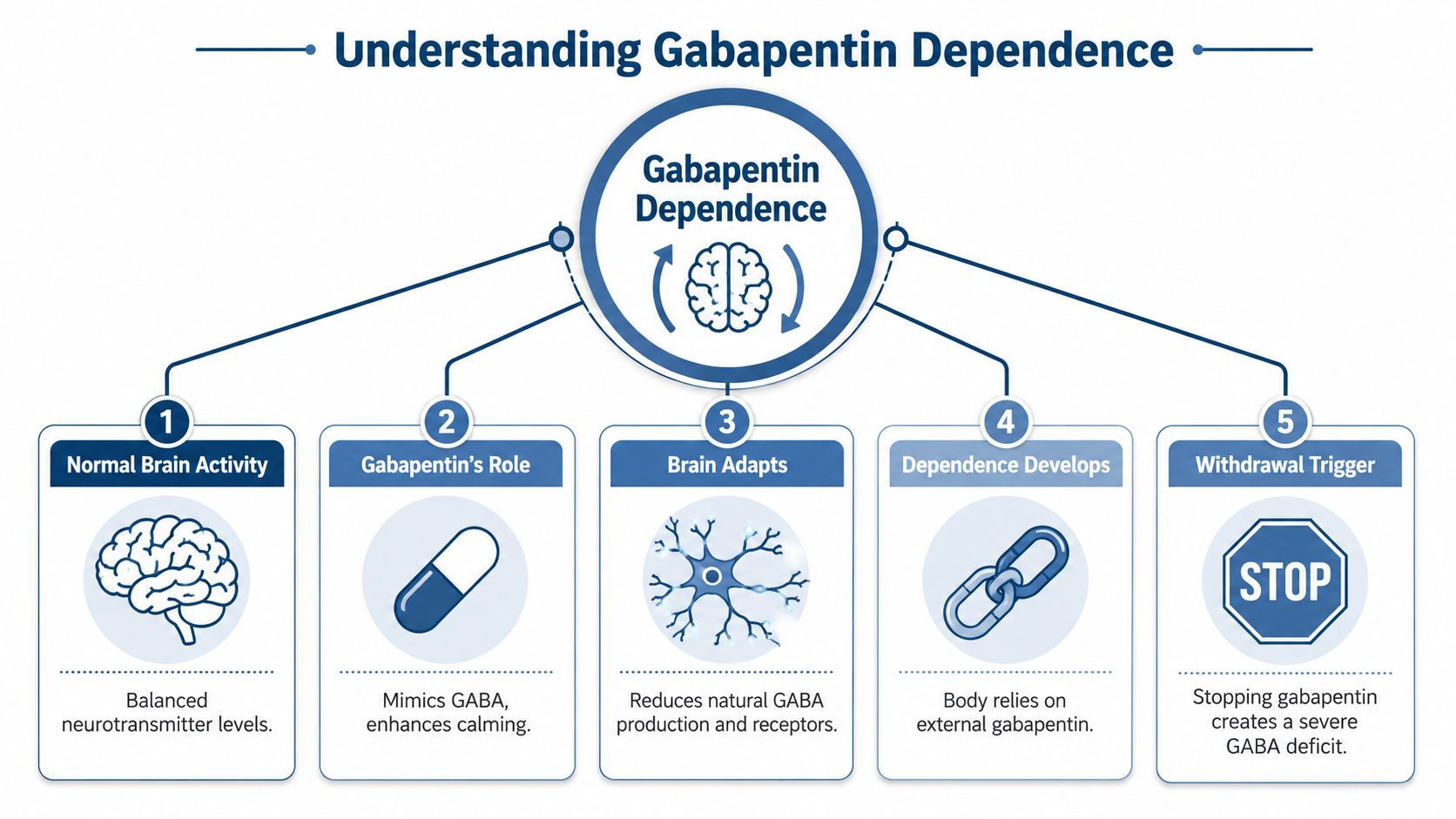
The body doesn't build physical dependence because a person is weak. It builds dependence because the brain is designed to adapt.
A simple way to think about it is a spring. If a spring is held down long enough, it adjusts to that pressure. When the pressure is suddenly removed, the spring doesn't return to neutral smoothly. It snaps upward. The nervous system can react in a similar way when gabapentin has been present regularly and then disappears too fast.
What physical dependence actually means
Gabapentin affects GABA-related activity in a way that can produce a calming effect in the nervous system. Over time, the brain adjusts to that external help. When the medication is stopped, the body may struggle to keep balance right away.
Physical dependence on gabapentin can develop in as few as 3 weeks of use, meaning abrupt discontinuation can trigger withdrawal symptoms after regular use, according to Greenhouse Treatment's overview of gabapentin withdrawal.
That point surprises many people. They assume dependence only happens after very long-term use or misuse. In reality, the nervous system may begin adapting much sooner than expected.
Why this gets misunderstood
A lot of patients take gabapentin for legitimate medical reasons. Some take it for nerve pain. Others take it for seizure control. Others receive it for off-label reasons, including anxiety-related symptoms. Because the prescription itself feels routine, the possibility of withdrawal gets overlooked.
That misunderstanding can lead to risky decisions like these:
- Stopping all at once: A person runs out of medication, feels tired of side effects, or decides they no longer need it.
- Making a home taper without guidance: They split capsules or space doses out based on guesswork.
- Assuming mild symptoms are harmless: Anxiety, sweating, and insomnia can be early warning signs, not just everyday stress.
The brain can adapt to a medication even when the medication is taken exactly as prescribed. Withdrawal is a medical response, not a character flaw.
This is also why a one-size-fits-all stopping plan doesn't work well. Two people taking the same dose may have very different withdrawal experiences based on age, health conditions, other substances involved, and why they were prescribed gabapentin in the first place.
Gabapentin Withdrawal Symptoms and Timeline
A common Dallas detox scenario starts like this. Someone misses a dose, feels unusually anxious that night, barely sleeps, then tells themselves they can probably taper at home over the weekend. By the time the shaking, sweating, and confusion build, they are already in deeper than they expected.
That pattern matters because gabapentin withdrawal is often less predictable than people assume. Even a gradual taper can go badly without medical supervision, especially if the dose has been high, the medication has been used for a long time, or other health conditions are involved. A taper is not just a calendar. It is a nervous system adjustment, and the brain does not always cooperate on schedule.
Withdrawal often begins within a day or two after the last dose, based on a clinical overview of gabapentin withdrawal timing and symptom patterns. Early symptoms may seem mild at first, which is one reason people underestimate the risk.
What symptoms often show up first
The first phase often looks like stress or a bad flu. That can be misleading.
Common early and mid-withdrawal symptoms include:
- Anxiety and irritability: A person may feel keyed up, easily overwhelmed, or suddenly panicky.
- Insomnia: Sleep may become very light or disappear for a night or more.
- Sweating and tremors: The body can feel shaky, clammy, and overstimulated.
- Nausea and physical discomfort: Stomach upset, weakness, chills, and body aches are common complaints.
- Confusion or perceptual changes: In more severe cases, disorientation, agitation, or hallucinations can appear.
For anyone trying to sort out what is expected discomfort versus a warning sign, this guide to symptoms of detoxing and when to get help gives a clearer framework.
When panic becomes part of the withdrawal picture, some families also benefit from outside education on mental health support for panic attacks, because withdrawal anxiety can feel intense and unfamiliar.
Gabapentin withdrawal timeline
| Timeframe | Common Symptoms |
|---|---|
| 12 to 24 hours | Headache, sweating, restlessness, rising anxiety, trouble sleeping |
| 12 to 48 hours | Clear withdrawal onset for many people, with nausea, irritability, tremors, and physical unease |
| Around day 3 | Symptoms may peak, including severe insomnia, agitation, confusion, fever, or hallucinations |
| Days 2 to 7 | The hardest stretch for many people, with ongoing anxiety, sweating, nausea, and flu-like symptoms |
| 1 to 2 weeks | Acute symptoms often begin easing, though sleep and mood may still be unsettled |
| Weeks afterward for some people | Anxiety, sleep disruption, and emotional instability can linger, as described in a clinical review published by StatPearls on gabapentin |
A helpful way to picture the timeline is similar to braking on a wet road. You may be slowing down, but the body does not stop on command. Even a taper that looks reasonable on paper can produce symptoms that accelerate quickly once the nervous system reacts.
Practical rule: If symptoms are intensifying instead of easing, or if confusion, hallucinations, severe vomiting, or any seizure concern appears, home management is not enough.
This is the part many people miss. The danger is not limited to quitting all at once. A person can be tapering, doing their best, and still run into symptoms that require medical monitoring, medication adjustments, and a safer detox setting.
Who Is Most at Risk for Severe Withdrawal
Not everyone faces the same level of danger. Certain factors make gabapentin withdrawal more likely to become intense, complicated, or medically risky.
Gabapentin misuse occurs in 1.1% of the general population but rises to 22% among individuals in drug abuse treatment centers, according to PubMed data on gabapentin misuse and abuse. That matters in addiction treatment in Dallas because gabapentin often shows up alongside other substance use issues, especially in people already dealing with complicated medical and psychiatric histories.

Risk tends to rise in a few specific situations
Some patterns should prompt extra caution right away.
- Higher doses or long-term use: More prolonged exposure often means the nervous system has had more time to adapt.
- Use with opioids or other central nervous system depressants: This combination can complicate both dependence and detox.
- History of seizure treatment: Stopping gabapentin can be particularly dangerous when it has been part of seizure management.
- Co-occurring mental health conditions: Anxiety, depression, bipolar disorder, and trauma-related symptoms can all make withdrawal harder to tolerate.
- Older adults and medically complex patients: Slower metabolism, multiple prescriptions, and fragile health can change how withdrawal unfolds.
A family in Dallas may see this play out in practical ways. An older parent taking gabapentin for chronic pain may seem like a lower-risk case than a younger person in active addiction, but the taper can still become destabilizing if the nervous system reacts badly.
Why tapering still needs supervision
One of the biggest myths around gabapentin is that tapering automatically makes it safe. Tapering is safer than abrupt discontinuation, but it isn't foolproof.
A geriatric case report described severe withdrawal symptoms after a week-long taper, highlighting that even gradual reduction can be difficult in vulnerable patients, as noted in this PubMed case report on gabapentin withdrawal during tapering.
That matters because many readers assume the only danger is "cold turkey." In reality, some people need a slower, more individualized taper, close symptom monitoring, and support for mood, sleep, hydration, and co-occurring conditions.
For families trying to understand how trauma and stress can magnify withdrawal distress, education like Interactive Counselling's approach to trauma can be helpful background. Trauma doesn't cause gabapentin withdrawal, but it can intensify how the body and mind experience it.
The Dangers of Quitting Gabapentin Cold Turkey or Alone
Stopping gabapentin without supervision can go far beyond feeling uncomfortable. The danger lies in symptoms becoming severe before a person realizes they need help.
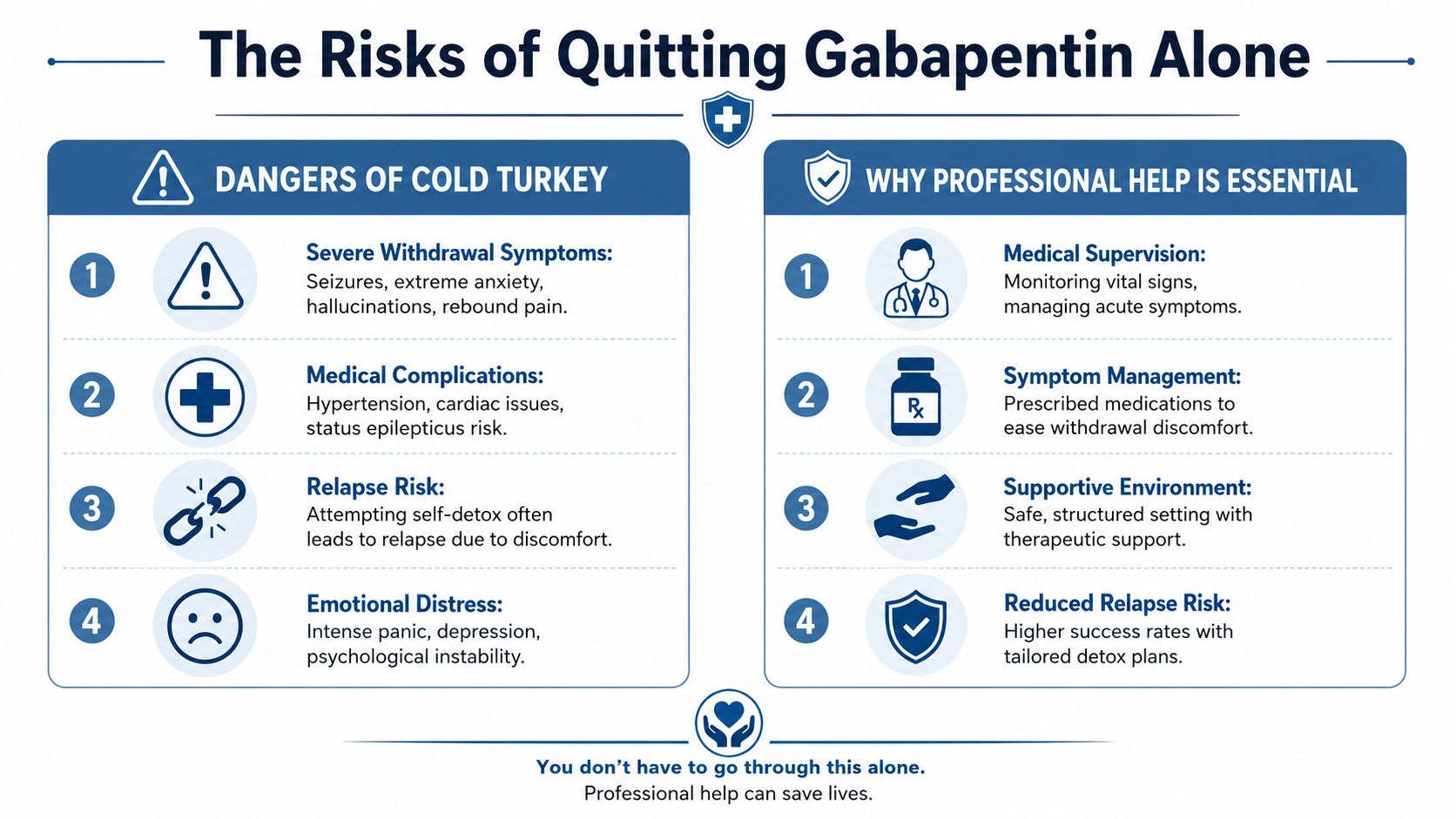
Gabapentin withdrawal is mechanistically analogous to alcohol and benzodiazepine withdrawal, and it can lead to dangerous autonomic instability, severe depression with suicidal ideation, and a significant risk of withdrawal seizures, especially in those prescribed it for seizure control, according to Recovery Centers of America on gabapentin withdrawal risks.
Why self-detox can turn risky fast
A person detoxing alone may think the problem is limited to anxiety, sweating, or poor sleep. Then symptoms escalate.
Possible dangers include:
- Seizures: This is the complication families fear most, and for good reason.
- Autonomic instability: Heart rate and blood pressure can become unstable.
- Severe psychiatric symptoms: Agitation, hallucinations, depression, or suicidal thinking may appear.
- Rebound symptoms: Nerve pain or seizure activity may return abruptly and forcefully.
- Dehydration and exhaustion: Vomiting, sweating, panic, and insomnia can wear the body down quickly.
These risks are why a Dallas detox center should treat gabapentin withdrawal with the same seriousness given to other central nervous system depressant-related withdrawal states.
What medical supervision changes
Medical care doesn't erase every symptom, but it changes the environment from unsafe and reactive to monitored and structured.
A medically supervised setting can provide:
- Observation: Staff can track changes in orientation, hydration, sleep, and vital signs.
- A flexible taper: The dose can be adjusted based on the person's response instead of a rigid schedule.
- Psychiatric support: Anxiety, depression, panic, and confusion can be addressed promptly.
- Emergency readiness: If seizure activity or severe instability develops, help is already in place.
Readers who want a clear picture of that process can review what medically supervised detox in Dallas looks like.
Withdrawal from gabapentin isn't a safe DIY project. The danger isn't just discomfort. It's how quickly discomfort can become a medical emergency.
Safe Gabapentin Detox at Tru Dallas Detox
A person may do what seems sensible. They lower the dose a little, expect a few rough nights, and plan to push through at home. Then the symptoms hit harder than expected. Sleep disappears, anxiety climbs, pain flares, and the taper that looked simple on paper starts to feel unpredictable.
That false sense of security is one of the biggest risks with gabapentin withdrawal.
At Tru Dallas Detox, safe detox starts with a medical assessment that looks at the whole picture. The team needs to know why gabapentin was prescribed, how long it has been used, what dose the person has been taking, whether alcohol or other sedating drugs are involved, and whether there is a history of seizures, panic, depression, or bipolar symptoms. A taper is not just a math problem. It works more like adjusting a dimmer switch in a room with faulty wiring. Small changes can produce much bigger reactions than expected in some people.

What safe detox usually includes
The usual goal is a gradual taper under medical supervision, with the schedule adjusted to the person's response instead of forcing everyone into the same timeline. Some people tolerate dose reductions reasonably well. Others develop insomnia, agitation, worsening anxiety, confusion, or rebound nerve pain even during a careful taper. That is why supervision matters so much.
A medically supported detox program in Dallas should include:
- Ongoing clinical observation: Staff watch for changes in sleep, orientation, hydration, blood pressure, pulse, and overall stability.
- Dose adjustments based on symptoms: If withdrawal becomes harder than expected, the taper can be slowed or modified safely.
- Treatment for physical and emotional symptoms: Nausea, sweating, restlessness, panic, and depressed mood need active care, not guesswork.
- Dual diagnosis support: Mental health symptoms can intensify during withdrawal and need attention at the same time.
- Planning for what comes after detox: Recovery is steadier when detox leads into therapy, rehab, medication review, and aftercare.
For a closer look at how a supervised step-down plan works, this guide on tapering off gabapentin explains why taper schedules often need to change in real time.
Why local care matters in Dallas-Fort Worth
Local treatment helps in very practical ways. Families can get answers faster. Assessments can happen sooner. If symptoms are building quickly, a nearby program is easier to enter before the situation becomes more unstable.
That matters in Dallas-Fort Worth. A person who is exhausted, panicked, shaky, or mentally overwhelmed often cannot manage long delays, complicated logistics, or a wait-and-see approach at home. Quick access to medical detox can reduce risk and give both the patient and family a clear plan instead of a frightening guessing game.
Take the First Step Toward Recovery in Dallas Today
Gabapentin withdrawal can be frightening, but it is treatable. What puts people at risk isn't the fact that withdrawal exists. The bigger risk is underestimating it, trying to manage it alone, or assuming a home taper will always go smoothly.
For individuals and families across Dallas, Fort Worth, Euless, Plano, Frisco, and surrounding communities, the next step should be simple. Don't wait for symptoms to become severe. Don't assume anxiety, shaking, insomnia, confusion, or rebound pain will just pass safely without support.
A professional assessment can clarify three things quickly:
- Whether withdrawal is already underway
- Whether seizure or psychiatric risk is present
- Whether detox, tapering, or a higher level of care is needed
Getting help early often means a safer detox, less suffering, and a more stable start to recovery.
The most effective action is direct contact with a qualified team that understands both substance use and mental health. That kind of support can help a person move from fear and uncertainty into a plan that is safe, structured, and realistic.
Anyone in the Dallas-Fort Worth area who needs help with gabapentin withdrawal, prescription drug detox, or co-occurring mental health care can contact Tru Dallas Detox & Recovery Center. The team can help families verify insurance, discuss symptoms confidentially, and arrange medically supervised care for a safer start to recovery.
