
The most popular advice about physical dependence vs psychological dependence is also the most misleading: one supposedly belongs to the body, the other to the mind, and the two can be handled separately. In Dallas treatment settings, that clean division rarely matches what patients and families see. A person with opioid dependence may experience withdrawal, cravings, fear, and emotional distress at the same time. Someone who mainly uses a stimulant to escape depression or stress may have less obvious physical withdrawal but still face powerful compulsive urges.
The distinction remains clinically useful, but it isn’t a diagnosis by itself. It helps clinicians decide whether a Dallas detox center should prioritize medical stabilization, whether therapy needs to target cravings and emotional triggers, and whether medication-assisted treatment, residential care, outpatient services, or dual-diagnosis support belongs in the plan. The safest approach is to assess the body and behavior together, rather than asking whether the problem is “physical or psychological.”
Table of Contents
- Why the Dependence Distinction Is More Complicated Than It Seems
- How Clinicians Define Physical and Psychological Dependence
- Comparing Mechanisms, Symptoms, and Timelines
- How Dependence Shows Up Across Different Substances
- Questions to Ask When You Are Unsure What Is Happening
- What the Difference Means for Detox and Long-Term Treatment
- Getting the Right Help in Dallas When Dependence Is Present
Why the Dependence Distinction Is More Complicated Than It Seems
Families often look for a simple answer. They may ask whether withdrawal proves addiction, whether cravings without vomiting or shaking are “serious,” or whether detox is unnecessary because the person can get through the first days without severe physical symptoms. Those questions are understandable, but they treat two overlapping processes as separate boxes.
Physical dependence describes adaptation in the body. Repeated exposure can produce tolerance and withdrawal, including after long-term use of some prescribed medications. Psychological dependence involves craving, compulsive use, preoccupation, and relying on a substance to regulate distress. The Cleveland Clinic explains that physical dependence can be a biological consequence of medication use, while addiction involves loss of control and continued use despite harm in its discussion of dependence and addiction.
Clinical rule: The absence of dramatic withdrawal doesn’t prove that psychological dependence is mild, and withdrawal alone doesn’t prove addiction.
Why the overlap changes care
Physical discomfort can intensify fear and irritability. Fear of withdrawal can drive a person to use before symptoms become severe. Emotional distress can then strengthen cravings, while repeated use reinforces the body’s adaptation. The result is a feedback loop, not two independent conditions.
That overlap matters in addiction treatment in Dallas. Medical detox can protect a physically dependent patient during withdrawal, but it doesn’t automatically address the reasons the person uses. Therapy can help with cravings and coping, but asking someone with high withdrawal risk to rely on willpower alone can create avoidable danger.
The practical question is not either-or
A useful assessment asks which drivers are present, how severe they are, and what happens when the substance is reduced. It also considers the substance involved, use pattern, other medications, medical history, mental health symptoms, and prior attempts to stop.
For someone in Dallas, Fort Worth, Irving, Plano, or nearby communities, the right starting point may be supervised detox followed by residential treatment. Another person may need structured counseling, relapse-prevention work, or medication support without a prolonged detox phase. The treatment plan should follow the clinical risk, not a simplified label.
How Clinicians Define Physical and Psychological Dependence
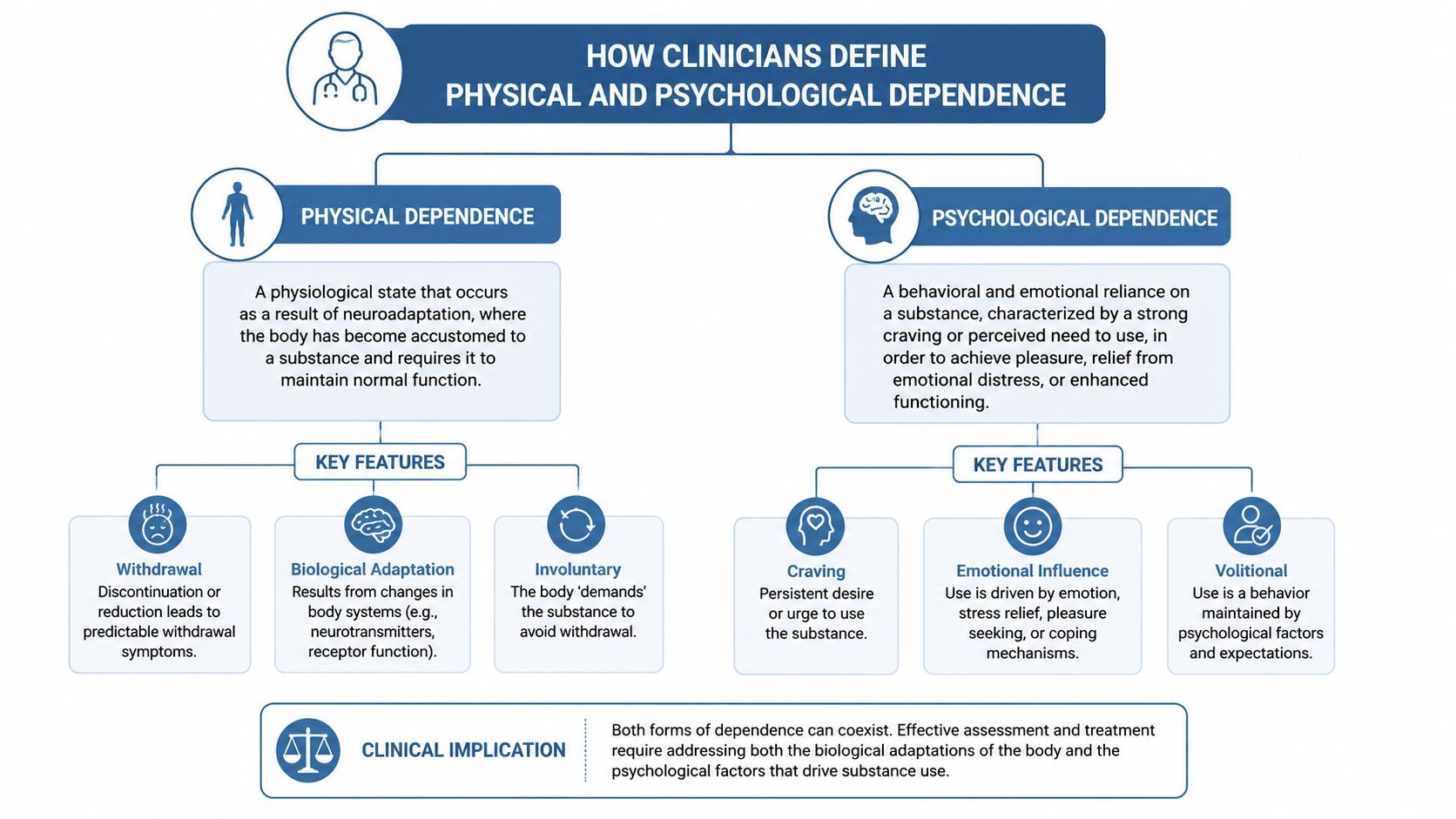
Clinicians use physical and psychological dependence as treatment-planning concepts, while diagnostic systems have changed how substance-related disorders are formally classified. Physical dependence centers on neuroadaptation, meaning the body adjusts to repeated exposure. The clearest markers are tolerance and withdrawal. Tolerance means the same dose has less effect, or a person needs more to achieve the previous effect. Withdrawal occurs when stopping or reducing the substance produces a characteristic syndrome, or when the person uses the substance to relieve those symptoms. These criteria are summarized in the DSM substance use disorder criteria.
Psychological dependence centers on the mental and behavioral relationship with use. Craving, preoccupation, compulsive use, and using a substance to manage anxiety, sadness, boredom, conflict, or stress are important indicators. A person may continue thinking about the substance, arranging access to it, or returning to it despite consequences even when obvious physical withdrawal is limited.
What the DSM changes clarified
The modern distinction became clearer after DSM-III in 1980, which required tolerance or withdrawal for a diagnosis of substance dependence and helped separate physiological dependence from the broader addiction concept. In 2013, DSM-5 combined abuse and dependence into one substance use disorder category, reflecting a move away from dependence as a stand-alone diagnostic label. The historical development is described in this NIH-linked review of dependence and addiction concepts.
That change prevents a common mistake. Tolerance is not the same as addiction. A patient can develop physical dependence while taking a medication as prescribed. NIDA describes physical dependence as a physiological state in which stopping abruptly can produce withdrawal, and notes that it can occur with legal or prescription drugs. The NIDA medical guide also distinguishes physical withdrawal from psychological symptoms such as craving, anxiety, depression, irritability, and sleep disturbance.
How assessment works in practice
A clinician doesn’t ask only whether the person uses every day. The assessment looks at dose changes, attempts to cut down, withdrawal symptoms, cravings, consequences, safety risks, and the function of use.
A person taking a prescribed medication may have tolerance and withdrawal but no loss of control or harmful pattern. Another person may have limited physical symptoms yet repeatedly use to escape emotional pain, neglect responsibilities, or continue despite clear harm. Those profiles call for different interventions, even though both deserve medical and compassionate attention.
Comparing Mechanisms, Symptoms, and Timelines
Physical and psychological dependence differ in their strongest signals, but the boundary becomes less clear as symptoms accumulate. Physical dependence reflects changes in the nervous system after repeated exposure. Receptor sensitivity, neurotransmitter signaling, and the body’s systems for maintaining balance can shift, so removing the substance exposes an unstable state. The technical NIDA discussion of neuroadaptation and dependence describes tolerance, withdrawal, and the relevance of supervised tapering or detox.
Psychological dependence is reinforced by learning. A person may associate a neighborhood, payday, argument, loneliness, or bedtime with using. Craving can then appear before the substance is present. Cue management, therapy, and relapse-prevention planning target those learned connections.
Physical vs Psychological Dependence at a Glance
| Dimension | Physical Dependence | Psychological Dependence |
|---|---|---|
| Core process | The body adapts to repeated exposure | The mind and behavior connect use with relief, reward, or coping |
| Strongest markers | Tolerance and withdrawal | Craving, preoccupation, compulsive use, and emotional reliance |
| Common trigger for recurrence | Avoiding physical discomfort or withdrawal | Stress, cues, emotions, routines, or perceived need for relief |
| Assessment focus | Dose history, withdrawal risk, medical status, and other substances | Control over use, consequences, cravings, coping patterns, and mental health |
| Main treatment needs | Medical monitoring, tapering when appropriate, and stabilization | Therapy, cue management, coping skills, and relapse prevention |
Physical withdrawal can include tremors, sweating, nausea, sleep disruption, autonomic changes, and, with some substances, severe complications. Psychological symptoms may include anxiety, irritability, anhedonia, intrusive thoughts about using, and distress when the substance is unavailable. Sleep and mood symptoms often sit in both columns, which is one reason families can’t reliably classify the situation from one symptom.
Timelines aren’t interchangeable
Physical withdrawal usually follows the pharmacology and exposure pattern of the substance. Some syndromes emerge quickly and settle as the body stabilizes, while others require extended monitoring or a gradual taper. Psychological dependence can continue after the most visible physical symptoms have eased because cues, habits, distress, and craving don’t disappear when the substance leaves the bloodstream.
That doesn’t mean every person experiences prolonged symptoms, and it doesn’t make a fixed timeline safe to predict without assessment. A practical overview of expected symptoms and warning signs appears in what to expect during detox.
Withdrawal tells clinicians what the body may need today. Craving and compulsive use help determine what support the person may need after stabilization.
How Dependence Shows Up Across Different Substances
The substance changes the clinical picture. Alcohol may create substantial physical withdrawal risk, while the psychological attachment to drinking for sleep, social comfort, or emotional relief can continue after the body begins to stabilize. Opioids can combine pronounced physical adaptation with a powerful psychological connection to rapid relief from pain, distress, or withdrawal. Families often mistake the return of energy after detox for recovery, even though cravings and conditioned routines may remain active.
Stimulants such as cocaine and methamphetamine often present differently. Physical withdrawal may look more like fatigue, sleep disruption, low mood, and reduced motivation than the dramatic vomiting or tremors families associate with detox. The psychological component can still include intense craving, obsessive pursuit, and using to escape depression or emotional emptiness.
Dependence Profiles by Substance Class
| Substance Class | Physical Dependence Severity | Psychological Dependence Severity | Typical Withdrawal Timeline | Key Clinical Concern |
|---|---|---|---|---|
| Alcohol | Can be medically serious and requires risk assessment | Cravings and emotional reliance may persist after stabilization | Varies by exposure, health, and withdrawal history | Seizure risk, autonomic instability, and the need for medical monitoring |
| Opioids | Often pronounced, with significant withdrawal discomfort | Frequently intertwined with relief-seeking and conditioned craving | Varies by opioid, exposure, and individual factors | Relapse risk, overdose vulnerability after tolerance changes, and medication decisions |
| Cocaine and methamphetamine | Often less visibly prominent than psychological symptoms | Can be intense, with compulsive pursuit and mood-related triggers | Commonly includes fatigue, sleep, and mood disruption | Depression, agitation, impulsive decisions, and persistent craving |
| Benzodiazepines and other prescription medications | Can develop gradually and may be dangerous to stop abruptly | May involve fear of anxiety or insomnia returning | Often requires individualized reduction planning | Seizures, rebound symptoms, medication interactions, and supervised tapering |
Benzodiazepine dependence can go unnoticed because the person may take the medication exactly as directed and only recognize the adaptation after a missed dose or attempted reduction. Long-term pain treatment can create a similar confusion. Physical dependence requires medical planning, but it doesn’t automatically establish a substance use disorder.
Caffeine also illustrates why the mind-body split can mislead. A person may focus on sleep disruption, while the routine and perceived need for caffeine reinforces continued use. Readers exploring the relationship between caffeine use and sleep can review this resource on caffeine addiction and insomnia, while remembering that withdrawal and treatment risks vary substantially by substance.
For opioid-specific warning signs, families can consult symptoms of opioid withdrawal and contact a qualified provider rather than attempting an unsupported home detox.
Questions to Ask When You Are Unsure What Is Happening
Self-assessment can’t determine a diagnosis or predict withdrawal safety, but it can help a person recognize why professional evaluation is warranted. The first question is simple: What happens when use stops or decreases? Tremors, sweating, nausea, vomiting, severe agitation, confusion, rapid heartbeat, or other significant symptoms point toward physical dependence and require clinical guidance before stopping.
The second question concerns the purpose of use. Does the person use mainly to prevent discomfort, or to seek relief from anxiety, sadness, trauma, boredom, pain, or conflict? Both answers can be true. The difference helps clinicians decide how much weight to place on medical stabilization, behavioral therapy, mental health care, or medication support.
Questions that reveal the pattern
- Physical response: Are there tremors, sweating, nausea, insomnia, racing heart, or other symptoms after missed use?
- Tolerance: Has the person needed more of the substance to feel the same effect, or noticed less effect from the previous dose?
- Emotional trigger: Do cravings intensify after arguments, loneliness, anxiety, depression, or reminders of past experiences?
- Behavioral control: Have there been failed attempts to cut down, promises to stop, or periods of abstinence followed by return to use?
- Functional impact: Has use affected health, relationships, work, driving, finances, safety, or daily responsibilities?
- Polysubstance risk: Are alcohol, prescription medications, opioids, or other drugs used together?
Red flags that end the guessing
Escalating use despite harm, repeated inability to cut down, withdrawal that interferes with normal functioning, using alone to avoid detection, and worsening depression or anxiety all justify a professional call. Confusion, seizures, severe breathing problems, chest pain, or immediate danger require emergency medical help.
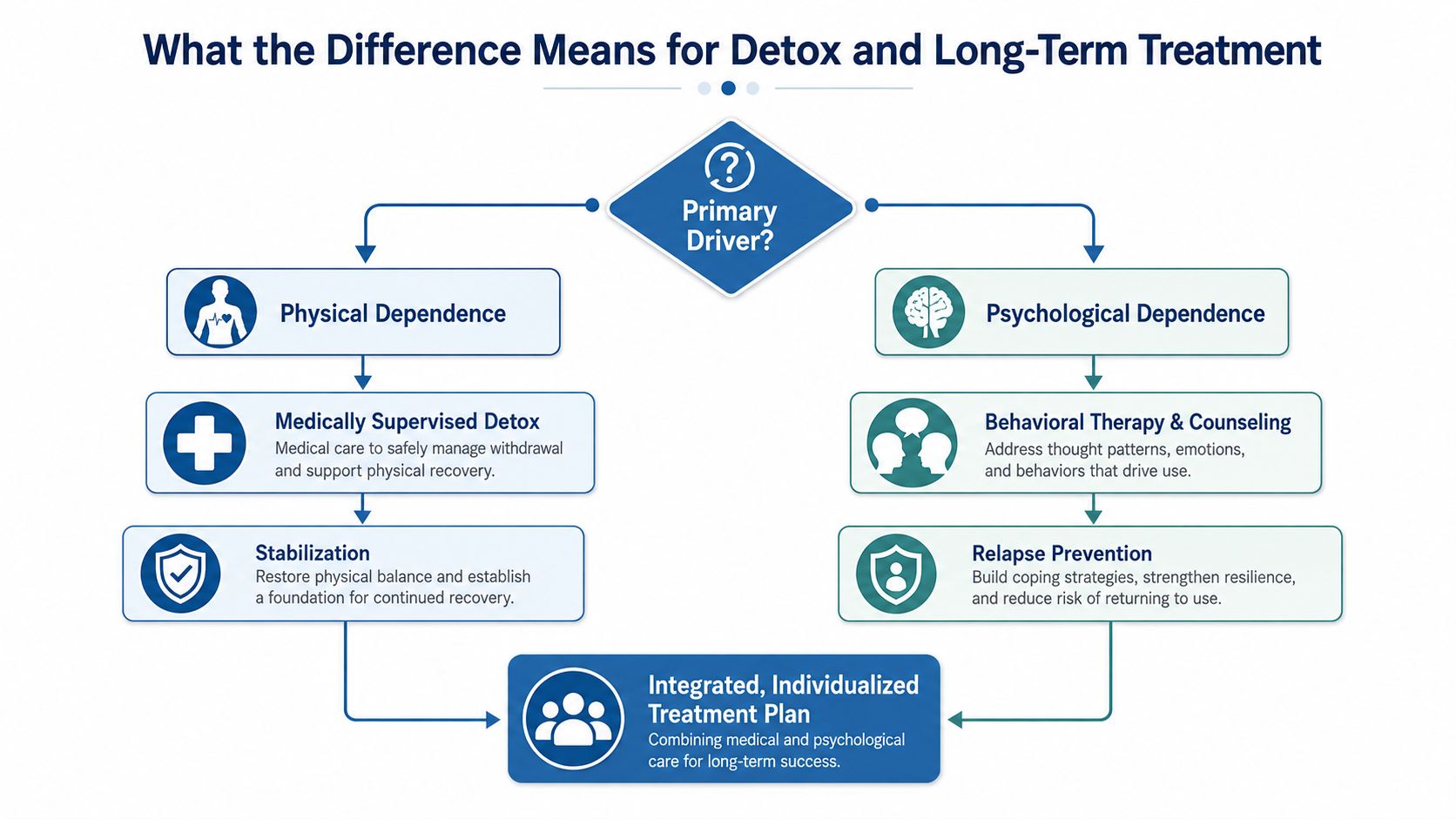
Predominantly physical signs suggest that medically supervised detox may be the safest starting point. Predominantly psychological signs still call for treatment, especially when cravings, compulsive behavior, or mental health symptoms are disrupting life. The most reliable answer comes from a confidential assessment, not a checklist alone.
What the Difference Means for Detox and Long-Term Treatment
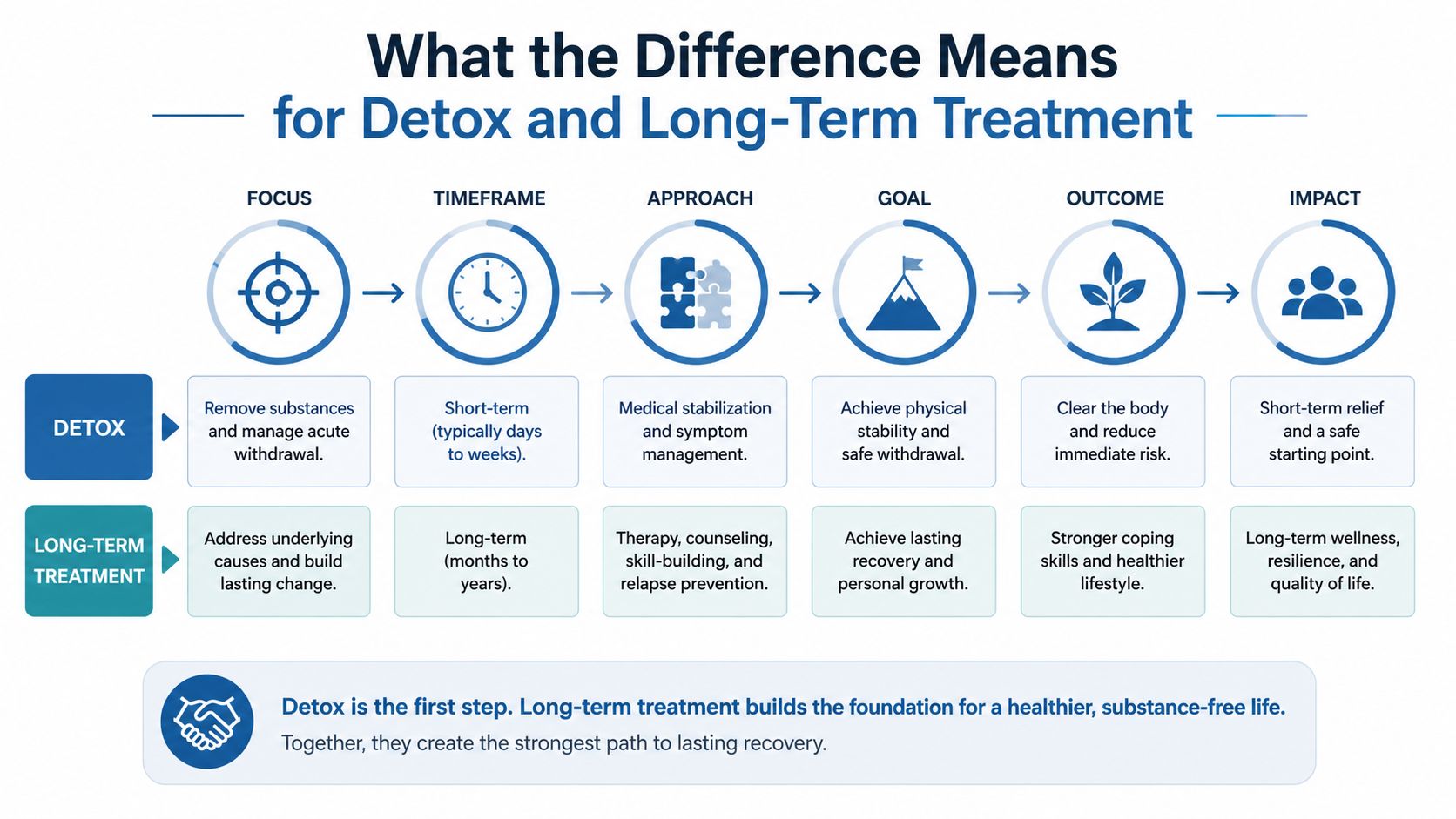
Detox and long-term treatment solve different problems. Medically supervised detox helps the body move through withdrawal with monitoring, symptom management, and attention to medical risk. It can be essential when alcohol, opioids, benzodiazepines, multiple substances, or significant health complications are involved.
Detox isn’t designed to erase learned routines, trauma, depression, anxiety, or cravings. A person may leave withdrawal physically stabilized and still return to the same emotional triggers and access patterns. That is why discharge planning should begin early and include the next appropriate level of care.
Matching care to the dominant drivers
When physical dependence dominates, the first priority is safe stabilization. When psychological dependence dominates, cognitive-behavioral therapy, motivational interviewing, contingency management, coping-skills practice, and cue management may carry more of the treatment work. Some people may begin therapy without a formal detox phase, while others need residential structure after withdrawal.
Most complex cases require both paths. Medication-assisted treatment can reduce withdrawal and craving while therapy addresses the situations that make use feel necessary. Families evaluating this option can learn more about medication-assisted treatment. Coverage questions also affect access, so a practical guide to how to check therapy coverage may help families prepare for an intake conversation.
Mental health belongs in the same plan
Depression, anxiety, PTSD, and bipolar symptoms can intensify psychological dependence. Treating substance use while ignoring those conditions leaves a major relapse driver untouched. Dual-diagnosis care evaluates both concerns together, with a plan that can include medication management, individual therapy, group counseling, family involvement, and step-down care.
Treatment decision: Detox may open the door to recovery, but ongoing care keeps the person from returning to the same untreated cycle.
Getting the Right Help in Dallas When Dependence Is Present
Families in Dallas often delay treatment because they aren’t sure the problem is “bad enough.” Fear of withdrawal, uncertainty about insurance, embarrassment, and concern about leaving work or home can all feel overwhelming. None of those concerns makes professional guidance less appropriate.
A qualified Dallas team begins with a confidential intake. Staff ask about the substance, dose, frequency, last use, withdrawal history, medical conditions, medications, mental health symptoms, prior treatment, home support, and immediate safety. From there, the team can determine whether medically supervised detox, medication-assisted treatment, residential rehabilitation, outpatient care, or a coordinated combination makes sense.
Tru Dallas Detox & Recovery Center provides medically supervised detox with ongoing clinical oversight, followed by inpatient rehabilitation, help finding outpatient care, medication-assisted treatment, individual therapy, group counseling, and dual-diagnosis services. The center serves the Dallas-Fort Worth area from its Euless facility and supports planning for continuing therapy, sober living referrals, and relapse prevention. For immediate coping support while arranging qualified care, families may also review these anxiety self-help guides, but self-help shouldn’t replace an assessment when dependence or withdrawal is present.
Early contact doesn’t obligate anyone to enter treatment. It gives the person and family a clearer safety plan, realistic options, and a way to replace guesswork with clinical information.
Tru Dallas Detox & Recovery Center offers medically supervised detox, individualized rehabilitation, medication-assisted treatment, and dual-diagnosis care for people facing physical dependence, psychological dependence, or both. Visit Tru Dallas Detox & Recovery Center to speak with the Dallas-Fort Worth admissions team, verify available coverage, and take the next step toward a structured recovery plan.
