
When you're going through opioid withdrawal, it can feel like the worst flu of your life, but that's only half the story. On top of the physical misery—the muscle aches, nausea, and sweating—there's an intense psychological battle raging inside, filled with anxiety and overwhelming cravings.
This isn't just in your head. It's a powerful, physical reaction from a body and brain trying to figure out how to work without a substance they’ve come to depend on.
Key Takeaways
- Opioid withdrawal is a physical process, not a character flaw. It's caused by the brain adapting to the drug's presence.
- The brain establishes a "new normal" with opioids, and withdrawal is the body's painful readjustment to their absence.
- Dependence can form quickly, sometimes in as little as a few weeks of consistent use.
- The severity of withdrawal symptoms is a major factor that drives continued opioid use.
- A person’s genetics and life experiences can influence their risk of developing an opioid use disorder.
Why Opioid Withdrawal Happens
Opioid withdrawal is a predictable, biological response when someone stops using opioids. It has nothing to do with personal weakness or a lack of willpower.
Think of it this way: when you regularly take opioids, your brain chemistry slowly changes to make room for the drug. It creates a "new normal" where the opioid is part of the equation for feeling okay. When you suddenly take that opioid away, the system is thrown into chaos.
Your brain and central nervous system, now scrambling to function without the substance they've learned to rely on, go into overdrive. This jarring, painful readjustment is what triggers the whole spectrum of withdrawal symptoms. Seeing it as a physiological event, not a moral one, is the first step toward understanding what’s really happening.
The Science Behind Dependence
This adaptation process in the brain can happen much faster than people realize. Physical dependence can set in after just a few weeks of regular use, even with a legitimate prescription. The brain just gets used to the drug that quickly.
Once that happens, the intense discomfort of withdrawal often becomes the main reason a person keeps using—they're just trying to feel normal and stop the pain. Research also tells us that things like genetics and a history of trauma can make someone more susceptible to developing an opioid use disorder. You can learn more about the signs of opioid addiction in our detailed guide.
Opioid withdrawal is the body's natural protest against the absence of a substance it has come to expect. This is a sign of dependence, which is a physical state. While it often goes hand-in-hand with addiction, they aren't the same thing.
Understanding dependence is crucial. It’s a biological state, and recognizing its roots helps pave the way for a safer, more compassionate approach to recovery.
A Timeline of Opioid Withdrawal Symptoms
If you're facing opioid withdrawal, knowing what's coming can make a world of difference. It helps to think of it less as a single, terrifying event and more as a series of stages that unfold over a fairly predictable timeline. We generally break this down into early, peak, and late phases, each with its own unique set of challenges.
The process kicks off as soon as the last dose starts to wear off. For most people, this is when the first wave of discomfort hits, which is your body's way of signaling that it's missing a substance it has learned to rely on.
The First Signs Emerge
Early withdrawal symptoms typically surface within 6 to 30 hours after the last dose, though this window varies depending on the specific opioid used. This initial stage often feels like a nasty case of the flu. Think muscle aches, a profound sense of restlessness, anxiety, a runny nose, and watery eyes. Sleep becomes nearly impossible, and you might find yourself sweating heavily one minute and shivering the next.
For short-acting opioids like heroin, these first signs can appear in as little as four hours. From there, the symptoms steadily build in intensity, usually peaking between 48 to 72 hours before they start to ease up over the next week or so.
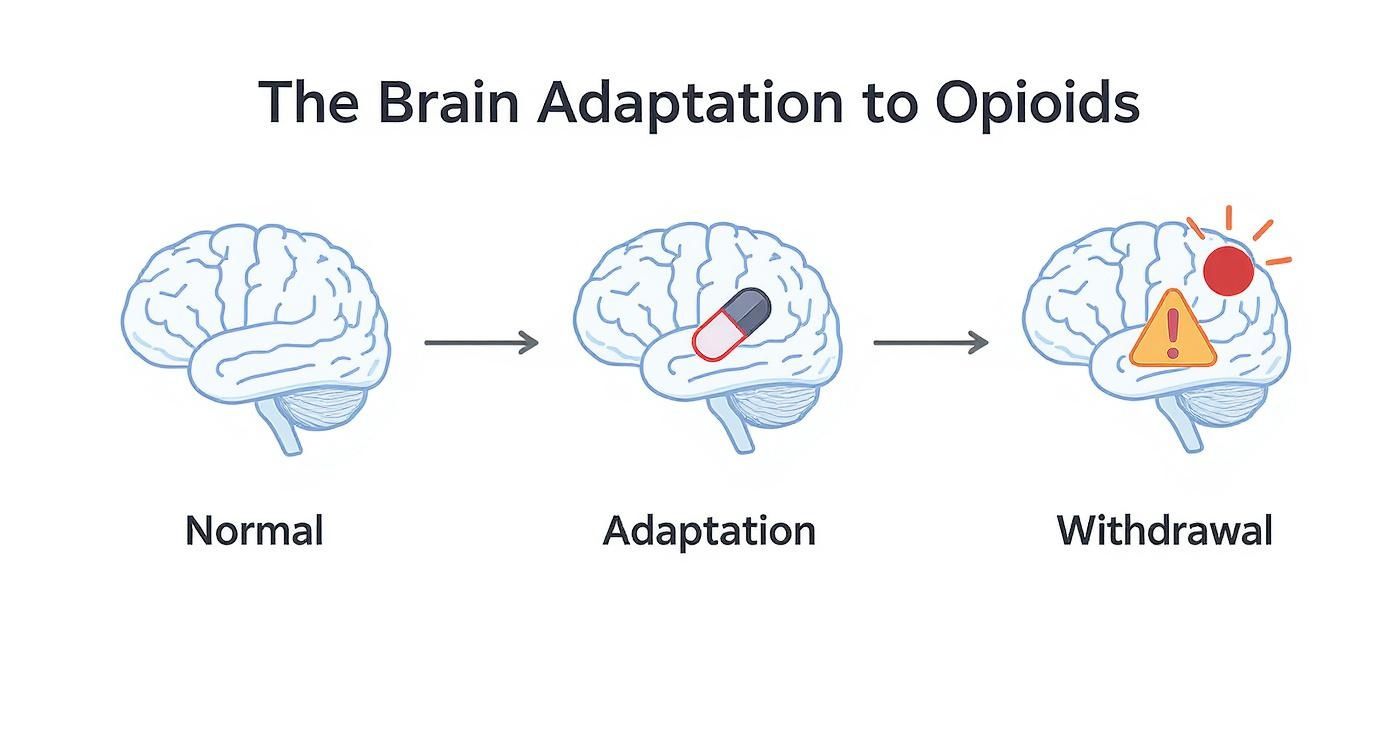
This visual gives a good sense of how the brain adapts to opioids over time. It’s this neurological shift that makes their absence so physically and psychologically disruptive.
The Peak of Withdrawal and Beyond
The peak, which often hits around the 72-hour mark, is without a doubt the toughest part of the acute phase. Symptoms that started earlier now intensify dramatically. This is when the most severe physical issues set in.
At this stage, you can expect:
- Intense nausea, vomiting, and diarrhea
- Painful stomach cramps
- Dilated pupils, often leading to blurry vision
- Goosebumps on the skin (where the term "cold turkey" comes from)
- Elevated blood pressure and a racing heart
Once you get through this acute phase, the worst of the physical symptoms begin to fade. However, the journey isn't over. Many people experience what's known as Post-Acute Withdrawal Syndrome (PAWS), where psychological symptoms can linger for weeks or even months. This can include depression, anxiety, insomnia, and powerful drug cravings.
Understanding this full timeline is crucial for a successful recovery. For a deeper dive into what to expect, check out our guide on how long drug detox can take.
To give you a clearer picture, here's a breakdown of what to expect and when.
Opioid Withdrawal Symptom Timeline
The following table provides a general outline of how symptoms progress during opioid withdrawal. Keep in mind that individual experiences can vary based on factors like the type of opioid used, duration of use, and overall health.
| Stage | Timeframe (Post-Last Use) | Common Symptoms |
|---|---|---|
| Early Stage | 6-30 Hours | Muscle aches, restlessness, anxiety, runny nose, sweating, yawning, trouble sleeping. |
| Peak Stage | 48-72 Hours | Intense nausea, vomiting, diarrhea, stomach cramps, dilated pupils, high blood pressure, rapid heartbeat, goosebumps. |
| Late Stage (PAWS) | Weeks to Months | Depression, anxiety, insomnia, irritability, mood swings, persistent cravings, fatigue. |
Navigating this timeline requires support and a solid plan. While the acute phase is physically demanding, the long-term psychological symptoms of PAWS are often the biggest hurdle to lasting recovery.
The Physical Side of Opioid Withdrawal
People often compare opioid withdrawal to a nasty bout of the flu, but frankly, that doesn't even begin to cover it. Imagine the worst flu you've ever had, then amplify it tenfold. It's a full-body assault, a visceral experience where your nervous system, suddenly deprived of the opioids it has come to rely on, goes into a state of shock and revolt.
In the beginning, you’ll likely feel a deep, nagging ache that settles into your muscles and bones. This is often accompanied by waves of sweating and shivering that leave you feeling clammy and freezing at the same time, making it impossible to find a comfortable position. Then comes the gut-wrenching nausea, vomiting, and diarrhea, which aren't just miserable—they can quickly lead to dangerous levels of dehydration.
Your Body in Revolt
As the withdrawal really takes hold, your autonomic nervous system—the part that controls all your automatic functions like breathing and heart rate—essentially short-circuits. It’s no longer being suppressed by the opioids, so it kicks into overdrive.
This is where you see some of the most tell-tale signs:
- Goosebumps covering your skin (piloerection)
- Uncontrollable tremors or shaking
- A heart that feels like it’s pounding out of your chest (tachycardia)
- Constant yawning, tearing eyes, and a relentlessly runny nose
- Dilated pupils, which can make you painfully sensitive to light
- A deep-seated restlessness and insomnia that denies your body the rest it desperately needs
These aren't just random discomforts; they are direct physical manifestations of your body trying to find its balance again. The National Library of Medicine offers in-depth research that details these clinical findings for those who want a closer look.
Opioid withdrawal is the body's chaotic, painful process of recalibrating. The central nervous system, accustomed to functioning with opioids, suddenly has to relearn how to work without them. The result is an overwhelming cascade of physical symptoms as it struggles to regain equilibrium.
This intense physical ordeal is precisely why trying to "tough it out" alone is not just incredibly difficult, but also potentially unsafe. Getting professional medical support is the safest and most humane way to navigate this brutal process.
The Psychological Battle of Opioid Withdrawal
While the physical side of opioid withdrawal gets a lot of attention, anyone who has been through it will tell you that the mental and emotional battle is often the most grueling part. This isn't just about "feeling sad" or being in a bad mood. It's a deep, overwhelming psychological storm triggered by the brain trying to heal itself.
Think of it this way: when someone uses opioids, the drug hijacks the brain's reward system, flooding it with an artificial sense of well-being. The brain, in response, scales back its own production of natural "feel-good" chemicals. When the opioids are suddenly gone, the brain is left with a massive chemical deficit, and that's when the psychological distress kicks in.
Your Brain on Withdrawal
The intense psychological symptoms are a direct signal that your brain is working hard to get back to normal. It’s like an engine trying to restart after running on the wrong kind of fuel for a long time—it’s going to sputter and struggle before it finds its rhythm again.
This fight for chemical balance shows up in some incredibly difficult ways:
- Intense Anxiety and Agitation: A constant, buzzing feeling of restlessness and panic is one of the first things people notice. Your nervous system is basically in a state of high alert.
- Deep Depression: The absence of the drug's artificial high can leave a void filled with profound sadness, emptiness, and a sense of hopelessness.
- Irritability and Mood Swings: With your emotional regulators offline, the smallest things can trigger intense anger or frustration. Moods can swing wildly from one moment to the next.
- Overwhelming Cravings: Your brain is screaming for the substance it has become dependent on, sending powerful signals that can feel impossible to ignore.
The psychological pain of withdrawal is not a sign of weakness—it's a biological reality. The brain is working hard to heal and restore its natural chemical balance, and these symptoms are a difficult but necessary part of that process.
Simply knowing that there's a real, biological reason for these feelings can be empowering. It validates the experience, confirming that what you're feeling is a predictable part of recovery, not a personal failure. This understanding helps build a foundation for self-compassion and seeking the right kind of help.
Why You Shouldn't Go Through Opioid Withdrawal Alone
Trying to face opioid withdrawal by yourself isn't just a matter of willpower—it's genuinely dangerous. While the withdrawal process itself isn't typically life-threatening, the side effects can be. Think about it: constant vomiting and diarrhea can lead to severe dehydration, which can quickly turn into a medical emergency.
This is why professional support is so critical. It transforms what could be a risky and agonizing experience into a safe, medically managed process.

In a supervised detox center, you have a team of medical experts watching over you 24/7. They monitor your vitals, manage symptoms the moment they pop up, and do everything possible to keep you safe and as comfortable as possible.
How Medication-Assisted Treatment Makes a Difference
One of the most powerful tools in a professional detox is something called Medication-Assisted Treatment (MAT). This isn't about replacing one drug with another; it's a science-backed approach that uses specific, FDA-approved medications to ease the body and brain out of physical dependence.
The goal is to dramatically reduce withdrawal symptoms and cravings, giving you a real fighting chance.
Here are a couple of the most common medications used in MAT:
- Buprenorphine: This medication is a game-changer. It works by partially activating the same opioid receptors in your brain, which stops the worst of the withdrawal symptoms and cravings in their tracks. Crucially, it does this without producing the "high" that other opioids do.
- Lofexidine: This is another highly effective medication specifically approved to help with acute withdrawal. It works by calming down the "fight-or-flight" nervous system response that withdrawal kicks into overdrive, which is what causes many of the most miserable physical symptoms.
The evidence is overwhelming: using medications like buprenorphine makes a successful detox far more likely. Studies consistently show that people who receive MAT are significantly less likely to relapse and have a much lower risk of overdose than those who try to quit without medication.
This structured medical support makes recovery feel possible again. By stabilizing your body first, MAT gives you the solid ground you need to stand on before you can start the deeper work of healing. To learn more about this crucial first step, you can read about what is medical detox and see how it creates a safe pathway to recovery.
Ultimately, getting professional help isn't just about surviving withdrawal. It’s about setting yourself up for a life of lasting recovery.
What You Really Need to Know About Opioid Withdrawal
When you're facing opioid withdrawal, knowing what's coming can make all the difference. Think of this as your roadmap—it helps you prepare for the journey ahead and understand why getting the right kind of help is so important.
Here are the absolute must-knows for anyone going through this process:
-
This Is Your Body's Response, Not a Lack of Willpower: Opioid withdrawal isn't a moral failure or a sign of weakness. It's a completely normal, physical reaction that happens when your body, which has become dependent on opioids, suddenly goes without them. Your brain is essentially trying to reboot itself.
-
It’s a Battle on Two Fronts: You're not just dealing with physical misery. While the intense, flu-like symptoms are draining, the psychological side—the crushing anxiety, deep depression, and powerful cravings—is often the hardest part.
-
There's a General Timeline: While everyone is different, withdrawal usually follows a predictable pattern. Symptoms often start within 6 to 30 hours after the last dose, hit their absolute worst around the 72-hour mark, and can sometimes linger in more subtle ways for months.
-
Don't Even Think About Going It Alone: This is the most critical point. Trying to detox by yourself is not just incredibly difficult; it's dangerous. The risk of severe dehydration and other complications is very real, which is why a medically supervised detox is the only safe option.
-
Professional Help Makes It Bearable: You don't have to suffer through the worst of it. Modern approaches like Medication-Assisted Treatment (MAT) can significantly ease withdrawal symptoms, manage cravings, and give you the stability you need to actually focus on recovery. It’s a game-changer.
Frequently Asked Questions
What does opioid withdrawal feel like physically?
It's an all-encompassing physical misery. Think of it as the flu on steroids, with severe muscle and bone pain, stomach cramps, vomiting, diarrhea, and alternating chills and sweats. On top of that, you feel an inescapable restlessness, with a racing heart and body tremors that make it impossible to relax.
How long do the psychological symptoms of withdrawal last?
The most intense physical symptoms usually peak and fade within about a week, but the psychological symptoms can linger for weeks or even months. This extended period is often called Post-Acute Withdrawal Syndrome (PAWS). It's a vulnerable time where ongoing professional support is absolutely critical to prevent a relapse.
Is it safe to detox from opioids at home?
No, detoxing from opioids at home is strongly discouraged. The symptoms can become incredibly severe, and complications like dehydration can quickly become life-threatening. A professional medical detox facility is the only truly safe environment to manage withdrawal.
What is Medication-Assisted Treatment (MAT)?
MAT is an evidence-based practice that combines medications (like buprenorphine) with counseling and therapy. It’s widely considered the gold standard for treating opioid use disorder because it effectively tackles the physical side of withdrawal, which dramatically reduces the risk of relapse.
What is the difference between dependence and addiction?
These two terms are often used interchangeably, but they mean very different things. It’s a crucial distinction. Dependence is purely physical. It means your body has gotten used to the presence of a substance and will protest with withdrawal symptoms if you take it away. Addiction is a brain disorder defined by compulsive drug-seeking and use, even when it causes serious harm.
