
Naltrexone is an FDA-approved, non-addictive medication that’s become a key player in helping people manage alcohol cravings. It works by fundamentally changing how your brain responds when you drink.
Instead of just treating symptoms, naltrexone gets to the root of the issue. It blocks the euphoric, rewarding feelings alcohol can create, effectively breaking the cycle of positive reinforcement that keeps cravings so powerful. This unique approach makes naltrexone for alcohol cravings a valuable part of many modern treatment plans for Alcohol Use Disorder (AUD).
Key Takeaways
- Reward Blocker: Naltrexone functions by blocking opioid receptors in the brain, which stops alcohol from creating its usual pleasurable effects.
- Craving Reduction: Because drinking becomes less rewarding, the medication helps dial down overall cravings for alcohol over time.
- Non-Addictive: Naltrexone itself is not habit-forming and doesn't cause physical dependence, making it a safe option for long-term use.
- Supports Recovery: It is most effective when integrated into a comprehensive treatment plan that includes therapy and behavioral support.
- Two Forms: Naltrexone is available as a daily oral pill (often known by the brand name ReVia) or a long-acting monthly injection (Vivitrol).
Understanding How Naltrexone Quiets Cravings
To really get how naltrexone works, picture it as a kind of blocker for your brain's reward centers. When you drink alcohol, your brain releases endorphins—natural chemicals that create feelings of pleasure. These endorphins lock into specific receptors, and that’s what gives you the "buzz."
Naltrexone steps in and sits on those receptors, essentially occupying them. So, when endorphins are released from drinking, they have nowhere to go.
By preventing that connection, naltrexone dulls the rewarding sensation that reinforces the desire to drink. It's important to know it doesn't cause a negative reaction like some other medications. It simply removes the high. Over time, this process helps your brain "unlearn" the powerful link between alcohol and pleasure.
The Science of Diminishing Returns
This mechanism is so effective because it tackles the biological driver of cravings head-on. As you continue to take naltrexone, your brain slowly starts to realize that the expected reward from drinking never arrives. This causes the psychological pull of alcohol to weaken significantly.
It’s like pulling a lever on a slot machine and never winning. Eventually, you stop pulling the lever.
This creates the mental space you need to fully engage in therapy and build new, healthier coping skills without constantly fighting intense biological urges. The goal is to dismantle the craving cycle from the inside out.
Naltrexone helps with this by:
- Reducing the Rewarding Effects: It makes drinking feel less satisfying, which naturally lowers your motivation to do it.
- Preventing Loss of Control: By curbing the pleasure response, it can help stop a single drink from spiraling into a binge.
- Lowering Background Noise: Many people report a noticeable drop in the constant, nagging thoughts about alcohol that used to fill their day.
Naltrexone isn't a magic pill, but it is an incredibly useful tool. Think of it as giving you an advantage—it handles the physical side of cravings so you can focus on the essential psychological work of recovery. It works best when paired with counseling and a solid support system.
By targeting the brain’s reward pathway, naltrexone provides a biological foundation for recovery, making the journey toward sobriety or moderation far more manageable.
To simplify, let's break down the core functions and benefits of naltrexone for managing alcohol cravings in a quick-reference table.
Naltrexone for Alcohol Cravings at a Glance
| Aspect | Description |
|---|---|
| Primary Function | Blocks opioid receptors in the brain to prevent the release of endorphins triggered by alcohol consumption. |
| Effect on Cravings | By making drinking less rewarding, it gradually reduces the psychological urge to drink over time. |
| Safety Profile | Non-addictive and does not create physical dependence, making it a safe option for long-term management. |
| Role in Treatment | Acts as a supportive tool to be used alongside therapy, counseling, and peer support programs. |
| Available Forms | Can be taken as a daily oral pill (ReVia) or as a long-acting monthly injection (Vivitrol). |
The Brain Science Behind Naltrexone
To really get a handle on how naltrexone quiets alcohol cravings, we first have to peek under the hood at the brain’s reward system. It's a complex network, but the core idea is simple. When you take a drink, your brain releases a flood of endorphins, which are essentially the body’s homegrown opioids. These are the chemicals behind that warm, euphoric "buzz."
That pleasurable feeling is a powerful motivator. Your brain is wired to repeat experiences that feel good, so it quickly forges a strong link: alcohol equals reward. The more you drink, the more that pathway gets reinforced, until the craving to drink feels less like a choice and more like a reflex.
How Naltrexone Blocks the Reward
This is where naltrexone steps in. It's what's known as an opioid antagonist. Think of your brain’s opioid receptors as tiny keyholes. The endorphins released from drinking are the keys that unlock the door to pleasure.
Naltrexone works like a blocker that's already in the keyhole. It fits perfectly, but it doesn't turn.
Because naltrexone is occupying those receptors, the endorphins have nowhere to go. They can't deliver their feel-good message. This elegantly simple action snaps the link between drinking and the rewarding buzz you’ve come to expect. You’ll still feel alcohol’s other effects, like dizziness or poor coordination, but the pleasure is dialed way down.
This process has a name: pharmacological extinction. You’re using a medication to help the brain unlearn a powerful, conditioned response. By consistently removing the "reward," naltrexone helps dismantle the craving cycle right at its biological source.
This is the key to why naltrexone is such a game-changer for so many people. It’s not about willpower; it’s about changing the underlying brain chemistry.
What This Means for Your Cravings
When your brain stops getting the expected reward from alcohol, the intense psychological pull starts to weaken. It’s a gradual process of unlearning. Your brain slowly but surely revises its old belief that alcohol is the key to feeling good. As that association fades, the cravings naturally begin to quiet down.
This gives you crucial breathing room. It frees up mental energy that was once spent constantly battling urges. Instead of being stuck in a fight with your own biology, you can focus on the real work of recovery—like therapy, building new coping skills, and addressing the root causes of your drinking.
- It breaks the cycle: Naltrexone gets in the way of the brain's reward loop that fuels compulsive drinking.
- It lessens the motivation: Without the promise of a euphoric payoff, the drive to drink simply isn't as strong.
- It supports real change: Naltrexone provides a biological assist, making it easier to put the behavioral strategies you learn in therapy into practice.
In short, naltrexone doesn't just put a bandage on cravings. It gets to the very root of the problem, helping to extinguish them by rewiring the brain's response to alcohol.
Comparing Naltrexone Treatment Strategies
When it comes to using naltrexone to quiet alcohol cravings, it's not a one-size-fits-all prescription. Treatment can be adapted to fit very different recovery goals, and the two most common paths are daily dosing for abstinence and a more targeted approach known as The Sinclair Method (TSM).
Knowing how these two strategies differ is crucial for having a productive conversation with your doctor. Each one is built for a distinct purpose and is better suited for certain individuals depending on their personal goals.
Think of it like this: naltrexone acts as a roadblock in the brain's reward pathway. When you drink, alcohol tries to send a pleasure signal, but naltrexone stops it from getting through. This visual helps explain that core concept.
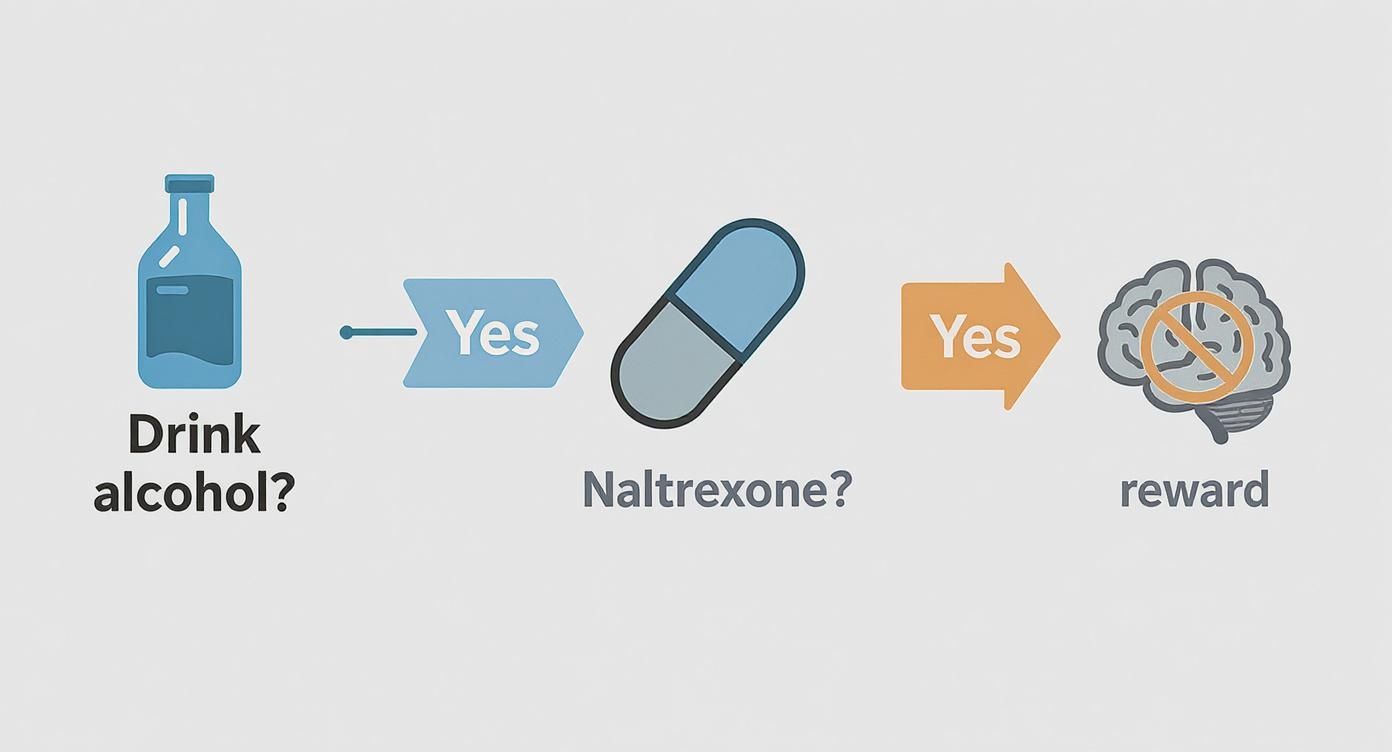
As the infographic shows, having naltrexone in your system essentially mutes the rewarding effects of alcohol, which is the secret to its success in helping people regain control.
Daily Dosing for Abstinence
The most traditional route is taking naltrexone every single day, usually in the morning. This strategy is designed for people whose primary goal is to stop drinking completely.
By consistently keeping the brain's opioid receptors blocked, a daily dose helps turn down the volume on that constant, nagging "background noise" of cravings. It also serves as a critical safety net. If someone has a lapse and takes a drink, the naltrexone that’s already in their system prevents that wave of euphoria. This can be the difference between a single slip-up and a full-blown relapse because the rewarding feedback loop is already severed.
- Primary Goal: To maintain total sobriety.
- Who It's For: Those committed to abstinence who need help managing cravings and preventing a slip from becoming a slide.
- How It Works: A daily dose ensures receptors are always blocked, reducing the overall desire to drink and blunting the effects of any potential lapse.
Targeted Dosing: The Sinclair Method
A completely different strategy, The Sinclair Method (TSM), uses naltrexone much more deliberately. Instead of a daily pill, you take a dose about an hour before you plan to have a drink. This approach isn't aimed at immediate, white-knuckle abstinence but at a fascinating process called pharmacological extinction.
By taking naltrexone only before drinking, you begin to systematically retrain your brain. Every time you drink, the expected pleasure and reward simply don't show up. Over time, this weakens the learned connection between alcohol and euphoria. In fact, The Sinclair Method has shown a 78% effectiveness rate in helping people dramatically cut back on their drinking when they stick with it. Discover more insights about this effective treatment method on AddictionCenter.com.
The whole idea behind TSM is to use the act of drinking itself to unlearn the craving. You're consistently denying the brain its expected reward, which gradually dismantles the very motivation to drink in the first place.
Choosing the right approach comes down to your personal recovery goals and is a decision that must be made with a healthcare provider. Whether you're aiming for complete abstinence or a significant reduction in your drinking, naltrexone is a flexible, evidence-based tool that can help you get there.
Does Naltrexone Actually Work?
When you’re looking into any medication, the bottom line is simple: does this stuff actually work? When it comes to naltrexone for alcohol cravings, the answer from years of solid scientific research is a resounding yes. This isn't just based on a few success stories; it’s backed by large-scale, rigorous studies that consistently show it makes a real difference.
The evidence shows naltrexone is a powerful ally in cutting down on heavy drinking days and supporting long-term recovery. Think of it this way: it essentially disconnects the "reward" wire in your brain that lights up when you drink. This helps turn down the volume on that intense, nagging urge for alcohol, giving you the upper hand in building healthier habits.
Putting the Research Into Real-World Terms
To really grasp naltrexone's impact, let's look at one of the biggest clinical trials ever done on the subject: the landmark COMBINE study. This study gave us crystal-clear data on how naltrexone stacked up against a placebo.
The results were impressive. Researchers found that 73.7% of patients taking naltrexone achieved what’s called a ‘good clinical outcome.’ This meant they had no more than two heavy drinking days a week and kept their overall consumption low during the last two months of the trial. For comparison, only 58.2% of the group taking a placebo hit that same mark.
Those numbers tell a powerful story. Naltrexone gives people a measurable advantage. It's not a magic pill, but it provides a substantial boost, making it much easier to get a handle on drinking patterns and stay on track with recovery goals.
A Consistent Edge Over Placebo
The COMBINE study wasn't a one-off. Time and time again, meta-analyses and randomized controlled trials—the gold standard in medical research—have confirmed that naltrexone consistently outperforms a placebo for treating Alcohol Use Disorder (AUD).
Across all this research, a few key benefits keep showing up:
- Fewer Heavy Drinking Days: People taking naltrexone reliably reduce how often they have high-risk drinking episodes.
- More Abstinent Days: It helps people string together more days without any alcohol at all.
- Lower Relapse Rates: For those working toward complete sobriety, naltrexone acts as a buffer, helping prevent a small slip-up from turning into a full-blown relapse.
This mountain of evidence confirms that using naltrexone for alcohol cravings is an effective, science-backed approach. By targeting the biological roots of addiction, it creates a firm foundation for therapy and behavioral changes to build upon for lasting success.
Getting Started: What to Expect with Naltrexone Dosing and Side Effects

Starting any new medication can feel a little daunting. You’re probably wondering about the right dose, what side effects you might feel, and what the overall experience will be like. That’s completely normal. Let’s walk through what you can expect with naltrexone so you can feel confident and prepared.
Of course, your healthcare provider will always create a plan tailored specifically for you.
Naltrexone comes in two forms, giving you a couple of different options for how to take it. The most common is a daily oral pill. To help your body ease into it, doctors often start with a lower dose of 25 mg for the first few days before moving up to the standard 50 mg daily dose.
The other route is Vivitrol, which is a long-acting injectable version of naltrexone that you get just once a month. This can be a fantastic choice if you'd rather not worry about remembering a pill every day.
Managing the Most Common Side Effects
Like any medication, naltrexone can have some side effects, but the good news is they’re usually mild and don’t stick around for long. The things people report most often are a bit of nausea, headaches, or some stomach cramping.
Thankfully, these symptoms tend to fade within the first week or two as your body adjusts. A simple but highly effective trick for managing nausea is to always take your pill with a meal. Staying well-hydrated can also make a real difference in keeping headaches at bay.
It's helpful to think of these initial side effects as a sign that the medication is beginning to do its job. If they feel severe or just aren't going away, it's really important to let your doctor know. They can help you figure out the best way forward.
A Few Important Safety Notes
While naltrexone is a safe and effective tool for many, it isn't the right choice for everyone. This is why having an open and honest conversation with your doctor about your entire health history is so critical before you start.
There are a couple of key situations where naltrexone should not be used:
- If You Use Opioids: You absolutely cannot be physically dependent on opioids. Naltrexone is an opioid blocker, and taking it while opioids are in your system will trigger sudden, severe withdrawal symptoms.
- If You Have Liver Problems: People with acute hepatitis or severe liver failure shouldn't take naltrexone because the medication is processed through the liver.
Before you can even begin treatment, your system needs to be clean. This is why learning how to detox from alcohol safely with medical supervision is such a crucial first step. Being upfront with your provider is the best way to ensure naltrexone can work safely and effectively for you.
Quick Guide to Naltrexone
- Typical Dosing: The oral pill usually starts at 25 mg and goes up to 50 mg daily. The Vivitrol shot is administered once a month.
- Common Side Effects: Nausea and headaches are the most common, but they typically resolve on their own within a couple of weeks.
- Simple Tips: Take the pill with food and drink plenty of water to minimize discomfort.
- Opioid Warning: Never take naltrexone if you are currently using or dependent on any opioids.
- Talk to Your Doctor: Always share your full medical history, especially any issues with your liver, before starting your prescription.
Why Naltrexone Works Best with Therapy
https://www.youtube.com/embed/Vb2-R6nDzDc
Naltrexone is an incredibly powerful tool, but it's important to understand that it’s not a magic bullet for recovery. Think of it as a way to quiet the intense biological noise—the overwhelming urge to drink. By turning down the volume on cravings, it creates the mental space you need to do the deeper psychological work of recovery.
And that’s where therapy comes in.
If naltrexone for alcohol cravings handles the what (the physical compulsion), therapy is all about addressing the why—the root causes, triggers, and thought patterns that fueled the drinking in the first place. The medication brings stability, making it possible to build a real foundation for sobriety without being in a constant war with your own brain chemistry.
Building a Two-Part Recovery Plan
Therapy gives you a set of skills that a pill simply can't. In counseling, you start to untangle the knots. You learn how to spot high-risk situations before they derail you, find healthier ways to manage stress, and build coping mechanisms that actually work for you.
This powerful, two-pronged approach is a cornerstone of modern addiction care, often called medication-assisted treatment (MAT). We break down this whole integrated strategy in our guide on what is medication-assisted treatment.
And the evidence for this combination is solid. A major 2023 review in JAMA confirmed that naltrexone significantly reduces the return to heavy drinking. The analysis found that for every 11 people treated, one experiences a major benefit compared to placebo, leading to far fewer drinking days. You can read the full research about these findings in JAMA.
By combining naltrexone’s biological support with therapy’s psychological guidance, you create a powerful synergy. The medication makes the therapeutic work possible, and the therapy makes the changes from the medication last.
This model ensures that you're treating the whole person—both the physical and emotional sides of Alcohol Use Disorder (AUD)—which leads to a much stronger, more resilient recovery.
What to Remember About Naltrexone
We've covered a lot of ground on how naltrexone can help with alcohol cravings. If you're walking away with just a few key ideas, make them these.
It's All About Blocking the "Reward"
At its core, naltrexone works by taking the "fun" out of drinking. It blocks the brain's opioid receptors, which means alcohol no longer produces that familiar euphoric buzz. Over time, this helps disconnect the act of drinking from the feeling of pleasure, effectively weakening the cycle of craving and reward.
The Science Is Solid
This isn't just a hopeful theory; it's backed by solid research. Study after study has shown that naltrexone genuinely helps people cut back. It significantly reduces the number of heavy drinking days and gives individuals a real, evidence-based advantage in their recovery compared to just a placebo.
Medication and Therapy Go Hand-in-Hand
Think of naltrexone as a tool that creates an opportunity. By dialing down the intense physical urges, it gives you the mental breathing room to do the deeper work. This is why it’s most powerful when paired with therapy, where you can build lasting coping skills for addiction and tackle the underlying reasons for drinking.
Dosing Can Be Personalized
There's no single "right" way to use naltrexone. A daily oral pill is a great fit for those aiming for complete abstinence. Alternatively, targeted dosing, often called The Sinclair Method, can be used to gradually reduce drinking habits over time. It’s all about fitting the treatment to your specific recovery goals.
Always Put Safety First
An open and honest conversation with your doctor is non-negotiable. Be sure to discuss your complete health history, paying special attention to any liver issues or opioid use (including prescription painkillers). This ensures naltrexone is a safe and appropriate choice for your journey.
Answering Your Questions About Naltrexone
Starting any new treatment for alcohol use disorder naturally comes with a lot of questions. Getting clear, straightforward answers about naltrexone can help you feel more confident and in control of your recovery.
Let's walk through some of the most common questions people have when they start this medication.
Will Naltrexone Make Me Sick if I Drink Alcohol?
This is a big one, and the short answer is no. It’s a very common misunderstanding, likely because people confuse naltrexone with other medications like Antabuse (disulfiram), which does cause a severe physical reaction to alcohol.
Naltrexone’s job is much more subtle. It doesn't punish you for drinking; it simply takes away the reward. By blocking the euphoric feelings and the "buzz" you get from alcohol, it helps break the cycle that makes you want to keep drinking.
How Quickly Will It Start to Reduce Cravings?
While naltrexone gets to work blocking your brain’s opioid receptors almost immediately, the change in cravings isn't like flipping a switch. The real magic happens gradually, over time.
Think of it as your brain slowly unlearning a deeply ingrained habit. The medication is there to stop the positive reinforcement from alcohol. Many people start to notice a real drop in their desire to drink after a few consistent weeks.
It’s a process, not a magic pill. The goal is to slowly weaken alcohol's psychological grip on you. Naltrexone creates the biological conditions for that change to happen, but it requires patience and consistency.
Can I Still Get Drunk on Naltrexone?
Yes, you absolutely can, and this is a critical point for safety. Naltrexone doesn't stop your body from becoming intoxicated.
You'll still experience all the negative effects of alcohol: poor coordination, bad judgment, and slowed reflexes. What it does block is the pleasurable sensation that drives the desire for another drink.
Frequently Asked Questions (FAQ)
1. What is the main benefit of using naltrexone for alcohol cravings?
The main benefit is that naltrexone reduces the rewarding, euphoric effects of alcohol. By blocking the "buzz," it weakens the brain's association between drinking and pleasure, which gradually reduces the psychological urge to drink over time.
2. Will naltrexone make me sick if I drink?
No. This is a common misconception. Unlike medications like Antabuse (disulfiram), naltrexone does not cause a severe physical illness if you drink. It simply makes the experience of drinking less satisfying.
3. How long does it take for naltrexone to work?
While the medication begins blocking opioid receptors shortly after you take it, the noticeable effect on cravings is gradual. Most people report a significant reduction in their urge to drink after a few weeks of consistent use as their brain unlearns the alcohol-reward connection.
4. Is naltrexone addictive?
No, naltrexone is not an addictive substance. It is a non-narcotic opioid antagonist and does not cause physical dependence or withdrawal symptoms, making it a safe option for long-term use in recovery.
5. Can I just take naltrexone without therapy?
While you can, naltrexone is most effective when used as part of a comprehensive treatment plan that includes therapy or counseling. The medication helps manage the physical cravings, while therapy addresses the underlying psychological triggers and helps build long-term coping skills.
