

A student entering a Dallas detox center may be worried about more than withdrawal. A high school senior may fear missing graduation requirements. A college student may be staring at unfinished assignments, tuition deadlines, and unanswered messages from professors. An employed adult may wonder whether treatment will cost a promotion or make a return to work impossible. Those concerns are real, but postponing care can create a larger disruption than taking a structured pause.
Educational support gives treatment teams a way to protect a person's academic or vocational future while addressing addiction and mental health needs. It can include school coordination, IEP or 504 planning, career preparation, remote learning access, and family guidance. For patients with co-occurring depression, anxiety, bipolar disorder, or another mental health condition, education planning also helps reduce the stress that can undermine treatment participation.
Table of Contents
- Why Education Matters During Addiction Treatment
- Defining Educational Support in Recovery
- Types of Educational Support Available During Treatment
- Legal Rights and School Coordination for Patients
- Practical Steps to Access Educational Support
- How Tru Dallas Detox Integrates Education Into Care
- Building a Recovery Plan That Includes Your Future
Why Education Matters During Addiction Treatment
A college student arriving for addiction treatment in Dallas may initially describe the problem as academic: missed classes, falling grades, or an upcoming exam. A closer assessment often reveals a more complicated pattern. Substance use may have disrupted sleep, attention, transportation, finances, and relationships, while untreated anxiety or depression makes ordinary school demands feel unmanageable.
The student may ask whether entering detox means losing an entire semester. A responsible treatment plan doesn't dismiss that fear, and it doesn't promise that every assignment can be preserved. Instead, staff help separate urgent clinical needs from academic tasks that can be postponed, modified, or completed later.

Structure supports recovery
Treatment creates a temporary structure at a time when addiction has often made daily life chaotic. Education can become part of that structure, but only when expectations match the patient's clinical stability. During early detox, the priority is medical safety, rest, hydration, medication management, and honest assessment. Academic work may need to wait.
Later, a patient might complete a short reading assignment, attend a virtual advising appointment, or review a vocational goal with a counselor. These modest activities can restore a sense of competence without turning treatment into another performance test.
The risk runs in both directions. Academic disruption can increase shame, financial pressure, and fear of returning to ordinary life. Those pressures may become relapse triggers if nobody addresses them. At the same time, pushing a patient to maintain a full course load during withdrawal or medication adjustment can overload attention and make treatment less effective.
Practical rule: Education should be paced around clinical readiness, not used as proof that a patient is recovering.
Support must include the whole person
Global education data shows why access and continuity cannot be treated as minor concerns. UNESCO reported that its Education Sector support reached 34.8 million learners across 40 countries in 2022, including 34.6 million learners reached through the Our Rights, Our Lives, Our Future programme in sub-Saharan Africa, with about 23 million learners directly attributable to programme interventions such as teacher training. The report also lists an integrated 2022–2023 budget of US$526.2 million, demonstrating that educational support operates at policy and systems scale, not only through individual tutoring. UNESCO's World Education Statistics 2025 provides that wider context.
In a Dallas treatment setting, the practical lesson is straightforward. A discharge plan should address where a person will live, how relapse prevention will continue, what mental health care is needed, and how school or work will restart. Educational support belongs in that conversation because a realistic future gives recovery a direction.
Defining Educational Support in Recovery
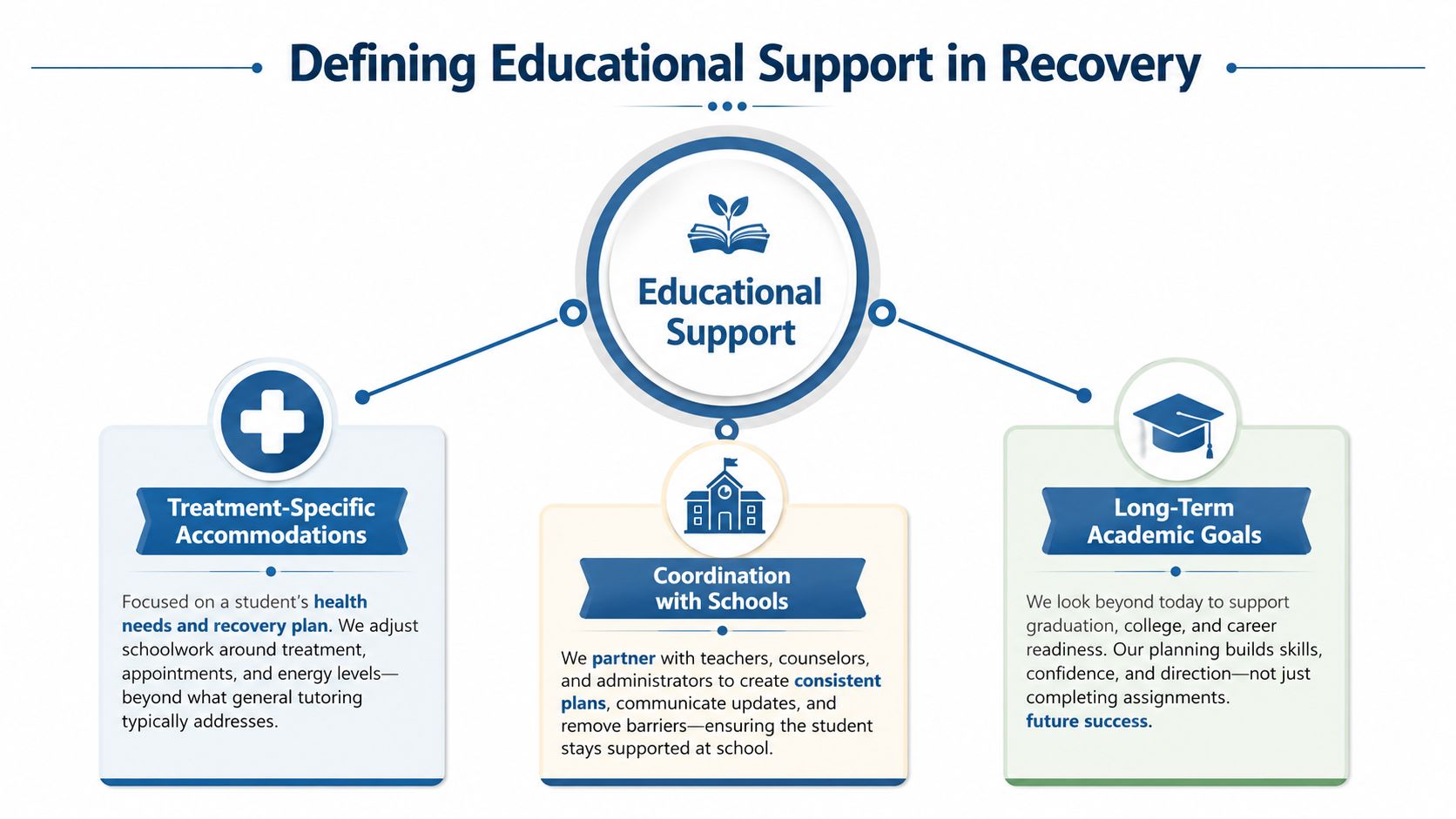
Educational support in addiction treatment is a coordinated plan that protects learning, employment preparation, and future goals while a patient receives clinical care. It isn't just tutoring, extra homework, or a quiet room for studying. The treatment team considers how withdrawal, cravings, trauma, medication changes, cognition, attendance, finances, and family responsibilities affect the person's ability to learn.
The definition becomes clearer when support is divided into three connected areas:
- Treatment-specific accommodations: Adjustments to workload, scheduling, testing, communication, or attendance that reflect current clinical needs.
- Coordination with schools and employers: Permission-based communication with counselors, disability services, instructors, human resources staff, or vocational agencies.
- Long-term academic goals: A plan for re-entry, credential completion, career training, or employment that remains realistic after discharge.
What treatment-specific planning includes
A patient may need a temporary reduction in assignments, flexible deadlines, recorded instruction, a quieter testing environment, or a gradual return to classes. A vocational learner may need help organizing transportation, documentation, and attendance while outpatient therapy continues. The right accommodation depends on functional limitations and school or workplace rules, not on a generic checklist.
A co-occurring disorder can make this coordination more important. The U.S. evidence review on adult education support found only 54 studies on strategies affecting learner outcomes, and just 22 met high rigor standards for confidence in effectiveness. That limited evidence base supports careful, individualized planning rather than assuming every tutoring or advising approach works equally well. The adult education evidence synthesis offers the relevant research context.
Why persistence matters
Educational support should address the reasons a person stops attending or drops out. A review of adult-learning evidence identifies behavioral supports such as encouragement, social support, and reflection on the value of learning as approaches that can strengthen motivation, engagement, and persistence. It also describes ICT-enabled and online learning as potentially useful for these intermediate outcomes when access and implementation are appropriate. The evidence review on adult learning support helps explain why persistence planning matters.
The practical vocabulary is simple: continuity, accommodation, coordination, persistence, and re-entry. Families can use those terms when speaking with admissions staff, school administrators, disability coordinators, or employers. Clear language makes it easier to request specific help instead of making a broad request for “support.”
Types of Educational Support Available During Treatment
Educational needs change across detox, residential treatment, outpatient care, and aftercare. A high school student may need an IEP meeting, while a college student may need an incomplete grade or medical leave. An adult returning to work may benefit more from vocational counseling than from traditional coursework.
| Support Type | Best For | Key Actions | Typical Timeline |
|---|---|---|---|
| Academic continuity | High school and college students | Notify the appropriate school contact, request deadline flexibility, organize assignments, and identify essential requirements | Before admission and during stabilization |
| IEP and 504 coordination | Students with documented disabilities or functional limitations | Share authorized clinical documentation, contact the school team, and review accommodations | As soon as treatment affects attendance or performance |
| Vocational training | Adults preparing to return to work or change careers | Identify transferable skills, explore training, and build a staged employment plan | During treatment and after discharge |
| Tele-education access | Patients clinically ready for limited remote learning | Confirm privacy, device access, schedule expectations, and instructor communication | Usually after early detox, if approved by the care team |
| Family education | Parents, partners, and caregivers | Learn how to support routines, communication, boundaries, and re-entry | Throughout treatment and continuing after discharge |
Academic continuity
A college student might request a medical leave, arrange an incomplete grade, or ask instructors to identify essential work rather than attempting to finish everything. A high school student may need attendance coordination, access to coursework, and communication with a counselor or special education team. The patient should remain involved in decisions whenever clinically possible, because taking ownership supports later independence.
A structured learning plan should specify who will communicate, what information may be shared, and which deadlines matter. Families should avoid sending extensive clinical details to multiple people when a concise treatment verification letter will meet the school's requirements.
Some learners also need help with anxiety around returning to study. A calm induction process and a patient tutor or advisor can make the first academic contact less intimidating. Families looking for general guidance on easing course-related anxiety can review support from Access Courses Online, while treatment staff focus on the patient's clinical situation.
IEP and 504 coordination
An IEP or 504 plan doesn't automatically solve every problem created by addiction or psychiatric symptoms. The school team may need updated information about attendance, concentration, medication effects, testing tolerance, or the pace of re-entry. Treatment staff can help families prepare questions, but schools determine how their formal processes apply.
Vocational preparation and tele-education
Vocational support may involve career exploration, résumé preparation, interview practice, scheduling, and referral to community resources. The objective isn't to force immediate employment. It is to help the patient build a realistic path that won't conflict with therapy, medication management, recovery meetings, or relapse-prevention needs.
Tele-education can preserve connection without requiring a full academic load. Patients may attend a limited virtual meeting, communicate with an instructor, or review material from a private setting. Digital access should never compromise confidentiality, sleep, medication routines, or participation in care. Practical daily-living skills may also belong in the plan, including those described in life-skills training guidance.
Legal Rights and School Coordination for Patients
Families often wait for a school to ask what happened. That delay can create avoidable confusion. A better approach is to identify the correct contact, understand what information can be shared, and request a written plan before academic consequences accumulate.
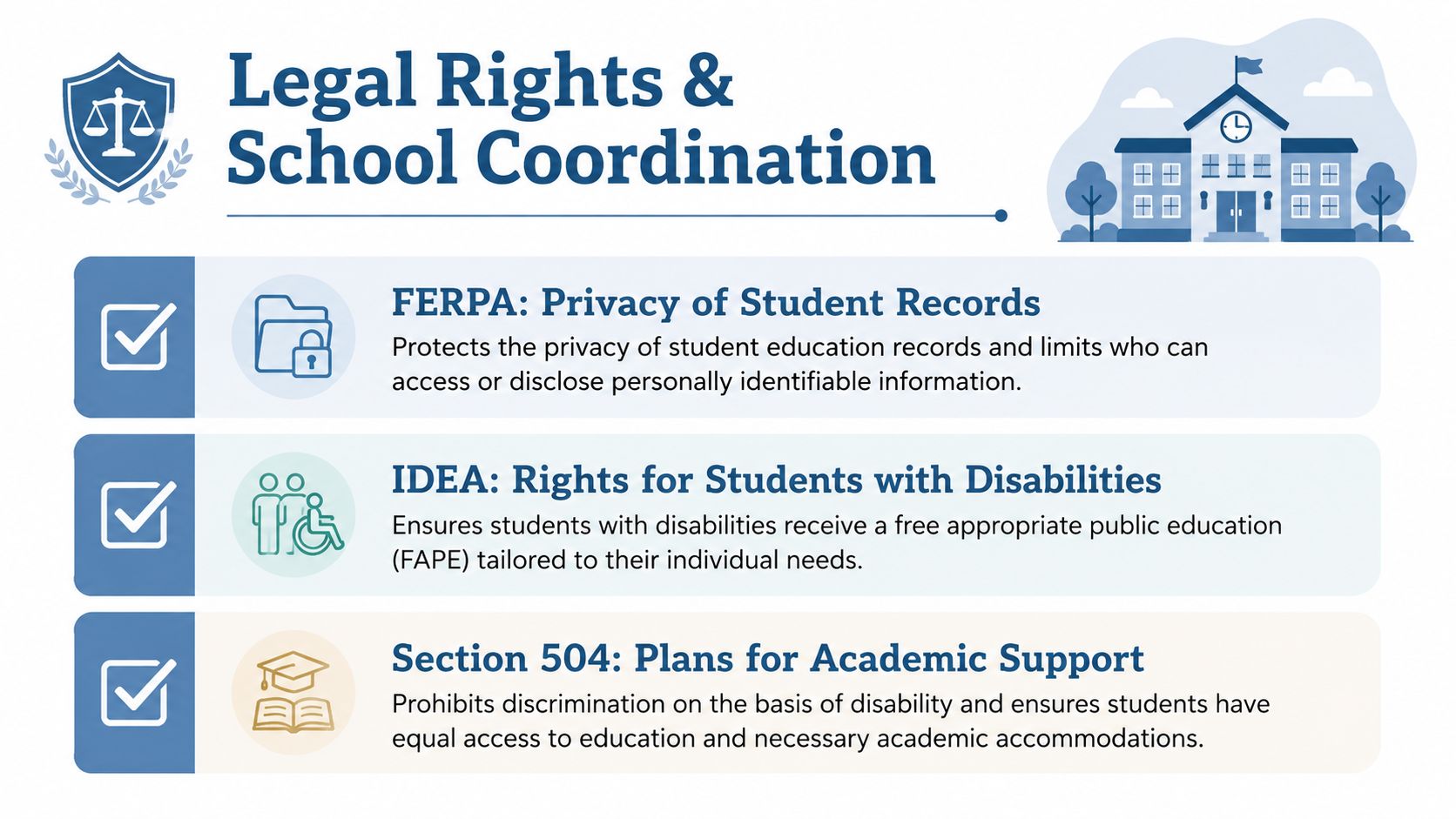
Three federal protections commonly enter the conversation, although their application depends on the student's circumstances and the institution involved:
- FERPA: Protects the privacy of student education records and governs when schools may disclose those records.
- IDEA: Provides rights and procedural protections for eligible students with disabilities receiving special education services.
- Section 504: Addresses disability-based discrimination and can support academic accommodations for eligible students.
A practical coordination sequence
The patient or authorized family member should begin with the school counselor, disability services office, special education coordinator, or human resources department. The request should identify the functional issue, such as inability to attend during treatment, difficulty concentrating, or the need for a gradual return. It needn't disclose a complete therapy history.
Treatment documentation may include admission verification, anticipated dates of care, a clinician's description of functional limitations, and recommended academic adjustments. Schools may have their own forms, deadlines, and review procedures, so families should ask for those requirements in writing.
Protecting the student's standing
A leave of absence can affect enrollment status, housing, loans, scholarships, or financial aid. The school's financial aid office should be contacted directly before a leave is finalized. A treatment provider can document the clinical need for care, but the school decides how that documentation affects enrollment and aid.
Documentation matters: A short, accurate letter describing treatment dates and functional needs is often more useful than a detailed narrative about the patient's diagnosis.
If a school is unresponsive, the family should keep copies of every request, note dates and names, and escalate through the institution's formal disability, student affairs, or grievance process. Patients and families can also review guidance on navigating legal requirements while seeking treatment before sending requests.
Legal protections don't guarantee a particular academic outcome. They do give families a framework for privacy, participation, accommodation, and documented communication. A qualified education advocate or attorney may be appropriate when the situation involves a disputed evaluation, denial of services, or complex disciplinary action.
Practical Steps to Access Educational Support
The fastest way to reduce overwhelm is to convert a broad concern into a short list of actions. Families don't need to solve the entire academic future before admission. They need enough organization to protect immediate deadlines and give the treatment team useful information.
Before admission
Gather the school or employer contact list, current schedule, accommodation plan, medication list, and upcoming deadlines. The patient should tell admissions staff whether school, training, or employment is a major relapse trigger. That information belongs in the clinical and discharge conversation.
A family member can ask the provider:
- Can the treatment team supply admission verification or functional documentation?
- Who can communicate with the school after the patient signs a release?
- What level of academic activity is clinically appropriate?
- How will tele-education affect therapy, rest, and privacy?
- What continuing-care plan will support re-entry?
Patients with stable home environments may eventually consider outpatient care, while others need a more contained setting first. The distinctions described in intensive outpatient treatment information can help families prepare questions about schedule, supervision, and step-down planning.
During treatment
Early detox is not the time to measure academic productivity. SAMHSA defines a freestanding medically monitored inpatient detoxification level as Level III.7-D, providing 24-hour medically supervised detoxification services. SAMHSA's detoxification guidance supports the clinical distinction between medical stabilization and later educational activity.
Once the patient is stable, staff can help with a limited plan:
- Choose essential tasks: Identify only the assignments, forms, or conversations that protect enrollment or re-entry.
- Set a communication boundary: Decide whether the patient, family member, counselor, or school contact will send updates.
- Use short work periods: Stop when concentration, anxiety, fatigue, or cravings rise.
- Record agreements: Save emails, forms, accommodation decisions, and revised deadlines in one secure location.
Parents and partners may also need to understand funding and enrollment questions, particularly when an adult learner supports a household. Resources addressing funding options for dads in school can provide general planning ideas, though each patient should confirm eligibility with the relevant institution.
After discharge
The re-entry plan should name the first week's schedule, transportation, therapy appointments, medication follow-up, recovery supports, and a point of contact for problems. A gradual return may be more sustainable than immediately resuming every class, shift, or training requirement.
The patient should also identify warning signs that academic pressure is becoming a relapse risk. A counselor can help create a response plan, such as contacting the care team, reducing workload, attending an additional support session, or asking the school for another adjustment.
How Tru Dallas Detox Integrates Education Into Care
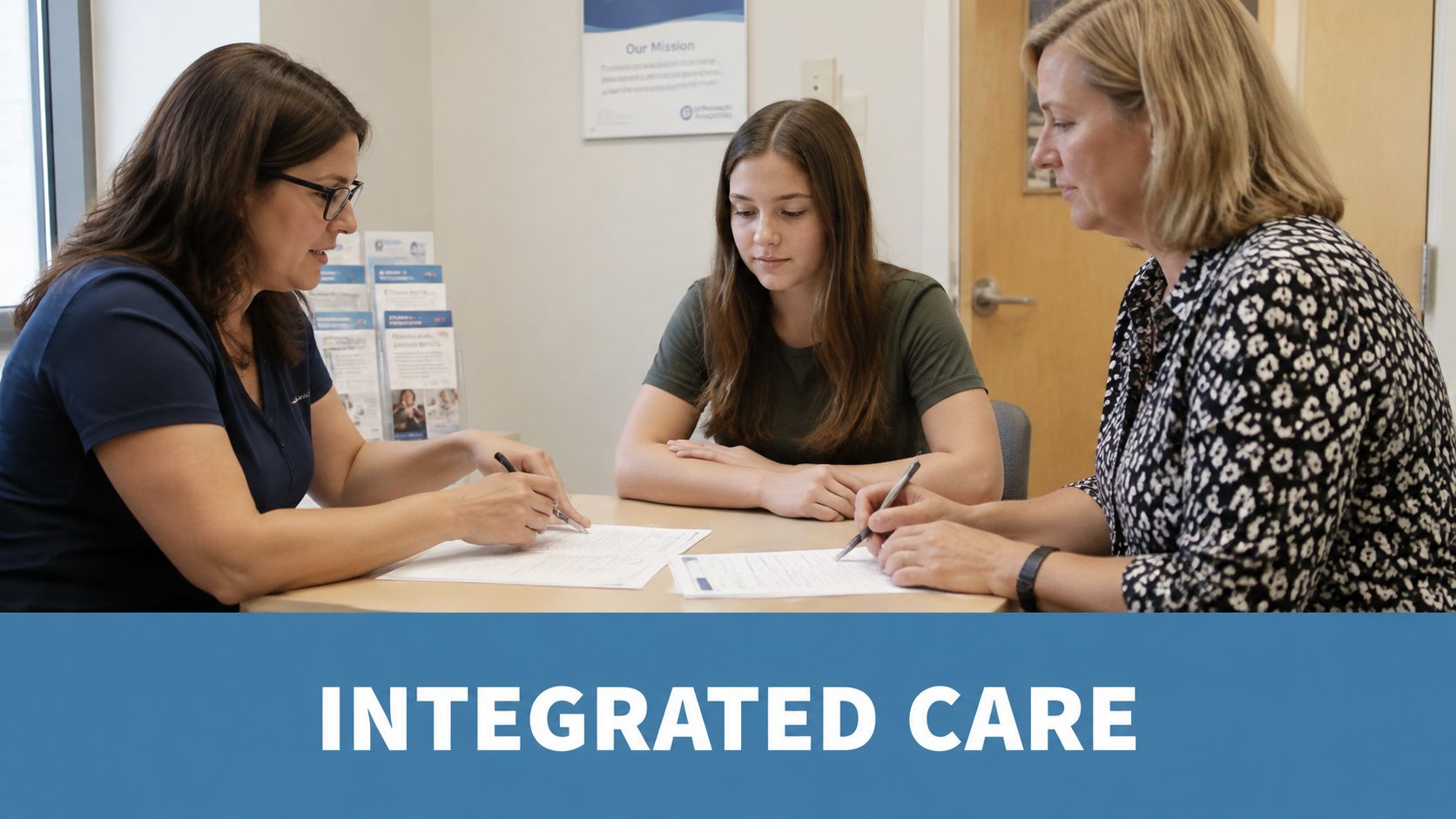
Educational planning works best when it begins during assessment rather than appearing as an afterthought at discharge. Tru Dallas Detox & Recovery Center serves Dallas and the Dallas-Fort Worth area from its Euless facility, where individualized care plans begin with medically supervised detox and may continue through inpatient treatment, help finding outpatient care, medication-assisted treatment, and aftercare.
A patient's education or employment status is relevant clinical information. Staff can discuss whether missed classes, tuition pressure, workplace conflict, or fear of failure contributes to substance use. For patients with depression, anxiety, bipolar disorder, or another co-occurring condition, the plan can account for concentration, motivation, sleep, medication adjustment, and therapy demands.
Clinical care and continuity
During detox, the emphasis remains safety and stabilization. The center describes 24/7 clinical monitoring as part of its detox services, allowing staff to focus first on withdrawal risks and immediate medical needs. Educational conversations can then become more detailed as the patient gains stability.
A discharge plan may include communication with a school or employer when the patient authorizes it, tele-education when clinically appropriate, vocational resources, continuing therapy, medication follow-up, sober living referrals, and relapse-prevention strategies. These elements should fit the patient's actual support network and home environment, not an idealized schedule.
Dallas patients may come from Downtown, Deep Ellum, Bishop Arts, Oak Lawn, South Dallas, West Dallas, or communities across the wider metroplex. Distance, transportation, family responsibilities, and work schedules can influence whether inpatient, outpatient, or step-down care is realistic. The plan should address those barriers directly.
Families can contact Tru Dallas to discuss treatment needs, educational concerns, insurance verification, and the documentation required for school or work. The conversation can begin before admission, while the patient still has time to protect essential academic or vocational arrangements.
Building a Recovery Plan That Includes Your Future
A recovery plan that ignores school, training, or work leaves a major part of daily life unprepared. A plan that treats academic performance as more important than medical stabilization creates a different risk. The useful middle ground is deliberate pacing, written coordination, and goals that support sobriety rather than compete with it.
A student may return through a reduced schedule. An adult may begin vocational preparation before applying for work. A parent may need flexible coursework while continuing therapy. Each route can be valid when it reflects clinical readiness, financial reality, transportation, mental health needs, and relapse-prevention planning.
Families should leave the initial treatment conversation with four answers:
- What educational or vocational problem needs immediate protection?
- Which school, employer, or training contact should receive authorized documentation?
- What level of participation is safe during each phase of care?
- What will happen if academic pressure increases cravings or psychiatric symptoms?
For Dallas-area individuals and families, seeking help doesn't require abandoning the future. It requires choosing care that includes the future in its planning.
Tru Dallas Detox & Recovery Center offers medically supervised detox, dual diagnosis treatment, inpatient care, help finding outpatient options, and discharge planning that can address academic and vocational continuity. Visit Tru Dallas Detox & Recovery Center to request a confidential consultation, discuss educational support needs, and verify insurance coverage.
