

At 4:30 a.m., a Fort Worth parent is already awake, staring at the clock and trying to decide whether today is the day to miss work, call a cousin for childcare, and drive across town before a clinic window closes. That's the problem behind a search for a methadone clinic Fort Worth patients can trust. The address matters, but the bigger question is whether the treatment model can fit a North Texas life that already has too many moving parts.
The strongest choice is the one that matches the person's schedule, opioid exposure, and support needs without pretending recovery happens on a convenient timeline. Methadone can be the right tool for some people, especially when structure matters, but it's not the only evidence-based path. Families in Dallas and Fort Worth need a clearer answer than a directory listing, and they need it fast.
Table of Contents
- What a Fort Worth Methadone Clinic Does
- The Real Fort Worth Intake and Dosing Process
- Methadone vs Buprenorphine vs Higher-Support Care
- Questions to Ask Every Methadone Clinic in Fort Worth
- Cost, Insurance, and Coverage for Fort Worth Patients
- How Tru Dallas Detox Supports Fort Worth Patients
- Your Next Step Toward a Methadone Clinic in Fort Worth
What a Fort Worth Methadone Clinic Does
A Fort Worth resident who feels worn down, sick, and worried about covering a morning shift needs a straight answer. A methadone clinic is not a general doctor's office and it is not a pharmacy counter. It is a regulated setting where methadone, a long-acting opioid agonist, is dispensed as part of medication-assisted treatment, or MAT, for opioid use disorder, with counseling built into the plan.
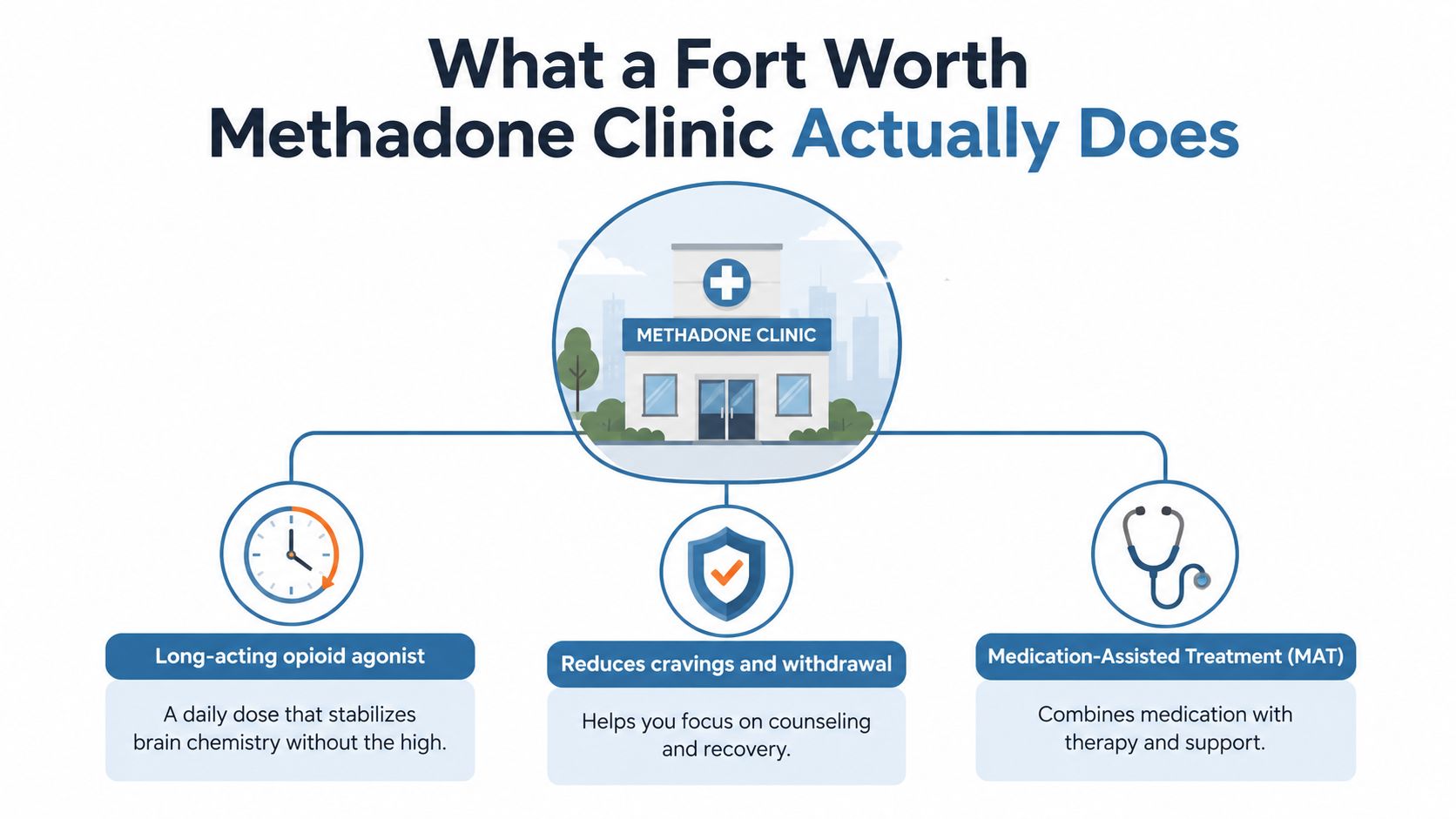
The controlled model exists for a reason. Methadone is powerful, it works over time, and it is meant to steady cravings and withdrawal rather than create a quick high. That is why it is dispensed through certified opioid treatment programs, not routine outpatient prescribers or retail pharmacies. In Fort Worth, that structure shapes the whole process from the first call to the first dose, especially because the city sits inside Tarrant County, where treatment access is discussed alongside Texas overdose trends and local capacity.
Practical rule: if a program makes methadone sound casual, it is not taking the medication seriously enough.
Fort Worth already has a real methadone footprint. A local directory lists 25 treatment centers in the city, estimates 500 inpatient beds, and gives a reported average cost of $6,000 per month across that inventory, while also naming active OTP sites such as Hemphill Treatment Facility at 700 Hemphill Street, Suite A and MedMark at 5201 McCart Street, Suite H Fort Worth clinic directory. SAMHSA also lists the Hemphill facility as a certified OTP with methadone maintenance and methadone detox services SAMHSA OTP directory export.
For families trying to fit treatment around work, school drop-off, and a long commute across DFW, the operational side matters as much as the clinical side. A clear explanation of how methadone treatment works helps set expectations before the first visit, and a solid medication management systems guide can help patients understand why daily dosing, check-ins, and dose adjustments are handled so carefully.
The main takeaway is blunt. A methadone clinic is built for structured, observed treatment, and that structure is what helps some people stay alive long enough to heal.
The Real Fort Worth Intake and Dosing Process
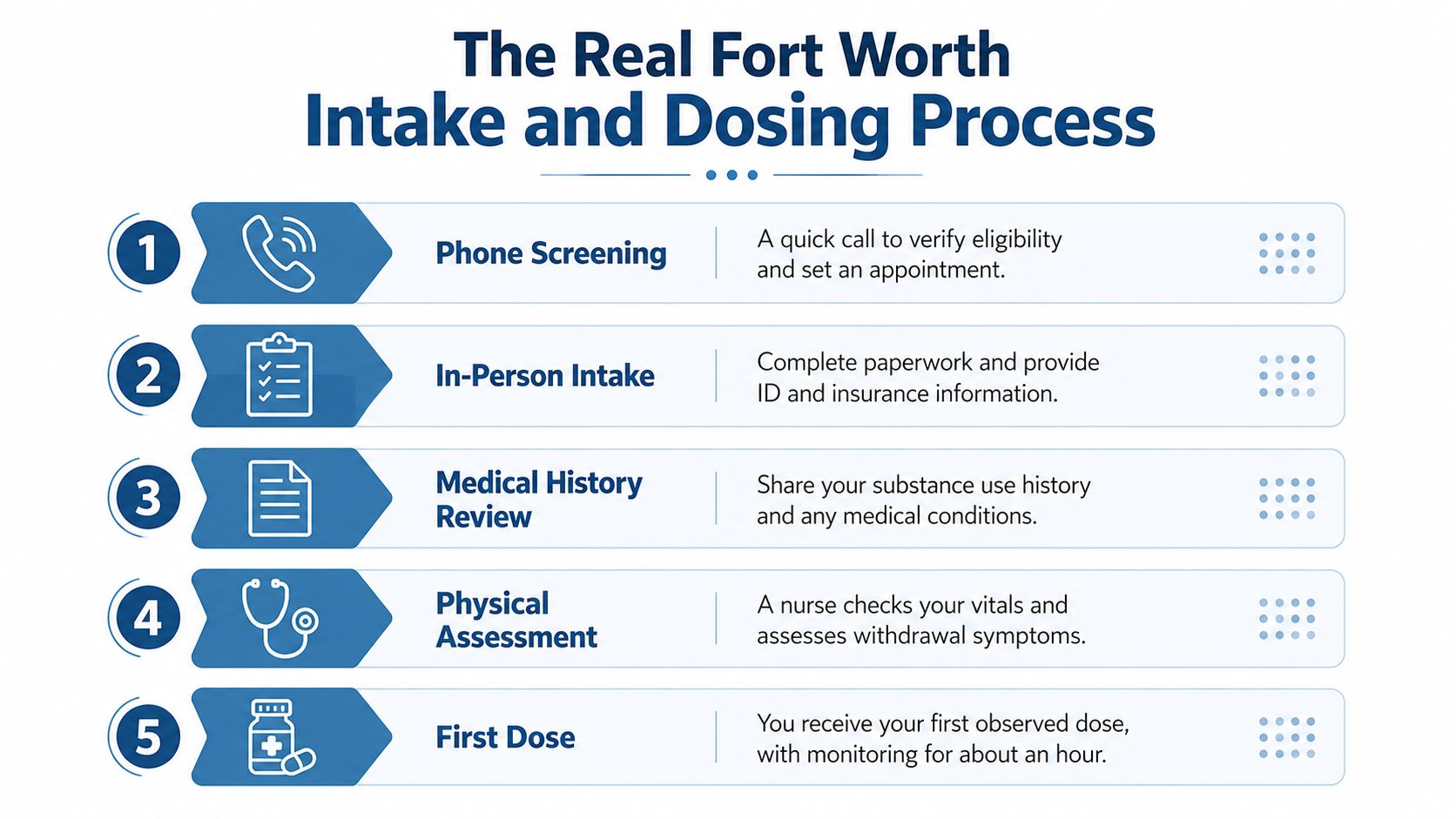
The first month matters more than most families realize. A Fort Worth patient usually starts with a phone screen, then moves into an in-person intake where the clinic reviews medical history, current opioid use, and daily logistics. After that comes a physical assessment, supervised dosing, and counseling touchpoints that help the team adjust the plan without guessing.
What the first visit usually includes
The call usually starts with eligibility and scheduling, not with a full treatment lecture. At intake, the clinic asks for ID and insurance if available, then reviews health history and substance use patterns. A urine drug screen is part of the process, and the first supervised dose is monitored closely so the clinic can see how the body responds.
Early dosing windows are one of the biggest realities people miss. Local Fort Worth listings show medication hours concentrated in the morning, including a site with weekday hours of 5:00 a.m. to 11:30 a.m. and Saturday hours of 6:00 a.m. to 10:00 a.m. MedMark Fort Worth location details, while another Fort Worth listing shows Monday through Friday, 5:00 a.m. to 12:00 p.m., Saturday, 5:00 a.m. to 7:30 a.m., and Sunday, closed Hemphill Treatment Facility listing. That schedule isn't arbitrary. It reflects the controlled, observed model that methadone treatment uses in real life.
A person who can't reliably get to the clinic before noon should treat scheduling as a treatment issue, not a minor inconvenience.
How the first month tends to unfold
The first few weeks often involve dose adjustment, because the clinic is watching for withdrawal, cravings, sedation, and stability. Counseling is part of the treatment model, not an optional add-on. Take-home privileges, when they're offered, are earned over time through adherence and negative screens, so the early phase usually feels tightly structured.
For a plain-English breakdown of the treatment flow, the medication management systems guide is a useful way to understand how structured medication programs keep care organized. A separate overview of the medication itself is also available in this Dallas methadone treatment guide, which helps make sense of why the clinic monitors dosing so carefully.
The honest answer is that the first month is built around consistency. If the schedule, travel time, or childcare plan already looks impossible, that's useful information. It means the treatment plan needs a smarter fit before the first dose is even taken.
Methadone vs Buprenorphine vs Higher-Support Care
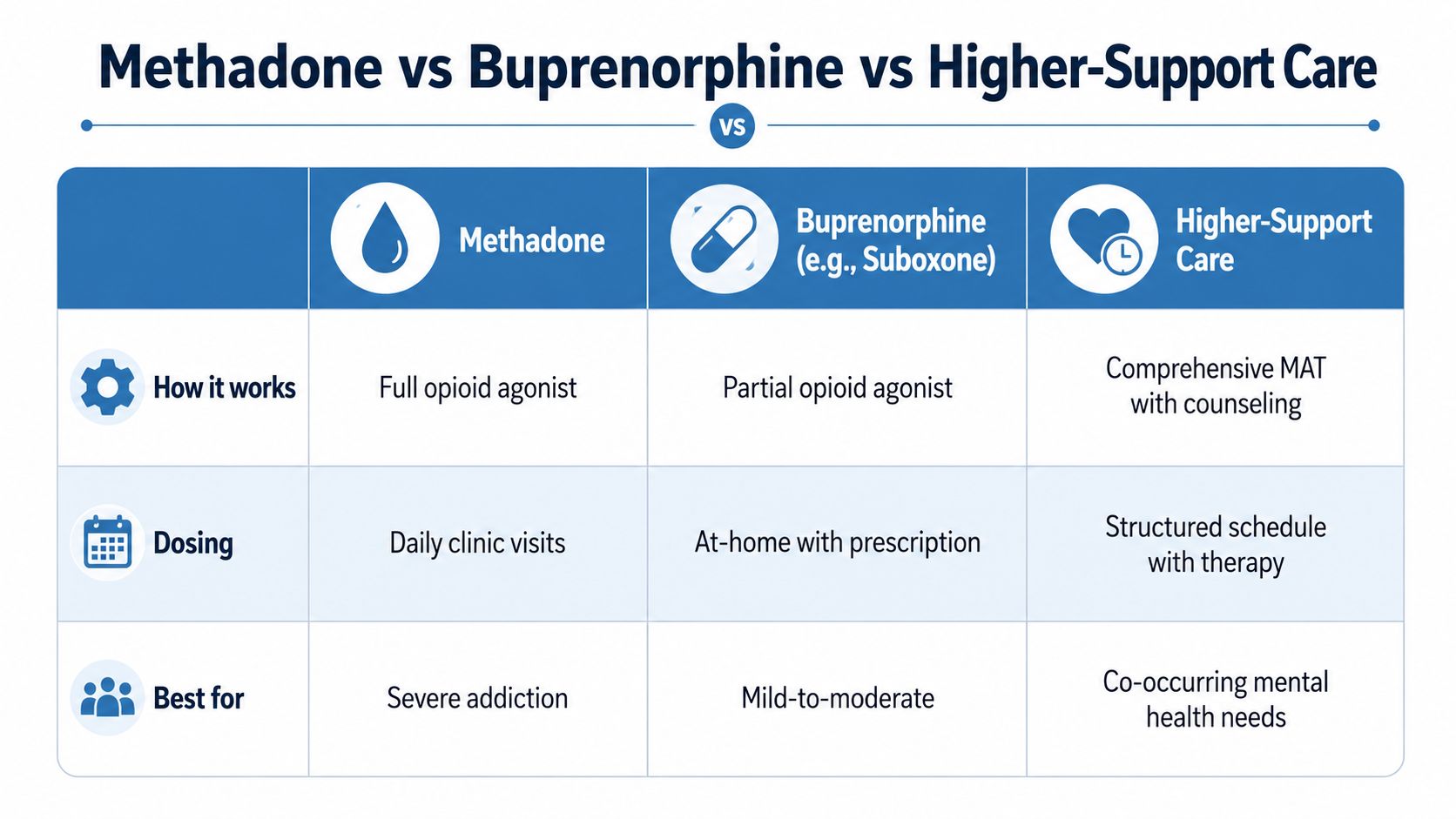
The best decision isn't “Which clinic is closest?” It's “Which level of care matches the problem?” In Fort Worth, that usually means weighing methadone, buprenorphine-based care such as Suboxone, and a higher-support setting that starts with detox or rehab when daily life is already unstable.
Use three filters before choosing
The first filter is opioid exposure and withdrawal severity. Methadone is often the stronger fit when a person needs more structure or hasn't done well with less intensive medication care. Buprenorphine can fit people who need medication but want more flexibility, since it's commonly easier to access outside a clinic setting. A separate side-by-side overview of those medication paths is available in this Dallas Suboxone comparison guide.
The second filter is co-occurring mental health care. Depression, anxiety, and bipolar disorder can make medication-only treatment too thin if the person is also in crisis. In those cases, a higher-support setting with detox, counseling, and psychiatric attention can be the safer starting point.
The third filter is daily-life reality. Work shifts, childcare, transportation, and housing stability all matter. A medication plan that technically exists but can't be attended consistently is a bad plan, no matter how good it looks on paper.
When a higher-support start is the safer move
Some patients should start with detox or inpatient or outpatient rehab before settling into outpatient MAT. That's especially true when fentanyl exposure is heavy, withdrawal has been severe, or the person is juggling unstable housing and mental health symptoms at the same time. The local rehab market in Fort Worth includes programs that handle detox, inpatient, outpatient, telemedicine, and dual-diagnosis needs Fort Worth rehab market overview.
Others do better beginning with a methadone or buprenorphine program right away, especially if they have stable housing and can reliably get to treatment. The right answer is not ideological. It's practical.
Questions to Ask Every Methadone Clinic in Fort Worth
Families often show up asking about hours, but the decision starts with better questions. A clinic can be certified, nearby, and still be a poor fit if it can't coordinate counseling, explain dosing changes, or work around a patient's actual schedule. A simple checklist saves time and frustration.
The questions that actually reveal fit
- Are you accredited? Ask whether the clinic has recognized accreditation and federal certification. A certified program is the baseline, not a bonus.
- Is the clinic SAMHSA-certified? That tells the family whether the program is operating under the federal OTP model.
- What is the daily dosing schedule? If the answer doesn't clearly fit work and commute patterns, the treatment will be hard to sustain.
- How long is the average wait for intake? Delays matter because gaps in treatment are dangerous and demoralizing.
- Do you offer counseling? Methadone works best when medication is paired with psychosocial support.
- What is the cost and do you accept insurance? People should get a clear answer before they commit.
A helpful mental model is to ask questions the same way a careful parent would when arranging child care or travel. The questions to ask a pet sitter checklist uses that same principle, clear questions first, trust second. That approach works here too.
Questions families forget to ask
Ask this directly: “How do you handle dose adjustments, and who answers after-hours concerns?”
Other useful questions include whether the clinic offers both methadone maintenance and methadone detox, whether it supports dual diagnosis, and whether it has individual, group, family, or couples counseling. Patients should also ask about telehealth options, medication hours on all seven days, and how the clinic coordinates with outside detox or inpatient programs when a higher level of care is needed.
The most important question is still the simplest. Can the clinic treat the person in front of it, not just the diagnosis on the intake form?
Cost, Insurance, and Coverage for Fort Worth Patients
Families usually ask about money too late. Bring it up before the first appointment, before anyone signs forms, and before a bill creates pressure that clouds the treatment decision. For Fort Worth patients, the price depends on insurance, the services included, and how the program is set up. The Fort Worth clinic directory shows how much the listed options can vary, and that variation is exactly why one clinic quote rarely tells the whole story.
What to verify before admission
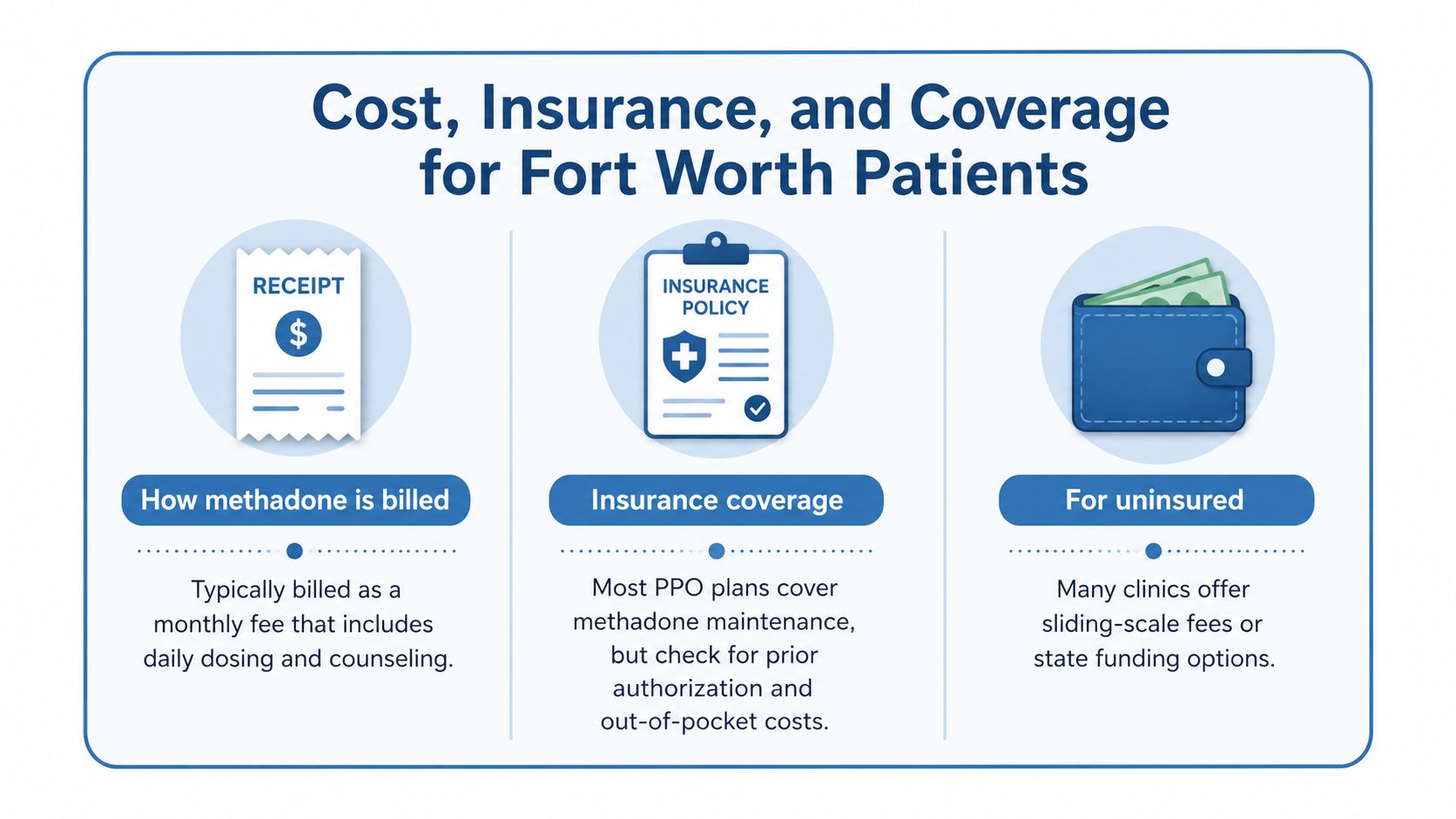
Methadone maintenance is usually billed as part of a monthly treatment plan that can include dosing, counseling, and monitoring. Insurance may treat each piece differently, so ask plainly whether medication, counseling, and drug screening are billed together or separately. A policy can look good on paper and still leave a family with out-of-pocket costs they did not expect.
If a patient has no insurance, ask about sliding-scale fees, state resources, and intake costs before agreeing to start. Families lose time and momentum when they guess at the bill. A direct answer is better than a hopeful one.
Financial rule: if a clinic cannot explain the bill in plain language, the family should pause before signing.
The questions worth asking every billing desk
Ask whether the clinic accepts the person's plan, whether prior authorization is needed, and whether counseling is bundled or billed separately. Ask how much travel the first month requires, because transportation costs matter even when the treatment fee looks manageable. Ask whether the clinic can step the patient up or down if detox or a higher-support program is a better first move.
For families comparing options in Fort Worth and the wider metroplex, the smartest move is to compare coverage with care level, not just sticker price. The Fort Worth clinic directory can help you see the range of local treatment settings, and Fort Worth treatment support resources can help families think through whether outpatient methadone is the right starting point or whether a stronger level of care makes more sense first.
Higher-support detox and rehab can shift more of the cost to insurance when medical necessity is clear. That is one reason some people start there instead of trying to make outpatient MAT cover every need at once. For Fort Worth patients, clear coverage matters as much as clinical fit.
How Tru Dallas Detox Supports Fort Worth Patients
Fort Worth families usually need a stronger first step than a phone number. They need a place that can stabilize withdrawal, sort out mental health issues, and build a real bridge into outpatient care when the time is right. Tru Dallas Detox and Recovery Center in Euless is built for that higher-support stage, with 24/7 medically supervised detox and care that addresses alcohol, opioids, fentanyl, heroin, cocaine, methamphetamine, and prescription medications.
Why a higher-support start changes the outcome
The right sequence matters. When a person is medically unstable, in severe withdrawal, or carrying both substance use and depression, anxiety, or bipolar disorder, starting with detox and structured rehab can make outpatient MAT safer and more sustainable. Tru Dallas also offers dual-diagnosis programming, private accommodations, and restorative amenities that help the first days of recovery feel manageable instead of chaotic.
How the handoff into ongoing care works
After stabilization, the team can help coordinate the next level of care, including inpatient or outpatient rehab and referral pathways that can dovetail with a Fort Worth methadone or buprenorphine program once the patient is ready. The admissions team also assists with insurance verification for most PPO plans and helps families build realistic discharge and relapse-prevention plans, including sober living referrals.
A useful local reference for people evaluating nearby access is this Fort Worth service area page, which shows how Dallas-Fort Worth families can connect the detox step to the next phase of treatment without losing momentum. That continuity is the point. People don't need a pile of options. They need a clean handoff.
The most practical move is to stop thinking in silos. Detox, rehab, and MAT aren't competing ideas. For many Fort Worth patients, they're consecutive steps.
Your Next Step Toward a Methadone Clinic in Fort Worth
The next move should be simple, not perfect. First, call a Fort Worth methadone clinic directly and ask about dosing hours, intake windows, counseling, and whether the schedule can realistically fit work or childcare. Second, contact a higher-support detox program if withdrawal, fentanyl exposure, or mental health symptoms make outpatient care too shaky to start safely.
Third, if it's still unclear whether methadone is the right first step, schedule a confidential evaluation that can compare detox, inpatient, outpatient, and MAT options side by side. Families also benefit from understanding the legal and practical stakes around substance possession and treatment access, and the Texas drug possession legal guide is useful background when those concerns are part of the conversation.
The right plan is the one a person can actually follow on a hard Monday morning, not the one that looks neat in a search result.
For Fort Worth residents who are tired of guessing, Tru Dallas Detox & Recovery Center gives families a calm place to sort out the next step with real clinical support, insurance verification, and a treatment plan that respects daily life. If the situation feels urgent, that's because it is, and the safest move is to ask for help before the week gets any heavier.
Tru Dallas Detox & Recovery Center helps Dallas-Fort Worth families sort out detox, rehab, and the right next level of addiction care with compassion and clarity. If a methadone clinic Fort Worth search has led to more questions than answers, visit Tru Dallas Detox & Recovery Center to take a confidential first step and get help choosing the right path.
