
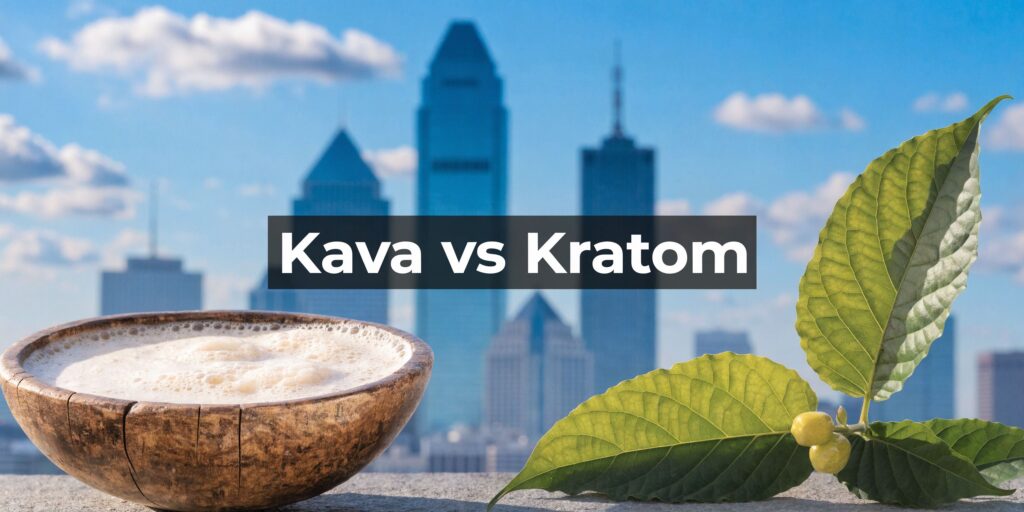
Short answer: kava and kratom are not the same thing. Kava is a root from the Pacific Islands that is mainly calming and sedating. Kratom is a leaf from Southeast Asia whose main compounds act on the brain’s opioid receptors, which is why regular use can lead to dependence and withdrawal. Kava’s main safety concern is the liver. Kratom’s is dependence. Neither is FDA-approved for any medical use.
They’re often sold side by side in smoke shops and “kava bars”, and marketed as natural ways to relax, ease pain or cut back on alcohol. This guide compares how each one works, what the risks are, where they stand legally in Texas, and when kratom use is worth getting help for.
Kava vs kratom at a glance
| Kava | Kratom | |
|---|---|---|
| Plant | Root of Piper methysticum (Pacific Islands) | Leaf of Mitragyna speciosa (Southeast Asia) |
| Main active compounds | Kavalactones | Mitragynine and 7-hydroxymitragynine (7-OH) |
| How it feels | Relaxed, calm, sometimes numb mouth and drowsy | Users report stimulation at low doses and opioid-like sedation at higher doses |
| Acts on opioid receptors? | No | Yes both main compounds activate mu-opioid receptors |
| Dependence and withdrawal | Not a typical concern | Yes regular users can have withdrawal when they stop |
| Main safety concern | Rare but serious liver injury; sedation, especially with alcohol | Dependence; contaminated products; rare seizures, high blood pressure and liver problems |
| FDA-approved use | None | None; the FDA has warned consumers not to use it |
Sources: NIH NCCIH on kava, NCCIH on kratom and NIDA on kratom.
What kava is and how it feels
Kava is made from the ground root of the kava plant and has been drunk socially and ceremonially in the Pacific Islands for centuries. Today it’s sold as powders, capsules, extracts and ready-to-drink shots. Its active compounds, kavalactones, have a calming effect: most people describe feeling relaxed and sociable, with a numb or tingly mouth. Larger amounts make people drowsy.
Some people use kava for stress or as a substitute for alcohol. The evidence that it helps anxiety is mixed. According to the NIH, it may take several weeks to have any effect and doesn’t appear to help generalized anxiety disorder.
What kratom is and how it feels
Kratom comes from the leaves of a tree related to coffee. It’s sold as powder, capsules, extracts, shots and gummies, often labeled by “vein color” (red, green, white). Its two main compounds, mitragynine and 7-hydroxymitragynine (7-OH), activate the same mu-opioid receptors as prescription painkillers, although their effects only partly resemble those of drugs like oxycodone.
Users often say small amounts feel energizing and larger amounts feel sedating and pain-relieving, though research hasn’t confirmed that the effect depends neatly on dose. That opioid-receptor activity is the key difference from kava. It’s why some people use kratom to manage pain or to self-treat opioid withdrawal, and why regular use can turn into dependence.
Which is more dangerous?
For most people, kratom carries more risk, mainly because of dependence. Kava isn’t harmless, though, and the risks are different.
Kava risks
- Liver injury. Kava has been linked to rare cases of liver damage, some serious or fatal. Drinking it with alcohol, heavy or long-term use, contaminated products and the part of the plant used may all play a role.
- Sedation. Kava adds to the effects of alcohol, benzodiazepines and other sedatives. Don’t combine them, and don’t drive after drinking it.
- Skin changes. Long-term heavy use can cause “kava dermopathy”: dry, scaly skin and yellowing of the skin and nails.
Kratom risks
- Dependence and withdrawal. People who use kratom regularly can develop tolerance and have withdrawal when they stop, usually described as mild to moderate. Commonly reported symptoms resemble mild opioid withdrawal: muscle aches, irritability, poor sleep, a runny nose and cravings.
- Unpredictable products. Kratom isn’t regulated as a medicine, so strength varies. Some products have been contaminated with heavy metals and harmful bacteria.
- Serious side effects. Nausea, constipation, dizziness and drowsiness are common. Seizures, high blood pressure and liver problems are rare but reported.
- Mixing with other drugs. Deaths from kratom alone appear to be extremely rare, but combining it with other substances has been linked to deaths and severe reactions.
Some shops now sell gummies, shots and tablets with concentrated 7-OH, far stronger than natural kratom leaf. In September 2025 the Texas Department of State Health Services warned people not to use them after poison centers saw a sharp rise in reports, including seizures, trouble breathing and loss of consciousness. If someone is very drowsy or breathing slowly after using kratom or 7-OH, call 911.
Does kava help with kratom withdrawal?
There’s no good evidence that it does. Kava may take the edge off restlessness for a few hours, but it doesn’t act on opioid receptors, so it doesn’t treat the underlying withdrawal. Using one substance to get through stopping another also risks a new routine: kratom during the day, kava to come down at night.
If kratom withdrawal is hard to get through, medical help is the safer route. Doctors can treat symptoms like aches, diarrhea and insomnia, and NIDA notes that clinicians have used medications such as buprenorphine in some cases of kratom dependence.
Can you take kava and kratom together?
There’s no research showing it’s safe. Both can cause drowsiness and both have been linked to liver problems, so combining them stacks the risks. It’s also a common pattern in people whose kratom use is escalating.
Are kava and kratom legal in Texas?
As of October 2026, both are legal for adults in Texas, with conditions:
- Kratom is regulated under the Texas Kratom Consumer Protection Act, in effect since September 1, 2023. It can’t be sold to anyone under 18, must carry serving-size and safe-use labeling, can’t contain synthetic 7-OH, and 7-OH can’t exceed 2% of a product’s total alkaloids.
- Federally, kratom leaf isn’t a controlled substance, but the DEA is moving to temporarily place concentrated 7-OH and several related compounds in Schedule I. It filed notices in July 2026 and updated them in October 2026. Rules are changing quickly, so check current law before relying on this.
- Kava is sold legally in the US as a food and dietary supplement.
Legal to buy doesn’t mean safe, or acceptable everywhere. Some employers, courts, sober living homes and treatment programs test for kratom or don’t allow it.
Signs kratom use has become a problem
- You need more to get the same effect.
- You feel sick, achy, anxious or can’t sleep when you go without it.
- You’ve tried to cut back and couldn’t.
- You’re using it to get through the workday, manage pain or avoid withdrawal from other opioids.
- You’re spending more than you can afford, hiding how much you use, or mixing it with alcohol, kava or other drugs.
If several of these sound familiar, it’s worth talking to a professional. You don’t need to wait for things to get worse. Our guide to kratom addiction treatment explains the options in more detail.
Worried about kratom use? Tru Dallas Detox offers 24/7 medically supervised detox and residential treatment in Euless, between Dallas and Fort Worth. Calls are confidential.
How we can help
At Tru Dallas Detox & Recovery Center, kratom detox happens under 24/7 medical supervision, so withdrawal symptoms can be treated as they come up. After detox, many people continue into residential treatment, where therapy addresses the reasons kratom started doing so much work, whether that’s pain, anxiety, depression or past opioid use. If those overlap with a mental health condition, we offer dual diagnosis care. If outpatient care is a better fit for you, our team can assist in finding outpatient options.
Read more about drug detox or how admissions works.
Frequently asked questions
Is kava the same as kratom?
No. Kava is the root of a Pacific Island plant and is mainly calming. Kratom is the leaf of a Southeast Asian tree, and its main compounds act on opioid receptors. They’re often sold in the same shops, which is where the confusion comes from.
Which is more addictive, kava or kratom?
Kratom. Its compounds activate opioid receptors, and regular users can develop tolerance and withdrawal. Kava isn’t usually associated with dependence, though it has other risks, mainly to the liver.
Is kava bad for your liver?
It can be. Kava has been linked to rare cases of serious liver injury. The risk appears higher with heavy or long-term use, with alcohol, and with poor-quality products. Avoid kava if you have liver disease or drink regularly.
Does kava help with kratom withdrawal?
There’s no good evidence that it does. It doesn’t act on opioid receptors, and it adds a second substance. Medical detox can treat kratom withdrawal symptoms directly.
Is kratom legal in Texas?
Yes, for adults 18 and over, under the Texas Kratom Consumer Protection Act. Products can’t contain synthetic 7-OH, and 7-OH can’t exceed 2% of total alkaloids. Federal rules on concentrated 7-OH products are changing in 2026.
Last updated: October 2026. This page is general information, not medical advice. Sources: NIH NCCIH (kava, kratom); NIDA; Texas DSHS; DEA.
