
When it comes to treating kratom addiction, we've found the most effective approach combines two crucial phases: a medically supervised detox to safely manage withdrawal, followed by behavioral therapy to get to the root of the addiction. This isn't just about stopping the substance; it's about healing the whole person and creating a solid foundation for recovery.
Key Takeaways
- Holistic Approach is Key: The most effective kratom addiction treatment combines medical detox with behavioral therapy.
- Kratom Acts Like an Opioid: Its main compounds bind to the brain's opioid receptors, leading to physical dependence.
- Natural Doesn't Mean Safe: Though marketed as a natural remedy, kratom can create a powerful cycle of tolerance and withdrawal.
- Professional Help is Necessary: Quitting "cold turkey" is often unsuccessful due to severe withdrawal; professional treatment provides crucial medical and psychological support.
- Treatment Removes Triggers: A structured environment allows you to focus solely on recovery, away from daily stressors that fuel addiction.
Understanding Kratom's Path from Relief to Dependence
No one sets out to become addicted to kratom. It usually starts as a search for a solution. Often touted as a "natural" or "herbal" remedy, people turn to it for very real problems like chronic pain, overwhelming anxiety, or even as a way to step down from more powerful opioids. In small doses, it can create a sense of energy and well-being, which feels like a welcome relief.
But that initial experience can be misleading. Kratom's two main active compounds, mitragynine and 7-hydroxymitragynine, don't just work on their own. They plug into the very same opioid receptors in the brain that are targeted by drugs like heroin and oxycodone. That's where the pain relief and euphoric feelings come from, and it's also where the trouble starts.
The Shift from Use to Reliance
Think of it like using a crutch for a sprained ankle. At first, it's essential support. But if you rely on it for months after you've healed, your leg muscles get weaker, and you start to feel like you can't walk without it. Kratom works in a similar way on the brain.
As your brain gets used to the constant presence of kratom's compounds, it starts to dial down its own natural chemistry. Soon, you need more and more kratom just to get the same feeling you used to. That's tolerance, and it's the first major signpost on the road to physical dependence.
Once your body develops a tolerance, the game changes completely. You're no longer using kratom to feel good; you're using it to keep from feeling awful. The primary motivation becomes avoiding the miserable, flu-like symptoms of withdrawal. This creates a powerful, self-perpetuating cycle that's incredibly difficult to break alone.
Why Professional Treatment Is Necessary
Trying to quit "cold turkey" when you're caught in that cycle of tolerance, dependence, and withdrawal is a monumental task. The physical cravings and psychological pull can feel relentless, which is exactly why professional kratom addiction treatment is so important. A dedicated program gives you the medical and therapeutic scaffolding you need to break free safely.
- Medical Safety: Going through withdrawal under a doctor's care means your symptoms are managed, keeping you as comfortable and safe as possible.
- Psychological Support: Therapy is where you do the real work—digging into why the substance use started and learning new, healthier ways to cope with life's challenges.
- A Structured Environment: Being in a treatment center removes you from the daily triggers and stressors that fuel addiction, letting you focus 100% on getting well.
Seeing how a seemingly innocent herbal supplement can lead to such a deep dependence makes it clear why getting expert help is the best path forward. It's the surest way to navigate the difficult process of withdrawal and build a new life free from substance use.
Spotting the Signs of Kratom Addiction and Withdrawal
It’s often hard to pinpoint the exact moment when using kratom shifts from a way to cope into a full-blown dependency. The change is usually so gradual that it's easy to miss, whether it's happening to you or someone you care about. But there are very real physical and behavioral signs that act as warning lights, signaling that it’s time to look into professional kratom addiction treatment.
These aren't just minor mood swings; they're noticeable changes that disrupt daily life. You might feel constantly nauseous, find yourself sweating for no reason, or notice a slight but persistent tremor in your hands. On the behavioral side, a person might start to ghost their friends, let responsibilities at work or home slide, or get into financial trouble from the constant need to buy more kratom.
Physical and Behavioral Red Flags
The physical symptoms of kratom dependence can look a lot like opioid use, and for good reason—it affects the same receptors in the brain. These symptoms are your body's way of telling you it has rewired itself and now needs the substance just to feel normal.
At the same time, the behavioral changes show just how tight addiction’s grip can be. The need to find and use kratom can start to eclipse everything else, pushing a person into secrecy and isolation.
- Tolerance: You find yourself needing to take larger amounts or more frequent doses to get the effect you used to.
- Neglecting Responsibilities: Work, school, or family commitments take a backseat to using kratom.
- Financial Strain: A significant chunk of your money goes toward buying kratom, even when it’s causing a financial crunch.
- Social Isolation: You start pulling away from hobbies, friends, and activities you once loved.
- Failed Attempts to Quit: You’ve tried to stop or cut back on your own, but you just can't, no matter how bad the consequences get.
This is a common and predictable path. What often starts as a search for relief can slowly morph into a cycle of dependence that's incredibly difficult to break alone.
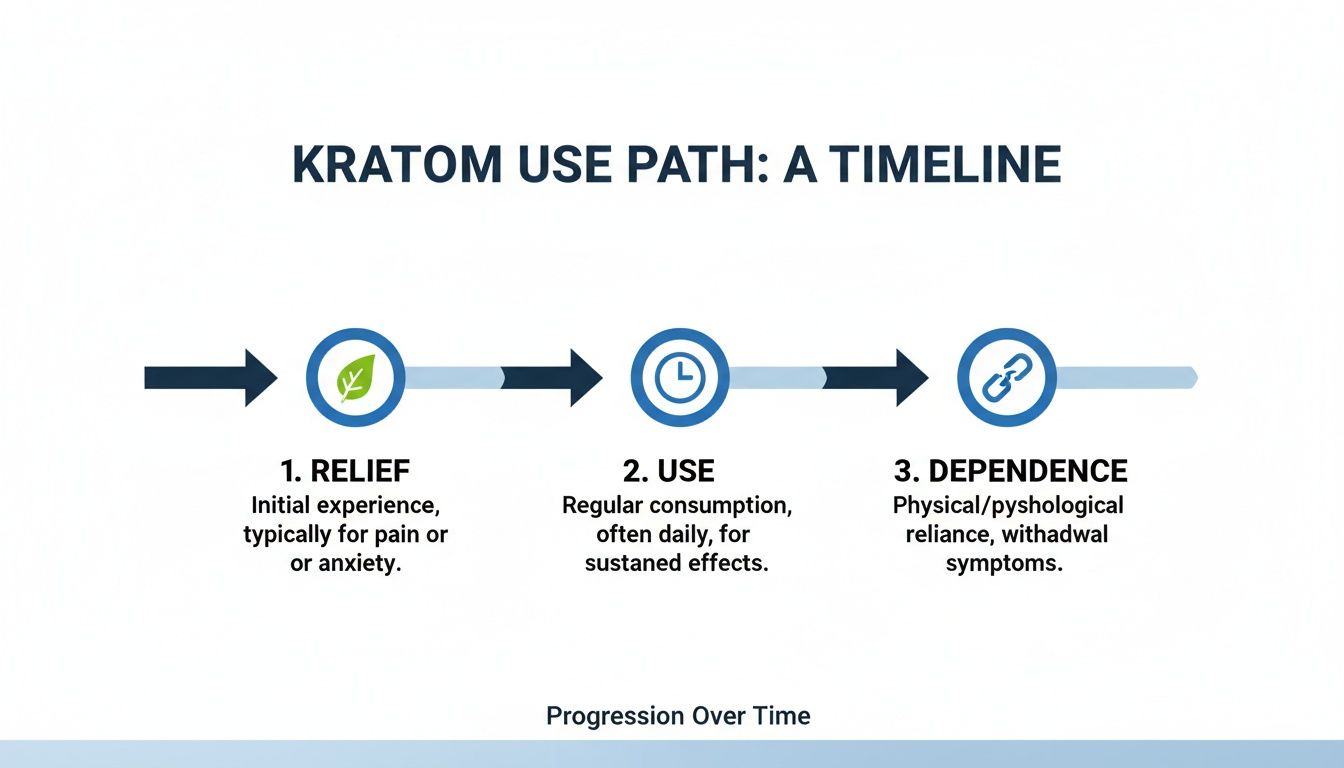
As the timeline shows, what begins as a tool for managing pain or mood can become the very thing that controls your life, making a structured treatment plan essential.
Navigating the Kratom Withdrawal Timeline
When someone who is physically dependent on kratom suddenly stops, their body and brain have a powerful, negative reaction. This is called withdrawal. The symptoms can be absolutely miserable, making it nearly impossible for most people to quit without professional support.
The withdrawal experience is frequently compared to what people go through when quitting opioids. Think severe flu-like symptoms, overwhelming cravings, and intense psychological pain. This is exactly why a medically supervised detox is the safest and most humane way to start the recovery journey.
The exact timeline can shift depending on how long and how much kratom a person was using, but it generally follows a fairly predictable pattern.
The table below breaks down what you can typically expect during the withdrawal process, separating the physical and psychological symptoms that emerge over the first week.
Kratom Withdrawal Symptom Timeline
| Timeframe | Common Physical Symptoms | Common Psychological Symptoms |
|---|---|---|
| First 12-24 Hours | Runny nose, watery eyes, muscle aches, sweating, restlessness. | Increasing anxiety, irritability, agitation. |
| Days 2-4 (Peak) | Severe muscle spasms, jerky limb movements, insomnia, diarrhea, nausea, hot flashes. | Intense cravings, deep sadness, anger, dysphoria (profound unease). |
| Days 5-7 | Acute physical symptoms start to fade; fatigue and muscle soreness may linger. | Depression, apathy, lingering cravings, mood swings. |
It's important to remember that while the worst of the physical symptoms usually ease up after a week, the psychological challenges, like depression and cravings, can stick around much longer.
And this isn't a niche problem. The FDA has noted that 1.7 million Americans aged 12 and older used kratom back in 2021. Many of them showed classic signs of a substance use disorder, including cravings, tolerance, and withdrawal. You can read more about the FDA's findings on kratom use and its growing public health impact.
Key Takeaways
- Recognize the Warning Signs: Key indicators of kratom addiction include increased tolerance, neglecting responsibilities, and social isolation.
- Withdrawal is a Major Barrier: The severe, flu-like symptoms of kratom withdrawal make quitting alone extremely difficult.
- Withdrawal Symptoms Peak Mid-Week: The most intense physical and psychological symptoms typically occur between days 2 and 4.
- Psychological Symptoms Linger: While physical withdrawal subsides after about a week, emotional challenges like depression and cravings can last much longer.
- Medical Detox is Crucial: Supervised detox is the safest and most effective way to manage withdrawal and begin recovery.
Frequently Asked Questions
What does kratom withdrawal feel like?
Kratom withdrawal is often compared to opioid withdrawal and feels like a very severe case of the flu. Common symptoms include muscle aches, nausea, diarrhea, sweating, intense anxiety, and powerful cravings.
How do I know if I'm addicted to kratom or just using it?
The line is crossed when you develop a physical dependence. Key signs are tolerance (needing more for the same effect), experiencing withdrawal symptoms when you stop, and continuing to use despite negative consequences in your life (work, relationships, finances).
Is it safe to quit kratom cold turkey?
While not typically life-threatening, quitting cold turkey is strongly discouraged. The withdrawal symptoms can be so severe that the risk of relapse is extremely high. A medically supervised detox is much safer and more comfortable.
Finding Your Way Through Recovery with Proven Treatment
When you're trying to break free from kratom dependence, figuring out the right path forward can feel overwhelming. But there's a clear roadmap, and it’s built on evidence-based treatment. This isn't about sheer willpower; it's about relying on medical and therapeutic strategies that have been proven to work. We often call this a continuum of care—a flexible approach that lets you move between different levels of support as your needs change, so you’re never without the help you need.
For almost everyone, the first and most important step is medically supervised detox. Trying to quit "cold turkey" on your own is not just incredibly difficult; the withdrawal symptoms can be so intense that they make relapse feel almost unavoidable. A professional detox program provides a safe, comfortable space where medical experts can manage your symptoms and look after your physical and mental health. This step lays a solid foundation for everything that comes next. You can get a clearer picture of why this is so critical in our guide on what is medical detox.
Building a Strong Foundation with Inpatient Treatment
Once detox is complete, many people find their footing in an inpatient or residential treatment program. Think of this as the deep-dive phase of your recovery. By living at the facility, you're completely removed from the daily triggers and stressors that fueled your kratom use. This gives you the space to focus 100% of your energy on healing.
This kind of structured environment is especially helpful for anyone with a long history of kratom use or who is also dealing with mental health conditions like anxiety or depression. A typical day is filled with a mix of individual counseling, group therapy, and workshops that teach you new coping skills and help you get to the root of the addiction.
Bridging Back to Daily Life with Outpatient Programs
Not everyone needs to live at a facility to get better. For some, Partial Hospitalization Programs (PHP) and Intensive Outpatient Programs (IOP) strike the perfect balance between intensive support and personal freedom. These programs let you live at home or in a sober living house while still getting a high level of care.
- Partial Hospitalization (PHP): This is the most structured type of outpatient care. You’ll typically spend several hours a day, five to seven days a week, in treatment. It’s a lot like residential care but with the freedom to go home at night.
- Intensive Outpatient (IOP): As a step down from PHP, an IOP usually involves a few hours of therapy, three to five days a week. It’s a great fit for people who are feeling more stable and are ready to start easing back into work, school, or family life with a strong support system still in place.
These programs act as a crucial bridge, helping you take the skills you’ve learned and apply them to real-world challenges. This step-down approach is what helps build a recovery that truly lasts.
It's important to understand how kratom use often connects to other substance use. In one study of patients at a treatment center, 21% had used kratom in their lifetime. Of those, nearly 70% were taking it specifically to try and quit or cut back on opioids. This really shows how kratom can get tangled up in the broader struggle with opioid use disorder.
Ultimately, there's no one-size-fits-all plan for kratom addiction. The best approach is a personal one that moves with you. By working through a full continuum of care—from detox and inpatient treatment to different levels of outpatient support—you build the strength and skills needed to find lasting freedom.
Key Takeaways
- Detox is the First Step: Recovery begins with a medically supervised detox to safely manage withdrawal symptoms.
- Inpatient Provides Immersion: Residential programs offer a trigger-free environment for intensive, focused healing.
- Outpatient Offers Flexibility: Programs like PHP and IOP allow you to integrate treatment with daily life responsibilities.
- Continuum of Care is Key: A successful treatment plan adapts to your needs, stepping down in intensity as you grow stronger in recovery.
- Treatment Isn't One-Size-Fits-All: The best kratom addiction treatment is personalized to your unique history and recovery goals.
Frequently Asked Questions
What is the difference between inpatient and outpatient treatment?
Inpatient (or residential) treatment requires you to live at the facility, providing a 24/7 structured and supportive environment. Outpatient treatment allows you to live at home while attending therapy and counseling sessions at the facility for a set number of hours each week.
How do I know which level of care is right for me?
A clinical assessment upon admission will determine the best starting point. Factors like the severity of your kratom use, your home environment, and any co-occurring mental health conditions will guide the decision between inpatient, PHP, or IOP.
Can I still work or go to school during treatment?
Intensive Outpatient Programs (IOPs) are specifically designed to be flexible enough for people who need to maintain work, school, or family commitments while receiving robust therapeutic support.
The Core of Recovery: Therapy and Supportive Care
Getting through detox is a huge accomplishment, but it's really just clearing the slate. The real, lasting work of recovery from kratom addiction happens next. This is where you dig into the underlying thoughts, feelings, and behaviors that led you to use in the first place. Therapy and supportive care are the bedrock of building a new, sober life.
Think of it this way: just stopping kratom without addressing the why is like pulling a weed but leaving the root behind. It’s only a matter of time before it grows back. That's why effective kratom addiction treatment is all about healing the whole person. It’s about giving you the tools to handle life’s ups and downs without reaching for a substance.
Rewiring Your Brain with Behavioral Therapy
Behavioral therapies are the heavy lifters in addiction recovery. These are proven, evidence-based methods designed to help you see, understand, and ultimately change the destructive patterns that have been running the show. Two of the most effective approaches you'll encounter are Cognitive Behavioral Therapy (CBT) and Dialectical Behavior Therapy (DBT).
- Cognitive Behavioral Therapy (CBT): This is all about learning to be a detective of your own mind. CBT helps you uncover the automatic negative thoughts and core beliefs that trigger your desire to use kratom. You learn to spot the trigger, question the thought that immediately follows, and consciously choose a healthier response.
- Dialectical Behavior Therapy (DBT): If you used kratom to escape or numb intense feelings, DBT is incredibly powerful. It gives you a practical toolkit for managing emotions. You'll learn skills in mindfulness, emotional regulation, distress tolerance, and building better relationships—all things that help you navigate emotional pain without needing to escape.
These therapies aren't just about putting down the kratom. They're about building essential life skills that drastically lower your risk of relapse and improve your quality of life for years to come.
The Role of Medication-Assisted Treatment (MAT)
For many, the physical grip of kratom dependence is the biggest hurdle. The cravings can be overwhelming, and the lingering withdrawal symptoms can make it feel impossible to focus on anything else. This is where Medication-Assisted Treatment (MAT) can be a true lifeline.
MAT is a whole-person approach that combines FDA-approved medications with counseling and therapy. Because kratom acts on the brain's opioid receptors, medications like buprenorphine (found in Suboxone) can be incredibly helpful.
These medications work by latching onto the same receptors kratom targeted. This helps stabilize your brain chemistry, significantly quiets the relentless cravings, and can even block the effects of other opioids. MAT isn’t trading one addiction for another; it's a medically supervised tool that calms the physical storm so you can do the deep psychological work of recovery. To get a better grasp on this, you can explore our detailed guide on what is Medication-Assisted Treatment and see how it works.
When you bring together the mental and emotional support of therapies like CBT and DBT with the physical stability that MAT provides, you've created a powerful, comprehensive strategy. It's this two-pronged approach that gives you the best possible shot at building a strong and lasting recovery.
Key Takeaways
- Therapy is Non-Negotiable: Lasting recovery means getting to the root causes of addiction with therapies like CBT and DBT, not just quitting the substance.
- CBT Changes Your Thinking: Cognitive Behavioral Therapy teaches you how to challenge and change the negative thought patterns that fuel kratom use.
- DBT Helps You Handle Feelings: Dialectical Behavior Therapy provides practical skills for managing difficult emotions and tolerating stress without turning to a substance.
- MAT Creates Stability: Medication-Assisted Treatment can dramatically reduce kratom cravings and withdrawal, giving you the space to focus on healing.
- A Combined Approach Works Best: Integrating behavioral therapies with medical support like MAT provides the most robust and effective foundation for sustainable recovery.
Frequently Asked Questions
Can therapy alone treat kratom addiction?
While therapy is absolutely essential, many people find the most success with a combination of therapy and medical support like MAT. This is especially true in early recovery when physical cravings and withdrawal can be at their worst.
How does MAT help with kratom specifically?
Kratom's main compounds affect the brain's opioid receptors. MAT medications like buprenorphine gently occupy those same receptors. This action eases withdrawal, dials down cravings, and helps you feel more "normal" so you can fully engage in therapy.
How long will I need to be in therapy for kratom addiction?
There’s no one-size-fits-all answer. The length of therapy really depends on your unique situation—things like how long you were using, if you're also dealing with anxiety or depression, and how you're progressing. A good treatment plan is flexible and evolves with you.
Treating the Whole Person with a Dual Diagnosis Approach
For so many people, kratom use doesn't just happen out of the blue. It often starts as a way to cope with the heavy weight of an underlying mental health condition—anxiety, depression, or even post-traumatic stress disorder (PTSD). When a substance use disorder and a mental health disorder are happening at the same time, we call this a co-occurring disorder, or dual diagnosis.
It’s a tough cycle to get caught in. Someone battling chronic anxiety might find that kratom temporarily quiets their racing thoughts and gives them a moment of peace. But over time, as their body builds a tolerance, they need more kratom more often. Soon, it's not just about feeling calm, but about avoiding the misery of withdrawal. This constant use can actually make the original anxiety far worse.
The Self-Medication Trap
This pattern is a classic example of self-medication. The person isn't trying to get high; they're desperately trying to find relief from real psychological pain. But using a substance like kratom to manage mental health is like putting a small bandage on a wound that needs stitches. It might cover up the problem for a little while, but it doesn’t heal anything and often leads to much more serious complications.
Treating only the kratom addiction while ignoring the co-occurring mental health issue is a recipe for relapse. If the root cause of the distress—the anxiety, depression, or trauma—is left untreated, the person will almost certainly fall back on the only coping mechanism they know when life gets stressful again.
Truly effective kratom addiction treatment has to address both conditions at the same time. This integrated approach ensures you're not just stopping the substance use, but also healing the reasons you started using in the first place.
Why Integrated Treatment Is So Critical
An integrated treatment plan means that therapists, doctors, and counselors are all on the same page, working together on a unified strategy. This approach recognizes that the substance use and the mental health condition are deeply tangled up and feed off each other.
Here’s what that looks like in practice:
- Comprehensive Assessment: It all starts with a thorough evaluation to accurately identify both the substance use disorder and any underlying mental health conditions. No guesswork.
- Combined Therapies: Using proven therapies like Cognitive Behavioral Therapy (CBT) to tackle the thought patterns that drive both addiction and mental health symptoms.
- Medication Management: When appropriate, using non-addictive medications to manage mental health symptoms can dramatically reduce the urge to self-medicate with kratom.
This isn't just a local issue. Globally, 55% of regular kratom users in some regions develop dependence, with many using it to self-treat chronic pain or get off opioids. But without professional, integrated help, the risk of relapsing within three months is incredibly high. You can discover more insights about kratom dependence and relapse rates from recent studies.
By treating the whole person—not just the symptoms of addiction—a dual diagnosis approach provides the strongest possible foundation for a real, lasting recovery.
Key Takeaways
- Addiction Often Hides Deeper Issues: Kratom use is frequently a way people try to self-medicate underlying mental health conditions like anxiety or depression.
- Dual Diagnosis is Common: When a substance use disorder and a mental health disorder exist together, it's called a co-occurring disorder, or dual diagnosis.
- Treating Both is Essential: For recovery to stick, treatment must address both the addiction and the underlying mental health condition simultaneously.
- Integrated Care is the Solution: A unified treatment plan where medical and therapeutic teams collaborate offers the best chance for long-term success.
- Relapse Risk is High Without Integrated Care: If you ignore the root mental health causes, a return to substance use is far more likely when stress hits.
Frequently Asked Questions
What are the most common mental health conditions that co-occur with kratom addiction?
We most often see anxiety disorders, major depressive disorder (MDD), post-traumatic stress disorder (PTSD), and bipolar disorder alongside kratom dependence. Many people start using kratom specifically to manage the symptoms of these conditions.
How do I know if I have a dual diagnosis?
The only way to know for sure is through a professional assessment at a treatment center. Clinicians use proven diagnostic tools and have in-depth conversations to get a complete picture of your mental health and substance use history.
Can my mental health medication be managed during kratom addiction treatment?
Absolutely. A critical part of any good dual diagnosis program is medication management. A psychiatrist will work with you to make sure you are on the right, non-addictive medications to support your mental health as you recover from substance use.
Wrapping It All Up: Your Path Forward
Deciding to get help for kratom addiction is a huge first step—and a brave one. As you think about what's next, it's helpful to remember the big picture of what a solid recovery plan looks like. Think of these as the cornerstones for building a life free from kratom.
The Most Important Things to Remember
-
Trust Your Gut—Know the Signs: Kratom dependence isn't something you can just ignore. It shows up in real, tangible ways, both physically and in your behavior. Recognizing these signs is the first signal that it's time to reach out.
-
Don't Go It Alone in Withdrawal: Trying to quit on your own can be incredibly tough, and frankly, risky. A professional, medically supervised detox is the safest and most comfortable way to get through the initial withdrawal phase.
-
Therapy is Where the Real Work Happens: Getting the substance out of your system is just the beginning. The real, lasting change comes from therapies like Cognitive Behavioral Therapy (CBT). This is where you'll dig into the why behind the addiction and build the skills to stay sober for good.
-
Look at the Whole Picture: So often, addiction is tangled up with other mental health challenges like anxiety or depression. For recovery to stick, you have to treat both at the same time. It's the only way to heal completely.
-
Help Is Closer Than You Think: The most important step is the next one you take. Making that first call to a treatment center can set everything in motion. You don't have to have it all figured out—just be willing to ask for help.
Your Questions About Kratom Treatment Answered
When you're considering getting help for kratom addiction, it's natural to have a lot of questions. Making sense of the treatment process is the first step toward making a confident decision for your health. Let’s walk through some of the most common questions we get from people just like you.
Can I Just Detox from Kratom at Home?
We strongly advise against trying to detox from kratom by yourself. People often underestimate how severe the withdrawal can be. The physical discomfort and psychological distress are often so intense that it's incredibly difficult to stick with it. More often than not, people end up using kratom again just to make the awful symptoms go away.
A medically supervised detox is a different world entirely. You’re in a safe, supportive place where clinical staff can manage your symptoms with proven medications. This approach isn't just about comfort—it's about safety and giving you the best possible shot at a successful recovery right from the start.
How Long Does Kratom Rehab Usually Take?
There's really no cookie-cutter answer here, as the right timeline is always based on your individual situation. Recovery isn't a race, and a good program will be tailored to what you personally need to heal.
That said, here’s a general idea of what to expect:
- Medical Detox: This first crucial stage typically lasts about 5 to 10 days. The goal is to get you through the acute withdrawal phase safely.
- Full Treatment Program: After detox, ongoing care in a residential or outpatient program usually lasts anywhere from 30 to 90 days. Sometimes, it can be longer, especially if you're also working through co-occurring mental health conditions.
Does Insurance Pay for Kratom Addiction Treatment?
Yes, in most cases, it does. Addiction is a recognized medical condition, and the vast majority of major PPO insurance plans provide coverage for substance use disorder treatment, which includes kratom.
The easiest way to find out for sure is to let a treatment center check for you. They can run a confidential verification of your benefits, which will spell out exactly what's covered and what, if any, your out-of-pocket costs might be. It takes the guesswork out of the equation so you can focus on what matters most—getting better.
Key Takeaways
- Don't Detox Alone: Trying to quit at home is a setup for relapse. A medically supervised detox is the safest and most effective way to begin.
- Timelines are Personal: While detox is about a week, a full treatment plan is often 30 to 90 days or more, depending on your specific needs.
- Insurance is an Option: Most major PPO plans cover treatment for kratom addiction.
- Confirm Your Coverage: The best first step is to call a treatment provider for a free, confidential insurance check to understand your benefits.
- One-Size-Fits-None: The best treatment is never generic. It's built around your personal history, challenges, and goals for the future.
Frequently Asked Questions
What is the first step in kratom addiction treatment?
The first step for almost everyone is medically supervised detox. This provides a safe and comfortable environment to manage withdrawal symptoms before transitioning into the therapeutic phase of recovery.
Will my insurance cover kratom rehab?
Most PPO insurance plans do offer coverage for substance use disorder treatment, including kratom addiction. The best way to know your specific benefits is to contact a treatment center for a free and confidential insurance verification.
How is kratom addiction treated differently from opioid addiction?
While the treatment approaches are very similar due to kratom's effects on opioid receptors (often using medical detox, therapies like CBT, and MAT), treatment is always personalized. A plan for kratom addiction will specifically address the unique reasons someone started using kratom, such as for anxiety or as a perceived "safer" alternative to opioids.
