
Inpatient drug and alcohol rehab is a residential program where you live on-site, receiving 24/7 medical and therapeutic support in a safe, structured environment. It’s a powerful option for anyone with a moderate to severe substance use disorder who needs a clean break from daily life to build a real foundation for recovery.
Key Takeaways
- Inpatient rehab provides a 24/7 residential setting for intensive addiction treatment.
- It offers a structured, trigger-free environment away from daily life stressors.
- Constant medical and therapeutic support ensures safety, especially during detox.
- The immersive program is ideal for moderate to severe substance use disorders.
- Living with peers creates a built-in community for shared understanding and support.
What Is Inpatient Rehab, Really?
Imagine trying to rebuild a house while still living in it, with shaky walls and a leaky roof. Every day, you're dealing with the same old problems, stressors, and triggers that caused the damage in the first place. It’s an uphill battle.
Inpatient rehab is like moving to a dedicated workshop for a little while. Here, you have all the tools, expert guidance, and sturdy materials you need, available around the clock. You get to step away from the chaos and focus completely on building a new, solid structure for your life—one that can stand strong against future storms.
That’s the core of what makes inpatient rehab so effective. By removing yourself from your everyday environment, you get the mental and physical space to heal without distraction. You’re not just putting a stop to substance use; you're learning an entirely new way to live.
A Structured Environment Built for Healing
Recovery isn’t just about having enough willpower to quit. It’s a deep, complex process, and inpatient programs provide a steady framework that addresses the physical, mental, and emotional sides of addiction. This kind of structure is crucial for a few key reasons:
- Constant Medical Supervision: This is especially critical during detox. Having medical professionals on hand 24/7 ensures you can manage withdrawal symptoms safely and as comfortably as possible.
- A Trigger-Free Zone: It offers a genuine sanctuary, away from the people, places, and stressful situations that fuel cravings and can lead to relapse.
- Built-In Peer Support: Living with others who truly understand what you're going through creates a powerful sense of community. It’s a game-changer for breaking through the isolation that so often comes with addiction.
- Intensive Therapy: Your days are filled with a consistent schedule of individual therapy, group sessions, and other proven treatments designed to get to the root of the addiction, not just treat the symptoms.
The need for this level of care has never been greater. The drug and alcohol rehab industry has grown to include 6,633 businesses across the U.S. as of 2025. This expansion, which has created an industry with an estimated $5.5 billion in revenue, is a direct response to the growing number of people needing structured, effective treatment. You can dig deeper into these industry trends and statistics on AddictionHelp.com.
At the end of the day, choosing an inpatient rehab program here in Dallas is an investment in your own future. It gives you the focused, intensive support needed to finally break old patterns and build the skills for a sober life that lasts.
A Quick Comparison: Inpatient vs. Outpatient Care
It can be tough to decide which level of care is right for you. This table offers a clear, side-by-side comparison to help you quickly understand the fundamental differences between inpatient and outpatient treatment models.
Key Differences Inpatient vs Outpatient Rehab
| Feature | Inpatient Rehab (Residential) | Outpatient Rehab |
|---|---|---|
| Living Arrangement | You live at the facility 24/7. | You live at home and commute for treatment. |
| Intensity & Structure | Highly structured days with 24/7 support. | More flexible, with sessions a few times a week. |
| Environment | A completely substance-free, immersive setting. | You continue to navigate your daily environment. |
| Best For | Moderate to severe SUDs, dual diagnosis, or those needing a break from a triggering environment. | Milder SUDs, strong home support, and those who can't leave work or family. |
| Support System | Constant access to staff and a built-in peer community. | Relies more on your existing support system outside of treatment hours. |
While both paths can lead to recovery, inpatient care provides an unparalleled level of immersion and support, which is often what’s needed to build momentum in the early stages.
Your Journey Through Medical Detox
Starting an inpatient drug and alcohol rehab program always begins with the first essential step: medical detox. Think of it as a guided passage through a rough, unfamiliar landscape. The challenging terrain is withdrawal—the intense physical and mental response your body has when it starts to clear itself of substances. Our medical team acts as your expert guide, there 24/7 to ensure you navigate this process safely and reach stable ground.
This initial phase is all about creating a secure environment. When you stop using substances like alcohol, opioids, or benzodiazepines, your body can react with severe withdrawal symptoms. Depending on what you were using and for how long, these reactions can range from deeply uncomfortable to genuinely life-threatening.
Trying to detox on your own is like attempting to climb a mountain in a storm without any gear or a guide. In a professional medical setting, you're never alone. We monitor you around the clock and provide care to manage your symptoms, making the process not just safer, but much more comfortable.
What to Expect During Medical Detox
The entire point of medical detox is to achieve stabilization. When you arrive, our clinical team of doctors and nurses will sit down with you for a comprehensive assessment. We’ll talk through your substance use history, your overall physical health, and any other medical conditions you might have. This conversation helps us build a detox plan that’s right for you.
This plan often includes specific medications to ease withdrawal symptoms. We can use medications to help with anxiety, prevent seizures, or manage nausea, which makes a world of difference in your comfort. This medical support is so important because unmanaged withdrawal is one of the biggest reasons people who try to quit on their own don't succeed. If you want to understand this better, we've put together a full guide on what medical detox truly is.
From Detox to Therapy: A Seamless Transition
It's important to understand that medical detox isn't the cure for addiction. It's the critical first step that prepares you for the real work of recovery. By clearing your mind and letting your body heal, you'll be in the best possible position to dive into the therapy that comes next. Once you're medically stable, we make the transition into the next phase of your treatment program completely seamless.
This is how we build a strong foundation for recovery, starting with a safe and managed detox.
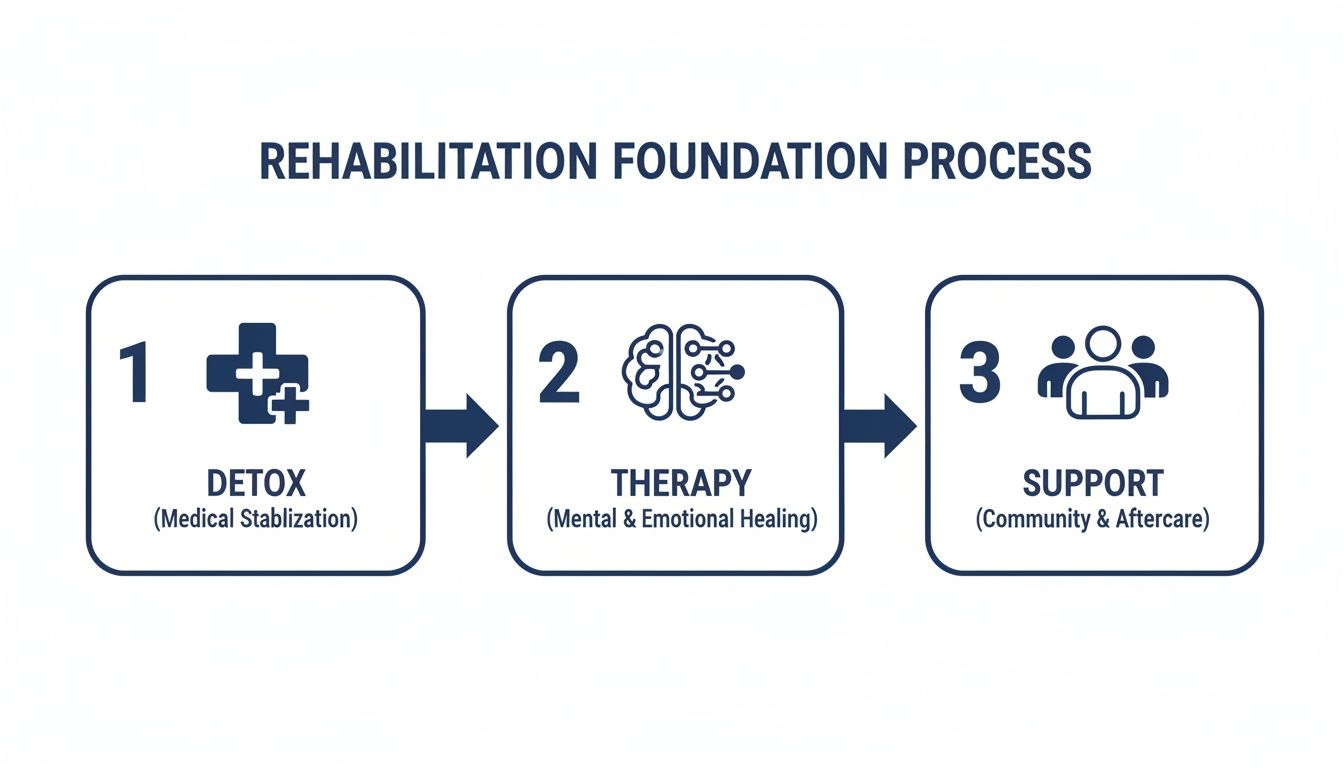
As you can see, detox is the gateway. It opens the door to effective therapy and the long-term support you need to heal. By getting through the physical challenges first, you're set up for success in exploring the psychological side of addiction. It’s a structured path that helps you build a lasting sobriety on solid ground.
Key Takeaways
- Medical detox is the essential first step of inpatient rehab, ensuring safety.
- 24/7 medical supervision is provided to manage withdrawal symptoms.
- Medications may be used to make the detox process more comfortable and prevent complications.
- Detox stabilizes the body, preparing you for the psychological work of therapy.
- Attempting to detox alone can be dangerous and is often unsuccessful.
The Core Therapies Driving Your Recovery
If medical detox is about stabilizing your body, therapy is where you start rebuilding your life. This is the heart of the recovery process—where you develop the insights, tools, and real-world coping skills needed for a future free from addiction. At a quality inpatient drug and alcohol rehab, the work you do in therapy is what powers your long-term success.

Think of it like learning to speak a new language: the language of recovery. At first, the concepts might feel strange, but with daily practice in a supportive place, they start to click. You learn how to understand what’s happening inside you and ask for what you need in healthy, constructive ways.
Rewiring Thought Patterns with Evidence-Based Therapies
The foundation of any effective rehab program is built on therapies that are scientifically proven to work. Two of the most important you’ll find are Cognitive Behavioral Therapy (CBT) and Dialectical Behavior Therapy (DBT). They’re not just talk; they’re about actively changing how you think and respond to life.
- Cognitive Behavioral Therapy (CBT): This is all about spotting the automatic, negative thoughts that lead to using. For instance, maybe your brain's default reaction to a bad day is, "I need a drink to deal with this." CBT gives you the tools to stop, challenge that thought, and replace it with a healthier action, like, "This day was tough. I'm going to call my sponsor instead."
- Dialectical Behavior Therapy (DBT): While it was first created for other conditions, DBT has become a game-changer for addiction treatment. It teaches you practical skills in four key areas: mindfulness, distress tolerance, emotion regulation, and interpersonal effectiveness. It’s about learning how to handle those overwhelming emotions without reaching for a substance.
These aren't about dwelling on blame or shame. They’re practical, skill-building approaches that put you back in the driver's seat of your own life.
The Power of Connection: Individual and Group Counseling
While proven methods like CBT and DBT provide the structure, it’s the human connection that truly brings recovery to life. Inpatient programs balance individual and group therapy, and each one plays a crucial role.
Individual therapy is your private, dedicated time with a licensed counselor. It's a safe space to dig into the root causes of your addiction, work through personal trauma, and map out your specific recovery goals without fear of judgment.
Group therapy, on the other hand, shatters the isolation that addiction thrives on. There is incredible power in sharing your story with others who just get it. It’s a profound reminder that you’re not alone and helps build the kind of community and accountability that are essential for staying sober.
Addiction thrives in isolation, but recovery blossoms in community. In group therapy, you learn from others, offer support, and practice new communication skills in a safe, structured setting. This shared journey builds a strong foundation for a sober support network.
Healing the Whole Person: Holistic Approaches
A solid recovery plan goes beyond just thoughts and behaviors; it nurtures your entire well-being. This is where holistic therapies come in, supporting the vital connection between your mind and body. These activities work alongside traditional therapy to lower stress, increase self-awareness, and help you feel whole again.
- Mindfulness and Meditation: Helps you learn to stay grounded in the present moment, observing your thoughts and feelings without getting carried away by them.
- Nutritional Counseling: Your body needs to heal, too. This helps you understand how the food you eat directly impacts your mood, energy, and cravings.
- Yoga or Recreational Activities: Re-establishes a positive relationship with your body and provides a healthy, natural way to manage stress.
This kind of comprehensive care is more important than ever. People from all walks of life are seeking help. For example, recent data on people leaving rehab shows that 17% were aged 25-29 and 19% were 50 or older. In 2023, 1 in 4 young adults needed substance use treatment. This shows just how broad the need is for programs that can be personalized for anyone. You can learn more about the demographics of rehab patients on IBISWorld.
Key Takeaways
- Evidence-Based Therapies Are the Core: Approaches like CBT and DBT are the bedrock of good treatment, giving you tools to change destructive patterns.
- Individual Therapy Provides Personal Focus: One-on-one sessions let you get to the unique, underlying reasons for your addiction.
- Group Therapy Builds Community: Sharing with peers breaks the cycle of isolation and creates a crucial support system.
- Holistic Methods Support Overall Wellness: Activities like mindfulness, yoga, and nutrition help heal the connection between mind and body.
- A Combined Approach Is Most Effective: The best inpatient programs integrate all these therapies to treat the whole person, not just the addiction.
Finding Your Path With Specialized Treatment
Recovery isn't a one-size-fits-all journey. Not even close. Just as every person's story with addiction is unique, the path to getting well has to be, too. That's why a modern inpatient drug and alcohol rehab program moves beyond a generic script and offers specialized treatment tracks—focused programs designed to handle the specific, real-life challenges that often go hand-in-hand with substance use.
Think of it as the difference between off-the-rack and custom-tailored. These specialized paths provide the precise support you need to tackle the root issues, not just the symptoms you see on the surface. You get care that genuinely understands your circumstances, which dramatically improves your chances of building a recovery that lasts.
Treating the Whole Person With Dual Diagnosis Care
For so many people, addiction is tangled up with a mental health condition like depression, anxiety, or PTSD. When you’re dealing with both at the same time, it’s called a dual diagnosis or co-occurring disorder. Trying to treat one without the other is like trying to fix a leaky pipe by just mopping the floor—you’re not solving the actual problem.
Imagine your anxiety is a constant, screaming alarm in your head, and alcohol is the only thing that seems to hit the mute button. If you only quit drinking, that alarm just gets louder. A dual diagnosis program is designed to disarm the alarm and fix the wiring at the same time. Therapists help you build real coping skills for your anxiety while you work on sobriety, ensuring one condition doesn't keep triggering the other. In fact, statistics show that roughly half of all people with a severe mental health disorder also have a substance use disorder, making this kind of integrated care absolutely essential.
Supporting Recovery With Medication-Assisted Treatment
Another crucial path is Medication-Assisted Treatment (MAT), a science-backed approach for treating addiction to opioids and alcohol. MAT isn’t just about medication; it combines FDA-approved medicines with counseling and behavioral therapies to create a comprehensive, whole-person strategy for healing.
Here’s a way to think about it: intense cravings and withdrawal symptoms are like a constant, deafening static that makes it impossible to think, focus, or feel. MAT medications help turn the volume down on that noise. This clears the way for you to actually engage in the real work of recovery—to listen, learn, and heal without being in a constant, exhausting battle with your own body. This isn’t about trading one drug for another; it's about using medicine as a strategic tool to stabilize your brain chemistry so you can build a solid foundation for a sober life.
Healing Together Through Couples Rehab
Addiction is rarely a solo act. It sends shockwaves through relationships, especially with a partner. Couples rehab is a unique program built for partners who are both struggling with substance use and want to find their way back to health, together. It creates a supportive space where both people can address their own addiction while actively working to repair and rebuild their relationship.
In this track, partners attend their own individual counseling, join group sessions, and participate in specialized therapy as a couple. This process helps them untangle codependent behaviors, learn to communicate again, and figure out how to be each other’s biggest supporters in sobriety. By rebuilding trust and creating new, healthy ways of being together, couples can forge a shared foundation for a future free from addiction.
This summary table can help you see which specialized treatment track might be the right fit for your situation.
Who Benefits From Specialized Rehab Programs
| Specialized Track | Ideal Candidate Profile | Primary Goal of Treatment |
|---|---|---|
| Dual Diagnosis | Individuals with both a substance use disorder and a mental health condition (e.g., depression, anxiety, PTSD). | To treat both the addiction and the mental health disorder at the same time for integrated healing. |
| Medication-Assisted Treatment (MAT) | Individuals recovering from opioid or alcohol addiction who struggle with severe cravings and withdrawal. | To reduce cravings and withdrawal symptoms, allowing the individual to focus on therapy and recovery. |
| Couples Rehab | Partners who both have a substance use disorder and are committed to recovering together. | To heal individual addictions while rebuilding the relationship on a foundation of sobriety and healthy communication. |
By offering these focused tracks, an inpatient program ensures your treatment plan isn't some standard blueprint. Instead, it’s a carefully drawn map designed specifically for your journey, and that personal touch is often the key to building a strong, resilient, and lasting recovery.
Key Takeaways
- One-size-fits-all treatment doesn't work; specialized tracks are essential.
- Dual diagnosis care treats addiction and mental health conditions simultaneously.
- Medication-Assisted Treatment (MAT) uses medication to reduce cravings and support therapy.
- Couples rehab provides a path for partners to heal from addiction together.
- Personalized care significantly improves the chances of a lasting recovery.
Your Journey to Recovery: Admissions, Insurance, and Life at Tru Dallas
Deciding to get help is a huge step, and frankly, it can be the hardest part. We get it. That’s why we’ve made our admissions process for inpatient drug and alcohol rehab as straightforward and human as possible. It all starts with a simple, confidential phone call. This isn't an interrogation; it's just a conversation where you can ask your questions and our team can start to understand what's going on, all with complete privacy and zero judgment.
After that initial chat, we'll set up a more in-depth assessment. This is where we get a clear picture of your history with substance use, your overall health, and any mental health concerns you might have. Think of it as creating a roadmap. We need to know where you are to help you get where you want to go, and this ensures our program is truly the right fit for you. The entire goal is to demystify the process and make you feel confident and ready to begin healing.
How Insurance Works for Rehab
"How will I pay for this?" It’s one of the first questions on everyone's mind, and a major source of stress. The great news is that most PPO insurance plans provide significant coverage for inpatient treatment. We take the burden of figuring it all out off your shoulders by handling the entire verification of benefits for you.
Here’s a quick look at how we make it simple:
- You Share Your Info: On that first call, you'll give us your insurance details.
- We Do the Legwork: Our admissions team gets on the phone directly with your insurance company to pin down the exact details of your coverage.
- We Give You Clear Answers: We'll walk you through your plan in plain English, explaining exactly what’s covered and what, if any, out-of-pocket costs you can expect.
This way, there's no guesswork or financial anxiety hanging over your head. You can focus on the one thing that truly matters: getting better. For a deeper dive, check out our guide on how insurance can cover drug rehab.
What Does a Typical Day Look Like?
Once you're here and settled in, you’ll find a sense of comfort in our daily routine. It’s structured on purpose—to help you build healthy habits and keep your mind focused on recovery. While no two days are exactly the same, this framework provides the stability needed for real growth.
Here's a glimpse into a day at Tru Dallas:
- Morning: We'll start with a good breakfast before heading into a group session or a mindfulness practice. It's all about setting a positive, intentional tone for the rest of the day.
- Midday: After lunch, your schedule will include individual therapy sessions and specialized groups focusing on things like CBT or DBT. This is the core clinical work.
- Afternoon: This part of the day is often for holistic wellness activities. You might find yourself in a yoga class, meeting with a nutritionist, or just having some quiet time for personal reflection.
- Evening: We'll wrap up with dinner and a final group meeting or a 12-step session. Afterward, you’ll have free time to read, journal, or just relax before winding down for the night.
This predictable rhythm helps replace the chaos of active addiction with a calm, supportive, and purposeful environment where you can truly heal.
Key Takeaways
- It Starts With a Call: The first step is a single, completely confidential phone call to our team.
- We Handle the Insurance: We verify your PPO benefits for you so you have clear, upfront answers.
- Structure Creates Stability: A predictable daily schedule of therapy and wellness activities is the foundation for a strong recovery.
- Time for Yourself is Built-In: Your days include personal time for rest, reflection, and journaling.
- Our Goal is Your Peace of Mind: Every step is designed to remove stress and uncertainty, allowing you to feel supported from the moment you reach out.
Building A Sober Life After Rehab
Finishing an inpatient drug and alcohol rehab program is a massive accomplishment, but it's really the starting line, not the finish line. Think of it as graduating from an intensive program where you've learned the core skills for a brand-new way of life. Now, the real work begins: applying those lessons out in the world, day by day. The focus has to shift from the bubble of intensive healing to creating a sustainable, real-world sobriety.
This is where a solid aftercare plan becomes your single most important tool. Before you leave our program, your care team sits down with you to map this out. It’s not a generic checklist; it's your personalized strategy for continuing care, making sure you have the support you need long after you walk out our doors.
Continuing Care and Building a Support Network
Your aftercare plan is your roadmap for what comes next, and following it is crucial for preventing relapse. These steps are all designed to ease you back into daily life while locking in the healthy habits you started building in treatment.
A strong plan will almost always include:
- Stepping Down to Outpatient Care: Many people transition to a Partial Hospitalization Program (PHP) or an Intensive Outpatient Program (IOP). This allows you to keep attending therapy while slowly reintegrating into your community and responsibilities.
- Finding Local Support Groups: We help you get plugged into local chapters of Alcoholics Anonymous (AA) or Narcotics Anonymous (NA). These groups offer priceless peer support from people who truly get what you’re going through.
- Ongoing Therapy and Counseling: Continuing with individual therapy sessions helps you work through challenges as they come up and keeps your new coping skills sharp.
The numbers really back this up. For example, 70% of alcohol rehab patients are still sober nine months after finishing treatment. Even better, 80% of all completers say their quality of life has improved. This shows how a strong start, followed by consistent aftercare, is the formula for lasting success.
The Role of Sober Living Environments
For some people, going straight home can be a huge risk, especially if that environment is unstable or full of triggers. This is where a sober living home can be an incredibly powerful next step.
These are structured, completely substance-free homes where you live with others who are just as committed to recovery as you are. They offer a built-in layer of accountability and a supportive community while you get back on your feet. You can learn more about how sober living differs from rehab in our guide.
Recovery is not a sprint; it's a marathon. Aftercare is the ongoing training, nutrition, and support crew that helps you keep running your race, one day at a time.
Ultimately, building a sober life means creating a whole new lifestyle—one supported by healthy routines, strong relationships, and a network you can lean on. Your time in inpatient treatment lays the foundation; your aftercare plan is the blueprint you'll use to keep building.
Key Takeaways
- Aftercare is Non-Negotiable: Your recovery journey doesn’t stop when you leave rehab. A solid aftercare plan is what makes sobriety stick for the long haul.
- A Gradual Transition is Key: Stepping down to outpatient programs like IOP or PHP provides a supported, gradual return to daily life.
- Peer Support is a Game-Changer: Groups like AA and NA provide a community of people who understand the challenges and will cheer for your wins.
- Sober Living Creates a Safe Harbor: For those who need it, sober living homes offer a safe, trigger-free space to practice new life skills.
- Recovery is a Lifelong Commitment: The tools and support systems you put in place after rehab are what will carry you through the years.
Your Questions, Answered
Making the decision to go to rehab is a huge step, and it's completely normal to have a lot of practical questions. What will it be like? How long will I be gone? What about my family and my job?
Getting clear, straightforward answers to these questions can help ease your mind and make the path forward feel less overwhelming. Here are some of the most common things people ask before starting inpatient drug and alcohol rehab.
How Long Does Inpatient Rehab Actually Last?
There’s no magic number here—the right length of stay is all about your individual needs. While most programs talk in terms of 30, 60, or 90-day stays, the best timeline for you will depend on a few key things. We'll look at the severity of the substance use, whether you're also dealing with mental health conditions, and how you're progressing through the program.
When you first arrive, our clinical team sits down with you to do a full assessment. Based on that, we'll recommend a duration that gives you the best shot at building a rock-solid foundation for recovery. The goal is to give you enough time to heal, dig into the root causes of addiction in therapy, and really master the coping skills you'll need when you return home.
Can I Talk to My Family While I'm in Treatment?
Yes, absolutely. We don't just allow family contact; we see it as a crucial part of your healing journey.
Most facilities, including ours, have a short "blackout" period for the first few days. This isn't a punishment—it’s a chance for you to get settled, decompress, and focus completely on yourself without outside distractions. After that, we begin integrating family contact in a structured, supportive way.
You can expect things like:
- Scheduled Phone Calls: You'll have set times to call home and catch up with your loved ones.
- Family Therapy Sessions: These are incredibly important. A therapist will guide sessions with you and your family to help mend relationships, open up lines of communication, and teach them how they can best support you when you get home.
Rebuilding those bonds in a healthy way is one of the most powerful things you can do to prepare for a successful, sober life.
What Should I Pack for Rehab?
Keep it simple. Your focus should be on comfort and recovery, not a fashion show. Pack a week or two's worth of comfortable, season-appropriate clothes you can relax in. Don't forget something for light activities like yoga or walks.
For toiletries, bring your own essentials, but double-check that everything is alcohol-free. You'd be surprised how many mouthwashes and other products contain alcohol. It’s also a great idea to bring a journal, a few good books, and a list of important phone numbers. We’ll give you a detailed list of what to bring (and what to leave behind), but the main idea is to ditch distractions like laptops and tablets.
Will I Lose My Job if I Go to Rehab?
This is a huge worry for so many people, but in many cases, your job can be protected. The Family and Medical Leave Act (FMLA) is a federal law that allows eligible employees to take up to 12 weeks of unpaid, job-protected leave per year for a serious medical condition—and substance use disorder qualifies.
We strongly suggest having a confidential conversation with your company's HR department. They can explain your specific rights and help you navigate the process of taking medical leave.
Key Takeaways
- Your Timeline is Personal: A stay can be 30, 60, or 90 days, but the final duration is tailored to your clinical progress and recovery needs.
- Family is Part of the Process: After you get settled, you’ll have scheduled calls and family therapy to help heal important relationships.
- Pack for Comfort: Bring casual clothes, alcohol-free hygiene products, and a journal. Leave major electronics and other distractions at home.
- Your Job May Be Protected: The FMLA often protects your employment while you seek treatment. Talk to HR to confirm your eligibility.
- Your Privacy is Protected: Your choice to enter rehab is confidential under HIPAA laws, giving you a safe and private space to focus on getting well.
Frequently Asked Questions
What is the main difference between inpatient and outpatient rehab?
The biggest difference comes down to where you live. With inpatient rehab, you reside at the treatment center, fully immersed in a therapeutic community with 24/7 support. Outpatient rehab is more flexible; you live at home and travel to the facility for scheduled therapy sessions each week.
Who is the ideal candidate for inpatient drug and alcohol rehab?
Inpatient care is often the best fit for someone with a severe substance use disorder or a co-occurring mental health condition (also known as a dual diagnosis). It's also highly recommended for anyone who has tried less intensive programs and relapsed, or for those whose home environment is unstable or full of triggers.
Is my treatment confidential?
Absolutely. Your privacy is a top priority. Reputable inpatient rehab centers are bound by strict federal laws like HIPAA, which means every aspect of your treatment is kept completely confidential. This allows you to focus entirely on your recovery in a secure and trusted space.
What is the difference between CBT and DBT?
Think of it this way: Cognitive Behavioral Therapy (CBT) helps you identify and change the specific negative thought cycles that trigger substance use. Dialectical Behavior Therapy (DBT) is more about building a new set of life skills—it teaches you how to handle intense emotions, get through a crisis, and improve your relationships without turning to drugs or alcohol.
What exactly is an aftercare plan?
An aftercare plan is a personalized guide you create with your therapist before you leave inpatient rehab. It lays out the specific actions, resources, and support systems—like your therapy appointments, support group meetings, and sober living plans—that will help you maintain sobriety after you leave.