
A person in Dallas might take an opioid after surgery, from a friend, or from a pill bought on the street and expect one simple effect. Less pain. Maybe a little relaxation. Maybe sleepiness. The problem is that the short term effects of opioids can shift from “this feels normal” to “this is a medical emergency” faster than many people realize.
That confusion is common in first-time and occasional users. Drowsiness can seem harmless. Nodding off can look like deep sleep. Slow breathing can be mistaken for rest. But opioids don't just change mood and pain. They can suppress breathing, cloud thinking, slow movement, and create a narrow window where overdose becomes possible.
Families across Dallas, Fort Worth, Arlington, Irving, Plano, Garland, and nearby communities often face this exact uncertainty. They're trying to decide whether someone should “sleep it off” or get help right now. That decision matters.
Table of Contents
- Understanding the Immediate Risks of Opioid Use
- Common Physical and Psychological Effects
- How Quickly Opioid Effects Appear and How Long They Last
- The Most Dangerous Risk Overdose Signs and Immediate First Aid
- From Short-Term Use to Early Withdrawal Symptoms
- Why Medical Detox Is the Safest Response in Dallas
- Your Path to Recovery Starts Here Contact Tru Dallas Detox
Understanding the Immediate Risks of Opioid Use
A person may swallow a pill and feel pain relief, calm, and heaviness within a short time. That first wave can feel manageable. It can even feel helpful. What makes opioids dangerous is that the same substance that causes relaxation can also begin slowing breathing and impairing judgment before the person recognizes that anything is wrong.
For many readers, the hardest part is knowing where normal side effects end and a crisis begins. Someone may seem sleepy but still answer questions. Then minutes later, they're hard to wake, speaking slowly, or breathing with long pauses. That's one reason the short term effects of opioids deserve immediate attention, especially for new or intermittent users who don't yet know how their body will respond.
National overdose data shows how serious this risk has become. The CDC notes that nearly 75% of the 91,799 drug overdose deaths in 2020 involved an opioid, and overdose deaths increased by nearly 30% from 2019 to 2020 according to this opioid mortality summary. Those numbers describe a national crisis, but the fear families feel is local and immediate when someone in North Texas is slumped over on a couch, in a parked car, or behind a locked bathroom door.
Why families often hesitate
People hesitate for understandable reasons. They hope the person will wake up. They worry about embarrassment. They may not know whether a prescribed opioid can be just as dangerous in the short term as an illicit one when mixed with alcohol or another sedative.
Practical rule: If a person is unusually hard to wake, breathing slowly, or making choking or gurgling sounds, the safest move is to treat it as an emergency.
Opioid misuse also affects children and family stability in ways many households don't expect. Families looking for legal and practical context around the impact of substance abuse on children may find that resource helpful when a parent's opioid use has started changing day-to-day safety at home.
Why clear action matters in Dallas
In Dallas and the broader DFW area, help needs to be practical, fast, and close to home. People don't need vague reassurance in the middle of a crisis. They need to know what signs matter, what to do first, and how to move from emergency response to detox and treatment without delay.
Common Physical and Psychological Effects
A short-term opioid effect can look deceptively ordinary at first. Someone may seem calm, sleepy, quieter than usual, or detached from what is happening around them. For a new or occasional user, that can create a dangerous false sense of safety, as if the person is only resting when their brain and lungs may already be slowing down.
That is the trap.
The same drug effect that feels like pain relief or relaxation can also blunt judgment, delay reactions, and make it harder for the person to notice they are getting into trouble. A person may not realize they are too impaired to drive, stand steadily, watch a child, or ask for help. Families often miss the shift too, because the early picture can resemble simple fatigue.
What a person may notice first
Common short-term effects include pain relief, drowsiness, a heavy or relaxed feeling, mental fog, and slower thinking. Some people feel warm, calm, and emotionally distant. Others feel sick to their stomach, itchy, dizzy, or strangely flat rather than euphoric.
Small pupils are also common. So is constipation, even after brief use. These may sound less urgent than breathing changes, but they still show that opioids are slowing normal body functions.
A helpful way to understand this is to picture the body as an engine being idled down. The heart, lungs, reflexes, and attention do not all slow at the same speed. Someone may still be sitting upright or speaking a little while breathing is becoming less effective.
What is happening under the surface
Opioids attach to receptors in the brain and nervous system that reduce pain signals, but those same pathways also affect alertness and breathing. As the dose rises, or when opioids are mixed with alcohol, sleep medications, or anti-anxiety drugs, the margin for error gets much smaller.
That is why "sleepy" can be a misleading word.
A person who seems merely sedated may already have worsening confusion, poor coordination, and slowed breathing. If oxygen levels start to fall, the brain does not work normally. Reaction time drops. Memory can become patchy. The person may stop responding in a clear, reliable way.
If someone is hard to wake, cannot stay awake, or seems confused about where they are, treat that as a medical safety problem, not simple drowsiness.
Another short-term effect that surprises families is that opioids can sometimes increase pain sensitivity instead of improving pain control. A clinical overview of opioids and hyperalgesia describes opioid-induced hyperalgesia, a state in which the nervous system becomes more sensitive to pain. In real life, this can push a person to take more of the drug because they believe the pain is getting worse on its own.
For intermittent users, that pattern is especially risky. They may not have much tolerance, so the step from "I need a little more relief" to "my breathing is slowing" can be much shorter than they expect.
Opioid Effects Expected Side Effects vs Overdose Warning Signs
| Symptom Category | Expected Short-Term Effect | Potential Overdose Warning Sign |
|---|---|---|
| Alertness | Sleepy, slowed down, less talkative | Won't wake up, barely responds, loses consciousness |
| Breathing | Mildly slowed breathing | Very slow, shallow, irregular, or stopped breathing |
| Thinking | Foggy, confused, poor focus | Severe confusion, inability to answer simple questions |
| Eyes | Small pupils | Pinpoint pupils with unresponsiveness |
| Body control | Slowed movement, poor coordination | Limp body, unable to sit up, repeated collapse |
| Color and sound | Quiet, resting | Blue or gray lips or nails, gurgling or rattling sounds |
| Pain response | Temporary pain relief | Worsening pain that leads to unsafe dose escalation |
For families in Dallas, the practical question is not whether every symptom means overdose. The practical question is whether the person can breathe normally, stay awake, answer clearly, and protect their airway. If those basic functions are slipping, the safest response is immediate emergency help, followed by medically supervised detox in the Dallas-Fort Worth area once the person is stabilized. For someone who is new to opioids, uses them off and on, or mixed them with another sedating substance, waiting to see what happens can close the window to act.
How Quickly Opioid Effects Appear and How Long They Last
A person can take an opioid, feel only mildly relaxed at first, and still move into dangerous impairment faster than friends or family expect. That timing is one reason opioid use is so risky for someone who is new to it, uses it only once in a while, or takes a pill without knowing exactly what is in it.
Why timing changes the risk
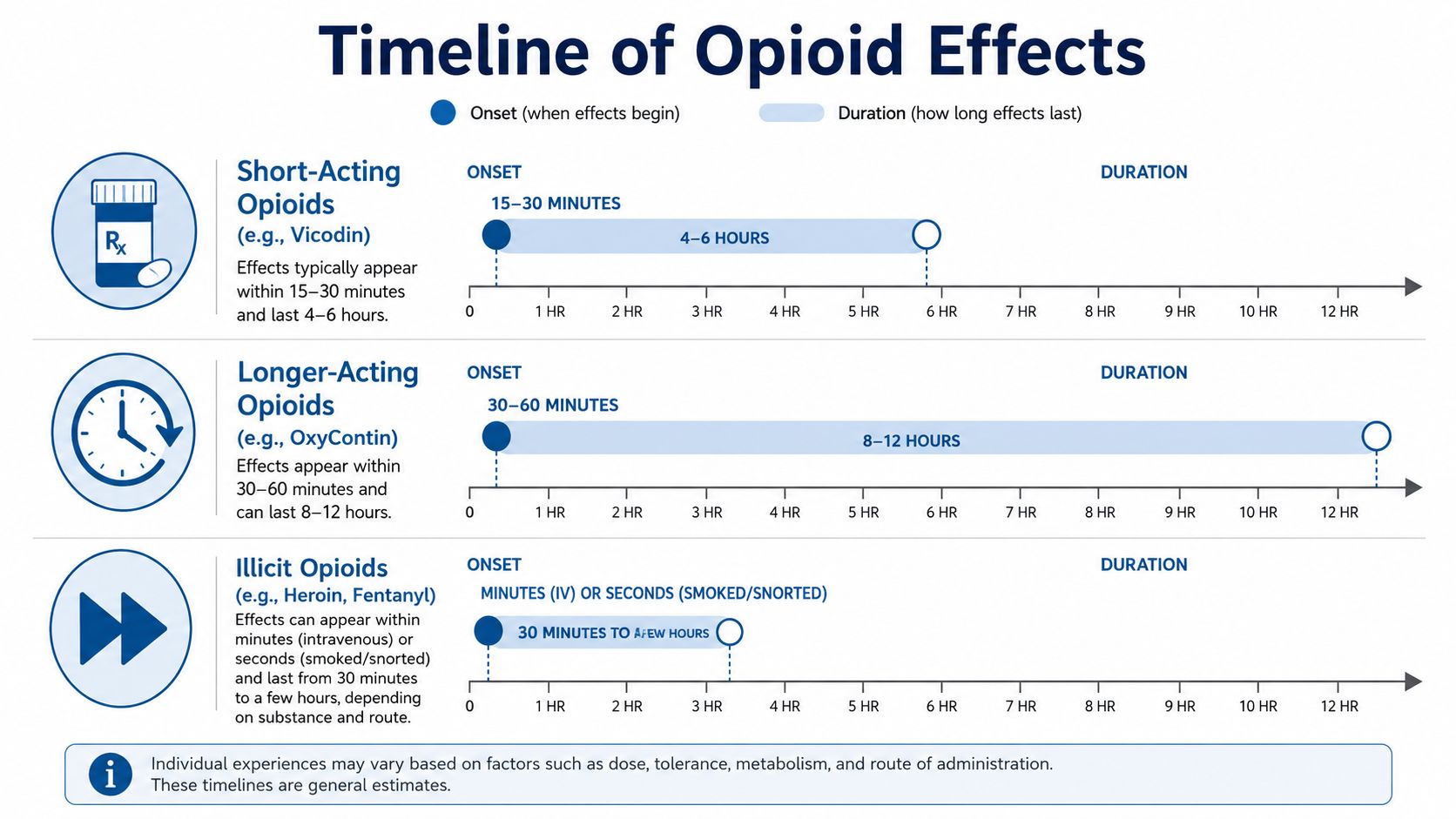
Opioid effects can begin quickly. The exact timing depends on how the drug is taken, the person's body, whether it was mixed with alcohol or another sedating substance, and whether fentanyl or another unusually potent opioid is involved. Some people notice drowsiness or a heavy, slowed feeling within minutes. Others seem alert at first, then fade over the next stretch of time.
The body often gives less warning than people expect. Opioids work like a dimmer switch on the brain's drive to stay awake and breathe. The change may start subtly, with quieter speech, slower reactions, or nodding off. Then the person becomes harder to wake, less aware of what is happening, and less able to protect their airway.
That fast shift is easy to miss in real life. Someone may take a pill before heading out in Deep Ellum, while resting at home in Oak Cliff, or after work in Irving and assume they have time to see how they feel. In many cases, that “wait and see” period is exactly when breathing and alertness begin to drop.
Why the danger can last longer than the person expects
The part people may experience as pain relief, calm, or euphoria does not always end at the same time as the dangerous effects. A person may say they are “coming down” or “fine now” because the desired feeling is fading. Sedation, poor judgment, and slowed breathing can still be present.
A simple comparison helps. The pleasant effect may feel like a light turning down. The breathing risk can act more like a pilot light that is still on in the background. If the person then drinks alcohol, takes a sleep medication, or uses another pill, that remaining effect can flare into an emergency.
This is one reason repeat dosing is so dangerous. Someone may think the first dose was weak, delayed, or already wearing off, then take more before the full impact on breathing has played out. Families who want to learn the warning pattern in more detail can review these signs of a fentanyl overdose, especially because fentanyl contamination can make the timeline much less predictable.
For Dallas families, the practical takeaway is simple. If a close call happened once, the next episode could tighten the timeline even more. Medically supervised detox in the Dallas-Fort Worth area is not only a long-range treatment decision. After acute opioid effects or a near overdose, it is often the safest immediate next step once emergency stabilization is complete.
The Most Dangerous Risk Overdose Signs and Immediate First Aid
The most dangerous short term effect of opioids is acute respiratory depression. In plain language, that means breathing slows so much that the body and brain don't get enough oxygen.
According to this federal summary on non-fatal opioid overdose and hypoxia, when breathing slows enough to cause hypoxia, short-term neurologic effects can include dizziness, confusion, impaired reaction time, and short-term memory loss, with some cases progressing to coma or permanent brain injury if oxygen deprivation persists.
What overdose can look like in real life
Opioid overdose doesn't always look dramatic. Sometimes it looks like very deep sleep. Sometimes the person is sitting upright but barely breathing. Sometimes there's a choking, snoring, or rattling sound that family members mistake for ordinary sleep.
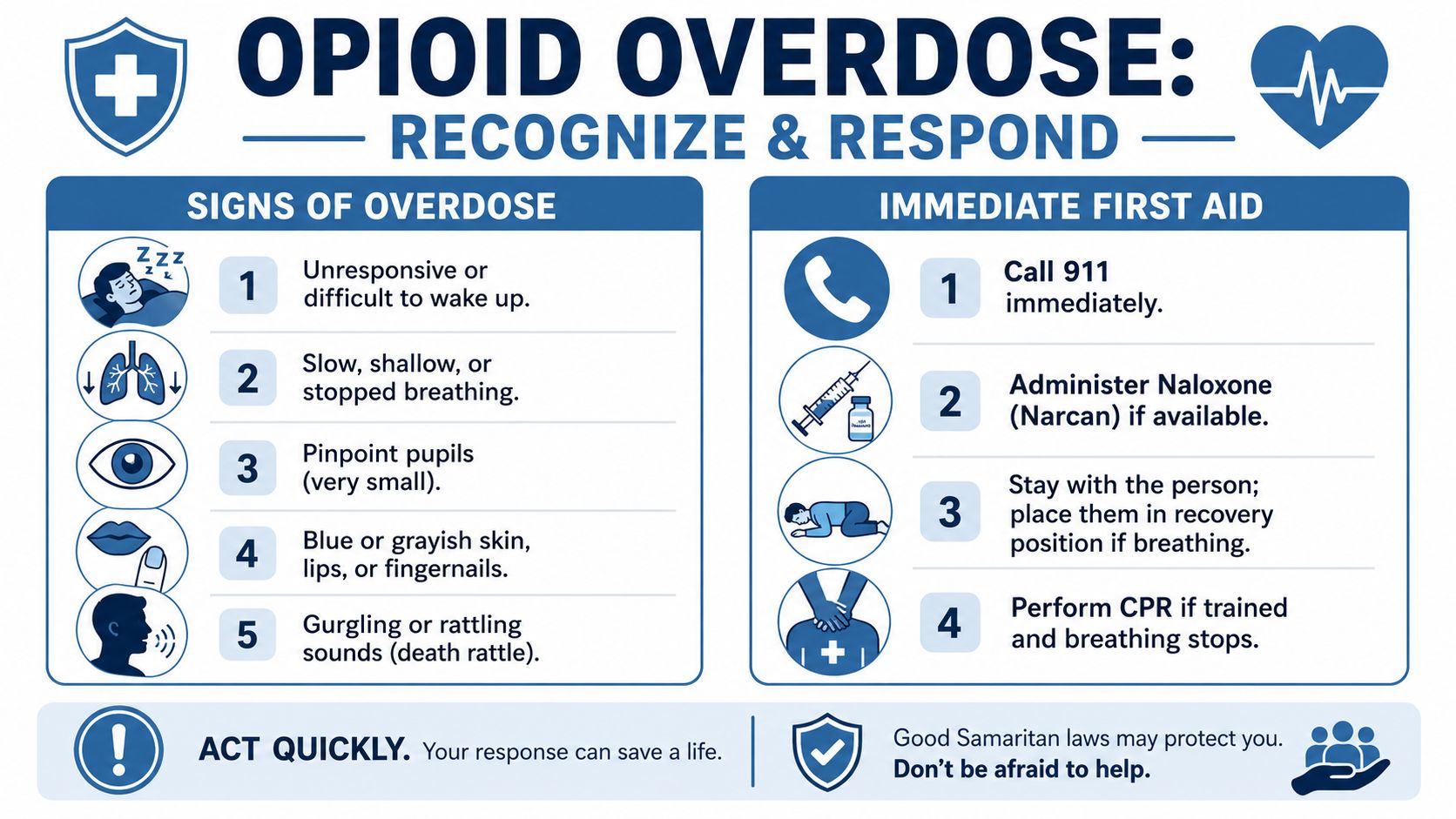
Common warning signs include:
- Unresponsiveness: The person won't wake up when name is called or shoulder is rubbed firmly.
- Breathing changes: Breaths are very slow, shallow, uneven, or absent.
- Pinpoint pupils: The centers of the eyes look extremely small.
- Color changes: Lips, fingertips, or skin may appear blue or gray.
- Airway sounds: Gurgling or rattling can mean the airway isn't being protected.
People who are worried about synthetic opioids can also review these signs of fentanyl overdose for a closer look at what a life-threatening event may look like.
What to do right away in Dallas
The safest response is fast and simple.
- Call 911 immediately. If the person isn't waking up or breathing normally, emergency help should be activated at once.
- Give naloxone if it's available. Naloxone can reverse opioid effects long enough for emergency responders to take over.
- Try to wake the person. Call their name, rub the center of the chest firmly, and look for any response.
- Support breathing. If trained, provide rescue breathing or CPR if breathing stops.
- Place in recovery position if breathing continues. Roll the person onto their side to reduce the risk of choking.
- Stay with them. Naloxone can wear off. The overdose can return.
The biggest mistake families make is waiting for “one more minute” to see if the person wakes up on their own.
For Dallas-area households, the decision point should be low. If there's doubt, call. A false alarm is safer than delayed oxygen loss.
From Short-Term Use to Early Withdrawal Symptoms
The same drug that can cause sedation and overdose risk in the short term can also start creating dependence faster than many people expect. This catches people off guard, especially those who believe addiction only develops after long-term heavy use.
Why the body starts depending on opioids so quickly
According to the American Psychiatric Association, regular opioid use for only weeks can cause the brain and body to adapt, so stopping suddenly may trigger withdrawal symptoms such as whole-body pain, chills, cramps, diarrhea, nausea, vomiting, insomnia, and intense cravings, as outlined in this APA overview of opioid use disorder.
That means a person in Dallas who started with pain pills after an injury or surgery may not recognize what's happening when they feel sick without them. They may think they have the flu, anxiety, or a pain flare. In reality, the body may already be reacting to the absence of opioids.
What early withdrawal can feel like
Withdrawal is often described as miserable, but the more important point is that it's predictable physiology, not weakness or lack of willpower. Common early symptoms include:
- Body distress: Muscle aches, bone pain, chills, sweating, and stomach cramps.
- Digestive symptoms: Nausea, vomiting, and diarrhea.
- Sleep disruption: Restlessness, insomnia, and inability to get comfortable.
- Psychological strain: Anxiety, agitation, and strong cravings to use again.
The cycle becomes easy to understand. The person uses to feel relief. The drug wears off. Withdrawal begins. They use again to stop the discomfort. Families often misread this as choosing drugs over responsibility, when the body may already be driving urgent, repetitive use.
Readers who want a closer look at the symptom pattern can review what the symptoms of opioid withdrawal can look like.
Withdrawal can start the same day the drug leaves the system enough for the body to notice. That's one reason people often relapse before they ever reach treatment.
Why Medical Detox Is the Safest Response in Dallas
When opioid use has already led to overdose risk, repeated use, or early withdrawal, home detox can become another dangerous turning point. People often try to stop alone because they're ashamed, frightened, or convinced they should be able to “tough it out.” That approach usually adds risk, not safety.
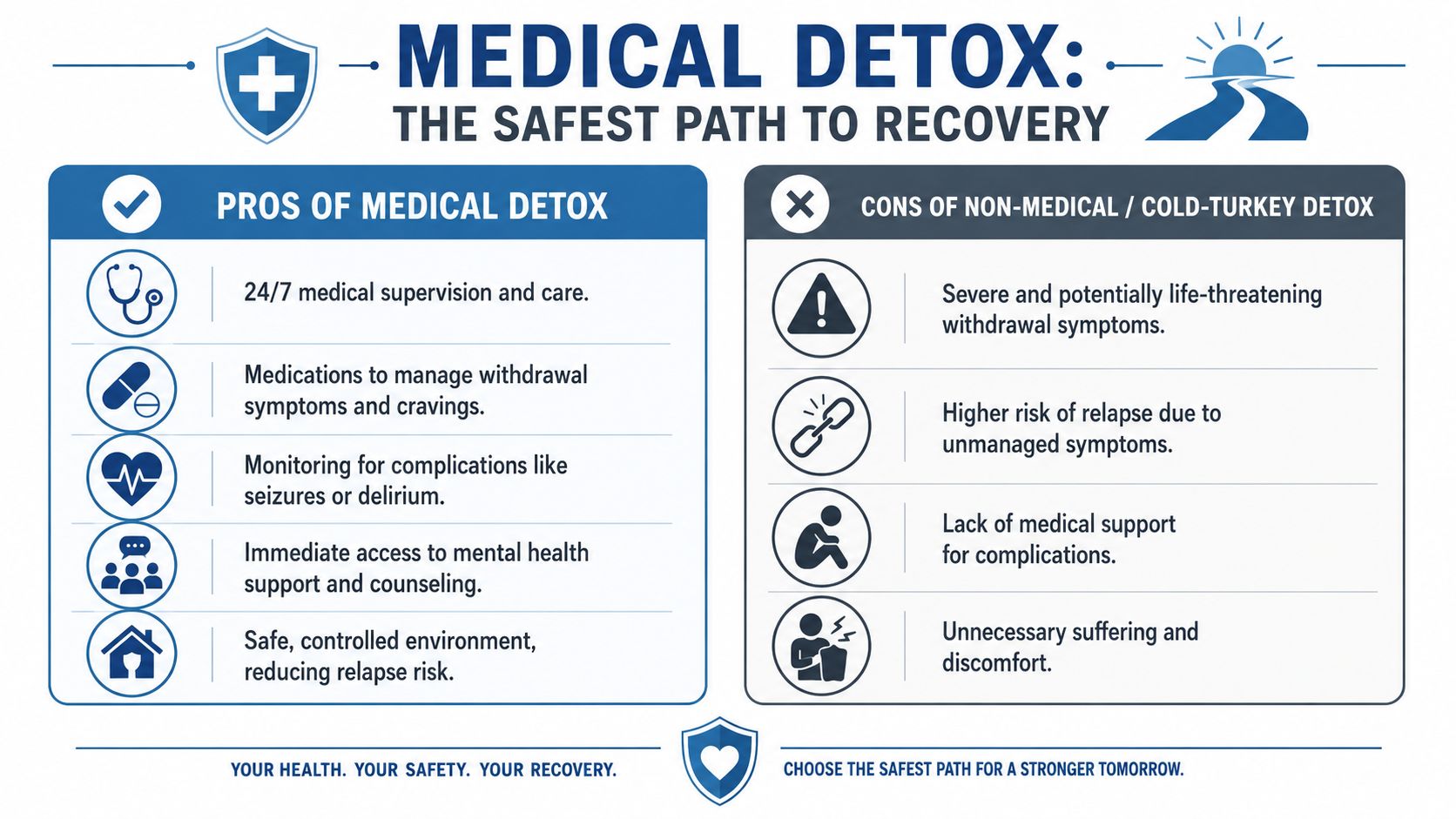
Why quitting alone often turns into another emergency
At home, symptoms can escalate without anyone trained to judge whether the problem is ordinary withdrawal, dehydration, severe distress, or a reason to go to the hospital. The person may also use again just to stop the pain, nausea, panic, or cravings.
Non-medical detox creates several problems:
- No monitoring: Breathing changes, confusion, dehydration, or other complications may be missed.
- Higher relapse risk: A person in severe discomfort is more likely to return to opioid use quickly.
- Loss of tolerance: After even a short period without opioids, returning to a previous amount can sharply increase overdose risk.
- No structured next step: Detox without follow-up often leaves the person back in the same environment that fueled use.
What medical detox changes in the first days
A Dallas detox center can provide observation, symptom management, and a safer transition into ongoing care. Medical teams may use approved medications to ease withdrawal and reduce cravings. Staff can also watch for co-occurring depression, anxiety, or other mental health conditions that make relapse more likely.
For people in the DFW area looking for details on the process, medical detox generally means 24/7 clinical supervision, medication support when appropriate, and a plan for what comes after the first stabilization phase.
One option in the area is Tru Dallas Detox & Recovery Center, which provides medically supervised detox, dual diagnosis support, and continuing treatment planning from its Euless facility serving Dallas-Fort Worth.
The first goal of detox isn't solving everything at once. It's getting the person medically stable, safer, and able to make the next good decision.
For opioid use, that first step matters because the immediate crisis often isn't only intoxication. It's the swing between intoxication, withdrawal, craving, and relapse.
Your Path to Recovery Starts Here Contact Tru Dallas Detox
A lot of opioid emergencies start in ordinary moments. Someone seems extra sleepy on the couch. A family member says they are "fine" and wants to sleep it off. An hour later, breathing is slower, the room feels tense, and no one is sure whether to wait, call 911, or find help now.
That kind of uncertainty is common, especially with new or intermittent opioid use. What looks manageable can shift quickly into overdose risk. In that window, the goal is not to solve every part of addiction at once. The immediate job is to get the person medically stable and into a safer setting.
What reaching out can look like
The first call can be simple and confidential. A person, partner, parent, or friend can explain what is happening right now and get clear guidance on whether medical detox is the next step, what admission may involve, and how insurance may apply. Households in Dallas, Fort Worth, Grapevine, Euless, Bedford, Arlington, and nearby communities often need those answers fast.
A useful admissions conversation often includes:
- What is happening right now: Excessive sleepiness, slowed breathing, vomiting, confusion, recent naloxone use, or early withdrawal symptoms.
- What was taken: Which opioid was used, how much is known, when it was last used, and whether alcohol, benzodiazepines, or other substances may be involved.
- Mental health concerns: Anxiety, depression, trauma symptoms, panic, or hopelessness that may affect safety in the first few days.
- Coverage and logistics: Whether PPO insurance may help cover detox, how quickly an assessment can happen, and what to bring.
Why local support matters in DFW
During an opioid crisis, distance creates delay. Local treatment can make it easier for families to act while the need is clear, instead of trying to arrange long travel during intoxication, withdrawal, or panic. It also helps loved ones stay involved in practical ways, such as confirming history, bringing medications, and supporting the transition into care.
Care also needs to fit the person in front of you. Opioid use does not affect everyone the same way, and early treatment planning should reflect that. Families who want a clearer picture of individualized treatment can review this overview of customized addiction recovery.
The need for immediate, local help is clear for people looking for a “Dallas detox center,” “addiction treatment in Dallas,” or “opioid detox near Dallas.” The central question in a crisis is whether help can start now, before another dose, another withdrawal cycle, or another overdose scare. It can.
A first step may be one phone call and an honest description of what happened today.
If opioid use has led to unsafe drowsiness, breathing changes, repeated withdrawal, or fear that an overdose could happen soon, Tru Dallas Detox & Recovery Center offers a direct next step for people in the Dallas-Fort Worth area. A confidential call can help determine whether medical detox is needed now, explain treatment options, and help with PPO insurance verification.
