
A person in Dallas often starts searching for the stages of recovery at a hard moment. A spouse has found pills again. A parent has noticed drinking that no longer looks social. Someone may be sitting in a parked car outside work in Uptown, Frisco, Arlington, or Fort Worth, wondering whether this is denial, withdrawal, relapse, or the beginning of real change.
What makes this moment so frightening is the uncertainty. Families want to know what happens next. Individuals want to know whether recovery is possible, or whether every setback means failure.
Recovery becomes easier to understand when it's seen as a process with recognizable stages, not as one dramatic turning point. That shift matters. It helps families stop reacting to every bad day as proof that nothing is working, and it helps patients understand why different kinds of support are needed at different times.
In addiction treatment in Dallas, this is one of the most important clinical realities. Someone who doesn't yet believe there's a problem needs a different approach than someone who's in withdrawal. Someone leaving detox needs a different plan than someone trying to protect sobriety months later while also managing depression, anxiety, trauma, or bipolar symptoms.
Recovery usually looks less like a straight line and more like movement through phases, with periods of momentum, resistance, progress, and repair.
That's why a stage-based view is useful. It doesn't make the journey simple, but it makes it more navigable. It gives families language for what they're seeing and gives treatment teams a framework for matching care to the moment.
Table of Contents
- Understanding the Framework of Recovery Stages
- A Detailed Walkthrough of Each Recovery Stage
- Dual Diagnosis The Intersection of Addiction and Mental Health
- Navigating Aftercare and Long-Term Maintenance in DFW
- How Families Can Support a Loved One Through the Stages
- Conclusion Your Next Step Towards Recovery in Dallas
Understanding the Framework of Recovery Stages
Why the stages model matters
The modern idea of the stages of recovery comes from the Transtheoretical Model, a behavioral framework developed in the 1970s that describes five core stages of change: precontemplation, contemplation, preparation, action, and maintenance. Recovery professionals adapted that model to substance use because it fits what families and clinicians see every day. People often move toward change gradually, and many need repeated attempts before recovery becomes stable. One recovery resource also notes that maintenance can extend over a 9+ year horizon for some people, which reinforces that recovery is a long-term process rather than a single event (Recovery Answers on stages of recovery).
That matters in a Dallas detox center or rehab setting because treatment planning has to match the person's current stage. A person in denial usually won't respond well to pressure-heavy lectures. A person in acute withdrawal needs medical safety first. A person who has stopped using but lost daily structure may need continued therapy and accountability more than crisis care.
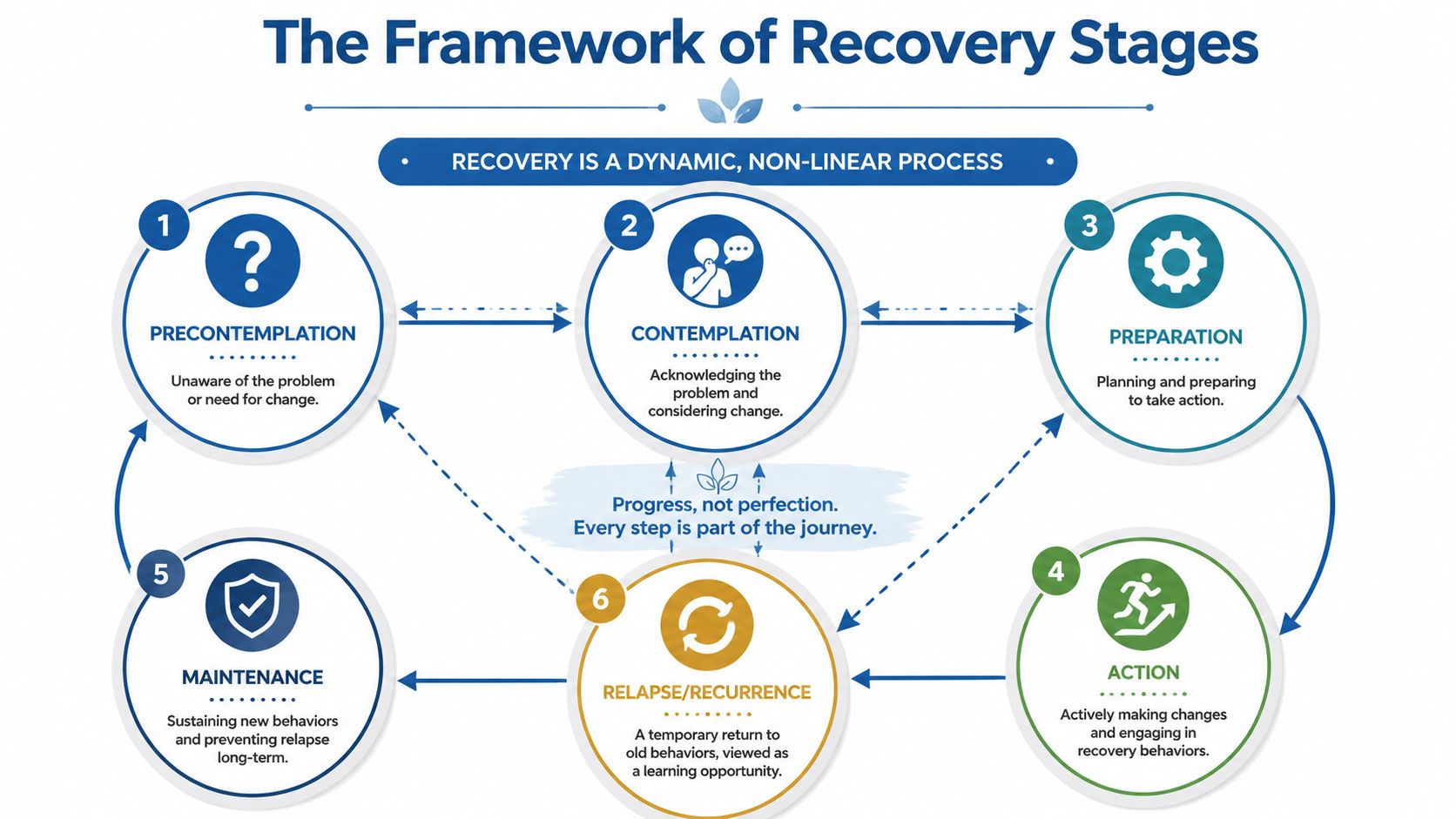
A practical comparison helps. Building recovery is closer to building a house than flipping a switch. First, there has to be recognition that the current structure isn't safe. Then there's planning. Then active construction. Then long-term upkeep. Skipping steps usually creates instability later.
Why progress often loops instead of climbs
Families often expect recovery to move in a clean upward line. In practice, movement between stages is often uneven. A person may admit there's a problem, then pull back. They may start treatment with conviction, then question it after the first painful week. They may do well after rehab, then struggle when work stress, isolation, or untreated anxiety returns.
That doesn't mean the process is broken. It means the model is realistic.
A stage-based framework helps answer practical questions such as:
- Why did motivation disappear after agreeing to treatment? Early insight doesn't always mean readiness for sustained action.
- Why does detox help but not solve everything? Physical stabilization is only one phase of a larger process.
- Why can someone look better and still be at risk? Improved appearance and mood don't always mean relapse prevention skills are strong.
- Why do families feel confused by mixed signals? Different stages produce different behavior, and those shifts can happen quickly.
Practical rule: The right intervention depends on the stage. Support that works in one phase can fail badly in another.
This framework gives people a map. It also removes a lot of shame. Instead of viewing ambivalence, relapse risk, or slow progress as proof that someone can't recover, the stages model treats them as expected clinical realities that need the right response.
A Detailed Walkthrough of Each Recovery Stage
At 2 a.m., a spouse is searching for help after another frightening night. By breakfast, the person using says everything is under control and refuses treatment. By evening, they may ask for help again. Families across Dallas-Fort Worth live this cycle every day.
The stages of recovery help explain why these sharp shifts happen and what kind of response fits each phase. In practice, the stage matters because the right clinical move for a person in denial is different from the right move for a person preparing for detox, and both are different again for someone trying to stay sober after treatment. That becomes even more important when depression, trauma, anxiety, bipolar symptoms, or family strain are part of the picture.
Precontemplation
In precontemplation, the person does not yet accept substance use as the central problem. They may blame work pressure, chronic pain, grief, insomnia, conflict at home, or the people confronting them. In DFW, I often see this stage complicated by high-functioning appearances. Someone may still show up to work, keep social plans, or handle some responsibilities, which makes the problem easier to minimize and harder for family members to address clearly.
The clinical task is increasing insight without feeding the fight.
Helpful responses in this stage include:
- Specific observations: Name missed shifts, unsafe driving, blackouts, isolation, hidden drinking, pill counts that do not match, or repeated emergencies.
- Clear boundaries: Stop covering financial fallout, lying to employers, making excuses to relatives, or rescuing the person from the same preventable crisis.
- Steady tone: Shame and panic usually trigger more defensiveness. Calm, direct language works better.
Families often ask whether love, logic, or consequences will finally get through. Sometimes they do. Sometimes they do not, at least not quickly. The trade-off is real. Press too hard and the person shuts down. Stay too passive and the pattern keeps worsening.
Contemplation
In contemplation, the person begins to recognize the damage but still feels divided about change. They may say they need help, then immediately argue against every option. That ambivalence is common. It is also exhausting for everyone around them.
This stage often includes grief. The person is not only facing the possibility of giving up alcohol or drugs. They are also facing fear about withdrawal, shame about what has happened, and anxiety about how life will work without the substance they have relied on.
Clinical work here focuses on turning vague concern into a decision. That usually means:
- Connecting the dots: Help the person see the link between substance use and panic, depression, legal problems, conflict at home, work impairment, or medical decline.
- Reducing treatment fear: Explain what detox, therapy, medications, and daily structure look like.
- Addressing timing directly: Waiting for the perfect week, the perfect mood, or the perfect level of motivation often delays care until the situation gets worse.
A person with untreated mental health symptoms may look indecisive here when they are overwhelmed. That distinction matters. Pressure alone rarely fixes overwhelm.
Preparation
In preparation, the decision has been made, but the details can still derail it. Many admissions are lost at this stage. Not because the person changed their mind completely, but because practical barriers pile up fast.
In Dallas-Fort Worth, those barriers are often concrete. Who will cover work. Who will pick up the kids. What happens to the phone. How will transportation work. What if withdrawal starts before admission. What if insurance says no. Even motivated people can stall here.
The goal is reducing friction and shortening the gap between yes and arrival.
Common tasks in this stage include:
- Choosing the level of care: Detox, residential treatment, outpatient care, or a step-down plan.
- Handling logistics: Insurance verification, leave from work, transportation, childcare, pet care, and communication with trusted family.
- Preparing for the first week: Packing, securing medications, removing access to substances, and limiting contact with people tied to active use.
For readers who want a practical picture of the first phase after admission, what happens in rehab explains how treatment typically unfolds.
Action
The action stage is where recovery becomes visible. The person enters treatment, begins withdrawal management if needed, starts therapy, follows a daily schedule, and practices new ways of handling distress. This is active clinical work, not a waiting period.
For some people, action begins with medical stabilization. For others, it starts in residential or outpatient care after a safer detox process elsewhere. The right setting depends on the substance involved, the severity of use, medical risk, psychiatric symptoms, relapse history, and the home environment. Someone with alcohol dependence and a history of severe withdrawal needs a different plan from someone with milder symptoms but serious depression and no stable support at home.
Strong treatment during this stage usually includes:
- Medical monitoring: Especially during withdrawal and early stabilization.
- Therapy that matches the patient: Individual, group, trauma-informed, and skills-based approaches as indicated.
- Medication support when appropriate: For withdrawal, cravings, mood instability, sleep disruption, or co-occurring psychiatric symptoms.
- Daily structure: Predictable routines reduce chaos and help the nervous system settle.
- Discharge planning from the start: The next placement, support system, and relapse-prevention plan should begin taking shape early.
Tru Dallas Detox & Recovery Center provides medically supervised detox, rehab programming, medication-assisted treatment, and aftercare planning for adults in the Dallas-Fort Worth area.
Maintenance
In maintenance, recovery shifts from crisis response to daily protection. The person may look better, sound clearer, and return to work or family responsibilities. That improvement is encouraging, but it can also create false confidence in the household. People start assuming the danger has passed because the emergency phase is over.
Maintenance asks a harder question. Can this person build a life that supports sobriety when stress, loneliness, success, boredom, resentment, and old relationship patterns return?
That work often includes:
- Consistent therapy or psychiatric follow-up
- Peer support and recovery community
- Relapse-prevention planning with specific warning signs
- Repair of sleep, routines, work habits, and relationships
- Honest review of setbacks before they turn into full relapse
This stage is rarely linear. A person may stay abstinent but drift emotionally. Another may relapse briefly after months of progress, then return to care with stronger insight than before. Families need to know the difference between a setback that calls for immediate intervention and a complete collapse. Good aftercare planning helps make that distinction early.
The stages of recovery at a glance
| Stage | Primary Goal | Typical Pattern | Focus at Tru Dallas |
|---|---|---|---|
| Precontemplation | Increase insight and reduce resistance | Denial, minimizing, blame, defensiveness | Assessment, family guidance, early engagement |
| Contemplation | Strengthen willingness to accept help | Mixed signals, fear, bargaining, ambivalence | Motivational work, education, treatment planning |
| Preparation | Remove barriers and convert intent into admission | Calls, scheduling, insurance, leave planning, hesitation | Intake coordination, level-of-care planning, admission support |
| Action | Stabilize, treat, and build recovery skills | Detox, therapy, medication support, structured daily care | Detox, therapy, structured treatment, medication support when appropriate |
| Maintenance | Protect recovery over time | Routine building, relapse prevention, mental health follow-up, family adjustment | Aftercare planning, referrals, relapse prevention, continued support |
Dual Diagnosis The Intersection of Addiction and Mental Health
Many people searching for the stages of recovery aren't dealing with substance use alone. They're dealing with panic attacks, depression, trauma symptoms, mood swings, chronic anxiety, insomnia, or a history of emotional instability that makes sobriety harder to start and harder to keep.

Generic recovery advice often falls short in this regard. SAMHSA's recovery framework includes health, home, purpose, and community, which means treatment has to address more than substance use alone. Stage-based care for someone with co-occurring mental health needs has to be integrated from the start, not added later as an afterthought (Mental Health First Aid on the four dimensions of recovery).
How co-occurring disorders change each stage
Dual diagnosis affects each stage in a different way.
In precontemplation, untreated depression can look like apathy. Trauma can make the person avoid insight because slowing down feels unsafe. Bipolar symptoms can distort judgment. Anxiety can lead the person to focus on immediate relief instead of long-term consequences.
In contemplation, mental health symptoms often intensify ambivalence. A person may understand that substance use is causing damage, but still fear life without it because it has become the main way they regulate panic, numb intrusive memories, or blunt depressive crashes.
In preparation and action, psychiatric symptoms can complicate detox, medication decisions, sleep, emotional regulation, and engagement in therapy. If the care team treats only the substance use, the patient often feels worse before they feel better and may conclude that recovery itself is the problem.
In maintenance, co-occurring symptoms frequently become relapse triggers. The person may not want to get high or drunk. They may want relief from dread, agitation, emptiness, or exhaustion.
When addiction and mental health are intertwined, relapse prevention has to include symptom prevention.
What integrated care looks like in practice
Integrated treatment means both conditions are assessed and treated together. It doesn't assume sobriety alone will solve mood or anxiety symptoms. It also doesn't assume psychiatric medication alone will stop addictive behavior.
In practice, that often includes:
- Coordinated evaluation: Substance use patterns, psychiatric symptoms, trauma history, medication history, and safety concerns are reviewed together.
- Parallel treatment planning: Therapy and medical support target both addiction and mental health.
- Medication review: Prescribing decisions account for cravings, withdrawal, mood stability, sleep, and misuse risk.
- Stage-specific relapse planning: Warning signs include both substance-related triggers and psychiatric deterioration.
- Family education: Loved ones learn how symptoms can mimic resistance, withdrawal, or relapse.
For readers exploring this area further, dual diagnosis treatment programs explain how integrated care is structured when both conditions are present.
Navigating Aftercare and Long-Term Maintenance in DFW
A Dallas patient finishes treatment on Friday, sleeps in their own bed that night, and by Monday is back in traffic on Central Expressway, answering work texts, facing family tension, and trying to look "normal" again. That transition breaks down more recoveries than families expect. The risk is not discharge itself. The risk is returning to the same pressure points with less structure and more access.
Aftercare belongs in the treatment plan from the start because the first stretch at home is often the least stable. Early recovery asks a person to manage cravings, routine disruption, unresolved stress, and, in many cases, psychiatric symptoms at the same time. In DFW, the pace of life can make that harder. Long commutes, irregular work hours, broad social networks, and easy access to substances can expose gaps in the plan quickly.
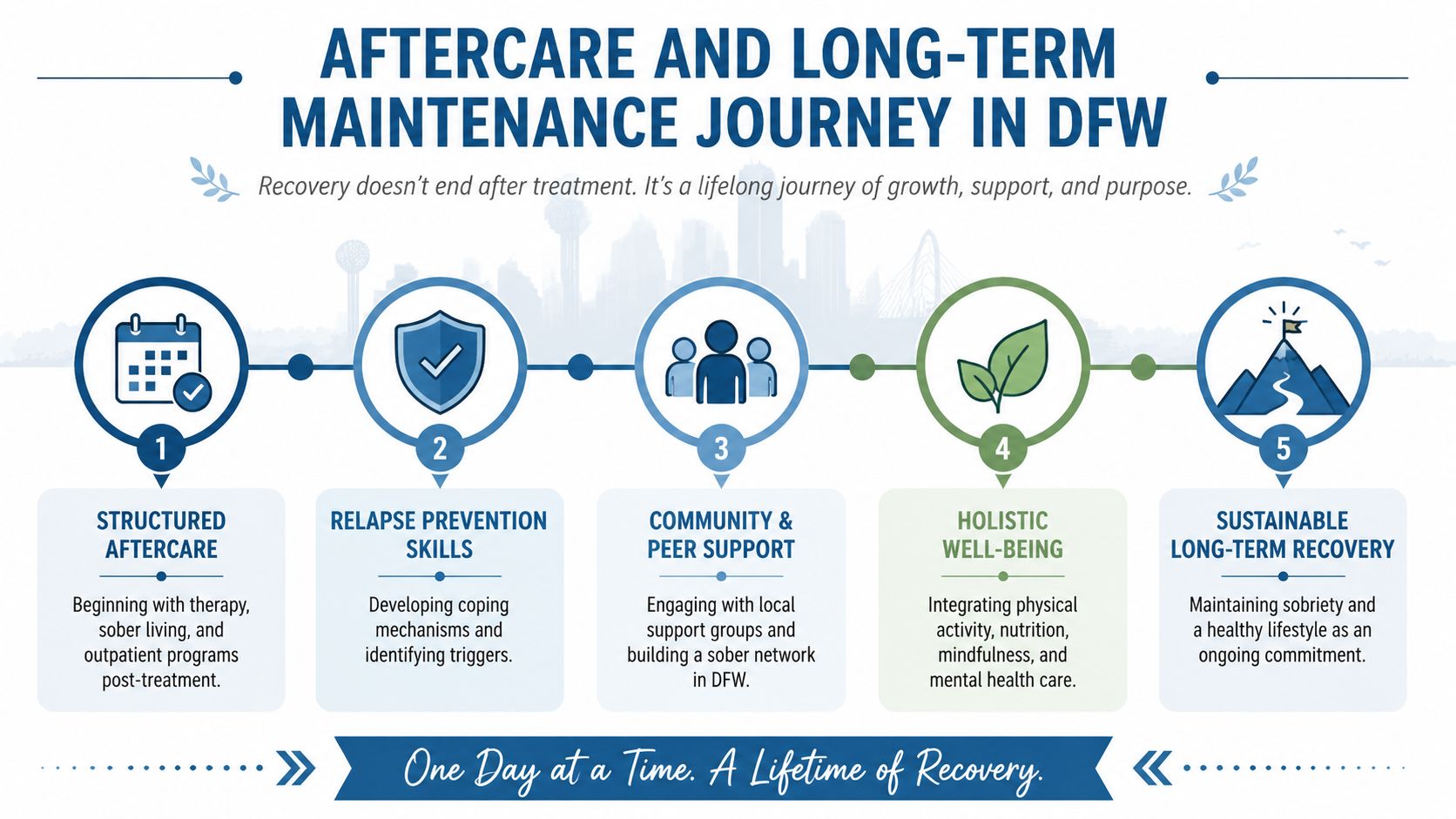
I tell families to judge an aftercare plan by its details, not by its good intentions. A strong plan answers concrete questions before the first hard night arrives:
- Who notices the earliest warning signs?
- What is the step-by-step response when cravings hit?
- Where can the person get support after hours or on weekends?
- What daily structure replaces the schedule treatment used to provide?
- How will mental health symptoms be handled before they turn into substance use risk?
That last point matters in this region. Many relapses in long-term maintenance do not begin with a decision to use. They begin with insomnia, panic, irritability, isolation, missed medication, family conflict, or the quiet belief that treatment is already "done." For patients with dual diagnosis, aftercare has to cover both sobriety and symptom stability. If one side is ignored, the other usually starts to slip.
What works in DFW depends on the person in front of you. Someone with steady housing, reliable family support, and a predictable schedule may do well with outpatient therapy, medication follow-up, and peer support. Someone returning to a chaotic home, a high-conflict relationship, or untreated depression may need sober living, more frequent clinical contact, and tighter accountability for a while.
A useful aftercare plan often includes:
- Continued therapy: Ongoing counseling helps patients work through stress, grief, shame, anger, and relationship strain without returning to substance use.
- Psychiatric follow-up: Medication and symptom monitoring need regular review, especially when mood, anxiety, trauma, or sleep problems have been part of the relapse pattern.
- Recovery community connection: Local meetings, recovery peers, and sober supports reduce isolation and give patients somewhere to turn before a lapse becomes a spiral.
- Routine rebuilding: Sleep, meals, exercise, transportation, work hours, and time with safe people all affect recovery stability more than many families realize.
- A written relapse response: Triggers, early warning signs, emergency contacts, and the exact next step should be decided in advance.
Families and patients who want a practical structure can use this guide to a relapse prevention plan after treatment.
Long-term recovery usually weakens gradually. A missed meeting becomes two. Sleep gets worse. Appointments slide. Stress stays hidden. Then the person starts telling everyone, including themselves, that nothing is wrong.
Maintenance in Dallas-Fort Worth works best when the plan is realistic, local, and flexible enough to adjust after setbacks. Progress is rarely linear. A good aftercare plan expects that, responds early, and keeps the person connected instead of waiting for a full relapse to force action.
How Families Can Support a Loved One Through the Stages
Family support can help recovery. Family pressure can also accidentally make things worse. The difference usually comes down to timing, boundaries, and whether the family is responding to the actual stage the person is in.

What helps and what backfires
In early denial, families often over-explain. They repeat the same arguments, gather evidence, and hope logic will break through. Usually, a calmer approach works better. Clear observations and firm limits tend to carry more weight than emotional debates.
Helpful responses by stage often look like this:
- During precontemplation: State observable facts, set boundaries, and stop protecting the person from every consequence.
- During contemplation: Listen for openings. If the loved one expresses doubt, fear, or curiosity, respond with calm support rather than a lecture.
- During preparation: Help with practical tasks such as transportation, child coverage, or admission paperwork. Don't crowd the process with guilt.
- During action: Participate in family therapy when offered. Recovery improves when family systems change too.
- During maintenance: Support routine, accountability, and honesty. Don't assume that “looking normal” means support is no longer needed.
What usually backfires:
- Monitoring everything: Surveillance can replace trust-building and create more secrecy.
- Rescuing repeatedly: Paying bills, covering legal problems, or cleaning up every crisis can remove urgency for change.
- Demanding instant gratitude: Early recovery is often physically and emotionally raw. Appreciation may come later.
- Using shame as motivation: Shame might produce short-term compliance, but it rarely builds stable recovery.
Family members should aim to be supportive without becoming the recovery program.
Family support in the Dallas area
Families in Dallas, Plano, Irving, Grapevine, Euless, and surrounding communities often need help of their own. Living with addiction changes the household. It creates hypervigilance, resentment, confusion, and burnout. When families get educated and supported, they respond more effectively and with less reactivity.
Practical steps for families include:
- Learn the stage, not just the symptom: Anger, withdrawal, lying, and passivity can mean different things at different points.
- Use one message across the household: Mixed rules weaken boundaries.
- Ask treatment teams direct questions: Families should understand the care plan, discharge risks, and warning signs.
- Build a crisis response plan: Know what to do if the loved one refuses help, leaves treatment, or returns to use.
Families don't need to be perfect to be helpful. They need to be steadier, clearer, and more consistent than addiction is.
Conclusion Your Next Step Towards Recovery in Dallas
The stages of recovery matter because they replace panic with structure. They help explain why someone may resist help, then ask for it. Why detox is necessary but not sufficient. Why progress can be real even when it doesn't look smooth. And why long-term recovery depends on more than stopping substance use.
For people in Dallas-Fort Worth, this isn't abstract theory. It's the difference between reacting to addiction crisis by crisis and following a treatment path that fits the person's actual needs. That becomes even more important when mental health symptoms are part of the picture, because recovery has to address both substance use and the life underneath it.
There is no single perfect timeline. Some people move quickly into action. Others circle through hesitation, treatment, renewed effort, and deeper commitment before recovery becomes stable. That doesn't erase hope. It supports it. A structured process gives patients and families something they can act on.
If someone is searching for a Dallas detox center, trying to understand whether a loved one is ready for rehab, or wondering what stage comes after withdrawal, the next step doesn't have to be dramatic. It just has to be real. A confidential conversation, an assessment, or an insurance check can turn fear into a plan.
If help is needed now, Tru Dallas Detox & Recovery Center offers confidential guidance for people across Dallas-Fort Worth who need detox, rehab, dual diagnosis care, or a practical next step. Readers can reach out to discuss treatment options, ask questions about admission, or verify insurance coverage through the center's team before making a decision.
