

A person in Dallas may stop drinking with the hope of finally feeling better, then wake up hours later with cramping, nausea, or a sharp ache across the abdomen. That moment is frightening. The mind starts racing. Is this a normal part of detox, or is something seriously wrong?
That fear makes sense. Stomach pain during alcohol withdrawal can be part of the body's adjustment, but it can also overlap with dangerous medical problems that need urgent care. Families in Dallas, Fort Worth, Euless, Plano, Irving, and Arlington often get stuck in that uncertainty and lose valuable time trying to guess.
Clear information matters because abdominal pain during alcohol withdrawal isn't something to brush off. The safest next step depends on what the pain feels like, when it started, and what other symptoms are happening at the same time.
Table of Contents
- Understanding Your Pain Is the First Step
- Why Alcohol Withdrawal Causes Stomach Pain
- A Timeline for Abdominal Pain and Withdrawal Symptoms
- Common Discomfort vs A Serious Medical Emergency
- Red Flags Requiring Emergency Care in Dallas
- How Medical Detox at Tru Dallas Safely Manages Withdrawal
- Take the First Step Toward a Safe Recovery Today
Understanding Your Pain Is the First Step
A common scene looks like this. Someone in the Dallas area decides to quit after months or years of drinking. At first, there's determination. Then the stomach starts to twist. Food sounds impossible. The abdomen feels sore, bloated, or sharply tender, and every hour without answers makes the anxiety worse.
That confusion is one of the hardest parts of alcohol withdrawal. Many people expect shaking, sweating, or trouble sleeping. They don't expect the stomach pain to become the symptom that scares them most. Families often wonder whether they should offer crackers and water, call a doctor, or go straight to an emergency room.
Why this symptom causes so much fear
Abdominal pain feels different from person to person. For one person, it may feel like burning in the upper stomach. For another, it may feel like cramping, nausea, pressure, or pain that comes in waves. That variation makes people second-guess themselves.
Practical rule: If pain during withdrawal feels intense, unusual, or paired with other alarming symptoms, guessing at home isn't safe.
There's also emotional weight behind it. A person trying to stop drinking is already dealing with stress, poor sleep, dehydration, and worry about what's coming next. Pain in the abdomen can make every one of those problems worse. Even sipping water can become difficult if the stomach is irritated.
The first goal is clarity, not toughness
Trying to “push through” severe abdominal pain alcohol withdrawal symptoms can delay the right care. A person doesn't need to prove strength by waiting. Safety comes first.
The helpful question isn't whether discomfort exists. The helpful question is what kind of discomfort it is. Mild gastritis-related pain may improve with careful medical support, hydration, and stomach-protective treatment. More dangerous pain can point to bleeding, pancreatitis, liver inflammation, or another urgent problem.
For people searching for a Dallas detox center or addiction treatment in Dallas, this is the turning point. Once the pain is understood clearly, the next step becomes easier. Either the body needs monitored detox, or it needs emergency care first. Both are better than staying stuck in uncertainty.
Why Alcohol Withdrawal Causes Stomach Pain
The stomach has a built-in protective layer. A simple way to picture it is a shield. That shield helps protect the stomach lining from acid and digestive chemicals that are supposed to stay contained.
What alcohol does to the stomach lining
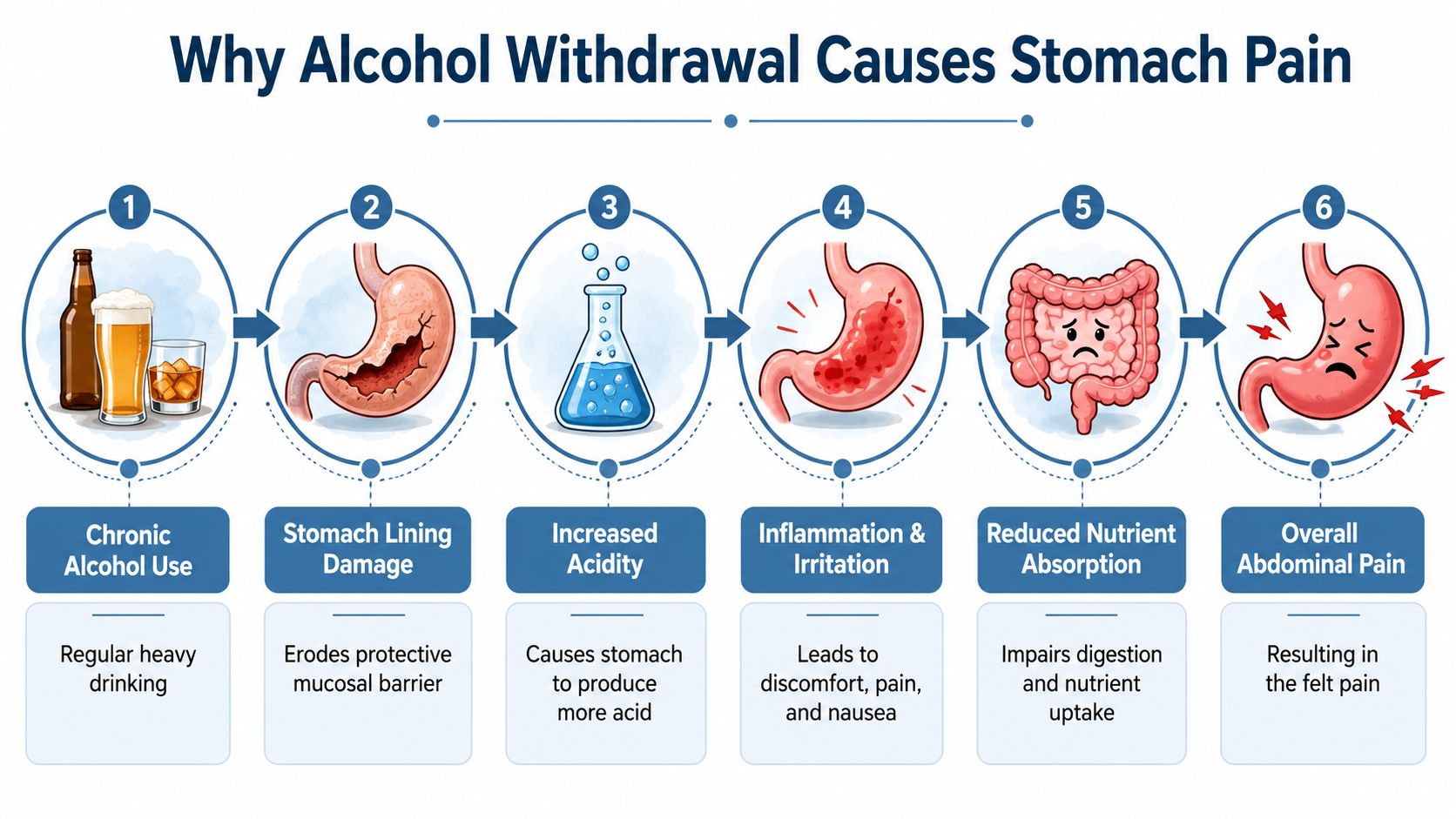
Heavy or long-term alcohol use can wear that shield down. When that happens, the lining becomes exposed and irritated. One medical summary explains that alcohol withdrawal precipitates abdominal pain primarily through acute alcoholic gastritis, where chronic alcohol exposure strips the stomach's protective mucus membrane, exposing the lining to digestive enzymes and gastric acids that cause inflammation, cramping, and potential hemorrhage.
That's why the pain doesn't feel random. The stomach tissue has often been irritated for a long time before withdrawal begins. Alcohol may have been masking some symptoms while also causing the damage underneath.
A person may notice:
- Burning pain in the upper abdomen after eating or drinking
- Cramping and tightness that comes with nausea
- Loss of appetite because the stomach feels raw
- Vomiting or diarrhea when the digestive tract becomes more reactive
Why pain can flare after the last drink
Stopping alcohol doesn't give the stomach instant relief. In the early detox period, the body is under stress. Stomach acid and digestive activity can become harder to regulate, and the inflamed lining may react strongly.
That's why abdominal pain alcohol withdrawal symptoms can feel worse right after drinking stops. The body is trying to rebalance, but the gut is doing that rebalancing on damaged tissue.
The pain is real, physical, and rooted in inflammation. It isn't “just anxiety,” even though anxiety can make it feel worse.
Another point confuses many families. They assume that if alcohol caused the injury, removing alcohol should make the pain disappear right away. Healing doesn't work that fast. Inflamed tissue often hurts during the repair process, especially when there's nausea, dehydration, poor nutrition, or repeated vomiting.
A practical example helps. If a person had a scraped arm covered by a protective bandage, removing the source of irritation would help. But the scrape would still need time and proper care to heal. The stomach works the same way. Stopping alcohol is necessary, but the lining still needs protection, hydration, and monitoring.
For people looking into addiction treatment in Dallas, this is why supervised detox makes medical sense. The pain usually has a clear biological reason, and treatment works best when that reason is treated directly instead of ignored.
A Timeline for Abdominal Pain and Withdrawal Symptoms
Knowing the timing helps people stop guessing. Alcohol withdrawal follows a rough pattern, though each person's experience can still vary based on drinking history, nutrition, hydration, and existing medical conditions.
What the first hours often feel like
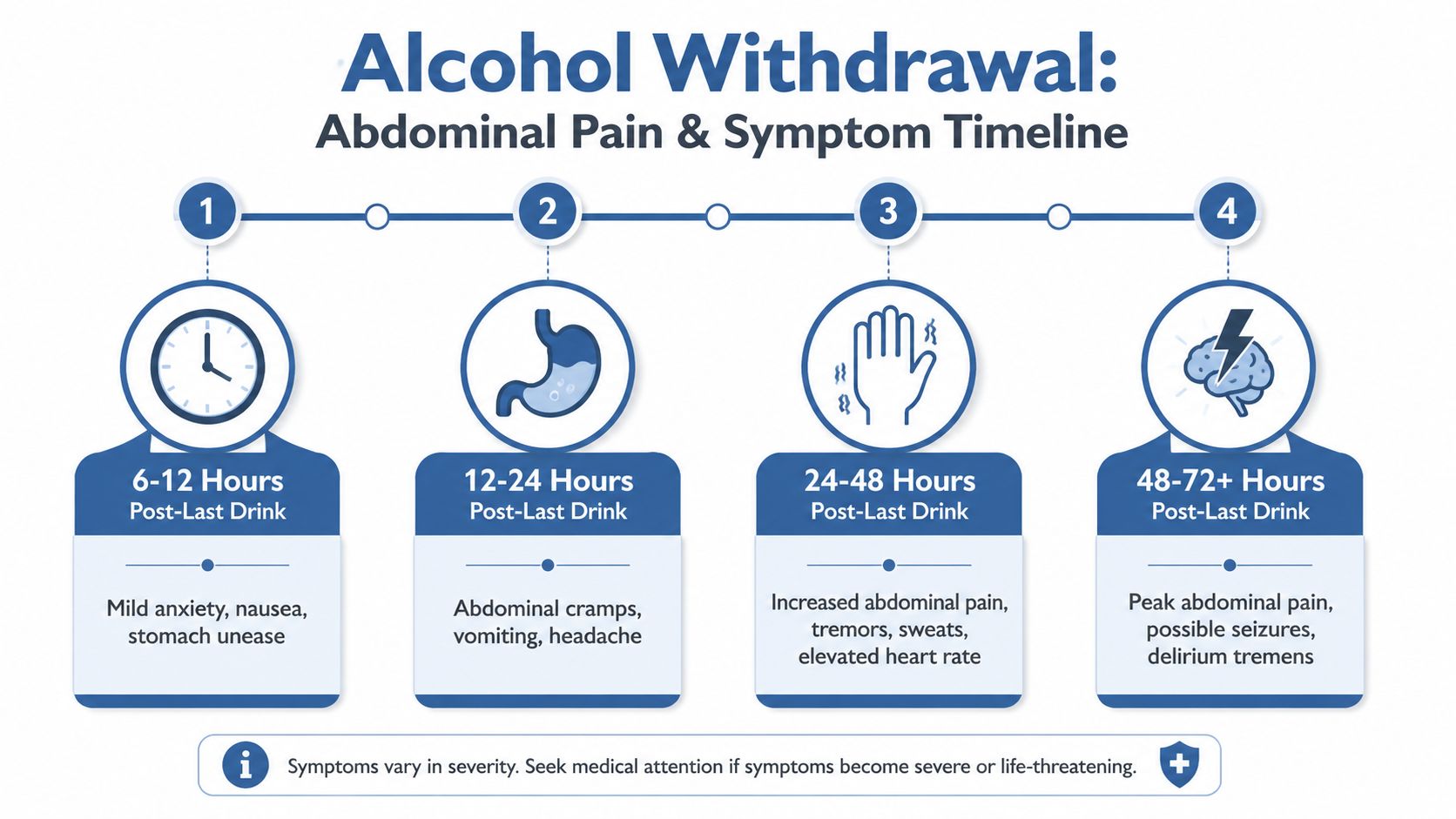
According to a published withdrawal overview, within 6 to 24 hours of the last drink, early-stage withdrawal symptoms include abdominal pain, nausea, and stomach discomfort, which typically peak within 24 to 72 hours. By days 5 to 7, these symptoms generally taper off, though some gastrointestinal distress can persist for several weeks.
That means the first day often brings uncertainty. A person may think the symptoms are still mild, then notice the pain becoming stronger as the day goes on. By the second and third day, the stomach pain may be joined by sweating, shaking, vomiting, insomnia, and rising anxiety.
Families who want a broader clinical picture can review this guide to the alcohol detox timeline and symptoms.
When symptoms usually ease
The timeline below provides a clear overview:
- Hours 6 to 24: Stomach unease, nausea, abdominal discomfort, and poor appetite may begin.
- Hours 24 to 72: Symptoms often intensify. This is the window when close observation matters most.
- Days 5 to 7: Acute symptoms often begin to taper.
- After the first week: Some digestive irritation can linger while the gut continues healing.
A person can feel “just sick to the stomach” early on, then become medically unstable faster than expected.
The timeline matters for one reason above all others. The most uncomfortable window is also the most unpredictable. If severe pain shows up during that period, it shouldn't automatically be labeled normal withdrawal. Timing helps with awareness, but it doesn't replace medical assessment.
Common Discomfort vs A Serious Medical Emergency
Not every stomach pain during withdrawal means the same thing. Some pain fits the pattern of irritated stomach lining. Some pain points to a crisis developing underneath. Confusing the two can be dangerous.
A particularly important finding came from emergency settings. Recent 2025 data from the American Journal of Gastroenterology indicates that nearly 34% of patients presenting with “withdrawal stomach pain” in emergency settings actually have concurrent acute pancreatitis or severe alcoholic hepatitis, conditions that require immediate specialized intervention.
That number matters because it changes the mindset. A person in withdrawal can't safely assume that abdominal pain is “just detox.”
How common withdrawal pain usually behaves
Pain related to gastritis often feels inflamed, crampy, burning, or gnawing. It may sit in the upper abdomen and get worse with vomiting, acidic foods, or an empty stomach. The person may still feel miserable, but the pain pattern is often diffuse rather than sharply localized.
Potential emergency pain often behaves differently. It may become severe, focused, or deep. It may radiate to the back, come with visible bleeding, or appear alongside major weakness, confusion, or signs of liver distress. The body often gives more than one warning sign at once.
Symptom Checker Gastritis vs Medical Emergency
| Symptom | Common Withdrawal Pain (Gastritis) | Potential Emergency (e.g., Pancreatitis, Hepatitis) |
|---|---|---|
| Pain quality | Burning, cramping, raw, irritated | Deep, severe, sharply localized, or rapidly worsening |
| Pain location | Often upper stomach or general abdominal discomfort | May center in the upper abdomen or right side, or radiate to the back |
| Food and fluids | Eating may be unpleasant, but small sips may still be possible | Pain may make eating or drinking nearly impossible |
| Vomiting | Nausea and vomiting can happen | Repeated vomiting, especially with blood, is an emergency sign |
| Stool changes | Mild bowel upset may happen | Blood in stool or black stool requires urgent evaluation |
| Abdomen feel | Tender or crampy | Rigid, hard, or intensely tender abdomen is concerning |
| Mental state | Anxious, uncomfortable, restless | Confusion, delirium, or collapse points to urgent danger |
A practical example helps. If a person in Fort Worth has burning stomach pain and nausea but is alert, able to sip fluids, and not showing bleeding or confusion, the problem may still be serious enough for detox admission, but it may fit a common withdrawal picture. If that same person has pain shooting into the back, can't keep liquids down, or starts vomiting blood, the situation has moved out of the home-care category.
The right question isn't “Can withdrawal cause this?” The right question is “Could something more dangerous be happening at the same time?”
That distinction is where prompt medical evaluation protects lives.
Red Flags Requiring Emergency Care in Dallas
Some symptoms should trigger immediate emergency action in Dallas, not home observation. Mild withdrawal advice, including bland foods and avoiding trigger foods, has limits. One clinical resource notes that avoiding spicy, acidic, or greasy foods is crucial during withdrawal to prevent further irritation of the stomach lining, but this dietary management is only for mild cases and is no substitute for medical evaluation when severe symptoms are present.
Signs that should never be managed at home
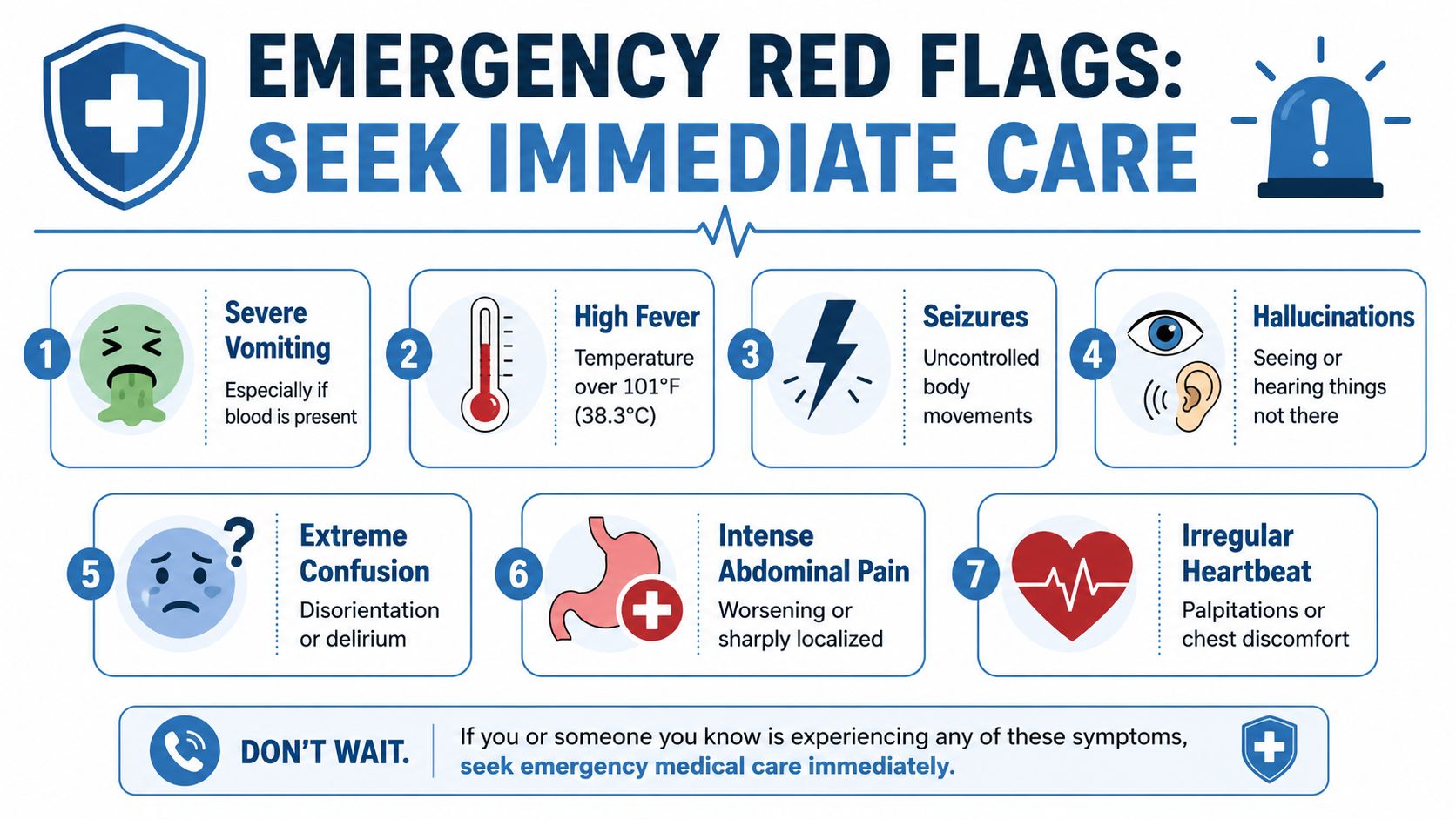
A person in Dallas, Irving, or Plano needs emergency care right away if any of these appear:
- Vomiting blood: This may point to gastrointestinal bleeding.
- Blood in the stool or black stool: Bleeding in the digestive tract needs urgent assessment.
- A rigid or hard abdomen: Severe tenderness with guarding can signal a serious abdominal emergency.
- Pain radiating to the back: This can raise concern for pancreatitis.
- Severe or persistent vomiting: The risk of dehydration and electrolyte problems rises quickly.
- High fever, severe confusion, hallucinations, or seizures: These suggest a dangerous withdrawal state.
- Irregular heartbeat or chest discomfort: Withdrawal can become medically unstable fast.
Why waiting is risky
Time matters in medical transport and emergency response. Families who want a clear explanation of why rapid intervention can change outcomes may find this overview of understanding the golden hour in patient transport helpful.
A person who's considering quitting alone should also review the dangers of quitting alcohol cold turkey, especially when abdominal pain is part of the picture.
If severe symptoms are present, the safest choice is simple. Go to the nearest emergency room. Don't wait for morning. Don't try to sleep it off. Don't assume a bland diet, sports drink, or antacid will fix something that may be bleeding, inflamed, or becoming unstable.
How Medical Detox at Tru Dallas Safely Manages Withdrawal
A safe detox plan does more than react to symptoms. It reduces risk before a crisis develops. That matters when abdominal pain is mixed with nausea, anxiety, dehydration, and the possibility of serious withdrawal complications.

What medical teams do that home detox cannot
A medically supervised setting can monitor symptoms around the clock, watch for changes in vital signs, respond to worsening pain, and decide quickly when a person needs a higher level of medical evaluation.
Treatment may include:
- Medication for withdrawal symptoms: One treatment summary states that benzodiazepines are commonly prescribed to manage severe alcohol withdrawal symptoms, including anxiety and stomach pain, while continuous monitoring in a medically supervised environment ensures rapid intervention if symptoms intensify or complications arise.
- Hydration support: Replacing fluids can help when vomiting, sweating, or poor intake has left the body depleted.
- Nutrition support: The digestive system often needs gentle reintroduction to food.
- Clinical observation: Staff can track whether pain behaves like expected withdrawal discomfort or suggests a different medical problem.
A person who wants a better picture of what this level of care looks like can review the medically supervised alcohol detox process.
Why monitored detox changes the outcome
The main benefit isn't comfort alone, though comfort matters. The main benefit is that dangerous changes are caught early. If abdominal pain becomes more intense, if confusion starts, if dehydration worsens, or if signs of a gastrointestinal emergency appear, action can happen immediately.
Medical detox gives the body a protected place to stabilize while trained staff watch for the problems that families can miss at home.
For many people in Dallas-Fort Worth, that structure changes everything. Instead of trying to interpret every cramp, every wave of nausea, and every hour of insomnia alone, they have a team tracking the full picture. That support lowers uncertainty and gives the body a safer path through the hardest part of withdrawal.
Take the First Step Toward a Safe Recovery Today
Abdominal pain during alcohol withdrawal can feel isolating, but it isn't something a person has to sort out alone. The pain may come from stomach inflammation, or it may be the first warning sign of a medical emergency. Either way, trying to self-diagnose in the middle of withdrawal is risky.
For adults and families in Dallas, Euless, Arlington, and nearby communities, the safest next move is professional evaluation. Medical detox protects the body during the highest-risk period and gives people a real plan instead of fear-based guessing.
Recovery support also needs to fit the person, not just the symptoms. For families exploring communication barriers in care, this resource on multilingual addiction recovery support may be useful when thinking about what kind of treatment environment helps someone stay engaged.
Help is available now. If pain is severe or red flags are present, emergency care should happen immediately. If the goal is safe withdrawal before things get worse, professional detox is the logical next step.
Tru Dallas Detox & Recovery Center offers medically supervised detox and personalized addiction treatment for people across Dallas-Fort Worth who need safe, immediate help. To take the next step, contact Tru Dallas Detox & Recovery Center to ask questions, verify insurance, and speak with a team that can help arrange confidential admission.
