

Someone in Dallas may be reading this after a refill appointment, a rough night of sleep, or a conversation with family that raised a hard question. Seroquel seemed to help at first. It may have calmed racing thoughts, helped with sleep, or taken the edge off symptoms that felt unmanageable. But after months or years, the concerns often change. Weight may be creeping up. Energy may feel lower. The body may not feel quite right. For people also dealing with alcohol or drug use, the situation can feel even more complicated.
Those concerns are legitimate. Seroquel, also called quetiapine, can be a useful medication. It can also carry meaningful long term risks that deserve real medical attention, especially in dual-diagnosis care. People in Dallas looking up the long term side effects of seroquel usually aren't being dramatic. They're trying to understand whether what they're feeling is part of recovery, part of their mental health condition, or part of the medication itself.
That distinction matters. It affects safety, daily functioning, and treatment decisions. It also affects whether someone feels hopeful about recovery or trapped between untreated symptoms and side effects they can't ignore.
Table of Contents
- Understanding Your Seroquel Prescription and Long-Term Concerns
- The Major Long-Term Physical Health Risks of Quetiapine
- Mental and Cognitive Effects of Chronic Seroquel Use
- Seroquel, Substance Use, and Dual Diagnosis in Dallas
- Safely Managing and Reducing Seroquel Risks
- Your Next Steps for Safe Seroquel Management in Dallas
Understanding Your Seroquel Prescription and Long-Term Concerns
A common Dallas scenario goes like this. An adult starts Seroquel during a period of crisis. Maybe anxiety is severe, sleep has collapsed, bipolar symptoms are destabilizing, or substance use has made everything harder to manage. The medication helps enough that life becomes more stable. Then the next phase begins. The person wonders what staying on it means for the long run.

That question deserves a careful answer, not fear-based advice and not dismissive reassurance. Seroquel is often prescribed for valid clinical reasons. For some people, it reduces agitation, supports sleep, or helps control serious mood symptoms. In dual-diagnosis treatment, that can make early recovery more manageable when the brain and body are already under strain.
Why the concern shows up later
Long term medication issues often don't announce themselves all at once. A person may feel more tired over time, gain weight gradually, lose motivation, or develop health changes that only show up on labs or an ECG. Families often notice something before the patient does. They may say the person seems slowed down, less emotionally present, or physically different.
Clinical reality: A medication can be helpful and still need re-evaluation later. Those two facts can both be true.
Some people are also prescribed quetiapine in the context of anxiety, depression, sleep problems, or attention-related concerns. For readers sorting through several diagnoses at once, this overview on medication questions involving anxiety, depression, and ADHD can help frame the bigger conversation.
What patients in recovery need to know
In addiction treatment in Dallas, medication management isn't separate from recovery. It is part of recovery. A sedating medication can affect alertness, motivation, therapy participation, and relapse risk. A medication that changes appetite or blood sugar can complicate healing for someone already physically depleted from alcohol, opioids, or stimulant use.
A useful way to think about Seroquel is this:
| Situation | What often helps |
|---|---|
| The medication is working but side effects are building | Review dose, timing, labs, and overall treatment goals |
| Symptoms are stable but the patient feels flat or slowed | Check whether side effects are being mistaken for emotional stability |
| The person is also using substances or recently detoxed | Coordinate psychiatric care with addiction medicine, not separately |
People asking about the long term side effects of seroquel usually don't need a lecture. They need a plan. The next step is understanding which risks matter most and what should be monitored.
The Major Long-Term Physical Health Risks of Quetiapine
A patient in early recovery starts taking Seroquel, sleeps better for the first time in months, and feels relieved. Three months later, the picture can look different. Appetite is up, weight is climbing, morning fatigue is dragging into group therapy, and routine labs start to matter in a way they did not at the beginning.
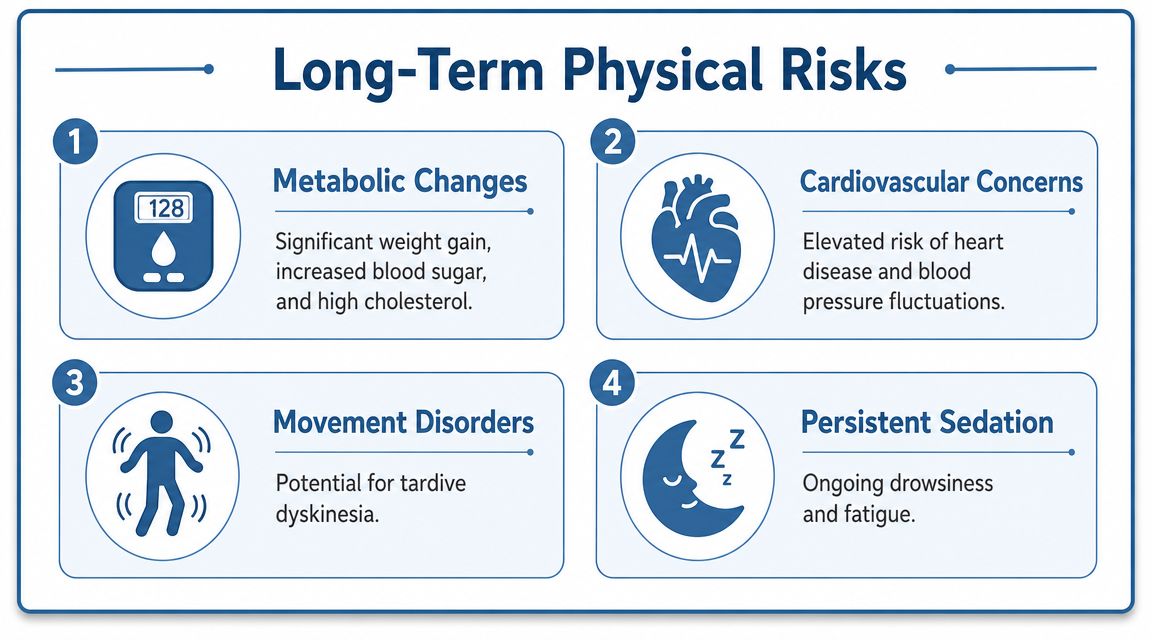
That does not mean quetiapine is the wrong medication. It means long-term use needs active follow-up, especially for people balancing psychiatric symptoms and substance use recovery. In our Dallas dual-diagnosis setting, the main physical concerns are usually metabolic strain, cardiac risk, movement-related side effects, and persistent sedation that interferes with healing.
Metabolic changes that can reshape daily health
Metabolic side effects often show up in ordinary routines before they show up in a diagnosis. A person feels hungrier at night, less motivated to move, and more drawn to sugar or fast food. For someone newly sober, that shift can blend into recovery and get dismissed as "just getting back to normal," even when the medication is part of the pattern.
Weight gain, rising blood sugar, and abnormal cholesterol are well-recognized risks with antipsychotic treatment, including quetiapine. The practical concern is not appearance. It is what follows. Poor metabolic health can worsen fatigue, raise diabetes risk, affect blood pressure, and make depression harder to treat. For patients already trying to rebuild sleep, energy, and self-trust, that can push recovery off course.
For a plain-language overview of why this matters, Bristol GP insights on metabolic health offer useful context.
In treatment, the safest approach is straightforward. Track weight. Check fasting glucose or A1c, lipids, and blood pressure. Reassess whether the dose, timing, or even the medication itself still fits the patient's goals.
Cardiovascular concerns that need active monitoring
Quetiapine can also affect the heart. Sometimes the issue is indirect, through weight gain and metabolic changes that increase long-term cardiovascular risk. Sometimes it is more immediate, especially in patients with dehydration, low potassium, eating problems, heavy alcohol use, stimulant use, vomiting, or several medications on board at the same time.
One concern is QT prolongation, which is a change in the heart's electrical timing that can increase the risk of dangerous arrhythmias. The risk is higher when quetiapine is combined with other QT-prolonging drugs or when electrolyte levels are off. That combination is not rare in dual-diagnosis care. Detox, relapse, poor nutrition, and medication changes can all create the setup for cardiac problems.
This is one reason integrated treatment matters. Patients dealing with both addiction and psychiatric illness often need coordinated care rather than separate medication decisions made in isolation. Our guide to mental illness and substance abuse explains why these conditions need to be treated together.
A practical point matters here. Low dose does not always mean low risk. If someone has fainting, palpitations, chest symptoms, severe weakness, or a history that raises concern, the prescribing clinician may need labs, medication review, and sometimes an ECG.
Neurological risks that shouldn't be dismissed
The movement-related complication families often worry about is tardive dyskinesia. This can look like lip smacking, tongue movements, jaw shifting, blinking, finger motions, or restless repetitive movements that the person cannot fully control. Quetiapine has a lower risk of this problem than some older antipsychotics, but lower risk is not zero risk.
The key safety issue is delay. Early movement changes are easy to miss, especially if a patient is also anxious, sleep-deprived, or withdrawing from substances. Family members often notice the pattern first.
Watch for these signs:
- Repetitive mouth, tongue, or facial movements
- New pacing, inner restlessness, or inability to sit still
- Hand or finger motions that were not present before
- Muscle stiffness, slowed movement, or tremor
- Symptoms that persist instead of fading after the first adjustment period
Persistent sedation belongs in this section too because it has physical consequences. Daytime grogginess can increase fall risk, reduce exercise, worsen constipation, interfere with driving, and make it harder to show up fully for therapy and medical appointments. In recovery, that matters. A medication can reduce symptoms and still create enough physical drag that the overall plan needs to be revisited.
Long-term side effects of Seroquel are manageable in many cases, but they should never be treated casually. The safest path is regular monitoring, honest reporting of side effects, and medication decisions that support both psychiatric stability and lasting recovery.
Mental and Cognitive Effects of Chronic Seroquel Use
A patient in early recovery may tell us, "I am sleeping, I am not panicking, and I am not using, so this must be working." Then his spouse says he is withdrawn, missing therapy details, and struggling to finish basic tasks. In Dallas dual-diagnosis care, that distinction matters. Less chaos is not the same as good cognitive and emotional function.

How emotional flattening can be mistaken for stability
Quetiapine can quiet severe mood symptoms and reduce agitation. It can also leave some people feeling emotionally muted. Patients often describe it as being less overwhelmed but also less interested, less expressive, and less connected to the people around them.
That trade-off can interfere with recovery in subtle ways. Group therapy requires attention and emotional presence. Trauma work requires enough mental clarity to track what is happening in session. Family repair depends on being able to show up, respond, and stay engaged. If a person feels dulled all day, treatment participation can slip even while the medication appears to be helping on the surface.
Sexual side effects can add another layer. Changes in libido, sexual function, or breast symptoms may be related to medication effects in some patients, and people often do not bring this up unless they are asked directly. In practice, these problems can affect adherence, relationships, self-esteem, and willingness to stay consistent with psychiatric care.
How to tell side effects from psychiatric symptoms
This is one of the harder clinical calls. Brain fog, low motivation, slowed thinking, and emotional distance can resemble depression, trauma-related shutdown, post-acute withdrawal, or medication burden. A good assessment looks at timing, dose changes, substance use history, sleep, and what other people close to the patient are noticing.
These patterns can help:
| More suggestive of medication effect | More suggestive of the underlying condition |
|---|---|
| Fogginess that tracks with dosing or builds over time | Clear return of mania, psychosis, or severe depression |
| Slowed thinking without strong sadness or fear | Distress tied to guilt, hopelessness, paranoia, or mood cycling |
| Emotional dullness across positive and negative events | Emotional reactions that rise and fall with stressors or episodes |
| Trouble concentrating despite sleeping more | Poor focus driven by anxiety, cravings, insomnia, or psychiatric relapse |
One caution matters here. In dual-diagnosis patients, sedation can hide warning signs. A person may look calmer while still struggling with cravings, depression, grief, or relapse risk underneath. That is one reason co-occurring disorders need integrated care, not isolated medication management. This overview of mental illness and substance abuse explains why the overlap can make side effects harder to sort out.
Persistent cognitive slowing should not be written off as poor motivation or a weak work ethic. If a patient cannot follow sessions, initiate daily tasks, remember key discussions, or stay mentally present with family, the treatment plan needs another look. Sometimes the answer is dose adjustment. Sometimes it is changing the medication. Sometimes it means addressing sleep debt, substance use, or another psychiatric issue that is getting mislabeled as a Seroquel problem.
Seroquel, Substance Use, and Dual Diagnosis in Dallas
For dual-diagnosis patients, Seroquel management gets harder because the medication isn't acting in a vacuum. It sits inside a larger clinical picture that may include alcohol use, opioids, stimulants, benzodiazepines, trauma symptoms, sleep disruption, and changing psychiatric states during early recovery.
Why recovery makes medication management more complex
Alcohol and other sedating substances can amplify the same problems Seroquel already tends to create. A person may become more impaired, less coordinated, more emotionally numbed, or less able to judge risk. That can affect driving, work, parenting, and treatment participation.
Stimulant use creates a different kind of complication. Some people who cycle between stimulants and sedating medications end up with a pattern of crash-and-recover self-medication. In that situation, Seroquel may be used less as a carefully managed psychiatric medication and more as a way to force sleep or shut down after a binge. That isn't stable treatment. It's a dangerous pattern that can hide worsening addiction.
Misuse concerns also matter. Quetiapine isn't usually discussed the same way as opioids or benzodiazepines, but in addiction settings it can still be sought for its sedating effects. When a medication is taken outside the treatment plan, every long term risk becomes harder to monitor and harder to contain.
A dual-diagnosis patient in Dallas often needs clinicians to answer questions like these at the same time:
- Is the current fatigue caused by the medication or by post-acute withdrawal?
- Is poor concentration part of depression, substance recovery, or excessive sedation?
- Is the patient sleeping better, or being knocked out?
- Has the medication become part of a misuse pattern?
Why integrated treatment usually works better
General outpatient care can miss the interaction between psychiatric medication and addiction recovery. One clinician may focus on mood symptoms. Another may focus on sobriety. The patient ends up trying to connect the dots.
Integrated care works better because the treatment team looks at the whole picture at once. That means detox history, relapse triggers, sleep pattern, psychiatric symptoms, current medications, vital signs, and family concerns all inform the same plan. For many people seeking addiction treatment in Dallas, that level of coordination is what prevents repeated setbacks.
A useful starting point for families exploring this kind of care is learning how dual diagnosis addiction treatment centers approach co-occurring mental health and substance use disorders.
When recovery and psychiatric treatment are separated, patients often get partial answers. When care is integrated, medication decisions become safer and more realistic.
For Dallas detox center and rehab patients, the goal isn't just to remove substances. The goal is to stabilize the person in a way that makes long term psychiatric care safer, more accurate, and easier to sustain.
Safely Managing and Reducing Seroquel Risks
People don't need to choose between blind acceptance and abruptly quitting. There is a safer middle path. It starts with structured monitoring, honest reporting of side effects, and any medication change being done under medical supervision.

Build a monitoring plan before problems escalate
Long term quetiapine use should have a tracking system. Without one, subtle harms can continue for months before anyone notices the pattern.
A practical monitoring discussion with a prescriber may include:
- Cardiac review: Ask whether ECG monitoring makes sense, especially if there is a history of heart issues, fainting, palpitations, multiple medications, or heavy substance use.
- Electrolyte checks: Potassium and related labs matter when dehydration, vomiting, poor nutrition, or alcohol use have been part of the picture.
- Metabolic labs: Blood glucose, HbA1c, and lipid panels help catch problems before symptoms become severe.
- Movement screening: Any new involuntary movement should be documented early, not watched passively for months.
- Functional review: Sleep quality, daytime alertness, libido, motivation, and mental sharpness deserve as much attention as symptom control.
Use practical daily habits to lower risk
Lifestyle changes don't replace medical oversight, but they do matter. Patients often do better when they stop treating side effects like a private burden and start managing them like part of the treatment plan.
Some of the most useful habits are simple:
- Keep a daily symptom log. Track sleep, appetite, energy, mood, cravings, and any unusual movement. Patterns become easier to see on paper.
- Eat on a schedule. Sedation and increased appetite can lead to late-night eating and impulsive choices. Planned meals reduce that drift.
- Move even when motivation is low. Short walks, light strength work, and basic routine help counter fatigue and metabolic slowdown.
- Bring one support person to appointments. A spouse, parent, or trusted friend may notice changes that the patient normalizes.
- Review all substances carefully. Alcohol, cannabis, stimulants, and non-prescribed sedatives all change the risk picture.
Practical rule: The more complicated the recovery history, the less safe it is to manage Seroquel side effects casually.
Never taper without medical supervision
Stopping Seroquel suddenly can create real problems. Sleep may collapse. Anxiety may surge. Mood symptoms may rebound. In dual-diagnosis patients, that rebound can be mistaken for relapse risk or can directly trigger relapse.
A safer taper usually depends on the person's diagnosis, current dose, duration of use, relapse history, and what other medications or substances are involved. That is why online taper advice can be risky. What works for one person may destabilize another.
What doesn't work well:
- Stopping because side effects feel unbearable and hoping for the best
- Cutting doses randomly from week to week
- Using alcohol or other sedatives to compensate for rebound insomnia
- Changing psychiatric medications during an unstable period without close follow-up
What tends to work better is a coordinated taper plan with medical oversight, symptom monitoring, and parallel support for sleep, anxiety, and recovery stress. For many patients in Dallas, that level of support can make the difference between a thoughtful medication transition and a crisis.
Your Next Steps for Safe Seroquel Management in Dallas
If someone is worried about the long term side effects of seroquel, the next move isn't panic. It is action. The right action is specific, medically grounded, and timed before a side effect becomes a crisis.
A safer path starts with one conversation
Start with the prescribing clinician. Bring a written list of concerns. Include physical changes, emotional flattening, cognitive slowing, movement symptoms, and any substance use that may be interacting with the medication. Ask directly what should be monitored and whether the current plan still makes sense.
If addiction is part of the picture, the issue needs more than a standard med check. A person navigating recovery in Dallas may need detox support, psychiatric reassessment, medication review, relapse prevention, and family guidance all at once. That is especially true when sleep disruption, cravings, emotional numbness, or medication misuse are part of the story.
Families also benefit from having a written plan for moments when symptoms escalate. While it is designed for younger people, this mental health safety plan for kids is a useful example of how a simple written safety plan can organize warning signs, support contacts, and immediate next steps. Adults need the same kind of clarity.
The most important point is this. No one should stay silent because the medication helped once. Benefit in the past doesn't erase harm in the present. If Seroquel is supporting recovery, it should be monitored well. If it is causing too many problems, the treatment plan should adapt.
Dallas patients and families don't have to figure this out alone. Help is available, and earlier help is usually safer help.
If Seroquel side effects, substance use, or co-occurring mental health symptoms are making life harder, Tru Dallas Detox & Recovery Center offers confidential support for adults across Dallas-Fort Worth. The team provides medically supervised detox, dual-diagnosis treatment, medication support, and personalized next-step planning. Reach out to verify insurance, ask questions, or start a private assessment today.