
Prescription pill dependence often starts with a real prescription: pain after surgery, panic attacks, years of bad sleep. Over time the dose creeps up, stopping becomes frightening, and trying to quit on your own brings on withdrawal that can range from miserable to dangerous.
Tru Dallas Detox provides medically supervised detox from prescription drugs at our facility in Euless, with 24/7 nursing and physician oversight, followed by residential treatment.
Admissions answers 24/7. Tell us what you're taking and we'll explain what detox would look like.
Why prescription pills shouldn't be stopped suddenly
Some prescription drugs are dangerous to stop abruptly. The most important is the benzodiazepine class. In 2020 the FDA required a boxed warning on all benzodiazepines, noting that stopping them abruptly or reducing the dose too quickly can cause withdrawal reactions, including seizures, which can be life-threatening.
Other pills are less dangerous to stop but hard to stop alone. Opioid withdrawal is intensely uncomfortable, and relapse after a few days off carries a real overdose risk because tolerance drops quickly. That's why detox from prescription drugs is best done under medical supervision, with a plan built around the specific medication.
Prescription drugs we help people detox from
Benzodiazepines
Xanax, Klonopin, Ativan, Valium
Seizure risk
Opioid painkillers
Oxycodone, hydrocodone, Percocet, tramadol
Overdose risk after
Sleep medications
Ambien, Lunesta, Sonata
Taper needed
Stimulants
Adderall, Ritalin, Vyvanse
Mood risk
Gabapentinoids
Neurontin, Lyrica
Taper needed
Benzodiazepines — Xanax, Klonopin, Ativan, Valium
Benzodiazepine withdrawal can include rebound anxiety, insomnia, tremors and, at worst, seizures. Stopping should be gradual. Clinical guidance from ASAM and other medical societies advises that benzodiazepines should not be discontinued abruptly in people likely to be physically dependent, and that tapers typically reduce the dose in small steps. For someone on a benzodiazepine for a long time, detox is the start of a taper, not the end of it. Read more in our guide to benzodiazepine withdrawal.
Opioid painkillers — oxycodone, hydrocodone, Percocet, Norco, tramadol
Opioid withdrawal brings flu-like symptoms: aches, sweating, nausea, diarrhea, anxiety, insomnia and strong cravings. It's rarely life-threatening in itself, but it's hard to get through without help. Medications such as buprenorphine can ease symptoms and cravings. See our guide to opioid withdrawal.
Counterfeit pills are a serious risk here. Pills bought outside a pharmacy that look like oxycodone or Xanax often contain fentanyl. If you've been using pills that didn't come from a pharmacy, tell our admissions team — it changes how detox is planned. Keep naloxone on hand and know the signs of an overdose.
Sleep medications — Ambien (zolpidem), Lunesta, Sonata
Stopping sleep medications after long-term or high-dose use can cause insomnia, anxiety and, in more severe cases, tremors or seizures. The zolpidem label describes withdrawal ranging from mild dysphoria and insomnia to a withdrawal syndrome that may include convulsions. Our guide to weaning off Ambien covers this in detail.
Stimulants — Adderall, Ritalin, Vyvanse
Stimulant withdrawal is mostly psychological: exhaustion, heavy sleep, increased appetite, low mood and cravings. It isn't usually physically dangerous, but SAMHSA notes that the risk of suicide is intensified during stimulant withdrawal, and mood needs close monitoring, especially in the first one to two weeks.
Gabapentin and pregabalin (Neurontin, Lyrica)
Both labels advise stopping gradually over at least a week. Stopping suddenly can cause anxiety, insomnia, nausea, pain and sweating (Neurontin label). See tapering off gabapentin.
Combinations
Many people take more than one medication, or combine pills with alcohol. Mixing opioids, benzodiazepines, sleep medications and alcohol is especially dangerous because they all slow breathing. Combined use makes detox more complex and medical supervision more important.
What happens during prescription pill detox
Assessment
We start with what you've been taking, how much, for how long, and what else is involved, plus your physical and mental health history. This determines whether you need a gradual taper, symptom medications, medication for opioid use disorder, or a combination.
24/7 medical care
Our nursing and physician team monitors you around the clock, manages symptoms as they come up, and adjusts the plan as you go.
Stabilization
The goal of detox isn't just getting the drug out of your system. It's getting you physically stable and clear-headed enough to start treatment.
How long does prescription pill detox take?
It depends on the drug. Opioid painkiller detox usually takes around a week. Stimulant withdrawal peaks in the first days, though low mood can linger for weeks. Benzodiazepine withdrawal takes the longest: it's managed with a gradual taper that can continue for weeks or months. Our guide on how long detox takes covers timelines by substance.
After detox: residential treatment
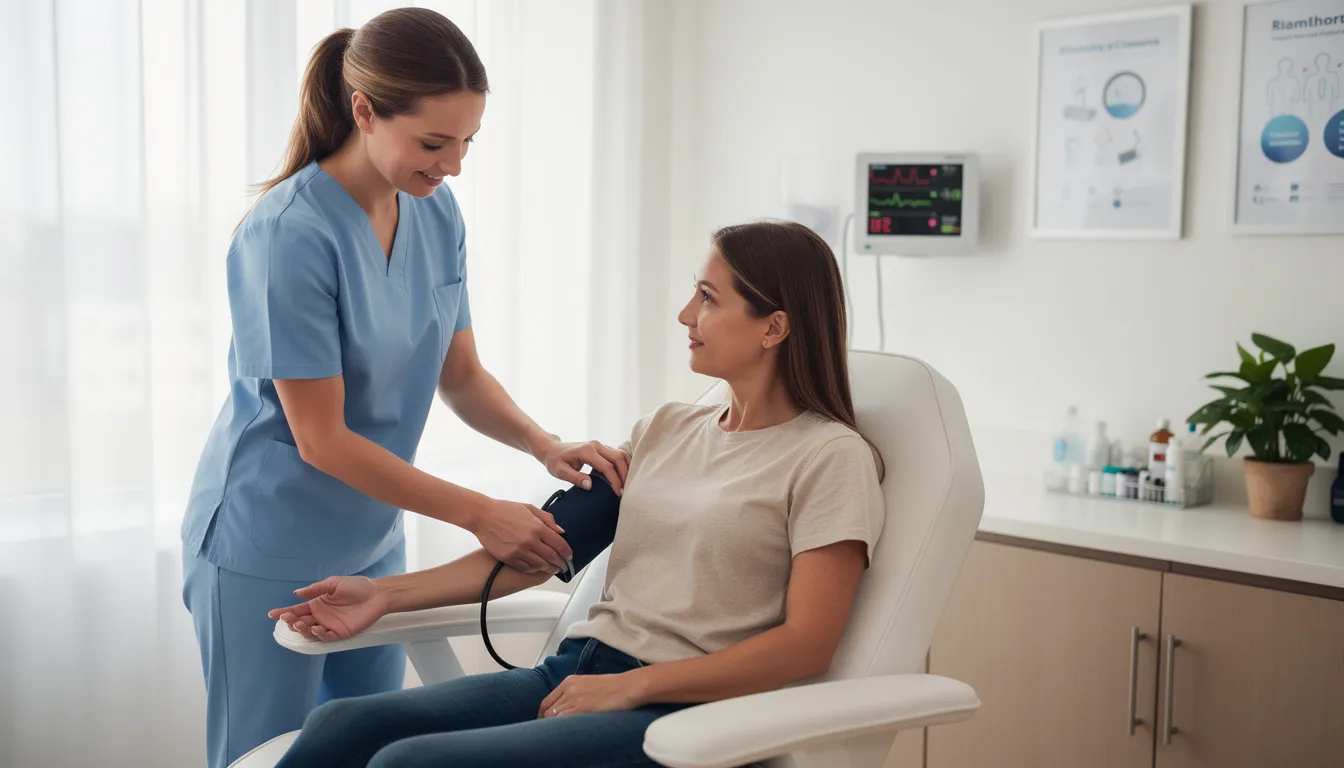
Detox treats physical dependence. It doesn't address why the pills became hard to stop — pain, anxiety, trauma, insomnia or something else. Most people move straight from detox into residential treatment at our facility, typically for one to three months, with individual therapy, group work and support for co-occurring mental health conditions through our dual diagnosis program.
If outpatient care is a better fit after residential treatment, our team can help arrange a referral to an outpatient program.
Signs it's time for medically supervised detox
- You've tried to cut down and ended up in withdrawal
- You run out early, take more than prescribed, or get pills from more than one source
- You mix pills with alcohol or other drugs
- You've had seizures, confusion or hallucinations when stopping before
- You take benzodiazepines daily and have for months or years
If you take a prescribed medication and want to stop, talk to your prescriber or to us before stopping.
Frequently asked questions
Can I detox from benzodiazepines at home?
Not safely by stopping suddenly. Benzodiazepine withdrawal can cause seizures. Any reduction should be gradual and medically supervised.
Will I be given medication during detox?
Usually, yes. Depending on the drug, that might mean a supervised taper, medication for opioid withdrawal, or medications that ease symptoms like nausea and insomnia. Your plan is set by our medical team after assessment.
My pills were prescribed. Is this still addiction?
Not necessarily. Physical dependence can develop even when you take medication exactly as prescribed. Addiction involves compulsive use despite harm. Either way, if stopping is hard or unsafe, medical detox helps.
Does insurance cover prescription pill detox?
Many plans cover medically necessary detox. Check your coverage or call and we'll verify it for you.
Get started
Speak with admissions 24 hours a day. Our facility is at 2219 W Euless Blvd, Euless, TX, serving Dallas–Fort Worth.
Last updated: September 2026. This page is general information, not medical advice. Don't stop a prescribed medication without talking to a medical professional.