

A mental breakdown rarely looks dramatic from the inside. It often feels like a person trying to hold together work, family, sleep loss, fear, and maybe alcohol or drug use, until the mind and body stop cooperating. Thoughts race. Small decisions feel impossible. Noise feels sharper. A phone notification can feel like too much.
In Dallas, many people reach this point unseen. They keep going through meetings in Uptown, long commutes across DFW, family demands in Lake Highlands or Oak Cliff, and private stress that nobody else sees. Then one day they can't settle down, can't think clearly, or can't stop crying, panicking, or shutting down.
If someone is searching for how to stop a mental breakdown, the first goal isn't to solve every problem today. The first goal is to lower the distress enough to get through this hour safely. After that comes the next day, then a plan, then support.
Table of Contents
- Understanding the Overwhelm and Finding Your First Step
- Immediate Grounding Techniques to Regain Control
- Creating Your Safe Space for the Next 24 Hours
- When to Call for Professional Help in Dallas
- Finding Integrated Mental Health and Detox Care in DFW
- Building Long-Term Resilience to Prevent Future Crises
Understanding the Overwhelm and Finding Your First Step
A mental breakdown isn't a formal diagnosis. It's a common way people describe a period of intense emotional collapse, panic, exhaustion, or inability to function under pressure. The experience is real, even if the label is informal.
One person may feel trapped in nonstop anxious thoughts. Another may feel numb and disconnected. Someone else may be crying, shaking, pacing, or unable to answer simple questions. If substance use is part of the picture, the crash can feel even harsher and more confusing.
The first step is smaller than most people think
The mind often demands a full solution immediately. Fix the relationship. Fix the job. Fix the withdrawal. Fix the sleep. That instinct makes sense, but it usually backfires in a crisis.
The first useful step is smaller. Reduce stimulation. Create a pause. Help the body feel a little safer.
A person in acute overwhelm doesn't need a perfect plan first. They need less noise, less pressure, and one doable action.
That might mean walking out of a crowded room, sitting in a parked car with the radio off, handing the keys to someone else, or putting the phone face down for ten minutes. It might mean telling one trusted person, "Something is wrong. Stay with me."
What matters right now
A breakdown often gets worse when people argue with themselves, judge themselves, or try to force normal performance in the middle of distress. It helps more to shift into a basic safety mindset:
- Make the world smaller: one room, one chair, one glass of water, one person.
- Delay major decisions: don't quit the job, end the relationship, or send the message while flooded.
- Aim for control, not productivity: the goal right now is steadiness.
For many people in Dallas dealing with addiction treatment needs, anxiety, depression, burnout, or withdrawal symptoms, this is also the moment to notice whether the crisis is tied to alcohol, pills, stimulants, or another substance. If it is, the next steps may need medical support, not just coping skills.
Immediate Grounding Techniques to Regain Control
When distress spikes, the body usually responds faster than logic can. Hands shake. Breathing gets shallow. The chest tightens. Thoughts get louder. The fastest way to interrupt that loop is often physical and simple.
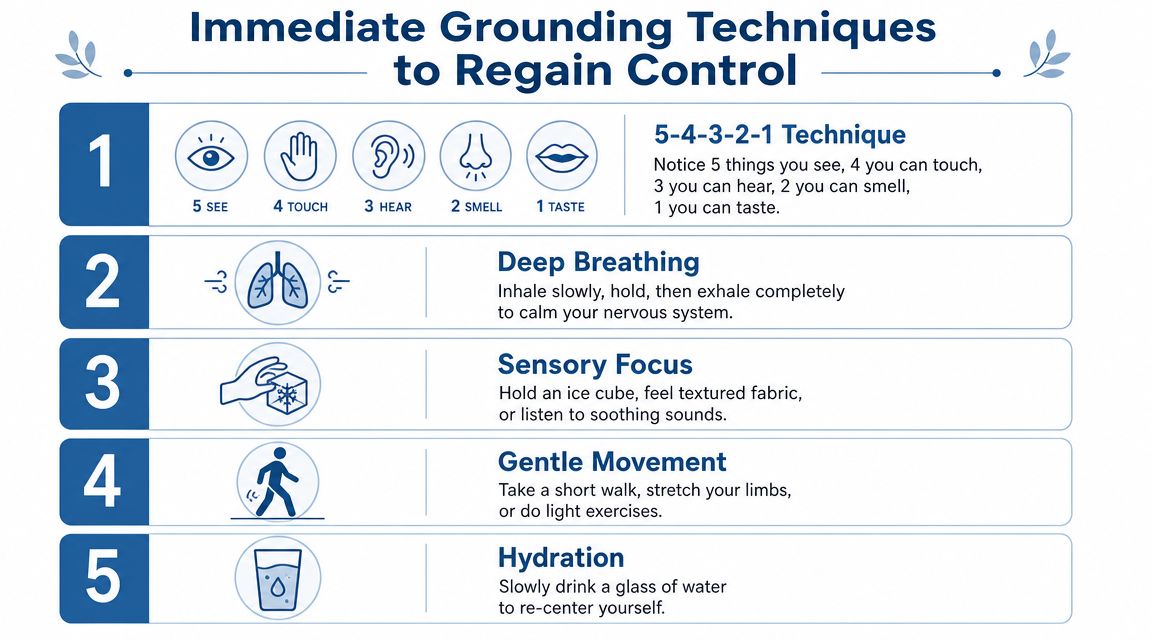
Public health guidance on acute mental health distress emphasizes immediate de-escalation. Step away from the trigger if possible, use calming techniques like deep breathing, and get professional help quickly if symptoms are escalating. Cleveland Clinic also advises calling emergency services if there are thoughts of self-harm, and notes the former urgent support number 1-800-273-TALK in that context, while the National Institute of Mental Health also recommends breathing exercises and avoiding excess caffeine when overwhelm builds up, as explained in Cleveland Clinic's guidance on nervous breakdown symptoms and response.
What to do in the next five minutes
Leave the trigger if possible.
Go to a bathroom stall, quiet office, hallway, porch, or parked car. Less noise and less visual input can help quickly.Use the 5-4-3-2-1 grounding method.
Name five things seen.
Touch four things.
Notice three sounds.
Identify two smells.
Focus on one taste.
This pulls attention out of spiraling thoughts and back into the room.Slow the breath on purpose.
Inhale gently. Pause. Exhale longer than the inhale. Repeat. For a clear demonstration, this psychiatrist's guide to box breathing gives a simple pattern many people can follow even when they're overwhelmed.Use strong but safe sensory input.
Hold an ice cube. Run cool water over the hands. Grip a textured blanket. Press both feet firmly into the floor.Drink water slowly.
Not fast. Not all at once. The point is to slow down and reorient.
What usually makes things worse
Some responses feel helpful in the moment but raise the risk of a harder crash later.
- More caffeine: This can intensify agitation and physical anxiety.
- Alcohol or non-prescribed drugs: These may numb distress briefly, then worsen instability.
- Doom scrolling or texting everyone: More stimulation usually means more overwhelm.
- Trying to power through: Pushing harder often turns a bad hour into a dangerous day.
Practical rule: If an action speeds the body up, it probably isn't the right move during acute overwhelm.
If the person also struggles with substance use, grounding skills work better when paired with healthier recovery habits. This overview of coping skills for addiction is useful for building options beyond white-knuckling through panic, cravings, and emotional crashes.
Creating Your Safe Space for the Next 24 Hours
The peak of the crisis may pass, but the nervous system usually stays tender for a while. The next day matters. On this day, many people either stabilize or get pulled back into the same overload.

Lower the load on the nervous system
For the next several hours, the priority is reducing input and increasing predictability. A person doesn't need to earn rest after a breakdown. Rest is part of the response.
Turn down lights if possible. Silence nonessential notifications. Avoid crowded stores, arguments, and emotionally loaded conversations. If work can wait, let it wait.
A short message to one trusted person can help: "Today is rough. Please check in." Isolation tends to magnify distress. Connection helps people orient again.
Choose calm over appearance. A person doesn't need to look fine to start recovering.
A simple stabilization checklist
Major public-health guidance on recovery after immediate distress points toward a core bundle of habits: sleep at least 7 hours per night, maintain regular physical activity, limit alcohol and non-prescribed drug use, and stay connected with trusted people. The CDC also recommends starting movement in small amounts and building toward about 2.5 hours per week, which is outlined in the CDC's mental health guidance for daily living.
For the next 24 hours, that can look like this:
- Eat something simple: toast, soup, rice, yogurt, or another easy meal.
- Keep fluids nearby: water first.
- Protect sleep tonight: dark room, quiet space, no pressure to perform.
- Move a little: a brief walk outside, a slow stretch, or pacing the living room.
- Avoid alcohol and drugs: especially if they were part of what made the crash worse.
- Reduce caffeine: this matters if the body is still revved up.
- Stay with safe people: or ask someone to stay nearby.
If the person lives alone and doesn't feel steady, it may be wise to spend the night with someone trusted or ask someone to check in several times. The goal isn't independence tonight. The goal is stability.
When to Call for Professional Help in Dallas
Self-soothing is useful. It is not enough for every crisis. Some situations need professional intervention quickly, and waiting can raise the risk.
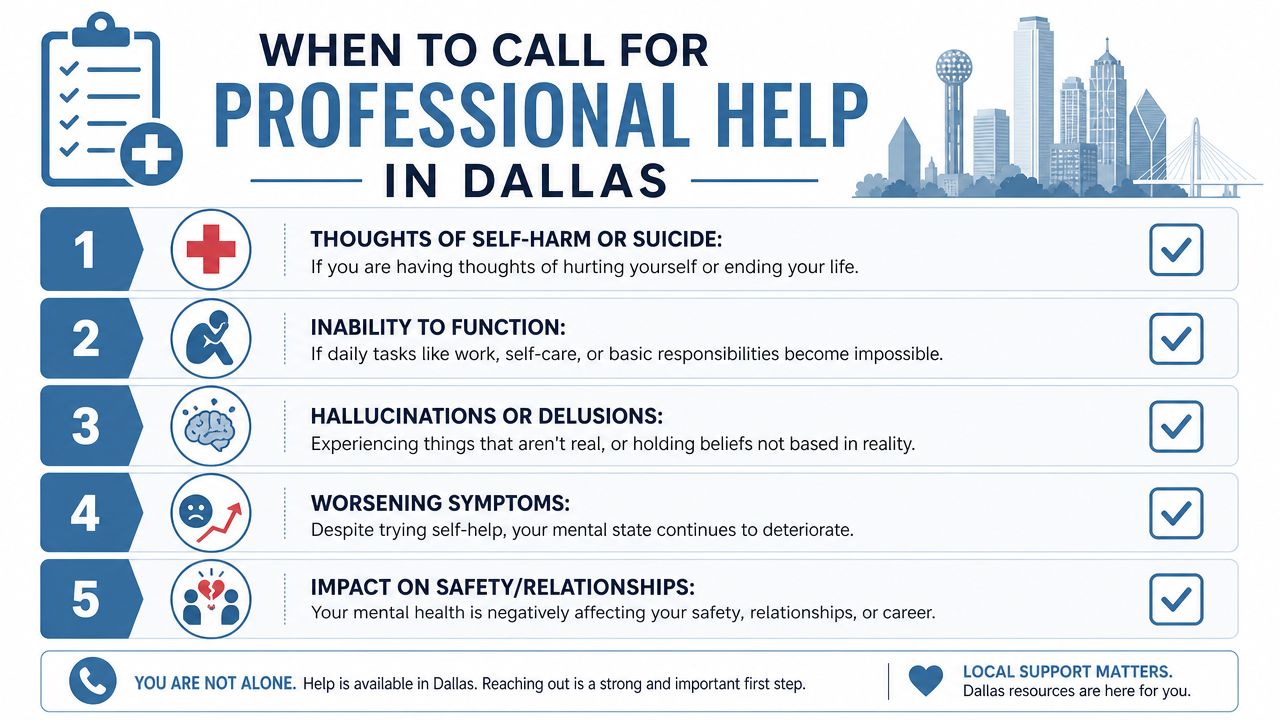
Clear signs it is time to reach out
A person in Dallas should seek immediate or urgent help if any of the following are happening:
- Thoughts of self-harm or suicide: This is an emergency. Call emergency services right away.
- Basic functioning is breaking down: not eating, not sleeping for long stretches, unable to care for hygiene, unable to stay safe alone.
- The person is hearing, seeing, or believing things that aren't grounded in reality.
- Symptoms are worsening instead of settling.
- Substance use or withdrawal is involved: especially alcohol, opioids, benzodiazepines, stimulants, or mixed use.
- The crisis is affecting safety at home, work, or on the road.
People often hesitate because they think they should be able to manage it themselves. That belief keeps many crises going longer than necessary. Getting help isn't overreacting when safety, functioning, or substance withdrawal is on the line.
What asking for help can look like
Professional support doesn't always mean the same level of care. Sometimes it means a same-day mental health evaluation. Sometimes it means outpatient therapy. Sometimes it means a higher level of care because symptoms are too intense to manage at home.
This overview of outpatient mental health treatment can help families understand one common option when the person needs structured care but not a medical emergency response.
The right question isn't "Am I sick enough?" The right question is "Am I safe enough to keep handling this alone?"
In Dallas and the broader DFW area, timing matters. If the person cannot reliably stay safe, is rapidly deteriorating, or may be in withdrawal, don't wait for a better moment. Act while support is still reachable.
Finding Integrated Mental Health and Detox Care in DFW
A mental breakdown and substance use often feed each other. Someone drinks to sleep, then wakes up more anxious. Someone uses pills to slow down, then crashes harder when they wear off. Someone uses stimulants to function, then becomes agitated, paranoid, or unable to rest. In those cases, treating only the emotional crisis while ignoring the substance issue rarely works well.

Why substance use changes the picture
When alcohol or drugs are part of the breakdown, the person may need more than talk support. Withdrawal, rebound anxiety, sleep disruption, cravings, and mood instability can all complicate recovery.
That is why dual diagnosis care matters. It means addressing mental health symptoms and substance use together instead of pretending they are separate problems. If panic, depression, trauma symptoms, or emotional collapse are tied to alcohol, opioids, fentanyl, cocaine, methamphetamine, or prescription medication misuse, integrated care is often safer and more realistic.
For readers looking at treatment options in the Dallas area, dual diagnosis treatment programs explain how coordinated support can work when both mental health and addiction are involved.
What integrated care can include
Depending on the situation, care may involve medically supervised detox, therapy, medication support, outpatient follow-up, or a more structured program. One local option is Tru Dallas Detox & Recovery Center, which serves Dallas Fort Worth from Euless with medically supervised detox, dual diagnosis treatment, outpatient options, and aftercare planning for people whose mental health crisis is complicated by substance use.
Families often get stuck on practical concerns right when quick action matters most. Insurance is one of them. For people trying to understand plan details before admission, this guide to Community Health Choice eligibility may help clarify part of the insurance picture in Texas.
A person doesn't need to wait until life is in ruins to ask for this level of help. If the breakdown keeps returning, if substances are being used to cope, or if withdrawal may be part of the crisis, an assessment can clarify the safest next step.
Building Long-Term Resilience to Prevent Future Crises
Stopping the immediate collapse is only the beginning. Many people get basic crisis advice, then are left alone with the harder question: how to keep this from happening again next week.
That gap matters. Existing guidance often focuses on breathing, grounding, and getting through the first wave, but practical post-crisis care matters too. The strongest neutral guidance points toward ongoing counseling, structured routines, and avoiding alcohol or drugs, while also noting that about 1 in 8 people globally live with a mental disorder, which highlights how common the need for real follow-up is, as described in GoodRx's overview of helping during a mental health crisis.
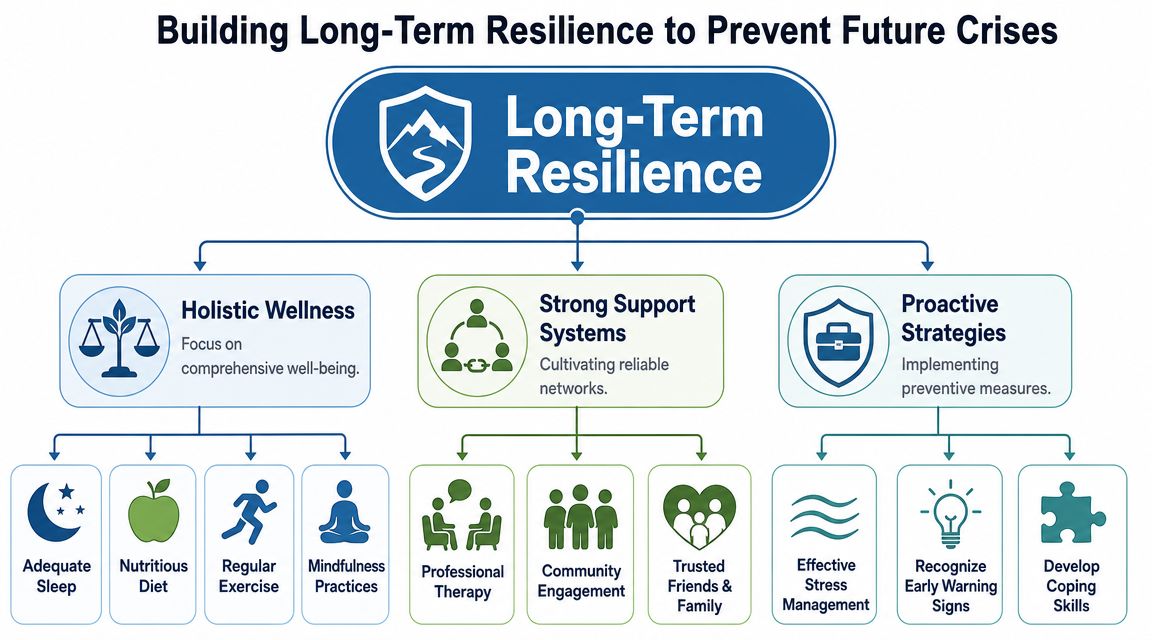
The recovery plan many people never get
A useful resilience plan is concrete. It doesn't rely on motivation alone. It answers a few simple questions:
| Question | Useful answer |
|---|---|
| What are the early warning signs? | poor sleep, isolating, using more substances, racing thoughts, hopelessness |
| Who gets contacted first? | one friend, one family member, one clinician |
| What gets reduced quickly? | caffeine, conflict, late nights, overstimulation |
| What level of care is next if symptoms rise? | therapist, outpatient program, detox assessment, urgent evaluation |
That kind of plan reduces confusion during the next rough day.
Recovery gets stronger when people stop relying on willpower alone and start building accountability, structure, and repeatable routines.
For readers who respond well to practical behavior change, these effective strategies for recovery offer a useful perspective on why support systems tend to work better than trying to muscle through alone.
What resilience looks like in daily life
Long-term prevention usually looks ordinary from the outside. Consistent sleep. Honest conversations. Therapy appointments kept even on better weeks. Less chaos. Fewer secret coping habits. More willingness to ask for help early.
A stronger plan might include:
- Ongoing counseling: especially when breakdowns are linked to anxiety, depression, trauma, or grief.
- Structured routines: wake time, meals, movement, and bedtime that don't swing wildly.
- Substance boundaries: complete abstinence for some people, or a formal treatment plan if stopping feels difficult or unsafe.
- Regular check-ins: one weekly conversation with a trusted person can catch early changes.
- Escalation rules: if sleep crashes, panic rises, or use returns, the person moves up to more support quickly.
This is how to stop a mental breakdown from becoming a cycle. Not by one perfect coping skill, but by building a life with fewer triggers, faster support, and less chemical fuel on the fire.
If a mental health crisis in Dallas is tangled up with alcohol, drugs, withdrawal, or recurring emotional collapse, Tru Dallas Detox & Recovery Center can help clarify the next step. A confidential call can help families discuss symptoms, treatment options, and insurance verification without delay.