
Feeling run down, foggy, nauseated, or strangely “off” can send anyone into a spiral. In Dallas, many people start with a simple online search for the symptoms of detoxing heavy metals, then get hit with a flood of advice about teas, powders, cleanses, binders, and home flushes. That's where confusion starts. Some of those suggestions talk about “detox” as if it's a wellness ritual. In medicine, it means something very different.
Heavy metal exposure can cause symptoms that look like ordinary illness. Fatigue, headaches, brain fog, stomach upset, tingling, constipation, and muscle aches don't point neatly to one diagnosis. They overlap with dehydration, viral illness, medication side effects, anxiety, substance withdrawal, and many other conditions. That overlap is exactly why self-diagnosis is risky.
A common pattern looks like this. Someone in the Dallas-Fort Worth area feels persistently unwell, suspects toxins, starts a home protocol, and then feels worse. At that point, it becomes hard to tell whether the person is reacting to actual metal exposure, reacting to an unregulated product, or delaying care for another medical issue entirely. For readers exploring broader lifestyle ideas, Yuve's natural body detox can be a useful example of how people think about general wellness support, but it shouldn't be confused with treatment for confirmed heavy metal poisoning.
Real heavy metal toxicity requires medical judgment. Real treatment, when poisoning is confirmed, may involve chelation therapy, careful monitoring, and follow-up testing. The safest first step isn't guessing. It's getting evaluated.
Table of Contents
- Introduction What to Expect When Detoxing Heavy Metals
- Understanding Heavy Metal Toxicity and Clinical Detox
- Common and Specific Symptoms of Heavy Metal Detox
- The Critical Risks of Unsupervised Heavy Metal Detox
- The Medical Detox Process at a Dallas Treatment Center
- When to Seek Immediate Medical Help in Dallas
- Frequently Asked Questions About Heavy Metal Detox
- Can a detox tea or kit remove heavy metals
- Are the symptoms of detoxing heavy metals always dangerous
- How long do symptoms last
- Can someone diagnose heavy metal toxicity from symptoms alone
- What does medically supervised detox do differently
- Does insurance cover medical detox in Dallas
- What if the person also has substance use or mental health symptoms
Introduction What to Expect When Detoxing Heavy Metals
People searching for the symptoms of detoxing heavy metals usually aren't curious in the abstract. They're worried. They may be dealing with nausea, headaches, bowel changes, weakness, odd nerve sensations, or a mental fog that won't lift. They may also be wondering whether what they're feeling is from heavy metals, from a detox attempt, or from something else entirely.
That uncertainty matters because heavy metal symptoms are often nonspecific. Clinical descriptions include fatigue, headaches, brain fog, tingling or burning sensations, achy joints and muscles, constipation, nausea, vomiting, diarrhea, abdominal pain, and neurologic changes such as confusion or numbness, as noted in this review on heavy metal exposure and treatment.
Practical rule: If symptoms are vague, worsening, or affecting thinking, breathing, hydration, or heart rhythm, a home detox experiment isn't the safe next move.
Another source of confusion is the word “detox.” In wellness culture, it often means juices, supplements, saunas, or cleanses. In actual clinical care, detoxing heavy metals means assessing exposure, confirming it with testing, stopping the source, and using medical treatment when appropriate. When poisoning is confirmed, the standard response is chelation therapy, not a pantry remedy or social media protocol.
Some people do feel unwell during medically supervised treatment. That doesn't make the treatment wrong. It means the body is dealing with both the toxic exposure and, sometimes, side effects from the treatment itself. Sorting those apart requires monitoring, not guesswork.
For people in Dallas who are trying to decide whether they're dealing with something mild or something dangerous, the key question isn't “What cleanse should be tried next?” It's “What symptoms can be watched safely, and which ones mean immediate medical attention is needed?”
Understanding Heavy Metal Toxicity and Clinical Detox
A Dallas patient may come in convinced a supplement, sauna, or cleanse is “pulling metals out,” when the actual problem is ongoing exposure, dehydration, a medication reaction, or active poisoning that needs urgent care. That confusion is dangerous. Heavy metal toxicity can affect the gut, nerves, kidneys, heart, and brain, and treatment decisions depend on which metal is involved, how much entered the body, and whether exposure is still happening. The National Institute of Environmental Health Sciences outlines common sources and health effects of metals such as lead, mercury, arsenic, and cadmium in its overview of heavy metals and human health.
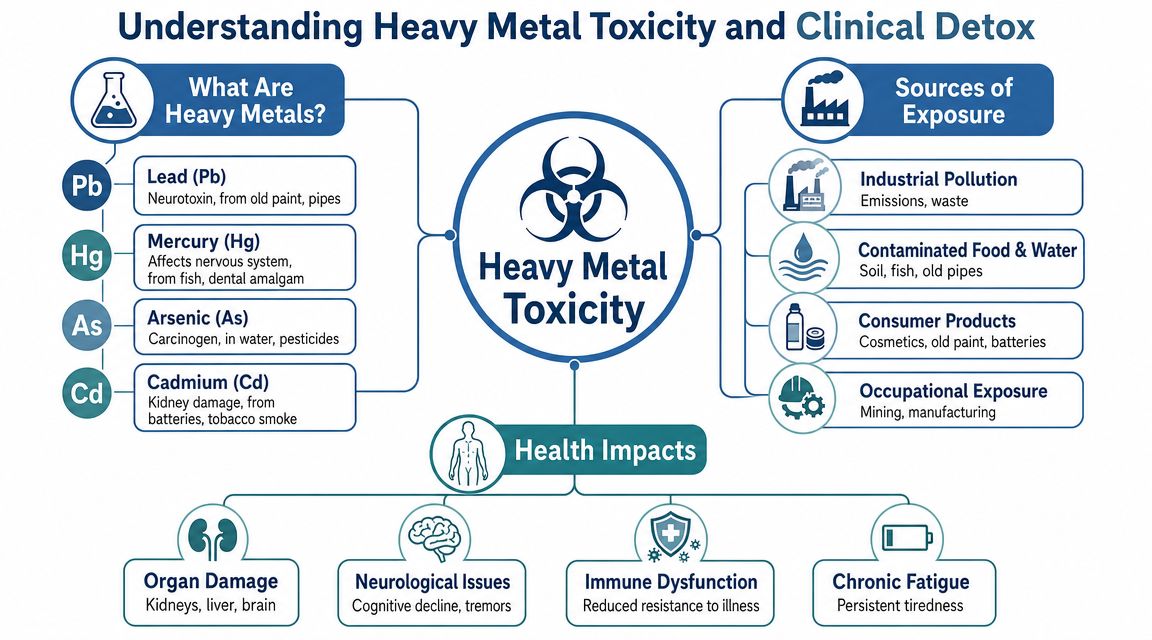
What heavy metals are and why they matter
Heavy metals enter the body through work exposures, contaminated dust, older buildings, certain products, food, and water. In practice, the challenge is rarely “Do metals exist?” The challenge is recognizing when a symptom pattern fits toxic exposure well enough to justify testing and close medical evaluation.
Symptoms also do not behave the same way in every case. A large exposure may trigger rapid gastrointestinal or neurologic symptoms. Lower-level exposure over time may look less dramatic at first, with ongoing weakness, concentration problems, sensory changes, or unexplained decline. That slower pattern is one reason people mislabel serious illness as a routine detox response.
I also tell patients to be careful about self-diagnosis if they are taking other medications. Problems blamed on heavy metals can overlap with side effects from stimulants, antidepressants, sleep aids, or withdrawal states. This ADHD medication side effects guide is one example of how medication-related symptoms can mimic other medical concerns.
What clinical detox actually means
Clinical detox starts with diagnosis. That includes a history of likely exposure, a review of current symptoms, medication and substance use assessment, physical exam, and testing when appropriate. The first step is stopping the source. Treatment only makes sense after that.
Chelation is not a wellness ritual. It is a medical treatment used in selected cases, with monitoring for side effects and for the patient's overall stability. In the wrong setting, a person can miss a dangerous diagnosis, worsen dehydration, or delay care for symptoms that need immediate attention. That is why unsupervised heavy metal detox is a poor gamble, especially for anyone in Dallas with chest symptoms, confusion, severe vomiting, fainting, or significant psychiatric distress.
Some people do feel ill during legitimate treatment, but “feeling bad” is not specific enough to guide safe care. The primary clinical challenge is telling apart a temporary treatment-related reaction from signs of worsening toxicity, another illness, or a complication that needs emergency evaluation. For readers trying to sort out what can be watched and what should never be handled at home, this guide to detox symptoms, what's normal, and when to get help gives useful context.
Common and Specific Symptoms of Heavy Metal Detox
When people ask about the symptoms of detoxing heavy metals, they're usually describing one of two things. They may mean symptoms from the metal exposure itself, or they may mean symptoms that occur during clinically supervised removal, including chelation-related side effects. Those are not the same thing, though they can overlap.
Symptoms that often show up first
Across confirmed exposures and supervised treatment settings, the most common early complaints tend to be gastrointestinal and systemic. Reported symptoms include:
- Nausea and vomiting: common in both toxicity and treatment-related reactions
- Abdominal cramps or pain: often paired with bowel changes
- Diarrhea or constipation: either pattern can occur
- Fatigue and weakness: often mistaken for stress, burnout, or viral illness
- Headache: a frequent complaint, but not specific
- Metallic taste: sometimes reported during treatment or active exposure
- Numbness or tingling: may suggest nervous system involvement
- Brain fog or confusion: deserves careful medical attention
Because these signs overlap with many other conditions, symptoms alone can't confirm heavy metal toxicity. Readers who want a broader comparison with other detox-related symptom patterns can review this guide to what detox symptoms can look like and when to get help.
Some overlap also exists with non-toxicologic causes of headache, appetite change, sleep disruption, and concentration problems. For example, medication reactions can muddy the picture, which is why resources like this ADHD medication side effects guide can help illustrate how easily symptom clusters can be mistaken for something they're not.
How symptoms can differ by metal
The details matter. While many symptoms are shared, some patterns are more suggestive of specific metals.
| Heavy Metal | Primary Systems Affected | Characteristic Symptoms |
|---|---|---|
| Arsenic | Gastrointestinal, cardiovascular, neurologic | Severe burning of the mouth and throat, abdominal pain, nausea, vomiting, diarrhea, hypotension |
| Thallium | Neurologic, gastrointestinal, hair follicles | Extreme drowsiness, GI distress, rapid hair loss |
| Lead | Nervous system, gastrointestinal | Fatigue, headache, constipation, cognitive complaints, numbness or tingling |
| Mercury | Nervous system, gastrointestinal | Brain fog, neurologic changes, nausea, vomiting, abdominal symptoms |
| Cadmium | Gastrointestinal, systemic | GI symptoms, weakness, generalized illness patterns |
Symptoms that are “common” aren't necessarily harmless. Their significance depends on timing, severity, and the exposure history.
A practical way to think about this is to separate annoying symptoms from escalating symptoms. Mild nausea, headache, and fatigue can happen in many illnesses and in supervised treatment. New confusion, severe vomiting, worsening numbness, collapsing energy, or symptoms that accelerate quickly need medical review.
That's why the phrase symptoms of detoxing heavy metals can be misleading. The body isn't “cleansing.” It may be responding to a toxic exposure, a medical intervention, or another condition entirely. The only safe path is evaluation that connects symptoms with testing and exposure history.
The Critical Risks of Unsupervised Heavy Metal Detox
A Dallas resident starts an online “heavy metal detox” after weeks of fatigue and brain fog. By that evening, the symptoms are no longer vague. Repeated vomiting, dizziness, and worsening weakness can look like a normal reaction to treatment, but they can also signal dehydration, kidney stress, electrolyte problems, or ongoing toxicity. At home, there is no safe way to sort that out in real time.

Why home detox can become dangerous fast
Heavy metal treatment is not a wellness cleanse. It is medical care used in selected cases after evaluation confirms exposure and shows that treatment is appropriate.
Chelation can cause adverse effects even when prescribed correctly. The U.S. Food and Drug Administration has warned that chelation products sold over the counter or online may be unsafe and may delay proper treatment, while prescription chelating agents require clinical oversight because of risks that include kidney injury, low calcium, and other serious complications, as described by the FDA's warning on non-prescription chelation products.
The practical problem is simple. People often label any new symptom as “detox.” In clinic, we do the opposite. We ask whether the symptom is mild and self-limited, or whether it suggests a dangerous turn that needs immediate assessment.
A mild headache or temporary nausea after treatment discussion is very different from severe vomiting, fainting, chest symptoms, confusion, a marked drop in urine output, or shaking that looks like a seizure. Those are not symptoms to watch for a few more hours. They are reasons to get medical help.
What people often miss
The biggest risk in unsupervised detox is misreading warning signs. A person may assume feeling worse means toxins are leaving the body, when the underlying problem is fluid loss, medication misuse, or a condition that was never heavy metal toxicity in the first place.
That same pattern shows up in other areas of health. Therapy with Ben's advice on medication risks makes a useful broader point: symptoms that appear after starting an intervention should be reassessed, not automatically normalized.
In Dallas, the danger rises when heavy metal concerns overlap with alcohol withdrawal, substance use, anxiety, heart disease, or kidney problems. These situations can blur together fast. Restlessness may be withdrawal, not “detox.” Vomiting may be poisoning, not cleansing. Confusion may be a medical emergency.
That is why medical supervision matters during detox in Dallas. Monitoring changes decisions early, before a treatable problem turns into a crisis.
Unsupervised heavy metal detox is risky because it can hide a true emergency, delay diagnosis, and add preventable stress to the kidneys, brain, and cardiovascular system.
The Medical Detox Process at a Dallas Treatment Center
A safe detox plan starts with a diagnosis, not a supplement list or an online protocol. In practice, the first job is to confirm whether heavy metals are involved, how serious the exposure may be, and whether the symptoms fit toxicity, another medical condition, or both.
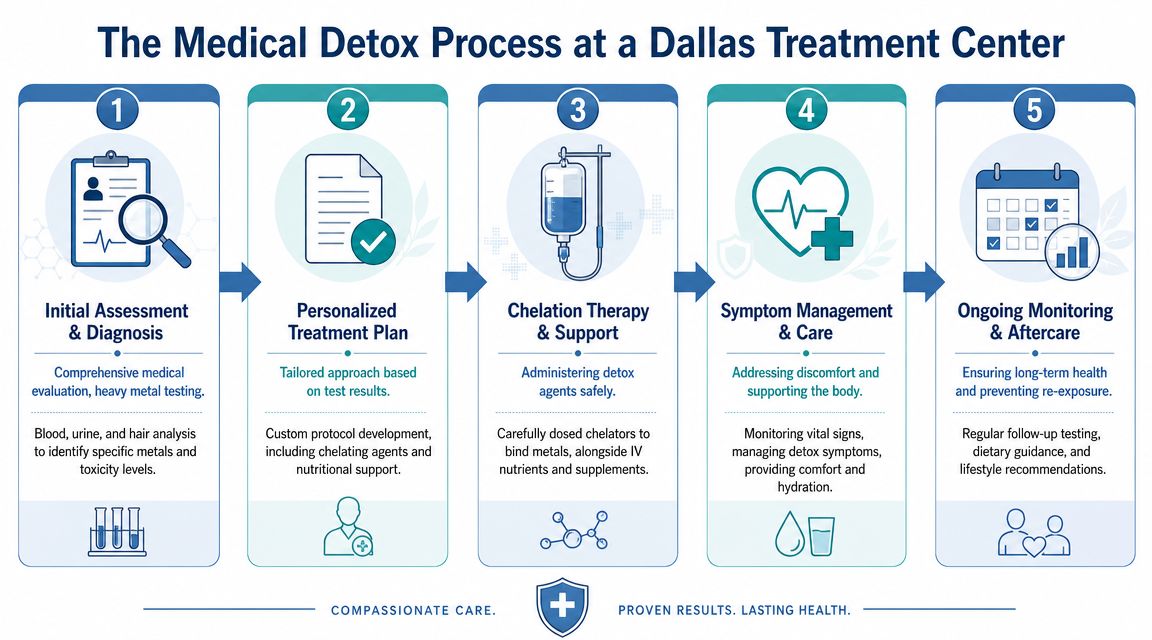
Step one is confirming the problem
Medical evaluation usually begins with a detailed exposure history, medication review, physical exam, and targeted testing. Blood or urine testing may be appropriate. Some patients also arrive with outside hair analysis, but those results need careful interpretation because they do not answer the full clinical question on their own.
This step matters because the symptoms people call “detox” often overlap with dehydration, infection, anxiety, alcohol or drug withdrawal, kidney problems, and neurologic illness. In Dallas, I would rather slow the process down and get the diagnosis right than rush into a treatment that adds risk.
Early clinical decisions focus on a few practical questions:
- Is the exposure still happening? If so, stopping the source is part of treatment.
- How sick is the patient right now? Mild fatigue is managed very differently from confusion, repeated vomiting, or worsening weakness.
- Are the kidneys, liver, heart, or nervous system under stress? Basic labs, hydration status, and neurologic checks help answer that.
- Will treatment help more than it harms? Chelation can be appropriate in selected cases, but it is not routine care for every nonspecific symptom.
What supervised treatment includes
When a clinician confirms toxic metal exposure and decides treatment is indicated, care may include chelation under direct medical supervision. The specific chelator, the route, and the monitoring plan depend on the metal involved, the degree of illness, and the patient's kidney function and overall stability. The Agency for Toxic Substances and Disease Registry notes that chelation is used in specific heavy metal poisonings and should be guided by the clinical picture, not used casually or without oversight.
Supportive care often determines whether treatment stays safe. Patients may need IV fluids, anti-nausea medication, repeat labs, cardiac monitoring, or frequent reassessment of mental status and urine output. Those details are not extras. They are how clinicians separate expected treatment effects, such as temporary nausea or fatigue, from warning signs that suggest the plan needs to change.
That distinction is one of the biggest reasons home detox is dangerous. A mild headache after treatment may only need observation. New confusion, worsening shortness of breath, a racing heartbeat, or falling urine output can signal a serious complication and require immediate action.
A structured medical detox program for supervised stabilization and monitoring gives patients a safer path from intake through treatment decisions and early recovery. Families also get something important. They no longer have to guess whether a symptom is expected, benign, or the start of an emergency.
Safe detox care depends on repeated reassessment. The question is never just whether toxins are leaving the body. The question is whether the patient is becoming more stable, not less.
When to Seek Immediate Medical Help in Dallas
A Dallas patient starts a home “detox,” then develops vomiting, dizziness, and trouble thinking clearly by evening. At that point, the question is no longer whether the body is “cleansing.” The question is whether a medical emergency is developing.
That distinction matters. Mild symptoms such as temporary fatigue, a mild headache, or brief nausea can occur during evaluation or treatment. Symptoms that escalate, interfere with breathing or hydration, or change mental status need immediate medical attention. The National Institute of Diabetes and Digestive and Kidney Diseases notes that heavy metals can cause acute liver injury, which is one reason sudden worsening symptoms should never be managed casually at home (NIDDK overview of toxic liver injury).
Red flag symptoms that need urgent care
Get emergency help in Dallas right away if any of these symptoms are present:
- Confusion, disorientation, or sudden behavior changes
- Shortness of breath, chest tightness, or labored breathing
- Fainting, seizure, or loss of consciousness
- A pounding, racing, or irregular heartbeat
- Repeated vomiting or inability to keep fluids down
- Very low urine output or no urination
- Severe weakness, collapse, or inability to stand safely
- Rapidly worsening numbness, tremors, or new trouble speaking or walking
These are not symptoms to monitor overnight. They can signal dehydration, cardiac strain, neurologic injury, or organ stress that needs prompt evaluation.
What to do next
Call 911 or go to the nearest emergency department if symptoms are severe or progressing quickly. If the person is confused, faint, or at risk for seizure, do not let them drive.
If symptoms feel less dramatic but are clearly getting worse, get same-day medical care. In practice, families often lose time. They assume they are seeing a harmless detox reaction when the person is becoming less stable.
Use a simple safety standard. If the person cannot drink and keep fluids down, stay awake, breathe comfortably, think clearly, or urinate normally, get urgent medical help now.
Frequently Asked Questions About Heavy Metal Detox
Can a detox tea or kit remove heavy metals
Not reliably, and they shouldn't be treated as a substitute for medical care. When true heavy metal poisoning is confirmed, the standard medical response is chelation therapy under supervision. Teas, cleanses, and home kits may create a false sense of progress while delaying diagnosis.
Are the symptoms of detoxing heavy metals always dangerous
No. Some symptoms can be mild or nonspecific, including headache, fatigue, nausea, bowel changes, or weakness. The issue is that mild and dangerous symptoms can overlap early on, which is why testing and medical assessment matter more than symptom guessing.
How long do symptoms last
There isn't one fixed timeline. Symptoms depend on the metal involved, the amount of exposure, how long exposure lasted, the route of exposure, and the person's overall health. Treatment-related symptoms can also vary depending on whether chelation is being used and how the patient tolerates it.
Can someone diagnose heavy metal toxicity from symptoms alone
No. Symptoms overlap with many other disorders. Testing and clinical evaluation are needed to confirm exposure and guide treatment safely.
What does medically supervised detox do differently
It confirms exposure, stops the source, monitors hydration and organ function, and decides whether chelation is appropriate. It also helps clinicians distinguish between symptoms from toxicity and side effects from treatment.
Does insurance cover medical detox in Dallas
Coverage depends on the plan, the medical necessity of treatment, and the services being provided. The most practical next step is insurance verification before admission so families understand their options clearly.
What if the person also has substance use or mental health symptoms
That raises the need for professional evaluation, not less. Heavy metal concerns can overlap with withdrawal, medication effects, anxiety, depression, and other urgent conditions. A medically supervised setting is the safest place to sort that out.
If heavy metal symptoms, detox concerns, or overlapping withdrawal issues are putting someone at risk, Tru Dallas Detox & Recovery Center can help guide the next step with compassionate, medically supervised care. Families in Dallas-Fort Worth can reach out to discuss symptoms, verify insurance, and get clear direction on whether immediate detox evaluation is needed.
