

Deciding to stop drinking is a massive, courageous step. But how you quit is just as critical as why. For anyone in the Dallas area, it's vital to understand that the single greatest danger of quitting alcohol cold turkey is that it can trigger a severe, unpredictable, and potentially fatal withdrawal.
Suddenly stopping can kick off a condition known as Alcohol Withdrawal Syndrome (AWS), which can quickly spiral into life-threatening emergencies like seizures and Delirium Tremens. The only safe way to begin recovery is with professional medical support at a trusted Dallas detox center like Tru Dallas.
Why Quitting Alcohol Suddenly Is Dangerous

When someone drinks heavily for a long time, their brain and central nervous system learn to function with the constant presence of alcohol. Alcohol is a depressant—it slows everything down. To compensate, the brain ramps up its own activity just to keep things running, creating a new, highly fragile state of balance.
Think of it like this: your brain is a speeding train, and alcohol has been acting as the emergency brake. When you quit cold turkey, you’re not just easing off the brake; you’re ripping the brake lines out entirely. The train doesn't just stop—it jolts forward, completely out of control.
Your central nervous system, finally free from alcohol’s sedative grip but still stuck in that hyper-alert state, goes into overdrive. This is what triggers Alcohol Withdrawal Syndrome (AWS), a collection of symptoms that can go from deeply uncomfortable to flat-out deadly. For anyone in the Dallas area, trying to white-knuckle your way through this alone is a dangerous gamble.
Understanding the Immediate Risks
The physical and psychological fallout from quitting abruptly can be overwhelming, and it can escalate with terrifying speed. Without professional medical support from a leading Dallas detox center, you are completely exposed to severe complications that demand immediate emergency care.
The key dangers include:
- Seizures: Grand mal seizures are a common and life-threatening risk. They often strike without warning, usually within the first 48 hours of the last drink.
- Delirium Tremens (DTs): This is the most severe and feared form of alcohol withdrawal. It’s marked by extreme confusion, terrifying hallucinations, high fever, and dangerous swings in heart rate and blood pressure. The DTs are a full-blown medical emergency with a significant mortality rate if left untreated.
- Cardiovascular Stress: The sudden shock to your system can cause your heart rate and blood pressure to skyrocket, dramatically increasing the risk of a heart attack or stroke.
- Severe Dehydration: Vomiting and diarrhea are extremely common withdrawal symptoms. They can lead to dangerous electrolyte imbalances that put immense strain on your organs.
The crucial takeaway is this: Alcohol withdrawal is a serious medical condition that demands a medical response. It is not a test of willpower.
Quitting Cold Turkey vs Medical Detox At a Glance
Choosing the right path to quit drinking is the single most important decision you'll make for your health and your future. To give you a clearer picture of the stakes, we've put together a table that compares the risks of going it alone against the safety of a structured, medical approach at our trusted Dallas detox center.
| Concern | Risk of Quitting Cold Turkey | Safety of Medical Detox at Tru Dallas |
|---|---|---|
| Seizures | High risk of sudden, life-threatening seizures with no immediate medical support. | Proactive use of anti-seizure medication and 24/7 monitoring prevent seizures before they start. |
| Delirium Tremens (DTs) | Significant risk of developing this fatal condition without access to emergency care. | Continuous medical supervision and appropriate medications effectively prevent the onset of DTs. |
| Comfort | Intense and painful physical and psychological symptoms, leading to a high chance of relapse. | A personalized medication plan manages pain and anxiety, ensuring a safe and comfortable detox experience. |
| Medical Stability | Dangerous fluctuations in heart rate, blood pressure, and body temperature go unmonitored. | Vital signs are constantly tracked by our clinical team to ensure stability and address any issues immediately. |
| Relapse | The overwhelming discomfort often forces individuals to drink again just to stop the symptoms. | A supportive, substance-free environment and craving management reduce the likelihood of relapse. |
If you or someone you love in the Dallas-Fort Worth area is thinking about stopping, please don't risk doing it alone. The expert team at Tru Dallas Detox & Recovery Center provides the medical care and compassionate support needed to get you through this critical first step safely. Call us now for a confidential assessment.
What Happens to Your Brain During Alcohol Withdrawal
To really get why quitting alcohol “cold turkey” can be so dangerous, we have to look under the hood at what’s happening in your brain. Chronic, heavy drinking doesn’t just impact your liver or your mood; it fundamentally rewires your brain’s chemistry, forcing it to adapt to a new, hazardous normal. Over time, your brain actually becomes dependent on alcohol just to feel balanced.
Think of your brain as having two main controls that work in opposition to each other: a brake pedal and a gas pedal.
- The brake is a neurotransmitter called GABA (gamma-aminobutyric acid). Its job is to calm everything down, slow brain activity, and make you feel relaxed.
- The gas is a neurotransmitter called Glutamate. It’s an excitatory chemical that keeps your brain alert, firing on all cylinders, and ready for action.
Alcohol is a depressant, which means it dramatically amplifies the effects of GABA, essentially slamming on your brain's brakes. At the same time, it blocks glutamate, taking the foot completely off the gas. This is what causes that slowed-down, relaxed feeling you get when you drink.
The Rebound Effect and Hyperactivity
When you drink heavily for a long time, your brain doesn’t just sit back and take this constant sedation. It fights back. To counteract the brake-slamming effect of alcohol, your brain starts producing a massive surplus of glutamate, its natural stimulant. It literally learns to keep its foot floored on the gas pedal just to try and function normally.
This creates a new, incredibly volatile state of balance. As long as alcohol is in your system, pressing down on the brakes, the system stays in a fragile equilibrium.
The real danger emerges when you suddenly quit. When you stop drinking cold turkey, the calming, braking effect of alcohol is abruptly yanked away. But your brain, still in survival mode, keeps producing a flood of the stimulant glutamate. Suddenly, the gas pedal is stuck to the floor with absolutely no brakes to slow it down.
This catastrophic imbalance throws your central nervous system into a state of extreme hyperactivity. This isn't about willpower or mental toughness; it is a full-blown physiological crisis. This neurological rebound is the direct cause of the severe symptoms of Alcohol Withdrawal Syndrome (AWS), including tremors, debilitating anxiety, and life-threatening seizures.
Why This Chemical Imbalance Requires Medical Care in Dallas
This state of brain hyperactivity is a medical emergency waiting to happen. The sudden, uncontrolled surge in excitatory signals can completely overwhelm your neural pathways, leading to unpredictable and dangerous outcomes. It’s the biological reason why trying to quit alone at your home in Dallas or a nearby neighborhood like Highland Park is such a profound risk.
Attempting to manage this intense neurological storm without medical supervision is like trying to fix the complex wiring in your house with no training—the potential for disaster is just too high. The symptoms are a direct signal that your brain is in crisis, which is why a medical solution is non-negotiable. To truly grasp the severity, it's vital to understand alcohol's long-term impact on brain health and the deep-seated changes that have taken place.
At a professional Dallas detox center like Tru Dallas, our medical team doesn't just watch you ride out the storm. We use evidence-based medications to gently and safely restore that chemical balance. These medications act as a temporary, safe substitute for the "brakes," easing your brain out of its hyperactive state and preventing the most dangerous complications from ever happening.
If you're in the Dallas area and ready to stop drinking, understanding this process is the first step toward seeking safe, effective help. The compassionate specialists at Tru Dallas Detox & Recovery Center are here 24/7 to manage these risks and guide you safely through withdrawal. Call us today to learn how our medical team can protect your brain and body during this critical time.
The Timeline of Alcohol Withdrawal Symptoms
To really grasp the dangers of quitting alcohol cold turkey, you have to understand what happens to your body and when. While everyone’s experience is a bit different, alcohol withdrawal follows a predictable pattern—one that can turn dangerous fast without the right medical support. For many in Dallas, seeing this timeline laid out is the first real step toward choosing a much safer way to quit.
The first few symptoms often feel manageable, almost like a bad hangover, which can give you a false sense of security. But don't be fooled. This is the calm before the storm. What starts as basic discomfort can escalate into a full-blown medical emergency before you know it.
This chart gives you a general idea of how withdrawal unfolds, showing when symptoms tend to appear, hit their peak, and then start to fade.
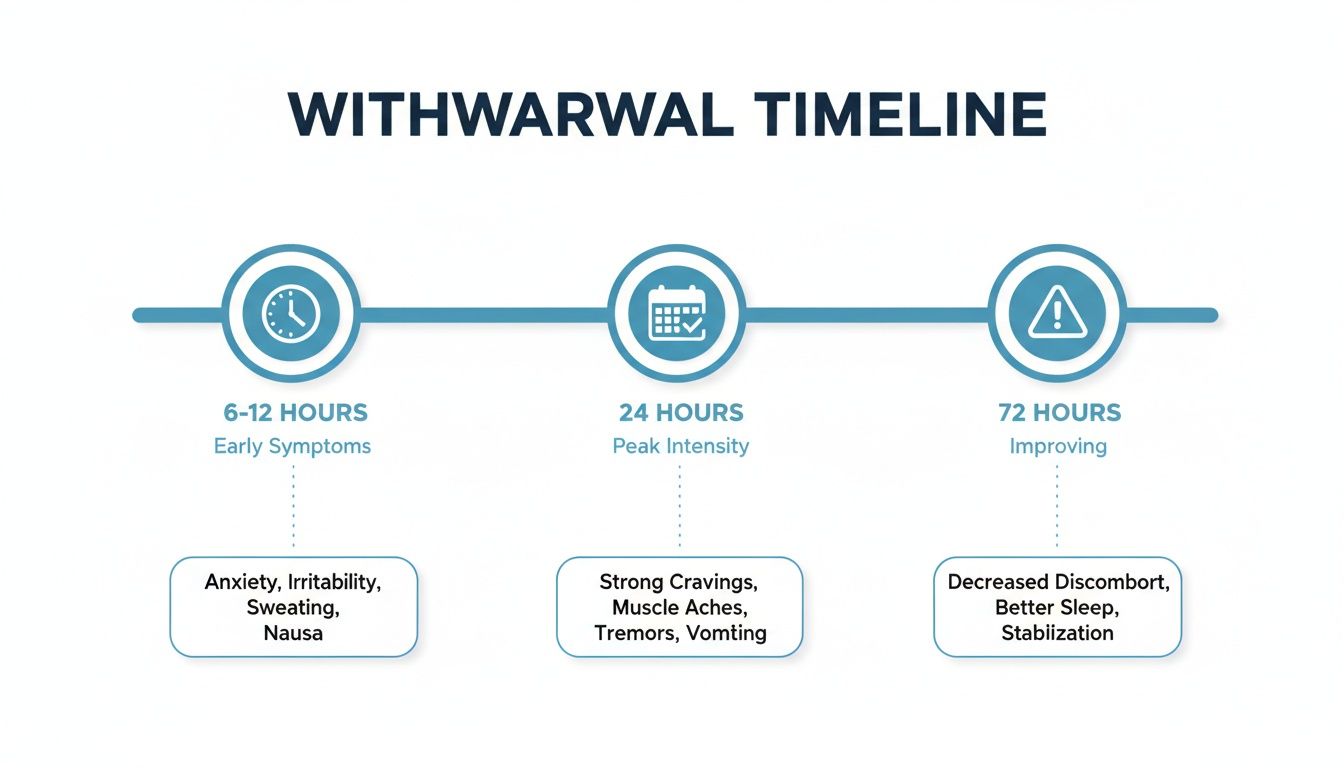
As you can see, the clock starts ticking immediately. The first three days are where the risk skyrockets, which is precisely why getting professional medical help isn't just a good idea—it can be life-saving.
The First 6 to 12 Hours
It only takes a few hours after your last drink for the first signs of withdrawal to show up. These are the initial signals from your brain that it’s starting to miss the sedative effect of alcohol and is becoming overstimulated.
- Anxiety and Restlessness: You might feel a growing sense of unease, nervousness, or just an inability to sit still.
- Insomnia: Even if you feel completely exhausted, sleep is nearly impossible to find.
- Nausea and Vomiting: Your stomach can feel incredibly unsettled, often leading to a total loss of appetite.
- Headaches: A pounding, persistent headache is one of the most common early signs.
It’s easy to write these off as just a nasty hangover, but they are the opening act of Alcohol Withdrawal Syndrome (AWS). It's a serious mistake to underestimate them, as they are a clear warning that more severe stages are on the way.
The Critical 24 to 72 Hour Window
This window is, without a doubt, the most dangerous part of quitting alcohol on your own. With alcohol no longer there to suppress it, your central nervous system goes into a state of extreme hyperactivity. This is when the risk for life-threatening complications is at its absolute highest.
This is the point where 24/7 medical supervision at a professional Dallas detox center becomes essential. Symptoms during this time can include:
- Hallucinations: You might start to see, hear, or feel things that aren’t actually there. These can range from mildly unsettling to absolutely terrifying.
- Increased Heart Rate and Blood Pressure: Your heart goes into overdrive, putting an immense and dangerous strain on your entire cardiovascular system.
- Severe Tremors: The mild shakes from the first few hours can progress into severe, uncontrollable tremors, often called "the shakes."
- Grand Mal Seizures: These can strike suddenly and without any warning, carrying a significant risk of serious injury or even death.
This is the point of maximum danger. The sheer unpredictability of seizures and hallucinations makes "toughing it out" at home an unnecessary and life-threatening gamble. Medical detox at Tru Dallas is specifically designed to manage and prevent these exact outcomes.
After 72 Hours
For people who get through the initial 72-hour peak, the most severe physical symptoms usually start to subside. However, the journey isn't over. Many people experience lingering psychological symptoms for weeks or even months. This is known as Post-Acute Withdrawal Syndrome (PAWS) and can include ongoing anxiety, mood swings, and poor sleep. Our detailed guide on the alcohol detox timeline provides more information on what to expect in every phase.
At Tru Dallas Detox & Recovery Center, our clinical team is here to manage this entire process with a compassionate, evidence-based medical approach. We don’t just sit back and wait for symptoms to become a problem. We use proven medications to keep you safe and comfortable from the very beginning, preventing the withdrawal from ever reaching that dangerous peak. Your safety is our number one priority. Call us today to speak with a caring specialist who can help.
Understanding Delirium Tremens: The Ultimate Risk of Quitting Alone
Of all the dangers that come with quitting alcohol cold turkey, there's one that towers above the rest: Delirium Tremens (DTs). This isn't just a bad case of withdrawal; it's the most severe and dangerous form—a full-blown medical emergency that can turn fatal without professional care. For anyone in Dallas thinking about stopping heavy, long-term drinking on their own, understanding this risk is non-negotiable.
DTs aren't a sign of weakness. They are the terrifying result of a brain in catastrophic overdrive. After being suppressed by alcohol for so long, the central nervous system rebounds with such violent force that it can completely lose its grip on reality.
The Harrowing Symptoms of Delirium Tremens
Delirium Tremens is a world away from just "the shakes" or a bad bout of anxiety. It’s a state of profound confusion and agitation where both mind and body become dangerously unstable. The symptoms are harrowing and can escalate with frightening speed.
The key symptoms of DTs include:
- Severe Confusion and Disorientation: People in DTs may not recognize their family, know where they are, or even remember their own name. This profound break from reality is terrifying for everyone involved.
- Profound Agitation and Paranoia: A state of extreme restlessness, irritability, and intense fear is common. It’s not unusual for individuals to become paranoid or aggressive, genuinely believing their life is in danger.
- Vivid Hallucinations: These aren't the mild hallucinations of early withdrawal. DTs can trigger all-encompassing and terrifying visions. People may see, hear, or feel things that aren't there, trapping them in a living nightmare.
- Dangerous Physical Instability: The body goes into crisis mode. DTs can cause a dangerously high fever, a racing heart, and skyrocketing blood pressure, placing an unbearable strain on the heart and other organs.
Delirium Tremens is a life-threatening condition. The mortality rate can be as high as 37% if left untreated. This is not a risk to take at home; it’s a clear signal that immediate, professional medical help is required.
Who Is Most at Risk for DTs?
While any person physically dependent on alcohol can experience withdrawal, some factors dramatically increase the chances of it progressing to Delirium Tremens. It's critical for people in the Dallas-Fort Worth area to know if they fall into a high-risk category.
Your risk is significantly higher if you have:
- A long history of heavy drinking. The longer and more you've been drinking, the more your brain has adapted. This makes the shock of sudden withdrawal much more severe.
- Previous withdrawal episodes. If you’ve gone through severe withdrawal or had seizures during past attempts to quit, you are far more likely to develop DTs this time.
- A history of seizures or DTs. Having experienced DTs once makes it much more probable that it will happen again in future withdrawals.
- Older age or other health conditions. Existing medical problems, particularly those affecting the liver or heart, can weaken the body’s ability to cope with withdrawal, increasing the severity of symptoms.
How Tru Dallas Prevents This Ultimate Risk
At Tru Dallas Detox & Recovery Center, our first and most important job is to prevent Delirium Tremens from ever developing. We don't wait for a crisis to happen; we act proactively from the minute you walk through our doors to guarantee your safety. Our Dallas detox center uses proven, evidence-based protocols to calm the central nervous system before it can become dangerously overactive.
We accomplish this through two key strategies:
- Medication-Assisted Treatment (MAT): We use specific, FDA-approved medications that act as a gentle brake on the overexcited nervous system, easing it back toward a state of balance. Learning about the best medication for alcohol withdrawal helps explain how these treatments effectively prevent the seizures and instability that lead to DTs.
- Continuous Vital Sign Monitoring: Our medical team is on duty 24/7, constantly monitoring your heart rate, blood pressure, and temperature. This allows us to spot any signs of distress immediately and intervene long before they become a danger, keeping you stable and safe.
The devastating potential of Delirium Tremens makes the strongest possible case for professional medical care. You do not have to face this risk alone. Contact Tru Dallas today and ensure your path to sobriety begins with safety, comfort, and expert medical support.
How Medical Detox in Dallas Ensures Your Safety

After understanding just how dangerous quitting alcohol cold turkey can be, there's really only one question that matters: what’s the safe way to stop? The answer is medically supervised detox, a process that manages withdrawal with expert care, comfort, and most importantly, dignity.
At a professional center like Tru Dallas, our goal isn't just to get you through withdrawal. It's to make sure you are completely safe from start to finish. This is a world away from trying to quit alone at home—it replaces the gamble of unsupervised detox with evidence-based medical care that protects both your body and your mind.
Comprehensive 24/7 Medical Monitoring
The heart of a safe alcohol detox is having a skilled medical team by your side at all times. The dangers of going cold turkey are so real because symptoms can spiral from uncomfortable to life-threatening in a matter of minutes. Our Dallas detox team is on-site 24 hours a day, 7 days a week to make sure that never happens.
This constant supervision means we're always watching:
- Vital Sign Tracking: We regularly check your heart rate, blood pressure, and temperature. This lets us catch and correct any dangerous spikes long before they could escalate into a medical crisis like a heart attack or stroke.
- Seizure and DTs Prevention: Our team is trained to spot the absolute earliest warning signs of severe complications. With immediate intervention, we can prevent seizures and Delirium Tremens from ever taking hold.
- Symptom Management: We are always on hand to respond to your needs, making sure you’re as comfortable as possible through the whole process.
This round-the-clock presence provides more than just medical safety—it offers a huge sense of relief. You are never alone, and help is always just a moment away.
Medication-Assisted Treatment for a Gentle Detox
A critical part of medical detox is using FDA-approved medications to gently and safely guide your body through withdrawal. These medications work by temporarily taking the place of alcohol’s calming effect on the brain, preventing the violent over-correction that causes severe symptoms.
Instead of ripping the brakes out, medication-assisted treatment (MAT) is like having an expert driver gently apply the brakes for you, bringing the speeding train to a slow, controlled, and safe stop.
Medications like benzodiazepines are given in carefully managed doses to effectively prevent seizures, calm intense anxiety, and allow your body to get the rest it desperately needs to heal. As you become more stable, the medication is slowly and carefully tapered down. This allows your brain chemistry to find its natural balance again without the shock of an abrupt stop.
Addressing Co-Occurring Conditions from Day One
For so many people in Dallas, alcohol use doesn't happen in a vacuum. It often goes hand-in-hand with mental health challenges like anxiety, depression, or trauma. We call this a dual diagnosis. Trying to stop drinking without also addressing the underlying mental health issue is a common reason for relapse.
At Tru Dallas, our addiction treatment in Dallas is built around integrated care from the moment you walk through our doors. Our therapists and medical staff work together to create a single, unified care plan that treats both your substance use and your mental health at the same time.
This approach treats the whole person, not just the symptoms of withdrawal. Comprehensive evaluations, which can include a GGT blood test to check on liver health, help us manage any potential organ damage right away. By starting this crucial work during detox, we lay a much stronger foundation for a lasting recovery.
If you’re ready to take the next step, our guide on how to detox from alcohol safely offers even more important insights.
Your Path to a Safe Recovery Starts at Tru Dallas
After reading about the very real dangers of quitting alcohol on your own—from your brain’s chemistry being thrown into chaos to the life-threatening risk of Delirium Tremens—it should be crystal clear. This is not a journey you should ever have to make alone. Safe, comfortable, and lasting recovery isn’t just a nice thought; it's completely achievable when you have the right professional support in your corner.
Making the choice to ask for help takes incredible courage. It's also totally normal to feel afraid or have a million questions running through your mind. We hear it all the time from people here in Dallas—worries about cost, about privacy, or about being judged for needing help. At Tru Dallas Detox & Recovery Center, our entire mission is to quiet those fears with compassionate, confidential, and expert care.
Overcoming the Barriers to Recovery
We get it. We know the real-world obstacles that can make it feel impossible to pick up the phone. That’s why we’ve designed our entire program to be as accessible and reassuring as possible for everyone in the Dallas-Fort Worth community.
- Financial Concerns: We are experts at working with PPO insurance providers to get you the maximum benefits you're entitled to, minimizing your out-of-pocket costs. Our admissions team can verify your insurance quickly and confidentially online, so you have a clear financial picture right away.
- Privacy and Confidentiality: Your recovery is your business, and we guard it with everything we have. Our facility operates under the strictest HIPAA guidelines, guaranteeing a private, discreet, and secure space where your only job is to heal.
- Fear of Judgment: Our team is built with caring professionals who meet you with empathy, not judgment. We see your decision to call us for what it is—a powerful, brave step forward. We're here to support you with the dignity and respect you deserve.
Your future is too important to gamble on the unpredictable and severe dangers of quitting alcohol cold turkey. Choosing medical detox is choosing safety, comfort, and a real shot at lasting wellness.
Your Personalized Path Forward
There’s no such thing as a one-size-fits-all plan for recovery. From the very first moment you contact our Dallas detox center, our focus is entirely on you. We listen to your story, work to understand your unique situation, and team up with you to build a personalized care plan that actually sets you up for success.
This plan is about so much more than just getting you comfortably through withdrawal. It’s a complete strategy for your long-term health, designed to address both the physical side of dependence and any co-occurring mental health conditions that might be part of your story.
Take the First Step Today
You don't need to have all the answers to get started. All you need is the willingness to make one phone call—that’s it. Taking that first step is the single most important thing you can do. Let our team at Tru Dallas handle the rest. We’ll guide you through everything, from that initial conversation all the way to building a solid aftercare plan.
Don’t let alcohol steal another day from you. A healthier, more fulfilling life is waiting, and it starts with a safe, medically supervised detox.
- Call our 24/7 admissions line to speak with a caring specialist right now.
- Verify your insurance online for a fast, free, and confidential benefits check.
- Take control of your future by choosing the trusted leader in addiction treatment in Dallas.
Still Have Questions About Alcohol Detox in Dallas?
When you’re thinking about getting help for alcohol use, it's completely normal to have a ton of questions. Making that first call is a huge act of courage, and getting straight, honest answers can make all the difference. Let's walk through some of the most common questions we hear from individuals and families in the Dallas area who are ready to start the detox process.
Our goal here is to take the mystery out of detox, build your confidence, and give you the clear information you need to take that next brave step.
How Long Does Alcohol Detox Usually Take?
This is probably the number one question, and the honest answer is: it’s a little different for everyone. Factors like your history with alcohol and your overall health play a big role. That said, most of our patients at Tru Dallas get through the medical detox phase in about 5 to 7 days.
From the moment you walk through our doors, our medical team starts crafting a plan that’s built just for you, focused entirely on your safety and comfort. We’re not trying to rush the process; we’re focused on making it steady, safe, and manageable.
Will Detox Be Painful?
This is the biggest fear we hear, and it’s completely understandable. The truth is, the intense pain and suffering people associate with quitting "cold turkey" are exactly what a medical detox program is designed to prevent. Our entire purpose is to make this process as safe and comfortable as it can possibly be.
We use proven, FDA-approved medications and provide round-the-clock therapeutic support to manage and drastically reduce the discomfort of withdrawal. You will never be left to just "tough it out" alone. Our team is with you 24/7 to manage symptoms the moment they arise.
At Tru Dallas, your safety and comfort are our highest priorities. We believe a gentle, medically-managed withdrawal is the foundation for a successful recovery journey.
Is My Treatment at Tru Dallas Confidential?
Absolutely. Your privacy isn't just a policy for us—it's a legal and ethical cornerstone of what we do. We are strictly bound by HIPAA regulations, and your treatment is a completely confidential matter between you and our professional care team.
We've created a discreet and secure environment where you can focus on your recovery. From your first phone call to your last day with us, you can have total confidence that your personal information and even your presence at our center are fully protected. If you have any other questions about our privacy policies, our admissions specialists are always available to talk you through them.
Your journey to a healthier future begins with a single, safe step. At Tru Dallas Detox & Recovery Center, our compassionate team is ready to guide you with expertise and respect. Don't risk the dangers of quitting cold turkey—contact us today to learn how our leading addiction treatment in Dallas can help you or your loved one heal with confidence.
