
An intensive outpatient program in Dallas gives you a powerful middle ground in your recovery journey. It provides a serious, structured therapy schedule without needing you to live at a treatment center. This model is perfect for anyone who needs more support than just a weekly therapy session but doesn't require round-the-clock medical care.
It's all about balancing your recovery with your real life—work, school, and family.
Key Takeaways
- An IOP provides structured therapy for several hours a week while you live at home.
- It's a middle ground between weekly therapy and 24/7 residential care.
- The goal is to integrate recovery skills into your daily life.
- IOPs are ideal for those stepping down from inpatient care or needing more than once-a-week support.
- Success in an IOP requires a stable, supportive home environment.
What Is an Intensive Outpatient Program
Think of an Intensive Outpatient Program (IOP) less like a hospital stay and more like a dedicated training camp for your sobriety and mental health. It’s a focused, supportive environment you attend for a few hours a day, several days a week, all while still living at home and handling your daily life.
The whole point is flexibility and real-world practice.
Instead of pulling you completely out of your everyday world, an IOP teaches you how to build and use new coping skills in that world. You might learn a new way to handle stress in a group session and then get to apply it at home with your family that very same evening. This makes recovery feel more natural because you're weaving it into your routine from day one.
Who Benefits Most From an IOP
An IOP is a great fit for a lot of different people. It’s often used as a critical "step-down" for someone leaving a higher level of care, like inpatient rehab. It keeps the structure and support going, so you don't feel like you’re being thrown into the deep end when you go home.
It can also be a "step-up" for those who find that a single weekly therapy appointment just isn't cutting it. If you need more intensity and community to get a real handle on things, an IOP provides that boost.
The goal of an IOP is simple: offer significant clinical support while you maintain your independence and stay connected to your community. It’s the perfect bridge between residential treatment and standard outpatient therapy.
The Typical Time Commitment
The schedule for an intensive outpatient program dallas is built for consistency. It’s enough to make a real impact, but not so much that it takes over your entire life. Here in Dallas, there are 44 treatment centers offering IOPs, so it's a very accessible option.
Typically, you're looking at about nine hours of treatment per week. This is usually broken down into three 3-hour sessions on different days. This schedule gives you strong, consistent support while still leaving plenty of time for your other responsibilities. If you want to dive deeper into the nuts and bolts, you can learn more about what intensive outpatient treatment entails in our detailed guide. This steady rhythm is what helps build a solid foundation for a recovery that lasts.
Understanding Your Outpatient Treatment Options
Figuring out the world of outpatient care can feel like a lot, especially when acronyms like IOP, PHP, and standard therapy all start to sound the same. The best way to think about them is as different rungs on a ladder of support. Each one offers a specific balance of clinical structure and personal freedom, designed to meet you exactly where you are in your recovery.
Choosing the right level is one of the most important first steps. It ensures you get enough support to make real progress without being either undertreated or overwhelmed. The whole point is to find that sweet spot that fits your life and your recovery needs.
This simple decision tree can help you visualize which path might make the most sense for you.
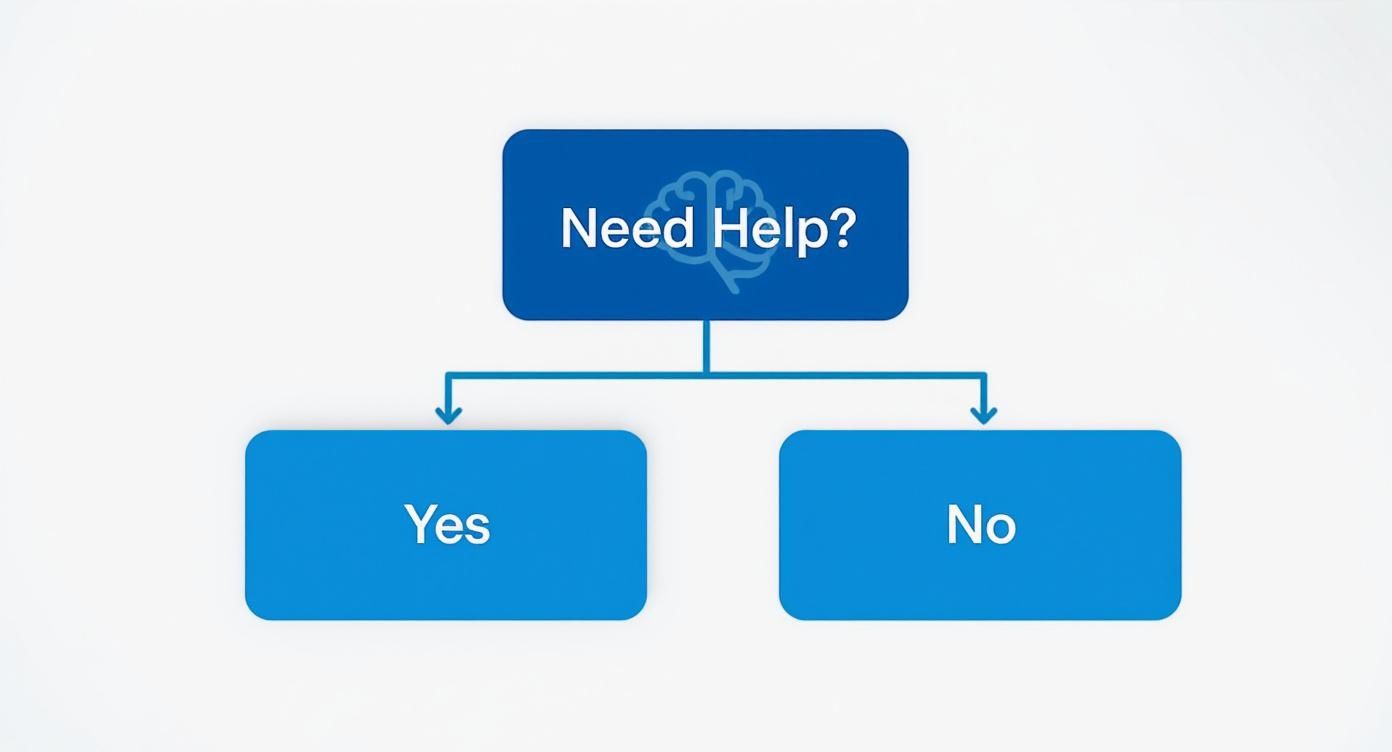
As you can see, the need for structured support is often the biggest factor in pointing you toward the right level of outpatient care in Dallas.
Comparing Levels Of Care
The main things that set these programs apart are the time commitment and the intensity of the clinical services. Getting a handle on these differences is the key to making a confident, informed choice.
A Partial Hospitalization Program (PHP) is the most structured outpatient option available. It often feels like a full-time job, requiring 20 or more hours of therapy each week. This is a great fit for people who need daily structure and support but don't require 24/7 residential supervision.
An Intensive Outpatient Program (IOP) is a significant step down in time commitment from PHP. It still provides very solid, structured support for about nine to fifteen hours weekly, which allows you to keep up with work, school, and family life.
Finally, standard outpatient therapy usually means meeting with a therapist once a week. This level of care is best for individuals who already have a strong foundation in their recovery and just need ongoing maintenance and support to stay on track.
While a PHP provides near-daily structure, an intensive outpatient program dallas offers a powerful middle ground. It delivers more support than weekly therapy but with greater flexibility than a PHP, making it a highly effective and popular choice.
IOP vs. PHP: A Closer Look
Intensive Outpatient Programs (IOPs) in Dallas have really evolved to serve both addiction and mental health needs, offering a model that's both flexible and structured. They are often used as a "step-down" for clients coming from higher levels of care, like Partial Hospitalization Programs (PHPs), which demand a heavy 20 to 30 hours per week compared to an IOP’s more manageable nine hours.
Because of this lower time commitment, you'll find that IOPs are much more widely available than PHPs, giving you more options to find the right fit. For more on local availability, you can explore Dallas-area IOP and PHP options here.
To make it even clearer, this table breaks down the key differences between the common levels of outpatient care.
Comparing Outpatient Care Levels: IOP vs. PHP vs. Standard Therapy
This side-by-side comparison should help you see the key differences in structure and intensity at a glance.
| Feature | Intensive Outpatient (IOP) | Partial Hospitalization (PHP) | Standard Outpatient Therapy |
|---|---|---|---|
| Weekly Time | 9-15 hours | 20-30 hours | 1-2 hours |
| Schedule | 3-5 days/week | 5 days/week | 1-2 times/week |
| Best For | Stepping down from inpatient or needing more than weekly therapy. | Transitioning from residential care or preventing hospitalization. | Maintaining recovery and managing mild symptoms. |
| Structure | Moderate structure with high flexibility for daily life. | High daily structure; resembles a full-time commitment. | Low structure; focuses on ongoing support. |
Seeing it laid out like this can really help you understand where you might fit. If you're looking for an even deeper dive, check out our guide on outpatient vs inpatient rehab.
Key Takeaways
- Think of outpatient care as a spectrum: PHP is the most intense, followed by IOP, and then standard therapy.
- An IOP in Dallas typically requires 9-15 hours of treatment per week, striking a balance between structured care and personal freedom.
- A PHP is much more like a full-time commitment, with 20-30 hours of therapy weekly for those needing a higher level of daily support.
- The right choice for you will depend on your clinical needs, how stable your home environment is, and what your daily responsibilities look like.
- Understanding these differences helps you have a more productive conversation with treatment providers and choose the best path forward.
Frequently Asked Questions
What is the main difference between an IOP and a PHP?
The biggest difference is the time commitment. A PHP is more intensive, requiring 20-30 hours per week (like a full-time job), while an IOP is more flexible, typically involving 9-15 hours per week. This flexibility is what allows IOP clients to more easily maintain work or school schedules.
Can I switch between IOP and PHP?
Absolutely. Transitioning between levels of care is a normal and often necessary part of recovery. Many people "step down" from a PHP to an IOP as they become more stable. A clinical assessment will always be used to determine the right level of care for you at any given time.
How do I know which program is right for me?
The best and safest way to know for sure is to get a professional assessment. A clinician can look at your specific situation—including your mental health, substance use history, and home environment—to recommend the level of care that gives you the best shot at a successful, lasting recovery.
A Look Inside a Typical Dallas IOP
Ever wonder what actually happens in an intensive outpatient program in Dallas? It's far more than just talking about your problems in a sterile room. Think of it as a highly structured, hands-on workshop for rebuilding your life—one where you learn practical skills, forge genuine connections, and lay a rock-solid foundation for lasting recovery.
The entire experience is built on three core pillars that work in tandem, ensuring you get support from every possible angle. Each one has a distinct purpose, creating a comprehensive approach to your well-being.

The Three Pillars of IOP Treatment
At the heart of every effective Dallas IOP, you'll find a powerful combination of therapies. This blend makes sure you get the focused, personal attention you need while also tapping into the incredible strength of peer support.
- Individual Therapy: This is your time. It’s a dedicated, one-on-one session with a licensed therapist where you can dig deep into the personal challenges, past trauma, or specific triggers driving your struggles. It's a completely confidential space to work on your own goals and see your progress up close.
- Group Therapy: Often considered the cornerstone of IOP, group therapy connects you with a community of people who just get it. Guided by an experienced clinician, these sessions are where you’ll develop stronger communication skills, practice new coping mechanisms, and hear perspectives that can completely shift your own. It's proof you're not alone.
- Family Counseling: Healing doesn’t happen in a bubble. Addiction and mental health struggles impact everyone in the family. These sessions are designed to mend strained relationships, teach healthier ways to communicate, and give your loved ones the tools to support you effectively. The goal is to create a healthier, more stable home environment for everyone.
Specialized Tracks for Targeted Healing
Beyond these foundational pillars, the best Dallas programs offer specialized tracks to meet specific needs. This isn't a one-size-fits-all model; it’s about getting the right kind of help for your unique situation.
For instance, it’s incredibly common for people with substance use disorders to also struggle with anxiety, depression, or other mental health conditions.
A dual-diagnosis track is built specifically for this overlap. Instead of treating addiction and mental health as separate issues, this integrated approach tackles both simultaneously. We've seen time and again that this leads to much stronger, more sustainable recovery.
Other specialized groups you'll often find in Dallas IOPs include:
- Trauma-Informed Care: For those dealing with the weight of past trauma, these sessions use proven methods like EMDR to help you process those experiences in a safe, controlled setting.
- Substance-Specific Support: Groups that dive into the unique challenges of recovering from opioids, alcohol, or stimulants, offering targeted education and strategies that actually work.
This blend of individual, group, and specialized care gives you a very real sense of what a week in treatment looks like. It’s a dynamic mix of deep personal work, shared experience, and practical skill-building designed to set you up for long-term success.
Frequently Asked Questions
What is the main focus of group therapy in an IOP?
The focus is twofold: building practical skills and fostering a genuine sense of community. You'll work on everything from healthy coping strategies and communication to relapse prevention, all while being supported by peers who truly understand what you're facing.
Do I have to participate in family therapy?
While we strongly recommend it, participation is usually based on your specific situation and comfort level. The goal is always to create a healthier support system at home, but we respect that it has to happen on your terms and when you're ready.
How are specialized tracks assigned to clients?
We determine this during your initial clinical assessment when you first come in. This comprehensive evaluation helps our treatment team identify specific needs—like a co-occurring mental health disorder or unresolved trauma—so we can place you in the groups that will give you the most benefit.
Is an Intensive Outpatient Program Right for You?
Choosing the right level of care is a huge decision, maybe one of the most important you'll make on your recovery journey. An intensive outpatient program in Dallas can be a game-changer, but it's not a one-size-fits-all solution. It's designed for people who need serious, structured clinical help but who also have a stable enough life to build on.
Think of it like this: an IOP gives you the professional-grade tools and the architectural plans for rebuilding your life. But you still need a safe, solid workshop—your home environment—to do the actual work.
When an IOP Is an Ideal Fit
An intensive outpatient program really shines when a person's circumstances line up with its structure. If any of the situations below sound familiar, an IOP could be exactly what you need. The common thread is having enough stability on the outside to focus on the hard work you need to do on the inside.
You might be a great candidate for an intensive outpatient program dallas if you:
- Are transitioning from a higher level of care. This is a classic and highly effective use of an IOP. It acts as a vital bridge when you're stepping down from inpatient rehab or a Partial Hospitalization Program (PHP), helping you ease back into daily life without losing critical support.
- Need more than just weekly therapy. If you feel like one hour a week with a therapist just isn't cutting it—that you need more structure and accountability to manage cravings or stay on track—an IOP provides that necessary step up.
- Have a stable and supportive home environment. This one is non-negotiable. Your living situation needs to be a safe, sober space. IOPs aren't built for people living in chaotic or triggering homes where their recovery efforts would be constantly sabotaged.
- Are genuinely motivated to get better. Success in an IOP hinges on your personal commitment. You have to be ready to show up, do the work in therapy, and practice the skills you're learning when you're back at home or work.
When Another Level of Care May Be Better
On the flip side, an IOP isn't the right starting point for everyone. It’s crucial to be honest about where you're at to keep yourself safe and set yourself up for success. Sometimes, a more intensive, 24/7 environment is simply what's needed first.
An IOP is likely not the right choice if you:
- Need medical detox. If you're facing withdrawal from substances like alcohol, benzodiazepines, or opioids, your first priority is safety. You need 24/7 medical supervision to manage withdrawal symptoms, which can be dangerous. Detox always comes first.
- Don't have a safe place to live. Without a stable and supportive home, the pressure of early recovery can be too much to handle. Inpatient care provides the structure and safety you need when your home environment doesn't.
- Are in the middle of a severe mental health crisis. If you are a danger to yourself or others, inpatient hospitalization is the only appropriate level of care. The immediate goal is to ensure your safety and get you stabilized.
Making the right choice for you is the first real step toward getting well.
Frequently Asked Questions
How do I know if my home environment is "stable enough" for an IOP?
A stable environment is a place free from active drug or alcohol use, constant conflict, and overwhelming triggers. It’s a home where you feel physically and emotionally safe, and where the people around you support your recovery. Our clinical team can help you figure this out during your initial assessment.
Can I start in an IOP if I've never been to treatment before?
Absolutely. Many people begin their recovery journey right here. If you don't require a medical detox and you have a solid support system and a real desire to change, an IOP can be the perfect starting point.
What happens if I start an IOP and realize I need more support?
This happens, and it's okay. Any good treatment program will constantly monitor your progress. If it becomes clear that you're struggling and need a higher level of care, our team will work with you to make a smooth transition to a PHP or inpatient program. The goal is always to get you the exact level of support you need to succeed.
How to Find a Quality IOP in Dallas
Dallas has no shortage of options for intensive outpatient programs, but it's critical to understand that not all IOPs are created equal. Finding a high-quality program that genuinely aligns with your personal needs is the single most important factor in a successful recovery. It takes a little homework, but a few key steps can empower you to confidently sift through the choices and find the right fit.
Your very first step should always be to check a program's credentials. Think of it like looking up a restaurant's health inspection grade—it’s a non-negotiable mark of basic safety and quality. Any reputable intensive outpatient program in Dallas will be fully licensed by the state of Texas and should hold accreditations from respected national organizations.

Key Credentials to Look For
Keep an eye out for seals of approval from groups like The Joint Commission or CARF (Commission on Accreditation of Rehabilitation Facilities). These accreditations mean the program has passed a rigorous review of its clinical care, patient safety, and operational standards. A center that's proud of its quality will have these credentials displayed prominently on its website.
Once you’ve confirmed a program is properly licensed and accredited, it's time to look at the people who will be guiding your recovery journey.
Assess the Clinical Team and Treatment Philosophy
The quality of any IOP is a direct reflection of its clinical staff. You're looking for a team of licensed and experienced professionals—therapists, counselors, and medical staff who truly specialize in addiction and mental health. Never hesitate to ask about their credentials, their years of experience, and the program’s core treatment philosophy. Do they rely on proven, evidence-based practices like Cognitive Behavioral Therapy (CBT) or Dialectical Behavior Therapy (DBT)?
A quality program will have a clear, well-defined approach to recovery. They should be able to explain exactly how their methods address the deep-rooted causes of addiction and co-occurring mental health issues, not just the surface-level symptoms.
This philosophy also shapes the program's length and structure. For instance, data from Dallas County’s own services shows their IOPs for certain populations average around 17 weeks, which underscores the need for sustained, consistent care.
Your Checklist of Crucial Questions
Before you commit to a program, make sure you get clear answers to a few practical questions. The details here will determine how well the program can realistically fit into your life.
- Scheduling: Does the program offer morning or evening sessions? You need a schedule that can accommodate your work, school, or family responsibilities.
- Insurance: Does the facility accept your insurance plan? Can they give you a straightforward estimate of your out-of-pocket costs? We have a guide if you need to learn more about insurance for drug rehab.
- Specialized Tracks: Do they offer specific support that you need, like dual-diagnosis care, trauma-informed therapy, or groups for specific substances?
Asking these questions upfront prevents surprises down the road and helps you find a program that truly supports your unique path to recovery.
Key Takeaways
- Always verify a program’s state license and look for accreditations from bodies like The Joint Commission or CARF.
- Dig into the clinical team’s credentials and make sure they use evidence-based treatment methods.
- Understand the program's core treatment philosophy to see if it resonates with your own recovery goals.
- Ask the practical questions about scheduling, insurance, and the availability of any specialized tracks you might need.
- A quality IOP will be transparent and happy to answer all of your questions to make sure it's the right fit for you.
Frequently Asked Questions
How can I verify a treatment center's license in Texas?
You can check a facility's license directly on the Texas Health and Human Services Commission (HHSC) website. They keep a searchable database of every licensed substance use and mental health treatment provider in the state.
What does "evidence-based" treatment actually mean?
"Evidence-based" simply means the therapeutic methods being used—like CBT or DBT—have been scientifically studied and proven to be effective for treating addiction and mental health conditions. It ensures your care is backed by solid data, not just someone's opinion.
What if an IOP doesn't offer a specialized track I need?
If a program doesn't have a specific track you need, such as one for dual diagnosis, it's probably not the best fit. Finding a center that can address all aspects of your condition is crucial for building a comprehensive and lasting recovery.
Wrapping It Up: Your Guide to Choosing the Right IOP
It's easy to feel lost when you're looking at all the different treatment options out there. But now you have the inside scoop. As you take the next step, just keep these five main ideas in your back pocket. They'll help you find an intensive outpatient program in Dallas that truly fits your life and your recovery goals.
-
Structure Meets Real Life: Think of an IOP as the best of both worlds. You get serious, structured clinical support for several hours each week, but you still get to go home, go to work, and live your life.
-
It’s a Bridge, Not an Island: IOP isn’t a starting point or an endpoint for everyone. It’s a crucial step in the recovery journey, perfect for when you're leaving a residential program but aren't ready to go it alone, or when standard weekly therapy just isn't cutting it anymore.
-
The Foundation of a Good Program: A solid IOP is built on three pillars: one-on-one therapy to dig into your personal journey, group sessions to build connection and see you're not alone, and family counseling to start mending those important relationships.
-
Look Under the Hood: Not every program is created equal, not by a long shot. Before you commit, make sure the facility is properly licensed by the state and holds legitimate accreditations. A quality program is proud to tell you about their evidence-based methods and the credentials of their clinical team.
-
Get Practical and Ask Questions: Don't be shy! Ask about their schedule flexibility, what insurance they take, and if they offer specific tracks (like for co-occurring disorders or professional-specific groups). The right program has to work for you on a practical level, not just a clinical one.
Your IOP Questions, Answered
When you're considering treatment, a million questions can pop into your head. That's completely normal. Let's walk through some of the most common ones we hear about Intensive Outpatient Programs in Dallas so you can get the clear, straightforward answers you need to feel confident about your next steps.
We want to pull back the curtain on everything from cost and program length to privacy and how to get started.
How Much Does an Intensive Outpatient Program Cost in Dallas?
The cost of an IOP in Dallas can shift based on the center you choose, the exact services you need, and the total length of your stay. But here’s the good news: most major health insurance plans cover IOPs as part of their mental health and substance abuse benefits.
Your best first move is to call your insurance provider to get the specifics on your plan, like what your deductible is or if you need pre-authorization. The admissions team at any Dallas treatment center is also your best friend here—they can verify your benefits for you and give you a clear estimate of what, if any, out-of-pocket costs you can expect.
How Long Does a Typical IOP Last?
There's no one-size-fits-all answer, because your treatment plan is built around you. That said, a typical IOP in the Dallas area runs for about 8 to 16 weeks. The whole point is to be flexible and adapt to how you're doing.
Some people build a solid foundation quickly and are ready to step down to a less intensive level of care. Others find that staying a bit longer helps lock in the new skills and habits they've learned. Your clinical team will be checking in with you regularly, and together, you’ll decide on the perfect time to transition.
An IOP isn't a race. It’s a supportive process designed to give you the tools for lasting recovery. The timeline works for you, not the other way around.
Is My Participation in an IOP Confidential?
Absolutely. Your privacy is 100% protected. Reputable Dallas treatment centers operate under strict federal laws like the Health Insurance Portability and Accountability Act (HIPAA).
This means every bit of your personal health information—including the simple fact that you’re in the program—is legally protected. A facility cannot and will not share any details with your boss, your family, or anyone else unless you give them specific, written permission to do so. Your privacy is paramount.
What Is the First Step to Enrolling in a Dallas IOP?
It all starts with a simple, completely confidential phone call. When you call a center like Tru Dallas, you'll chat with an admissions coordinator who is there to listen, learn a bit about your situation, and answer those immediate questions you have.
From there, the next step is a detailed clinical assessment with a licensed therapist. This isn't a test; it's a conversation to make sure an IOP is truly the right fit for you. If it is, the team will walk you through the rest, from checking your insurance to getting you enrolled, making sure it’s a smooth and stress-free process.
Key Takeaways
- Insurance Often Covers It: Most big insurance plans help pay for IOP. Admissions staff are experts at helping you figure out your specific coverage.
- Flexible Timeline: Plan on 8 to 16 weeks, but know that this adjusts based on your personal journey and clinical milestones.
- Your Privacy is Protected: Strict HIPAA laws mean your treatment is completely confidential, from start to finish.
- Getting Started is Easy: The whole process kicks off with a simple phone call to an admissions coordinator who will guide you from there.
- Finding the Right Fit: The initial assessment ensures an IOP is the best possible level of care to help you succeed.
Frequently Asked Questions
How does billing for an IOP work with insurance?
Typically, the treatment center will bill your insurance company directly for the services you receive, like group and individual therapy sessions. You will be responsible for any copay, coinsurance, or deductible required by your plan. The admissions team can provide a detailed breakdown of these costs before you start.
Can I still work or go to school while attending an IOP in Dallas?
Yes, that's one of the primary benefits of an IOP. Most programs in Dallas offer morning or evening sessions specifically to accommodate work, school, and family responsibilities, allowing you to get the help you need without putting your life on hold.
What happens after I complete the program?
A quality IOP includes discharge planning from the very beginning. After you complete the program, you will transition to a lower level of care, such as standard weekly therapy, and be connected with aftercare support groups. The goal is to ensure you have a strong, ongoing support system to maintain your recovery.