
When someone starts using methamphetamine, the first signs are often dramatic and confusing. You might see a person who is suddenly, unnaturally full of energy—talking a mile a minute and staying awake for days on end. This is often followed by a "crash," where they fall into a deep, long sleep. These early warning signs are critical to catch because they mark the start of a very dangerous cycle.
Key Takeaways
- Early signs of meth use include extreme energy swings, from hyperactivity to deep exhaustion.
- A sudden loss of appetite and rapid, unexplained weight loss are common red flags.
- Noticeable declines in personal hygiene and grooming habits often indicate a problem.
- Changes in social circles, secrecy, and sudden financial issues can be warning signs.
- Recognizing these early symptoms is crucial for intervening before the addiction escalates.
The First Changes to Watch For
If you're worried about someone you care about, learning to spot the first signs of meth use is a crucial first step. At the beginning, these changes can be easy to write off as just stress or a new phase. But when you see several of them happening at once, they start to paint a much clearer, more troubling picture.
It's like the body takes out a high-interest loan on its energy reserves. That initial surge feels powerful, but the crash that follows is devastating, and it sets a destructive pattern in motion.
Recognizing these symptoms isn't about placing blame; it's about seeing a cry for help. Stepping in early can completely change the course of an addiction, helping prevent the severe physical and psychological damage that comes with long-term use.
Early Behavioral and Physical Clues
The earliest signs of meth use often show up as disruptions to a person's everyday life. You'll likely notice a mix of physical and behavioral shifts that just feel out of character.
Here are a few key changes to keep an eye on:
- Unpredictable Energy Levels: Intense bursts of hyperactivity, staying awake for days, and talking nonstop, followed by a sudden crash into extreme exhaustion and long periods of sleep.
- Changes in Appetite and Weight: A sudden, significant loss of appetite is a hallmark sign, often leading to rapid and otherwise unexplained weight loss.
- Decline in Personal Hygiene: A noticeable drop in grooming habits and personal care can be one of the first outward signs that something is seriously wrong.
- Social and Financial Shifts: The person might start hanging out with a new crowd, become secretive about where they're going, or suddenly run into money problems.
These symptoms can escalate quickly. What starts as a small change in sleep can spiral into a total disruption of their job, family life, and responsibilities.
"You may notice someone who was once calm and focused becoming erratic, anxious or compulsively productive. These behaviours aren’t always drugs-related, but if they persist or worsen, it’s worth exploring further.”
When you see these signs, it's so important to approach the conversation with compassion. Your loved one is likely struggling with more than you can see on the surface. Figuring out how to get someone into rehab can feel overwhelming, but there is professional guidance available to help you plan a safe and effective path forward. Taking that first step is often the most important one you can take.
Early Warning Signs of Methamphetamine Use
To help you identify these initial changes, the table below summarizes the common early indicators of methamphetamine use. These are the red flags that suggest it's time to pay closer attention and consider seeking professional advice.
| Symptom Category | What to Look For |
|---|---|
| Energy & Sleep | Extreme "highs" (hyperactivity, no sleep for days) followed by deep "crashes" (sleeping for 24+ hours). |
| Physical Appearance | Rapid, unexplained weight loss; dilated pupils; poor hygiene and a disheveled look. |
| Behavior & Mood | Increased talkativeness, paranoia, anxiety, irritability, and secrecy. |
| Social & Financial | Withdrawing from old friends, hanging out with a new crowd, and unexplained money problems or constant borrowing. |
Seeing one or more of these signs doesn't automatically confirm meth use, but it does signal that something is wrong. Trust your instincts—if you feel concerned, it's worth looking into.
The Devastating Physical Toll
When methamphetamine addiction takes hold, the psychological battle is intense. But the physical war it wages on the body is just as devastating, and often far more visible. The physical symptoms are shocking, acting as a clear, external sign of the drug's destructive internal power. These aren't just surface-level changes; they're red flags signaling severe damage that demands immediate medical help.
Think of the drug as a corrosive agent, systematically breaking down the body from the inside out. While someone might be able to hide or explain away early behavioral shifts, the profound physical decay that comes with meth use is impossible to ignore. Recognizing these symptoms is the first step in grasping the life-threatening medical crisis unfolding.
The Strain on the Cardiovascular System
Methamphetamine forces the heart and cardiovascular system into a constant state of overdrive. It’s an unsustainable burden, causing a racing heart, dangerously high blood pressure, and a much higher risk of a sudden heart attack or stroke—even in young, otherwise healthy people.
Imagine running a car engine at its redline for days on end. Eventually, it’s going to break down. That's what meth does to the heart. Research from the American Heart Association backs this up, showing that people who use meth face a 32% higher risk of cardiovascular disease. The numbers get even starker: a 53% higher risk of heart failure and a shocking 73% increased likelihood of a heart attack for men who use meth compared to women. When you hear someone complain of chest pain or a fluttering heartbeat, it’s a critical warning that their heart is in serious trouble. You can read the full research about these cardiovascular findings to learn more.
One of the most severe consequences of long-term meth use is the damage to the heart. The drug's stimulant effects can lead to chronic high blood pressure, arrhythmias, and an enlarged heart, conditions that significantly shorten a person's lifespan.
Visible Signs of Decay: Meth Mouth and Skin Sores
Beyond the hidden damage to the heart, two of the most infamous physical symptoms of meth addiction are "meth mouth" and relentless skin sores. These signs are a direct result of the drug's effects on the body and mind.
"Meth mouth" is a term for the kind of severe dental decay you rarely see elsewhere. It’s caused by a perfect storm of problems:
- Severe Dry Mouth: Meth suffocates saliva production, which is the mouth's natural defense against acid and bacteria.
- Constant Teeth Grinding: The drug makes users clench their jaw and grind their teeth (a condition called bruxism), literally wearing them down to stumps.
- Neglected Hygiene: As addiction consumes a person's life, basic self-care like brushing and flossing goes out the window.
- Sugary Drink Cravings: To combat the dry mouth, many people constantly sip on sugary sodas, pouring fuel on the fire of tooth decay.
The result is a landscape of cracked, blackened, and rotting teeth—a condition so specific that doctors and dentists often see it as a clear diagnostic marker for meth use.
At the same time, many people develop sores all over their skin. This is often caused by a common and terrifying hallucination where they feel insects crawling just beneath the surface, a sensation sometimes called "crank bugs." This leads to frantic, compulsive picking and scratching to try and get them out. These self-inflicted wounds easily become infected, leading to abscesses, permanent scarring, and other serious health issues. When you see these signs—the heart problems, the dental collapse, and the skin lesions—it’s a clear picture of an advanced addiction that needs intervention right away.
Key Takeaways
- Methamphetamine puts tremendous stress on the heart, drastically raising the risk of heart attack, stroke, and long-term heart failure.
- "Meth mouth" is a catastrophic form of tooth decay driven by a combination of dry mouth, teeth grinding, poor hygiene, and high sugar consumption.
- Compulsive skin picking, fueled by hallucinations of "crank bugs," results in painful sores, infections, and deep scars.
- Sudden and unhealthy weight loss is another common sign, as the drug is a powerful appetite suppressant.
- These physical symptoms are not cosmetic issues; they are indicators of a profound medical emergency requiring professional detox and treatment.
Understanding the Psychological Breakdown
While the physical damage from methamphetamine is often what you see first, the psychological breakdown can be even more terrifying—both for the person struggling and for their family. Meth doesn't just cause a bad mood; it floods the brain with chemicals that fundamentally warp a person's thoughts, feelings, and sense of reality.
Think of it like the slow, deliberate demolition of a person's entire mental framework. The drug hijacks the mind, building a new, terrifying reality on a foundation of fear, confusion, and suspicion. What you see on the outside—the anger, the paranoia—isn't a character flaw. It's a direct symptom of a brain under siege.

From Paranoia to Psychosis
One of the most dangerous places meth can take someone is into stimulant-induced psychosis. This is a complete break from reality, and it often starts with an intense, unshakable paranoia. The person becomes utterly convinced they are being watched, followed, or that people are conspiring against them.
This isn't just everyday anxiety. It's a deeply rooted conviction that drives bizarre and frightening behavior. You might see them barricading doors, covering windows, or obsessively checking security cameras, all because they are living in a state of genuine terror. This is a direct result of how meth scrambles brain chemistry.
The World of Hallucinations and Delusions
As the psychosis deepens, that paranoia can morph into vivid hallucinations. These aren't just in their head; they are real experiences for the person. They might be:
- Auditory, like hearing voices when no one is there.
- Visual, such as seeing people or objects that don't exist.
- Tactile, which involves feeling sensations on the skin.
One of the most infamous tactile hallucinations is called formication, but it's better known by its street name: "crank bugs." This is the disturbing, overwhelming sensation of insects crawling on or underneath the skin. It feels so real that it drives people to compulsively pick and scratch themselves, which is what causes the deep sores and scars so commonly associated with long-term meth use.
These delusions are not just an internal battle. They spill out into observable actions. You might witness someone talking to themselves, reacting to things you can't see, or lashing out at a threat that exists only in their mind.
Chronic meth use can trigger psychosis with paranoid delusions, visual and auditory hallucinations, and tactile hallucinations such as feeling insects crawling under the skin. These symptoms are so distinctive that “crank bugs” and compulsive skin-picking are frequently documented in emergency and psychiatric settings. Learn more in this detailed StatPearls review about methamphetamine toxicity and its symptoms.
Aggression and Emotional Volatility
At the same time, methamphetamine short-circuits the brain’s emotional control center. This leads to wild, unpredictable mood swings that are incredibly difficult for families to handle. A person can swing from an intense high to a crushing depression or explosive rage in the blink of an eye.
Simple irritability can quickly escalate into full-blown aggression and violent outbursts. When a family member tries to help or express concern, they can easily become the target of this anger. It’s not because the person doesn't love them anymore; it's because their brain is trapped in a chemically-induced cycle of fear and instability.
These severe psychological symptoms are precisely why dual-diagnosis care is non-negotiable. You have to treat the addiction and the mental health crisis it creates at the same time. Understanding how addiction affects mental health is a crucial first step for any family trying to navigate this storm.
Key Takeaways
- Methamphetamine can cause severe psychological symptoms, including intense paranoia, delusions, and a full break from reality known as stimulant-induced psychosis.
- Hallucinations are common, especially the tactile feeling of "crank bugs," which leads to compulsive and damaging skin picking.
- Behaviors like barricading doors, talking to oneself, and pulling away from others are direct results of the person's altered reality.
- The drug triggers extreme emotional volatility, causing unpredictable mood swings, irritability, and violent outbursts.
- These are not moral failings. They are symptoms of a brain in crisis, which is why specialized dual-diagnosis treatment is so essential.
How Addiction Tears Daily Life Apart
When methamphetamine addiction takes hold, it doesn't just create problems—it completely rearranges a person's world. The drug worms its way into the very center of their existence, pushing everything else to the side. What once mattered, like work, family, and even basic self-care, starts to fall away, piece by piece.
This destructive pattern is often locked in by the relentless "binge and crash" cycle. Someone might stay awake for days on end, running on the drug's artificial energy, only to crash into a deep, exhaustive sleep for 24 to 48 hours afterward. You can imagine how impossible it is to hold down a job, take care of your kids, or even make it to a doctor's appointment when your life is that chaotic. Predictable routines are the first thing to go.
The Breakdown of Self-Care and Personal Responsibility
One of the most jarring signs of advancing meth addiction is a rapid decline in personal hygiene. As the brain's reward system gets hijacked, fundamental survival drives like hunger and thirst are muted. The drug simply becomes more important than food, sleep, or staying clean.
This isn't a conscious decision to "let oneself go." It’s a neurological takeover. Long-term meth use can damage the brain circuits that manage motivation and pleasure. As these changes set in, people often stop eating regular meals, forget to drink water, and can go for days without showering or changing clothes. It's why clinicians often note a "gaunt appearance" as a hallmark sign of a stimulant use disorder—it's the visible result of severe weight loss, malnutrition, and dehydration. You can find more details about how meth impacts the brain and body at Riverwoods Behavioral Health.
The ripple effects of this self-neglect are devastating:
- Severe Weight Loss: It's not uncommon for someone to lose a shocking amount of weight very quickly, leaving them looking frail and unhealthy.
- Dehydration and Malnutrition: Ignoring the body's basic needs for food and water can lead to serious health crises, from kidney problems to a severely weakened immune system.
- Abandoned Responsibilities: Bills pile up, the house falls into disarray, and promises to friends and family are broken. The drug consumes all available time and energy.
Social Isolation and Financial Ruin
Methamphetamine doesn't just isolate people; it builds walls around them. The paranoia and irritability fueled by the drug make it hard to connect with others, while the deep-seated shame of addiction causes them to push away the very people who could help.
Relationships with family and friends become incredibly strained and often shatter completely. The person may vanish from social gatherings, drop hobbies they once loved, and replace their supportive friends with a new circle centered on drug use. This social withdrawal is one of the most painful and isolating symptoms of meth addiction.
Addiction creates a lonely world. The person struggling is often trapped in a cycle of shame and fear, while their family feels helpless and heartbroken. Rebuilding those bridges is a central part of the recovery process.
The financial fallout is just as dire. The constant need to buy meth, combined with the inability to keep a job, creates a perfect storm for financial disaster. This spiral often leads to overwhelming debt, borrowing or stealing from loved ones, and run-ins with the law. The chaos you see on the outside—the lost job, the empty bank account, the broken relationships—is a direct reflection of the internal damage the drug is causing. Understanding these behaviors as symptoms, not moral failures, is the first step toward compassion and real solutions.
Key Takeaways
- The "binge and crash" cycle makes normal routines like work, school, and family care impossible to maintain.
- A severe decline in personal hygiene, including not eating or bathing, is a common and visible symptom.
- Drastic weight loss, malnutrition, and dehydration are frequent physical consequences of neglected self-care.
- Addiction leads to profound social isolation as individuals withdraw from family, friends, and hobbies.
- Job loss and the high cost of the drug often result in severe financial debt and legal troubles.
The Difficult Road Through Meth Withdrawal
Deciding to stop using meth is a huge, courageous step. But it's just the beginning. The withdrawal that follows is an intense and often perilous part of the journey, which is precisely why trying to go it alone is so dangerous. Understanding what’s coming is key to seeing why professional medical help isn't just a good idea—it's critical.
Think of meth withdrawal as the body and brain trying to settle a massive debt. After being flooded with artificial energy and feel-good chemicals like dopamine, the system is left completely depleted. This leads to a profound crash, both physically and emotionally, that can feel absolutely crushing without the right support.
The cycle of addiction often leads directly to this point, moving from the intense high of a binge to the inevitable crash and the isolation that follows.
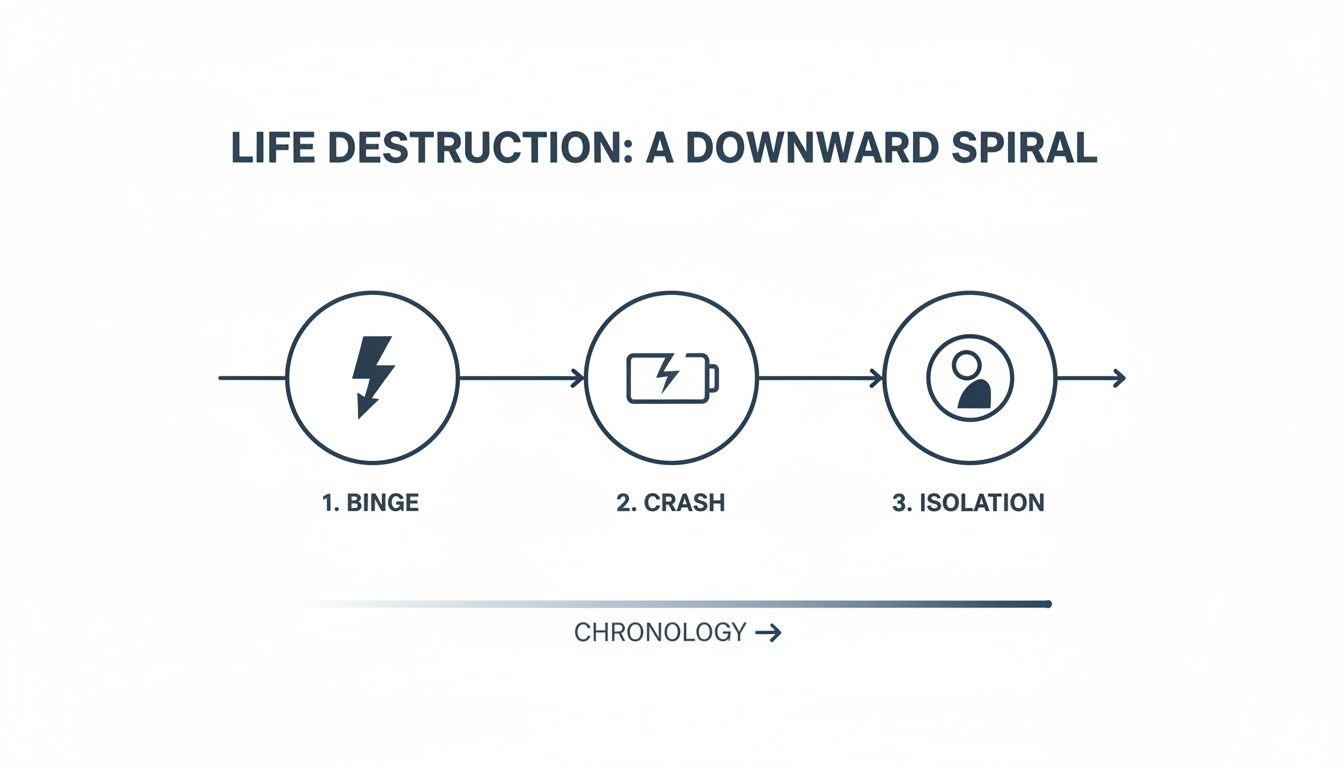
This process shows how the euphoria from a binge inevitably leads to a debilitating crash. That crash, in turn, fuels isolation and pushes a person back toward using the drug just to escape the pain.
What to Expect: The Meth Withdrawal Timeline
While everyone’s experience is a bit different, meth withdrawal tends to follow a fairly predictable pattern. It starts almost as soon as the drug’s effects wear off and unfolds in a few distinct phases, each with its own set of challenges.
- The Crash (First 24-48 hours): The first stage is defined by one thing: exhaustion. It's an overwhelming fatigue that sleep can't seem to fix. A person might sleep for days on end but still wake up feeling completely drained, irritable, and in the grips of a deep depression.
- Acute Withdrawal (Week 1-2): Once the initial crash subsides, the most severe symptoms kick in. This period is marked by powerful drug cravings, crippling anxiety, paranoia, and volatile mood swings. For some, this phase can include psychosis—hallucinations and delusions that are not only terrifying but can also be dangerous.
- Protracted Withdrawal (Weeks to Months): After about two weeks, the worst of the physical symptoms usually fade. But the psychological battle often continues. This can mean dealing with ongoing depression, anhedonia (a frustrating inability to feel pleasure), and intense cravings that can pop up out of nowhere.
Why You Should Never Detox Alone
Trying to detox from meth without medical supervision is a gamble you don't want to take. The psychological weight of withdrawal can trigger severe depression and suicidal thoughts, turning a difficult time into a life-threatening crisis. The physical and emotional pain is often so intense that the risk of relapse skyrockets. Many people go back to using simply to make the unbearable symptoms stop.
A medically supervised detox program provides a safe, controlled space where these overwhelming symptoms can be managed by professionals. It removes the temptation to relapse and offers medical support to ease the worst of the physical and psychological distress.
This structured environment is the critical bridge from active addiction to stable recovery. For anyone ready to get help, learning about the process of detoxification from methamphetamine in a professional facility can offer the hope needed to move forward. A medical detox center provides 24/7 monitoring and compassionate care, ensuring you don’t have to face this dangerous period by yourself. This safe start is the foundation for building a lasting recovery.
It’s Time to Take the First Step
Spotting the signs of meth addiction in yourself or someone you care about is a huge, often painful, realization. It’s that moment when the confusion and fear start to give way to a difficult truth. But knowing is one thing; acting on that knowledge is what truly starts the healing process and saves lives.
All the signs we've discussed—from the devastating physical changes to the internal psychological battles—are symptoms of a serious medical condition. This isn't a moral failing or a battle of willpower. It's a disease that requires professional, compassionate care, and it's far too much for anyone to face alone.
Specialized Care for Methamphetamine Addiction
Kicking a meth addiction is uniquely challenging because of the drug's profound grip on the brain and body. It requires a specialized approach, which is exactly what we've built at Tru Dallas. We guide people through every stage, starting with the most difficult one.
Our approach includes:
- Medically Supervised Detox: This is the non-negotiable first step. Our clinical team provides 24/7 monitoring to safely manage the intense physical and psychological crash of meth withdrawal. Using proven medical protocols, we help ease symptoms like severe depression and psychosis, ensuring safety and dignity.
- Dual-Diagnosis Treatment: Meth use and mental health issues like anxiety, paranoia, and depression are often deeply intertwined. We treat them at the same time. Our integrated programs are designed to address the underlying conditions that often fuel the cycle of addiction, giving you a real shot at healing.
- A Full Continuum of Care: Recovery doesn’t happen in a week. It’s a journey. We provide a seamless path from detox into our inpatient rehab, partial hospitalization programs (PHP), and intensive outpatient programs (IOP). This ensures you have consistent, unwavering support as you learn to stand on your own again.
How to Get Help Right Now
When you're ready for help, the last thing you need is a complicated process. We get it. Taking this step for yourself or a loved one is hard enough without confusing barriers. Our entire admissions process is built to be simple, direct, and supportive.
"Addiction is a family illness, and it impacts the whole family. I've worked with a lot of family members who come to me absolutely broken. They don't know what to do, they don't know how to help."
We are here to answer those questions. The process at Tru Dallas is confidential, compassionate, and fast. It all starts with a phone call. You’ll speak with a real person who will listen, understand what you're going through, and can often verify your insurance benefits in just a few minutes. We want to remove the financial guesswork so you can focus on what matters.
Recognizing the problem is where it begins. Reaching out is how it gets better. Contact Tru Dallas today and let us help you turn this crisis into a lasting recovery.
Key Takeaways
- Moving from recognizing the signs of meth addiction to taking action is a life-saving decision that requires professional help.
- Medical detox is crucial for safely navigating the dangerous symptoms of meth withdrawal, particularly severe depression and potential psychosis.
- Lasting recovery depends on treating both the addiction and any co-occurring mental health disorders through dual-diagnosis care.
- A complete continuum of care—from detox to outpatient programs—provides the ongoing support needed to rebuild your life.
- Getting help starts with a simple, confidential phone call to an admissions specialist who will guide you every step of the way.
Frequently Asked Questions About Methamphetamine Addiction
What are the first symptoms of methamphetamine addiction?
The earliest signs often involve dramatic behavioral shifts. Look for extreme energy swings, such as staying awake for days followed by a long "crash" of sleep. Other initial symptoms include a sudden loss of appetite, rapid weight loss, and increased talkativeness or agitation. These changes disrupt normal life and are clear red flags.
How does meth physically change a person's appearance?
Long-term meth use causes severe physical changes. "Meth mouth" is a hallmark sign, characterized by severe tooth decay, gum disease, and broken teeth. Users often develop skin sores from compulsively picking at their skin, a behavior caused by the hallucination of bugs crawling underneath it. Drastic weight loss and a gaunt appearance are also common.
Can meth cause permanent psychological damage?
While methamphetamine can cause long-term changes to brain structure and function, many of the most severe psychological symptoms can improve with sobriety. Meth-induced psychosis, including paranoia and hallucinations, often subsides after a person stops using. However, underlying mental health conditions may be unmasked, requiring dual-diagnosis treatment for lasting recovery.
Why is professional detox necessary for meth withdrawal?
Detoxing from meth at home is dangerous due to the severity of the psychological withdrawal symptoms. Intense depression, anxiety, and suicidal thoughts are common and require medical supervision. A professional detox facility provides a safe, supportive environment to manage these symptoms, prevent relapse, and ensure medical stability during the critical first phase of recovery.
How can I help a loved one who is showing signs of meth addiction?
Your first step should be to seek professional guidance. Contact an addiction treatment center to speak with an admissions specialist. They can provide advice on how to approach your loved one, explain treatment options, and help you create a plan. Trying to handle the situation alone can be overwhelming and sometimes unsafe. Professional support is crucial for both you and your loved one. Most insurance plans cover addiction treatment, and you can verify your insurance benefits quickly over the phone.
