
When you hear "inpatient treatment," what comes to mind? For many, it's the most intensive and structured form of addiction care, and for good reason. It’s a residential program where you live on-site, 24/7, completely immersed in a healing environment.
This approach is designed to do one thing exceptionally well: remove you from the people, places, and daily stressors that trigger substance use. It creates a safe, focused space where your only job is to get better. For anyone struggling with a moderate to severe addiction, this level of care is often the most powerful and effective first step toward lasting recovery.
Key Takeaways
- Inpatient treatment offers 24/7 residential care, removing you from triggers.
- It provides a highly structured and supportive environment focused solely on healing.
- This immersive approach is ideal for moderate to severe substance use disorders.
- The goal is to create a safe space to rebuild habits and coping skills.
- It is often the most effective first step toward long-term recovery.
What Exactly Is Inpatient Addiction Treatment?
Think of an inpatient program not as a hospital, but as a dedicated campus for rebuilding your life. Unlike outpatient care, where you go home at the end of the day, an inpatient center provides a structured, residential setting where every aspect of your day is intentionally geared toward healing.
Living on-site is the key difference. It eliminates the environmental and social cues that fuel addiction, allowing you to focus entirely on your recovery without the distractions and pressures of your usual routine. It’s a protective bubble where you can finally breathe and begin the real work of getting well.
A Powerful Analogy: Learning a New Language
Imagine you wanted to become fluent in a new language. You could take a class for an hour or two each week—that’s kind of like outpatient care. Or, you could move to a country where everyone speaks that language, immersing yourself in it from morning to night.
Inpatient treatment is the full immersion option.
Every single part of your day becomes a learning opportunity, reinforcing new, healthy ways of thinking and behaving.
- Structured Days: Your schedule is filled with a mix of therapy sessions, group counseling, and workshops designed to teach you vital coping skills.
- Expert Guidance: You’re surrounded by a dedicated team of therapists, doctors, and nurses who are there to guide you every step of the way.
- Peer Support: Living alongside others who understand exactly what you're going through creates an incredibly powerful sense of community and shared purpose.
This constant reinforcement helps you build new habits from the ground up, replacing the old, destructive patterns of substance use.
Why This Model Is So Effective
The 24/7 nature of inpatient care means you have constant medical and emotional support, which is absolutely critical in the early, vulnerable stages of recovery. This round-the-clock supervision ensures you are safe during detox and allows staff to immediately address intense cravings or emotional crises as they happen.
The global market for addiction rehabilitation reflects this. Inpatient treatment centers for addiction account for 20% of the total market share. While residential centers hold a larger piece at 27%, the inpatient sector is expected to grow the fastest because of its intensive, clinically supervised model.
This is especially true for people facing severe addictions to substances like opioids, alcohol, or benzodiazepines, where medically supervised withdrawal is not just helpful—it’s essential for safety. By blending constant medical oversight with proven therapeutic methods, inpatient care builds a strong, stable foundation for long-term success. You can discover more rehab statistics and market insights to get a clearer picture of the addiction care landscape.
The Clinical Cornerstones of Effective Inpatient Rehab
When you look at what makes an inpatient treatment center for addiction truly effective, it all comes down to a solid foundation of clinical care. Think of it like building a house—you need strong, interconnected pillars to support the whole structure. It’s not just about getting someone to stop using; it’s about using proven medical and therapeutic strategies to heal both the body and mind.
The journey starts by tackling the immediate physical hurdles in a safe, medically sound environment. Once you're stable, the deeper work of building psychological resilience and new habits can begin.
Medically Supervised Detox: The First Step to Stability
Before any real healing can start, your body needs to be safely cleared of all substances. That's where medically supervised detox comes in—it’s the essential first phase. Trying to quit substances like alcohol, opioids, or benzodiazepines cold turkey is not just incredibly difficult; it can be downright dangerous.
In a professional setting, a medical team is with you 24/7. They monitor your vital signs and manage withdrawal symptoms with appropriate medication to keep you safe and as comfortable as possible. This isn't just about "getting through it." It's about stabilizing your body so you have the clarity and strength to dive into the therapy that comes next. You can get a deeper look into what is medical detox and understand why it’s such a crucial starting point for recovery.
This path is about moving from intensive support toward sustainable, long-term wellness.
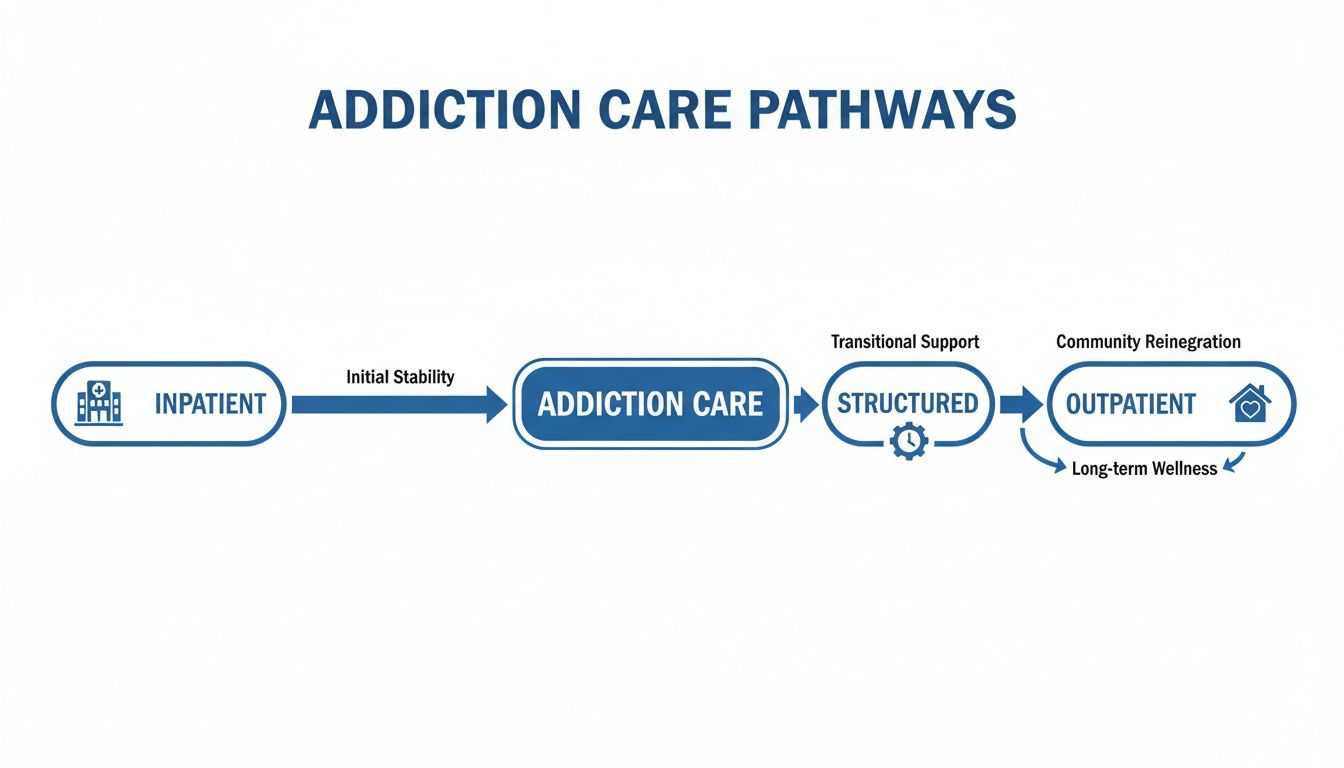
As the graphic shows, inpatient care is designed to be that solid bridge, giving you the structure and support needed to eventually transition to outpatient care and a life of recovery.
Medication-Assisted Treatment: A Tool for Cravings
After detox, Medication-Assisted Treatment (MAT) often comes into play, especially for those recovering from opioid and alcohol addiction. There's a big misconception that MAT is just trading one drug for another. That couldn't be further from the truth.
In reality, MAT involves using FDA-approved medications to rebalance brain chemistry, neutralize the euphoric effects of drugs, and quiet the intense physical cravings. It gives you breathing room from the constant, overwhelming urges that so often lead to relapse, freeing up your mind to focus on therapy.
When folded into a comprehensive treatment plan, MAT is a powerful medical tool that dramatically increases the chances someone will stick with treatment and build a lasting recovery. It handles the biological side of addiction so you can do the hard work on the psychological side.
Therapy Modalities: Rewiring the Brain for Recovery
Once your body is stable, the real work begins: understanding the thoughts and behaviors that fueled the addiction in the first place. Quality inpatient centers don't just use one approach; they use a blend of evidence-based therapies to help you build a new toolkit for life.
- Cognitive Behavioral Therapy (CBT): Think of CBT as learning to become a detective of your own mind. It teaches you to spot the destructive thought patterns that lead to using, challenge them, and then develop practical, healthier ways to respond.
- Dialectical Behavior Therapy (DBT): DBT is a game-changer for people who struggle with overwhelming emotions. It gives you concrete skills in mindfulness, tolerating distress, and regulating your emotions so you can handle life's curveballs without needing to turn to a substance.
These aren't just passive "talk therapy" sessions. They are active, hands-on learning labs where you practice new skills in a safe, supportive space.
Dual Diagnosis Care: Treating the Whole Person
It’s incredibly common for someone struggling with addiction to also be dealing with a co-occurring mental health condition like anxiety, depression, or PTSD. Trying to treat the addiction while ignoring the underlying mental health issue is like patching a leaky pipe but ignoring the cracked foundation causing the problem. It’s a recipe for failure.
Dual diagnosis care is the only approach that makes sense: treating both conditions at the same time, in an integrated way. This is an absolute cornerstone of effective treatment, because untreated mental health symptoms are one of the biggest drivers of relapse. At Tru Dallas Detox & Recovery Center, our team specializes in building these integrated plans, ensuring we’re addressing every part of your well-being right from the start.
Why Inpatient Care Is a Powerful Choice for Recovery
When you're facing addiction, choosing the right path forward can feel like a monumental task. For many people, the decision to enter an inpatient program is the single most important one they make for their recovery. It’s a powerful choice because it creates a dedicated healing space, completely separate from the daily triggers, people, and places that keep the cycle of substance use going.
Think of it as a protective bubble. By stepping away from the chaos and negative influences, you give yourself the space and quiet clarity needed to start the real, meaningful work of getting well.
A Structured and Trigger-Free Environment
Trying to build a new life on shaky ground is almost impossible. That’s often what recovery feels like when your home life is filled with stress, conflict, or easy access to drugs or alcohol. Inpatient treatment centers for addiction solve this problem by giving you solid ground to stand on—a structured, safe, and completely trigger-free setting.
This controlled environment isn't about being restrictive; it’s about giving you the freedom to heal without constantly battling temptation or being reminded of past use. The days are intentionally planned, from therapy sessions and group meetings to meals and activities. This predictable rhythm helps rebuild the sense of order and purpose that addiction so often strips away.
The Power of 24/7 Support and Safety
One of the biggest advantages of inpatient care is having 24/7 medical and emotional support right there when you need it. In the fragile, early days of recovery, things can get intense. Withdrawal symptoms, overwhelming cravings, or a sudden emotional crisis can pop up at any time, day or night. Having immediate access to nurses, doctors, and therapists is an incredible safety net.
This constant supervision means any medical issues are handled instantly, and moments of emotional distress are met with compassionate, professional help. You are never, ever alone in your struggle.
This level of care is so critical. In 2023, nearly 54.2 million Americans needed substance abuse treatment, but a staggering 24% were the only ones who actually received it. Inpatient centers are uniquely equipped to handle the most severe cases precisely because they offer this continuous clinical oversight. You can read the full analysis on addiction treatment needs for more context on these numbers.
Breaking Isolation Through Peer Community
Addiction is an incredibly isolating disease. It convinces you that you’re the only one going through this, that no one could possibly understand. Inpatient treatment shatters that loneliness by building a genuine community. Living alongside others who are walking a similar path creates a powerful bond built on shared experience and mutual encouragement.
For many, it's the first time they can talk openly about their struggles without being judged. This shared journey fosters a sense of camaraderie and accountability, reminding you that not only is recovery possible, but it’s happening right in front of you. Seeing others have breakthroughs and make progress gives you tangible hope. To see how this compares to other options, you can explore our detailed guide on outpatient vs. inpatient rehab.
This immersive community, combined with round-the-clock professional care, provides the stability needed for a true breakthrough.
Key Takeaways
- Inpatient care provides a structured, trigger-free space so you can focus entirely on healing.
- With 24/7 medical and emotional support, you're kept safe and have immediate help whenever you need it.
- Living with a community of peers breaks the deep isolation that fuels addiction.
- It's the best option for severe substance use, co-occurring disorders, or if outpatient attempts have failed.
- The controlled setting gives you the stability you need to build a lasting foundation for recovery.
What a Typical Day in an Inpatient Program Looks Like
The idea of checking into an inpatient program can be daunting, mostly because of the unknown. What really goes on all day? The truth is, it’s nothing like the chaotic or prison-like stereotypes you might see in movies. It’s a highly structured, supportive, and surprisingly calm environment built for one single purpose: your healing.
Knowing the daily rhythm can help replace that anxiety with a sense of preparedness. Every single activity, from the moment you wake up to when your head hits the pillow, is a carefully planned step toward building a new, solid foundation for your life. It’s all about balance—mixing intensive therapeutic work with time for personal reflection, physical health, and connecting with others who get it.
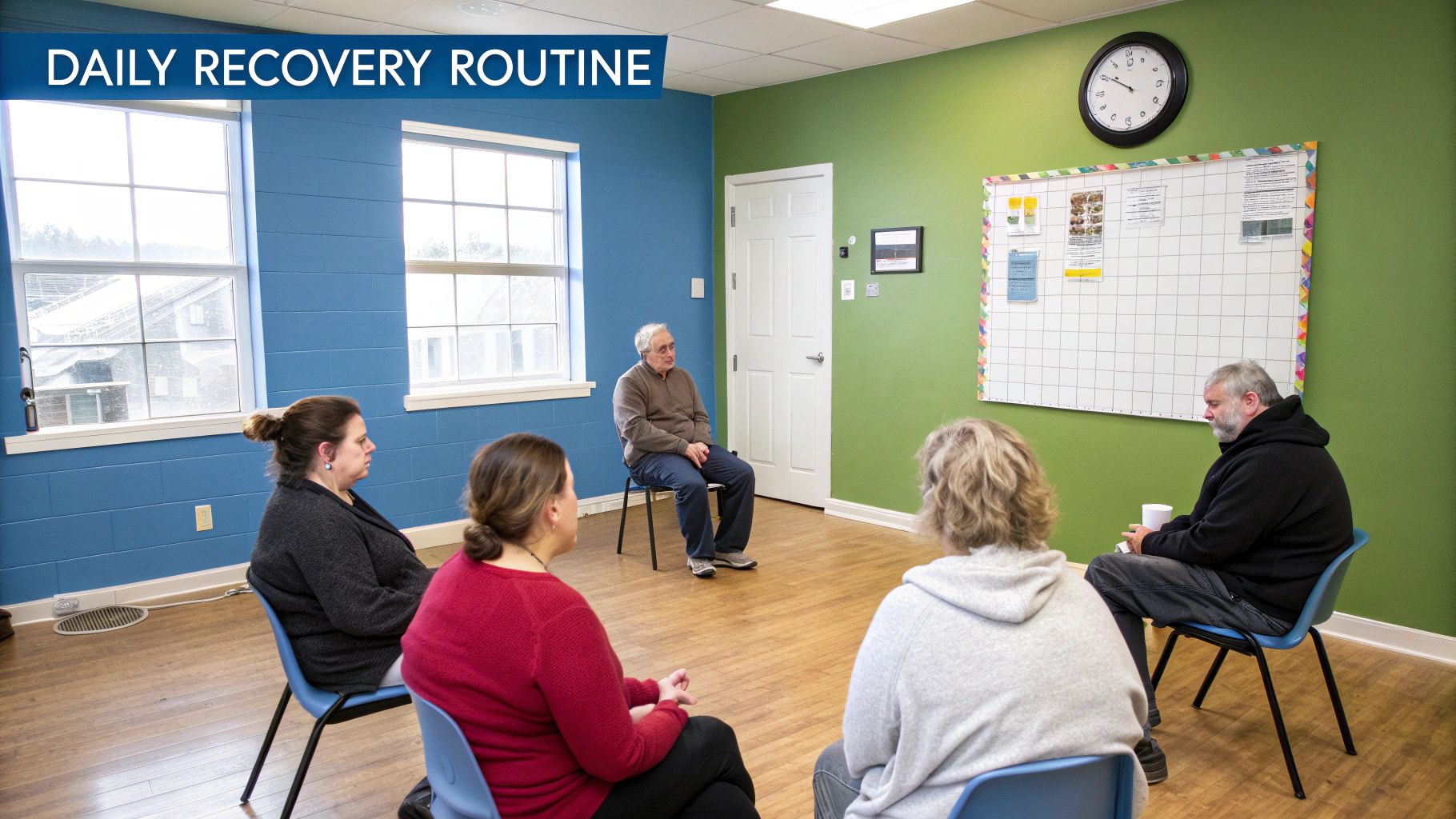
Morning: The Start of a Purposeful Day
Mornings in a residential setting start early, and that’s intentional. The goal is to build a healthy, predictable routine. After a good breakfast, the day's therapeutic work kicks off, usually with a group session to get everyone centered.
These morning meetings are a chance to set a positive tone for the day. You check in with your peers and the clinical team, share any immediate challenges, and celebrate small wins. It’s a powerful way to ground yourself in the present and reaffirm why you’re there. This kind of structure is crucial for rebuilding the discipline that addiction often takes away.
Midday: Intensive Therapeutic Work
The late morning and afternoon are where the real heavy lifting happens. This is prime time for the deep, focused work of recovery, and your schedule will have a mix of different formats to tackle things from every angle.
- Individual Therapy: This is your dedicated one-on-one time with a primary therapist. You’ll dig into the roots of your addiction, process personal history or trauma, and map out a recovery plan that’s uniquely yours.
- Group Therapy: Small, focused groups are where the magic of peer support comes alive. Sessions might cover specific topics like relapse prevention, how to handle triggers, or building better communication skills.
- Skill-Building Workshops: These are practical, hands-on classes that give you real-world tools for life after treatment. Think of it as school for sobriety, where you might learn about mindfulness, healthy coping skills, or even financial planning.
This blend ensures you aren't just talking about the problems—you're actively learning and practicing the solutions.
Evening: Reflection and Holistic Healing
As the day winds down, the focus shifts to reflection and overall wellness. After dinner, the activities are geared toward calming your mind and body. This could be anything from a yoga or meditation class to art therapy or a session in the gym.
These aren't just fluffy extras; they're vital for healing the whole person. They teach you how to manage stress, feel your emotions without needing to numb them, and find genuine joy in being sober. The day usually wraps up with a final group meeting or a 12-step meeting, giving you a chance to reflect on your progress and set your intentions for tomorrow.
A key thing to understand about inpatient treatment is that every activity has a purpose. The goal isn't just to keep you busy; it's to immerse you in a new way of living where every hour contributes to building your physical, mental, and emotional strength for the long haul.
To give you a clearer picture, here's what a day might look like.
A Look Inside a Sample Daily Schedule
This table breaks down a typical day, showing how time is thoughtfully balanced between structured therapy, personal growth activities, and essential rest.
| Time Slot | Activity | Purpose |
|---|---|---|
| 7:00 AM – 8:00 AM | Wake Up & Morning Mindfulness | Start the day with a calm, clear mind. |
| 8:00 AM – 9:00 AM | Nutritious Breakfast | Fuel the body and brain for the day ahead. |
| 9:00 AM – 10:30 AM | Morning Process Group | Check in with peers and set daily intentions. |
| 10:30 AM – 12:00 PM | Skill-Building Workshop | Learn practical tools like CBT or DBT skills. |
| 12:00 PM – 1:00 PM | Lunch & Free Time | Rest, socialize, and recharge. |
| 1:00 PM – 2:30 PM | Individual Therapy / Specialty Group | Deep dive into personal issues or specific topics. |
| 2:30 PM – 4:00 PM | Holistic Therapy (Yoga, Art, etc.) | Heal the mind-body connection. |
| 4:00 PM – 5:30 PM | Personal Reflection / Journaling | Process insights from the day’s sessions. |
| 5:30 PM – 6:30 PM | Dinner | Community mealtime. |
| 7:00 PM – 8:30 PM | 12-Step Meeting or Evening Group | Reinforce community support and reflect on progress. |
| 8:30 PM – 10:00 PM | Quiet Time & Wind Down | Prepare for a restful night's sleep. |
Every schedule is a bit different, but this gives you a solid idea of the rhythm and purpose behind each day.
How Long Does Treatment Last?
There's no magic number for how long you'll stay at inpatient treatment centers for addiction. The length of your stay is determined by your specific clinical needs, which we figure out during your initial assessment.
Here are the most common timelines:
- 30-Day Programs: This is often a good starting point for people with less severe substance use disorders or for those who need to stabilize before moving to a lower level of care.
- 60-Day Programs: This gives you more time to get past the surface-level issues and start building solid, healthy habits that will stick.
- 90-Day Programs: For many, this is the gold standard. Research consistently shows that longer stays are linked to much better long-term recovery outcomes. This extended time allows new behaviors to truly become second nature.
The right program length depends on things like the substance used, how long the addiction has been going on, and if there are co-occurring mental health conditions to address.
Finding and Paying for Inpatient Treatment: Your First Steps
Let's be honest—the idea of figuring out how to get into rehab, let alone how to pay for it, can feel overwhelming. It’s often the biggest hurdle that keeps people from even making the first call. But the process is far more straightforward than you might imagine. It all starts with a simple, private phone call. This isn't a high-pressure sales pitch; it's a conversation with someone who understands and is there to help you figure things out.
When you call a center like Tru Dallas, an admissions coordinator will listen to your story, get a basic sense of what's going on, and answer your most pressing questions. The entire point is to ease your worries and show you that there's a clear, manageable path forward.
What Does Inpatient Rehab Actually Cost?
This is the question on everyone's mind. The good news is that high-quality care is more accessible than ever. Thanks to laws like the Affordable Care Act, most PPO insurance plans provide significant coverage for substance abuse treatment, including inpatient programs.
So, how do you find out what your plan covers? You don't have to spend hours on the phone with your insurance company. The first step is a free, confidential insurance benefits check. This is a standard part of the process where you provide your insurance details, and the center's admissions team does the legwork. They'll figure out exactly what your plan covers and what, if any, out-of-pocket costs you might have. It completely removes the guesswork and gives you a clear financial picture from the start.
The need for this intensive level of care is only growing. Rehabilitation centers, including inpatient programs, make up a 32% market share of the treatment industry. Experts project that inpatient care will see the highest growth through 2034, simply because its 24/7 support model works. Learn more about these U.S. mental health and addiction market trends.
Your Path to Admission: A Step-by-Step Look
Getting into treatment is a supportive, guided process. Here’s a quick rundown of how it typically unfolds:
- The Confidential Call: You reach out to the admissions team. This is a private conversation where you can ask anything and share what’s been happening.
- The Benefits Check: You provide your insurance information for a fast, no-obligation check to confirm your coverage.
- The Clinical Assessment: You’ll talk with a clinician for a more in-depth conversation to make sure the program is the right medical and therapeutic fit for you.
- Getting Here: Once you’re approved, the team coordinates everything—your admission date, travel plans, and anything else you need for a smooth, stress-free arrival.
This whole process is designed to be fast and supportive. In many cases, admission can be arranged within 24 hours. The goal is simple: get you the help you need, right when you need it, without confusing delays.
Key Takeaways
- It all starts with a simple, confidential phone call to an admissions coordinator.
- Most PPO insurance plans provide solid coverage for inpatient addiction treatment.
- A free insurance benefits check is a standard first step that clarifies all costs upfront.
- A clinical assessment ensures the program is a perfect match for your unique needs.
- Admission can often happen within 24 hours to provide immediate care.
Critical Questions to Ask Before Choosing a Center
Finding the right inpatient treatment center is, without a doubt, one of the most important decisions you or your family will ever face. The truth is, not all programs are created equal, and the quality of care can be worlds apart. To make a choice you can trust, you have to look past the fancy websites and start asking tough, specific questions that get to the heart of what a facility truly offers.
Think of yourself as an advocate for your own health. Your job is to uncover the facts, assess the quality, and make sure the program is the right fit. This isn't about being difficult—it's about being smart when it matters most.
Licensing, Accreditation, and Staff Credentials
First things first, let's talk credentials. These are the non-negotiables that prove a facility is safe, professional, and held to a high standard. Without them, you're flying blind, with no real guarantee that the care is legitimate or effective.
Start with these foundational questions:
- Is the facility licensed by the state? This is the absolute bare minimum. It means the center meets basic health and safety codes.
- Is it accredited by a national body like The Joint Commission or CARF? This is a much bigger deal. Accreditation means an outside expert organization has put the facility under a microscope and verified it meets rigorous national standards for patient care.
- What are the credentials of the clinical staff? Get specific. Ask about the qualifications of the therapists, doctors, and nurses. You want to see licensed professionals like LPCs (Licensed Professional Counselors), LCDCs (Licensed Chemical Dependency Counselors), and medical doctors board-certified in addiction medicine.
- What is the patient-to-clinician ratio? A low ratio is a good sign. It means you’ll get personalized attention and won't get lost in the shuffle because the clinical team isn't stretched too thin.
Asking these questions helps you quickly separate the serious medical facilities from places that might just be a nice house with a recovery theme.
Treatment Philosophy and Therapeutic Approach
Once you've confirmed a center is legitimate, it's time to find out how they actually treat addiction. Any reputable facility should be able to clearly explain its philosophy and the specific, research-backed methods it uses. If you get vague answers here, consider it a major red flag.
Here’s what to dig into:
- What specific, evidence-based therapies do you use? You're listening for names like Cognitive Behavioral Therapy (CBT), Dialectical Behavior Therapy (DBT), and Motivational Interviewing. A strong program won't rely on just one, but will use a mix of proven methods.
- How do you handle dual diagnosis? If co-occurring conditions like anxiety, depression, or trauma are part of the story, the center must have an integrated plan to treat both at the same time. Ask how their psychiatrists and therapists work together on a patient's care.
- Do you offer Medication-Assisted Treatment (MAT)? For opioid and alcohol use disorders, MAT is the gold standard of care. A quality center will have a well-defined, medically supervised MAT program, not just be "open to it."
- Can you walk me through a typical daily schedule? This is a great way to see how much structured clinical time you'll actually get. A good schedule is full, balancing individual therapy, group sessions, and skill-building workshops—not a ton of unstructured "free time."
The answers you get should be confident, specific, and grounded in established clinical science. A great program won't just tell you what they think you want to hear; they'll explain the "why" behind their entire approach.
Key Takeaways
- Verify Credentials First: Before you go any further, always confirm state licensing and national accreditation (like from The Joint Commission).
- Ask About the Team: Inquire about the specific credentials of the clinicians and the patient-to-staff ratio to get a sense of the personal care you'll receive.
- Demand Therapy Specifics: A quality program will be proud to detail the evidence-based therapies it uses, like CBT and DBT, not just offer vague promises.
- Prioritize Dual Diagnosis Care: If mental health is a factor, make sure the facility has a solid, integrated plan for treating co-occurring disorders.
- Understand the Daily Flow: A detailed daily schedule shows a program's intensity and commitment to structured, meaningful clinical work.
Life After Inpatient Care: Planning for Long-Term Success
Finishing an inpatient program is a huge accomplishment. Seriously, it's a massive step. But it’s not the end of the road—it’s just the beginning of a new chapter. Think of residential treatment as building the foundation for your sobriety. The real work of long-term recovery starts the day you walk out the door.
This is where a solid aftercare plan becomes your most valuable asset. It acts as a bridge, connecting the 24/7 support of inpatient care with the day-to-day realities of life. The best inpatient treatment centers for addiction don’t just hand you a pamphlet on your last day; they start building this roadmap with you from the very beginning.
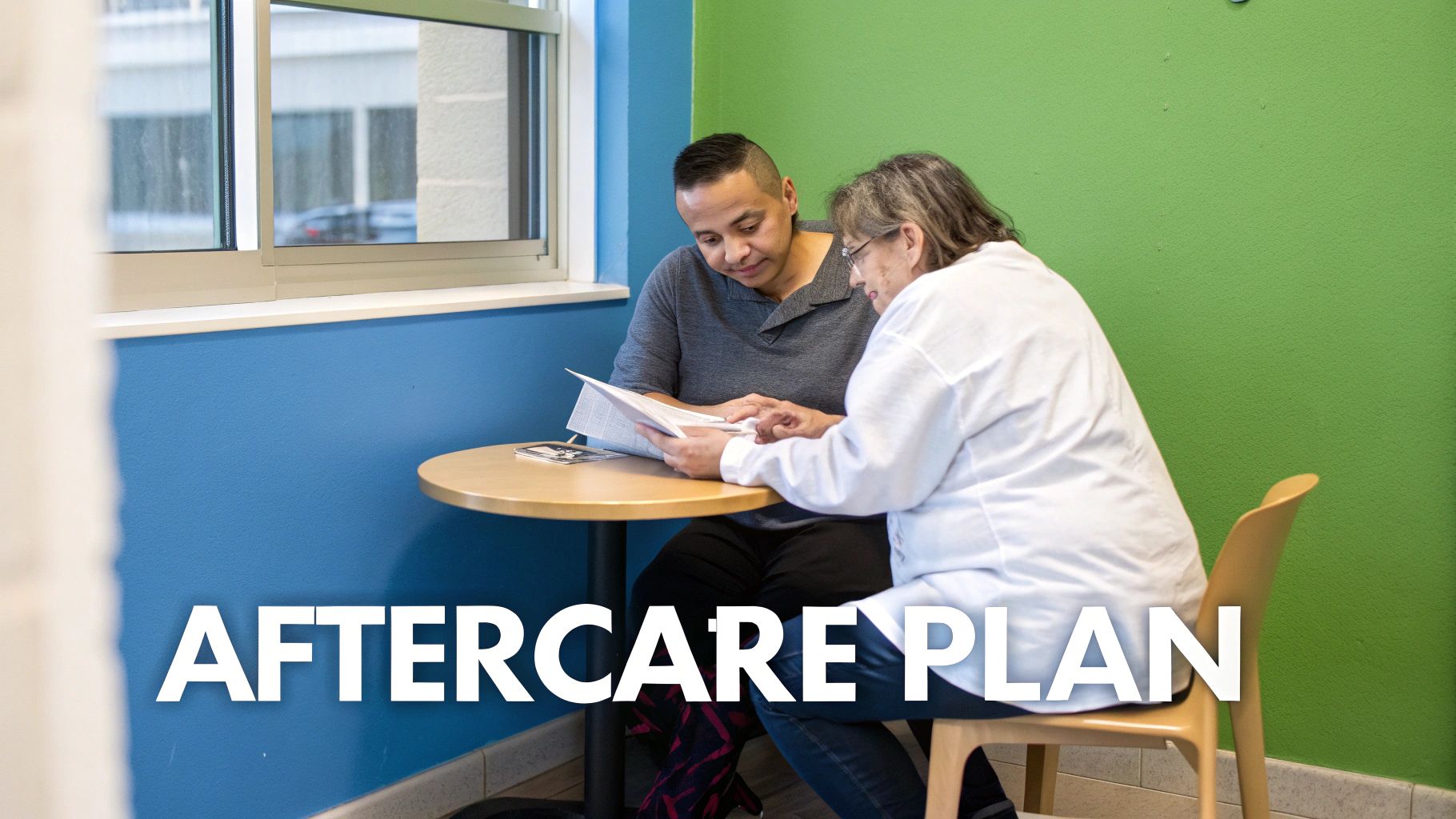
Building a Bridge to Sustained Recovery
A good aftercare plan is anything but generic. It’s a personalized strategy, a safety net designed to help you handle real-world triggers and challenges. This continuity of care is what helps turn the skills you learned in treatment into life-long habits.
The bottom line is this: lasting recovery depends on having a continuum of support. This plan gives you the tools and the network to manage triggers, celebrate wins, and stay resilient when life inevitably gets tough.
Most strong aftercare strategies use a step-down approach. This means you gradually move from more intensive levels of care to less intensive ones, all while taking on more personal responsibility. It’s a measured transition that prevents the shock of going from a highly structured, supportive environment straight back into the deep end.
Essential Elements of a Strong Aftercare Plan
A quality treatment center will collaborate with you to build a plan that truly fits your life, pulling together several layers of ongoing support.
- Step-Down Programs: This is a critical first move. Transitioning to an Intensive Outpatient Program (IOP) or Partial Hospitalization Program (PHP) keeps you connected to structured therapy a few times a week as you start easing back into your community.
- Ongoing Therapy: Continuing one-on-one sessions with a therapist is key. It gives you a dedicated space to work through new challenges and strengthen the coping skills you developed in rehab.
- Sober Living Arrangements: For many people, going straight home just isn't the safest or most supportive option. If you're looking for a structured, drug- and alcohol-free environment, you can learn more about the role of sober living homes in Texas and how they provide crucial accountability and peer support.
- Support Groups: Getting involved in groups like Alcoholics Anonymous (AA), Narcotics Anonymous (NA), or SMART Recovery connects you with a community of people who get it. This shared experience and encouragement is invaluable.
- Alumni Programs: Staying connected with your treatment center and the people you graduated with creates a lasting support network. These are the people who truly understand what you've been through.
At Tru Dallas Detox & Recovery Center, we don’t see aftercare as an exit strategy. It’s a core component of your treatment from day one, ensuring you leave our facility feeling confident and equipped with a clear path forward.
Frequently Asked Questions About Inpatient Treatment
Stepping into inpatient treatment is a huge decision, and it’s completely normal to have a lot of questions. Let’s walk through some of the most common things people ask, so you can feel clear and confident about what to expect.
How Long Will I Need to Be in Rehab?
This is one of the first questions on everyone's mind. While there's no magic number, most inpatient programs run for 30, 60, or 90 days. The right timeline for you isn't a guess—it's determined by a thorough clinical assessment when you first arrive. We'll look at a few things together: the substance you've been using, how long you've been struggling, and whether you're also dealing with mental health challenges like anxiety or depression. Generally, a longer stay gives you a much stronger foundation for a lasting recovery.
Can I Still Talk to My Family?
Absolutely. In fact, we encourage it. Your family can be one of your greatest sources of support, and we want to help strengthen those connections. There’s usually a brief "settling-in" period for the first few days where we limit outside contact. This just gives you a chance to focus on yourself and acclimate. After that, we schedule time for phone calls and visits, and family therapy sessions are often a core part of the healing process.
What Should I Pack for My Stay?
Think comfort and simplicity. When you're admitted, we’ll give you a complete packing list, but the basics are pretty straightforward. Plan on bringing about a week's worth of comfortable clothes, your own alcohol-free toiletries, and any prescription medications you currently take. Just be sure to bring them in their original pharmacy bottles. To keep the environment safe and free of distractions for everyone, we do have rules about what to leave at home. This usually means no personal electronics like laptops or tablets, no outside food and drinks, and of course, no non-prescribed substances.
Is Everything I Share Kept Private?
Your privacy is 100% protected. Every accredited inpatient treatment center for addiction is legally bound by the strict confidentiality standards of HIPAA. This is something we take incredibly seriously. What that means for you is that your personal information, your treatment details, and anything you share with our team stays between us. We cannot and will not share any of it with anyone—not your boss, not your family—without your direct, written consent. You can focus completely on getting well, knowing your privacy is secure.
Who is the best candidate for inpatient treatment?
Inpatient care is strongly recommended for anyone with a severe substance use disorder, those also dealing with mental health conditions (dual diagnosis), or people whose home environment is unstable or unsupportive. It's also a great fit for anyone who has tried a less intensive program before and relapsed.