

Sober living homes in Texas are a critical stepping stone for anyone serious about long-term recovery. Think of them as the supportive bridge between the structured, intensive environment of an addiction treatment center and the full-blown independence of returning to everyday life. They offer a safe, substance-free space where you can practice the coping skills you learned in rehab, but with real-world responsibilities and a community of peers holding you accountable.
This transitional step is often the make-or-break factor in maintaining sobriety.
Key Takeaways
- Bridge to Independence: Sober living homes serve as a transitional environment between structured rehab and independent living.
- Safe and Substance-Free: They provide a secure, alcohol- and drug-free space to practice new coping skills.
- Community and Accountability: Residents live with peers who share the same recovery goals, fostering mutual support and accountability.
- Real-World Practice: These homes balance freedom with structure, allowing residents to work or go to school while adhering to house rules.
- Critical for Long-Term Sobriety: This step is often essential for turning short-term abstinence into lasting, sustainable recovery.
What Is a Sober Living Home?
Imagine you’ve just learned to scuba dive. You’ve aced all the lessons in the safety of a pool with an instructor right by your side. A sober living home is like your first few open-water dives with a trusted dive master—you’re in the real ocean, but you’re not alone. You have the freedom to explore, but there’s a structured plan and an expert nearby to ensure you stay safe.
It's not a clinical treatment center like a detox or rehab facility. Instead, it’s a residential home where everyone is committed to building a new, sober lifestyle from the ground up.
Residents get a healthy mix of freedom and structure. Most are expected to have a job, be enrolled in school, or participate in an outpatient program during the day. This fosters independence and responsibility. But at the end of the day, they return to a home with clear rules designed to protect everyone's recovery journey.
The Core Components of Sober Living
The entire purpose of a sober living home is to ease the transition from the 24/7 bubble of rehab back into the complexities of society. It does this by zeroing in on a few key elements:
- Peer Support: This is huge. Living alongside others who understand the struggle and share the same goal of staying sober creates an incredibly powerful, organic support system. It cuts through the isolation that so often leads to relapse.
- Accountability: There’s no hiding. With rules like curfews, mandatory house meetings, and random drug testing, residents are held accountable for their choices. This isn't about punishment; it's about reinforcing positive behaviors and a sense of personal ownership over one's recovery.
- Routine and Structure: Building a new life requires building new habits. Residents are expected to keep their space clean, manage their own schedules, and often attend 12-step or other recovery meetings. This daily structure is what turns good intentions into a stable, sober reality.
A sober living home isn’t just a roof over your head; it’s an active training ground for recovery. It's where you put the lessons from treatment into practice, all while having a safety net to catch you from the triggers and stressors waiting in the outside world.
Sober Living vs Inpatient Rehab a Quick Comparison
It's easy to get sober living and inpatient rehab confused, but they serve very different purposes in the recovery timeline. Rehab is where the intensive clinical work happens—detox, therapy, and stabilization. Sober living is where you learn to live sober.
This table breaks down the key distinctions:
| Feature | Sober Living Home | Inpatient Rehab (Detox Center) |
|---|---|---|
| Primary Goal | Real-world integration and lifestyle change | Medical stabilization and intensive therapy |
| Clinical Staff | House manager, peer support (no medical staff) | 24/7 medical staff, therapists, counselors |
| Daily Structure | Flexible; residents work or go to school | Highly structured with scheduled therapy sessions |
| Personal Freedom | High degree of autonomy and independence | Very limited; residents remain on-site |
| Length of Stay | Typically 3-12 months | Usually 30-90 days |
| Focus | Community, accountability, life skills | Healing trauma, detox, initial recovery skills |
Ultimately, one is not better than the other—they are two distinct, essential phases of a complete recovery plan. For a deeper dive, you can learn more about how sober living differs from rehab in our detailed guide. This transitional phase is often the key to turning short-term abstinence into a lifetime of recovery.
The Sober Living Landscape in Texas
When someone finishes treatment in Texas, their recovery journey is really just beginning. Sober living homes are supposed to be that crucial next step, but finding one is a real challenge for most people. Given the state's sheer size, the demand for quality, supportive housing is simply overwhelming the supply.
This isn't just an abstract problem. It’s about real people leaving rehab, filled with hope, only to find themselves scrambling for the structured, safe environment they desperately need. For families right here in Dallas-Fort Worth, the search can feel like a full-time job, and it shines a harsh light on just how badly we need more certified, high-quality recovery homes.
The Challenge of Finding a Good, Accredited Home
Here’s something that surprises a lot of people: unlike clinical treatment centers, sober living homes in Texas operate under a voluntary accreditation system. This means there's no mandatory, statewide registry to tell you how many homes or beds are actually available. It puts the burden squarely on individuals and their treatment teams to do the homework and vet every potential option.
This is where organizations like the Texas Recovery-Oriented Housing Network (TROHN) become so important. As an affiliate of the National Alliance for Recovery Residences (NARR), TROHN sets the gold standard. A home that has gone through the process to become TROHN-certified has proven its commitment to safety, ethics, and a genuine recovery-focused culture. If you’re looking for a quality home, starting with their certified list is one of the smartest moves you can make.
The infographic below really nails the core principles of what makes a great sober living environment work. It’s all about that balance between growing independence and having a solid support system.
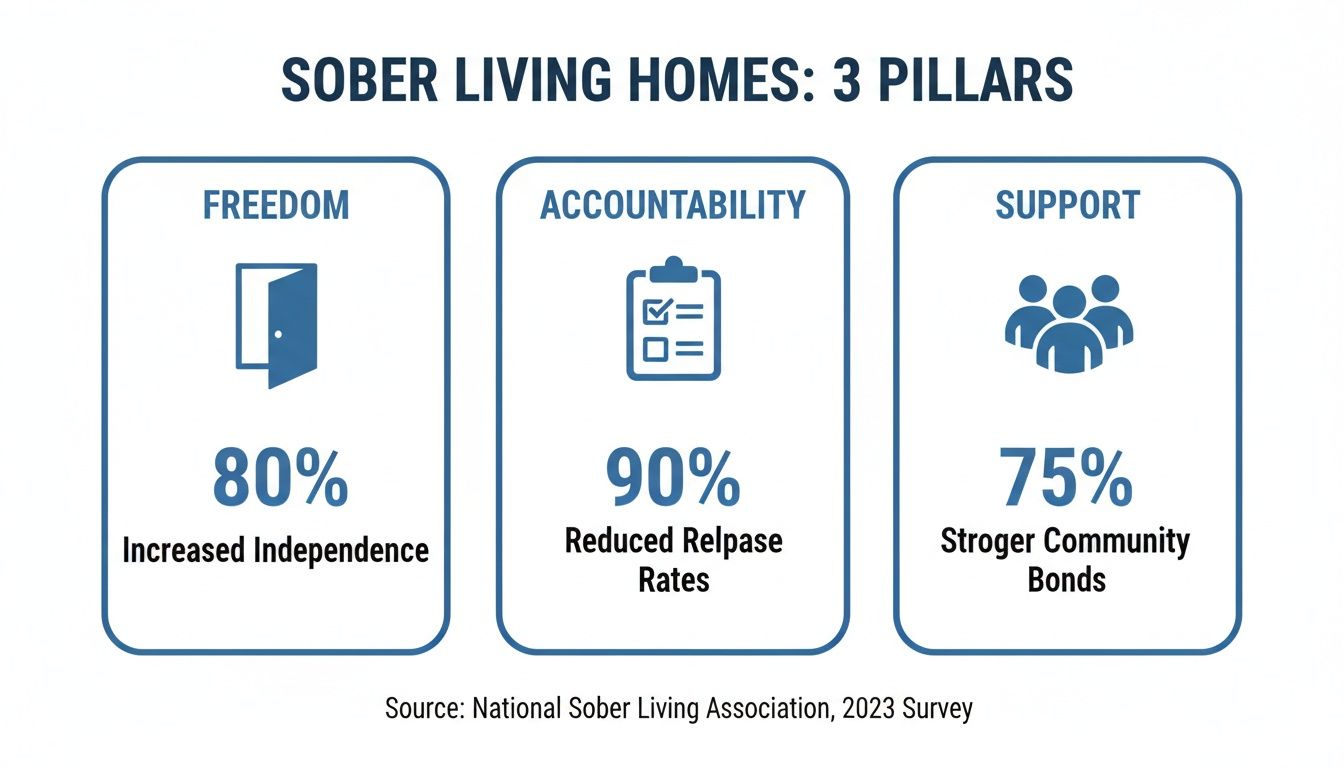
These three pillars—freedom, accountability, and support—are the magic ingredients. They work together to create a space where residents can start putting real-world sober skills into practice without being completely on their own.
But the numbers paint a pretty grim picture of what’s available. While it's hard to get an exact count, most estimates put the number of recovery homes in Texas somewhere between 600 and 700. Digging into the data, the Texas Health and Human Services Commission recognizes 407 accredited homes, while a separate NSTARR study found 583.
That might sound like a lot, but it works out to just 2.06 houses per 100,000 people. This lands Texas at a dismal 33rd in the nation for per-capita availability. Even more shocking? A staggering 218 of Texas's 254 counties have no recovery housing at all. You can dive deeper into the data on Texas recovery housing availability to see just how widespread this issue is.
Why This Scarcity is a Public Health Crisis
This isn't just an inconvenience; it's a genuine public health problem. When a person is ready to leave a detox and residential program like Tru Dallas, they have momentum. They’re motivated. Making them wait weeks—or longer—for a spot in a sober living home can be disastrous, leaving them in limbo without the structure and peer support that is so critical in those early months.
For someone fresh out of treatment, waiting for a spot in a good home feels like an eternity. Having immediate access to a safe, substance-free environment can literally be the difference between staying sober and relapsing.
This is why a huge part of our aftercare process is connecting clients with sober living partners we've already vetted and trust. It’s not about finding just any bed. It's about finding the right community that fits a person's recovery goals, ensuring that all the hard work they put into treatment has a chance to stick for the long haul. The shortage of sober living homes in Texas makes it clear just how vital it is to expand access for everyone who needs it.
Key Takeaways
- Significant Shortage: Texas has a major shortage of sober living homes, ranking 33rd in the U.S. for availability per capita.
- Accreditation is Key: Accreditation from groups like the Texas Recovery-Oriented Housing Network (TROHN) is voluntary but is the best indicator of a quality, safe home.
- Access "Deserts": Over 200 counties in Texas have zero identified recovery housing, creating vast areas with no aftercare support.
- Dangerous Delays: The gap between high demand and low supply creates risky waiting periods for individuals leaving treatment.
- Informed Search is Crucial: Finding a quality sober living home requires careful research, often best done with guidance from treatment professionals.
How Sober Living Supports Lasting Recovery
So why are sober living homes such a vital piece of the recovery puzzle? Think of it this way: moving from a highly structured treatment center straight back into the world can feel like stepping onto a tightrope without a net. A sober living home is that safety net. It provides the stability and support you need to build a life grounded in recovery, not just temporary abstinence.
This is where the rubber meets the road. In treatment, you learn the tools for sobriety. In a sober living house, you start using them every single day, in real-world situations. It’s where all those clinical lessons take root and start to become lasting, instinctual habits.
The Power of Peer Accountability and Structure
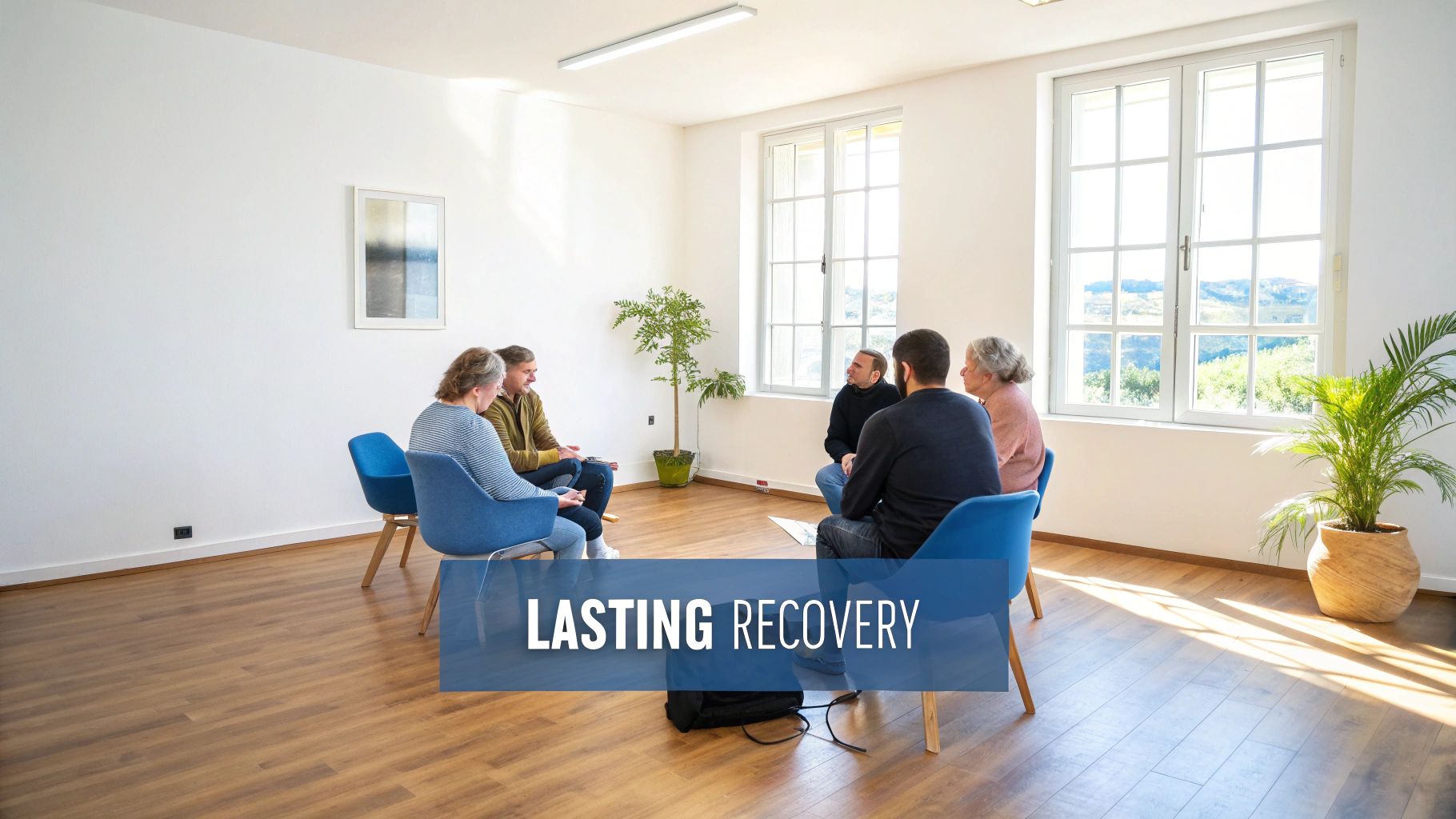
One of the most powerful elements of sober living is the built-in community. You are literally surrounded by people who get it—they know exactly what you’re going through because they’re walking the same path. This creates an atmosphere of mutual accountability and encouragement that’s almost impossible to find anywhere else.
When someone has a tough day or gets blindsided by a trigger, they don't have to go it alone. They can turn to their housemates for genuine, non-judgmental support. This constant reinforcement of positive choices helps residents build the confidence and resilience they need to handle life's curveballs without falling back on old habits.
Living in a community committed to sobriety helps normalize recovery. It shifts the mindset from "I can't use" to "We don't use," creating a powerful collective identity that strengthens individual resolve.
This incredible peer support is layered on top of a simple but effective daily structure. Residents are expected to:
- Hold down a job or be enrolled in school
- Show up for regular house meetings
- Respect curfews and guest policies
- Pitch in with household chores
This structure isn’t just about keeping the house tidy; it's about rebuilding essential life skills. It fosters responsibility, time management, and a sense of purpose—all of which are critical for getting back on your feet as a productive, self-sufficient person. The benefits of sober living in addiction recovery are countless, but this blend of community and routine is the secret sauce.
Evidence-Based Outcomes of Sober Living
The life-changing impact of sober living isn't just a collection of feel-good stories; it's backed by some serious research. Study after study shows that people who move from treatment into a sober living home have dramatically better long-term outcomes. These environments directly lead to higher rates of sobriety, improved mental health, and greater overall stability.
The data is pretty compelling. Research has found that sober living participants see major improvements in drug and alcohol abstinence, psychiatric symptoms, arrests, and employment—and they maintain those gains for at least 18 months. Homes based on the Oxford House model have been shown to be particularly effective. After two years, residents were:
- Twice as likely to remain abstinent (65% vs. 31%)
- Earning double the monthly income ($989 vs. $440)
- Facing one-third the incarceration rates (3% vs. 9%)
Economically, this model even yielded a net benefit of +$29,000 per resident over two years. You can read more about these powerful outcomes from addiction recovery studies.
These numbers prove that sober living homes in Texas aren’t just a safe place to land. They are a smart investment in a person’s future. They provide the framework needed to rebuild a life from the ground up, leading to real, measurable improvements in work, well-being, and community life. This support is often the one thing that turns the hope of recovery into a lived reality.
Key Takeaways
- Crucial Bridge: Sober living homes bridge the gap from intensive rehab to independent life, enabling real-world practice of recovery skills.
- Community and Routine: The combination of peer support and daily structure is key for rebuilding life skills, accountability, and purpose.
- Proven Results: Residents of sober living homes demonstrate significantly higher rates of long-term sobriety, employment, and overall stability.
- Effective Models: Data from models like Oxford House shows residents are twice as likely to stay sober and double their income after two years.
- Tangible Benefits: Time in a sober living environment creates measurable, positive results for your health, finances, and future.
Choosing the Right Sober Living Home in Texas
Let's be clear: not all sober living homes are created equal. Finding the right fit is one of the most important decisions you'll make, one that can genuinely shape your entire recovery journey. You’re looking for a safe, structured, and truly supportive community—not just a room for rent. This means you’ve got to do your homework and learn how to spot a quality home.
Think of it like choosing a college. You wouldn't just enroll in the first one you see online, right? You’d visit the campus, talk to students, and check their accreditation. The same diligence applies here. A well-run sober living home is the foundation for building a new life, and you want to be absolutely sure that foundation is solid.

Start with Accreditation and Staff Qualifications
If you remember one thing, make it this: the single most important sign of a home's quality is its accreditation. Here in Texas, the gold standard is a certification from the Texas Recovery-Oriented Housing Network (TROHN). This group is our state's affiliate of the National Alliance for Recovery Residences (NARR), and a TROHN seal of approval means a home has voluntarily met high standards for safety, ethics, and real recovery support.
Beyond the official paperwork, look at the people running the place. Who is the house manager? What’s their own recovery story? A good house manager isn’t just a landlord collecting rent; they're a mentor and a guide who leads by example.
You should also ask about the qualifications of any other staff. Do they have certifications in peer recovery support? It’s their training and experience that turns a house into a place where real change happens. When you're vetting sober living homes in Texas, this is non-negotiable.
Key Questions to Ask During Your Visit
When you tour a potential home, show up with a list of questions. You’re trying to get a gut feeling for the culture, the rules, and the overall vibe. This is your chance to interview them just as much as they are interviewing you.
Here’s a checklist to get the conversation started:
- House Rules and Structure: "Can I see a copy of the house rules? What are the curfews, guest policies, and consequences for breaking a rule?"
- Testing and Accountability: "How often do you do drug and alcohol testing? Is it random or scheduled?"
- Support and Meetings: "What are the requirements for attending 12-step meetings or other programs? Do you have weekly house meetings?"
- Conflict Resolution: "How do you handle disagreements between residents? How is the house manager involved?"
- Financial Policies: "What is the total monthly cost, and what does that cover? What happens if someone has trouble making rent?"
A quality sober living home will welcome these questions and give you straight answers. If a manager gets defensive or the rules seem fuzzy, consider it a major red flag. Transparency is the hallmark of a program you can trust.
Policies on MAT and Dual Diagnosis
It's also critical to understand where a home stands on Medication-Assisted Treatment (MAT) and co-occurring mental health issues. MAT, which can include medications like Suboxone or Vivitrol, is a proven, evidence-based approach for treating opioid and alcohol use disorders.
Unfortunately, some older or less-informed homes still have outdated rules that prohibit residents from being on these life-saving medications. A modern, high-quality home should be "MAT-friendly," meaning they fully support residents who are following a treatment plan prescribed by their doctor.
Along the same lines, ask how they support residents with a dual diagnosis—those managing both a substance use disorder and a mental health condition like anxiety or depression. Do they make it easy for residents to keep up with therapy and psychiatry appointments? A truly supportive environment gets that recovery means treating the whole person, not just the addiction.
Finding the right sober living home is the step that makes all the hard work from treatment stick. By focusing on accreditation, asking tough questions, and making sure their policies are up-to-date, you can confidently choose a community that will set you up for long-term success.
Key Takeaways
- Prioritize Accreditation: Always prioritize homes certified by the Texas Recovery-Oriented Housing Network (TROHN) as the best indicator of quality and safety.
- Ask Direct Questions: Come prepared with specific questions about house rules, drug testing, meeting requirements, and conflict resolution.
- Confirm MAT Support: Ensure the home has a supportive, "MAT-friendly" policy for residents using prescribed Medication-Assisted Treatment.
- Vet the Staff: Inquire about the qualifications and personal recovery experience of the house manager and staff, as they set the community's tone.
- Check Dual Diagnosis Policies: Verify the home supports residents with a dual diagnosis by encouraging ongoing therapy and mental health care.
Daily Life and House Rules
Moving into a sober living home can feel like a big, uncertain step. But once you understand the daily rhythm and the reasons behind the rules, it all starts to make sense. Life in these homes is built on one simple idea: creating a stable, predictable, and supportive space where recovery can truly take root.
This isn’t about control or punishment. It’s about rebuilding the healthy habits and sense of personal responsibility that addiction often strips away.
Think of it as a training ground for your new life. You'll be expected to be an active member of both the household and the wider community. For most people, this means finding a job, going to school, or committing to regular volunteer work during the day. The whole point is to start re-engaging with the world, knowing you have a safe, drug-and-alcohol-free home to come back to.
A Framework For A Structured Day
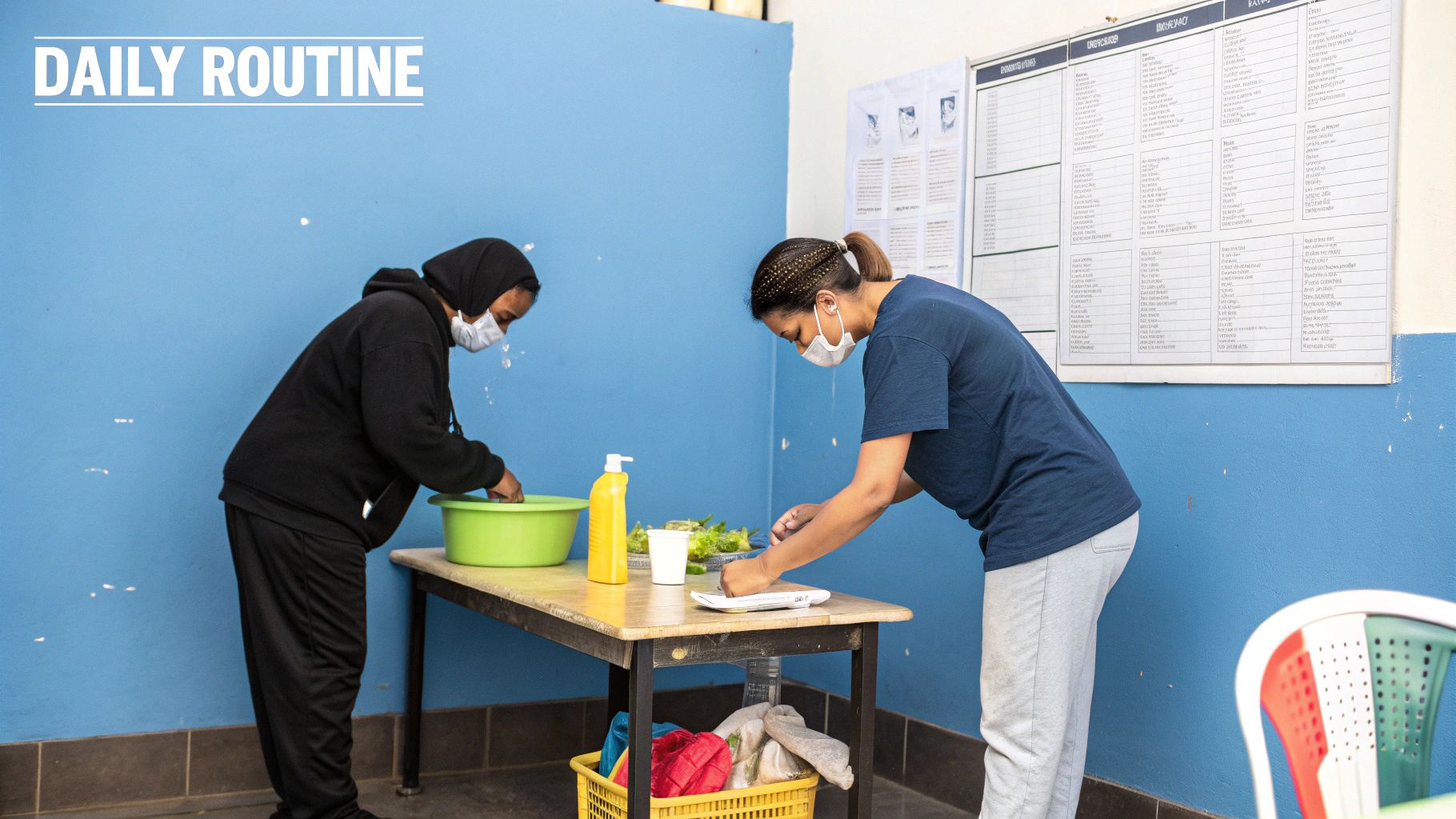
The daily schedule in most sober living homes in Texas is a mix of personal responsibility and community life. While every house is a little different, the framework is usually built on a few key pillars.
These common rules provide the structure needed to focus on recovery without the chaos that so often comes with active addiction. To get a closer look, you can dive deeper into the common rules and expectations in sober living homes. This structure really is the backbone of daily life.
- Curfews: Nearly every home has a nightly curfew. It’s a simple rule that helps make sure everyone is home, safe, and accounted for, promoting a healthy sleep schedule and discouraging late-night situations that could put sobriety at risk.
- Mandatory Meetings: Regular house meetings are a must. This is where everyone checks in, talks through any household issues, and offers support to one another. It’s a huge part of building that community feel.
- 12-Step Participation: You’ll almost certainly be required to actively participate in a recovery program like Alcoholics Anonymous (AA) or Narcotics Anonymous (NA). This ensures you’re building a support network that goes far beyond the walls of the house.
- Household Chores: Everyone pitches in. A rotating chore list teaches accountability and respect for the shared space, reinforcing the idea that you’re all part of a team.
Legal Protections And A Safe Environment
It’s not just about house rules. As a resident, you’re also protected by law. Sober living homes must follow the Fair Housing Act and the ADA, which prevent discrimination against people with disabilities—and that includes those recovering from a substance use disorder.
On top of that, Texas Administrative Codes require homes to maintain a safe environment by banning firearms, illegal drugs, and violence. They even get as specific as requiring vaccinated pets and designated spaces for counseling sessions. These legal guardrails ensure a fundamental level of safety and respect for everyone living there.
The rules aren't arbitrary; they are the guardrails that keep everyone on the path to recovery. They create a culture of mutual respect and shared purpose, turning a simple house into a powerful tool for healing.
While the need for these homes is clear, recent NSTARR data shows that Texas only has 583 documented recovery residences. That's just 2.06 per 100,000 people, with a staggering 218 counties having none at all. For our clients at Tru Dallas Detox & Recovery Center, who are looking for insured, confidential care, we make sure our sober living recommendations provide a seamless and high-quality continuation of their treatment. This stark reality just highlights how crucial it is to find a well-run, supportive home.
Key Takeaways
- Structured Routine: Daily life is built around a routine that includes work/school, household chores, and a nightly curfew to foster stability.
- Required Participation: Active participation in 12-step programs and regular house meetings is a core requirement for accountability and support.
- Legal Protections: Residents are legally protected from discrimination by the Fair Housing Act and the ADA.
- Purposeful Rules: House rules are designed to create a safe, stable, and predictable environment, not to be punitive.
- Shared Responsibility: All residents contribute to the household through chores and mutual respect, which helps rebuild crucial life skills.
What Comes After Treatment?
Finishing a detox or rehab program is a massive accomplishment. It’s a moment to be proud of, but it’s also the start of a whole new journey, not the finish line. All the tools, clarity, and stability you gained are the bedrock of your new life, but now you have to build on that foundation. This is where sober living homes in Texas come in.
Think of this next phase as the bridge between the highly structured, protective environment of a treatment center and the complete freedom of everyday life. It’s where recovery goes from being a concept you learned in therapy to something you live and breathe, day in and day out. A sober living home provides just enough structure—accountability, support from people who get it, and a solid routine—to help you navigate early sobriety with confidence.
How Tru Dallas Helps You Make the Transition
At Tru Dallas Detox & Recovery Center, we know that a solid recovery plan has to look beyond our own walls. Our commitment to you doesn’t just stop the day you walk out our doors. We have a dedicated aftercare planning process that starts almost as soon as you arrive, all to make sure you have a clear, supportive path forward.
Our team sits down with every single client to understand their specific needs, goals, and life situation. From there, we tap into our network of trusted, high-quality sober living partners right here in the Dallas-Fort Worth area. We’ve already done the legwork, so you can be sure the homes we recommend are safe, well-run, and genuinely focused on helping people build lasting recovery.
We don't just give you a list of names and numbers and wish you luck. Our goal is a warm handoff, connecting you to a community where you can truly put your new skills to the test and continue to grow.
Making this connection seamless is a huge part of what we do. By bridging that gap between clinical care and community living, we help take the fear and uncertainty out of the equation—the very things that can so easily derail hard-won progress. We want to make sure the momentum you built with us keeps rolling right into the next phase of your journey.
Your Path to Lasting Recovery Starts Here
If you or someone you care about is struggling, figuring out the path forward can feel impossible. You don’t have to do it alone. At Tru Dallas, we’re here to help you build a complete recovery plan, starting with medically supervised detox and therapy and extending all the way through thoughtful aftercare.
The next step is simple: reach out. Call our admissions team to learn how we can help you build a new life—one grounded in health, hope, and sobriety.
Key Takeaways
- A Crucial Next Step: Sober living is the critical step connecting the safety of a clinical program with the reality of independent life.
- Real-World Application: A good sober living home provides the structure and peer support needed to practice recovery skills in the real world.
- Guided Aftercare: Tru Dallas has a dedicated aftercare team that connects clients with vetted, high-quality sober living partners in the DFW area.
- Seamless Transition: A smooth, supported transition from treatment to sober living is key for maintaining momentum in early recovery.
- Help is Available: Asking for help is the first and most important step in building a complete, lasting recovery plan.
Your Questions, Answered
Finding the right path after treatment can feel overwhelming, and it's completely normal to have a lot of questions. Let's walk through some of the most common things people ask about sober living homes in Texas. My goal here is to give you straightforward answers so you and your family can move forward with confidence.
Cost and Insurance Coverage
How much do sober living homes in Texas actually cost?
Think of it like renting an apartment—the price tag can really vary. What you pay depends heavily on the home's location, the kind of amenities it offers, and whether you're in a shared or private room.
In a major hub like Dallas-Fort Worth, you’re likely looking at a range from $500 to over $2,000 per month. It's always a good idea to ask for a clear, itemized list of all costs before you commit.
Will my health insurance cover sober living?
This is a big one, and the short answer is usually no. Health insurance policies don't typically cover sober living because it's seen as a supportive housing service, not a clinical medical treatment.
You'll almost always pay the monthly fee out-of-pocket. However, your insurance will likely still cover other essential services you might need while you're there, like outpatient therapy sessions or appointments with a psychiatrist.
Duration of Stay and Next Steps
How long does someone need to stay in a sober living home?
There's no magic number here, but both recovery experts and people who've been through it agree that a stay of six to twelve months seems to be the sweet spot.
That timeframe gives you a real chance to cement healthy recovery habits, build a solid support system of peers, find a steady job, and truly prepare for life on your own. The idea isn't to get in and out as fast as possible; it’s to build a foundation that's strong enough to support you for the rest of your life.
Think of your stay as an investment in your future. The time you spend building a stable, sober routine is what will carry you through the challenges of long-term recovery.
What’s the main difference between sober living and a halfway house?
People often use these terms interchangeably, but they're quite different. Sober living homes are usually private-pay and are all about creating a supportive, peer-driven community for anyone serious about recovery.
Halfway houses, on the other hand, are often connected to the criminal justice system. They might be government-funded and are sometimes a mandatory step for people leaving prison.
Do I need to go to rehab first?
Yes, almost every reputable sober living home in Texas will require you to have recently completed a detox and/or an inpatient treatment program. This is crucial because it ensures everyone living in the house is medically stable and already has a basic grasp of recovery principles, creating a safer environment for all.
Are sober living homes co-ed?
It depends on the house. While some are co-ed, the vast majority are gender-specific—either men-only or women-only. This is a deliberate choice made to reduce potential distractions and foster a safe, focused environment where residents can build genuine, supportive friendships with their peers.
Frequently Asked Questions About Sober Living in Texas
What happens if a resident relapses?
Most homes have a zero-tolerance policy for drug or alcohol use to protect the safety and sobriety of all residents. If a relapse occurs, the individual is typically asked to leave immediately. A good home will not simply put them on the street; they will often help connect the person with a higher level of care, like a detox or inpatient facility, to get them stabilized and back on the path to recovery.
Are residents required to have a job?
Yes, most sober living homes require residents to be employed, actively seeking employment, enrolled in school, or volunteering. This policy is designed to promote financial responsibility, build a healthy routine, and help residents reintegrate into the community as productive, self-sufficient individuals.
How is a sober living home different from a halfway house?
While similar, the main difference lies in their structure and affiliation. Sober living homes are typically private, self-pay residences focused on peer support for anyone in recovery. Halfway houses are often government-funded and may be affiliated with the criminal justice system, sometimes serving as a required transitional step for individuals leaving incarceration.
Can I have visitors?
Most homes allow visitors, but with strict rules to maintain a safe environment. There are usually designated visiting hours, guests are restricted to common areas, and overnight guests are almost never permitted. All visitors must respect the house's strict substance-free policy.
Do I have to share a room?
Sharing a room is very common, particularly for new residents. This is often an intentional part of the program designed to reduce isolation and encourage peer accountability and support. Some homes may offer private rooms, but they are usually less common and come at a higher cost.
