
Suboxone tackles opioid addiction with a clever, two-part strategy that eases withdrawal and discourages misuse. The main ingredient, buprenorphine, gently interacts with the brain's opioid receptors—just enough to silence cravings and stop withdrawal symptoms in their tracks, but not enough to create a "high." The second ingredient, naloxone, is there purely as a safety measure, designed to trigger immediate withdrawal if someone tries to inject the medication.
Key Takeaways
- Suboxone uses a dual-action formula of buprenorphine and naloxone.
- Buprenorphine, a partial opioid agonist, reduces cravings and withdrawal without a euphoric high.
- Naloxone acts as a safety feature, deterring misuse by causing immediate withdrawal if injected.
- The medication provides brain stability, allowing individuals to focus on recovery.
- It is an FDA-approved treatment that helps manage the physical side of opioid use disorder.
How Suboxone’s Two Ingredients Work Together
Opioid addiction isn't a matter of willpower; it physically rewires the brain, leading to a powerful dependence. When a person stops using opioids, their brain goes into crisis mode, unleashing a storm of agonizing withdrawal symptoms and relentless cravings. This is where Suboxone, an FDA-approved medication for opioid use disorder since 2002, comes in.
But how does it provide stability without just swapping one drug for another? The answer is in its two distinct ingredients: buprenorphine and naloxone. Think of them as a highly specialized team working in concert to manage the physical side of recovery.
The Role of Buprenorphine: The Stabilizer
Buprenorphine is the real workhorse in Suboxone. It’s known as a partial opioid agonist, which might sound complicated, but a simple analogy makes it clear. Imagine the opioid receptors in your brain are like light switches.
- Full Agonists (like heroin or fentanyl): These drugs flip the switch all the way on, flooding the brain with dopamine and causing an overwhelming euphoric rush.
- Partial Agonists (buprenorphine): This ingredient only nudges the switch partway up. It gives the receptors just enough stimulation to keep the lights from flickering out (which prevents withdrawal), but it doesn't crank them up to full brightness.
This partial activation is key. It satisfies the brain's craving for an opioid, calming the painful physical symptoms of withdrawal. For a closer look at what this process helps you avoid, our guide on the symptoms of opioid withdrawal is a great resource. Because buprenorphine binds so tightly to these receptors, it also acts as a blocker, preventing other, stronger opioids from latching on and causing a high.
This unique action creates something called the "ceiling effect." With full agonists like fentanyl, taking more leads to a stronger high and a much greater risk of overdose. Buprenorphine is different. Its effects level off, or "hit a ceiling," at a certain point. This built-in safety feature drastically reduces the risk of respiratory depression, the main cause of fatal opioid overdoses.
The Role of Naloxone: The Safety Net
Naloxone is the second ingredient, and its job is to act as a powerful deterrent. It’s an opioid antagonist, meaning it aggressively blocks and even reverses the effects of opioids. When you take Suboxone the right way—dissolving it under your tongue—the buprenorphine gets absorbed, but the naloxone stays mostly inactive.
However, if someone were to crush and inject Suboxone in an attempt to get high, the naloxone instantly springs into action. It strips all opioids off the brain's receptors, throwing the person into immediate and severe withdrawal, a miserable experience known as precipitated withdrawal. This mechanism effectively removes any incentive to misuse the medication, adding a crucial layer of safety.
Putting It All Together
- Dual-Action Formula: Suboxone combines buprenorphine (to manage withdrawal and cravings) with naloxone (to prevent misuse).
- Partial Agonist Power: Buprenorphine gives just enough stimulation to opioid receptors to provide relief without a dangerous high.
- The Ceiling Effect: This property of buprenorphine limits its opioid effects, making it a much safer option than full agonists.
- Built-in Safety: Naloxone only activates if the medication is injected, triggering immediate withdrawal and discouraging abuse.
- A Foundation for Recovery: By stabilizing the brain’s chemistry, Suboxone creates the calm and clarity needed to engage fully in therapy and build a new life.
The Three Phases of Suboxone Treatment
Getting started with Suboxone isn't a one-and-done deal. It’s a carefully managed journey broken down into three distinct phases, each with a clear purpose designed to guide you toward long-term recovery. Think of it as moving from immediate stabilization to a place of sustained wellness, all under the watchful eye of a medical professional.
This structured process is all about managing the brain's opioid receptors, giving you the power to block cravings and truly focus on healing.
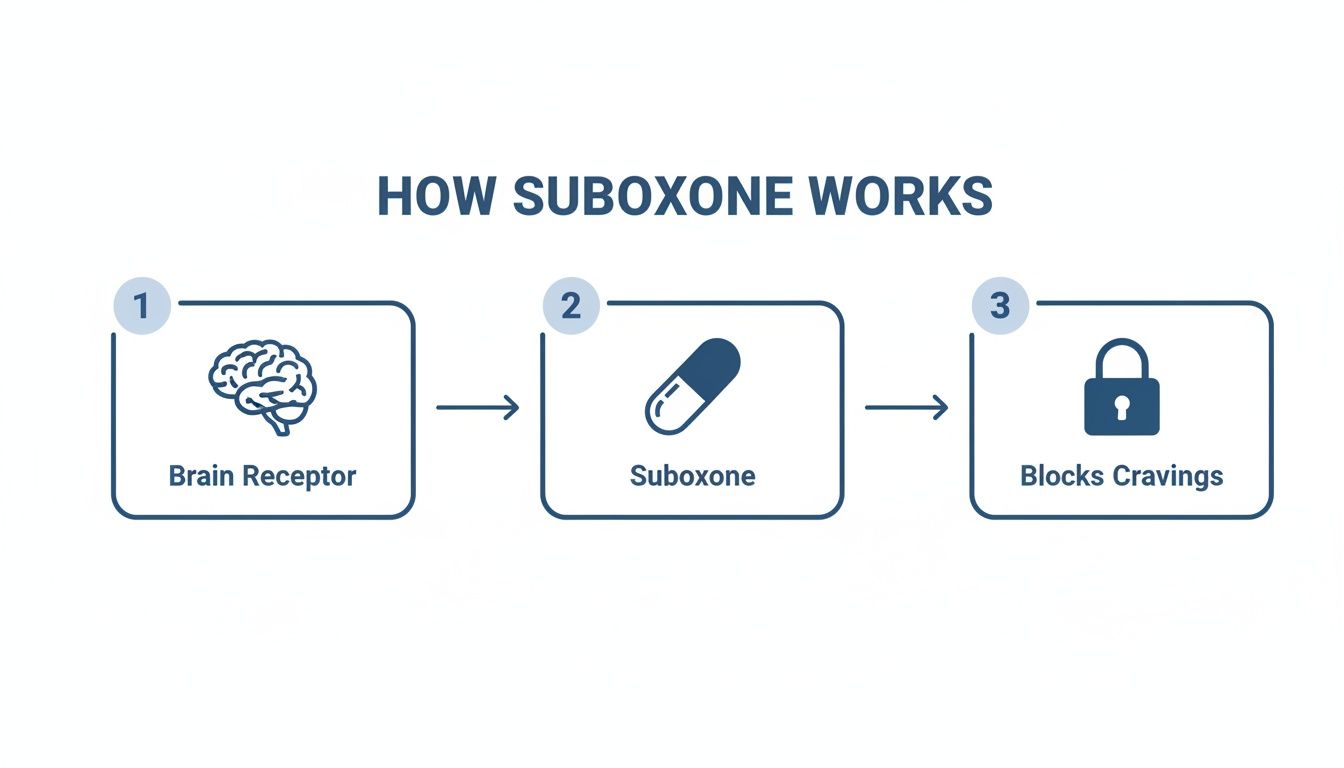
This visual helps show how Suboxone fits into the brain's receptors like a key in a lock. It effectively blocks other opioids from attaching and stops the signals that trigger intense cravings.
Phase 1: Induction
The first stage is called induction, and it’s all about carefully introducing Suboxone into your system. This is where timing is absolutely everything. A doctor will only start the induction process once you’re already feeling the effects of mild-to-moderate opioid withdrawal.
So, why the wait? If you take Suboxone too soon, while other opioids are still active in your system, it can trigger a nasty, abrupt reaction called precipitated withdrawal. The buprenorphine would essentially kick the other opioids off your brain's receptors all at once, throwing you into immediate and intense withdrawal. To make sure that doesn't happen, induction usually starts 12 to 48 hours after the last use of a short-acting opioid. Your first dose will be small, and you’ll be monitored closely to ensure a smooth, safe transition.
The goal of induction is simple: find the lowest dose of Suboxone that successfully relieves withdrawal symptoms and stops cravings without making you feel overly sedated.
Phase 2: Maintenance
Once your withdrawal symptoms are under control and the cravings have faded, you move into the maintenance phase. This is the longest and, for many, the most crucial part of the treatment. During this time, you’ll take a steady, consistent daily dose of Suboxone prescribed by your doctor.
This stability is the bedrock of recovery. By quieting the physical chaos of addiction, you finally get the mental and emotional breathing room needed to work on the root causes of substance use. The maintenance phase is where the real work of healing happens, allowing you to fully engage with the other vital parts of your treatment plan.
Your progress during this period is built on:
- Consistent Medication: Taking your dose every day keeps withdrawal and cravings at bay, creating a new, reliable sense of normal.
- Therapy and Counseling: With a clear head, you can dive into individual and group therapy to build coping skills, process trauma, and learn healthier behaviors.
- Rebuilding Your Life: This newfound stability gives you a chance to mend relationships, get back to work or school, and create a strong, supportive environment for yourself.
Phase 3: Tapering
The final phase is tapering, which is a gradual, medically supervised process of reducing your Suboxone dose over time. This step is only ever considered when you and your doctor both agree that you’re ready and have built a solid foundation for a drug-free life. There's no fixed timeline here; it’s all about your individual progress and stability.
The tapering process is done very slowly to minimize any potential withdrawal symptoms and help your body adjust comfortably. Rushing this step can put your recovery at risk, so the focus is always on a safe, patient-first approach. It’s also important to know that for many people, long-term maintenance is the most effective way to prevent relapse, and the decision to taper is always a collaborative one.
Key Takeaways
- Induction is time-sensitive: This first phase requires waiting for withdrawal to start to avoid a painful reaction called precipitated withdrawal.
- Maintenance creates stability: A consistent, daily dose eliminates cravings and allows you to focus on therapy and rebuilding your life.
- Tapering is a slow, optional process: The dose is reduced gradually under a doctor's supervision only when the patient is ready.
- Each phase is medically supervised: A healthcare provider guides every step to ensure safety and comfort.
- Treatment is a journey: The phases build on one another to support lasting recovery, not a quick fix.
How Suboxone Fits Into a Complete Recovery Plan
When you hear experts call Suboxone the “gold standard” for opioid use disorder, there’s a good reason. Think of it as creating a stable foundation on which you can start rebuilding your life. It tackles the relentless physical side of addiction head-on, giving you a much-needed window to truly heal.
By balancing your brain chemistry, Suboxone dramatically cuts down on illicit opioid use, keeps withdrawal symptoms at bay, and significantly lowers the risk of a fatal overdose. This stability is everything. Instead of waking up every day to an overwhelming battle against cravings, you can finally put that energy toward the hard but necessary work of psychological recovery.

More Than Just a Medication: Why Therapy is Crucial
Suboxone isn't a magic pill or a cure on its own. It's a powerful tool that makes other forms of treatment click. It effectively quiets the physical “noise” of addiction, allowing you to show up and fully engage in the therapies that get to the root of the issue.
When your body is no longer in a constant state of crisis, your mind is finally free to focus on healing. This is where real, lasting recovery begins—moving beyond just surviving to understanding and addressing the core reasons behind substance use.
This newfound mental clarity makes it possible to dive deep into:
- Individual Counseling: A safe space to explore personal triggers, confront past trauma, and unpack the emotional drivers of addiction.
- Group Therapy: The chance to build a real support system with others who just get it. This shared experience offers incredible encouragement and accountability.
- Behavioral Therapies: Learning practical, healthy ways to cope with stress, anxiety, and life's challenges without reaching for a substance.
To get a clearer picture of how these pieces fit together, it’s helpful to understand what medication-assisted treatment involves and its integrated philosophy.
The table below breaks down the different stages of Suboxone treatment, helping to clarify what to expect at each step of the journey.
Suboxone Treatment Phases and Patient Goals
| Treatment Phase | Primary Objective | Patient Experience & Focus |
|---|---|---|
| Induction | Safely start Suboxone and stabilize withdrawal symptoms. | The initial 24-72 hours. Focus is on finding the right dose to relieve cravings and withdrawal without causing discomfort. |
| Stabilization | Fine-tune the dosage and integrate counseling. | The first few weeks or months. The goal is to eliminate cravings and stop illicit opioid use. Patients begin engaging deeply in therapy. |
| Maintenance | Maintain stability and build a recovery-focused life. | This is the long-term phase. The patient is on a steady dose, consistently attending therapy, and actively building new life skills and healthy habits. |
| Tapering | Gradually reduce the Suboxone dose when appropriate. | A decision made with a doctor after a long period of stability. The focus is on a slow, managed reduction to avoid withdrawal. This phase is optional. |
Each phase is a building block, moving you from immediate crisis management toward long-term, self-sufficient recovery.
The Proof is in the Progress: Better Outcomes and Retention
This combined approach isn't just a theory; it's backed by a mountain of evidence. Using buprenorphine-based medications like Suboxone drastically improves how long people stick with treatment and slashes relapse rates compared to going it alone.
For example, clinical trial data has shown that one-year retention rates for patients on buprenorphine can be as high as ~75%. That’s a world away from the near-zero retention often seen in placebo groups.
Staying in treatment is one of the most important predictors of success. It gives you the time you need to develop the skills, confidence, and support network required for a life free from addiction.
Key Takeaways
- Suboxone provides the physical stability needed to engage in therapy.
- It is most effective as part of a comprehensive plan including counseling and support.
- Therapy helps address the root psychological causes of addiction.
- This combined approach is proven to increase treatment retention rates.
- Recovery involves treating the whole person, not just the physical symptoms.
Navigating Side Effects and Safety Protocols
While Suboxone has been a game-changer for many, it’s still a powerful medication with its own set of rules. Like any prescription, it’s important to go in with your eyes open, understanding the potential side effects and safety guidelines.
Think of it this way: your body needs time to get used to the new medication. Most side effects are temporary and relatively mild, but knowing what to look for helps you and your doctor stay ahead of any issues. The goal is to make your recovery as smooth as possible, and that starts with open communication.
Common Side Effects and How to Manage Them
When you first start Suboxone, you might notice a few things. Don't worry, this is pretty normal, and most of these little hurdles can be managed with simple, practical steps.
Some of the most common physical side effects include:
- Nausea and vomiting: An easy fix for many is to take your dose after eating a small meal or a snack. A little food can help settle your stomach.
- Headaches: Dehydration is a common culprit here. Making sure you're drinking enough water throughout the day can make a huge difference.
- Constipation: This is a classic side effect of all opioids, even a partial one like buprenorphine. The best defense is a good offense: increase your fiber, drink plenty of fluids, and try to stay active.
- Drowsiness or dizziness: This usually pops up right at the beginning of treatment. It's smart to hold off on driving or using heavy machinery until you know how the medication affects you.
Always, always talk to your doctor about any side effects you're having. They can offer advice or even adjust your dose to make you more comfortable. Your focus should be on recovery, not on battling discomfort.
Understanding Key Safety Risks
Here’s the most important thing to know about Suboxone safety: it does not play well with other central nervous system depressants. Mixing it with substances like alcohol, benzodiazepines (think Xanax or Valium), and other sedatives is incredibly dangerous.
This is because these combinations can completely undermine the medication’s built-in safety net. The result can be severe respiratory depression—the very thing Suboxone is designed to prevent. This is why being 100% honest with your doctor about every single substance you use isn't just a good idea; it's essential for your safety.
The "ceiling effect" is buprenorphine's superpower. It means that after you reach a certain dose, the opioid effects just level off, which dramatically lowers the risk of overdose compared to full opioids like heroin or fentanyl.
But that protection goes right out the window when you add other depressants to the mix. Suboxone’s partial agonist nature gives it a huge safety advantage and is a major reason it has helped reduce overdose deaths. If you want to dive deeper, you can explore the clinical data on Suboxone's safety profile to see the numbers for yourself.
Key Takeaways
- Most side effects are mild, temporary, and manageable with simple steps.
- The greatest safety risk is mixing Suboxone with alcohol or other sedatives.
- The "ceiling effect" of buprenorphine significantly reduces overdose risk.
- This built-in safety can be negated when combined with other depressants.
- Always be completely honest with your doctor about all substances you use.
What to Expect at Your First Suboxone Appointment
Walking into that first appointment can feel like a huge, nerve-wracking step. It’s completely normal to feel a mix of hope and anxiety. But knowing what’s behind the clinic doors can take away a lot of that uncertainty and help you feel more in control.
Think of this first visit not as a test, but as the start of a partnership. It’s a dedicated, one-on-one process where a medical team gets to know you and your story so they can build a treatment plan that’s both safe and effective for you.

The Initial Intake and Assessment
Your first visit will start with an intake and assessment. This is much more than just filling out forms; it's a deep dive into your health and history to make sure Suboxone is the right fit. The more open and honest you can be here, the better your team can tailor the treatment to your specific needs.
You'll likely talk through a few key areas:
- Medical History: The team needs to know about any health conditions you have, any allergies, and every medication you're currently taking. This is critical for avoiding any harmful drug interactions.
- Substance Use History: You’ll be asked about what opioids you've used, for how long, and in what amounts. This isn't about judgment—it’s practical information that helps them figure out the right starting dose for you.
- Mental Health: It's very common for people struggling with substance use to also deal with anxiety, depression, or trauma. A good treatment plan looks at the whole picture, so discussing your mental and emotional well-being is a key part of the process.
A physical exam and some lab work, like a urine drug screen, are also standard. These are just routine steps to confirm that you’re a good candidate for Suboxone and to get a baseline to track your progress.
Ongoing Monitoring for Safety and Progress
Starting Suboxone isn't a one-and-done deal. Ongoing monitoring is a core part of any successful treatment program. These regular check-ins are there to keep you safe, see how you’re progressing, and make any necessary tweaks to your plan.
These follow-up appointments are like tune-ups for your recovery. They give you a chance to talk about how the medication is working, discuss any side effects you might be feeling, and acknowledge the hard work you're putting in.
Your treatment team is your partner in recovery. Regular check-ins and screenings are not about catching you doing something wrong; they are about keeping you safe and ensuring the treatment is working effectively for you.
Part of this monitoring usually includes periodic drug screenings. The goal here is twofold: to confirm you're taking the Suboxone as prescribed and to check for any other substances that could cause a dangerous interaction. It’s a simple accountability measure that protects your health and supports your recovery journey.
Suboxone as Part of a Larger Care Plan
It’s so important to understand that Suboxone is just one piece of the recovery puzzle. It's an incredibly powerful tool for managing the physical side of addiction—the relentless cravings and painful withdrawal. But true, lasting recovery goes much deeper.
That’s why Suboxone is almost always used as part of a complete care plan. The medication gives you the stability you need to do the real work of healing. This integrated approach pairs medication with essential therapy, so you can address both the physical symptoms and the underlying emotional and psychological reasons for the addiction.
Your comprehensive plan will likely include:
- Individual Counseling: One-on-one therapy to help you identify your triggers, learn new coping skills, and work through personal challenges.
- Group Therapy: There's immense power in connecting with others who get what you're going through. Group sessions provide support, community, and a real sense of shared experience.
- Behavioral Health Support: Learning healthier ways to handle stress and navigate life’s ups and downs without relying on substances.
By treating the whole person, this approach gives you the best shot at building a strong, sustainable life in recovery. To get a better feel for how all these pieces fit together, you can learn more about what happens in rehab and see how different therapies work in tandem.
Key Takeaways
- The first appointment involves a comprehensive assessment of your health and history.
- Complete honesty with your medical team is crucial for a safe and effective plan.
- Ongoing monitoring through check-ins and drug screens is standard practice.
- Suboxone is most effective when combined with counseling and behavioral therapy.
- The overall goal is to stabilize physical symptoms to enable deeper psychological healing.
Wrapping It Up: The Big Picture on Suboxone and Recovery
Getting a handle on how Suboxone works is the key to understanding its powerful role in opioid addiction recovery. It’s not just another drug; it's a sophisticated medication designed to tackle the physical side of addiction head-on, giving you the solid ground you need to start rebuilding your life. Let's recap the most important points.
The magic of Suboxone lies in its two-part formula. The main workhorse is buprenorphine, a partial opioid agonist. Imagine it as a key that fits into the brain's opioid receptor locks but doesn't turn all the way. It's just enough to stop the rattling discomfort of withdrawal and quiet the constant cravings, but it doesn't produce the euphoric high of full opioids. This is also where its "ceiling effect" comes in—a natural safety brake that dramatically lowers the risk of overdose, which is a constant danger with drugs like heroin or fentanyl.
The second ingredient, naloxone, is the medication’s safeguard. It stays dormant when Suboxone is taken as directed, but if someone tries to inject it to get high, the naloxone springs into action and causes immediate, severe withdrawal. It’s a very effective way to discourage misuse.
By bringing stability back to your brain chemistry, Suboxone lays the foundation for real recovery. It frees you from the exhausting physical fight, allowing you to focus your energy on the counseling and therapy that heals the deeper wounds of addiction.
Your Quick Reference Guide
- Stops Cravings and Withdrawal: Buprenorphine occupies the brain's opioid receptors, effectively blocking the debilitating physical symptoms that make early recovery so difficult.
- Safety by Design: The "ceiling effect" prevents a full opioid high, making it much safer than other opioids, and the naloxone component is there to deter abuse.
- A Tool for Recovery, Not a Cure-All: Suboxone works best as part of a complete treatment plan that includes therapy and support to address the underlying reasons for addiction.
- Always Medically Supervised: From your first dose (induction) through the maintenance phase, your treatment is guided by a qualified medical professional to ensure it’s safe and effective for you.
- Frees You to Focus on Healing: The real goal here is to get your body stable so you can do the hard work of rebuilding your health, your relationships, and your future.
Common Questions About Suboxone Treatment
It's completely normal to have questions when you're thinking about starting a new medical treatment. When that treatment is for something as personal as opioid addiction, getting clear, honest answers is the first step toward feeling confident in your recovery plan.
Let's walk through some of the most common questions we hear from people considering Suboxone treatment at a center like Tru Dallas.
Can You Get Addicted to Suboxone?
This is probably the most important and common question we get, and it’s a great one to ask. The short answer is no, not in the way you think of addiction. It’s crucial to understand the difference between physical dependence and addiction.
When you're dependent on a substance, your body has simply gotten used to it. If you stop suddenly, you'll experience withdrawal. This can happen with many medications, even caffeine. Addiction, however, is about compulsive, out-of-control drug-seeking and use, even when it’s causing serious harm to your life. Suboxone is designed to manage the physical dependence on opioids, effectively stopping the destructive cycle of addiction.
How Long Will I Need to Be on Suboxone?
There's no one-size-fits-all answer here. The length of your treatment is something you and your doctor will decide together, based on what's working for you. It's not about a deadline on a calendar; it's about your personal journey.
Some people might stay on Suboxone for a few months to get stable and build a solid foundation in recovery. Others find that staying on it for a year or even longer gives them the best shot at preventing a relapse. The goal is to use the medication for as long as it supports your health and well-being.
The idea that "you're not supposed to be on it forever" is a common myth that puts a lot of unnecessary pressure on people. Effective treatment is tailored to the individual, not to a predetermined timeline.
Does Suboxone Show Up on a Drug Test?
Yes, it does. Buprenorphine, the main active ingredient, will show up on drug screens that are looking for it. This is perfectly normal and expected.
In a treatment setting, this isn't a "failed" test. It's actually a good thing! It confirms you're taking your medication as prescribed, which is an important part of making sure the treatment is working safely and effectively.
Can I Work or Drive While Taking Suboxone?
For most people, the answer is a definite yes. Once you're past the first few days of induction and settled on a stable dose, Suboxone is designed to help you feel normal, not high. It allows your brain to function properly so you can get back to your daily life—including work, school, and driving.
That said, everyone reacts differently, especially at first. You might feel a bit drowsy or dizzy when you start treatment or if your dose changes. The smart thing to do is to pay close attention to how you feel and avoid driving or operating machinery until you're confident about how the medication affects you.
Key Takeaways
- Dependence Isn't Addiction: Suboxone leads to physical dependence (which is managed by your doctor), but it’s a tool to break the cycle of addiction.
- Your Timeline is Unique: How long you’re on Suboxone is a personal decision between you and your provider, based entirely on your recovery needs.
- A "Positive" Test is Expected: Buprenorphine will appear on a drug test, which simply confirms you are following your treatment plan.
- Getting Back to Normal: The goal is to function fully. Most people on a stable dose work, drive, and live their lives without impairment.
- Always Prioritize Safety: Be cautious when you first start. Understand how your body is reacting before you get behind the wheel or operate machinery.
Frequently Asked Questions About How Suboxone Works
1. Is Suboxone just trading one addiction for another?
No. When used as prescribed within a comprehensive treatment program, Suboxone is a medication that helps normalize brain function, similar to how insulin helps a person with diabetes. It addresses the physical dependence on opioids, which allows you to focus on the psychological and behavioral work of recovery without the compulsive drug-seeking that defines addiction.
2. Why do I have to be in withdrawal to start Suboxone?
If you take Suboxone while other opioids are still fully active in your system, the buprenorphine will immediately displace them from your brain's receptors. This rapid change triggers an intense and unpleasant reaction called precipitated withdrawal. Waiting until you are in mild-to-moderate withdrawal ensures a much smoother and safer start to treatment.
3. What is the "ceiling effect" and why is it important?
The "ceiling effect" is a unique property of buprenorphine. It means that its opioid effects level off at a certain dose. Taking more of the medication will not produce a stronger high. This built-in safety feature makes the risk of a fatal overdose from respiratory depression significantly lower than with full opioids like heroin or fentanyl.
4. How long does the maintenance phase of treatment last?
The duration is highly individual and is determined by you and your doctor. Some people may stay in the maintenance phase for several months, while others find that remaining on Suboxone for several years provides the best protection against relapse. There is no set timeline; the goal is sustained stability and well-being.
5. Can I drink alcohol or take other medications with Suboxone?
No, you should never mix Suboxone with alcohol, benzodiazepines, or other central nervous system depressants. This combination is extremely dangerous and can lead to severe respiratory depression, coma, or even death, as it undermines the medication's safety features. Always be completely transparent with your doctor about every substance you use.