

Detoxing from methamphetamine is the first, most critical step toward getting your life back. It’s the process of letting your body clear the drug and start healing from the damage it’s caused. Think of it like a hard reset for a computer that’s been running nonstop and is now crashing—it’s an essential shutdown that prepares you for the real work of long-term recovery.
Key Takeaways
- Detox is the Foundation: It is the essential first step that stabilizes your body and mind for long-term recovery.
- Professional Help is Crucial: Meth use changes brain chemistry, making medically supervised detox necessary for safety.
- Home Detox is Dangerous: Attempting to detox alone carries severe risks, including intense depression and psychosis.
- The Stakes are High: Rising overdose deaths highlight the increased danger of methamphetamine and the need for effective treatment.
- Stability is the Goal: A successful detox provides the physical and psychological stability required to benefit from subsequent therapy and rehabilitation.
Why Meth Detox Is a Critical First Step
Taking that first step to beat a methamphetamine addiction is a huge deal, and it all starts with detox. This isn't just about stopping the drug; it's a carefully managed process where your body and brain begin to find their way back to normal. Chronic meth use rewires your brain, creating a powerful dependence that makes trying to quit on your own not only incredibly difficult but also genuinely dangerous.
The need for a professional, structured detox from meth has never been clearer. We're seeing a tragic and alarming trend: overdose deaths involving methamphetamine are skyrocketing. The CDC reported that in the 12-month period ending in October 2022, there were roughly 33,800 fatalities. This spike is happening because people are using more frequently and for longer periods, which makes detoxing that much more complicated and risky.
Laying the Foundation for Lasting Recovery
Trying to build a recovery without a proper detox is like building a house on a shaky foundation. No matter how strong the rest of the structure is, it’s bound to fail. Detox is that solid ground you need to build everything else on. By getting through the initial withdrawal in a safe, controlled environment, you create the stability necessary to tackle the deeper work of rehabilitation.
This foundational stage is all about:
- Getting Stable Physically: It helps your body handle the shock of withdrawal, managing everything from debilitating fatigue to serious stress on your heart.
- Creating Psychological Safety: It gives you a secure place to deal with the intense mental and emotional storm of withdrawal—things like deep depression, crippling anxiety, and even psychosis are common.
- Breaking the Cycle: It gets you away from the people, places, and things that trigger your use, immediately breaking that destructive pattern.
The Role of Medical Supervision
Trying to detox from meth at home isn't a test of willpower; it’s a massive gamble with your safety. The psychological withdrawal can be brutal, bringing on intense paranoia and suicidal thoughts that feel terrifyingly real. A professional medical detox means you have experts watching over you 24/7, ready to step in at a moment's notice. You're never alone during the toughest parts. To get a clearer picture of what this involves, you can learn more about what medical detox entails and why it’s so vital for a safe recovery. This supervised care is what bridges the gap between active addiction and effective, lasting treatment.
Detox isn't the entire journey, but it is the essential, non-negotiable starting point. It clears the path, making it possible to walk toward a healthier future with clarity and stability. Without this first step, the subsequent stages of therapy and rehabilitation cannot be effective.
Understanding the Meth Withdrawal Timeline
Knowing what to expect during meth withdrawal can make all the difference. It takes an overwhelming, often scary process and breaks it down into predictable stages. This knowledge doesn't make the symptoms disappear, but it gives you a roadmap. You can start to see the discomfort not as a sign of failure, but as proof that your body and brain are fighting to heal.
The process kicks off almost as soon as the drug wears off with what's known as the "crash." This is more than just feeling tired—it's a profound, bone-deep exhaustion paired with a heavy sense of depression. Your body, which has been running on artificial fuel, is finally hitting the brakes to start the essential work of getting back to normal.
This infographic gives a high-level view of the journey from active use, through detox, and into the beginnings of recovery.
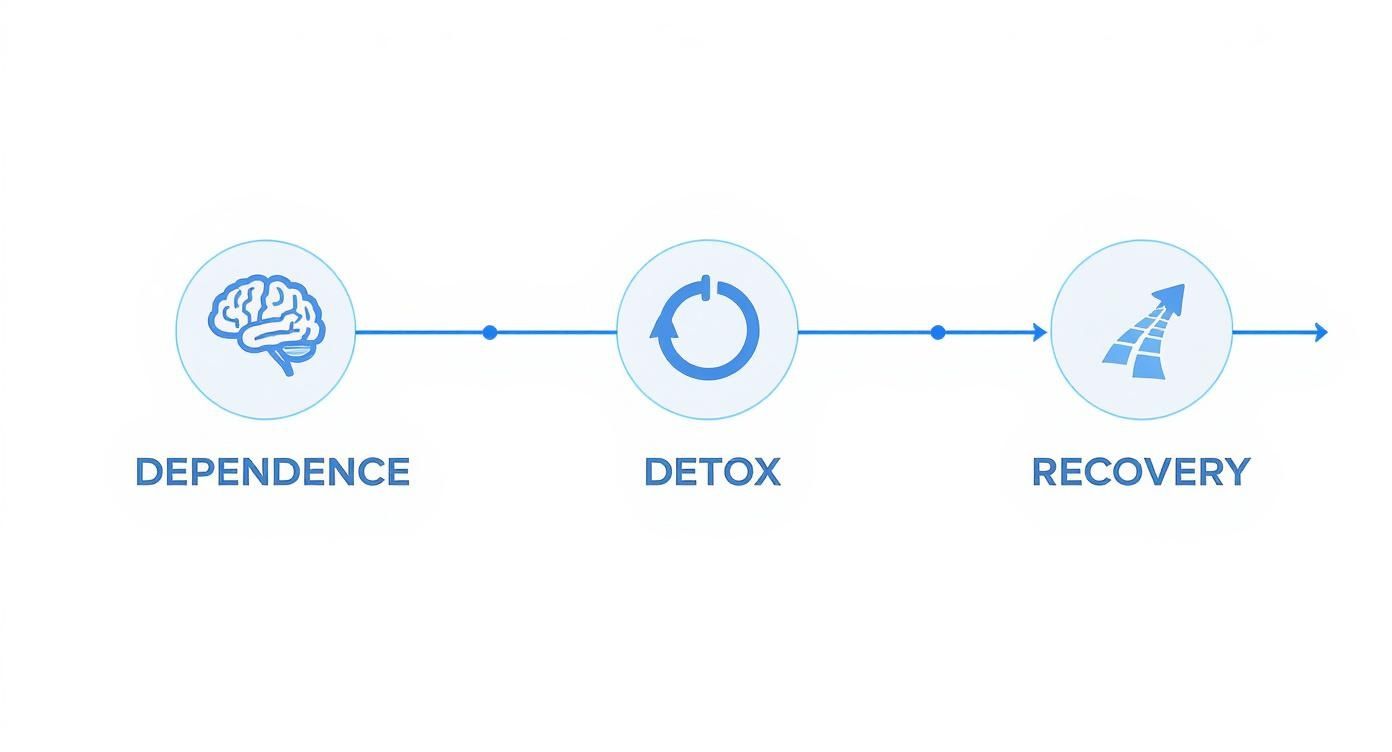
As you can see, detox is that critical first step—the reset button that makes lasting recovery a real possibility.
A Phased Look at Methamphetamine Withdrawal
To better understand what happens day by day, it helps to look at the withdrawal process in phases. Each stage brings its own set of challenges, but remember, each one is temporary. The table below outlines the common physical and psychological symptoms you might experience as your body works to rebalance itself.
| Timeframe | Common Physical Symptoms | Common Psychological Symptoms |
|---|---|---|
| The Crash (First 24-48 Hours) | Extreme fatigue, excessive sleeping, increased appetite, muscle aches. | Intense depression, anxiety, irritability, strong initial cravings. |
| Acute Withdrawal (Days 3-10) | Continued exhaustion, vivid and unpleasant dreams, slowed physical movements. | Severe mood swings, anhedonia (inability to feel pleasure), paranoia, potential for hallucinations or psychosis. |
| Subacute Phase (Weeks 2-4) | Sleep disturbances (insomnia), lingering fatigue, some physical complaints may persist. | Anxiety and depression may continue, cognitive fog (trouble concentrating), periodic cravings. |
| Post-Acute Withdrawal (1+ Month) | Symptoms often come in waves; improved sleep and energy levels on good days. | Lingering depression, episodic cravings (often triggered by stress), ongoing cognitive challenges. |
Navigating these phases is tough, which is why having a support system is so crucial. The symptoms are a normal part of the healing journey, not a sign that you're going backward.
The Acute Crash: The First Few Days
The first 24 to 48 hours are all about the crash. Once the stimulant effect is gone, your body swings hard in the other direction. It’s completely normal to feel drained, sleep for very long stretches, and feel ravenously hungry.
At the same time, the psychological weight can be crushing. Intense cravings kick in almost right away, along with deep sadness, anxiety, and a short temper. This is your brain's immediate, and very loud, protest to being deprived of the massive dopamine rush it has come to expect.
Subacute Withdrawal: The First Two Weeks
After the initial crash, you move into what’s called subacute withdrawal. This phase usually hits its peak between days three and ten, and the symptoms get more complex and psychologically taxing. While you might still feel exhausted, the mental and emotional battles often move to the forefront.
This is where many people face the toughest part of the process:
- Overwhelming Cravings: The urge to use can feel all-consuming as your brain sends out powerful signals for the substance it links with relief.
- Extreme Mood Swings: You might find yourself bouncing between intense irritability, anger, deep depression, and brief moments of feeling okay.
- Anhedonia: This is a clinical term for the inability to feel any pleasure. Life can feel flat, colorless, and joyless, which is incredibly difficult to endure.
- Paranoia and Psychosis: For some, frightening symptoms like paranoia, seeing or hearing things that aren't there (hallucinations), or delusional thoughts can emerge. This is a primary reason why professional medical supervision is non-negotiable.
The acute withdrawal phase, which typically lasts 7 to 10 days, is when symptoms are at their absolute worst. Professional medical support isn't just for comfort—it's a critical safety measure to manage psychological distress and prevent relapse.
Post-Acute Withdrawal Syndrome (PAWS): The Lingering Symptoms
Once you get through the first couple of weeks, the most severe physical symptoms tend to ease up. But the healing journey isn't over. Many people go on to experience Post-Acute Withdrawal Syndrome (PAWS), a cluster of symptoms that can stick around for months, sometimes even for more than a year.
PAWS symptoms are usually less severe than acute withdrawal, but their persistence can be frustrating. They often show up in waves—you might have a string of good days, only to have symptoms suddenly return.
Common signs of PAWS include:
- Lingering Depression and Anxiety: Feelings of sadness and worry can hang around as your brain chemistry slowly works its way back to a healthy equilibrium.
- Cognitive Glitches: You might struggle with focus, short-term memory, and making decisions for a while. It can feel like your brain is in a fog.
- Sleep Problems: Insomnia or just irregular, unsatisfying sleep are very common long after the acute phase is over.
- Random Cravings: The cravings aren't constant anymore, but they can pop up unexpectedly, often triggered by stress or something that reminds you of past use.
Understanding PAWS is vital. It helps you realize that these lingering issues are a normal part of long-term healing, not a personal failing. Every phase you push through, from the crash to the last waves of PAWS, is a major victory on your body's path back to health.
Key Takeaways
- Withdrawal is a Process: Meth withdrawal follows a predictable timeline, starting with a "crash" and progressing through acute and post-acute phases.
- Psychological Symptoms Peak Early: The most intense psychological distress, including psychosis, often occurs within the first 3 to 10 days.
- Long-Term Symptoms Exist: Post-Acute Withdrawal Syndrome (PAWS) can cause lingering issues like depression and cravings for months.
- Knowledge Reduces Fear: Understanding the timeline can make the process feel more manageable and less frightening.
- Each Phase is Temporary: While uncomfortable, every stage of withdrawal is a sign that your body is healing and rebalancing.
Frequently Asked Questions
What is the primary goal of methamphetamine detox?
The main goal is to safely manage the intense physical and psychological symptoms of withdrawal as the drug leaves your body. This process gets you stable enough to move on to the next phase of addiction treatment, like inpatient or outpatient rehab.
Is detoxing from meth painful?
While it’s not known for the kind of sharp physical pain you see with opioid withdrawal, meth detox is deeply uncomfortable. The biggest hurdles are psychological—crushing depression, severe anxiety, overwhelming fatigue, and powerful cravings. Medical supervision is there to help ease this distress.
Why can't I just quit "cold turkey" at home?
Going "cold turkey" at home is strongly advised against because of the high risk of serious psychological fallout. This includes suicidal thoughts and meth-induced psychosis, where you might experience hallucinations and extreme paranoia. Without professional support, the relapse rate is also incredibly high because the cravings and withdrawal symptoms are too much to handle alone.
The Dangers of Detoxing from Meth Alone
Thinking you can power through a methamphetamine detox at home with sheer willpower is a common, and dangerous, misconception. The reality is that going it alone isn't just incredibly difficult—it can be life-threatening. The withdrawal symptoms hit with an intensity that can easily overwhelm anyone, pushing them into dangerous physical and psychological territory without the safety net of professional medical care.
While physical complications are certainly a concern, the most immediate and severe threats are often psychological. Methamphetamine withdrawal wreaks havoc on brain chemistry, triggering a cascade of mental health crises that are nearly impossible to manage on your own.
Severe Psychological Risks
One of the most terrifying dangers of detoxing without medical supervision is the potential for meth-induced psychosis. This isn't just feeling "off"—it's a severe condition that can mimic serious mental illnesses, creating frightening experiences that put both the person detoxing and those around them at risk.
Symptoms of meth-induced psychosis often include:
- Paranoia: An overwhelming and irrational distrust of others that can lead to erratic, unpredictable behavior.
- Hallucinations: Seeing, hearing, or feeling things that aren’t actually there, which makes reality feel confusing and terrifying.
- Delusions: Clinging to strong beliefs that have no basis in reality, often resulting in poor or dangerous decisions.
Beyond psychosis, the risk of a deep, profound depression is extremely high. This is far more than just a case of the blues. It’s a crushing emotional weight that can quickly lead to suicidal thoughts and ideation. Without a support system trained to intervene, these thoughts can tragically turn into actions.
Serious Medical Complications
The psychological battle is intense, but the physical strain of withdrawal can be just as dangerous. After being forced into an overstimulated state, your body struggles to recalibrate. This process can trigger serious medical problems that demand immediate attention.
One major concern is severe dehydration. Vomiting, diarrhea, and intense sweating are all common during meth withdrawal. Without medical monitoring to replenish fluids (sometimes with an IV), dehydration can quickly lead to kidney problems and stress on other vital organs.
The cardiovascular system is also under immense strain. The heart, which has been pushed to its limits by meth use, can react unpredictably as the body detoxes. This can show up as:
- Irregular heartbeats (arrhythmias)
- Chest pains
- Wild swings in blood pressure
In a professional detox facility, your vital signs are monitored 24/7. This constant clinical oversight allows the medical team to step in immediately if any cardiovascular issues pop up—a critical safety net that simply doesn't exist when you're at home.
"The psychological torment of meth withdrawal—including severe depression and psychosis—is a primary reason why detoxing alone is so dangerous. A professional facility provides a controlled, safe environment where these symptoms can be managed medically before they escalate into a crisis."
Why Professional Supervision Is Non-Negotiable
A professional medical detox facility offers a structured, safe, and stable environment. It removes you from the people, places, and things that trigger your use and provides round-the-clock care from doctors, nurses, and therapists who truly understand the complexities of meth detox. They can administer medications to ease anxiety, manage depression, and ensure your body remains physically stable throughout the process.
This level of support does more than just keep you safe; it dramatically increases your chances of a successful detox. By managing the worst of the withdrawal symptoms, it gives you the stability you need to move on to the next, crucial phase of recovery. To learn more, take a look at our guide on why medical supervision matters for a safe drug detox in Dallas. Choosing to get professional help isn't a sign of weakness—it's the smartest, safest, and most effective first step you can take toward a lasting recovery.
Key Takeaways
- Psychosis is a Major Risk: Unsupervised meth detox can trigger severe paranoia, hallucinations, and delusions.
- Depression Can Be Severe: Intense depression during withdrawal often leads to dangerous suicidal thoughts and behaviors.
- Medical Dangers Are Real: Severe dehydration and cardiovascular stress are common physical risks that require medical monitoring.
- Relapse Rates are High: Attempting to detox alone often leads to relapse due to the overwhelming intensity of withdrawal symptoms.
- Professional Care is a Lifeline: A medically supervised detox facility provides 24/7 care to manage risks and ensure safety.
Frequently Asked Questions
Is it ever safe to detox from meth at home?
No, it is strongly discouraged. The risks of severe psychological symptoms like psychosis and suicidal thoughts, along with potential medical complications, make it extremely dangerous to attempt without professional medical supervision.
What kind of medical support is given during a professional detox?
Medical support includes 24/7 monitoring of vital signs, medications to manage anxiety and depression, IV fluids for dehydration, and immediate intervention for any cardiovascular issues. The goal is to keep you as safe and comfortable as possible.
Can withdrawal from meth cause permanent psychological damage?
While most acute psychotic symptoms resolve after detox, prolonged meth use can contribute to long-term mental health challenges. A professionally managed detox helps mitigate the severity of these acute symptoms, providing a better foundation for long-term mental health recovery.
Choosing Between Inpatient and Outpatient Detox
Deciding how to approach detox is a huge first step—and probably one of the most important decisions you'll make. When it comes to meth, you'll generally hear about two main routes: inpatient and outpatient programs. They both offer support, but in completely different ways that suit different people, addiction histories, and life situations.
Choosing the right level of care isn't just about what's convenient. It’s a clinical decision that directly affects your safety and your chances of a successful recovery. The best choice hinges on a real, honest look at your physical health, your mental state, and what your home life is actually like.
What Is Inpatient Detox Like?
Inpatient detox is the most intensive level of care you can get. Think of it as hitting the pause button on your life and checking into a safe, residential facility where you're completely removed from the triggers and daily stresses that fuel your use. Your only job is to heal.
You live at the center for the entire detox process, which usually lasts 7 to 14 days. This immersive, protective environment is critical for anyone facing serious challenges, such as:
- A Severe or Long-Term Addiction: If you have a history of heavy meth use, the withdrawal symptoms can be intense and even dangerous.
- Co-Occurring Mental Health Issues: Many people struggling with meth use are also dealing with depression, severe anxiety, or psychosis. Having 24/7 medical and psychiatric supervision isn't just a benefit—it's essential.
- An Unstable Home Environment: It's almost impossible to get sober in a chaotic or unsupportive home. Inpatient care provides a stable, drug-free space to start fresh.
How Does Outpatient Detox Work?
Outpatient detox offers a lot more flexibility. You get to live at home and keep up with your responsibilities—like work, school, or family—while coming to a clinic for treatment on scheduled days.
This approach can work well for someone with a milder addiction who has an incredibly strong and reliable support system at home. But it requires a ton of self-motivation. You need a safe living situation, supportive people around you, and the discipline to manage cravings and show up for every single appointment.
If you want to explore this more, our guide on outpatient vs. inpatient rehab breaks down the differences in more detail.
The choice between inpatient and outpatient detox really boils down to one question: How much support do you need to be safe? With meth detox, the psychological risks are so high that the structure of an inpatient program is almost always the recommended starting point.
The need for these different types of care is a global issue. Methamphetamine is the most popular synthetic stimulant in the world. In some Asian countries, for example, more than three-quarters of all people in drug treatment are there for amphetamine-type stimulants. This highlights how detox needs can vary by region. For a deeper understanding of these global trends, you can read the full research about the global context of methamphetamine use.
Key Takeaways
- Inpatient detox offers 24/7 medical care in a live-in facility. It's the best choice for severe addiction or co-occurring mental health disorders.
- Outpatient detox is more flexible, letting you live at home. It's only suitable for milder cases where a strong support system is in place.
- Your safety—both physical and psychological—should be the number one factor driving your decision.
- Because of the high risk of psychosis and severe depression during meth withdrawal, inpatient care is often the safest and most effective option.
- The best way to know for sure is to speak with an addiction specialist who can perform a thorough assessment and recommend the right level of care for you.
Frequently Asked Questions
Who is the best candidate for inpatient meth detox?
Someone with a moderate-to-severe meth addiction is the ideal candidate. This is especially true if they are also dealing with mental health conditions like psychosis or deep depression, or if their home environment makes recovery difficult.
Can I switch from outpatient to inpatient detox if I need more help?
Absolutely. If it becomes clear that outpatient care isn't enough to manage your withdrawal symptoms safely, most treatment providers can help you transition smoothly into an inpatient program for a higher level of care.
Does insurance cover both inpatient and outpatient detox?
Yes, most major insurance plans cover both inpatient and outpatient detox because they are considered medically necessary services. How much they cover can vary, so it's always a good idea to have the treatment center's admissions team verify your specific benefits.
What to Expect at a Detox Treatment Center
Making the call to get help for meth addiction is a huge step. But let's be honest—walking through the doors of a treatment center for the first time can be intimidating. The unknown is always a little scary.
The goal here is to pull back the curtain on that process. Knowing what actually happens, step by step, can help quiet the anxiety and give you the confidence to move forward. It’s a structured, compassionate journey designed entirely around your safety and well-being.

This isn’t just about getting you off the drug. It’s about building a stable foundation so you can begin the real work of recovery that comes next.
The Admissions and Assessment Process
Your journey starts with a simple, confidential phone call. You'll speak with an admissions coordinator who will listen, gather some basic information, and answer your questions about the program, what to bring, or how insurance works. This conversation is meant to be supportive, never judgmental.
Once you arrive at the center, the next step is a comprehensive assessment. This is where a team of medical and clinical professionals really gets to know you—not just your addiction, but you.
The assessment is pretty thorough and usually includes:
- A Medical Evaluation: A doctor or nurse will check your vitals, review your health history, and get a clear picture of your methamphetamine use.
- A Psychological Screening: You'll talk with a therapist about your mental health, including any co-occurring struggles like anxiety or depression, which often go hand-in-hand with substance use.
- A Social History Review: This part is about understanding your world—your living situation, your support system (or lack thereof), and other life factors that play a role.
This isn't just about filling out forms. All of this information becomes the blueprint for your personalized detox plan, making sure it meets your specific medical and psychological needs.
The Supervised Detoxification Phase
With your plan in place, you’ll begin the detox process in a safe and comfortable environment. This is where your body finally gets the chance to heal and clear the meth from its system. You won't be alone. A clinical team is there with you 24/7 to manage withdrawal symptoms and make sure you’re safe.
During this phase, support looks like this:
- Medical Monitoring: Nurses are constantly checking your vital signs to catch and manage any physical issues that come up during withdrawal.
- Medication Management: While there's no magic pill for meth withdrawal, the medical team can provide medications to ease the worst of the anxiety, help with deep depression, and get you some much-needed sleep. The goal is simple: keep you as comfortable as possible.
- Therapeutic Support: You’ll have access to counselors for both one-on-one and group sessions. These are a safe space to start processing the intense emotions that surface during withdrawal and begin learning new ways to cope.
A professional detox center is a sanctuary. It’s a place designed to get you through the toughest part of withdrawal without the dangers of trying to do it on your own. It's all about keeping you physically safe and psychologically stable.
Transitioning to the Next Level of Care
Getting through detox is a massive accomplishment, but it's the first step, not the finish line. As the intense, acute withdrawal symptoms begin to fade—usually within 7 to 14 days—the focus shifts to what comes next.
Your treatment team will sit down with you to map out a continuing care plan. They’ll work to find the right fit for the next stage of your recovery journey.
This plan might recommend transitioning into:
- Residential or Inpatient Rehab
- Partial Hospitalization Programs (PHP)
- Intensive Outpatient Programs (IOP)
The idea is to create a seamless handover into a program where you can dig into the root causes of your addiction. The staff makes sure you’re not just stable, but fully prepared and supported for what's ahead. This clear pathway is crucial for building a recovery that actually lasts.
Key Takeaways
- Assessment is Personalized: The process starts with a thorough medical and psychological evaluation to create a treatment plan just for you.
- 24/7 Supervision is Standard: You will be monitored around the clock by a medical team to manage symptoms and ensure safety.
- Comfort is a Priority: Medications are used to ease withdrawal symptoms like anxiety, depression, and insomnia.
- Support is Holistic: Detox includes both medical care and therapeutic support to help you process difficult emotions.
- Detox is a Bridge: The final step is creating a clear plan to transition you to the next level of care, such as inpatient or outpatient rehab.
Putting It All Together: Your Path Forward
If you're feeling overwhelmed by everything we've covered, let's bring it back to the essentials. Think of this as a quick-reference guide, boiling down the most critical takeaways for starting your recovery from methamphetamine use.
The absolute first step is accepting that you can't do this alone. The psychological and physical storm of meth withdrawal is simply too intense and unpredictable to face without professional help. It’s not just about willpower; it’s about your safety.
The 5 Cornerstones of a Safe Meth Detox
Keep these five points in mind. They are the bedrock of a successful and safe start to your recovery journey.
- Professional Detox is Non-Negotiable: I can't stress this enough—never try to detox from meth at home. The risks, from severe psychological distress to medical complications, are far too high. You need medical supervision.
- Withdrawal Isn't a Single Event: It's a process with distinct phases. You'll have the initial crash, followed by a period of acute withdrawal, and you may even experience Post-Acute Withdrawal Syndrome (PAWS) for months. Knowing what to expect makes it less frightening.
- Support is There for a Reason: The intense depression, powerful cravings, and potential for psychosis are real. Medical and therapeutic support isn't just for comfort; it's there to manage these dangerous symptoms and keep you stable and safe.
- Find the Right Level of Care: Inpatient detox provides 24/7 care, which is essential if your addiction is severe or your home environment isn't stable. Outpatient can work, but only if you have a rock-solid support system and a less severe situation.
- Detox is Just the Beginning: Getting through detox is a massive achievement, but it's the first step, not the finish line. It clears your body and mind, creating the stable foundation you need to do the real work in therapy and rehab.
Key Takeaways
- Safety Above All: Medically supervised detox is the only safe option. Period.
- It’s a Process: Understand that withdrawal has a timeline, from the immediate crash to lingering symptoms.
- Managing the Mind: Professional care is crucial for handling the severe psychological fallout, like depression and psychosis.
- Care That Fits You: Your treatment plan should be based on your specific needs and circumstances.
- Step One, Not Done: See detox as the launchpad for your long-term recovery, not the entire journey.
Your Meth Detox Questions, Answered
If you're considering detox, you probably have a lot of questions. That’s completely normal. Let’s walk through some of the most common concerns to give you a clearer picture of what to expect on the first step toward recovery.
How Long Does Meth Detox Usually Take?
The roughest part of the ride is usually the first week or two. This is the acute withdrawal phase, where you’ll feel the most intense symptoms—things like bone-deep fatigue, heavy depression, and powerful cravings.
But the process doesn't just stop there. Many people run into something called Post-Acute Withdrawal Syndrome (PAWS). This is where you might get hit with waves of mood swings or cravings for months afterward. A professional medical detox is set up to get you through that initial 7 to 14 day acute phase as safely as possible.
What Medications Help With Meth Withdrawal?
There isn't a magic pill specifically for meth withdrawal that's been approved by the FDA. Instead, the medical team focuses on managing the symptoms to keep you safe and as comfortable as possible. It’s all about support.
Here’s what that might look like:
- Anti-anxiety medications to help with extreme agitation or panic attacks.
- Antidepressants to navigate the severe depression and dark thoughts that can surface.
- Non-addictive sleep aids to help you get much-needed rest and break the cycle of insomnia.
Can I Safely Detox from Meth at Home?
Going it alone at home is something we strongly advise against. The risks are just too high. While some substances have dangerous physical withdrawal symptoms, the biggest threats with meth detox are psychological. Without professional help, these can quickly become overwhelming and even life-threatening.
Trying to detox on your own can lead to severe depression, suicidal thoughts, or even a full-blown meth-induced psychosis, complete with terrifying hallucinations and paranoia. A professional detox center offers a safe, controlled space with 24/7 medical supervision to handle these exact issues, giving you a much better chance at getting through it safely.
Key Takeaways
- The toughest phase of meth detox typically lasts one to two weeks, but some symptoms can pop up for months.
- There's no single "meth detox pill," but doctors use different supportive medications to manage the symptoms.
- Detoxing at home is incredibly risky because of the danger of severe psychological symptoms, including psychosis.
- A professional center provides the 24/7 medical supervision needed to manage risks and keep you safe.
- The goal of medical care during detox is simple: keep you stable, safe, and comfortable.
Frequently Asked Questions
What is the single most important thing to remember about meth detox?
That professional medical supervision is absolutely essential. The risk of severe depression, thoughts of self-harm, and psychosis during withdrawal is incredibly high. You need to be in a safe, clinical environment where a team can support you 24/7.
Why is detox called the 'foundation' of recovery?
Think of it like building a house. You can't put up walls and a roof on shaky ground. Detox stabilizes you physically and mentally, giving you that solid ground. Without it, you're not in a place where you can truly engage with the therapy needed to address the root causes of addiction.
After detox, am I cured?
No, and that's a really important thing to understand. Detox is a critical first step, but it's not a cure. It addresses the physical dependence. The real work of recovery—healing the psychological and behavioral patterns behind the addiction—happens in rehab and ongoing aftercare.