
Navigating recovery from substance abuse is a journey of rediscovering strength and building a new way of life. It’s not just about stopping; it’s about starting a new chapter equipped with the right tools. Cravings, triggers, and difficult emotions are inevitable, but they don't have to lead to relapse. The key is developing a robust set of coping skills-practical, evidence-based strategies that empower you to manage challenges and maintain your commitment to sobriety. This guide breaks down ten powerful coping skills for substance abuse, offering clinician-informed insights, step-by-step guidance, and real-world applications.
From reframing your thoughts with Cognitive Behavioral Therapy to healing underlying trauma with EMDR, these strategies form the foundation of a resilient, sustainable recovery. Each skill presented is a vital component of a comprehensive approach to treatment, addressing both the psychological and physiological aspects of addiction. Whether you're just starting your journey at a treatment center or are focused on long-term aftercare, mastering these skills will be your greatest asset. This article provides actionable steps to help you build a personalized recovery toolkit, putting you in control of your response to triggers and stressors, and paving the way for lasting change.
1. Cognitive Behavioral Therapy (CBT)
Cognitive Behavioral Therapy (CBT) is a foundational, evidence-based psychotherapy that helps individuals identify and change destructive thinking patterns and behaviors. It operates on the principle that our thoughts, feelings, and actions are interconnected. For substance abuse, CBT is one of the most effective coping skills because it equips you with practical tools to recognize triggers, challenge irrational thoughts related to substance use, and develop healthier responses.

How CBT Works for Substance Use
CBT helps you break the cycle where a negative thought (e.g., "I can't handle this stress without a drink") leads to a negative feeling (anxiety) and then a destructive action (drinking). By learning to "reframe" these automatic thoughts, you can interrupt the cycle before it leads to a relapse. This structured approach is highly effective in both inpatient and outpatient settings, with research from institutions like RAND showing significant improvements in substance abuse outcomes for participants. To dive deeper into its applications, you can learn more about how CBT is used for addiction recovery.
Actionable Steps for Using CBT
- Keep a Thought Record: Use a notebook to log situations that trigger cravings. Write down the situation, your automatic thought, your feelings, and your behavioral response. This builds self-awareness.
- Identify Distortions: Learn to spot common cognitive distortions like "all-or-nothing thinking" (e.g., "I had one slip-up, so my recovery is a total failure").
- Practice Reframing: Actively challenge and replace a negative thought. If you think, "This party will be boring without alcohol," reframe it to, "I can connect with people and have fun without drinking."
- Develop a Plan: Create a hierarchy of high-risk situations and practice your new coping skills in lower-risk scenarios first to build confidence.
2. Mindfulness and Meditation
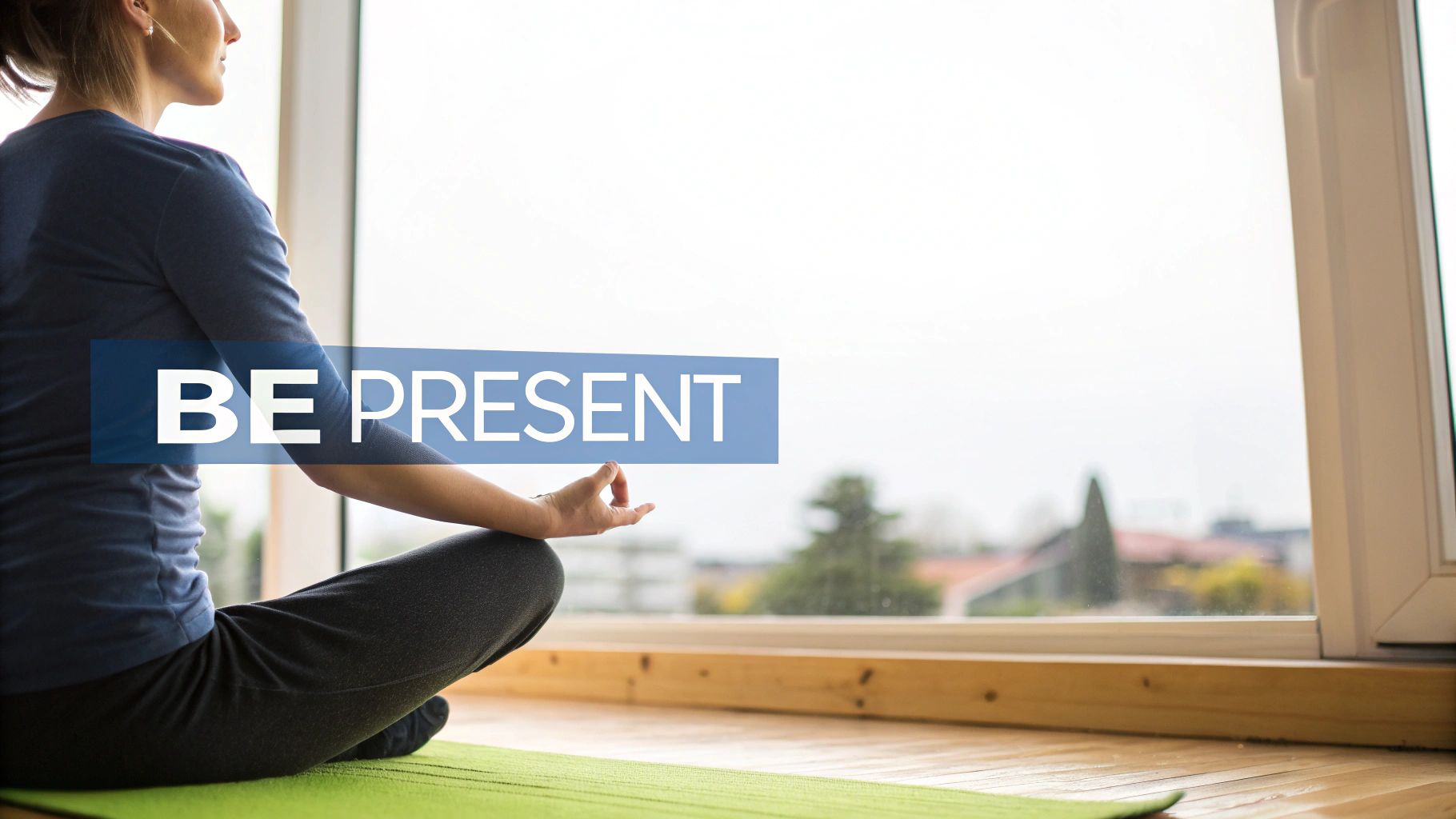
Mindfulness and meditation are powerful practices centered on present-moment awareness, helping individuals observe cravings, thoughts, and emotions without judgment or immediate reaction. It involves paying attention to your breath, body sensations, and surroundings to anchor yourself in the now. As a coping skill for substance abuse, mindfulness creates a crucial "pause" between an urge and the action of using, allowing you to make a conscious choice rather than engaging in a reactive, habitual behavior.
How Mindfulness Works for Substance Use
This practice interrupts the automatic pilot mode that often drives addiction. Instead of being swept away by a craving, you learn to sit with the discomfort, recognize it as a temporary sensation, and let it pass. This skill is a core component of Mindfulness-Based Relapse Prevention (MBRP), an evidence-based approach that significantly reduces substance use recurrence. Studies in JAMA Psychiatry have shown that MBRP can be more effective than traditional relapse prevention programs in preventing long-term relapse.
Actionable Steps for Using Mindfulness
- Start Small: Begin with a 5-minute guided meditation session each day. Consistency is more important than duration.
- Use Guided Apps: Utilize apps like Headspace or Insight Timer to learn foundational techniques and stay on track.
- Practice the "Pause": When a craving hits, stop what you are doing. Take three deep breaths and notice the physical sensations of the urge without judging them.
- Mindful Walking: Pay full attention to the sensation of your feet on the ground and the movement of your body as you walk, even for just a few minutes.
3. Peer Support Groups and 12-Step Programs
Peer support groups and 12-step programs are community-based networks that foster connection among individuals sharing similar struggles with addiction. These groups operate on the principle of mutual support, where members share their experiences, strength, and hope to help one another achieve and maintain sobriety. They offer a structured, supportive environment that combats the isolation often associated with substance use, making them a powerful coping skill for long-term recovery.
How Peer Support Works for Substance Use
The effectiveness of groups like Alcoholics Anonymous (AA) and Narcotics Anonymous (NA) lies in creating a sense of belonging and accountability. By regularly attending meetings, you are reminded that you are not alone in your journey. The structured format, such as the 12 Steps, provides a clear framework for self-reflection and personal growth. This shared experience reduces feelings of shame and guilt, while sponsorship offers personalized guidance from someone who has successfully navigated the recovery path. Alternatives like SMART Recovery offer secular, science-based approaches focused on self-empowerment.
Actionable Steps for Using Peer Support
- Explore Different Groups: Attend meetings for various programs like AA, NA, or SMART Recovery to find a community and philosophy that resonates with you.
- Find a Sponsor: In 12-step programs, connect with an experienced member who can act as a sponsor, offering one-on-one guidance and support.
- Participate Actively: Move from passive listening to active participation by sharing your experiences when you feel comfortable. This deepens your connection and reinforces your commitment.
- Build a Network: Exchange phone numbers with other members to create a support system you can reach out to during moments of craving or distress.
4. Physical Exercise and Fitness
Regular physical activity is a powerful coping skill for substance abuse, serving as a natural and healthy outlet for stress and cravings. Exercise triggers the release of endorphins, the body's own mood elevators, which can mimic some of the euphoric effects sought through substance use. It helps restore physical health, reduce anxiety and depression, and provides a structured, goal-oriented activity that builds discipline and self-esteem.

How Exercise Works for Substance Use
Engaging in fitness directly counteracts the neurochemical deficits common in early recovery. The "runner's high" is a well-known example of how intense exercise produces a neurochemical response that can alleviate withdrawal symptoms and cravings. This mind-body connection is a cornerstone of recovery, helping individuals reconnect with their physical selves in a positive way. Studies, including a notable one from Boston Medical Center, have shown that exercise combined with counseling can significantly reduce substance use by offering a constructive way to manage triggers.
Actionable Steps for Using Exercise
- Start Gradually: Begin with low-impact activities like walking, swimming, or yoga for 20-30 minutes a day to build a sustainable habit without risking injury.
- Schedule Your Workouts: Treat exercise like a non-negotiable appointment. Scheduling it in the morning can help set a positive tone for the entire day.
- Find Community: Join group fitness classes, a running club, or a recovery-focused gym. The accountability and social support are powerful motivators.
- Track Your Progress: Use a simple journal or a fitness app to log your workouts. Seeing how far you've come provides a tangible sense of accomplishment and reinforces your commitment.
5. Dialectical Behavior Therapy (DBT)
Dialectical Behavior Therapy (DBT) is a specialized form of cognitive-behavioral therapy that balances acceptance and change. Originally created by Dr. Marsha Linehan to treat borderline personality disorder, its focus on emotional regulation makes it a powerful coping skill for substance abuse, especially for those with co-occurring disorders. DBT operates on the principle of managing painful emotions and decreasing conflict in relationships, which are often at the root of substance use.
How DBT Works for Substance Use
DBT teaches that some people are more prone to reacting intensely to certain emotional situations. It provides skills to cope with these sudden, intense surges of emotion, reducing the need to turn to substances as a way to numb or escape them. Research from the University of Washington has shown significant reductions in substance abuse among participants receiving DBT. This structured approach helps individuals build what Dr. Linehan calls "a life worth living," free from the control of drugs or alcohol.
Actionable Steps for Using DBT
- Practice Mindfulness: Engage in "Wise Mind" exercises to balance your emotional and rational thoughts, helping you make more grounded decisions when cravings hit.
- Build Distress Tolerance: Use skills like "TIPP" (Temperature, Intense exercise, Paced breathing, Paired muscle relaxation) to survive crisis moments without resorting to substance use.
- Improve Emotional Regulation: Learn to identify and label your emotions, reduce your vulnerability to negative feelings, and increase positive emotional experiences.
- Enhance Interpersonal Effectiveness: Practice scripts for asking for what you need, saying no, and managing conflict in a way that maintains self-respect and strengthens relationships.
6. Family Therapy and Support Systems
Family therapy and support systems are crucial coping skills for substance abuse because addiction rarely exists in a vacuum; it impacts the entire family unit. This approach involves therapeutic interventions with family members to repair relationships, establish healthy boundaries, and transform the home into a supportive environment for recovery. It addresses systemic issues, improves communication, and builds accountability structures that are essential for long-term sobriety.
How Family Therapy Works for Substance Use
Family therapy works by treating addiction as a family disease rather than an individual problem. It helps identify and modify dysfunctional family dynamics like enabling or codependency that may contribute to substance use. Models like Multidimensional Family Therapy (MDFT) and Behavioral Couples Therapy have been proven to reduce relapse rates by strengthening the primary support network. By educating loved ones and involving them in the recovery process, these therapies create a unified front against addiction. To explore this topic further, you can learn more about how family therapy is used in addiction recovery.
Actionable Steps for Using Family Support
- Establish Clear Boundaries: Work with a therapist to define and communicate healthy boundaries regarding enabling behaviors, financial support, and emotional responses to relapse.
- Attend Educational Sessions: Encourage family members to participate in educational programs about the science of addiction to foster empathy and understanding.
- Schedule Family Meetings: Hold regular, structured check-ins to discuss progress, challenges, and expectations in a safe and moderated environment.
- Engage in Parallel Support: Encourage loved ones to attend support groups like Al-Anon, which provide them with their own coping strategies and community.
7. Medication-Assisted Treatment (MAT)
Medication-Assisted Treatment (MAT) is an evidence-based approach that combines FDA-approved medications with counseling and behavioral therapies to treat substance use disorders, particularly for opioids and alcohol. This "whole-patient" method is a powerful coping skill because it addresses the physiological and neurological aspects of addiction. Medications like buprenorphine, methadone, and naltrexone work by normalizing brain chemistry, blocking the euphoric effects of substances, and relieving cravings and withdrawal symptoms.
How MAT Works for Substance Use
MAT helps stabilize individuals, allowing them to focus on the psychological components of their recovery without being overwhelmed by intense physical cravings. For instance, methadone and buprenorphine are used to reduce opioid cravings and withdrawal, while naltrexone (Vivitrol) can be used for both opioid and alcohol use disorders. By managing the biological drive to use, MAT significantly lowers the risk of overdose and relapse, providing a crucial foundation for long-term recovery. You can learn more about Medication-Assisted Treatment to understand its role in a comprehensive care plan.
Actionable Steps for Using MAT
- Consult a Specialist: Speak with a physician or addiction specialist to determine if MAT is appropriate for your specific needs and which medication is the best fit.
- Combine with Therapy: Actively participate in behavioral counseling or therapy alongside your medication regimen. The medication provides stability, while therapy provides the skills to maintain it.
- Adhere to Dosing: Follow your prescribed dosing schedule consistently and communicate any side effects or concerns with your healthcare provider immediately.
- Address Stigma: Understand that MAT is a legitimate, science-backed medical treatment for a chronic disease, not a substitute for another addiction.
8. Stress Management and Relaxation Techniques
Stress is a primary trigger for substance use, and learning to manage it is one of the most vital coping skills for substance abuse. Stress management and relaxation techniques are structured practices designed to calm the body's physiological stress response. By regulating the nervous system, these methods provide a healthy, immediate alternative to using substances when difficult emotions or cravings arise, helping you regain control and feel grounded.
How Relaxation Techniques Work for Substance Use
When you experience stress, your body enters a "fight-or-flight" state, releasing hormones like cortisol and adrenaline. Substances often serve as a way to artificially suppress this response. Relaxation techniques achieve a similar, yet natural, outcome by activating the parasympathetic nervous system, which promotes a state of rest. This directly counteracts the physiological urge to use a substance to cope, helping to break the stress-relapse cycle. Techniques like the 4-7-8 breathing method or progressive muscle relaxation reduce physical tension and mental anxiety, making cravings more manageable.
Actionable Steps for Using Relaxation Techniques
- Practice 4-7-8 Breathing: Inhale through your nose for a count of 4, hold your breath for a count of 7, and exhale completely through your mouth for a count of 8. Repeat 3-5 times.
- Try Progressive Muscle Relaxation (PMR): Starting with your toes, tense each muscle group for 5 seconds, then release for 30 seconds, consciously noticing the feeling of relaxation. Work your way up your body.
- Use Guided Imagery: Close your eyes and visualize a peaceful, safe place in detail. Engage all your senses: what do you see, hear, smell, and feel? This mental escape can reduce immediate distress.
- Schedule Relaxation: Treat relaxation time like an appointment. Block out 10-15 minutes in your daily calendar to practice these techniques, even when you feel calm.
9. Lifestyle Restructuring and Environmental Changes
Lifestyle restructuring involves deliberately modifying your daily routines, social circles, and physical environment to support long-term recovery. It operates on the principle that your surroundings and habits powerfully influence your behavior. For substance abuse, this is a crucial coping skill because it proactively removes triggers and builds a new foundation for a sober life, making it easier to sustain positive changes.
How Lifestyle Restructuring Works for Substance Use
Addiction often creates deep-rooted patterns tied to specific people, places, and activities. Lifestyle restructuring works by systematically dismantling these old patterns and replacing them with new, healthy ones. Instead of relying solely on willpower to resist temptation, you create an environment where the healthy choice is the easier choice. This approach disrupts the automatic nature of substance use and helps you build a new identity centered on wellness and purpose.
Actionable Steps for Restructuring Your Lifestyle
- Conduct a Trigger Audit: Make a list of people, places, emotions, and situations that are strongly associated with your past substance use.
- Modify Your Environment: Remove all substance-related paraphernalia from your home, car, and workplace. Rearrange furniture or redecorate a room to give it a fresh start.
- Establish New Routines: Create a structured daily schedule. Incorporate recovery rituals like a morning walk, journaling, or a non-alcoholic "wind-down" drink in the evening.
- Build a Supportive Social Circle: Intentionally seek out and spend time with sober friends or join recovery-friendly social groups like sports leagues, book clubs, or volunteer organizations.
10. Trauma-Informed Care and EMDR
Trauma-Informed Care (TIC) is an approach that recognizes and responds to the widespread impact of trauma. It understands that underlying traumatic experiences are often a primary driver of substance abuse, functioning as a form of self-medication. Rather than just treating the addiction, this framework addresses its root causes in a safe, empowering environment. Eye Movement Desensitization and Reprocessing (EMDR) is a specific psychotherapy within this model that helps individuals process and heal from distressing memories that fuel addictive behaviors.
How Trauma-Informed Approaches Work
Substance use often begins as a way to cope with the overwhelming emotional and physiological symptoms of trauma. A trauma-informed approach creates a treatment setting that prioritizes physical and emotional safety, preventing re-traumatization. Therapies like EMDR use bilateral stimulation (like eye movements) to help the brain reprocess traumatic memories, reducing their emotional intensity. This allows individuals to address the core pain without needing substances to numb it, making it one of the most vital coping skills for substance abuse tied to PTSD or complex trauma.
Actionable Steps for Integrating Trauma Work
- Seek Specialized Care: Look for treatment centers and therapists who explicitly state they are "trauma-informed" and have expertise in addiction.
- Prioritize Stabilization: Before diving into deep trauma processing, work with your therapist to develop strong grounding and emotional regulation skills.
- Use Grounding Techniques: Practice the 5-4-3-2-1 sensory method (name 5 things you see, 4 you feel, 3 you hear, 2 you smell, 1 you taste) before and after therapy sessions to stay present.
- Pace Yourself: Trauma work should be done at a manageable pace to avoid overwhelming your nervous system. Communicate your comfort level with your therapist.
Top 10 Substance Abuse Coping Skills Comparison
| Approach | Implementation Complexity 🔄 | Resource & Training ⚡ | Expected Outcomes 📊⭐ | Ideal Use Cases 💡 | Key Advantages ⭐ |
|---|---|---|---|---|---|
| Cognitive Behavioral Therapy (CBT) | Moderate; structured sessions + homework | Requires trained therapist; outpatient-friendly | Strong evidence; durable relapse prevention ⭐⭐⭐⭐ | Motivated clients; outpatient/inpatient skill-building | Practical coping skills; evidence-based; relapse prevention |
| Mindfulness and Meditation | Low–Moderate; needs daily practice | Minimal cost; apps or instructor optional | Reduces stress/cravings; neuroplastic benefits ⭐⭐⭐ | Stress-reactive cravings; adjunct to therapy; anywhere practice | Accessible, low-cost, enhances self-awareness |
| Peer Support Groups / 12-Step | Low; attend regular meetings | Minimal resources; volunteer-led, widespread access | Improves adherence & social support; variable clinical outcomes ⭐⭐📊 | Need for community, long-term social support, low-cost care | 24/7 peer support; reduced isolation; low financial barrier |
| Physical Exercise & Fitness | Low; habit formation and scheduling | Low cost options; optional coaching or classes | Lowers cravings; improves mood & health ⭐⭐⭐ | Co-occurring depression/anxiety; early recovery routine building | Immediate mood lift; physical health gains; routine building |
| Dialectical Behavior Therapy (DBT) | High; multi-component (skills + individual) | Requires certified DBT teams; higher cost & time | Strong for emotional dysregulation & SUD comorbidity ⭐⭐⭐⭐ | Clients with emotion regulation, self-harm risk, BPD features | Comprehensive skills; phone coaching; crisis support |
| Family Therapy & Support Systems | Moderate–High; coordinate multiple members | Trained family therapists; scheduling/logistics | Improves relapse rates; strengthens relationships ⭐⭐⭐📊 | Adolescents, enabling family systems, cohabiting partners | Addresses systemic causes; builds long-term support |
| Medication-Assisted Treatment (MAT) | Moderate; medical monitoring & protocols | Requires prescribers/clinics; medication costs; monitoring | High effectiveness for opioid/alcohol use; lowers overdose ⭐⭐⭐⭐⭐📊 | Opioid dependence, severe withdrawal, high overdose risk | Rapid stabilization; reduces mortality; enables engagement |
| Stress Management & Relaxation | Low; simple teachable techniques | Minimal resources; apps or brief instruction | Immediate symptom relief; modest long-term when solo ⭐⭐ | Acute stress/craving moments; adjunctive coping strategy | Portable, no side effects, quick anxiety reduction |
| Lifestyle Restructuring & Environmental Change | High; sustained behavior and environment changes | Variable resources; may need housing/job support | High impact on relapse prevention when sustained ⭐⭐⭐⭐📊 | Chronic relapsers; strong environmental triggers; transition phases | Removes triggers; builds new identity and routines |
| Trauma-Informed Care & EMDR | High; stabilization then trauma processing | Specialist-trained therapists; longer timeline & cost | Strong for PTSD+SUD; reduces relapse by addressing trauma ⭐⭐⭐⭐📊 | Clients with trauma history or PTSD comorbidity | Treats root causes; EMDR offers relatively rapid trauma processing |
Integrating Your Skills for a Stronger Recovery
You have now explored a comprehensive set of ten evidence-based coping skills for substance abuse, from cognitive reframing with CBT to the somatic release offered by exercise and trauma-informed care. The journey to recovery is not about mastering one single technique; it's about building a diverse, personalized toolkit that you can access at any moment. Think of these skills not as separate items on a list, but as interconnected parts of a robust support system you build for yourself.
Lasting sobriety is rarely achieved by simply willing it to happen. It is built through the consistent, daily practice of new behaviors and thought patterns. The strategies discussed, including DBT, mindfulness, and peer support, provide a structured framework for navigating the challenges of early recovery and beyond. They empower you to respond to triggers and cravings with intention rather than reacting on impulse.
From Knowledge to Action: Building Your Recovery Plan
The true power of these coping skills for substance abuse is unlocked when they are integrated into a cohesive relapse prevention plan. This involves learning to combine strategies to address difficult situations from multiple angles. For example, when you feel a sudden, intense craving, your integrated response might look like this:
- Mindfulness: You first use a grounding technique to acknowledge the craving without judgment, noticing the physical sensations and thoughts associated with it.
- CBT: Next, you challenge the automatic thought that "using is the only way to feel better," replacing it with a more rational belief, such as "this feeling is temporary, and I have other ways to cope."
- Peer Support: You then reach out to your sponsor or a trusted peer from your support group, sharing what you are experiencing and asking for encouragement.
- Physical Exercise: Finally, you redirect that nervous energy into a positive outlet, like going for a brisk walk or run, releasing endorphins and shifting your mental state.
This layered approach is far more effective than relying on a single tool. It creates multiple barriers between you and a potential relapse, giving you the time and space to make a healthy choice.
Your Path Forward: Seeking Professional Guidance
Building this toolkit and learning how to use it effectively is a process, and you don't have to do it alone. The most successful recovery journeys begin with a foundation of professional support. In a structured environment like a detox or residential treatment program, you can learn and practice these skills under the guidance of experienced clinicians who understand the complexities of substance use and co-occurring mental health disorders.
This professional support is critical for creating a personalized plan that addresses your unique history, triggers, and goals. Clinicians can help you identify which skills will be most beneficial, guide you through advanced techniques like EMDR for trauma, and integrate Medication-Assisted Treatment (MAT) if it's right for you. Recovery is a commitment to continuous growth. By embracing these coping skills for substance abuse and seeking the support you deserve, you are not just stopping a behavior; you are actively building a more resilient, fulfilling, and purposeful life.
Key Takeaways
- Integration is Key: The most effective approach involves combining multiple coping skills to create a layered defense against triggers and cravings.
- Practice Builds Resilience: Recovery is an active process. Consistent practice of these skills transforms them from concepts into automatic, healthy responses.
- Personalization Matters: Your recovery plan should be tailored to your unique needs, incorporating the strategies that work best for you.
- Professional Guidance is Crucial: Working with clinicians in a structured program provides the foundation needed to learn, practice, and integrate these skills safely and effectively.
- Recovery is a Lifelong Journey: These skills are not just for getting through early sobriety; they are tools for building a fulfilling, substance-free life for the long term.
Frequently Asked Questions (FAQ)
Q: How do I know which coping skills will work best for me?
A: The best way is through a combination of professional assessment and personal experience. A therapist or addiction specialist can help identify skills that align with your specific challenges, such as trauma or anxiety. From there, it's about practicing different techniques to see what resonates most with you in various situations.
Q: Can I develop these skills on my own, or do I need to go to rehab?
A: While some skills, like basic mindfulness or exercise, can be practiced independently, learning to apply them effectively for substance abuse often requires professional guidance. A structured program like detox, inpatient, or outpatient rehab provides a safe environment to learn and practice these skills with expert support, which is especially crucial for managing withdrawal and addressing co-occurring disorders.
Q: What if a coping skill doesn't seem to work when I'm having a strong craving?
A: This is common, especially in early recovery. It's why having multiple skills in your toolkit is so important. If one strategy, like deep breathing, isn't enough, immediately pivot to another, such as calling a support person or engaging in vigorous exercise. The goal is to interrupt the craving cycle, and sometimes that requires a multi-pronged approach. Don't get discouraged; consistent practice will make the skills more effective over time.