
A family in Dallas often starts the search for help the same way. One person is panicking, another is opening tabs on a phone, and someone is trying to figure out whether the crisis can wait until morning. They see detox, rehab, outpatient, sober living, therapy, support groups, insurance questions, and a long list of promises. It quickly stops feeling like a healthcare decision and starts feeling like chaos.
That confusion gets worse across a large region like Dallas-Fort Worth. A person might live in Uptown, Lake Highlands, Oak Cliff, Plano, Irving, Arlington, or Fort Worth, but the same problem shows up everywhere. The family needs one clear next step, not a dozen disconnected options.
A recovery network program is the term many professionals use for that next step. For families, it's easier to think of it as a recovery roadmap. It connects the first safe intervention to the care that should follow, so the person doesn't leave one setting and drift without support.
When addiction is affecting parenting, custody, or home stability, legal stress can intensify the emergency. Families who need that perspective may find Understanding substance abuse and child welfare useful while they work on getting treatment in place.

Table of Contents
- Your First Step in a Confusing Search for Help
- What Exactly Is a Recovery Network Program
- The Core Components of a Dallas Recovery Network
- The Proven Benefits of a Connected Recovery Journey
- Finding Trusted Addiction Treatment in Dallas Fort Worth
- How Tru Dallas Builds Your Aftercare and Recovery Network
- Start Building Your Path to Recovery in Dallas Today
Your First Step in a Confusing Search for Help
In Dallas addiction treatment searches, families often assume they need to choose the whole future tonight. They don't. They need to secure the right starting point and make sure that starting point leads somewhere solid.
That's where recovery network programs matter. They turn a crisis response into a guided sequence. Instead of asking, “Should it be detox or rehab or therapy or sober living?” the better question is, “What does this person need first, and what should happen immediately after that?”
What families are usually facing
Some people need urgent stabilization because they're withdrawing, intoxicated, or mentally overwhelmed. Others look “functional” on the surface but keep relapsing after short bursts of motivation. Some have already tried treatment and returned home to the same pressure, same access to substances, and same isolation.
A fragmented approach usually misses the pattern. The problem isn't always willingness. Often, it's that the person was given a single service instead of a coordinated plan.
Practical rule: If a program can't explain what happens after the current level of care ends, the family is not hearing a full treatment plan.
What the first step should accomplish
A real first step should do three things at once:
- Create safety: manage immediate medical, emotional, and environmental risk
- Reduce confusion: identify the right level of care instead of guessing
- Build momentum: line up the next support before the current one ends
That's the difference between a random program list and a recovery roadmap. In a city as large as Dallas, with treatment options spread across the metroplex, families need a guide who can connect detox, therapy, structured treatment, and community support into one path.
What Exactly Is a Recovery Network Program
A recovery network program is a continuum of care built around a person, not around a single service line. It isn't a menu where someone picks one item and hopes it solves everything. It's a structured chain of care that changes as needs change.
The easiest way to understand it is to think of recovery like rebuilding daily life after it's been disrupted by alcohol or drugs. One professional or one program can't do all of that alone. A person may need medical supervision first, then a highly structured environment, then flexible treatment while returning to work or family responsibilities, then ongoing support to stay steady in ordinary life.
Why one program usually isn't enough
Detox can stabilize the body. It does not automatically rebuild judgment, routine, relationships, or coping skills.
Residential treatment can create structure. It does not fully test how someone will respond once they're back in Dallas traffic, family conflict, work stress, or old social circles.
Outpatient treatment can support real-world practice. It does not replace the need for safe housing, peer support, or mental health care when those pieces are missing.
That's why the strongest plans move in stages.
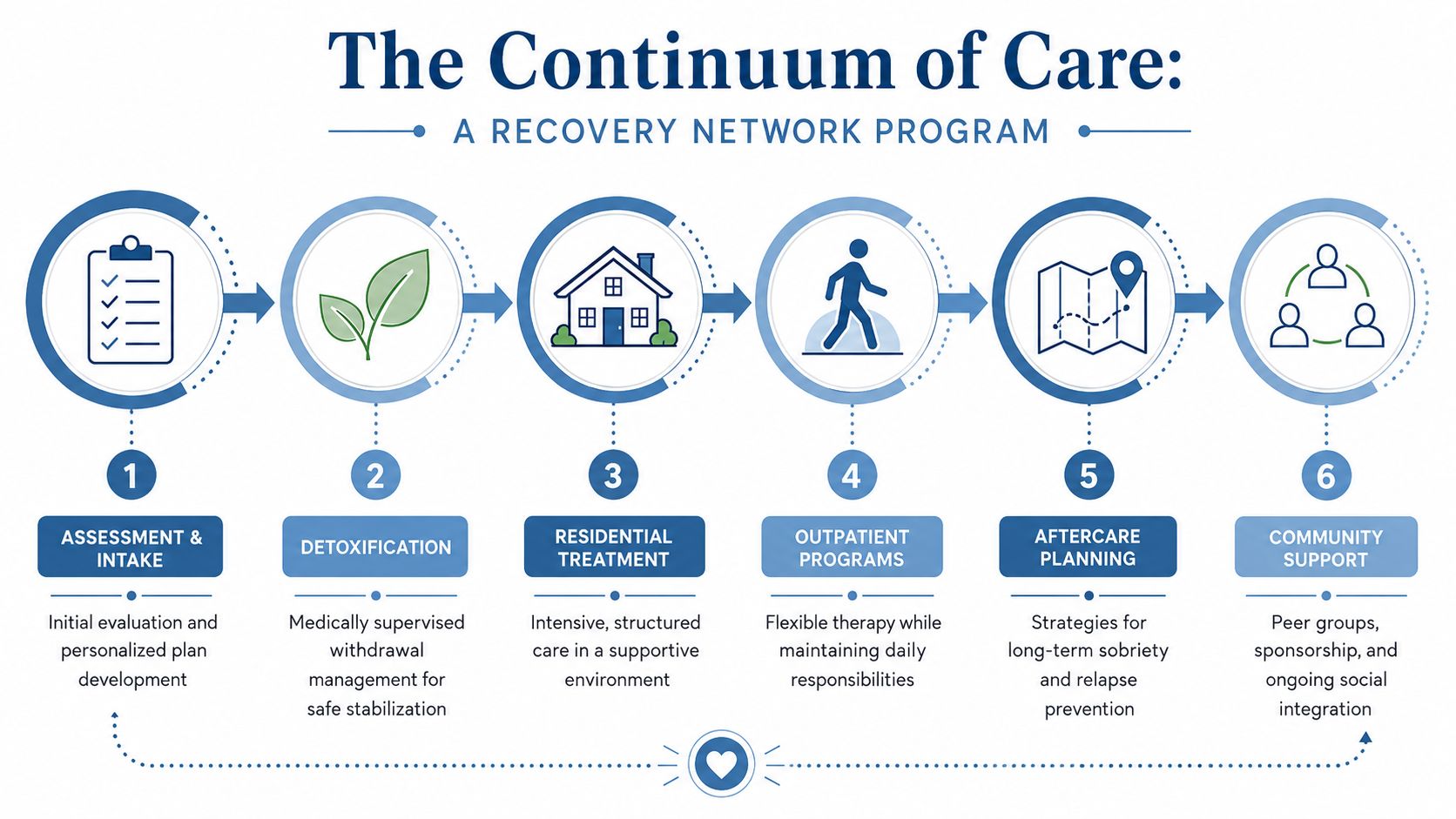
What a continuum of care looks like in practice
A well-built roadmap usually includes these linked decisions:
- Assessment and intake to identify substance use patterns, mental health concerns, medical needs, and relapse history
- Detoxification if withdrawal or medical instability is present
- Structured treatment through residential care or a day program when the person needs close support
- Outpatient care when stability improves and daily responsibilities can be reintroduced
- Aftercare planning so discharge doesn't become a cliff
- Community connection through peers, meetings, recovery housing, therapy, and accountability
Recovery doesn't usually fail because a person lacked information. It often breaks down when the handoff from one stage to the next is weak.
What makes the plan personal
Not everyone needs the same route. A young adult in East Dallas with supportive parents and no withdrawal risk may need a different sequence than a parent in North Dallas with alcohol dependence, depression, and a history of stopping treatment early. Someone in Euless trying to protect a job may need outpatient flexibility. Someone in Arlington who keeps relapsing at home may need a more contained setting first.
That's why effective recovery network programs are personalized. The roadmap should reflect substance use severity, mental health, living environment, transportation, family involvement, work demands, and readiness for change.
The Core Components of a Dallas Recovery Network
The Dallas-Fort Worth recovery network includes several levels of care that work best when they're connected. Each piece serves a different function. Problems begin when families assume every service does the same job.
Medically Supervised Detox
Detox is often the front door. It's designed for people who may face withdrawal complications, severe cravings, physical instability, or intense early distress after stopping alcohol, opioids, benzodiazepines, or other substances.
In a Dallas detox center, the purpose isn't just to “get substances out of the system.” Its primary job is to help the person become medically stable enough to participate in treatment. When detox is handled well, patients are safer, clearer, and more able to engage in what comes next.
Detox is best suited for people who have:
- Withdrawal risk: past withdrawal symptoms, heavy ongoing use, or a substance known for dangerous withdrawal
- Poor short-term control: repeated failed attempts to stop alone at home
- Immediate instability: sleep disruption, agitation, dehydration, confusion, or a sharp mental health decline
Inpatient or Residential Treatment
Residential treatment provides a protected environment with routine, therapy, and distance from daily triggers. It's often the right fit when a person's home setting is chaotic, enabling, unsafe, or too saturated with access to alcohol or drugs.
This level of care works well for people who need time away from constant pressure. That includes those with repeated relapse, poor follow-through after detox, serious emotional volatility, or limited sober support. The daily structure matters because recovery skills are easier to learn before a person returns to ordinary distractions.
Outpatient Programs
Outpatient care includes flexible options such as partial hospitalization and intensive outpatient treatment. These programs allow a person to receive therapy and clinical support while still living at home or in sober housing.
This level is useful when the person is stable enough to function outside a residential setting but still needs accountability and frequent contact. It often fits adults who must protect work, parenting, or school responsibilities while staying engaged in treatment.
A simple way to think about it:
| Level of care | Best fit | Main purpose |
|---|---|---|
| Detox | Withdrawal or acute instability | Safe stabilization |
| Residential | High relapse risk or unsafe home setting | Intensive structure |
| Outpatient | Moderate stability with ongoing needs | Continued treatment in real life |
Medication-Assisted Treatment
Medication-assisted treatment can be a critical part of the roadmap for some patients, especially those recovering from opioid, alcohol, or certain prescription drug dependence. It isn't a shortcut and it isn't replacing one problem with another. Used correctly, MAT helps reduce cravings, lower distress, and support engagement in counseling and recovery work.
Families who want a grounded overview can review what medication-assisted treatment means in addiction care. The key point is that MAT works best as part of a broader plan, not as a stand-alone answer.
Some patients need medication to create enough stability to benefit from therapy. Refusing that option on principle can leave the person fighting cravings at full force.
Dual Diagnosis Care
Many people seeking addiction treatment in Dallas aren't only dealing with substance use. Anxiety, depression, trauma symptoms, panic, bipolar symptoms, or chronic emotional dysregulation may be driving relapse or intensifying it.
Dual diagnosis care treats both conditions together. That matters because untreated mental health symptoms often undermine sobriety, while ongoing substance use can make psychiatric symptoms harder to evaluate and manage. When the two are treated separately, the patient gets mixed messages and fragmented care.
Signs that dual diagnosis care should be part of the network include:
- Mood swings that predate sobriety attempts
- Persistent anxiety or depression during short abstinence periods
- Self-medication patterns, such as drinking to sleep or using stimulants to push through exhaustion
- Psychiatric medication confusion, missed follow-up, or inconsistent mental health treatment
Sober Living Homes
Sober living can bridge the gap between formal treatment and total independence. These homes aren't a substitute for therapy, but they can provide structure, accountability, and a drug-free environment during a vulnerable stage.
They're especially useful for people who can't safely return to their previous housing. That includes patients leaving treatment who have active substance use in the home, unstable relationships, or no reliable routine. In Dallas-Fort Worth, geography matters here. Long commutes, old neighborhoods, and familiar relapse routes can all affect whether a living environment supports recovery.
Aftercare and Alumni Support
Aftercare is where many treatment plans either become sustainable or start to unravel. A strong aftercare plan isn't a vague suggestion to “keep going to meetings.” It should match the patient's real life, including transportation, work hours, child care, mental health needs, medical follow-up, and risk triggers.
Alumni support can help recovery feel active rather than isolated. For some people, that means peer connection and regular check-ins. For others, it means a predictable recovery rhythm that keeps them from drifting.
Useful aftercare often includes:
- Therapy appointments already scheduled
- Medication follow-up already arranged
- Peer support options close to home or work
- A relapse response plan for cravings, conflict, or sudden setbacks
The Proven Benefits of a Connected Recovery Journey
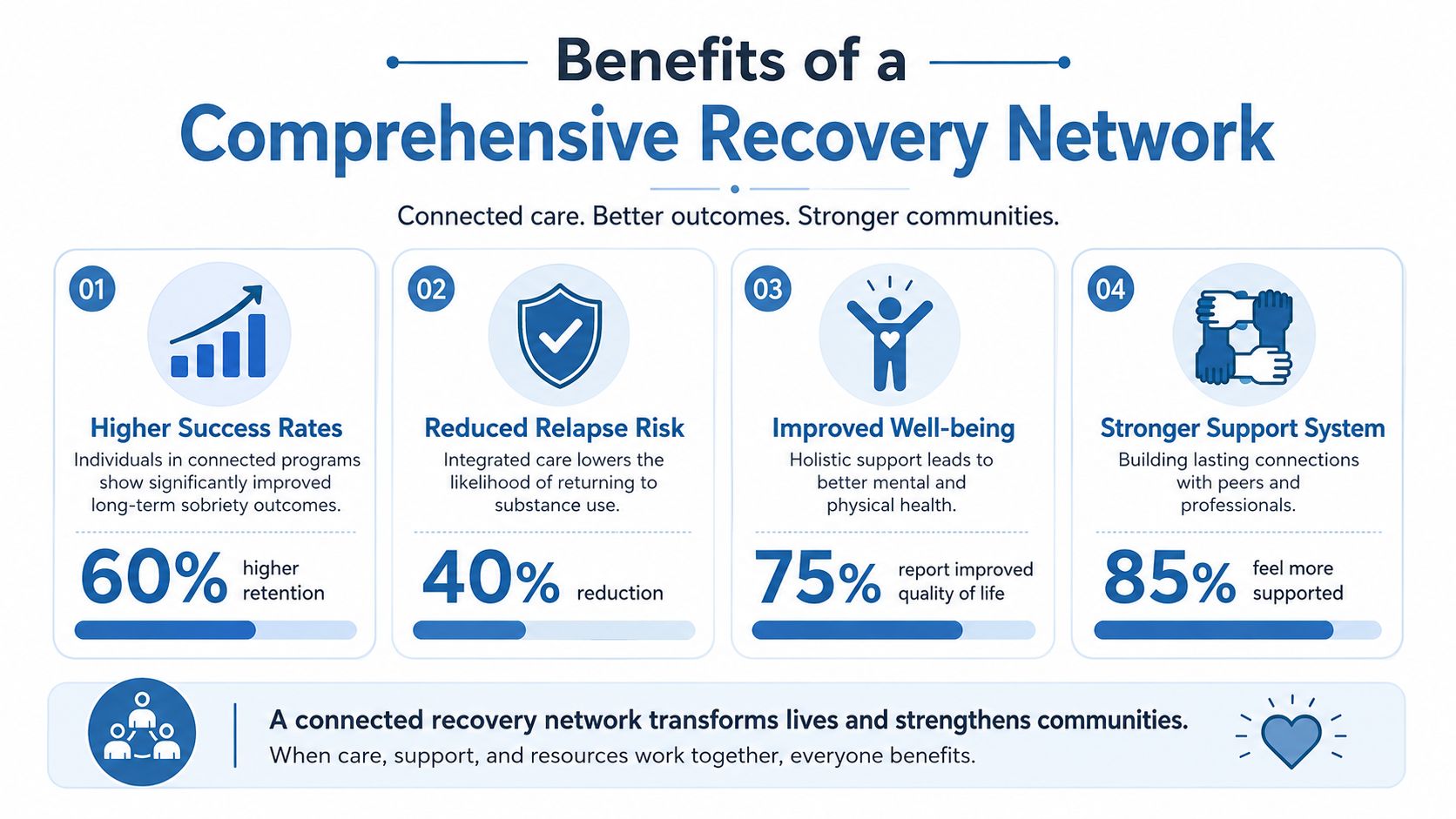
A connected recovery journey gives people something that isolated treatment doesn't. It gives them continuity. That matters because addiction tends to exploit every gap between intention and support.
Families often ask whether a full continuum is really necessary. In practice, it's usually the difference between short-term interruption and genuine rebuilding. When care is connected, each stage prepares the person for the next one instead of leaving them to improvise after discharge.
Why continuity changes outcomes
A person coming out of detox is in a fragile phase. Motivation may be strong, but tolerance has changed, emotions are close to the surface, and everyday triggers return fast. If the next step is already arranged, the patient doesn't have to make major decisions while physically depleted and psychologically raw.
Connected care also helps clinicians see patterns over time. The team can adjust the plan when a patient struggles with sleep, panic, cravings, family conflict, or attendance. That kind of course correction is much harder when every stage happens in isolation.
The same principle applies to peer support. The article on NA meetings in Dallas can help families understand how community support fits into long-term recovery. Meetings alone aren't the whole answer, but they often become one of the stabilizing parts of life after formal treatment.
What families usually notice first
The first visible benefit is often less chaos. There's less scrambling after discharge, fewer unanswered questions, and more clarity about who is responsible for what.
The second benefit is usually better follow-through. People are more likely to keep engaging when the path is simple, expectations are clear, and support is layered rather than thin.
A recovery plan should reduce decision fatigue. Early sobriety is hard enough without making the patient build the system alone.
Common advantages of a connected recovery roadmap include:
- Stronger accountability: patients know where they're going next and who's expecting them
- More consistent mental health support: therapy and psychiatric care are less likely to drop off
- Safer transitions: discharge becomes a handoff, not a goodbye
- Better relapse prevention: triggers are anticipated before they become crises
A connected system doesn't guarantee a perfectly smooth recovery. Nothing can. But it gives the person a much better chance to respond to setbacks quickly, learn from them, and stay engaged instead of disappearing from care.
Finding Trusted Addiction Treatment in Dallas Fort Worth
When families search for Dallas addiction treatment, the hard part isn't finding options. It's figuring out which programs are credible, clinically appropriate, and honest about what they provide.
Marketing language can sound similar across the DFW rehab space. The safest approach is to verify the basics and ask direct questions. A good program should welcome that scrutiny.
What to verify before admission
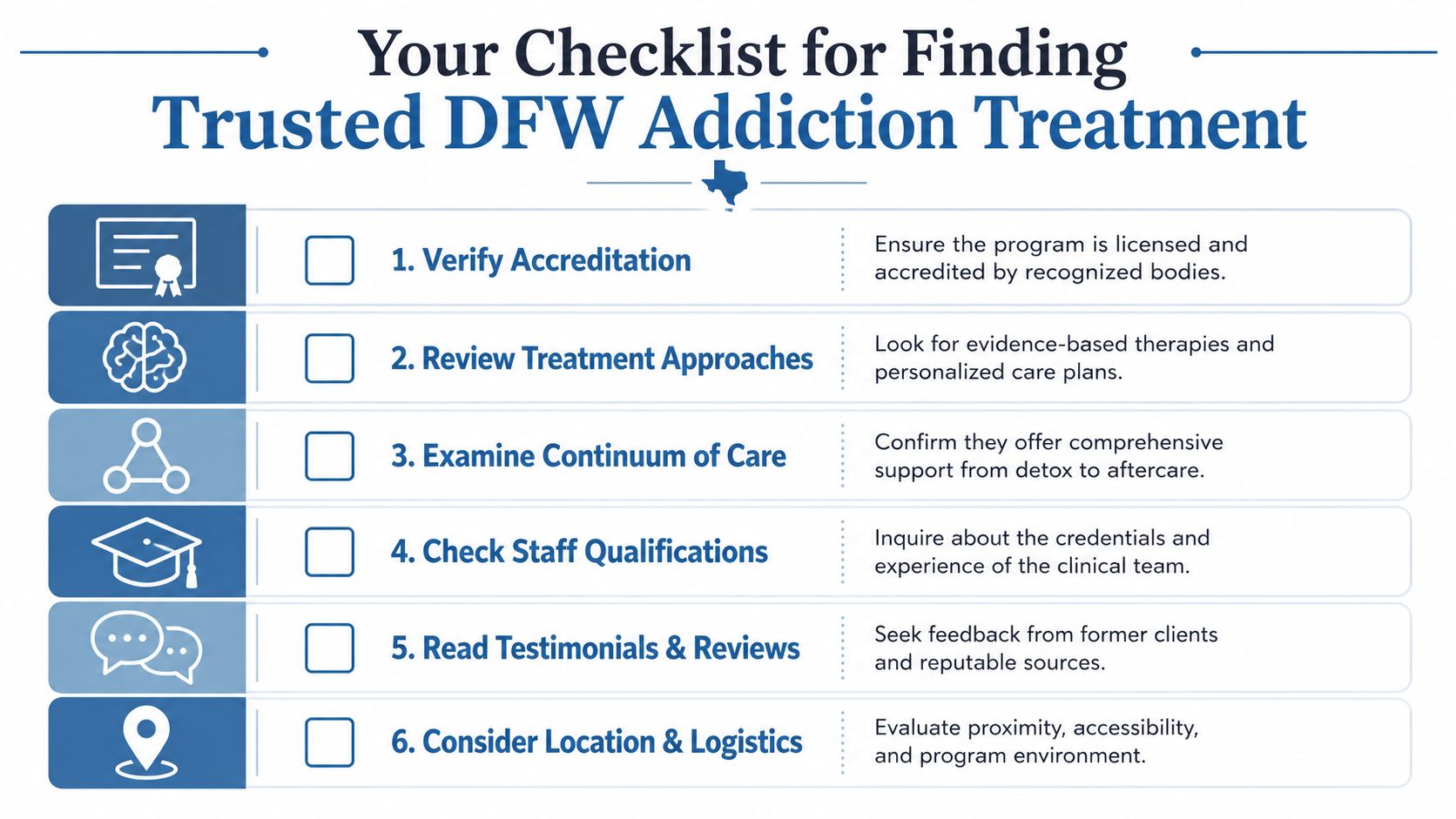
Start with licensing and accreditation. Families should ask whether the facility is properly licensed and whether independent accreditation is in place. Terms like JCAHO or CARF matter because they show the program has gone through outside review rather than relying only on self-description.
Then ask about the actual treatment model. A reputable program should be able to explain:
- How assessment works
- Whether detox is medically supervised
- What mental health services are available
- How medication decisions are handled
- What happens after discharge
Insurance verification is another major step. Many families in Texas are trying to move quickly while also protecting finances. It's reasonable to ask whether the program can help verify benefits for PPO plans, explain likely out-of-pocket responsibility, and describe what services may or may not be covered.
Questions worth asking on the first call
Short calls can still reveal a lot. Families don't need perfect clinical language. They need straightforward answers.
A useful checklist includes:
- Who will evaluate the patient's medical and psychiatric needs?
- How do you decide whether someone needs detox, residential care, or outpatient care?
- What does discharge planning look like before the person leaves?
- Do you coordinate with therapists, sober living, or community support in the Dallas-Fort Worth area?
- How do you handle relapse risk after treatment?
If a provider can describe admission well but gets vague about aftercare, families should slow down and ask more questions.
Location and logistics matter too. For some patients, a Dallas detox center close to home improves family participation and discharge planning. For others, a bit of distance within the metroplex creates needed separation from triggers while still keeping treatment accessible. The right answer depends on the person's home environment, transportation, and relapse pattern.
How Tru Dallas Builds Your Aftercare and Recovery Network
Effective treatment doesn't end when the patient is medically stable. The most important planning often happens near discharge, when the structure of treatment is about to give way to ordinary life again.
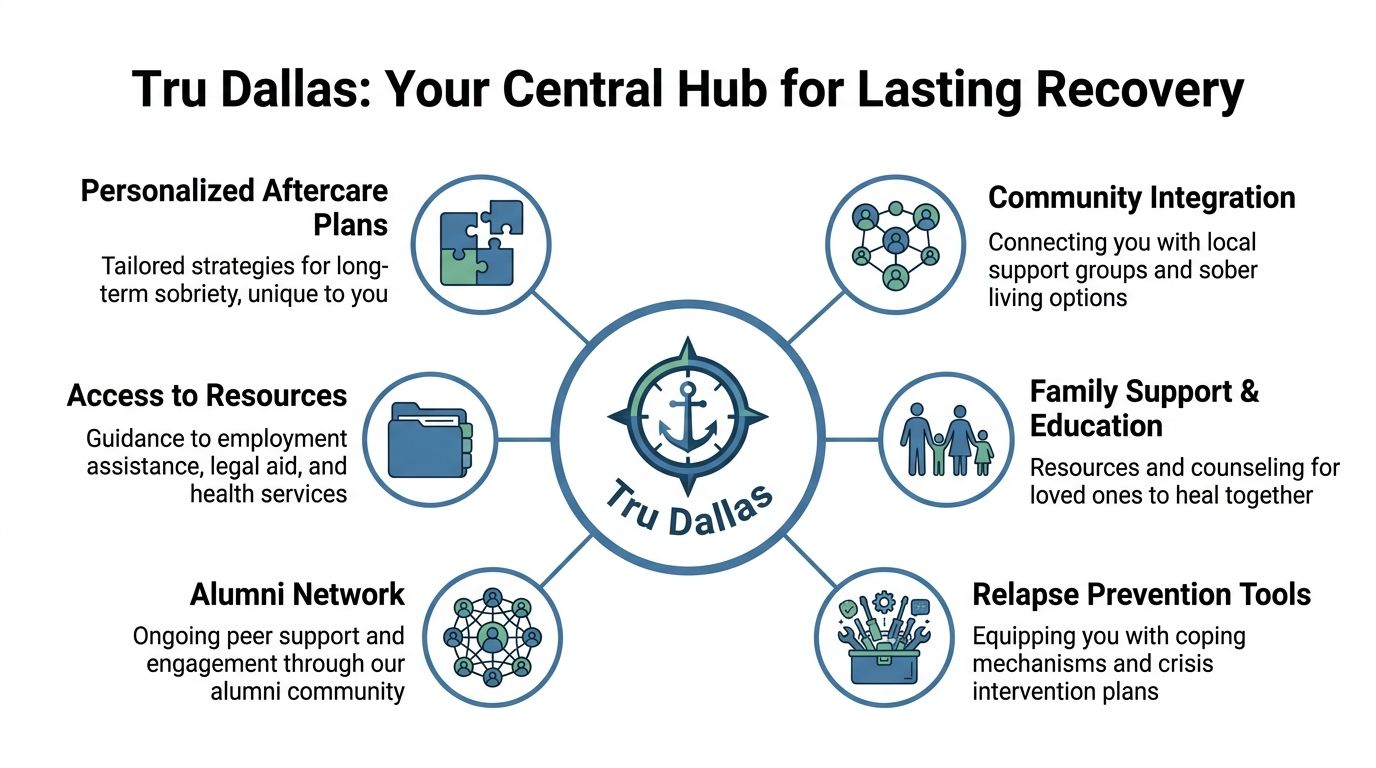
That's where a strong provider becomes a hub, not just a facility. The work includes identifying relapse risks, mapping next steps, and connecting the patient to the people and settings that can sustain progress in the Dallas-Fort Worth area.
What strong discharge planning looks like
A real discharge plan should be specific enough that the patient can follow it under stress. That means more than handing over a list of names or suggesting a few general resources.
Strong planning usually includes:
- A next level of care already identified, whether that's residential treatment, outpatient care, therapy, or sober housing
- A relapse prevention framework built around personal triggers, warning signs, and immediate response steps
- Mental health follow-up when depression, anxiety, trauma, or other symptoms are part of the picture
- Family guidance so loved ones know how to support recovery without enabling substance use
Some patients also need practical supports that aren't always discussed early enough. That can include transportation planning, work re-entry conversations, legal coordination, or help identifying recovery-safe housing. Families exploring that housing step can learn more about sober living homes in Texas and how they fit recovery.
Why local connections matter in DFW
Dallas-Fort Worth isn't one neighborhood. It's a broad, fast-moving region with very different daily realities from one area to another. A patient leaving care in Euless may need a different aftercare setup than someone returning to Downtown Dallas, Frisco, Grand Prairie, or Fort Worth.
Local coordination matters because recovery is lived in traffic patterns, work schedules, family routines, and nearby temptations. A solid network considers where the patient sleeps, where they commute, who they see, and where they're most vulnerable.
That local approach is one reason many families look for a provider that can act as a central organizer. When aftercare planning is personalized and rooted in the DFW area, the patient is less likely to leave treatment with a plan that looks good on paper but falls apart in daily life.
Start Building Your Path to Recovery in Dallas Today
The search for help often begins in fear. It doesn't have to stay there. When families understand recovery network programs as a roadmap instead of a maze, the next step becomes clearer.
Recovery is rarely a single event. Detox may be the entry point. Residential care, outpatient treatment, mental health support, sober living, and community connection may all play a role after that. What matters most is that these steps are linked, personalized, and timed well.
For a person struggling with alcohol, opioids, fentanyl, heroin, cocaine, methamphetamine, or prescription medications, waiting for a perfect moment usually makes the situation harder. The better move is to get a professional assessment and start building a plan that fits the actual level of risk, the home environment, and the support available in Dallas-Fort Worth.
Families don't need to solve the entire future tonight. They do need to take the first action that leads toward safety, clarity, and continuity of care.
If someone you love needs a Dallas detox center, addiction treatment in Dallas, or a clearer aftercare plan in the DFW area, contact Tru Dallas Detox & Recovery Center. A compassionate admissions team can help verify insurance, explain treatment options, and guide the first step toward a personalized recovery roadmap.