

If you've been taking cyclobenzaprine and decide to stop, you might find yourself dealing with some uncomfortable symptoms.We're talking about things like headaches, nausea, general discomfort, and a noticeable sense of irritability.
While it doesn't happen to everyone, quitting suddenly—especially after using it for a while—ramps up the risk. Your body has gotten used to the medication, and now it needs time to adjust to its absence.
Key Takeaways
- Withdrawal is Possible: Stopping cyclobenzaprine, especially abruptly, can lead to withdrawal symptoms like headaches, nausea, and irritability.
- Dependence vs. Addiction: Physical dependence, where the body adapts to the drug, is the primary cause of withdrawal; it is not the same as addiction.
- Body's Recalibration: Withdrawal symptoms are a sign that your central nervous system is readjusting to functioning without the medication.
- Symptoms are Usually Mild: Withdrawal from cyclobenzaprine is typically not severe and affects a minority of users (less than 20%).
- Professional Guidance is Key: The safest way to stop taking cyclobenzaprine is with a medically supervised plan to avoid unnecessary discomfort and complications.
Understanding Cyclobenzaprine and Why Withdrawal Occurs
Cyclobenzaprine, which you might know by its old brand name Flexeril, is a prescription muscle relaxant. Doctors typically prescribe it for short-term relief from the painful muscle spasms that come with injuries.
Think of it as a dimmer switch for your central nervous system. It dials down the overactive nerve signals that cause muscles to clench up in pain, giving your body a chance to heal. By depressing the central nervous system, it effectively quiets those spasms. But when you use it for an extended period, your body starts to rely on it to stay balanced.

The Body's Recalibration Process
Imagine your nervous system is like a finely tuned orchestra that has gotten used to playing with cyclobenzaprine conducting. When you suddenly take the conductor away, the music gets chaotic. The orchestra needs a moment to find its rhythm again. That chaotic period of recalibration is what we call withdrawal.
This is a completely normal physiological response, not some kind of personal failing. It’s simply your body signaling that it developed a physical dependence on the medication to maintain its normal state. When the drug is gone, the system gets thrown off kilter for a bit, leading to those uncomfortable cyclobenzaprine withdrawal symptoms.
Physical dependence isn't the same as addiction. It’s the body's natural adaptation to a substance. Withdrawal is just the process of the body re-learning how to function without it, which can cause both physical and psychological discomfort.
While often mild, these symptoms are a big reason why having medical guidance is so important. Data shows that cyclobenzaprine withdrawal symptoms typically pop up in less than 20% of users. When they do, things like headaches, nausea, and irritability tend to start a day or two after the last dose. The intensity really depends on factors like your dosage and how long you were taking it.
Why Professional Guidance Is Essential
Because cyclobenzaprine directly impacts your central nervous system, stopping it isn't something to take lightly. Trying to go it alone can be unnecessarily rough and might even lead to complications. The safest way forward is with a clear, structured plan, ideally managed by professionals.
A medically supervised detox program ensures your body can readjust safely and as comfortably as possible. For anyone looking for that kind of structured support, learning more about a prescription pill detox program can offer real peace of mind. It clarifies what that first critical step toward recovery looks like, minimizes discomfort, and builds a solid foundation for your long-term health.
Recognizing the Physical Symptoms of Withdrawal
When you stop taking cyclobenzaprine after using it for a while, your body has to figure out how to function without it. This adjustment period can be tough, triggering a whole host of physical reactions as your central nervous system gets back on its feet. These cyclobenzaprine withdrawal symptoms aren't just in your head; they're very real and can range from mildly annoying to downright miserable.
The physical side of withdrawal is your body sending out an S.O.S. It's so used to having the drug around that its absence throws everything off balance. Understanding that each symptom is just a sign of your body working hard to find its equilibrium again can make the whole process feel less scary and more manageable.
Nausea and General Malaise
One of the first things people often notice is a deep, nagging nausea. This isn't just a slight queasiness; it can feel like a relentless bout of the flu or motion sickness. This general feeling of being unwell, or malaise, can completely wipe out your appetite and make it hard to even think about food.
So, why does this happen? Cyclobenzaprine doesn't just work on your muscles—it also influences neurotransmitters that play a role in your digestive system. When you take the drug away, your gut can get thrown into chaos for a bit, leading to that awful, sick-to-your-stomach feeling.
Severe Headaches and Dizziness
Get ready for headaches. And we’re not talking about your average, everyday tension headache. Many people describe these as severe, throbbing pains that feel a lot like a migraine. They often come with a side of dizziness or lightheadedness, which can make it almost impossible to focus on anything.
This is your brain’s chemistry going through a major recalibration. Cyclobenzaprine affects nerve signaling and blood flow in the brain. When it’s suddenly gone, the blood vessels can go a little haywire, constricting and dilating unpredictably, which is what triggers that intense headache pain.
Paradoxical Muscle Aches and Spasms
Here’s a cruel bit of irony: stopping a muscle relaxant can actually cause muscle pain. It’s a rebound effect where you might suddenly experience the very symptoms you started taking the drug for—aches, stiffness, and even little muscle twitches or full-blown spasms.
Think of it like a spring that has been held down for a long time. Once the pressure (cyclobenzaprine) is released, it doesn't just return to normal—it bounces back with extra force. This neurological "rebound" is what causes the paradoxical muscle discomfort.
It can feel incredibly frustrating, but it’s a classic sign that your nervous system, which has been suppressed by the medication, is waking back up and trying to find its normal rhythm.
Sweating, Chills, and Temperature Fluctuations
Feeling like your internal thermostat is broken is another common experience. One minute you might be drenched in a cold sweat, and the next you’re shivering with chills, even if the room temperature hasn’t changed at all.
This is your autonomic nervous system—the system that controls all your automatic functions like body temperature—struggling to regulate itself without the drug's influence. It’s similar to what happens when you have a high fever; your body’s control panel is temporarily on the fritz.
To give you a clearer picture, here’s a quick breakdown of the most common physical symptoms people report.
A Snapshot of Physical Withdrawal Symptoms
| Symptom | Description | Typical Onset |
|---|---|---|
| Nausea & Malaise | A persistent feeling of sickness, similar to the flu or motion sickness. Often includes loss of appetite. | 1-3 days after last dose |
| Severe Headaches | Throbbing, migraine-like head pain, often accompanied by light sensitivity. | 2-4 days after last dose |
| Muscle Aches & Spasms | A rebound effect causing stiffness, soreness, and involuntary muscle twitches. | 2-4 days after last dose |
| Sweating & Chills | Fluctuations in body temperature, leading to cold sweats and shivering. | 1-3 days after last dose |
| Dizziness | A sense of lightheadedness or feeling off-balance. | 1-3 days after last dose |
Dealing with these physical symptoms takes a lot of patience, and in many cases, professional medical support. While they are definitely unpleasant, it’s critical to remember they won't last forever. Understanding why they're happening can validate your experience and show just how important a safe, properly managed withdrawal plan is.
Key Takeaways
- Flu-Like Symptoms are Common: Nausea, malaise, sweating, and chills are among the first physical signs of withdrawal.
- Headaches Can Be Severe: Expect migraine-like headaches and dizziness as your brain's chemistry recalibrates.
- Paradoxical Muscle Pain: A rebound effect can cause the return of muscle aches and spasms, the very symptoms the drug treated.
- Symptoms are Temporary: These physical reactions are signs of your body healing and will subside as it adjusts.
- Support is Crucial: Managing these physical symptoms is easier and safer with professional medical guidance.
Navigating the Psychological and Emotional Impact
While the physical side of cyclobenzaprine withdrawal gets a lot of attention, the psychological and emotional journey is often where the real battle lies. It’s more than just aches and nausea; it’s your mind working overtime to find its footing again. This mental recalibration can unleash a wave of intense emotions that feel just as powerful as any physical symptom.
Think of it this way: your nervous system on cyclobenzaprine is like a coiled spring being held down. The drug forces it into a state of calm. When you suddenly take that pressure away, the spring doesn't just relax—it jolts back violently. This rebound effect can throw your brain into a state of high alert, triggering the cascade of emotional responses that define cyclobenzaprine withdrawal symptoms.
Understanding Anxiety and Irritability
One of the first things people notice is a sharp, nagging sense of anxiety. This isn't just everyday stress. It can feel like a constant, low-humming panic that you just can't shake. You might find yourself snapping at loved ones or getting infuriated by minor frustrations that you'd normally brush off.
This happens because the neurotransmitters in your brain, which cyclobenzaprine had been influencing to keep you calm, are now completely out of whack. Your brain is desperately trying to restore its natural balance without the drug, and this temporary chemical chaos is what fuels those feelings of unease and agitation. It’s a messy process, but it’s a sign that your mind is actively healing.
The Challenge of Insomnia and Fatigue
Sleep often becomes the next major hurdle. Many people struggle with severe insomnia, tossing and turning for hours, unable to switch off their racing thoughts. When you finally do drift off, it might only be for a short, unsatisfying stretch. This creates a vicious cycle, because a sleep-deprived brain is naturally more prone to anxiety and irritability.
Even if you manage a few hours of sleep, you might wake up feeling like you’ve run a marathon. This profound exhaustion, sometimes called malaise, is a feeling of general discomfort that can make even the smallest tasks feel monumental. Your body and brain are pouring an incredible amount of energy into the healing process, leaving very little for anything else.
The psychological aspects of withdrawal are not just side effects; for many, they are the primary challenge. The emotional instability, lack of motivation, and persistent cravings can be more difficult to manage than the physical symptoms, especially for those with pre-existing mental health conditions.
This is a critical point. Research backs up what so many people experience firsthand: the emotional rollercoaster is often the hardest part, especially for anyone who already deals with mental health struggles. You can find more insights on the connection between withdrawal and mental health on riveroakstreatment.com.
Worsening of Pre-Existing Conditions
It’s crucial to understand that withdrawal can pour gasoline on the fire of any existing mental health issues. If you already live with anxiety, depression, or another condition, the withdrawal process can amplify your symptoms, making an already vulnerable time feel even more precarious.
This is exactly why a strong support system isn't just a nice-to-have—it’s non-negotiable. Leaning on friends, family, or professionals gives you an anchor in the storm. Acknowledging and preparing for the mental toll is a key part of getting through withdrawal successfully.
Key Takeaways
- Brain on High Alert: Psychological symptoms like anxiety are a direct result of your brain rebounding from the sedative effects of cyclobenzaprine.
- Insomnia and Fatigue: Sleepless nights and deep exhaustion are common, creating a feedback loop that can make other emotional symptoms worse.
- Pre-Existing Conditions: Withdrawal can temporarily make underlying mental health issues like depression feel more intense, highlighting the need for support.
- Mental Toll is Significant: For many, the emotional and psychological fight is tougher than the physical one.
- It's a Sign of Healing: As uncomfortable as they are, these feelings mean your brain is working hard to get back to a stable, drug-free state.
Mapping Your Withdrawal Timeline and Severity
When you’re thinking about stopping cyclobenzaprine, one of the biggest sources of anxiety is the unknown. What’s going to happen? How bad will it feel? For how long?
Having a clear picture of the typical withdrawal process can make all the difference. It helps you trade that fear for a sense of control. While everyone's journey is a little different, the timeline usually follows a few predictable stages. Think of it less like a strict schedule and more like a roadmap—it gives you a sense of what’s coming around the next turn so you can prepare.
Here's a closer look at what to expect, broken down by each phase.
The First 24 to 48 Hours: The Early Stage
The first signals that your body is adjusting usually show up within one to two days after your last dose. This initial phase isn't typically overwhelming, but the discomfort is noticeable.
You might feel the first whispers of withdrawal, like a dull headache that won't quit, a low-level sense of anxiety, or some mild nausea. This is also when insomnia often starts to set in. You might find it hard to fall asleep or stay asleep as your nervous system begins to recalibrate itself without the drug.
Days 3 to 7: The Acute or Peak Stage
This is, without a doubt, the toughest part of the process for most people. Between the third and seventh day, the cyclobenzaprine withdrawal symptoms you felt earlier will likely ramp up and hit their peak intensity.
During this acute phase, the physical and psychological discomfort is at its most severe. You can expect the anxiety to become more pronounced, headaches to intensify, and nausea to worsen. Paradoxically, the very muscle aches and spasms you took the medication for can return with a vengeance. Many people also describe feeling like they have the flu—sweating, chills, and a deep, bone-weary fatigue that makes it hard to do much of anything.
The acute phase is your body's most dramatic period of readjustment. Your central nervous system was suppressed by the medication, and now that it's gone, it rebounds with force. This neurological "overshoot" is what causes the symptoms to feel so intense.
Having strong support and, ideally, medical supervision during this window is critical. The sheer difficulty of this stage is exactly why quitting "cold turkey" is a bad idea—the symptoms can be incredibly hard to manage on your own.
Weeks 2 and Beyond: The Post-Acute Stage
Once you get through that first week, you’re over the biggest hurdle. The most severe symptoms will start to fade, and you'll likely feel a gradual but definite improvement as you move into the post-acute stage. The journey isn't quite over, but the worst is behind you.
While the intense physical discomfort recedes, some psychological effects can stick around for a few weeks. These are often called Post-Acute Withdrawal Symptoms (PAWS), and they might include:
- Lingering anxiety or irritability
- Bouts of low mood or depression
- Sleep that’s still a bit disturbed
- General fatigue and low energy levels
Patience is key here. It takes time for your brain and body to find their equilibrium again. The timeline for the entire detox process can vary, and it's helpful to understand the different factors at play. To get a better sense of what to expect, you can learn more about how long drug detox can take in our comprehensive guide.
Factors That Influence Your Timeline
It's so important to remember that this timeline is just a general guide. Your personal experience will be shaped by a few key things:
- Dosage and Duration of Use: Someone taking a high dose for many months or years will likely face a more intense and longer withdrawal than someone on a low dose for a few weeks.
- How You Stop: Quitting abruptly (cold turkey) almost guarantees a rougher ride. A slow, medically supervised taper is designed to soften the blow and make the process much more manageable.
- Your Individual Health: Things like your metabolism, overall physical health, and whether you're dealing with other mental health conditions can all influence how your body responds.
Understanding these phases and how they might play out for you personally allows you to prepare for the road ahead. You can face it knowing that each stage, no matter how challenging, is a temporary but necessary step toward feeling better for good.
Key Takeaways
- Early Stage (Days 1-2): Mild symptoms like headache, nausea, and anxiety begin to appear.
- Peak Stage (Days 3-7): Symptoms become most intense; this is the most challenging period of withdrawal.
- Post-Acute Stage (Week 2+): Severe symptoms fade, but milder psychological effects like anxiety and fatigue may linger.
- Individual Factors Matter: Your dose, duration of use, and overall health will influence your specific timeline and severity.
- A Taper is Gentler: A medically supervised tapering plan can significantly soften the intensity of this timeline.
How to Manage Withdrawal with Medical Support
Trying to navigate cyclobenzaprine withdrawal on your own can feel like a lonely and overwhelming battle. While the urge to just stop "cold turkey" might seem like the fastest way out, it's actually one of the riskiest things you can do. Suddenly cutting off the medication can throw your system into a state of shock, making the cyclobenzaprine withdrawal symptoms far more intense and difficult to manage.
Instead of an abrupt stop, the safest and most effective path forward is a medically supervised withdrawal. This isn't about powering through the pain; it's about giving your body the time and professional support it needs to recalibrate safely. It turns a chaotic, unpredictable process into a structured, manageable journey.
The infographic below maps out what you can typically expect, showing why having an expert in your corner is so critical when symptoms are at their peak.
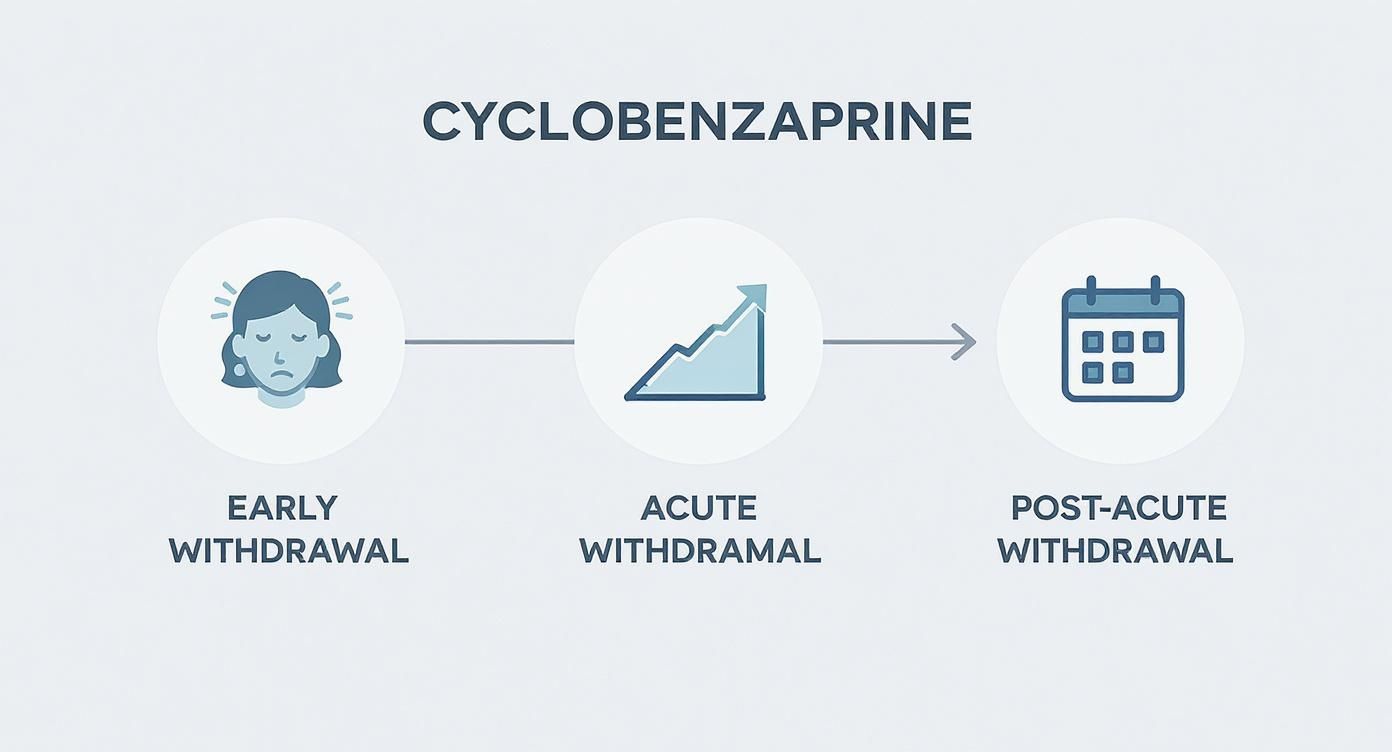
As you can see, withdrawal isn't a straight line. Symptoms build, peak, and then fade. Having professional support during that peak phase can make all the difference in the world for a safe and successful recovery.
The Gold Standard: Tapering Down
The cornerstone of a safe cyclobenzaprine withdrawal is tapering. The best analogy is slowly turning down the volume on a blaring stereo instead of just ripping the cord from the wall. Tapering is a deliberate, gradual reduction of your dose over a planned period.
A doctor will work with you to create a tapering schedule that's customized for you. They’ll look at things like your current dose, how long you've been taking the medication, and your overall health. This slow, methodical approach gives your central nervous system a chance to catch up and adapt, which dramatically lessens the severity of withdrawal.
Tapering isn't a sign of weakness; it’s the smartest, most compassionate approach to recovery. By avoiding the system shock of a sudden stop, you set yourself up for a much smoother transition off the medication.
During this time, your medical team is right there with you, ready to adjust the schedule if needed. That flexibility is what makes the process as comfortable as it can possibly be.
The Role of Comfort Medications
Even with the most careful taper, some uncomfortable symptoms might still pop up. This is where "comfort medications" come in. These are specific, short-term prescriptions used to ease the process, not replace it.
For example, a doctor might prescribe:
- Ondansetron to help control nausea and keep you from getting sick.
- Non-addictive sleep aids or anxiety medications to help calm your system and ensure you get much-needed rest.
- Over-the-counter pain relievers to take the edge off headaches and muscle aches.
These are used strategically to target specific issues. They provide targeted relief, helping you stick with your tapering plan without introducing the risk of a new dependency.
The Benefits of Professional Medical Detox
For many people, the best and safest place to manage cyclobenzaprine withdrawal is in a professional medical detox facility. It’s a level of comprehensive care that you simply can't replicate at home. For a closer look at what this entails, we have a great guide that explains what is medical detox and why it's so beneficial.
Here's what a supervised detox program offers:
- 24/7 Medical Monitoring: A clinical team is always present to keep an eye on your vitals and step in immediately if any complications arise.
- Immediate Symptom Management: As soon as a symptom appears, comfort medications can be administered for quick relief.
- A Safe, Stable Environment: Being away from daily triggers and stressors allows you to focus 100% on your health and recovery.
- Emotional and Psychological Support: You’ll have access to counselors and therapists who understand what you're going through and can help you work through the mental and emotional hurdles.
Choosing professional support isn't just about getting through withdrawal—it's about building a solid, safe foundation for a lasting recovery.
Key Takeaways
- Avoid Quitting Cold Turkey: Stopping cyclobenzaprine all at once is a recipe for severe, and sometimes complicated, withdrawal symptoms.
- Tapering is the Safest Method: A gradual, doctor-supervised reduction in your dose is the best way to let your body adjust safely and comfortably.
- Comfort Medications Provide Relief: Short-term medications can be used to manage specific symptoms like nausea, insomnia, or pain.
- Professional Detox Offers Superior Support: A medical detox center provides round-the-clock monitoring and immediate care in a trigger-free environment.
- Personalization is Key: A truly effective withdrawal plan is always tailored to your unique history, dosage, and health needs.
Key Things to Remember for a Safe Recovery
Getting through cyclobenzaprine withdrawal can feel like a lot to handle, but a few core ideas can really light the way. Think of this as the "need-to-know" summary to keep you on the safest and most successful path forward.
When things feel tough, coming back to these points can help you stay grounded. They’re a quick reminder of what truly matters as you manage cyclobenzaprine withdrawal symptoms and move toward feeling better.
Key Takeaways
Here are the five most important things to keep in mind:
-
Never Stop Cold Turkey: Quitting cyclobenzaprine abruptly is a huge shock to your system. It’s the fastest way to trigger severe physical and psychological withdrawal and is by far the riskiest approach.
-
Medical Supervision is Non-Negotiable: The only safe way to stop using this medication is under a doctor's care. They can create a tapering schedule just for you, which helps minimize the rough spots and keeps you safe from complications.
-
Expect Both Physical and Mental Hurdles: Withdrawal isn’t just about feeling sick to your stomach or getting headaches. It often brings on intense anxiety, mood swings, and sleepless nights. Being ready for both the physical and emotional side of things is crucial.
-
This Feeling Isn't Forever: That first week can be incredibly challenging, but hold on to this: the symptoms will pass. The discomfort you’re feeling is a temporary, necessary part of your body healing and finding its balance again.
-
You Can Get Through This: With the right support system and a solid plan, you can absolutely move past dependence. Professional detox and ongoing therapy are the building blocks for a healthy, sustainable recovery.
Common Questions About Cyclobenzaprine
When you're dealing with something as personal as stopping a medication, it's natural to have a lot of questions. We've gathered some of the most common ones we hear about cyclobenzaprine withdrawal to give you straightforward answers. Think of this as a quick reference guide to help you understand the process better and see why getting professional medical advice is so important.
Is Cyclobenzaprine Actually Addictive?
This is a great question, and the answer has a couple of parts. Cyclobenzaprine isn't classified as a controlled substance like opioids are, but it can absolutely lead to physical dependence and misuse.
Dependence is when your body gets so used to having the drug around that it needs it to feel normal. Addiction is a bit different—it’s when you start compulsively seeking out the drug even when it's causing problems in your life. With cyclobenzaprine, dependence is the far more common issue, and it's what triggers those tough cyclobenzaprine withdrawal symptoms when you stop.
How Long Does Cyclobenzaprine Withdrawal Usually Last?
Everyone’s experience is a little different, but there's a general pattern. The first symptoms usually show up within 24 to 48 hours after your last dose.
Things tend to get most intense between days three and seven. After that peak, the worst is usually over, but you might notice some milder, lingering symptoms like anxiety or low energy for a few weeks while your brain chemistry gets back to its baseline.
What’s the Safest Way to Stop Taking It?
Without a doubt, the safest way is a gradual, medically supervised taper. Stopping cold turkey is a shock to the system and can make withdrawal symptoms feel much, much worse. It's just not worth it.
A doctor can work with you to create a tapering plan, slowly lowering your dose over time. This gives your body a chance to adjust without the jarring effects of abrupt cessation.
Quitting cold turkey is never the answer. A slow, methodical taper isn't just about safety—it’s a kinder, smarter approach that dramatically improves your chances of getting through this comfortably and successfully.
Can Other Medications Help with the Withdrawal Symptoms?
Yes, they can. During a medical detox, a team can provide what we call "comfort medications" to take the edge off specific symptoms. These aren't meant to be a long-term fix, but they can be a huge help for managing things like nausea, sleepless nights, or overwhelming anxiety. This kind of targeted support makes the whole detox experience far more manageable.
When Is It Time to Get Professional Help?
The short answer? You should always talk to a doctor before you stop taking cyclobenzaprine.
But it becomes especially critical if you've been on high doses, have used it for a long time, or are also dealing with other mental health issues. In those cases, a professional medical detox is your safest bet. Having 24/7 medical supervision means any complications can be handled immediately, giving you peace of mind.
Frequently Asked Questions
1. What is cyclobenzaprine primarily used for?
It's a prescription muscle relaxant used for the short-term treatment of muscle spasms and pain from acute musculoskeletal injuries. It works by depressing the central nervous system to help calm the muscles.
2. Is physical dependence on cyclobenzaprine the same as addiction?
No. Physical dependence is a physiological state where your body adapts to a substance to function normally. Addiction involves compulsive drug-seeking and use despite negative consequences. You can be dependent without being addicted.
3. Why do withdrawal symptoms happen when I stop taking cyclobenzaprine?
Your nervous system becomes accustomed to the drug's presence. When you stop, your body has to "relearn" how to function without it. This recalibration period is what causes the temporary physical and psychological symptoms of withdrawal.
4. Can I just stop taking cyclobenzaprine "cold turkey"?
It is strongly advised against, especially after long-term or high-dose use. Quitting abruptly can make withdrawal symptoms much more intense and potentially complicated. A gradual tapering plan overseen by a doctor is the safest method.
5. How long does a medical detox for cyclobenzaprine usually last?
The most acute phase of withdrawal typically lasts from 5 to 10 days. The exact duration of a medical detox program will depend on your individual needs, dosage, and the specific tapering plan your medical team creates for you.