

If you're asking, "how long is inpatient drug rehab?" it's helpful to know there’s no magic number. While you'll often hear about 30, 60, or 90-day programs, the right length of stay is always about what you need to get well and stay well.
Key Takeaways
- Standard rehab programs are usually 30, 60, or 90 days long.
- The best program length is never one-size-fits-all; it must be tailored to you.
- Factors like addiction severity and co-occurring mental health issues influence the recommended stay.
- Shorter programs focus on stabilization, while longer ones allow for deeper healing and skill-building.
- The goal is to build a strong foundation for lasting sobriety, not to finish quickly.
Your Quick Guide to Inpatient Rehab Timelines
Think of it like this: if you break your leg, you don't just ask the doctor, "How many days until this cast is off?" The answer depends on how severe the break is, how you're healing, and what physical therapy you'll need afterward. It’s the same with addiction recovery. The timeline isn't based on a calendar; it's based on clinical milestones and your personal progress.
Let's walk through the most common program lengths. Each one is designed to meet people where they are in their journey.
Comparing Common Program Durations
The whole point of inpatient treatment is to do more than just get sober for a little while. It’s about creating a stable, supportive environment where you can dig deep, heal, and build a completely new foundation for your life. That immersive approach is what makes this level of care so effective. For a closer look at what makes it unique, you can read more about the key differences between inpatient and outpatient rehab programs.
The data backs this up. Most inpatient programs last somewhere between 30 and 90 days, but that can change based on the severity of the substance use disorder and other personal factors. National studies show that short-term residential programs typically run for about a month, while longer-term care often extends to 90 days or more. This flexibility is crucial because it means your treatment plan is built around your clinical needs, not a rigid schedule.
To give you a clearer idea, the table below breaks down the goals and focus of the most common program lengths.
Common Inpatient Rehab Program Lengths at a Glance
This table provides a quick comparison of the goals, typical patient profile, and focus areas for the most common inpatient rehab durations.
| Program Length | Primary Goal | Best Suited For | Key Focus Areas |
|---|---|---|---|
| 30 Days | Stabilization & Assessment | Individuals with less severe addiction, strong support systems, and no co-occurring disorders. | Medical detox, introducing core recovery principles, and initial therapy. |
| 60 Days | Deeper Healing & Skill Building | Those needing more time to address underlying issues or who have relapsed previously. | Intensive therapy, behavioral change, and practicing new coping mechanisms. |
| 90+ Days | Solidifying Recovery & Relapse Prevention | Individuals with severe, long-term addiction, co-occurring disorders, or a history of multiple relapses. | Addressing deep-rooted trauma, rebuilding habits, and creating a robust aftercare plan. |
Looking at this, you can see how each timeframe serves a different, but equally important, purpose on the path to recovery.
A Look Inside 30, 60, and 90-Day Rehab Programs
Trying to choose the right length for an inpatient rehab program can feel overwhelming. You see numbers like 30, 60, and 90 days thrown around, but what do they actually mean for your recovery? It’s not about serving a sentence; it’s about giving yourself the right amount of time to heal.
Think of it like building a house. A 30-day program is your foundation—it’s absolutely essential, but you can’t stop there. Longer stays allow you to frame the walls, run the electrical, and actually move in. Each phase builds on the last, offering a deeper level of care as you get stronger in your recovery.
The timeline below gives you a clear picture of how the focus shifts, moving from the critical work of stabilization in the first month to the deeper healing and skill-building that happens over 60 and 90 days.
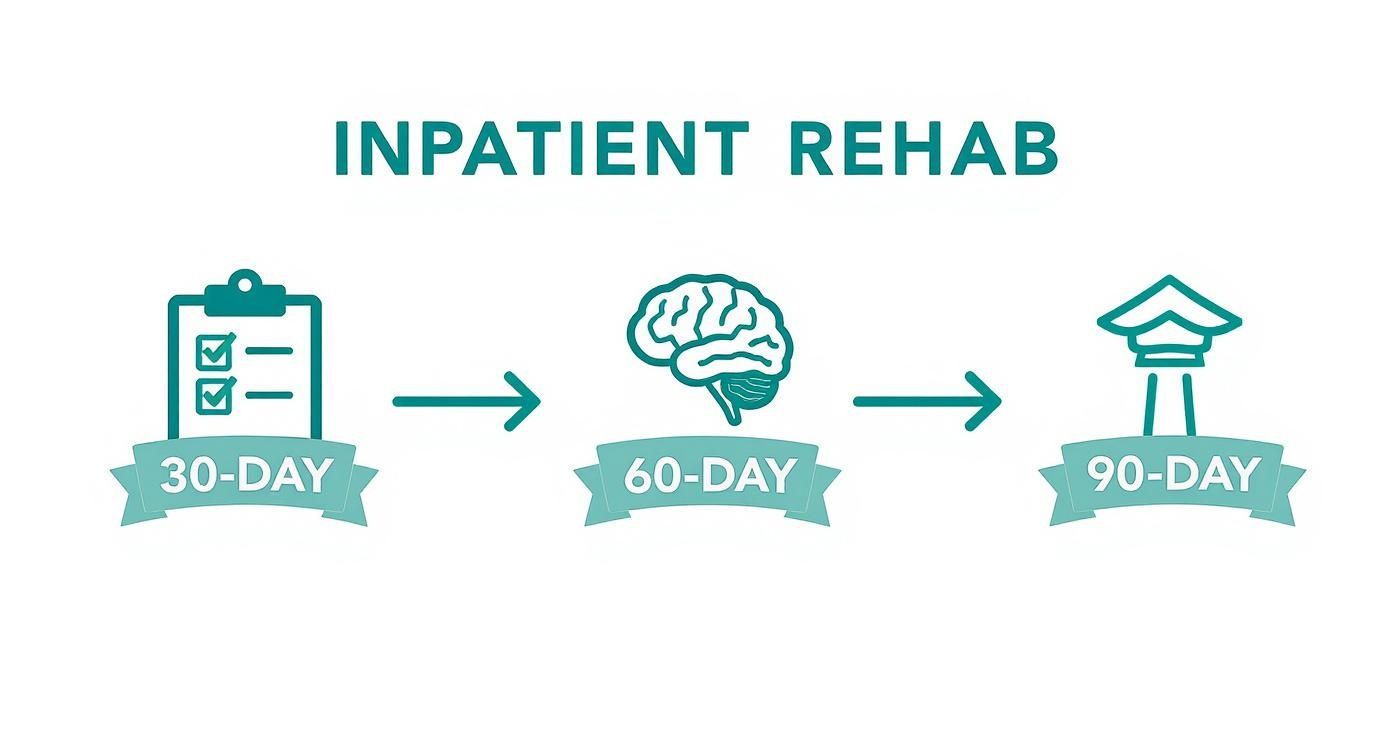
As you can see, a longer stay isn’t just more of the same. It's an opportunity to move from simply getting stable to making profound, life-altering changes.
The 30-Day Program: Laying the Foundation
A 30-day inpatient program is where most people start their journey. The entire focus of this first month is on one thing: stabilization. We have to get you safely through withdrawal and give your mind and body a chance to reset.
You can't build a sturdy house on shaky ground. That’s what this phase is all about—clearing away the chaos of active addiction so you have a solid place to start building your new life. It’s intense, but it’s the necessary first step.
Here’s what you can expect:
- Medical Detox: Our clinical team will be with you 24/7 to help you safely and comfortably manage withdrawal symptoms.
- Initial Assessments: We get to know you through comprehensive evaluations, which helps us build a personalized treatment plan that fits your specific needs.
- Introductory Therapy: You’ll begin individual and group therapy sessions to understand the basics of addiction and recovery.
- Education: We’ll help you learn about the science behind addiction—why it happens and how recovery works.
This first month is dedicated to breaking the physical grip of substance use and establishing a safe, sober environment where you can finally breathe.
The 60-Day Program: Digging Deeper
Extending your stay to 60 days is where the real transformation begins. Now that the initial crisis of detox is over, you have the clarity and stability to start exploring the why behind your addiction. This is when you start putting up the walls of your recovery house.
Having this extra month gives you time to do more than just learn about coping skills—you get to actually practice them in a safe, supportive space. It’s one thing to talk about handling triggers in a group session; it’s another to work through them in real-time with guidance from therapists who have your back.
A 60-day stay gives you the breathing room to truly engage in powerful therapies like Cognitive Behavioral Therapy (CBT) and Dialectical Behavior Therapy (DBT). You can turn abstract concepts into real, practical skills you’ll use for the rest of your life.
The focus here shifts to more intensive work, like healing from past trauma, addressing co-occurring conditions like anxiety or depression, and starting the delicate process of repairing relationships with family.
The 90-Day Program: The Gold Standard
A 90-day program is widely recognized as the gold standard for building a lasting recovery, especially for those who have been struggling with addiction for a long time. This extended stay gives your brain the time it needs to heal and allows new, healthy habits to truly take root. Think of this as finishing the house—installing the plumbing, turning on the lights, and making it a place you feel safe and secure.
With three months of dedicated effort, you’re not just learning concepts; you’re living them. Relapse prevention becomes a central focus, and you'll work with our team to build a bulletproof plan for navigating life's challenges after you leave. The extra time helps turn healthy new behaviors from conscious, difficult choices into second nature.
The complex nature of addiction is precisely why longer stays are so crucial. In fact, people in rehab for substance use disorders often require more time than those hospitalized for other conditions. The average stay in a psychiatric setting is about 36 days, a stark contrast to the average of just 6 days for non-psychiatric hospital stays. This really underscores the intensive work needed for true recovery.
By the end of 90 days, you’re not just sober—you’ve started building a completely new life. If you want to get a feel for what the daily routine looks like, our guide on what happens in rehab breaks it all down.
Key Takeaways
- A 30-day program focuses on stabilization, medical detox, and introducing recovery concepts.
- A 60-day program allows for deeper therapeutic work on root causes and practicing new skills.
- A 90-day program is the gold standard for solidifying new habits and creating a strong relapse prevention plan.
- Each program builds on the last, offering a more comprehensive level of care.
- Longer stays allow for neurological healing and the sustained practice needed for real behavioral change.
What Shapes Your Personal Rehab Timeline?
Figuring out the right amount of time for inpatient rehab isn't as simple as picking a date on a calendar. There’s no magic number or one-size-fits-all schedule. Instead, the clinical team here at Tru Dallas Detox & Recovery Center acts a bit like a detective, carefully looking at your personal story to build a treatment timeline that gives you the best possible shot at a lasting recovery.
Think of it like getting a custom prescription. Two people might have the same diagnosis, but their treatment plans will look very different based on their overall health, history, and how they respond to care. The same idea applies to addiction recovery—your journey is yours alone, and your plan has to reflect that.

Several key factors come into play when we determine the right length of stay for you. When you understand these, you can start to see your rehab timeline not as a fixed sentence, but as a flexible and responsive roadmap built just for you.
Substance Type and Severity of Use
The first piece of the puzzle is the substance itself. Different drugs impact the body and brain in completely different ways, which has a direct effect on the detox process and the kind of therapy you'll need.
For instance, getting through withdrawal from long-acting opioids or benzodiazepines can be a drawn-out and difficult process, often calling for a longer period of medical supervision than withdrawal from alcohol or stimulants. The severity and length of your substance use also play a massive role. Someone who has been using heavily for a decade is going to need more time to heal physically and mentally than someone who is just starting to struggle.
The specific substance used is a critical factor because it dictates the initial medical detox protocol. A safe and comfortable detox sets the stage for all subsequent therapeutic work, so getting this first step right is essential.
Co-Occurring Mental Health Conditions
It’s incredibly common for addiction to show up alongside mental health challenges like depression, anxiety, or trauma. In fact, an estimated 21.5 million people with a substance use disorder also have a co-occurring mental health condition. We refer to this as a dual diagnosis.
When a dual diagnosis is part of the picture, treatment has to tackle both conditions at the same time. Trying to treat an addiction without also addressing the underlying anxiety that might be fueling it is like trying to mop up a flooded floor without turning off the faucet. It just doesn't work long-term.
Effectively treating both requires more time. A longer stay gives our therapists the space to help you:
- Unpack the connection between your mental health and substance use.
- Develop healthy coping skills for both challenges.
- Find the right combination of medication and therapy to manage your symptoms.
This integrated approach is the bedrock of preventing relapse and building a truly strong foundation for your recovery.
Your Personal and Environmental Factors
Beyond the clinical side of things, your personal history and home environment are absolutely vital. Our team takes a look at the whole picture of your life to create a plan that prepares you for the realities you'll face when you head back home.
We carefully consider elements like:
- Previous Treatment Experiences: Have you been to rehab before? If you have, we want to know what worked and what didn't. A history of relapse might suggest that a longer, more intensive program is needed this time around.
- Physical Health: Issues like chronic pain can complicate recovery and may require more time for integrated care and stabilization.
- Home Environment: A stable, supportive home can be a huge asset. But if your home environment is stressful or full of triggers, a longer stay can give you the time needed to build a stronger personal foundation and a solid aftercare plan before you return.
By weighing all these factors, we can craft a truly personalized treatment timeline that meets your specific needs and sets you up for a successful, sober future.
Key Takeaways
- Your rehab timeline is a clinical decision based on personal factors, not a random number.
- The type of substance and severity of addiction are primary drivers for the length of your stay.
- Treating co-occurring mental health conditions (dual diagnosis) is essential and often requires more time.
- Your personal history, physical health, and home environment help shape the ideal program length.
- The goal is to create a personalized plan that gives you the best chance at long-term success.
Navigating Insurance Coverage for Your Treatment
Figuring out the financial side of rehab can feel like trying to solve a puzzle in the dark. It’s often overwhelming, but I promise you, it's a solvable piece of the recovery journey. Getting a handle on how insurance works for inpatient treatment clears away that uncertainty and lets you focus on what really matters: getting well.
The most important term you’ll hear is medical necessity. This is the standard that insurance companies use to decide how long your stay should be.
https://www.youtube.com/embed/0U1Us0Mq-5o
Think of medical necessity as the clinical blueprint for your recovery. It's not just a suggestion; it's a formal recommendation from our medical team, backed by detailed assessments, that proves why a specific level and length of care is absolutely essential for you. It’s based on your unique history, substance use patterns, and overall health.
Here at Tru Dallas, our team becomes your advocate. We manage all the back-and-forth with your insurance provider, making sure they have a crystal-clear picture of your needs so they can approve the care you deserve.
The Pre-Authorization Process
Before you even walk through our doors, we kick off the pre-authorization process. This is the first step where our admissions specialists contact your insurance company with our initial assessment to get the green light for your stay. We build and present a strong clinical case that explains exactly why inpatient care is medically necessary for you right now.
Usually, this first approval is for a set number of days—often just enough to cover medical detox and help you get stable. It's crucial to understand that this is just the starting line, not the finish line. Your treatment plan will evolve, and so will the authorization from your insurance.
As you move forward, our clinical team performs regular check-ins called utilization reviews. In these reviews, we send your insurer detailed updates on your progress, any hurdles you're facing, and what you still need to work on. This ongoing conversation is how we fight to get extensions for your stay, making sure your time in treatment is guided by your health, not by a calendar.
Verifying Your Benefits and Asking the Right Questions
You can also take a proactive role in this process, which often provides a huge sense of relief. Before you start, it’s a great idea to call your insurance provider yourself or simply let our team handle verifying your benefits for you. For a more detailed look at this, our guide on whether insurance covers drug rehab is a fantastic resource.
When you (or we) talk to your insurance company, it helps to be prepared with a few key questions.
Key Questions to Ask Your Insurance Provider:
- What is my deductible for inpatient substance use treatment, and how much of it have I already met this year?
- What is my total out-of-pocket maximum?
- Does my plan require pre-authorization before I can be admitted to an inpatient rehab?
- After I meet my deductible, what percentage of the cost (this is called coinsurance) will be my responsibility?
- Is Tru Dallas Detox & Recovery Center considered an in-network provider for my plan?
Getting straight answers to these questions upfront helps you build a clear financial picture. It erases the stress of the unknown and lets you put all your energy into recovery, knowing the logistics are handled.
What if Coverage Ends Sooner Than Expected?
It can happen. Sometimes, an insurance provider decides that a lower level of care is appropriate before you or our clinical team feel you're truly ready. If you find yourself in this situation, it’s not the end of the road. You have options, like filing a formal appeal or exploring a self-pay plan to finish your recommended stay. Our team will walk you through every single option to ensure you can complete the treatment you need.
Key Takeaways
- Insurance approvals are based on the principle of medical necessity.
- Your treatment center will advocate for you through pre-authorization and utilization reviews.
- Verifying your benefits beforehand provides essential financial clarity.
- Initial insurance authorization is just a starting point and can often be extended.
- If coverage issues arise, you have options, including appeals and other payment plans.
Why a Longer Stay Can Mean a Stronger Recovery
In a world that loves quick fixes, it's totally understandable to ask, "how long is inpatient drug rehab going to take?" While short-term programs definitely have their place, the evidence we've seen over the years points in one clear direction: more time in treatment almost always leads to a more lasting recovery. Trying to rush the process is like setting a broken bone and expecting to run a marathon the next week—the body, and especially the brain, simply need time to heal.
Think of it as a neurological reset. Chronic substance use literally rewires the brain's reward system, carving deep pathways that are tough to break. A longer program, particularly one lasting 90 days, gives the brain the crucial time it needs to recalibrate. It's the space where new, healthy thought patterns can shift from a constant, conscious effort to a more natural, automatic response.

This extended time isn't just about repeating the same lessons over and over. It's about going deeper, moving past the initial crisis and stabilization to really tackle the complex roots of addiction.
Building a Bulletproof Foundation for Sobriety
A longer stay allows for a much more profound therapeutic journey. When you have more time, you can safely unpack deep-seated trauma, begin to mend strained family relationships through dedicated therapy, and build an aftercare strategy that’s truly built to last. It’s the difference between patching a leaky pipe and replacing the entire plumbing system.
The connection between how long you're in treatment and how well you do afterward is well-documented. When you look at the success rates of inpatient drug rehab programs, you see a clear line between the length of stay and positive outcomes. Research consistently shows that programs lasting around 90 days produce higher success rates than shorter stays. With relapse rates for substance use disorders sitting at a stark 40-60% within the first year, investing more time upfront can dramatically improve your long-term odds.
A 90-day program gives you the gift of time—time to practice new coping skills until they become instinct, time to rebuild trust with loved ones, and time for your brain's chemistry to find a new, healthy equilibrium.
The Power of Practice and Repetition
Learning to live without drugs or alcohol is a lot like learning a new language. You can't become fluent in a couple of weeks. A longer rehab stay creates the immersive environment you need to practice new behaviors until they feel like second nature.
This is where you master the essential life skills for a sober life:
- Stress Management: Learning and, more importantly, repeatedly practicing healthy ways to handle stress without reaching for a substance.
- Emotional Regulation: Getting comfortable with identifying and managing tough emotions like anger, sadness, and anxiety in a constructive way.
- Communication Skills: Relearning how to talk openly and honestly with family, friends, and colleagues.
- Relapse Prevention: Building a highly detailed, personalized plan to navigate your specific triggers and high-risk situations once you leave treatment.
Ultimately, a longer stay isn’t a punishment. It's an investment in your future. It provides the time, space, and support needed to not just get sober, but to build a strong, resilient foundation for a lifetime of success.
Key Takeaways
- Longer rehab programs, especially those around 90 days, are strongly linked to higher rates of long-term sobriety.
- Extended care gives the brain the time it needs to heal and helps solidify new, healthy habits.
- More time in treatment allows for a deeper dive into underlying issues like trauma and mental health disorders.
- A longer stay provides the critical space to practice and master the life skills needed to prevent relapse.
- Investing more time at the start significantly strengthens your foundation for a lasting recovery.
So, How Long Should Rehab Really Be?
When you’re trying to figure out how long inpatient rehab should last, the real answer is that there’s no magic number. It’s all about what you need. While you'll see standard program lengths advertised, the right path for lasting recovery is always a personal one.
Let’s boil it all down. If you remember nothing else, remember this:
The goal isn’t to finish rehab quickly; it's to finish it for good. The right amount of time is whatever it takes for you to feel solid, confident, and truly ready to build a life in recovery. This is an investment in your future, not a race.
Here are the key things to keep in mind:
-
Forget the Cookie-Cutter Approach: You'll hear about 30, 60, and 90-day programs, and those are great starting points. But the best plan is always the one designed specifically for you.
-
Your Story Shapes Your Stay: How long you stay depends on your unique situation—things like the substance involved, how long you've been struggling, and whether you're also dealing with mental health challenges like anxiety or depression.
-
More Time Often Means Better Results: The evidence is clear. Stays of 90 days or more consistently give people a much stronger footing and a lower chance of relapse down the road.
-
We'll Handle the Insurance Hassle: Don't let insurance dictate your health. A good treatment center will fight for you, making the case that your length of stay should be based on what’s clinically best for you, not just what your policy says.
-
It’s About Real, Lasting Change: True recovery is about healing from the inside out and building the skills to stay sober for a lifetime. That's a process that simply can't be rushed.
Frequently Asked Questions
It's completely normal to have a lot of questions when you're thinking about rehab, especially when it comes to the timeline. Let's clear up some of the most common ones so you can feel more confident about taking this step.
What is the most common length of inpatient rehab?
The 30-day program is a very common starting point. It provides a solid block of time to detox, stabilize, and begin foundational therapeutic work. However, 60 and 90-day programs are also frequently recommended, particularly for individuals with a longer history of substance use or co-occurring mental health conditions.
Is a 30-day program long enough?
For some individuals, especially those with a less severe substance use disorder and a strong support system at home, a 30-day program can be highly effective. It creates a safe environment to get through withdrawal and learn the fundamental tools for early recovery. For many, it serves as the first essential step in a longer continuum of care.
Why would someone need a 90-day program?
A 90-day program is often considered the gold standard for long-term success. This extended duration gives the brain significant time to heal and for new, healthy habits to become ingrained. It allows for in-depth work on underlying issues like trauma and provides ample time to develop and practice a robust relapse prevention plan.
Can I lose my job for going to rehab?
For many people, the answer is no. The Family and Medical Leave Act (FMLA) is a federal law that allows eligible employees to take up to 12 weeks of unpaid, job-protected leave for serious medical conditions, which includes substance use disorders. This allows you to focus on your health without the added stress of job security. It is always best to speak with your HR department to understand your company's specific policies.
What happens if my program isn't long enough?
Recovery is a dynamic process. If you and your clinical team feel more time is needed, extending your stay is a proactive step toward a stronger recovery. Often, this involves "stepping down" to a less intensive level of care, such as a Partial Hospitalization Program (PHP) or an Intensive Outpatient Program (IOP), which provides continued support as you transition back to daily life.
