
The side effects of alcohol detox can be incredibly varied, running the gamut from mild anxiety and hand tremors to severe, life-threatening events like seizures. This isn't a sign of weakness; it's a predictable biological reaction. When alcohol is suddenly removed, the brain, which has been suppressed for a long time, rebounds into a state of intense overstimulation. This is why professional medical supervision isn't just a good idea—it's critical for getting through detox safely.
Key Takeaways
- Alcohol detox side effects range from mild discomfort to severe, life-threatening complications.
- Withdrawal is a biological process caused by the central nervous system becoming overstimulated after alcohol is removed.
- The brain's rebound effect is the root cause of symptoms like tremors, anxiety, and seizures.
- Professional medical supervision is essential to manage symptoms safely and prevent emergencies.
- Understanding the process can help reduce fear and prepare you for a safe detox journey.
What Happens to Your Body During Alcohol Detox
If you've been drinking heavily for a while, your central nervous system has learned to live with a constant depressant. To keep things running, it ramps up its own stimulating chemicals just to maintain a sense of normal. Imagine holding a beach ball underwater; you have to apply constant downward pressure to keep it submerged. Your brain does something similar, pushing back against alcohol's sedative effect.

When you suddenly stop drinking, it's like letting go of that beach ball. The alcohol—the downward pressure—is gone, but your brain's overactive, upward push remains for a while. That powerful rebound is what triggers the uncomfortable and often dangerous alcohol detox side effects.
Without alcohol to keep it in check, the nervous system essentially goes into overdrive. This sudden, jarring shift is the root cause of withdrawal symptoms, which can escalate with alarming speed without medical care.
This process is a serious medical event, not a test of willpower. While the intensity of symptoms can depend on many factors, the core biological mechanism is the same for everyone going through it.
The Initial Withdrawal Phase
The first signs of withdrawal usually start to creep in within five to 10 hours after the last drink. It's your body's way of sending out an alarm that it's missing the substance it has come to depend on. During this early stage, it's common to experience:
- Anxiety and Irritability: With the brain's calming neurotransmitters out of whack, a feeling of deep unease and restlessness is one of the first things people notice.
- Tremors or "The Shakes": Those involuntary muscle spasms, especially in the hands, are a classic physical sign that your nervous system is hyperactive.
- Nausea and Vomiting: Your digestive system is also trying to readjust, often leading to significant gastrointestinal distress.
- Headaches and Insomnia: Persistent headaches and the inability to sleep are also tell-tale signs that the withdrawal process is underway.
Recognizing these early signs for what they are is incredibly important because they can quickly snowball into much more severe symptoms. Acknowledging that these are predictable reactions to a medical condition is the first step toward getting safe, effective help. Professional support is truly essential to manage these effects and prevent life-threatening complications down the road.
The Alcohol Withdrawal Timeline Day by Day
If you're facing detox, one of the biggest sources of anxiety is the unknown. What's going to happen to my body? How bad will it get? Understanding the typical progression of alcohol withdrawal symptoms can take away a lot of that fear and give you a clear roadmap for what to expect as your body readjusts.
While everyone's journey is a little different, the timeline generally follows a predictable pattern.
The first whispers of withdrawal usually start within 6 to 12 hours after your last drink. These early side effects are often more of a nuisance than anything severe—think of a nagging headache, a growing sense of anxiety, or tossing and turning all night. This is your central nervous system, which has been suppressed by alcohol for so long, starting to wake up and overreact.
This infographic gives a great visual breakdown of what happens during those critical first 72 hours.
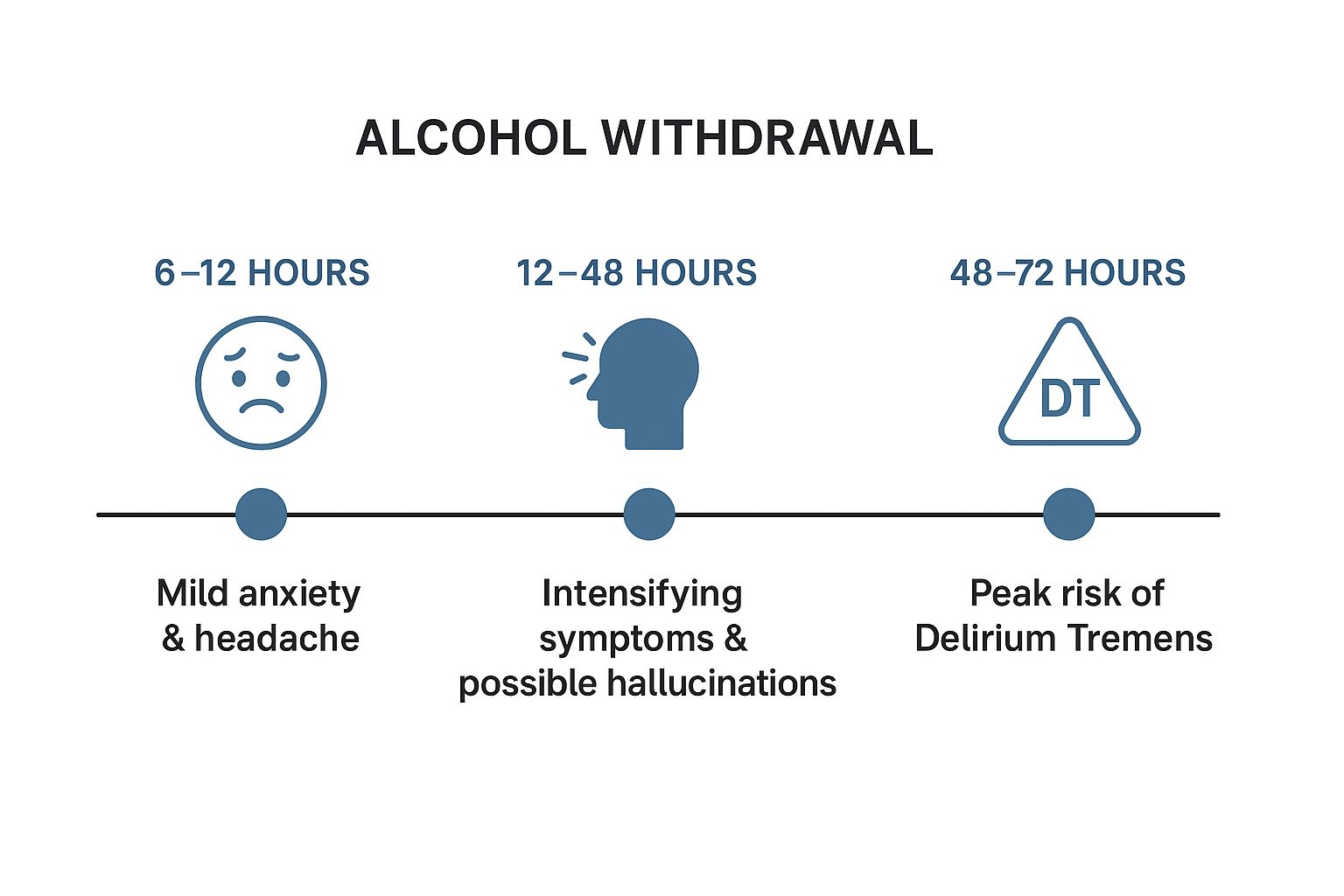
As you can see, the intensity really ramps up over those first three days. This is when your body is in the thick of it, and the risk of serious complications is at its highest.
The Peak Withdrawal Phase
Once you cross the 12-hour mark and head toward the 48-hour point, the symptoms tend to get louder. This is often when the more moderate side effects kick in. Your heart might start racing, your blood pressure could climb, and you might notice more significant tremors, often called "the shakes." For some, this is also when hallucinations can begin, which can be incredibly disorienting and scary.
The period between 48 and 72 hours is considered the most critical phase of acute withdrawal. This is when the risk for Delirium Tremens (DTs), the most severe complication, hits its peak. DTs are a full-blown medical emergency, causing severe confusion, high fever, agitation, and seizures that can be life-threatening. This very real danger is precisely why a medically supervised detox is not just a good idea—it's essential.
The following table provides a clearer picture of what you might expect and when.
Alcohol Detox Side Effects Timeline
| Timeframe | Common Side Effects |
|---|---|
| 6-12 Hours | Anxiety, insomnia, nausea, headaches, and sweating. Symptoms are generally mild. |
| 12-24 Hours | Increased blood pressure, elevated heart rate, tremors, and potential for hallucinations. |
| 24-48 Hours | Symptoms intensify. Risk of withdrawal seizures increases. Hallucinations may become more pronounced. |
| 48-72 Hours | Peak withdrawal phase. Highest risk for Delirium Tremens (DTs), characterized by severe confusion, agitation, fever, and seizures. |
| 72+ Hours | Acute physical symptoms typically begin to subside for most individuals. Psychological symptoms may persist. |
Keep in mind this is a general guide. Your own experience will depend on many factors, but this timeline helps set realistic expectations for the physical challenges ahead.
Beyond The First Few Days
After you've made it past the 72-hour peak, the most intense physical symptoms usually start to fade. You’ll begin to feel more stable, but that doesn't mean the journey is over.
Many people enter a phase known as Post-Acute Withdrawal Syndrome (PAWS). This is where the psychological side of things really comes into play. You might find yourself dealing with persistent mood swings, lingering anxiety, low energy, and sleep problems for weeks or even months. Managing these long-term effects is a crucial part of building a strong, lasting recovery.
Key Takeaways
- Withdrawal symptoms typically begin 6-12 hours after the last drink.
- The most severe symptoms and highest risk occur between 48 and 72 hours.
- Delirium Tremens (DTs), a life-threatening condition, is a major risk during the peak phase.
- After 72 hours, physical symptoms usually begin to improve, but psychological effects can linger.
- Post-Acute Withdrawal Syndrome (PAWS) can cause mood swings and sleep issues for weeks or months.
Navigating the Physical and Psychological Journey of Detox
When you stop drinking, your brain and body have to scramble to find a new equilibrium. The side effects you feel aren't just random aches and pains; they're the predictable, direct result of this massive recalibration effort. Think of it as your system relearning how to function without alcohol's constant influence.
This process unfolds on two fronts: the physical and the psychological. Understanding what's happening inside you can take away a lot of the fear and uncertainty.

I like to use an analogy: imagine your central nervous system has been driving with one foot slammed on the brake (alcohol, a depressant) and the other on the gas to compensate. When you suddenly take your foot off the brake, the gas pedal is still floored. The car lurches forward, and everything goes into overdrive. That surge is what alcohol withdrawal feels like.
The Common Physical Side Effects
The physical reaction to alcohol withdrawal is usually the first and most intense part of the experience. These symptoms are tell-tale signs that your central nervous system is over-excited now that the depressant effect of alcohol is gone.
You can expect some or all of the following:
- Tremors: This is the classic sign people call "the shakes." It’s an involuntary trembling, especially in the hands, and it’s one of the first things to show up, often within 5 to 10 hours of the last drink.
- Nausea and Vomiting: Your digestive system is thrown for a loop, too. It’s highly sensitive to withdrawal and struggles to regulate itself, leading to serious stomach upset.
- Sweating and Fever: It's common to have trouble regulating your body temperature. This can show up as drenching sweats, clammy skin, and even a low-grade fever as your body works overtime.
- Increased Heart Rate and Blood Pressure: With the "brakes" off, your heart can start racing. It's not uncommon to see a rapid pulse and a sharp spike in blood pressure as your cardiovascular system revs up.
These symptoms can be incredibly uncomfortable, but they are an expected part of the process. In a medical setting, a professional team can provide medications and support to ease this discomfort, monitor your vitals, and ensure things don't escalate.
Understanding the Psychological Symptoms
The mental and emotional storm of detox can be just as difficult, if not more so, than the physical side effects. Your brain chemistry is in the middle of a major overhaul, and that directly impacts how you feel, think, and see the world.
During this time, you might experience:
- Anxiety and Panic: A sense of impending doom or a full-blown panic attack is extremely common. Your brain is running low on its natural calming chemicals, leaving you feeling exposed and terrified.
- Irritability and Agitation: You might find yourself with a very short fuse. Small things can feel overwhelmingly frustrating, leading to sudden mood swings.
- Insomnia and Nightmares: Getting any restful sleep can feel impossible. When you finally do drift off, it's often disturbed by vivid, unsettling dreams.
- Confusion and Disorientation: Thinking clearly can be a real challenge. You might struggle to focus, concentrate, or even keep track of what day it is as your cognitive functions temporarily sputter.
When Symptoms Become Severe
While most of these symptoms are manageable with the right support, there's a point where they can become a true medical emergency. It's absolutely critical to know the signs of severe withdrawal, as they demand immediate medical help.
Alcoholic hallucinosis is one such complication. It can start within 12 to 24 hours and involves seeing or hearing things that aren't there. A key distinction is that the person is usually aware that the hallucinations are not real, which can be terrifying.
Far more dangerous is Delirium Tremens (DTs), a life-threatening condition that typically appears 48 to 72 hours after the last drink. This is the most severe form of withdrawal, and while it only affects about 3-5% of people detoxing, it’s a five-alarm fire. Signs include profound confusion, extreme agitation, a high fever, and seizures. This is precisely why a medically supervised detox is the only safe way to stop drinking.
Key Takeaways
- Alcohol withdrawal symptoms are broken into two categories—physical and psychological—both caused by an overactive central nervous system.
- Common physical side effects include the shakes, nausea, sweating, and a racing heart.
- Common psychological symptoms include intense anxiety, irritability, poor sleep, and confusion.
- You must be aware of severe complications like alcoholic hallucinosis and the life-threatening condition known as Delirium Tremens (DTs).
- Medical supervision is non-negotiable for safely managing symptoms and responding to emergencies like DTs.
Risk Factors That Influence Withdrawal Severity
Alcohol withdrawal isn't a one-size-fits-all experience. It’s a deeply personal process shaped by your unique body and your history with alcohol. Two people can stop drinking on the same day, and while one might just feel a bit anxious, the other could face severe and even dangerous alcohol detox side effects.
Understanding what makes one person's detox different from another's is the first step toward getting through it safely.
By far, the biggest variable is the duration and quantity of your alcohol use. Think of physical dependence like a debt your brain and body build up over time. Someone who has been drinking heavily every day for years has a much deeper level of dependence than someone who has been drinking for a few months. Their brain has made far more significant adjustments to the constant presence of alcohol, so the rebound effect is much more intense when it's suddenly taken away.
Your Personal Health Profile
Beyond just your drinking patterns, your overall physical and mental health play a huge role in how withdrawal will feel. Each of these factors adds another layer of complexity to the detox process.
Here are some of the critical risk factors to consider:
- Age and Physical Health: Older individuals or those with underlying health problems, like heart or liver conditions, often find it harder to manage the immense physical stress of withdrawal.
- Nutritional Deficiencies: Chronic heavy drinking robs the body of essential nutrients, especially thiamine (vitamin B1). This kind of deficiency can make neurological symptoms much worse and raise the risk of serious complications.
- Co-occurring Mental Health Conditions: If you’re already dealing with anxiety, depression, or PTSD, withdrawal can feel like pouring gasoline on a fire. It often dramatically amplifies those symptoms, making the psychological side of detox incredibly challenging.
One of the most critical risk factors is a history of previous withdrawals. Each time a person goes through detox, they can experience a phenomenon known as the "kindling effect," where withdrawal symptoms become progressively more severe with each subsequent attempt.
The Kindling Effect and Medical Needs
The kindling effect is a bit like carving a path through a dense forest. The first time you do it, it’s tough going. But each time you walk that same path, it gets clearer and easier to travel. In a similar way, each episode of withdrawal primes your brain to react more severely the next time, dramatically increasing the risk of dangerous side effects like seizures.
This is exactly why a personalized, medical detox is so essential. A clinical team looks at all these risk factors—from your drinking history to your mental health—to build a detox plan that is safe and effective for you. They figure out the precise level of support and care you need to manage your specific symptoms. Often, that plan involves finding the best medication for alcohol withdrawal to keep you safe and as comfortable as possible.
Key Takeaways
- The severity of withdrawal is heavily influenced by how long and how much you've been drinking.
- Your age, overall physical health, and any nutritional deficiencies can make detox more difficult.
- Co-occurring mental health conditions like anxiety or depression often intensify psychological withdrawal symptoms.
- The "kindling effect" means that withdrawal can become more severe with each repeated detox attempt.
- A medical team must assess all these personal risk factors to create a safe, individualized detox plan.
Why Medical Detox Is Your Safest Option
Thinking you can quit alcohol "cold turkey" at home isn't about willpower. It’s a dangerous gamble. The reality is that alcohol detox side effects can go from manageable to life-threatening in the blink of an eye, which is why professional medical supervision isn't just a good idea—it's the only truly safe way to get through withdrawal. Trying to do it on your own is like navigating a serious medical event without a safety net.
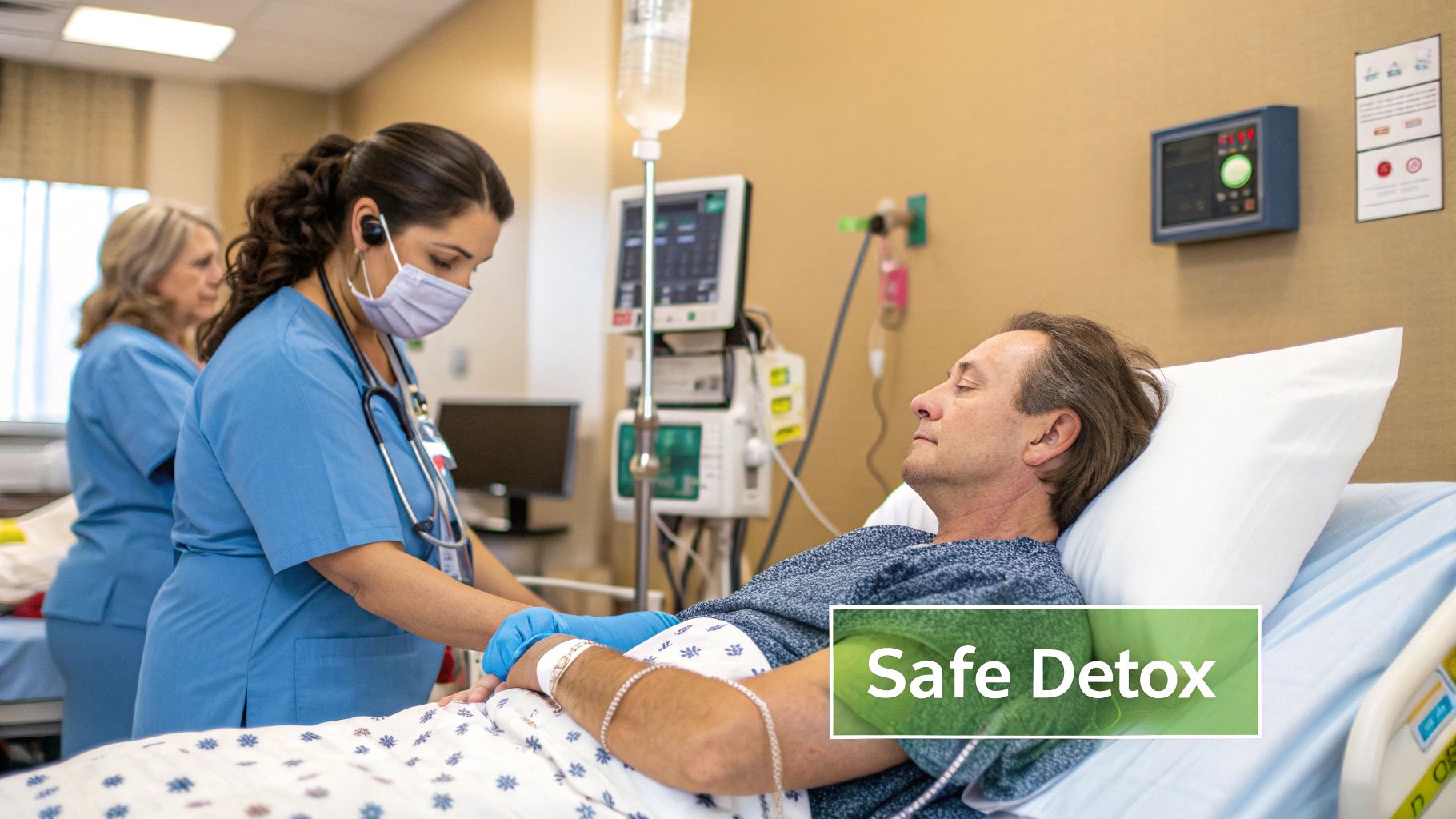
In a supervised detox center, you have a team of experienced clinicians watching over you 24/7. They’re trained to spot the subtle warning signs of severe complications long before they become emergencies. If your heart rate spikes or your blood pressure drops, they can intervene immediately. That instant access to care is something you simply cannot replicate at home.
The Role of Medication in a Safe Detox
One of the biggest fears during withdrawal is having a seizure. It’s a very real risk. In a professional setting, medical teams use specific medications—most often benzodiazepines—to gently calm the central nervous system. This dramatically lowers the risk of seizures and helps ease the crushing anxiety that often comes with detox, making the whole process safer and far more manageable.
But it’s not just about preventing the worst-case scenario. The medical staff is also there to provide crucial supportive care to help your body heal. This usually includes:
- IV Fluids: Vomiting and sweating can lead to dangerous dehydration. IV fluids restore hydration and electrolyte balance quickly and effectively.
- Vitamin Supplements: Heavy drinking strips the body of essential nutrients. Thiamine (vitamin B1) is especially critical to prevent Wernicke-Korsakoff syndrome, a severe type of alcohol-related brain damage.
- Comfort Medications: Other prescriptions can be given to manage specific symptoms like nausea or insomnia, helping you rest and feel more stable.
The goal of medical detox is to get you through withdrawal safely, stop life-threatening complications before they start, and give you a stable foundation for the next stage of your recovery. It’s about replacing risk with reassurance.
A Structured and Supportive Environment
Never underestimate the power of a controlled, substance-free environment. Being away from the triggers and temptations of your daily life allows you to focus 100% on healing. This structured setting offers both physical and emotional security right when you feel most vulnerable.
The need for this level of care is clear when you look at the numbers. Alcohol withdrawal syndrome is a common reason for hospitalization. One major study found that these hospitalizations were particularly frequent among men aged 30 to 49, highlighting just how serious this is and why proactive, professional management is essential. You can read more about these hospitalization trends in the study published by the JAMA Network.
Ultimately, choosing a medical facility is about more than just getting through the physical symptoms. It’s about starting your recovery journey with the right kind of support from day one. To get a better feel for the entire process, you might want to read our guide on what is medical detox.
Key Takeaways
- Quitting "cold turkey" at home is incredibly risky due to potentially fatal complications like seizures.
- Medical detox offers 24/7 monitoring and immediate emergency care to safely manage severe symptoms.
- Clinicians use medications like benzodiazepines to prevent seizures and supportive care like IV fluids to treat the physical toll of withdrawal.
- A structured, substance-free environment eliminates triggers and provides the stability needed for a successful detox.
- Professional supervision is the only way to guarantee your safety and build a strong foundation for lasting recovery.
Wrapping Up: Your Roadmap to a Safer Detox
Stepping away from alcohol is one of the most significant decisions you can make for your health, but it's crucial to understand that detox isn't just about willpower—it's a serious medical event. As we've covered, the body's reaction to the absence of alcohol can be intense and even dangerous.
Remember, this is a global health challenge. The World Health Organization reports that alcohol use disorders impact nearly 400 million people worldwide, and alcohol contributes to over 2.6 million deaths each year. You are not alone, and getting the right support is the first step toward reclaiming your life.
Let's distill everything down to the essentials.
Final Thoughts on Alcohol Detox
-
Detox is Biological, Not a Moral Failing: What you experience during withdrawal—the shakes, anxiety, and cravings—are real alcohol detox side effects. They are the result of your brain and nervous system recalibrating after being suppressed by alcohol for so long.
-
The Risks Are Real: Severe complications like seizures and Delirium Tremens are not just worst-case scenarios; they are life-threatening medical emergencies that can arise without warning.
-
Professional Help is a Lifeline: Never, ever try to detox on your own. The only way to navigate this process safely is with professional medical supervision, where symptoms can be managed and emergencies can be prevented.
-
Detox is the Foundation, Not the Finish Line: Getting through withdrawal is a monumental achievement, but it's just the beginning. True, lasting recovery is built on the therapy, support, and new coping skills you develop afterward.
Common Questions About Alcohol Detox
When you're facing alcohol withdrawal, questions come up fast. It's completely normal to feel uncertain, and getting clear answers is the first step toward making a safe plan. Let's walk through some of the most common concerns people have about detoxing from alcohol.
Can I Just Detox at Home?
I get this question a lot, and the answer is almost always no. For anyone who has been drinking moderately to heavily, trying to quit cold turkey at home is incredibly dangerous. The risk of life-threatening alcohol detox side effects, like a sudden seizure or the onset of Delirium Tremens (DTs), is very real.
These aren't things you can manage on your own. The only genuinely safe way to detox is under medical supervision, where trained professionals can watch your vitals around the clock and step in the moment a problem arises.
How Long Does This Actually Last?
The most challenging physical part of withdrawal, the acute phase, usually lasts about 5 to 7 days. This is when you'll feel the most intense symptoms—the shaking, the nausea, the overwhelming anxiety.
But it's important to know that the process doesn't just stop after a week. Many people go on to experience what's known as Post-Acute Withdrawal Syndrome, or PAWS. This is where psychological symptoms like mood swings, fatigue, and trouble sleeping can stick around for weeks or even months. It’s a sign that your brain is still working hard to find its balance again.
What Kind of Medications Help With Detox?
To keep people safe and as comfortable as possible, medical teams use specific medications to ease the worst symptoms. The gold standard for preventing severe complications are benzodiazepines. They work by calming the central nervous system, which is in a state of high alert during withdrawal, and they are extremely effective at preventing seizures.
Beyond that, a clinical team will often provide other supportive medications to manage the whole experience. These can include things to:
- Settle an upset stomach and stop vomiting
- Help with insomnia and restore a normal sleep pattern
- Provide crucial vitamins, like thiamine, to protect against brain damage
I Finished Detox. Now What?
Getting through detox is a huge accomplishment, and it's the critical first step. But it's just that—the first step. Detox handles the physical side of things, but it doesn't address the core reasons why the addiction took hold in the first place.
For a real shot at long-term sobriety, the next move is to transition directly into a structured treatment program. This is where the deeper work happens—therapy, counseling, and connecting with support groups—to build the skills you need to live a healthy life without alcohol.
Key Takeaways
- Never attempt detox at home if you have a history of moderate to heavy drinking. The risk of fatal side effects is too high.
- The worst physical symptoms usually last 5 to 7 days, but be prepared for psychological symptoms (PAWS) that can last longer.
- Benzodiazepines are the cornerstone of medical detox, used to prevent dangerous seizures and manage extreme anxiety.
- Detox is just the beginning. A comprehensive rehab program is the essential next step for lasting recovery.
- Always talk to a medical professional. They can help you create a safe detox plan based on your unique situation.
Frequently Asked Questions (FAQ)
What are the very first physical side effects of alcohol detox?
The earliest signs of withdrawal typically appear within 6 to 12 hours after the last drink. These often include hand tremors (also known as "the shakes"), sweating, nausea, headaches, and an increasing sense of anxiety. These symptoms are the first indication that your central nervous system is becoming overactive.
Is it safe to detox from alcohol at home?
For anyone with a history of moderate to heavy drinking, detoxing at home is not safe. The potential for severe and life-threatening complications, such as seizures and Delirium Tremens (DTs), is significant. These conditions require immediate medical intervention that can only be provided in a professional setting. Medical supervision is the only way to ensure a safe withdrawal process.
How long do alcohol detox side effects last?
The most intense, or acute, phase of physical withdrawal symptoms usually lasts for about 5 to 7 days. However, psychological symptoms can persist for much longer. This condition, known as Post-Acute Withdrawal Syndrome (PAWS), can include mood swings, anxiety, low energy, and sleep disturbances that may last for several weeks or even months.
What is Delirium Tremens (DTs)?
Delirium Tremens is the most severe form of alcohol withdrawal and is a medical emergency. It typically occurs 48 to 72 hours after the last drink and is characterized by severe confusion, extreme agitation, high fever, hallucinations, and seizures. DTs can be fatal if not treated immediately in a medical facility.
Why is medical supervision so important for alcohol detox?
Medical supervision is crucial for several reasons. A clinical team provides 24/7 monitoring to track vital signs and can intervene immediately if dangerous complications arise. They administer medications, like benzodiazepines, to prevent seizures and manage severe anxiety. They also provide supportive care, such as IV fluids and vitamins, to keep you stable and as comfortable as possible, creating a safe foundation for your recovery.
