
Someone takes a hit, laughs it off, then a few minutes later everything shifts. At a gathering in Deep Ellum or on a back patio near Bishop Arts, a person who seemed fine suddenly looks pale, starts sweating, says their heart is racing, or insists something is seriously wrong. The room gets louder, everyone starts talking at once, and the panic spreads.
That moment feels bigger than it is. In many cases, greening out means a person has consumed too much cannabis and is having an acute, overwhelming reaction. It can look dramatic. It can feel frightening. It also calls for calm, practical help.
This guide is for the person standing next to them right now, trying to figure out what to do when someone is greening out. It covers how to spot the signs, how to lower the chaos, when to call 911 in Dallas, and when one bad episode may point to a larger problem that needs professional support.
Table of Contents
- A Guide for When a High Goes Wrong
- Recognizing the Signs of Greening Out
- Your Immediate Action Plan to Help
- When to Seek Emergency Medical Help in Dallas
- From One Bad Night to a Bigger Problem
- Preventing Greening Out and Finding Support in DFW
A Guide for When a High Goes Wrong
A bad cannabis reaction often starts with confusion. Friends may ask whether the person just needs water, whether they're having a panic attack, or whether they should sleep it off. That uncertainty is what makes these moments spiral.
Greening out usually isn't about someone being dramatic. It's the body and mind reacting badly to too much THC. The person may feel sick, dizzy, intensely anxious, detached, or convinced something terrible is happening. The people around them often mirror that fear, which can make the episode feel even worse.
The most useful person in the room is usually the calmest one.
That calm matters because overstimulation tends to feed panic. Bright lights, multiple voices, loud music, and people crowding around can all make the person feel less safe. The first job isn't to debate what strain they used or whether they'll be okay in an hour. The first job is to lower the temperature in the room.
What calm support looks like
A steady response is simple and direct:
- Reduce the audience: Ask extra people to step back.
- Lower the noise: Turn down music, TV, or anything chaotic.
- Use short reassurance: Say they're safe, they're not alone, and help is with them.
- Stay nearby: Don't leave them by themselves if they're scared, dizzy, or vomiting.
In Dallas, this situation can happen anywhere. At an apartment in Uptown, a concert pregame in Lower Greenville, or a house gathering in Oak Cliff, the basics stay the same. Keep the person safe now, then pay attention to what happens next.
Recognizing the Signs of Greening Out
One of the hardest parts of a bad cannabis reaction is that it can look different from person to person. Some people go pale and quiet. Others get agitated, scared, or fixated on the feeling that something is very wrong. If you can recognize the pattern early, you can make better decisions about safety instead of guessing.
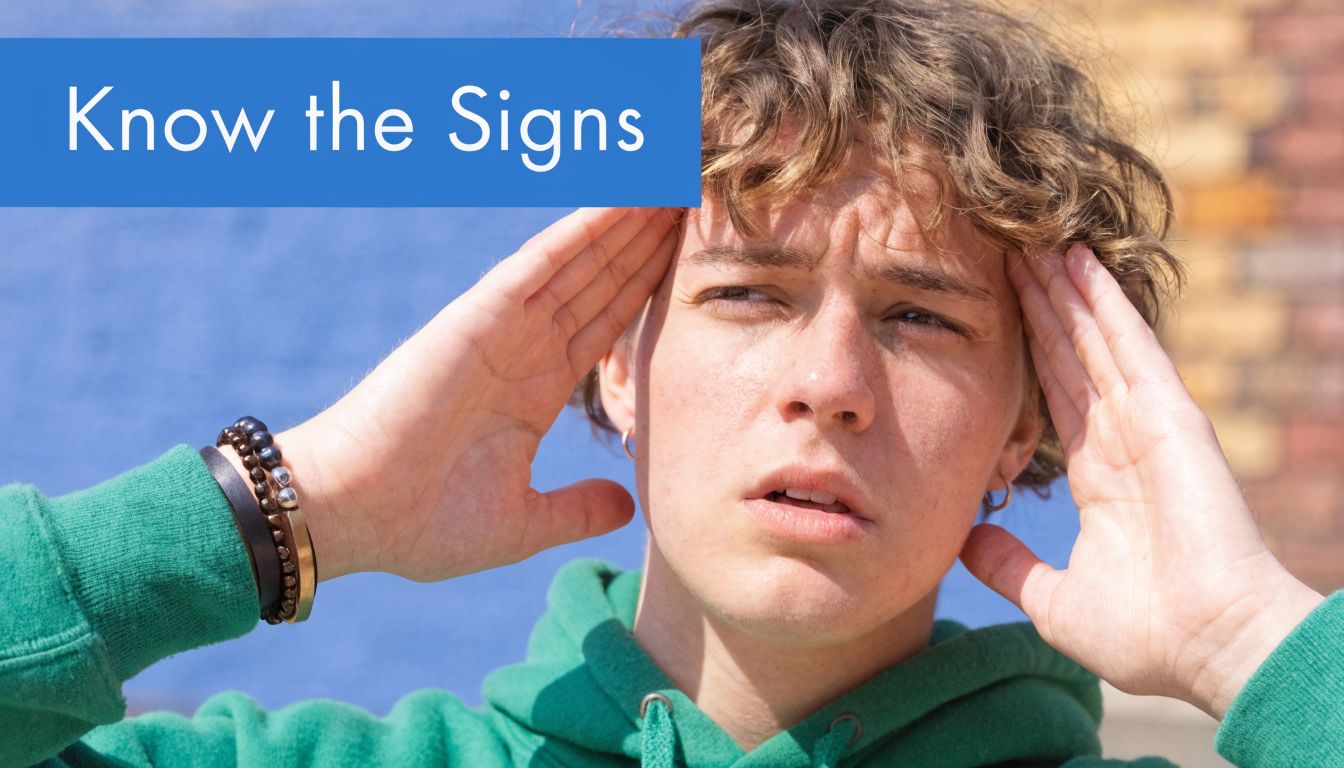
What greening out usually looks like
Greening out usually involves both body symptoms and mental distress at the same time. Watch for signs like these:
- Nausea or vomiting: Stomach upset is common, especially after a large dose or an edible.
- Pale, sweaty, or clammy skin: The person may look drained or unwell.
- Racing heart: They may say their heart is pounding, or they may keep checking their pulse.
- Dizziness or trouble standing: Walking can become unsteady, and standing up may make the symptoms worse.
- Anxiety or panic: Fear can take over fast, even if the person knows they used cannabis.
- Confusion: They may lose track of the conversation, repeat themselves, or struggle with simple questions.
- Paranoia or feeling detached: Some people become suspicious, feel unreal, or say they do not feel like themselves.
A typical high can involve laughter, sleepiness, or distraction. Greening out looks more like loss of control. The person is uncomfortable, frightened, and often focused on making the feeling stop.
There is also a trade-off here. Plenty of people who are greening out do not need an ambulance, but assuming every reaction is harmless can miss something more serious. If behavior starts to look extreme, disorganized, or disconnected from reality, this guide to cannabis-induced psychosis symptoms can help you tell the difference between a bad high and a mental health emergency.
Why it happens more often now
Stronger cannabis products have changed the risk. High-THC flower, vapes, concentrates, and edibles can hit harder than people expect, especially newer users, people mixing products, or anyone taking more because the first dose "didn't work yet."
Edibles are a common problem. The delay tricks people into taking more before the first dose peaks. By the time symptoms show up, they may have taken far more than they meant to.
Practical rule: If the person looks frightened, sick, pale, and overstimulated, treat it as greening out first, then keep watching for signs that it is turning into something more serious.
That last part matters. One bad night can be a one-time dosing mistake. It can also be a warning sign. If episodes like this keep happening, if cannabis is causing panic, missed work, risky behavior, or repeated scares for the family, the problem may be bigger than over-intoxication.
Your Immediate Action Plan to Help
When someone is greening out, simple steps work better than complicated ones. The goal is to stop the spiral, protect the person from injury, and help the body settle down.
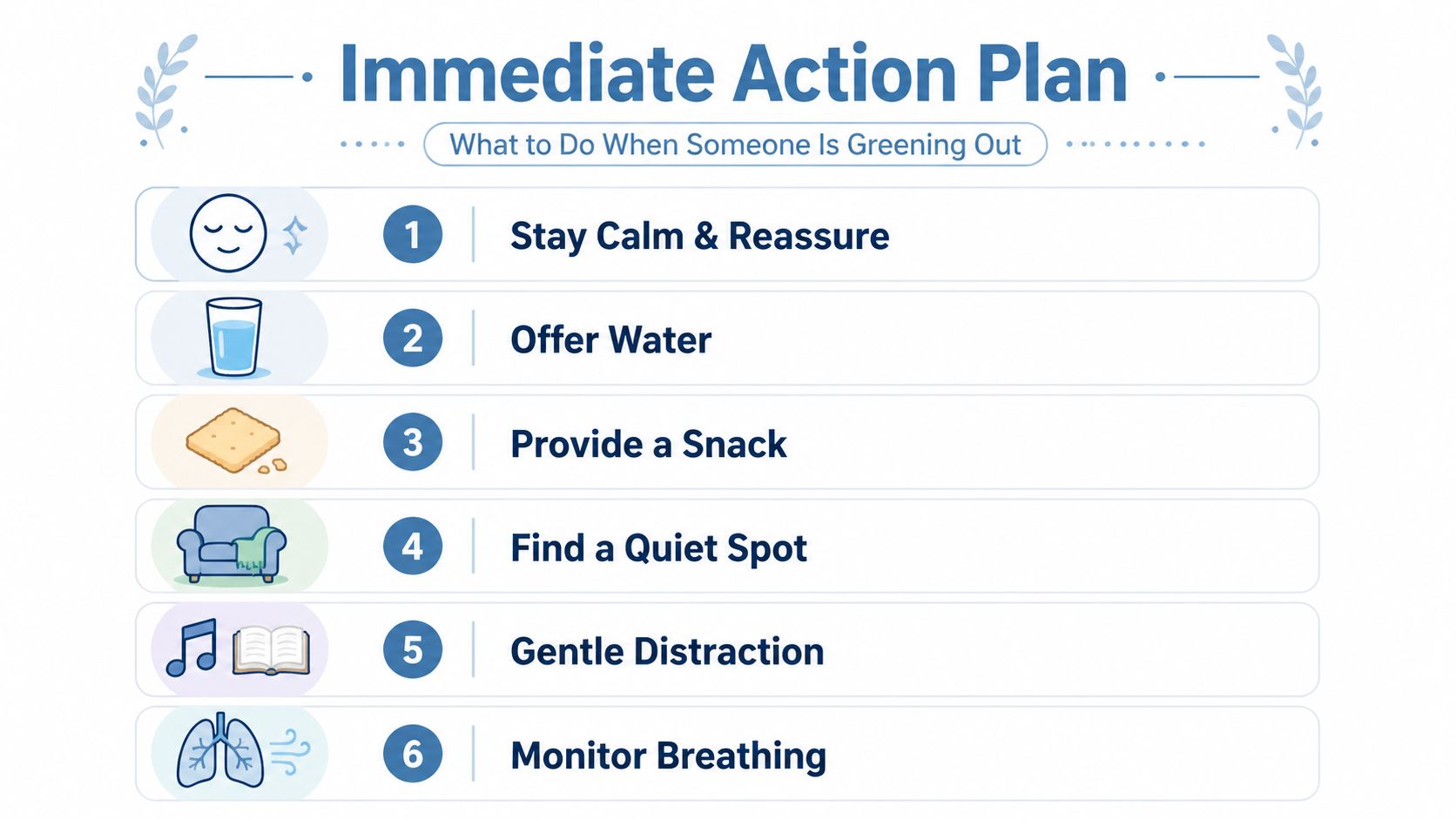
What to do in the first few minutes
Follow this sequence as calmly as possible:
- Stop any more cannabis use immediately. No more hits, no more edibles, no "tiny amount" to level things out.
- Move them to a quiet, controlled space. A bedroom, couch, parked car with supervision, or any calm indoor spot is better than a crowded room or loud patio.
- Coach slow breathing. A slow inhale and longer exhale helps interrupt the panic cycle.
- Offer small sips of water. Sipping is better than chugging.
- Stay with them. A distressed person does better when one calm person remains present.
According to Vive Treatment Centers' review of the recovery sequence, the standard protocol is to stop cannabis use, move to a quiet environment, use slow deep breathing, and sip water. The same source notes that a typical episode resolves within 1 to 3 hours, which is why those first actions matter.
What helps and what usually makes it worse
Some responses lower the intensity. Others make it drag on.
| What usually helps | What often makes it worse |
|---|---|
| A quiet room | Loud music, bright lights, lots of talking |
| One calm support person | A crowd hovering over them |
| Small sips of water | Forcing them to drink quickly |
| Sitting or lying safely on their side if nauseated | Walking them around when they're dizzy |
| Short reassurance | Arguing about whether they're "fine" |
A few practical details matter here:
- If they're nauseated, protect against falls: Help them sit down or lie on their side if vomiting is a concern.
- If they can tolerate food, offer something light: Plain toast or crackers are usually easier than anything heavy.
- Keep language simple: "You're safe." "This will pass." "Breathe with me."
- Limit stimulation: One person talking is better than five.
Gentle distraction can help, but only if it's actually calming. Soft lighting and a steady voice are usually better than trying to joke the person out of panic.
What doesn't usually help is debate, shame, or improvising home remedies. The body needs less input, not more.
When to Seek Emergency Medical Help in Dallas
A bad high can look messy without being dangerous. It can also cross into a true medical emergency fast, especially if the person used an edible, a vape from an unknown source, or mixed cannabis with something else. If your gut says this is more than panic and nausea, treat it that way.

Red flags that change this into an emergency
Call 911 in Dallas if the person:
- Has trouble breathing
- Complains of chest pain
- Has seizure-like activity
- Passes out or cannot be woken up
- Becomes more confused instead of settling
- Is hallucinating and acting in unsafe ways
- Turns violent, severely agitated, or hard to contain safely
- May have used alcohol, pills, or other drugs too
- Has a heart condition and is in marked distress
These are not symptoms to monitor at home for hours. They need medical assessment.
The hardest cases are often the uncertain ones. You may not know how much THC they took, whether the product was stronger than expected, or whether something else was in it. That uncertainty matters. A person who is only dizzy and frightened usually improves with time. A person who is getting less responsive, more disorganized, or physically unstable needs a higher level of care.
I tell families to watch the direction of symptoms. If things are easing, that is one situation. If symptoms are intensifying, spreading beyond panic and nausea, or do not fit the usual pattern, call for help.
If anxiety is the main symptom and the person is awake, responsive, and physically stable, Dr. Valencia Root's anxiety guidance offers a useful explanation of how panic can feel in the body. It does not replace emergency care. It helps you separate fear from signs that the body is failing.
After an ER visit, some families want to know what treatment looks like if the problem is no longer just one bad night. This overview of what medically supervised detox in Dallas involves can help you understand the next step if repeated intoxication, mixing substances, or loss of control is becoming part of the story.
From One Bad Night to a Bigger Problem
One rough night can be exactly that. One rough night. What matters is the pattern that shows up after it.

In practice, I worry less about a single episode than I do about what the person does with the warning. If they keep using the same way after panic, vomiting, paranoia, or an ER visit, that is no longer just bad luck. It can point to poor control, using to cope, or both.
Patterns that shouldn't be brushed off
A bigger problem may be developing if the person:
- Greens out more than once
- Uses more than planned
- Needs stronger products to get the same effect
- Keeps using even after panic, vomiting, or scary experiences
- Relies on cannabis to manage stress, sleep, or anxiety
- Gets irritable or unsettled when trying to cut back
These signs matter because cannabis problems do not always look dramatic at first. A person may still go to work, keep up socially, and insist everything is fine. Meanwhile, the pattern gets tighter. More use, more consequences, more excuses, then another bad night.
That is the point where families often get stuck. They do not know whether to treat it as a one-time mistake or the start of something more serious.
When support needs to go beyond first aid
Cannabis and anxiety can feed each other. Someone uses to settle down, then ends up with panic, racing thoughts, or fear after taking too much. If you are trying to sort out whether anxiety is driving the use, or the use is making anxiety worse, Dr. Valencia Root's anxiety guidance gives useful context. It does not replace an addiction assessment, but it helps families understand the overlap.
The next step is not a lecture. It is an honest assessment.
If repeated greening out is showing up alongside secrecy, failed attempts to cut back, mixing substances, mood changes, or using despite real consequences, ask for professional help. Families usually do better when they prepare before having that conversation. This guide on how to help a family member with addiction can help you approach it without making the situation worse.
Repeated greening out is often the visible part of a larger problem. Catching that early can spare someone a lot more than one bad night.
Preventing Greening Out and Finding Support in DFW
Prevention usually comes down to pacing, setting, and honesty about your limits. The people I worry about most are not the ones who had one miserable night and learned from it. It is the ones who keep having the same scare, promise it will not happen again, then end up right back there.
Edibles cause a lot of trouble because the effects take longer to build. Someone gets impatient, takes more, and then gets hit with both doses. Smoking and vaping can also go sideways fast when the product is stronger than expected or mixed with alcohol.
Simple prevention that actually helps
A few habits lower the odds of another bad experience:
- Start with less than you think you need: Especially if the product is new, high-potency, or homemade.
- Wait before taking more: With edibles, give it plenty of time. Rushing is a common reason a manageable high turns into panic, vomiting, or confusion.
- Do not mix substances: Alcohol, benzodiazepines, stimulants, and cannabis make reactions less predictable and harder to manage.
- Eat and hydrate beforehand: An empty stomach and dehydration can make the experience feel harsher.
- Stay with people you trust: A quiet, familiar place is easier to handle than a crowded or chaotic setting.
- Know when to stop entirely: If someone has a history of panic, repeated green outs, or risky behavior while high, the safer choice may be not using at all.
That last point matters. Prevention is not always about using more carefully. Sometimes it is about recognizing that the pattern itself is becoming unsafe.
When it's time to reach out
For some people in Dallas, Fort Worth, Euless, Irving, Arlington, and nearby communities, one bad episode is a wake-up call. For others, repeated green outs are part of a larger pattern. They are using more often, hiding it, mixing substances, missing responsibilities, or relying on cannabis to get through stress, sleep, or anxiety.
That is when families should stop treating it like an isolated incident.
Help should be private, practical, and grounded in a real assessment. A good Dallas detox center does more than get someone through the immediate crisis. It looks at whether cannabis is only part of the problem, whether anxiety or another mental health issue is involved, and what level of treatment makes sense next.
If cannabis use has moved beyond a one-time scare, Tru Dallas Detox & Recovery Center offers compassionate, medically supervised care for adults and families across Dallas-Fort Worth. The team provides detox with 24/7 clinical monitoring, dual diagnosis treatment for co-occurring mental health concerns, personalized care planning, and help with PPO insurance verification. For anyone looking for addiction treatment in Dallas after repeated green outs, worsening anxiety, or broader substance use concerns, reaching out now can be the safest next step.
