
Someone in Dallas usually types Suboxone walk in clinic near me when the situation has already become urgent. Withdrawal may be building. A family member may be trying to help before work starts. Someone may be sitting in a parking lot in East Dallas, Oak Cliff, Plano, Irving, Arlington, Fort Worth, or Euless wondering whether to wait, call, or give up for one more day.
The most useful next step isn't guessing. It's getting clear on how same-day treatment works in the Dallas-Fort Worth area, what to ask when calling, what to bring, and what needs to happen medically before the first dose can be started safely. That clarity lowers panic and helps people move faster.
Table of Contents
- Finding Same-Day Suboxone Treatment in Dallas
- Making the Call What to Say and Ask
- How to Prepare for Your First Clinic Visit
- The Intake and First Dose What to Expect
- Navigating Insurance Payment and Other Options
- Start Your Recovery Today at Tru Dallas
- Frequently Asked Questions About Suboxone Clinics
Finding Same-Day Suboxone Treatment in Dallas
The first thing to know is simple. Walk-in and same-day access are not always the same thing.
A lot of people searching for immediate opioid treatment in Dallas are really trying to find care today, not necessarily a clinic with an open-door lobby and no process. National referral tools such as SAMHSA's FindTreatment.gov confidential treatment locator are available 24/7, but listings may mix telehealth, outpatient programs, and clinic pages without making it clear whether a same-day, in-person induction is available.
What walk-in usually means
In practice, many programs use the phrase walk-in loosely. Some mean a person can show up without a referral. Others mean the clinic can fit in a same-day assessment if staff and prescribing capacity are available. That difference matters when someone is trying to avoid worsening withdrawal or a return to use.
In Dallas-Fort Worth, the best approach is to treat search results as a starting point, not a promise. A clinic page may rank for walk-in care while still requiring a scheduled intake call, insurance review, or a specific arrival window.
Practical rule: Don't ask only, “Do you do walk-ins?” Ask, “Can you evaluate me today, and if appropriate, can you start buprenorphine today?”
How to search smarter in Dallas-Fort Worth
Search terms should reflect urgency and access model, not just proximity. Useful variations include:
- Same-day MAT Dallas for clinics emphasizing medication access
- Immediate opioid treatment DFW when timing is the main concern
- Buprenorphine same day Dallas when searching for medication-specific care
- Dallas detox center opioid treatment if withdrawal support may need a higher level of care
- Addiction treatment in Dallas with MAT when co-occurring mental health needs are part of the picture
People who want broader context before making the call may also find Integrative Psychiatry of America opioid data helpful for understanding why rapid access has become such an important part of opioid treatment planning.
A quick screening checklist helps separate useful listings from dead ends:
| What to check | Why it matters |
|---|---|
| Same-day evaluation | A nearby clinic doesn't help if the next opening is too far away |
| Prescribing availability | Assessment alone isn't enough if medication can't be started promptly |
| Clear intake instructions | Fast treatment depends on knowing what to bring and when to arrive |
| Mental health support | Anxiety, depression, and trauma often affect stabilization and follow-up |
Dallas callers usually feel less overwhelmed once the search shifts from “Who is closest?” to “Who can see me today and move me safely toward treatment?”
Making the Call What to Say and Ask
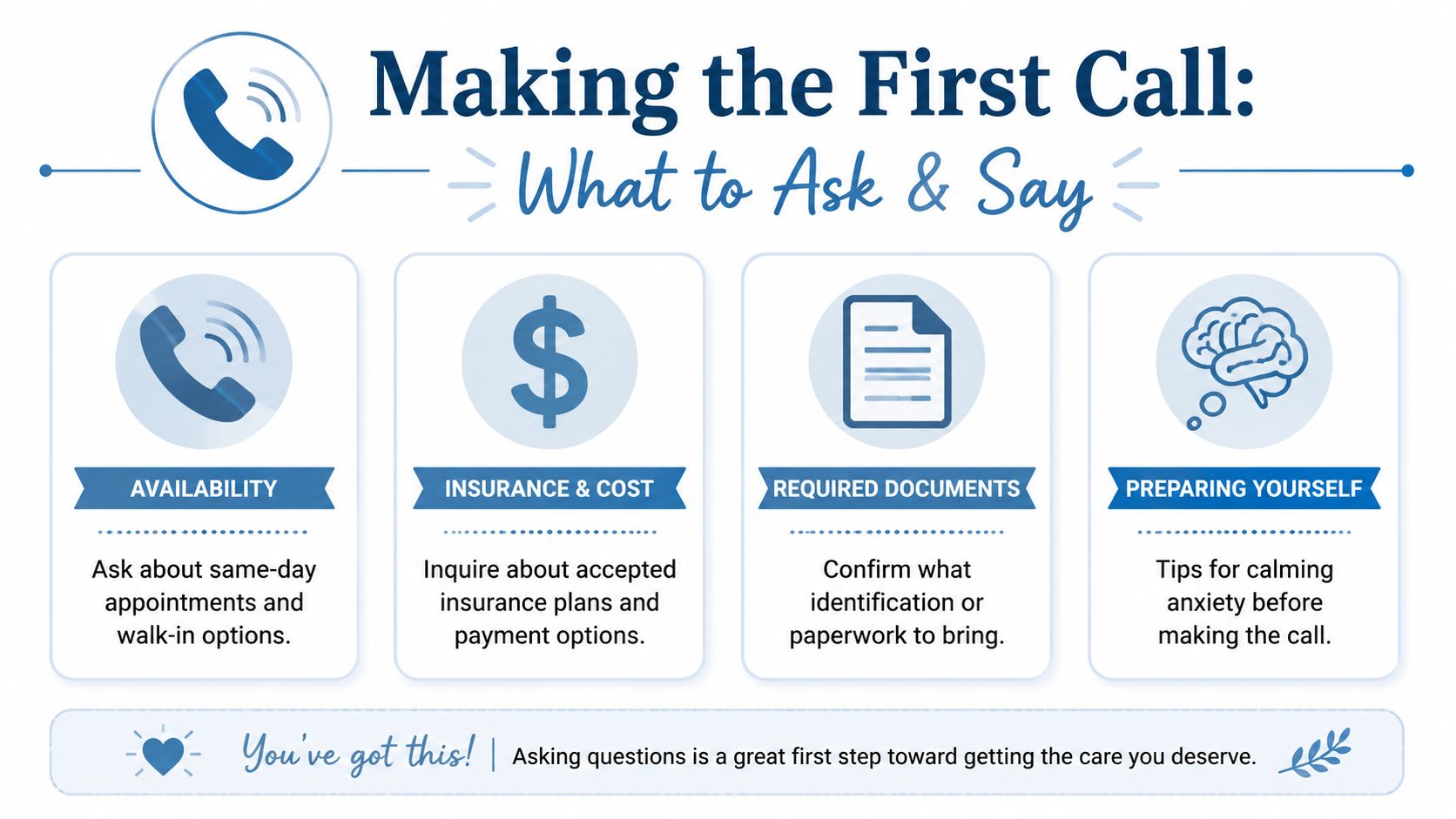
For many people, the phone call is the hardest part. The anxiety usually isn't about the words. It's about fear of being told no, being judged, or hearing that nothing is available until later.
A short script makes the call easier because it removes the need to think under stress.
A simple phone script
A caller can say:
“Hi, I'm looking for help for opioid use, and I need to know if I can be seen today in the Dallas-Fort Worth area. I'm looking for a same-day Suboxone evaluation if I'm medically appropriate for it. Can you tell me what the next step is?”
That opening works because it does three things fast. It states the need, sets the time frame, and asks for direction.
If a family member is calling, this version is clear:
“I'm calling for my loved one. They need help with opioids, and we're trying to find same-day treatment in DFW. Can you tell me if an assessment is available today and what they need to bring?”
Questions that save time
Once a staff member answers, these are the questions that matter most:
- Availability: “Can this person be seen today, or is it next-day access?”
- Medication start: “If the clinician determines MAT is appropriate, can buprenorphine be started quickly?”
- Insurance: “Do you accept this insurance plan, and can you verify benefits before arrival?”
- Documents: “What identification, insurance information, or medication list should be brought?”
- Arrival timing: “Is there a same-day intake window or a specific time they need to arrive?”
- Backup plan: “If an in-person slot isn't available, is there a telehealth option or another immediate path?”
A useful sign of a well-run admissions process is directness. Clear answers, simple instructions, and calm guidance usually mean the intake team understands urgency.
A few signs to slow down and ask more questions:
- Unclear promises: If staff keep saying “just come in” without explaining the process
- No answer on timing: If nobody can say whether evaluation can happen today
- No prep guidance: If they can't explain what documents or withdrawal status matter
- No next step: If there's no plan in case the first option falls through
People in Dallas often feel immediate relief after this call, even before treatment starts, because uncertainty drops. They know where to go, what to bring, and whether the clinic can help that day.
How to Prepare for Your First Clinic Visit
Once the appointment is set, preparation matters. It helps the intake move faster, gives the medical team a clearer picture, and lowers the chance of delays.
A standard Suboxone clinic workflow involves confirming opioid use disorder, completing a same-day medical evaluation, and starting buprenorphine when withdrawal is present. Starting the medication too early can trigger precipitated withdrawal, which is why clinics assess withdrawal severity before induction, as noted in this same-day buprenorphine workflow overview.
What to bring
A simple bag or folder is enough. The goal is organization, not perfection.
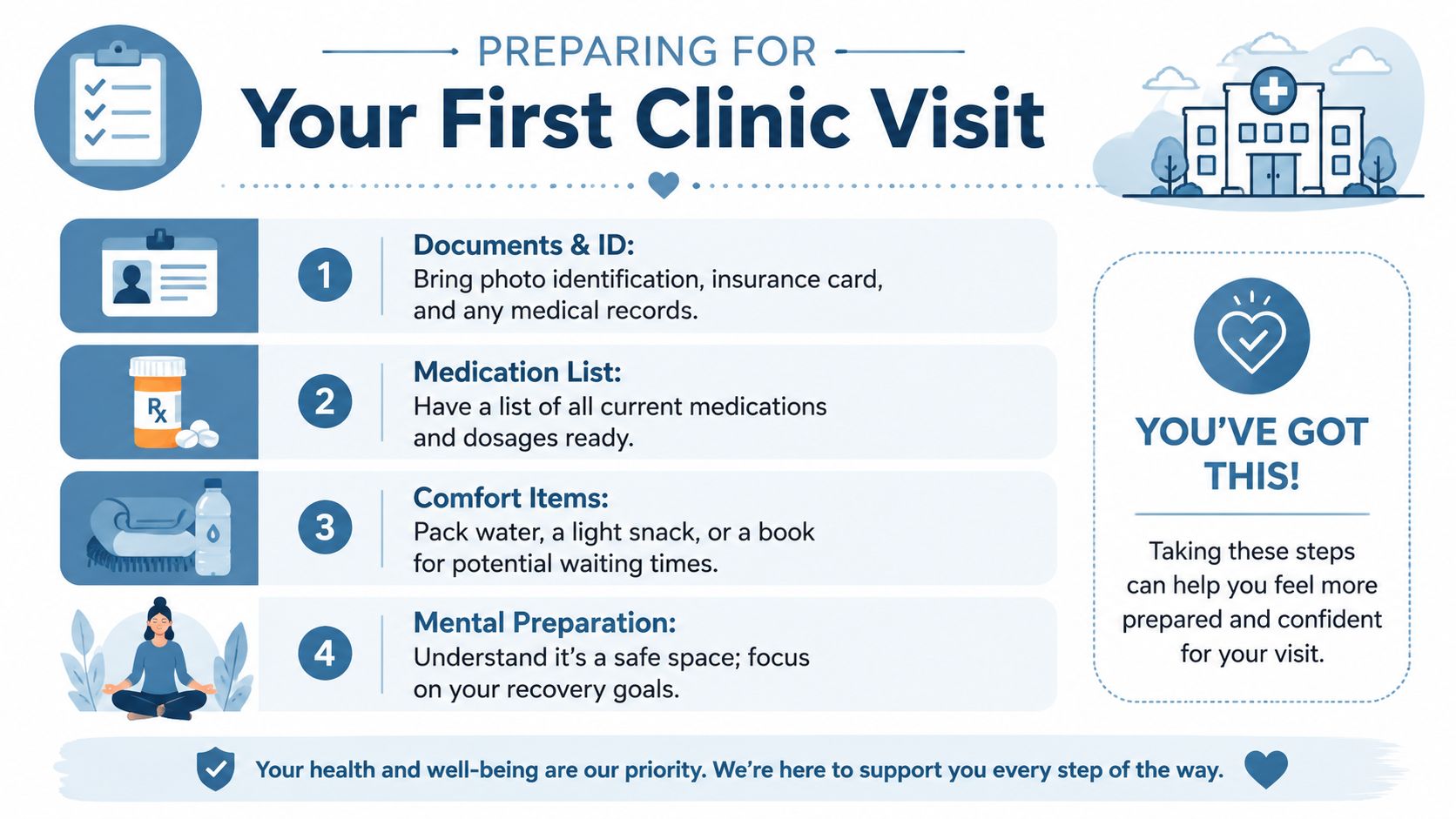
- Photo identification: A government-issued ID helps staff complete registration accurately.
- Insurance card: If insurance is being used, this helps benefits verification move faster.
- Medication list: Include current prescriptions, over-the-counter medications, and anything taken regularly.
- Relevant medical information: Discharge paperwork, medication bottles, or prior treatment details can be useful.
- Comfort items: Water, a light snack, and something quiet to read can make waiting easier.
If a person isn't sure what withdrawal can look like, this guide to opioid withdrawal symptoms can help them recognize why timing affects induction.
Why withdrawal timing matters
This is the part many callers don't hear clearly enough. Suboxone isn't started just because someone arrives and asks for it. The medical team has to determine whether the body is in enough withdrawal for buprenorphine to be introduced safely.
If it's started too soon, it can make someone feel worse instead of better. That's why a careful clinic won't rush this part, even if the overall goal is same-day access.
The fastest clinic is not the one that skips assessment. It's the one that moves quickly without skipping safety.
A few practical steps before leaving for the clinic:
- Confirm the appointment window: Some same-day programs have limited intake times.
- Charge the phone: Staff may call with directions or updates.
- Arrange transportation: Stress rises fast when a ride falls through at the last minute.
- Keep expectations realistic: The visit is designed to stabilize and start treatment, not solve everything in one afternoon.
That preparation often makes the difference between a chaotic first visit and a manageable one.
The Intake and First Dose What to Expect
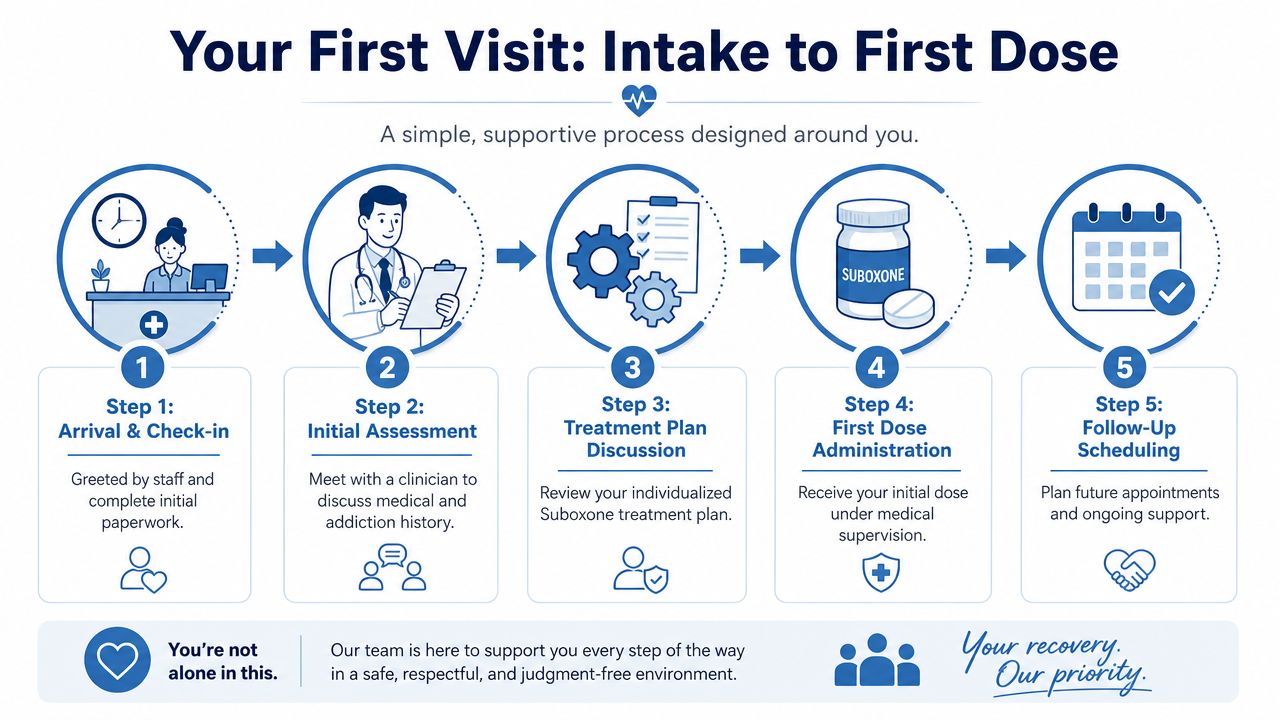
The first visit usually feels more structured than people expect. Most patients walk in worried that the process will be cold, rushed, or confusing. A well-run intake does the opposite. It moves in a clear order so staff can make safe decisions and the patient knows what's happening.
Buprenorphine, the active medication in Suboxone, is an evidence-based standard of care because it reduces opioid cravings and withdrawal symptoms, and public treatment guidance also lists it alongside methadone and naltrexone as a mainstream treatment option in this city treatment guidance on opioid use disorder medications.
What happens when you arrive
The process usually starts at check-in. Staff gather identification, insurance details if relevant, consent forms, and basic history. From there, the patient meets with a clinician or intake specialist for a confidential assessment.
That conversation usually covers:
- Opioid use history: What substances have been used, how recently, and how often
- Current symptoms: Withdrawal signs, cravings, sleep, appetite, and physical discomfort
- Mental health concerns: Anxiety, depression, panic, trauma, or other symptoms that may affect treatment
- Treatment goals: Immediate stabilization, detox support, outpatient follow-up, or a broader recovery plan
For many people, this is the first time the full picture gets discussed without interruption or blame.
How the first dose is handled
After the assessment, a licensed medical provider reviews whether Suboxone is appropriate and whether the timing is safe. If the person is in sufficient withdrawal, the first dose may be started under supervision.
The point of supervised induction is simple. Staff can watch how the person responds, monitor symptoms, and make sure the start of treatment is heading in the right direction.
A typical visit often includes these stages:
| Stage | What the patient can expect |
|---|---|
| Check-in | Paperwork, ID review, and initial questions |
| Clinical assessment | Discussion of opioid use, health history, and symptoms |
| Medical evaluation | Review by a prescribing clinician |
| Induction decision | Determination of whether it's the right time to begin |
| Follow-up planning | Next appointment and continuing care instructions |
Patients who want a fuller overview of medication action and treatment planning can review how Suboxone works for addiction.
“The first dose is not a test of willpower. It's a medical step, timed carefully, with follow-up built around it.”
The final part of the visit matters as much as the first. Before leaving, the patient should know the next appointment, the short-term plan, and who to contact if symptoms change. That's what turns a one-day intervention into real treatment.
Navigating Insurance Payment and Other Options
Cost worries stop a lot of people right at the moment they're ready to get help. The best response is to deal with money questions early and directly, not after arrival.
Many treatment programs now organize access around extended hours and rapid-entry systems rather than traditional open-door walk-ins. One public example shows operating hours from 5:00 a.m. to 2:30 p.m. Monday through Friday and 6:30 a.m. to 9:30 a.m. Saturday, while another program highlights a 24/7/365 call center for intake support in this overview of extended-hours opioid treatment access. That model matters because payment verification, intake triage, and scheduling often happen by phone before someone reaches the front desk.
How to handle insurance without getting overwhelmed
The simplest move is to call with the insurance card ready and ask the admissions team to verify benefits. That avoids guessing about coverage and helps the clinic tell the patient what level of care makes sense financially and clinically.
Questions worth asking include:
- Plan acceptance: Is this insurance accepted for evaluation, MAT, detox, or continued treatment?
- Verification help: Can the admissions team check benefits directly?
- Out-of-pocket expectations: What costs may need to be discussed before admission?
- Level of care fit: Does the insurance match outpatient MAT only, or broader addiction treatment in Dallas if more support is needed?
People without coverage or with limited coverage can review options for paying for drug rehab without insurance.
If in-person treatment cannot happen today
A same-day in-person opening isn't always available. That doesn't mean the person has no path forward.
In some situations, telehealth may be a practical backup for rapid evaluation when travel, distance, or scheduling gets in the way. In other situations, a next-day intake may be the safest realistic option if the program can clearly tell the patient how to prepare.
If the person is in immediate danger, has severe medical symptoms, or cannot stay safe while waiting, emergency care should come first. The priority is stabilization, not forcing a specific treatment format.
Start Your Recovery Today at Tru Dallas
For people in Dallas, Fort Worth, Euless, Irving, Arlington, Grapevine, and the surrounding DFW area, fast help matters most when opioid use has reached the point where waiting feels dangerous. The right next step is a program that can respond calmly, assess quickly, and support both substance use and mental health needs without adding confusion.

Tru Dallas Detox & Recovery Center stands out in the Dallas area because the team helps people move from panic to action. Same-day MAT access, detox support, dual diagnosis care for co-occurring conditions such as anxiety and depression, and a non-judgmental admissions process give patients and families a clear path instead of another dead end.
When someone is searching for a Suboxone walk in clinic near me, what they usually need is an answer today. Tru Dallas is built to provide that answer with urgency, discretion, and real clinical support.
Frequently Asked Questions About Suboxone Clinics
A few worries tend to linger even after someone understands the process. These are the questions that often keep people from making the call.
People who want a plain-language overview of evidence-based substance use treatment sometimes find it easier to move forward once MAT is framed as a medical treatment plan instead of a last resort.
What if there is no insurance
Lack of insurance shouldn't stop the first call. Admissions teams can usually explain self-pay options, alternative levels of care, and whether a telehealth or scheduled evaluation is a workable bridge. The key is to ask early, not avoid the call because of assumptions.
A person doesn't need every financial detail solved before reaching out. They need an accurate picture of what's possible today.
How long will the first visit take
The honest answer is that it varies. The visit includes paperwork, assessment, medical review, withdrawal evaluation, and planning for follow-up. A rushed answer here usually creates more frustration later.
Important: It's smarter to protect the day as much as possible, arrange transportation in advance, and expect that careful medical timing may matter more than speed.
Will staff judge me
A professional addiction treatment team shouldn't treat opioid use like a moral failure. Intake staff hear fear, shame, and confusion every day. Their job is to gather information, keep the patient safe, and help the next step happen.
Someone who feels embarrassed can keep the opening line simple: “I need help with opioids and don't know where to start.” That is enough to begin.
Can a family member call first
Yes. Family members often make the first contact when the patient feels too overwhelmed. It helps if they have basic details ready, such as current substance use, insurance information, location in DFW, and whether the person is looking for same-day care.
The most useful family role is practical support. Make the call, help with transportation, bring identification, and keep the focus on getting through the first appointment.
If opioid use is taking over and help is needed now, Tru Dallas Detox & Recovery Center offers a confidential path forward for people across Dallas-Fort Worth. The team can help verify insurance, explain same-day treatment options, and guide patients toward safe, compassionate care without judgment. Calling today can turn a desperate search into a real plan.