

Finishing detox or rehab in Dallas Fort Worth can bring two feelings at once. There’s relief because a hard step is finally complete. There’s also fear because the next move matters, and going straight back to the same apartment, the same stress, or the same social circle can feel risky.
For many people, this is the point where recovery starts to feel real. Treatment has structure. Home may not. A person might leave a program in Euless, Dallas, or Fort Worth with stronger coping skills, better physical stability, and a clear desire to stay sober, yet still feel unsure about where to live next. Families often feel the same tension. They want to support recovery, but they also know that love alone doesn’t create routine, accountability, or a substance-free environment.
That’s where sober living can make recovery feel more manageable. A sober living home offers a safe place to practice daily life after treatment without being fully on one’s own. It gives people time to rebuild habits, earn trust, return to work, attend support meetings, and learn how to handle ordinary stress without alcohol or drugs.
For readers searching for sober living fort worth, this guide breaks the process down step by step. It explains what sober living is, what daily life looks like, how to choose a quality home, what costs to expect, and how people in the Dallas Fort Worth area can move from treatment into a more stable next phase of recovery.
Table of Contents
- Introduction The Next Step in Your Dallas-Fort Worth Recovery Journey
- What Is a Sober Living Home
- The Critical Bridge from Treatment to Independent Life
- Daily Life in a Fort Worth Sober Living Program
- How to Choose a High-Quality Sober Living Home in Fort Worth
- Understanding the Costs of Sober Living in Fort Worth
- How Tru Dallas Supports Your Transition to Sober Living
- Take the First Step Toward a Secure Recovery
Introduction The Next Step in Your Dallas-Fort Worth Recovery Journey
A person can complete detox or inpatient treatment and still feel unprepared for ordinary life. That doesn’t mean treatment failed. It usually means recovery needs another layer of support before full independence.
In the Dallas Fort Worth area, that moment often comes fast. Discharge dates approach. Work, family, transportation, legal obligations, and housing decisions start piling up. Someone may want sobriety deeply, yet still know that returning to an unstable environment in Dallas, Fort Worth, Arlington, or another nearby community could trigger old patterns.
Sober living helps slow that transition down in a healthy way. It gives recovery room to breathe.
Leaving treatment is an achievement. Building a daily life that protects sobriety is the next achievement.
Families also benefit from understanding this step. Many loved ones assume the choices are either treatment or home. In reality, there’s a middle ground that offers more structure than independent living and more freedom than a clinical setting. That middle ground is often what helps recovery last.
For people searching for local answers, sober living fort worth isn’t just a housing search. It’s often a search for safety, accountability, and a practical plan for what happens after addiction treatment in Dallas.
What Is a Sober Living Home

A sober living home is a structured, substance-free place to live during early recovery. It isn’t a hospital. It isn’t the same as inpatient rehab. It’s a home-based setting where residents live with other people who are also working to stay sober.
A bridge instead of a sudden jump
The simplest way to understand sober living is to think of it as training wheels for sobriety. A person is no longer in round-the-clock treatment, but also isn’t facing daily life without support. That middle step matters because early recovery often feels strong one day and shaky the next.
Fort Worth sober living homes serve as a transitional option after inpatient or outpatient treatment, with average monthly costs ranging from $500 to $2,500 according to Fort Worth sober living housing information. That same source notes that these homes act as a bridge between treatment and independent living.
Many people stay long enough to build habits that feel ordinary again. That may include waking up on time, keeping a job, managing emotions, handling transportation, rebuilding family trust, and learning how to move through evenings and weekends without substances.
What makes sober living different
A sober living home works because it combines freedom with clear expectations. Residents usually have more independence than they would in inpatient rehab, but they still live within a framework designed to protect recovery.
Common features often include:
- Zero-tolerance rules: Alcohol and drug use aren’t allowed.
- Regular testing: Homes may use screening to support accountability.
- Curfews and routines: Residents are expected to follow house schedules.
- Shared responsibilities: Chores and house upkeep are part of daily living.
- Recovery participation: Meetings, outpatient care, or other recovery activities may be required.
These expectations are part of what makes sober living useful, not restrictive. Active addiction often creates chaos. Sober living replaces that chaos with repetition, structure, and peer support.
Practical rule: The best sober living homes don’t only remove substances. They help residents build a life that makes returning to substances less likely.
Another point causes confusion for families. Sober living is usually non-clinical housing, which means the home itself may not provide full medical or psychiatric treatment on site. Residents often continue outpatient therapy, medication management, support groups, or dual diagnosis care in the community while living there.
That combination is what makes the model effective. A person gets real-world responsibility and a safer environment at the same time. For someone leaving a Dallas detox center or another addiction treatment program in Dallas, that can be the difference between feeling exposed and feeling supported.
The Critical Bridge from Treatment to Independent Life
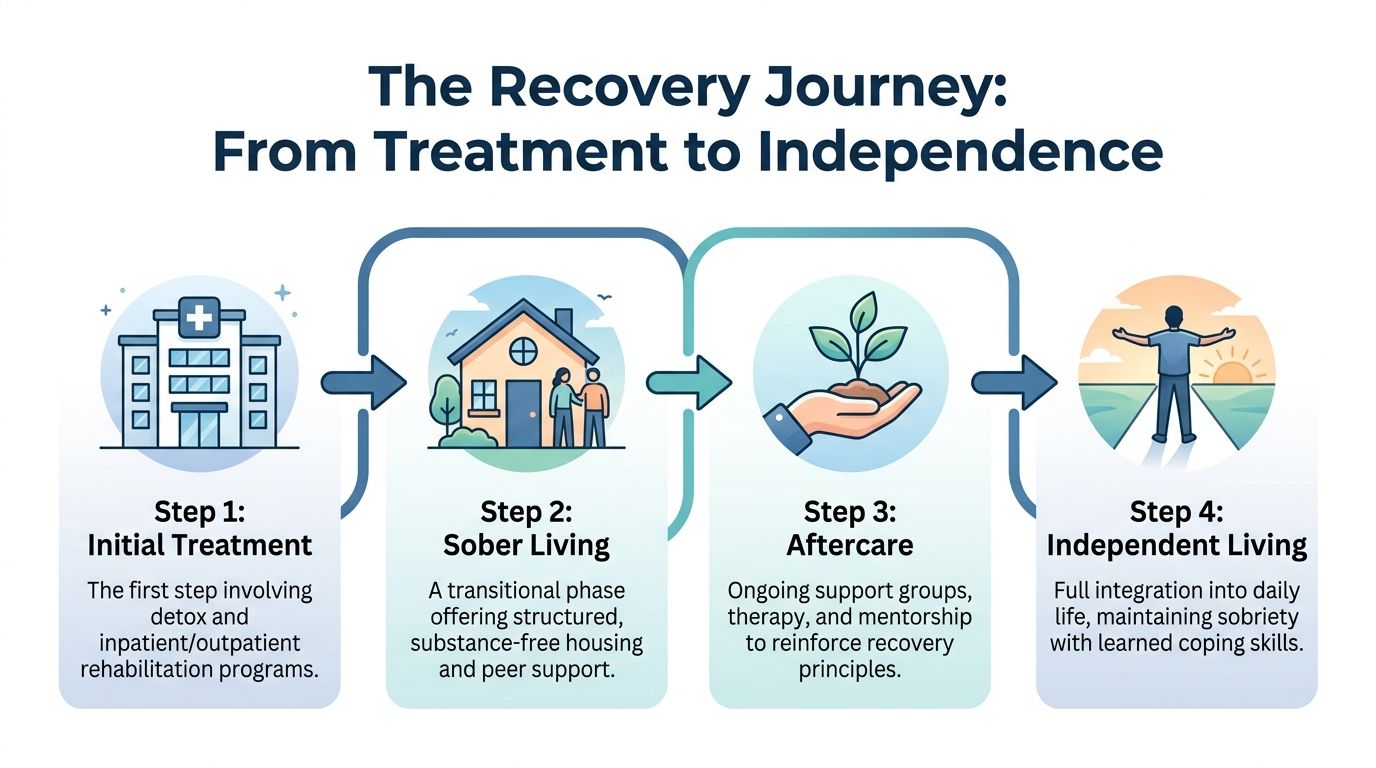
Recovery usually works best as a sequence, not a single event. A person stabilizes physically, starts therapeutic work, practices new skills, and then gradually takes on more independence. Problems often start when that sequence gets cut short.
Where sober living fits
A common recovery path looks like this:
Medical detox
The body clears substances in a supervised setting.Inpatient or outpatient treatment
The person begins therapy, relapse prevention work, and recovery planning.Sober living
The person lives in a structured environment while practicing sobriety in everyday life.Aftercare and independent living
Recovery continues through therapy, support groups, and routine.
This is why sober living fort worth should be viewed as part of a full care plan, not just a place to rent a room. It gives people a way to leave treatment without losing all the support that helped them get stable in the first place.
Research on sober living houses shows they help prevent relapse and improve recovery-related outcomes, and for people with co-occurring mental health needs, the combination of therapy, peer support, and life skills can help counter the 40 to 60 percent relapse rates seen nationally in the first year, according to Texas sober living research summaries.
Why this stage matters so much
A person may learn strong coping tools in rehab. The harder part is using those tools on an ordinary Tuesday.
That can mean turning down an invitation from an old friend, getting through a paycheck without impulsive spending, sitting with anxiety after work, or handling conflict with family without storming out to drink or use. Those moments don’t happen in a classroom. They happen in real life.
Sober living gives people a place to practice those moments with support nearby. If a resident has a hard day, there are usually house rules, peer accountability, and recovery expectations already in place. That safety net can keep one stressful moment from becoming a full relapse spiral.
A few examples make this clearer:
- A person leaving detox for opioid use may still be emotionally raw and vulnerable to triggers tied to old neighborhoods or social contacts.
- A person with alcohol addiction and anxiety may need time to learn how to unwind in the evening without drinking.
- A person in dual diagnosis treatment may need a living situation that supports both sobriety and follow-through with therapy.
A stable address after treatment can protect recovery as much as motivation can.
Sober living also helps families reset expectations. Loved ones often want proof that recovery is real. A structured home allows that proof to develop through daily behavior. Showing up, following rules, working, attending meetings, and staying accountable often rebuild trust more effectively than promises alone.
For the Dallas Fort Worth community, this middle stage can make treatment gains more durable. It turns recovery from something that happened in a facility into something a person learns to live.
Daily Life in a Fort Worth Sober Living Program

Daily life in sober living is usually quieter and more ordinary than families expect. That’s part of its value. Recovery becomes less about crisis and more about consistency.
What a normal day can look like
A resident in Fort Worth might start the morning with breakfast, a room check, and assigned chores. After that, the day may include work, outpatient treatment, job searching, classes, or scheduled recovery activities. Evenings often involve house meetings, 12-step attendance, check-ins, or quiet time back at the house.
The point isn’t to fill every hour with rules. The point is to create a rhythm that supports sobriety. People in early recovery often benefit from knowing what comes next.
Many homes expect residents to follow rules such as:
- Keep a curfew: Early phases usually involve tighter evening limits.
- Attend recovery meetings: AA, NA, or similar meetings may be mandatory.
- Stay accountable: Residents may need to verify attendance, share schedules, or check in with staff.
- Contribute to the home: Cleaning shared spaces and completing chores are part of communal living.
Some Fort Worth programs also use technology for accountability, including GPS-verified meeting check-ins, and some use a phased system where residents move from stricter routines in Phase 1 to near-independent living in Phase 3, as described by Fort Worth sober living program practices.
For readers who want a closer look at the kind of guidance residents often receive, this overview of support in sober living to help people stay sober adds useful detail.
How structure turns into confidence
At first, these routines can feel rigid. Then something important happens. The structure stops feeling external and starts becoming internal.
A resident who once needed reminders to wake up, attend meetings, and avoid risky situations may begin doing those things automatically. That’s one of the biggest shifts in sober living. Recovery stops being something imposed by treatment staff and becomes part of daily identity.
A typical week may also include practical growth areas such as:
- Employment tasks: Filling out applications, preparing for interviews, or getting to a steady job.
- Life skills work: Budgeting, transportation planning, time management, and basic household responsibility.
- Peer accountability: Talking through cravings, frustration, or conflict with others who understand the process.
The routine may look simple from the outside. Inside recovery, simple routines often do heavy lifting.
There’s also an emotional benefit to seeing other residents move through the same stage. Someone may arrive feeling ashamed, guarded, or unsure they can manage life without substances. Living with peers who are also rebuilding can reduce isolation and normalize the struggle of early recovery.
For families in Dallas and Fort Worth, this helps answer a common fear. Sober living doesn’t place a loved one in limbo. It places that person in a setting where responsibility grows in steps. The home becomes a practice ground for ordinary sober adulthood.
How to Choose a High-Quality Sober Living Home in Fort Worth
A sober living home can support recovery well, or it can create confusion if the standards are weak. The difference often comes down to structure, safety, transparency, and how seriously the house protects sobriety.
Questions that reveal quality
One of the most important things to understand is that Fort Worth sober living homes function within local housing rules. In Fort Worth, these homes are classified as group residences and must comply with city requirements that include spacing rules, occupancy limits based on property size, and safety measures such as fire suppression systems and emergency exits, according to Fort Worth recovery housing zoning guidance.
That local detail matters because a quality home should be able to explain how it handles compliance and resident safety without sounding evasive.
When families or prospective residents speak with a house manager, the strongest questions are often direct ones:
- How are rules enforced: Ask what happens if someone misses curfew, skips meetings, or tests positive.
- Who supervises the home: Clarify whether staff are present, available on call, or managing multiple houses.
- What is required each week: Ask about meetings, chores, employment expectations, and any outpatient participation.
- How are medications handled: Residents with legitimate prescriptions, including recovery-related medications, need clear policies.
- What is the living environment like: Ask how many people share rooms, how conflicts are addressed, and whether the home feels calm and organized.
For a closer look at oversight and accountability, this article on whether sober living homes are supervised and who manages them can help families know what to ask.
Checklist for evaluating options
The fastest way to compare homes is to look for signs of order, consistency, and openness. A tour should leave a family with fewer questions, not more.
| Evaluation Criteria | What to Look For and Questions to Ask |
|---|---|
| House rules | Ask for written rules on sobriety, curfew, guests, chores, and meeting attendance. |
| Safety standards | Ask how the property handles emergency exits, fire safety, and overall resident security. |
| Staffing and oversight | Ask who manages the home day to day and how residents get help during difficult moments. |
| Recovery expectations | Ask whether residents must attend meetings, outpatient care, or regular house check-ins. |
| Living conditions | Look for a clean, stable, respectful environment rather than crowding or visible disorder. |
| Medication policies | Ask how prescribed medications are documented, stored, and monitored. |
| Financial clarity | Ask exactly what is included in rent and what fees may be separate. |
| Transportation and location | Ask how residents get to work, meetings, therapy, and other obligations around Fort Worth or greater DFW. |
A few red flags deserve attention.
- Vague answers: If staff can’t clearly explain rules or enforcement, structure may be weak.
- Disorder in the house: A chaotic environment often reflects poor management.
- Little focus on recovery: If sobriety support feels secondary to rent collection, that’s a concern.
- Pressure to commit immediately: A reputable program should welcome thoughtful questions.
A good sober living home should feel predictable. Early recovery needs stability more than marketing language.
For people searching online for sober living fort worth, quality isn’t always obvious from a website or listing. The best decision usually comes from asking practical questions and paying attention to whether the home feels serious about recovery.
Understanding the Costs of Sober Living in Fort Worth
Cost is one of the first questions families ask, and it should be. Recovery planning gets harder when housing costs feel vague or confusing.
What families are really asking about cost
People usually aren’t only asking, “What is rent?” They’re also asking what the monthly amount includes, what happens if work hasn’t started yet, whether payment plans exist, and whether insurance can reduce any part of the overall burden.
One Fort Worth source notes that many programs are described as affordable, but families still need clearer answers about out-of-pocket expenses, payment options, and how PPO insurance may apply to associated clinical care. That concern is outlined in Fort Worth sober living cost transparency guidance.
Those questions matter because sober living itself is often different from formal treatment billing. The housing portion may be private pay, while related services such as outpatient therapy or other clinical care may be handled separately depending on the program and benefits available.
This is why families should ask for plain language around:
- Monthly housing fees: What the resident owes on a regular basis.
- Included services: Whether utilities, testing, transportation, or programming are part of the price.
- Additional costs: Any separate charges for supplies, deposits, or required activities.
- Insurance coordination: Whether the home works alongside outpatient providers that can verify PPO benefits.
For readers comparing options, this breakdown of how much sober living costs and whether financial assistance options exist can make those conversations easier.
Questions to ask before committing
Some families avoid asking money questions because they feel uncomfortable. In recovery planning, that’s a mistake. Financial clarity protects both the resident and the household supporting them.
Helpful questions include:
- What does the resident pay each month, and what is included in that amount
- Are there any upfront charges before move-in
- What happens if a resident loses a job or has a temporary financial setback
- Does the program require outpatient treatment, and if so, how is that billed
- Can staff explain insurance-related services in a way the family can understand
Cost transparency doesn’t make recovery less compassionate. It makes recovery planning more realistic.
A well-run home should be able to answer these questions calmly and directly. That kind of transparency can reduce stress and help families make decisions based on fit, support, and long-term stability rather than uncertainty.
How Tru Dallas Supports Your Transition to Sober Living
The transition from treatment into sober living works best when it starts before discharge day. Tru Dallas Detox & Recovery Center builds that planning into the recovery process so clients aren’t left trying to solve housing, aftercare, and relapse prevention all at once.
The team begins by looking at the whole picture. That includes clinical needs, mental health support, medication-related considerations, transportation realities, financial concerns, and the kind of environment most likely to support stability after treatment. A person stepping down from detox may need a different level of accountability than someone completing a longer treatment stay.
This approach matters for clients across Dallas Fort Worth because the move into sober living isn’t only about finding an open bed. It’s about finding the right setting for the next phase of recovery. Someone in dual diagnosis care may need close connection to therapy. Someone rebuilding work structure may need practical support around scheduling and accountability. Someone in medication-assisted treatment may need continuity and coordination rather than a loose referral.
The safest discharge plan is one that treats housing as part of recovery, not as an afterthought.
Tru Dallas supports this handoff through coordinated discharge planning, individualized recommendations, and continued attention to what comes next after formal treatment. That helps reduce the uncertainty families often feel when a loved one is nearing discharge.
For many people, the hardest part of recovery isn’t asking for help the first time. It’s accepting support during the in-between stage when they feel better but aren’t fully ready to do everything alone. A managed transition into sober living can protect the progress already made and give recovery a stronger foundation.
Take the First Step Toward a Secure Recovery
Sober living fort worth is more than a housing search. It’s often the step that helps treatment gains hold up in daily life. A structured home can give a person time to rebuild routines, strengthen judgment, and practice sobriety in everyday life with accountability still in place.
For families in Dallas Fort Worth, that can bring needed relief. Recovery doesn’t have to jump from intensive care straight into full independence. There’s a middle path, and for many people, it’s the safer one.
Recovery also involves emotional momentum. When someone feels stuck between the old life and the new one, outside support can help. This resource on how to get unstuck in life may be useful for readers who are trying to rebuild direction during early sobriety.
The most important move is to start planning early. If treatment is ending soon, or if a loved one needs a safer next step after detox or rehab, it’s worth having the sober living conversation now instead of waiting for a crisis.
If help is needed with detox, rehab, insurance verification, or a coordinated transition into sober living in Fort Worth, Tru Dallas Detox & Recovery Center can guide the next step with compassionate, individualized support for people and families across Dallas Fort Worth.
