

Making the choice between inpatient and outpatient rehab is one of the most important decisions you'll make on the road to recovery. At its core, the difference is straightforward: inpatient rehab means living at a treatment facility for immersive, 24/7 care, while outpatient rehab offers structured treatment sessions that you attend while continuing to live at home.
The right path for you isn't about which one is "better" in general, but which one is better for you. It all comes down to what you need right now—a completely structured, focused environment, or the flexibility to integrate recovery into your existing life.
Key Takeaways
- Core Difference: Inpatient rehab is a residential program with 24/7 care, while outpatient rehab allows you to live at home while attending scheduled treatments.
- Best Fit: Inpatient is ideal for severe addictions or unstable environments; outpatient suits those with strong support systems and milder conditions.
- Structure vs. Flexibility: Inpatient programs offer a highly structured, immersive environment, removing external triggers and distractions.
- Integration: Outpatient care provides greater flexibility, allowing you to maintain work, school, or family responsibilities during treatment.
- Supervision: Medical and therapeutic supervision is constant in inpatient settings but limited to session times in outpatient programs.
Choosing Your Rehab Path: Inpatient vs. Outpatient
When you're weighing your options, it’s crucial to look at the big picture. The severity of the addiction, your support system at home, and any co-occurring mental health conditions all play a huge role. The goal is to find the program that aligns with your specific circumstances and gives you the best shot at long-term success.
Inpatient programs are often the best fit for someone who needs to get away from a toxic or triggering home environment. By removing you from daily stressors and temptations, these programs allow you to focus entirely on healing with constant medical and therapeutic support.
On the other hand, outpatient care can be incredibly effective for individuals with a strong, sober support network and a less severe substance use disorder. This model lets you put the coping skills you learn in therapy to the test in your day-to-day life, which can be a powerful way to build lasting habits.
Inpatient vs Outpatient Rehab At a Glance
To make the differences even clearer, it helps to see them side-by-side. This table breaks down the key features of each approach so you can quickly get a sense of where you might fit.
| Feature | Inpatient Rehab | Outpatient Rehab |
|---|---|---|
| Living Arrangement | You live at the treatment facility 24/7 | You live at home and travel to the facility for treatment |
| Level of Care | Intensive, round-the-clock medical and emotional support | Scheduled therapy sessions for a set number of hours per week |
| Structure & Supervision | Highly structured daily schedule with constant oversight | More flexible, designed to fit around work or family commitments |
| Ideal Candidate | Severe addiction, unstable home, co-occurring disorders | Mild to moderate addiction, strong support system, stable home |
| Environment | Controlled, substance-free, and fully immersive | Integrates recovery practice with your real-world daily life |
Think of this decision as building the foundation for your entire recovery journey. Taking the time to understand these fundamental differences is the first, most critical step toward choosing a program that provides the right level of support and structure for you.
What Inpatient And Outpatient Programs Actually Involve
To really figure out whether outpatient or inpatient rehab is the right call, you need to understand what the day-to-day reality looks like for each. Both are designed to get you on the path to recovery, but their structure, intensity, and the environment they create are worlds apart. Each is built for a different level of need.
Inpatient rehabilitation is a full-time commitment. It’s a residential program where you live at the treatment facility 24/7. The whole point is to pull you out of your current environment—away from triggers, stressors, and access to substances—and place you in a highly structured, controlled setting that’s 100% focused on healing. It's the highest and most intensive level of care you can get.
The Structure Of Inpatient Rehab
Life inside an inpatient program is scheduled from morning until night, and for good reason. Your days are packed with a mix of therapy, medical check-ins, and personal time for reflection. This routine is designed to build healthy new habits and bring back a sense of stability that’s often lost in active addiction.
A typical day might look something like this:
- Medical Oversight: You have round-the-clock access to doctors and nurses. This is non-negotiable, especially during the detox phase when withdrawal symptoms or other health issues can be serious.
- Individual Therapy: These are your one-on-one sessions with a therapist, where you dig into the personal reasons behind your addiction.
- Group Counseling: In these sessions, you connect with others who get what you’re going through. It breaks down the isolation that addiction thrives on and builds a powerful sense of community.
- Holistic Activities: Many centers now include things like yoga, meditation, art therapy, or gym time to help heal your mind and body together.
This all-in approach works incredibly well for people with severe substance use disorders or for anyone who simply needs a completely safe, substance-free place to start over. If you want to dive deeper into the daily experience, you can learn more about what to expect from a residential stay in our guide to what happens in rehab.
The real power of inpatient care is how immersive it is. When you physically step away from your daily life, you give yourself the space to focus entirely on building the foundation for sobriety without the usual distractions.
Understanding Outpatient Rehab Programs
Outpatient rehab is the opposite—it’s a non-residential model. You attend treatment at a clinic for a specific number of hours each week, but you go home every night. This allows you to keep up with your job, school, or family life, which is a huge advantage for many people.
But "outpatient" isn't just one thing. It's a spectrum of care with different levels of intensity. The right level for you depends on your clinical needs and how stable and supportive your home life is.
Different Levels Of Outpatient Care
The main types of outpatient programs are all about time commitment and structure. They’re designed to provide a "step-down" process, where you can gradually reduce the intensity of care as you get stronger in your recovery.
- Partial Hospitalization Programs (PHP): This is the most intense form of outpatient care. Think of it like a full-time job—you’ll be in treatment for several hours a day, five to seven days a week.
- Intensive Outpatient Programs (IOP): This is a step down from PHP. An IOP usually requires 9 to 20 hours of therapy a week. The sessions are often scheduled for evenings or weekends so you can still work a 9-to-5 job.
- Standard Outpatient Programs (OP): This is the least intensive option, with just a couple of therapy sessions per week. It’s perfect for people who have already completed a more intensive program and need ongoing support to stay on track.
This tiered system means your treatment can evolve with you. Someone might start in a PHP, move to an IOP after a few weeks, and eventually transition to standard outpatient care as they grow more confident in their sobriety.
Comparing The Daily Treatment Experience
Deciding between outpatient and inpatient rehab often comes down to how you want recovery to fit into your life. One path offers an all-in retreat focused solely on healing, while the other stitches treatment into the fabric of your everyday routine. Your choice hinges on whether you need complete immersion or a gradual transition that tests your new skills in real time.

Below is a side-by-side snapshot of how each model handles daily care:
| Aspect | Inpatient Rehab | Outpatient Rehab |
|---|---|---|
| Schedule | Fully planned from wake-up to lights-out | Blocks of therapy amid work, school, or home obligations |
| Supervision | 24/7 medical and clinical oversight | Appointments during set hours; after-hours support if needed |
| Environment | Removed from all triggers in a controlled site | Recovery tools tested in your real-world setting immediately |
| Peer Interaction | Shared living builds constant connection | Group sessions focus on daily-life challenges |
This quick chart highlights the basic rhythms, but every program has its own flavor and specialties.
A Day In Inpatient Rehab
Inpatient rehab wraps you in a protective bubble, stripping away outside stressors so you can focus purely on recovery. You’ll follow a predictable routine designed to stabilize both mind and body.
• Morning Routine: Rise at a set hour for breakfast followed by a brief mindfulness or meditation practice.
• Therapy Blocks: Multiple sessions each day—individual counseling, cognitive-behavioral workshops, relapse-prevention groups.
• Medical Care: Regular vital checks with nursing staff to manage withdrawal and adjust medications.
• Recreational & Holistic Activities: Afternoon yoga, art therapy, fitness classes or nutritional lessons to strengthen overall wellness.
• Evening Wind-Down: Support meetings (like 12-step groups), personal reflection, journaling—and prep for the next day.
This highly structured approach can be a lifeline if you’re dealing with severe withdrawal or intense cravings. For a thorough walkthrough of a typical inpatient schedule, see our guide on what happens in rehab.
A Day In Outpatient Rehab
Outpatient care weaves recovery into your everyday commitments. You maintain your home life while carving out dedicated time to heal and grow alongside peers facing similar struggles.
• Morning: Attend work, classes, or family duties—applying coping strategies on the fly.
• Afternoon/Evening: Head to the clinic for an intensive three-hour session of group therapy, followed by a brief one-on-one check-in.
• After Session: Return home to real-life tests: managing a tense conversation, dodging social pressure at a gathering, or handling a stressful deadline.
The real power of outpatient rehab is immediate feedback—you learn a skill in therapy, then challenge it in your own world, with your counselor ready to debrief next time.
If you have stable housing, supportive loved ones, and a strong drive to stay sober, this model can build resilience where it counts most.
Navigating Costs and Insurance for Rehab
Let’s talk about one of the biggest factors in choosing a rehab program: money. It’s a reality for almost everyone, and understanding how the costs and insurance work for inpatient versus outpatient care can make a stressful decision a lot clearer. The main reason for the price difference boils down to one thing: inpatient care is an all-inclusive package.
When you choose an inpatient program, you’re paying for everything in one go—your room, meals, round-the-clock medical support, and a packed schedule of therapy. It's a residential model, so naturally, it's more expensive. With outpatient care, you're just paying for the treatment sessions themselves while you continue to live at home.

This difference in cost is a huge driver behind the rise of outpatient services. Even with that growth, inpatient care costs significantly more. In Canada, for example, a standard inpatient program runs anywhere from USD 10,000–20,000 a month. Compare that to an intensive outpatient program, which might cost between USD 2,000–5,000. This cost-effectiveness is a key reason the outpatient market is expanding, as detailed in these outpatient rehabilitation market trends.
How Insurance Coverage Works
The good news is that most private insurance plans, Medicare, and Medicaid all provide some level of coverage for substance use treatment, whether it’s inpatient or outpatient. The catch? How much they cover can be wildly different.
Insurance carriers almost always require pre-authorization for an inpatient stay. This is their way of making sure it’s “medically necessary” before they agree to foot the bill. You'll likely need a clinical assessment to prove that your condition is severe enough to require 24/7 supervision.
For outpatient programs, getting coverage is usually more straightforward. Still, you’ll need to be mindful of co-pays, deductibles, and any limits on the number of sessions they’ll cover.
The single most important thing you can do is call your insurance provider directly to verify your benefits. That one phone call will tell you exactly what your out-of-pocket costs will be for both options, saving you from any nasty financial surprises later on.
Key Factors That Influence Rehab Costs
The inpatient vs. outpatient question is the biggest cost driver, but other factors can move the price tag up or down. Keep these in mind as you weigh your options.
- Location: A facility in a major city or a scenic, desirable area will have higher operating costs, and that often gets passed on to the patient.
- Duration of Stay: Inpatient programs typically last 30 to 90 days. The longer you stay, the higher the total cost will be, although some places offer a lower per-day rate for extended stays.
- Amenities: This is a big one. Luxury or executive rehab centers with private rooms, gourmet food, and high-end fitness centers will cost a whole lot more than a standard facility.
- Specialized Services: If a program offers dedicated care for things like co-occurring disorders, trauma, or specific professional groups, it may cost more. This is because they need highly specialized staff and unique therapeutic approaches.
At the end of the day, while cost is a huge piece of the puzzle, it shouldn't be the only piece. The most effective treatment is the one that actually addresses your clinical needs. Many facilities know that cost is a barrier and offer financing or payment plans to help.
Evaluating Success Rates and Recovery Outcomes
When you're trying to choose between outpatient and inpatient rehab, one of the first questions is always, "Which one works better?" It’s a natural question, but the truth is, there’s no simple answer. True success in recovery is incredibly personal, and it has far more to do with matching the right program to the person than it does with any single statistic.
The first hurdle is even defining what "success" means. Is it just about finishing the program? Staying sober for a year? Or is it about genuinely improving your quality of life? The reality is that both inpatient and outpatient programs can and do lead to lasting recovery, but only when they're the right level of care for the person walking through the door.
What the Data Tells Us
Trying to compare success rates head-to-head is tricky because the people entering these programs are often in very different situations. Inpatient centers typically treat individuals with more severe substance use disorders, co-occurring mental health conditions, or unstable home lives, which makes their recovery journey inherently more complex.
That said, we can see some broad trends in the data. Completing a formal treatment program, no matter the setting, is a huge predictor of long-term success. Across the U.S., about 85–95% of people who complete a rehab program report being drug-free nine months later, and around 80% say their quality of life has improved.
However, studies consistently show that people with more severe addiction challenges tend to have better outcomes in an inpatient setting. Having that 24/7 medical and therapeutic support can make all the difference. You can dig deeper into these insightful rehab completion statistics to see the full picture.
Factors Influencing Long-Term Recovery
Beyond the type of program, a few key factors really move the needle on whether someone will achieve and maintain their sobriety. It's less about the setting and more about the quality of the care and the person's unique circumstances.
- Severity of Addiction: Someone with a long-standing or severe substance use disorder usually needs the intensive, highly structured environment of inpatient care. It's crucial for managing complex withdrawal symptoms and overwhelming cravings safely.
- Co-Occurring Disorders: If you're also battling depression, anxiety, or trauma, an inpatient facility with an integrated dual diagnosis program is vital. It provides the comprehensive psychiatric and therapeutic support needed to build a truly stable recovery.
- Program Quality: A top-tier program—whether inpatient or outpatient—will always offer evidence-based therapies like Cognitive Behavioral Therapy (CBT) or Dialectical Behavior Therapy (DBT), be staffed by licensed therapists, and create a personalized treatment plan. The actual quality of the program often matters more than the setting itself.
The most successful recovery journeys aren't defined by the first program someone chooses. They're defined by a commitment to a continuum of care. Treatment is just the first step, not the last.
The Critical Role of Aftercare
Perhaps the single most important factor for long-term success is what happens after the initial treatment program ends. Recovery is an ongoing process, not a 30-day fix. This is where a "continuum of care" becomes absolutely essential.
An effective and common strategy is to "step down" through different levels of care over time. For instance, a person’s journey might look like this:
- Start with a medically supervised detox.
- Move into a 30-day inpatient program to get stable.
- Transition to an Intensive Outpatient Program (IOP) while living back at home.
- Finally, settle into a routine of weekly outpatient therapy and alumni support groups.
This gradual approach helps bridge the gap between the protective bubble of rehab and the triggers and stresses of daily life. Outpatient programs are critical here, providing the ongoing support, accountability, and skill-building needed to navigate the real world and keep sobriety on track. Success isn't just about getting sober; it's about staying sober, and a solid aftercare plan is the foundation for making that happen.
How to Make the Right Choice for Your Situation
Deciding between inpatient and outpatient rehab isn't just about picking a program; it's about making a clear, honest assessment of your life right now. You need to take a hard look at the severity of your substance use, the stability of your home life, and what your day-to-day responsibilities demand of you.
It all starts by asking the tough questions. Is your home a safe space that supports sobriety, or is it a minefield of triggers? Do you need round-the-clock medical supervision just to get through withdrawal safely? Answering these questions with total honesty is the first, most critical step toward clarity.
Assess Your Core Needs
To land on the right level of care, you have to evaluate your situation from a few different angles. This isn't about checking boxes—it's about understanding where you truly need the most support to build a foundation for recovery.
- Severity of Substance Use: For a long-term, severe addiction or if you've relapsed before, the immersive, highly structured environment of inpatient care is often what it takes to finally break the cycle.
- Co-Occurring Conditions: If you’re also dealing with mental health challenges like depression, anxiety, or trauma, an inpatient program with integrated dual diagnosis treatment is built to provide the comprehensive psychiatric support you need.
- Home Environment: A stable, sober, and genuinely supportive household is non-negotiable for success in an outpatient program. If that's not your reality, inpatient care offers a crucial safe haven.
- Professional and Family Obligations: If you're a primary caregiver or simply can't afford to step away from your job, the flexibility of an outpatient program might be the only path that works.
This decision tree gives you a visual for how to line up your personal situation with the right level of care.
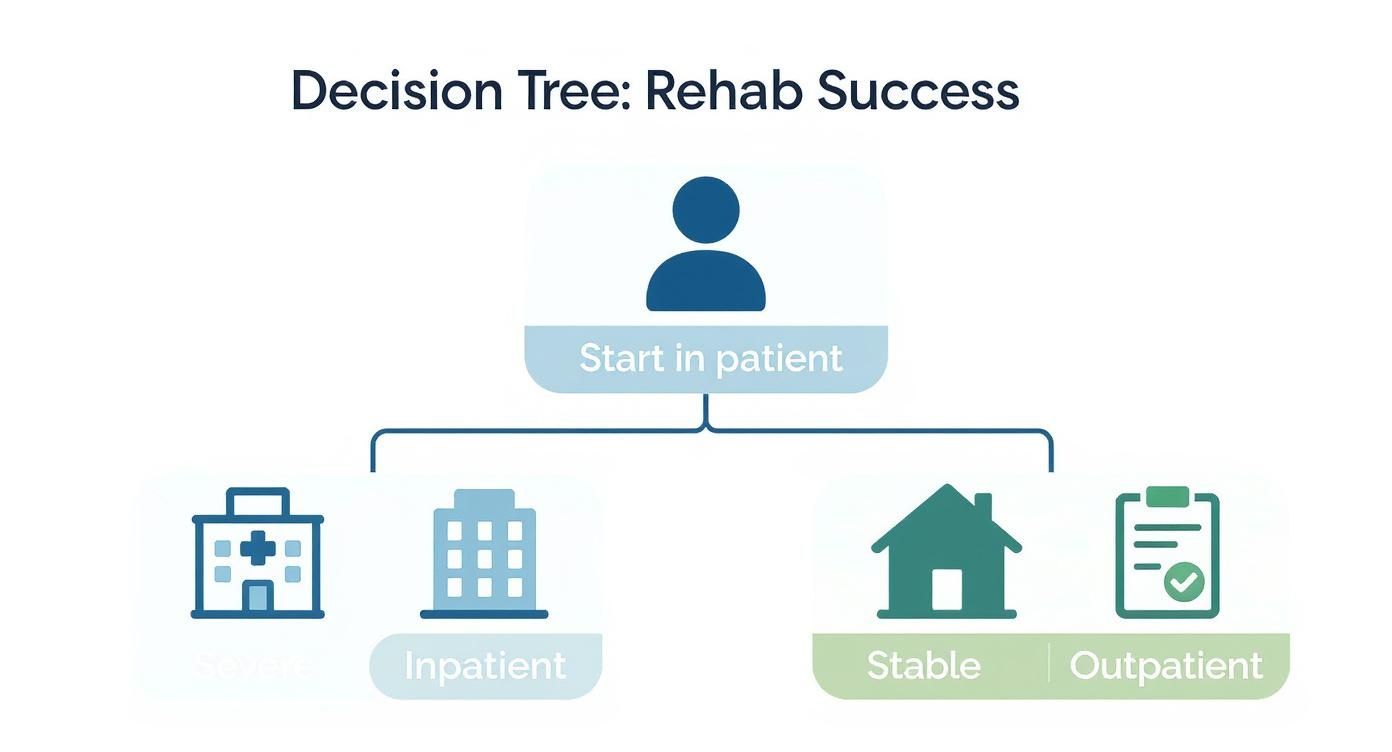
As the graphic shows, there’s a pretty clear path. The more severe your condition and the less stable your environment, the more you'll benefit from the structure of inpatient rehab. Conversely, those with a strong support system at home can often thrive with outpatient flexibility.
Preparing for the Next Step
Ultimately, this self-assessment is about preparing you for a meaningful conversation with a healthcare professional. An admissions counselor or a clinician can give you a formal evaluation to confirm that you’re headed toward the right level of care.
It's interesting to note that in the United States, outpatient treatment is by far the more common option. In fact, it's offered by 83% of all substance use treatment facilities, while just 24% offer residential care. This trend reflects how accessible and flexible outpatient models are for people who don't need 24/7 medical oversight. If you want to dig into the numbers, you can learn more about these national substance use treatment trends from KFF.
By getting clear on your own needs first, you can walk into that conversation feeling confident and ready to choose the recovery path that gives you the best shot at lasting success.
Final Summary & Key Takeaways
Deciding between outpatient and inpatient rehab can feel overwhelming, but it really boils down to a few key factors. The best path for you is the one that fits your specific clinical needs, your home life, and your daily responsibilities. Think of these points as a starting point for conversations with your family or a healthcare professional to find the program that will set you up for lasting success.
Your Quick Reference Guide
- Severity Should Guide Your Decision: For anyone dealing with a severe substance use disorder or a co-occurring mental health diagnosis, inpatient rehab is almost always the answer. The 24/7 structured support provides a level of medical and therapeutic care that’s essential for complex situations.
- Your Home Environment Matters—A Lot: Outpatient treatment can work beautifully, but only if you have a stable and supportive home. If your living situation is stressful or full of triggers, the insulated, safe setting of an inpatient program is a much better place to start your recovery.
- Flexibility or Full Immersion? Outpatient rehab is built to fit into your life, letting you keep up with work, school, or family commitments. Inpatient care is the opposite; it requires you to press pause on everything else to fully immerse yourself in recovery, free from the distractions of the outside world.
- Facing the Costs and Insurance Hurdles: Inpatient treatment costs more because it includes housing, meals, and round-the-clock care. While insurance often covers both, be prepared for more stringent pre-authorization requirements to justify the medical necessity of an inpatient stay.
- Aftercare Is Your Lifeline: Real, long-term recovery doesn't end when your initial program does. It’s all about the commitment to ongoing support. A common and effective path is to transition from an inpatient program to an outpatient one, which helps ease you back into daily life.
Frequently Asked Questions (FAQ)
1. Is one type of rehab more successful than the other?
Success depends on the individual, not the program type. The key is finding the right fit for your specific needs. For severe, complex cases, inpatient care often has a higher success rate due to its immersive nature. However, for those with strong support systems and milder conditions, outpatient care can be just as effective.
2. Can I switch from inpatient to outpatient rehab?
Absolutely, and it's a very common path. Many people complete an inpatient stay and then "step down" to an outpatient program for continuing care. This helps ease the transition back into daily life while keeping a strong support system in place.
3. Will my insurance cover both types of rehab?
Most insurance plans offer coverage for both inpatient and outpatient services, but the specifics can vary widely. Because inpatient care is more intensive and costly, your policy might have stricter requirements or limitations for it, such as needing pre-authorization. It's always best to call your insurance provider to verify your benefits.
4. How do I know which one is right for me?
The best way to figure this out is with a professional assessment. A doctor, licensed therapist, or a rehab admissions counselor can conduct an evaluation of your addiction severity, mental health, and home life to recommend the level of care that will work best for you.
5. Will I lose my job for going to rehab?
You are protected by law. The Family and Medical Leave Act (FMLA) allows eligible employees to take up to 12 weeks of unpaid, job-protected leave for serious health conditions, which includes substance use treatment. While you must inform your employer you are taking medical leave, you are not required to disclose the specific reason.