

Inpatient drug detox is the first critical step in breaking free from addiction, providing a safe, medically supervised space to get through the initial withdrawal period. This isn't a quick fix or a cure for addiction itself. Instead, think of it as a necessary stabilization period—the process of clearing your body and mind so you're ready for the real work of recovery.
Key Takeaways
- Inpatient detox is a medically supervised first step in addiction recovery, not a cure.
- The primary goal is stabilization: safely managing withdrawal symptoms to prepare you for further treatment.
- Professional oversight is crucial for substances with dangerous withdrawal, such as alcohol, opioids, and benzodiazepines.
- It provides a safe, trigger-free environment where the sole focus is on your health and recovery.
- Detox is the foundation for the real therapeutic work that addresses the root causes of addiction.
Understanding the Foundation of Safe Withdrawal
Imagine trying to land a plane in a storm without air traffic control. That's what detoxing on your own can be like—disorienting, dangerous, and often disastrous. Inpatient detox is your control tower. It’s a controlled, 24/7 clinical environment where a team of medical experts guides you through the turbulence of withdrawal, ensuring you land safely.
The main goal here is to get you physically and mentally stable. This means managing the intense symptoms that come with withdrawal, preventing any potentially life-threatening complications, and getting you prepared for the next phase of your treatment. This kind of professional oversight is absolutely essential when you're dealing with substances that have severe, and sometimes deadly, withdrawal syndromes.
Who Needs This Level of Care?
While everyone's journey is different, some dependencies are just too risky to handle without the security of an inpatient facility. The constant support and immediate access to medical care can make all the difference when things get tough.
This level of care is almost always the right call for anyone withdrawing from:
- Alcohol: Withdrawal can spiral into delirium tremens (DTs), seizures, and put immense stress on your heart. It’s not something to take lightly.
- Opioids: Getting off heroin, fentanyl, or prescription painkillers is notoriously brutal. The withdrawal is intensely painful, and the cravings can feel impossible to overcome alone.
- Benzodiazepines: Suddenly stopping drugs like Xanax or Valium can trigger life-threatening seizures. This requires a slow, medically managed taper.
Inpatient drug detoxification is a cornerstone of addiction treatment, especially for those with severe substance use disorders. It provides round-the-clock medical supervision and structured support to safely manage withdrawal.
This focused, medical approach is a huge part of the global addiction treatment market, which was valued at USD 9.44 billion in 2024. Inpatient programs are a vital piece of this system, offering a secure place for people to begin their recovery journey. You can find more details about the addiction treatment market on Precedenceresearch.com.
Ultimately, choosing an inpatient drug detox program is about putting safety first. It creates a supportive bubble where the only thing you need to focus on is navigating the toughest physical part of recovery, building a solid foundation for all the healing that comes next.
To make it clearer, here's a breakdown of what you can expect from a quality inpatient detox program.
Core Components of Inpatient Drug Detox
This table summarizes the essential features of a medically supervised inpatient detox program.
| Feature | Description |
|---|---|
| 24/7 Medical Supervision | Doctors and nurses are always on-site to monitor vital signs, manage symptoms, and respond to emergencies immediately. |
| Medication-Assisted Treatment (MAT) | FDA-approved medications are used to ease withdrawal symptoms, reduce cravings, and prevent dangerous complications. |
| Safe and Secure Environment | The facility is a trigger-free zone, removing access to substances and stressful external influences. |
| Nutritional Support | Proper hydration and balanced meals are provided to help your body heal and regain strength. |
| Clinical Assessment | A thorough evaluation helps create a personalized detox and a long-term treatment plan. |
| Transition Planning | The team prepares you for the next step in recovery, whether it's residential treatment, PHP, or IOP. |
These elements work together to ensure that the detox process is not just about stopping substance use, but about starting the healing process in a safe and supportive way.
Your Journey Through Inpatient Detox
Walking through the doors of a detox facility for the first time can be intimidating. It’s a huge step, and not knowing what’s on the other side can stir up a lot of anxiety. The good news is that the process is carefully structured, designed by medical experts to guide you from physical dependency to a place of stability, where the real work of recovery can begin.
Your journey starts the moment you arrive with a comprehensive intake assessment. This is much more than just filling out forms. It’s a detailed conversation where our clinical team—doctors, nurses, and therapists—gets to know you. We’ll discuss your history with substance use, your current physical health, and any co-occurring mental health conditions you might be facing. This deep dive allows us to build a detox plan that is specifically for you.
Every person's situation is unique, and a personalized plan is the only way to ensure we’re addressing your specific needs. It's the cornerstone of a safe and effective detox.
The Stabilization Phase
The first 24 to 72 hours are often the most intense part of the process. This is the stabilization phase, where our entire focus is on managing the acute, and often severe, symptoms of withdrawal. Think of it as the steepest part of a climb—it’s tough, but you have a team of experts right there with you, making sure you get through it safely.
During this critical window, our medical staff provides around-the-clock monitoring and compassionate care. We use proven medications to ease discomfort, reduce cravings, and prevent dangerous complications that can arise from withdrawing from substances like alcohol, benzodiazepines, or opioids. This constant medical supervision is exactly why inpatient detox is the safest way to begin your recovery.
The goal here is simple: re-establish a sense of physical and emotional balance in a controlled, supportive environment. We take the stress and fear out of withdrawal so your body can finally start to heal.
Of course, withdrawal looks different for everyone. Alcohol withdrawal can start within hours and peak in a couple of days, while opioid withdrawal might follow a longer, more drawn-out timeline. Our medical team understands these differences intimately and adjusts your care plan in real time to keep you as safe and comfortable as possible.
This visual breaks down the core stages of the process: stabilizing your body, managing withdrawal, and getting you ready for what comes next.
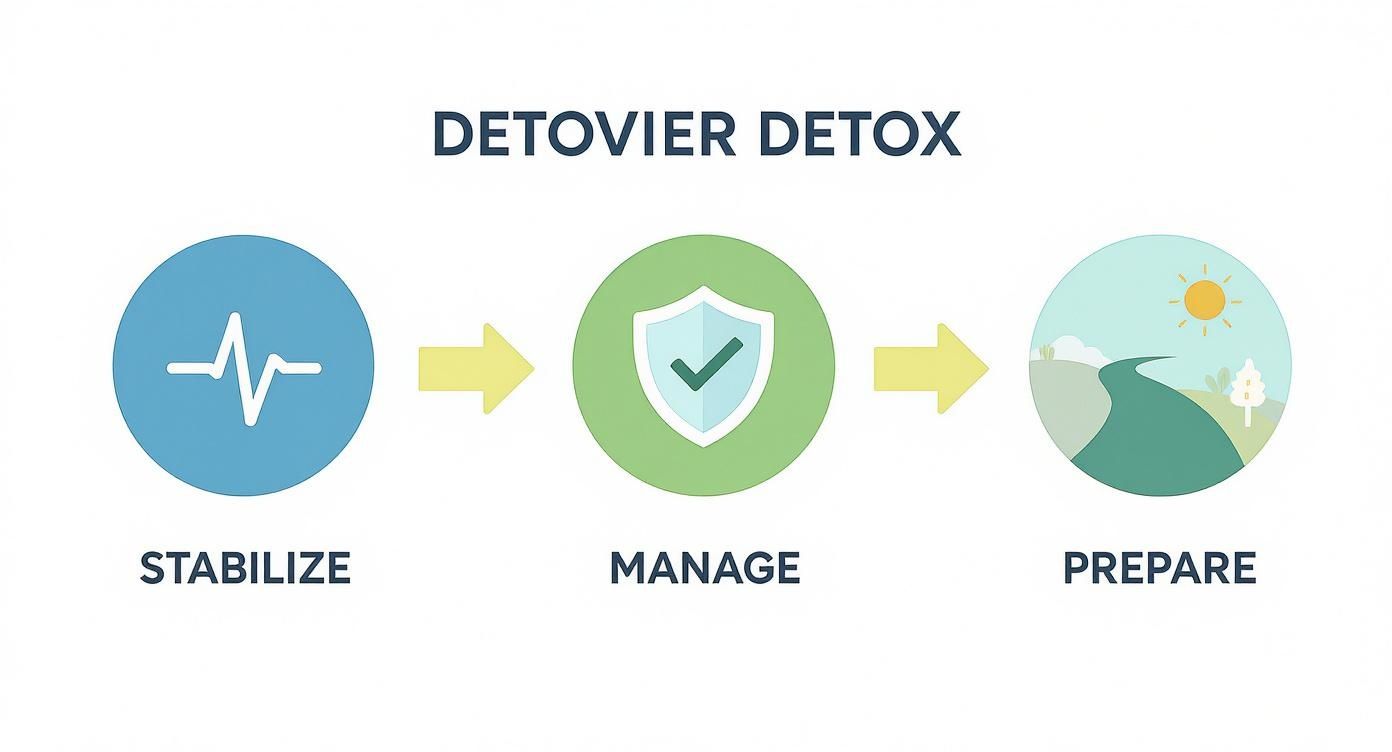
As the graphic shows, detox isn’t just one event. It’s a progressive journey that takes you from immediate medical safety to being fully prepared for long-term recovery.
Transitioning to Ongoing Treatment
Once your body is stable and the worst of the withdrawal symptoms have passed, our focus begins to shift. The final stage of inpatient detox is all about preparing you for the next step. It's crucial to remember that detox is the starting line, not the finish line. It cleanses the body, but it doesn't address the underlying reasons why addiction took hold.
Your clinical team will sit down with you to create a solid continuing care plan. This plan becomes your roadmap for the next phase of recovery, built around the progress you’ve made and your unique needs.
Common pathways after detox often include one of the following:
- Residential Treatment: You live at the facility, fully immersed in an environment of intensive daily therapy and support.
- Partial Hospitalization Program (PHP): You attend a structured, full-day program but can return home or to a sober living house in the evenings.
- Intensive Outpatient Program (IOP): A more flexible option with several hours of therapy each week, designed to fit around your work or family life.
This careful planning ensures there's no "what now?" moment. We make sure you have a seamless transition to the next level of care, giving you a strong foundation for lasting sobriety. You’ll leave us not just physically stable, but with a clear, actionable plan for the future.
Key Takeaways
- The first 24-72 hours are the most critical. This is when medical stabilization and symptom management are most intense.
- Your care plan is personalized. It’s built from a detailed assessment of your physical health, mental health, and substance use history.
- Medical supervision is constant. Around-the-clock monitoring ensures immediate response to any complications.
- The goal is stabilization, not just abstinence. The focus is on safely balancing your body and mind.
- Detox prepares you for the next step. A clear transition plan into ongoing treatment (like PHP or IOP) is a key part of the process.
How Medical Supervision Keeps You Safe
Trying to detox on your own can feel like steering a ship through a hurricane without a compass. The physical and psychological storm of withdrawal is often too much to handle, and for some substances, it can be downright dangerous. This is where inpatient drug detox shines, creating a safe harbor where our medical team can guide you through the storm.
At its heart, medical supervision means having experienced doctors and nurses watching over you 24/7. This isn't just about checking in now and then. It’s an active, hands-on process of tracking your vitals, listening to how you feel, and stepping in immediately if you show any signs of distress. This rapid response is what stops severe withdrawal complications—like seizures from alcohol or life-threatening heart problems from stimulants—before they can take hold.

This level of care isn’t a small niche; it's a critical need. In 2023 alone, nearly 54.2 million people over the age of 12 in the U.S. needed treatment for substance use. Many of them required inpatient care because their addiction was severe, especially when it involved opioids or alcohol, where withdrawal can be fatal without professional help. You can learn more about these substance abuse trends and statistics at DrugAbuseStatistics.org.
The Role of Medication-Assisted Treatment
One of our most effective tools for a safe detox is Medication-Assisted Treatment (MAT). This is a science-backed approach that uses specific, FDA-approved medications to make withdrawal far more manageable. It’s a common myth that this is just swapping one drug for another. That couldn't be further from the truth.
The real goal of Medication-Assisted Treatment is to bring stability back to your body. These medications calm your overwhelmed nervous system, quiet the intense cravings, and ease the painful physical symptoms. They give your body the space it needs to start healing without being stuck in a constant state of crisis.
This medical support is carefully customized based on the substance you’re detoxing from.
- For Opioid Withdrawal: We often use medications like buprenorphine (Suboxone). It latches onto the same brain receptors as opioids but without the high. This clever trick helps your brain think its needs are being met, which dramatically cuts down on cravings and the agony of withdrawal.
- For Alcohol Withdrawal: A carefully managed taper with specific benzodiazepines is the gold standard for preventing dangerous complications, including deadly seizures. These medications help soothe the overstimulated nervous system that goes into overdrive when alcohol is removed.
Using these medicines under strict medical guidance helps us pave a much smoother, safer road through the toughest part of early recovery. Our guide on safe drug detox in Dallas explains why medical supervision matters in much more detail.
Comprehensive Supportive Care
Great medical care goes beyond just MAT. A top-tier inpatient detox program also focuses on helping your body recover its strength. Withdrawal often leaves you depleted and dehydrated, feeling weak, sick, and utterly exhausted. Our team tackles this head-on with supportive care designed to rebuild you from the inside out.
This typically includes:
- IV Hydration Therapy to quickly replenish fluids and electrolytes, which is a game-changer if you’re dealing with vomiting or diarrhea.
- Nutritional Support with balanced, nutrient-rich meals that help your body repair itself while stabilizing your mood and energy.
- Comfort Medications that are non-addictive and used to manage all the other unpleasant symptoms, like nausea, body aches, anxiety, and sleepless nights.
This mix of round-the-clock medical oversight, targeted medications, and restorative care ensures your detox is not just safe, but as comfortable as it can possibly be. We take the fear and danger out of the equation, so you can put all your energy into taking the first real step toward freedom.
Key Takeaways
- 24/7 Monitoring is Essential: Constant medical supervision is the best defense against dangerous withdrawal complications like seizures or cardiac events.
- MAT Provides Stability: Medication-Assisted Treatment uses FDA-approved medicines to calm cravings and symptoms, making detox safer and much more bearable.
- Supportive Care Heals the Body: Things like IV fluids, good nutrition, and comfort meds help restore your physical health and improve how you feel overall.
- Safety is the Primary Goal: An inpatient facility eliminates the risks of detoxing alone and provides a secure environment totally focused on your healing.
- Care is Personalized: Every medical intervention is specifically chosen based on the substance used and your personal health history for the best possible outcome.
Choosing Between Inpatient And Outpatient Detox
Making the right call on the level of detox care is easily one of the most critical decisions you'll face at the start of recovery. This isn't about preference; it's about matching the right medical intensity to your unique situation. The main difference really comes down to your environment and how much medical supervision you'll have.
Think of it this way: inpatient drug detox is like staying in a specialized medical unit after a serious operation. You have a dedicated team watching over you 24/7 in a completely controlled and safe setting, ready to step in at a moment's notice. Outpatient detox, on the other hand, is more like having a home health nurse visit you—you still get professional medical guidance, but you're navigating recovery from your own home.
Who Needs Inpatient Detox
For many people, the structured, secure environment of an inpatient facility isn't just helpful—it's absolutely essential for a safe detox. This level of care is often the only responsible choice for anyone facing certain high-risk situations.
You're likely a strong candidate for inpatient detox if you:
- Have a long-term or severe substance use disorder. The longer you've used a substance and the higher the doses, the more intense and unpredictable withdrawal is likely to be.
- Are withdrawing from high-risk substances. Alcohol, benzodiazepines (like Xanax), and opioids (especially fentanyl) can trigger life-threatening withdrawal symptoms, including seizures, hallucinations, and delirium tremens. Medical supervision isn't just a good idea; it's a necessity.
- Have a co-occurring mental health condition. If you're also managing depression, anxiety, PTSD, or another condition, withdrawal can pour fuel on the fire. You need integrated care that addresses both your physical and mental health at the same time.
- Lack a stable or supportive home environment. Trying to detox in an unstable living situation, especially one with access to substances or unsupportive people, can make success feel nearly impossible.
For example, someone with a long-standing opioid dependency who also battles severe anxiety needs the constant medical oversight and integrated psychiatric support that only an inpatient detox facility can offer. Attempting to manage a physical and mental health crisis at home is incredibly dangerous.
When Outpatient Detox Might Be An Option
While inpatient care is critical for many, outpatient detox can be a viable path for individuals with less severe dependencies who have a rock-solid support system at home. This approach allows you to continue living at home while attending scheduled appointments at a clinic for medical checks and medication management.
An outpatient program could be a good fit if you:
- Have a mild to moderate substance use disorder.
- Are in good overall physical and mental health.
- Have a strong, sober support network of family and friends to lean on.
- Live in a safe, stable, and trigger-free environment.
Even if you check all these boxes, the final decision should always be made after a professional medical assessment. For a more detailed comparison, our guide on outpatient vs. inpatient rehab provides some great additional insights. At the end of the day, your safety has to be the number one priority.
Inpatient vs Outpatient Detox Comparison
Use this table to understand the fundamental differences and decide which program aligns with your needs.
| Feature | Inpatient Detox | Outpatient Detox |
|---|---|---|
| Environment | Secure, medically supervised facility. No access to substances. | Living at home, attending scheduled appointments at a clinic. |
| Medical Supervision | 24/7 medical and clinical monitoring. | Regular check-ins with medical staff, but no round-the-clock supervision. |
| Best For | Severe SUD, high-risk substances (alcohol, benzos), co-occurring disorders. | Mild to moderate SUD, low-risk substances, strong home support. |
| Structure & Support | Highly structured days with therapy, medical care, and peer support. | Allows for maintaining work or school, but requires high self-motivation. |
| Crisis Management | Immediate intervention for medical or psychiatric emergencies. | Limited to clinic hours; emergencies require a call to 911 or a hospital visit. |
| Mental Health Support | Integrated psychiatric care available on-site. | Referrals to outside therapists or psychiatrists are often necessary. |
Choosing the right setting is the foundation for a safe and successful start to recovery.
Key Takeaways
- Severity Matters Most: The type of drug you used and the intensity of your use are the biggest factors in determining the right level of care.
- Inpatient Offers 24/7 Safety: For high-risk withdrawals from substances like alcohol, benzos, and opioids, constant medical supervision in a secure facility is non-negotiable.
- Co-Occurring Conditions Require More Support: If you have a dual diagnosis, the integrated medical and psychiatric care found in an inpatient setting is almost always necessary.
- Your Environment Plays a Huge Role: A stable, supportive home is a must-have for safe outpatient detox. If you don't have that, an inpatient facility is the far better choice.
- Always Consult a Professional: Never try to make this decision on your own. A thorough medical assessment is the only way to determine the safest and most effective path forward for you.
What Happens After Detox
Making it through inpatient drug detox is a huge accomplishment—a true milestone. It’s the moment your body is finally free from the physical hold of substances. But it’s important to see this for what it is: the starting line, not the finish line.
Think of detox like clearing out a condemned building. It's a necessary, messy, and crucial first step. Once the debris is gone and the foundation is stable, the real work of building a new, stronger life can actually begin.
As soon as you’re medically stable, our clinical team sits down with you to map out what comes next. A smooth transition is everything. True, lasting recovery means getting to the heart of why the substance use started in the first place—the thoughts, behaviors, and life experiences that fueled it. Detox clears the way, but it doesn't solve those underlying issues. It prepares you to face them with a clear head and a body that's starting to heal.
This focus on a complete continuum of care isn't just our philosophy; it's where the entire field of addiction treatment is heading. The global market for substance abuse treatment is expected to hit USD 16.42 billion by 2025, largely driven by comprehensive programs that follow detox. This trend shows a worldwide recognition that we have to treat the whole person, not just the physical dependency. You can discover more insights about the substance abuse treatment market on cognitivemarketresearch.com.
Building Your Path to Lasting Recovery
After detox, we work together to build out your personalized treatment plan. There's no such thing as a one-size-fits-all approach to recovery, so we help you find the level of care that provides just the right mix of structure, support, and freedom for your specific situation.
The most common pathways we help people navigate after detox are:
- Residential Treatment: This is the most intensive option. You live on-site, fully immersed in a therapeutic community, away from the triggers and stressors of daily life. It’s a chance to focus 100% on healing.
- Partial Hospitalization Program (PHP): A great step-down from residential care. You get the same intensity of a full-time program—with hours of therapy and medical support each day—but you return home or to a sober living house at night.
- Intensive Outpatient Program (IOP): This offers more flexibility. With several hours of therapy a few days a week, IOP allows you to reintegrate back into your life, balancing treatment with work, school, or family commitments.
The whole point of these programs is to move beyond just being physically stable. This is where you roll up your sleeves and do the deep therapeutic work—learning the skills, strategies, and new ways of thinking that will support a life free from substance dependence.
This is where you'll dive into evidence-based therapies like Cognitive-Behavioral Therapy (CBT) to rewire destructive thought patterns. You’ll also find incredible strength and connection in group counseling and begin to heal old wounds through trauma-informed care. This is the work that builds a solid foundation for the rest of your life.
The Importance of Aftercare Planning
As you move through your treatment program, our focus gradually shifts toward what happens when you leave. Aftercare planning isn't an afterthought; it's one of the most critical pieces of the puzzle. It’s your personalized roadmap for navigating the challenges and joys of life in recovery.
A solid aftercare plan is your safety net, designed to support you long after you walk out our doors. It usually includes practical relapse prevention strategies, connections to local support groups like AA or NA, and setting up ongoing therapy. We make sure you don't just "finish" treatment—you leave with a clear, actionable plan for a vibrant, sober future.
Key Takeaways
- Detox Is the First Step: Getting through detox is a massive win, but it's the beginning of the real work, not the end.
- Transition Is Key: Moving smoothly into the right level of care—like residential, PHP, or IOP—is essential for addressing the psychological roots of addiction.
- Therapy Heals: After detox, therapies like CBT and group counseling are where you build coping skills and heal the underlying issues.
- Aftercare Is Your Roadmap: A strong aftercare plan with support groups and ongoing therapy is your guide to long-term sobriety.
- Treatment Is Personalized: Your journey is unique. The right next step is always based on your individual needs, ensuring you get the support you truly need to succeed.
Finding and Paying for Treatment
https://www.youtube.com/embed/vkkelAz6dHw
When you're ready to get help for a substance use disorder, the last thing you need is a complicated process. We get it. That's why we've made the path to treatment as straightforward as possible, starting with a simple, confidential phone call.
That first conversation is just a pre-assessment. You’ll speak with a compassionate member of our admissions team who will ask a few questions to get a feel for your situation. It's not an interrogation; it's about figuring out the right level of care to keep you safe and set you up for a successful recovery. From there, we can guide you through the next steps for entering our inpatient drug detox program.
A big piece of that puzzle is figuring out payment. For most of our clients, this means using their health insurance.
Making Sense of Your Insurance Benefits
Trying to decipher an insurance policy can feel like reading a foreign language, but our team is fluent. We can verify your benefits for you—often in just a few minutes—and give you a simple, clear breakdown of what your plan covers. This takes the guesswork out of the equation so you can focus on what really matters: getting well.
When we look over your plan, we’ll walk you through what the key terms actually mean for your treatment:
- Deductible: This is the amount you'll need to pay out-of-pocket before your insurance company starts chipping in.
- Out-of-Pocket Maximum: Think of this as your financial safety net. It’s the absolute most you’ll have to pay for covered services in a year. Once you hit this limit, your insurance pays 100% of the rest.
- In-Network vs. Out-of-Network: We are an in-network provider for most major PPO insurance plans. This is a huge advantage, as it means we have a contract with your insurance company to provide services at a lower cost to you.
We firmly believe that financial stress shouldn't stand in the way of life-saving care. Our admissions specialists are experts at navigating the insurance world to make sure you get every bit of the coverage you're entitled to.
Dealing with insurance can be a headache, which is why we've put together a more detailed guide on the topic. For a deeper dive, check out our article that answers the question, does insurance cover drug rehab? Our goal is to give you clarity and confidence, showing you that recovery is well within reach, both medically and financially.
Key Takeaways
- It Starts With a Call: A single, confidential phone call is the first step to getting a personalized assessment and clear guidance.
- We Handle the Insurance: Our team will contact your insurance provider directly to figure out your exact coverage for detox and treatment.
- No More Confusion: We’ll help you understand your deductible, out-of-pocket maximum, and what it means to be in-network.
- Most PPO Plans Accepted: We work with a wide variety of PPO insurance plans to make top-tier care affordable.
- You're Not Alone: Our team is here to manage the logistics so you can put all your energy into healing.
Frequently Asked Questions About Inpatient Drug Detox
Making the decision to start an inpatient drug detox program is a significant step, and it's natural to have questions. Here are answers to some of the most common concerns.
How long does inpatient detox typically last?
A typical stay is between 5 to 10 days. However, this can vary based on the substance used, the duration and severity of the addiction, and your overall physical and mental health. The medical team will create a timeline that is safest for you.
Is detox painful?
While withdrawal is uncomfortable, the primary purpose of a medically supervised detox is to manage pain and discomfort. The clinical team uses FDA-approved medications and supportive care to make the process as safe and bearable as possible.
Will I be able to have visitors or contact my family?
Most facilities have specific policies regarding communication to ensure you can focus on your recovery. Typically, there are designated times for phone calls and approved family visits after the initial, most critical phase of stabilization is complete.
What happens immediately after detox is completed?
Detox is only the first step. Once you are medically stable, the clinical team will recommend the next appropriate level of care. This usually involves a seamless transition into a residential treatment, Partial Hospitalization Program (PHP), or Intensive Outpatient Program (IOP) to address the psychological aspects of addiction.
Can I be forced to take medication during detox?
No. Treatment is a collaborative process. While the medical team will recommend medications that can significantly improve your safety and comfort, the final decision is always yours. They will explain the benefits and answer all your questions so you can make an informed choice.
What if I don't have insurance?
Lack of insurance should not be a barrier to seeking help. Many treatment centers offer alternative payment options, such as sliding scale fees based on income, financing plans, or can connect you with state-funded programs. Always call and ask about your options.
Is the admissions process confidential?
Yes, absolutely. From the first phone call to your discharge plan, your privacy is protected by federal laws like HIPAA. All communication with the admissions and clinical teams is 100% confidential.
