

The acute physical phase of alcohol detox typically completes in 5 to 7 days, with symptoms often peaking 48 to 72 hours after the last drink and 95% of cases lasting 2 to 8 days. The dangerous part isn't usually the whole week, it's the first 3 days, when monitoring matters most and a monitored stay can run 3 to 14 days depending on severity and care setting.
A Dallas family often lands on this question late at night after noticing shaking, sweating, or confusion and wondering whether the next morning will be better or much worse. The honest answer is that alcohol detox is usually measured in days, not months, but the right timeline depends on the person, not the calendar alone. Some people are through the acute physical stretch fairly quickly, while others need more observation because the risk window is front-loaded.
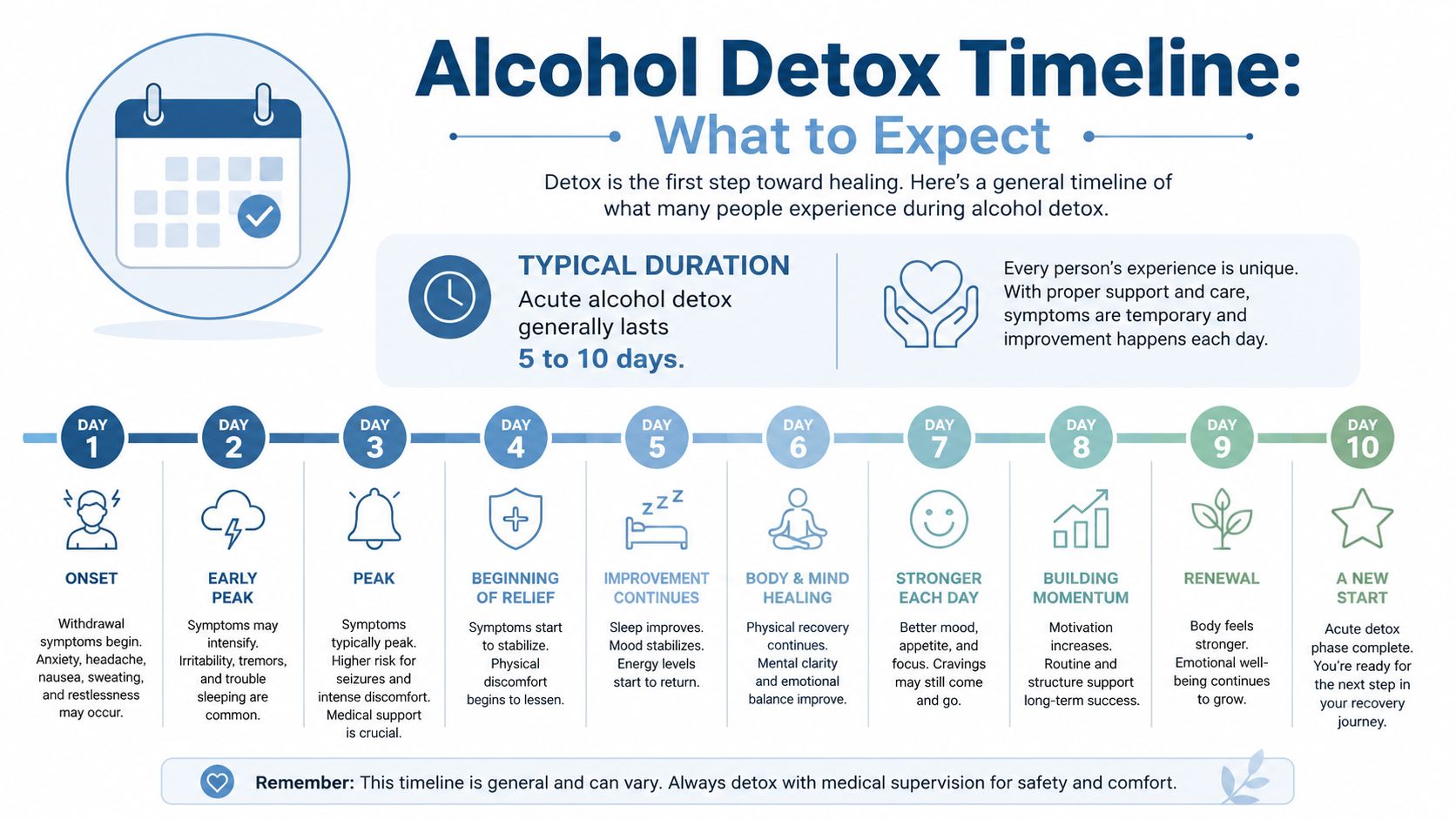
Table of Contents
- How Long Alcohol Detox Typically Takes and What to Expect First
- Understanding the Alcohol Detox Timeline Hour by Hour and Day by Day
- Why Detox Length Varies for Every Person in Dallas
- Medical Risks During Alcohol Withdrawal and When to Seek Help
- What Medically Supervised Alcohol Detox Looks Like at Tru Dallas
- Beyond Detox Rehab MAT and Aftercare for Lasting Recovery
- Taking the Next Step Toward Safe Detox in Dallas
How Long Alcohol Detox Typically Takes and What to Expect First
A reasonable first answer for families in Dallas is simple, acute alcohol detox usually takes about a week. A widely cited survey of 2,136 American adults who had detoxed from alcohol found that withdrawal symptoms lasted an average of 4.83 days, and 95% reported symptoms lasting 2 to 8 days. That same source notes that symptoms commonly peak 48 to 72 hours after the last drink and often resolve within 7 to 10 days.
That range helps set expectations without making detox sound neat and predictable. A person may feel early symptoms, then seem worse for a day or two, then slowly settle. Families often read that pattern as a setback, but it's often the normal arc of withdrawal.
Practical rule: if the first day feels manageable, that doesn't mean the next two days will be easy. The medically important window usually arrives later.
The clearest way to think about it is this. Physical detox is the body adjusting to the absence of alcohol, while functional recovery is sleep, mood, and energy coming back online. Those are related, but they're not the same finish line.
For someone in Dallas searching from a kitchen table after midnight, that difference matters. It means the question is not only “How long does alcohol detox take?” but also “How closely does this person need to be watched while it's happening?” That's why a local Dallas detox center may recommend a more supervised setting when the first few days could turn unstable.
Understanding the Alcohol Detox Timeline Hour by Hour and Day by Day
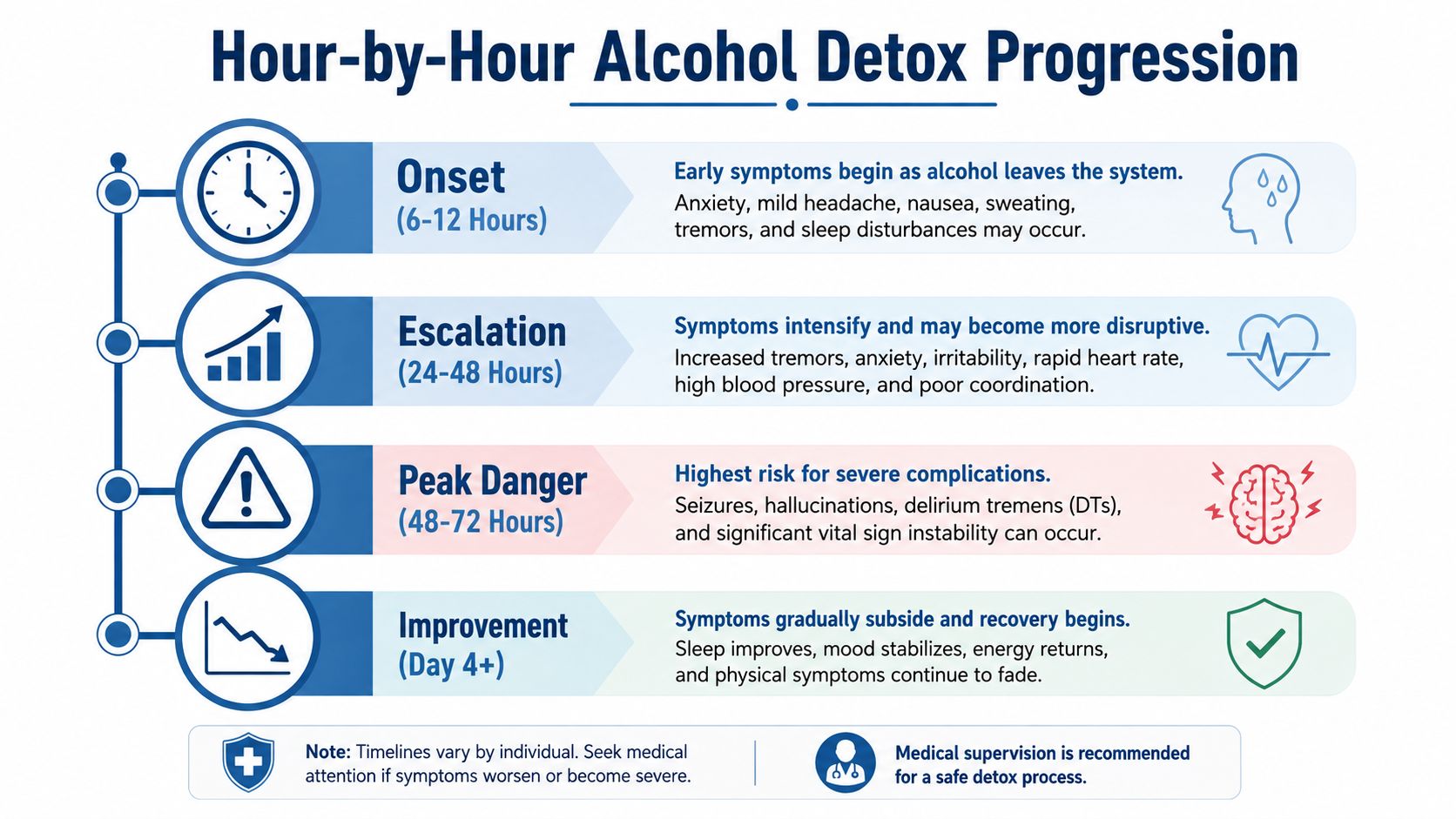
Alcohol withdrawal often begins sooner than people expect. Clinical timelines show it can start 6 to 12 hours after the last drink, then intensify as the body keeps adjusting. In the first stage, symptoms may seem to flicker on and off, much like a dimmer switch being turned lower before the room feels clearly dark.
The first hours can look mild, but they still matter
Early symptoms often include anxiety, shakiness, nausea, sweating, or poor sleep. That stage can be misleading because the person may still be talking, walking, and insisting they are fine. The body may already be in withdrawal even when the situation still looks steady from the outside.
By 24 to 48 hours, seizure risk is more likely, according to clinical timelines. That does not mean every person will seize, but it does mean the danger window is real and concentrated. Families in Dallas often need to treat that window as a monitoring period, not just a count of hours.
By 48 to 72 hours, delirium tremens may appear. This is the stretch when confusion, severe agitation, and worsening instability can show up quickly, which is why many families are told not to wait at home and hope symptoms pass on their own.
After that, the body usually begins to settle, but recovery is still uneven. Many people improve by about day 5. Even then, improvement does not mean everything is back to normal. Sleep can lag, mood can stay uneven, and energy may return more slowly than the physical symptoms.
For families trying to decide between 24/7 supervised detox and outpatient care in Dallas, the main question is not only how long the process lasts. It is how much risk sits inside those first few days, and whether the person can be watched closely enough while symptoms may change fast. That is the point at which a medically supervised setting can matter most, because the highest-risk period is often the middle of the timeline, not the beginning.
American Addiction Centers
Why Detox Length Varies for Every Person in Dallas
The length of detox changes because people don't arrive with the same body, drinking pattern, or support system. A clinical review found alcohol detox treatment may last 3 to 14 days, with one study showing an average outpatient duration of 6.5 days and an average inpatient duration of 9 days (PMC). That spread shows why a calendar alone can't predict the right level of care.
Two people can stop drinking on the same day and have very different needs
One Dallas patient might have a shorter drinking history, stable housing, and someone checking on them at home. Another may have repeated withdrawal episodes, poor sleep, liver concerns, anxiety, or a history of severe symptoms. Both people are “in detox,” but they are not facing the same risk profile.
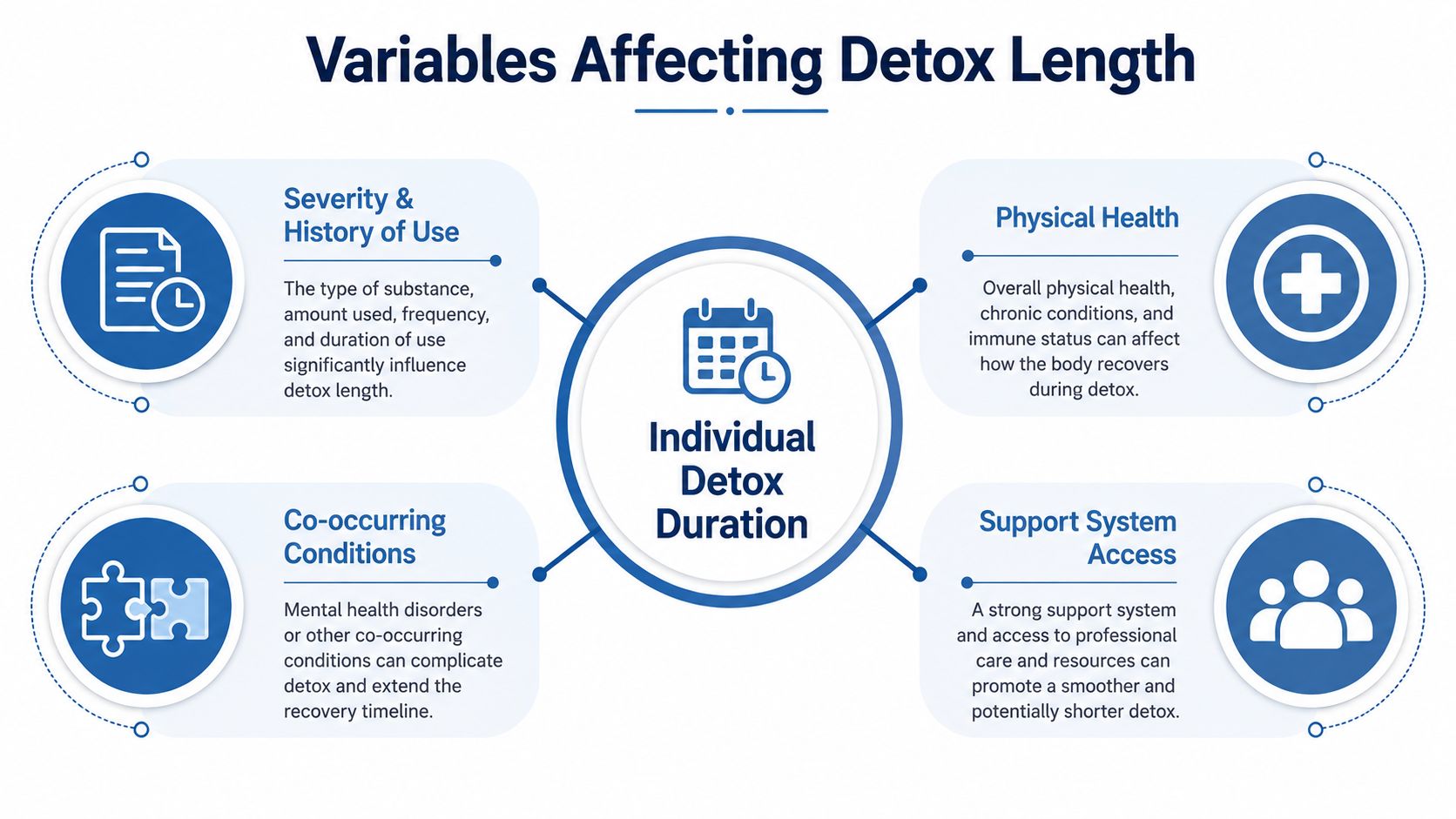
The most important factors are usually the ones clinicians ask about first:
- Severity and history of use. Longer, heavier, or more frequent drinking tends to make withdrawal more complicated.
- Physical health. Liver problems, poor nutrition, and other medical issues can make the body less able to handle stress.
- Co-occurring conditions. Anxiety, depression, or bipolar disorder can make symptoms harder to manage.
- Support at home. A safe, monitored environment matters when symptoms can change quickly.
A family in North Dallas may assume that a person who looks calm needs only a short stay, while another person in Euless might need more observation even if they're outwardly less dramatic. That's where professional assessment becomes useful. Detox planning should follow the person's risk, not the hope that the worst part will be brief.
Medical Risks During Alcohol Withdrawal and When to Seek Help
A person may seem to be getting through the first stretch of alcohol withdrawal, then suddenly become sicker. That is why alcohol detox is treated as a medical monitoring window, not just a count of days. The most dangerous complications tend to appear early, with seizure risk rising around 24 to 48 hours and delirium tremens sometimes appearing 48 to 72 hours after the last drink, even though the most obvious symptoms may improve within 3 to 7 days (GoodRx).
Warning signs that need urgent attention
Confusion, hallucinations, fever, rapid heartbeat, or seizures should never be brushed off as a rough night. Those symptoms point to a withdrawal process that can change quickly and needs immediate medical care. If a seizure happens, or if the person becomes severely confused, emergency services are appropriate.
Dallas families often ask whether home detox can ever be safe. The safer answer depends on the risk profile. Home detox is a poor fit when there is a history of severe withdrawal, prior seizures, delirium tremens, or limited supervision. Even when the early symptoms seem manageable, the peak risk period may still be ahead.
For a practical overview of common warning signs and why they matter, see this guide on alcohol detox side effects.
If the person is hard to wake, severely confused, or acting in a way that feels medically alarming, the right move is to get help right away rather than wait for symptoms to settle.
A 24/7 medically supervised detox setting can be the safer choice for many people in Dallas and the surrounding area. The objective is steady clinical monitoring through the risk window, not dramatizing the detox experience.

What Medically Supervised Alcohol Detox Looks Like at Tru Dallas
A person who walks into a Dallas detox center often arrives with a simple question, how long will this take, and how much watching does the body need along the way? Medically supervised detox starts by answering that in a practical way. The team looks at withdrawal risk, physical health, and mental health needs, because detox is really a safety window while the body recalibrates. At Tru Dallas Detox & Recovery Center, that process includes 24/7 clinical monitoring, supportive medications when appropriate, and care matched to the person's level of stability.
The first day usually centers on intake, questions, and observation. Staff check vital signs, review drinking history, and watch for red flags that can make the next 24 to 72 hours more concerning. In plain terms, they are trying to stay ahead of a problem instead of waiting for it to grow.
Some families want a clear picture before admission, and that helps calm the fear around the process.
- Monitoring: Care stays available around the clock so symptoms can be followed as they change.
- Comfort support: Medications may be used to ease withdrawal distress and lower complication risk.
- Therapeutic support: Individual and group counseling can begin once the person is stable enough.
- Dual diagnosis care: Co-occurring anxiety, depression, or bipolar symptoms are addressed within the plan.
- Discharge planning: The team prepares the next step before detox ends.
A quiet, private setting can make those first days feel less overwhelming. Families often feel relief when they learn that the plan extends beyond detox and discharge, with a structured transition into ongoing recovery support built in from the start. For a more detailed look at the process, see medically supervised alcohol detox at Dallas Detox.
Tru Dallas also helps patients verify insurance for many PPO plans, which can remove one of the biggest barriers to getting started. In alcohol detox, the right level of care is the one that fits the person's risk, not the one that seems easiest in the moment.
Beyond Detox Rehab MAT and Aftercare for Lasting Recovery
Detox ends when the body is safer, not when recovery is finished. Many individuals complete the physical phase in roughly 5 to 7 days, but symptoms can extend longer, and sleep and functional recovery may take weeks to normalize. That gap is where many families get confused, because the person may look more stable while still feeling off.
The next step depends on stability, support, and history
Some people step into inpatient or outpatient rehab right after detox. Others need medication support for alcohol use disorder, therapy for co-occurring mental health concerns, or a structured relapse-prevention plan before going home. If home is supportive and the person is medically stable, outpatient care can make sense. If the environment is unstable or the withdrawal history is complicated, a more protected setting is often the safer bridge.
Post-acute withdrawal can also affect sleep, mood, and concentration. That's why discharge planning should not stop at “the alcohol is out of the system.” It should include a plan for cravings, routine, counseling, and follow-up.
For readers who want a deeper look at the role of medications in recovery, this overview of medication-assisted treatment for alcohol gives a practical starting point.
Detox opens the door. Rehab, therapy, and aftercare help keep that door from swinging shut again.
In Dallas, that next step might include continued care close to home, sober living referrals, or family guidance on what support should look like after discharge. The right plan treats detox as the beginning of treatment, not the end of it.
Taking the Next Step Toward Safe Detox in Dallas
The short answer to how long does alcohol detox take is predictable enough to plan around, but personal enough to require care. Individuals typically pass through the acute physical phase in about a week, while the most medically unstable period sits in the first 3 days. That's why a timely decision matters more than waiting to see whether symptoms settle on their own.
For Dallas families, the primary question is often whether the person needs a monitored setting or can safely wait at home. A supervised detox option gives the team room to watch for the early danger window, respond to worsening symptoms, and guide the person into the right next step after detox ends. That kind of support can be especially important when anxiety, medical issues, or past withdrawal are part of the picture.
Tru Dallas Detox & Recovery Center serves individuals and families in Dallas, Euless, and Fort Worth with medically supervised detox, coordinated treatment planning, and continued care after the first stage ends. The center's role is to help people move through withdrawal safely, then connect that stabilization to a realistic recovery path.
If alcohol withdrawal is already underway, the safest next move is to reach out now, not later. Call to ask about symptom monitoring, discuss the right level of care, and verify insurance before the withdrawal window gets more difficult.
If alcohol detox is affecting someone in the Dallas area, Tru Dallas Detox & Recovery Center can help with medically supervised withdrawal, next-step planning, and confidential guidance for families. Visit Tru Dallas Detox & Recovery Center to check insurance, ask about admission, and get support that matches the risk window, not just the calendar.