
The call comes late in the evening. A parent in Dallas has watched a loved one promise to quit, then spiral again after another withdrawal scare, and now the question is no longer whether treatment is needed. The question is where to go, how fast to move, and how to pay for care without losing precious time.
For many families across Dallas, Fort Worth, Irving, Arlington, and nearby neighborhoods like Uptown, Oak Cliff, and East Dallas, inpatient drug rehab in Texas becomes the turning point when outpatient help hasn't been enough. The right program gives a person a protected setting, medical oversight, and a real chance to stabilize before life pushes them back into the same triggers. That's why the choice matters so much, especially when withdrawal, relapse, and co-occurring mental health symptoms are all part of the picture.
Table of Contents
- Understanding Inpatient Drug Rehab in Texas
- The Pathway from Detox to Inpatient Admission
- Evidence-Based Therapies and Dual Diagnosis Treatment
- How Long Does Inpatient Rehab Last
- Navigating Insurance Coverage and Treatment Costs in Texas
- Choosing a Reputable Inpatient Rehab Center in Dallas
- Aftercare Planning and Building Long-Term Recovery
Understanding Inpatient Drug Rehab in Texas
A family in North Dallas may notice the same pattern over and over. The person gets through a few sober days at home, then anxiety spikes, sleep collapses, cravings return, and the cycle starts again. That's often the point where inpatient care stops sounding dramatic and starts sounding practical.
Inpatient drug rehab means the person lives in a structured treatment setting and receives round-the-clock support while they work on recovery. That environment matters because early sobriety is fragile, especially when the person is dealing with severe substance use, repeated relapse, or unstable mental health symptoms. A strong program does more than keep someone busy, it protects them from the conditions that kept the addiction going.
The clinical value of that structure is easier to understand when looking at how addiction affects the brain and behavior. A helpful overview of the science behind addiction is available through Empire Medical Wellness, and it aligns with what families see on the ground, cravings, impaired judgment, and a narrowed ability to pause before using again.
Who tends to need inpatient care first
Inpatient treatment usually fits people who can't safely start recovery in a less supervised setting. That includes individuals with dangerous withdrawal risks, heavy polysubstance use, repeated outpatient failures, or co-occurring depression, anxiety, bipolar disorder, or trauma symptoms that complicate sobriety.
Practical rule: if staying at home makes it too easy to use, or too hard to stay medically safe, inpatient care is often the right starting point.
Texas has a substantial treatment system behind that choice. The state profile shows 512 substance abuse treatment facilities and 35,995 clients in treatment on March 29, 2019, with 53.1% treated for drug abuse only and 34.5% treated for both alcohol and drug issues, which shows the size and complexity of the care system SAMHSA Texas profile. For Dallas families, that scale matters because it means care exists, but access still requires the right level-of-care match and a fast admission path.
For readers comparing levels of care, this internal guide on outpatient vs inpatient rehab helps clarify when a home-based plan is enough and when it isn't.
The Pathway from Detox to Inpatient Admission
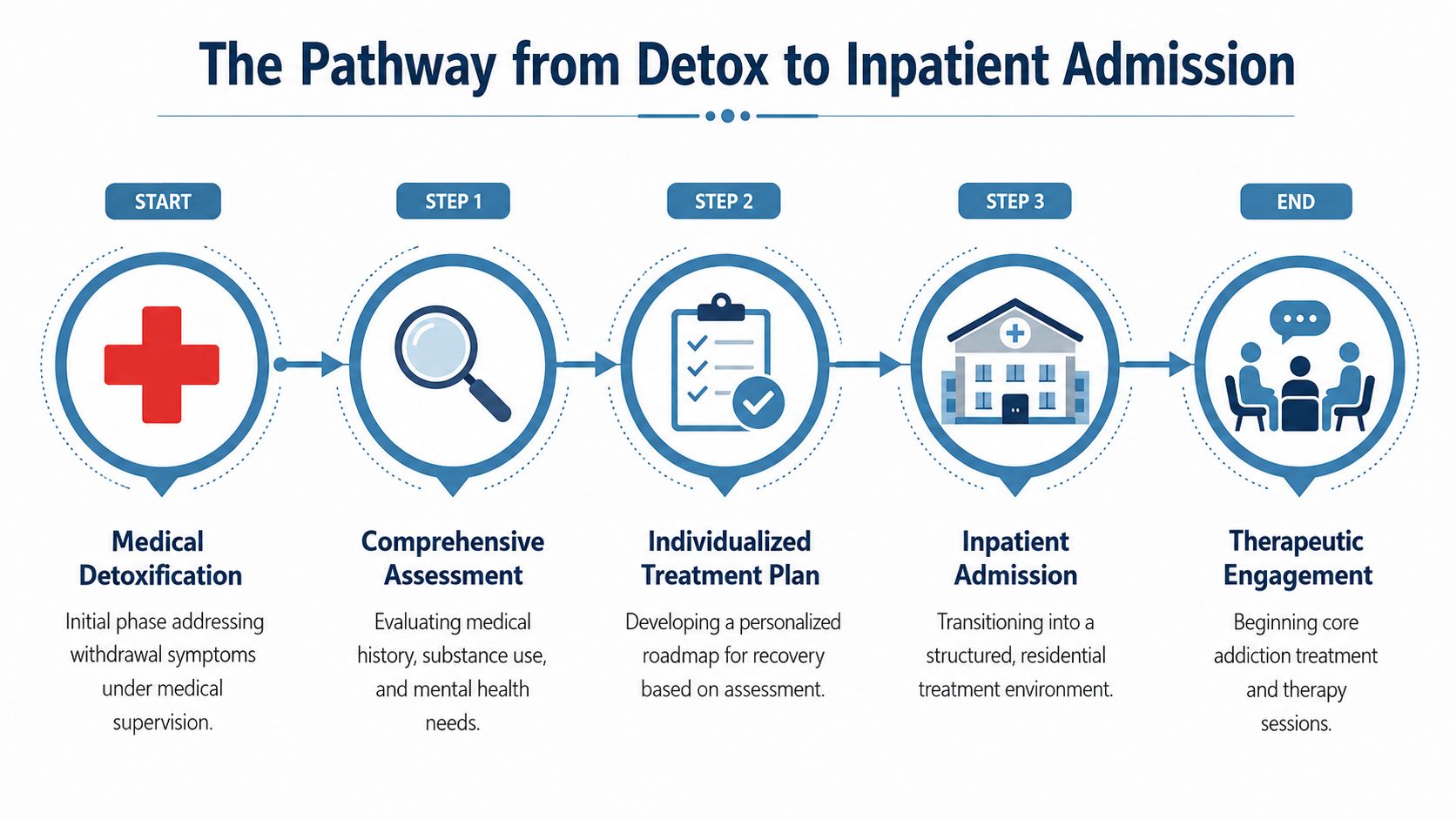
Many individuals don't walk straight into residential rehab feeling stable. They start in withdrawal, in crisis, or at least at serious risk of withdrawal, and that's why the first step is usually medical detox. The point isn't just comfort. It's to get the body stable enough to engage in therapy without the person getting pulled back into use by pain, panic, or insomnia.
What happens before residential admission
In a medically supervised setting such as Tru Dallas Detox, the first hours focus on assessment, safety, and symptom management. For someone withdrawing from alcohol, opioids, methamphetamine, or prescription medications, the team watches for dehydration, agitation, sleep disruption, blood pressure changes, confusion, and other signs that the person isn't ready for an unstructured setting.
Detox alone is not treatment. It clears the immediate physical crisis, but it doesn't teach coping skills, address trauma, or change the routines that fueled the addiction. That's why the handoff into residential care matters so much, because the risk of immediate relapse is high when a person leaves detox with no therapeutic next step.
A stable discharge from detox should feel like a bridge, not a hallway.
That bridge usually includes a medical assessment, a treatment recommendation, and a realistic bed plan. Dallas-Fort Worth residents often need this process to move fast, because beds can be limited and delays create openings for relapse, especially when the person returns to the same environment that contributed to the crisis.
The transition works best when the detox team and the residential team share information about medications, withdrawal severity, mental health concerns, and family needs. The clearer that handoff is, the less likely the person is to fall through the cracks. For a practical follow-up, this guide to treatment after detox is useful for understanding what comes next after stabilization.
Evidence-Based Therapies and Dual Diagnosis Treatment
Once the body is stable, the actual work begins. In quality inpatient programs, therapy isn't a generic support group schedule; it's a coordinated clinical plan built around the person's symptoms, triggers, and diagnosis history. That matters because addiction rarely exists by itself, and untreated depression, anxiety, trauma, or bipolar symptoms can quickly undo early progress.
What evidence-based treatment usually includes
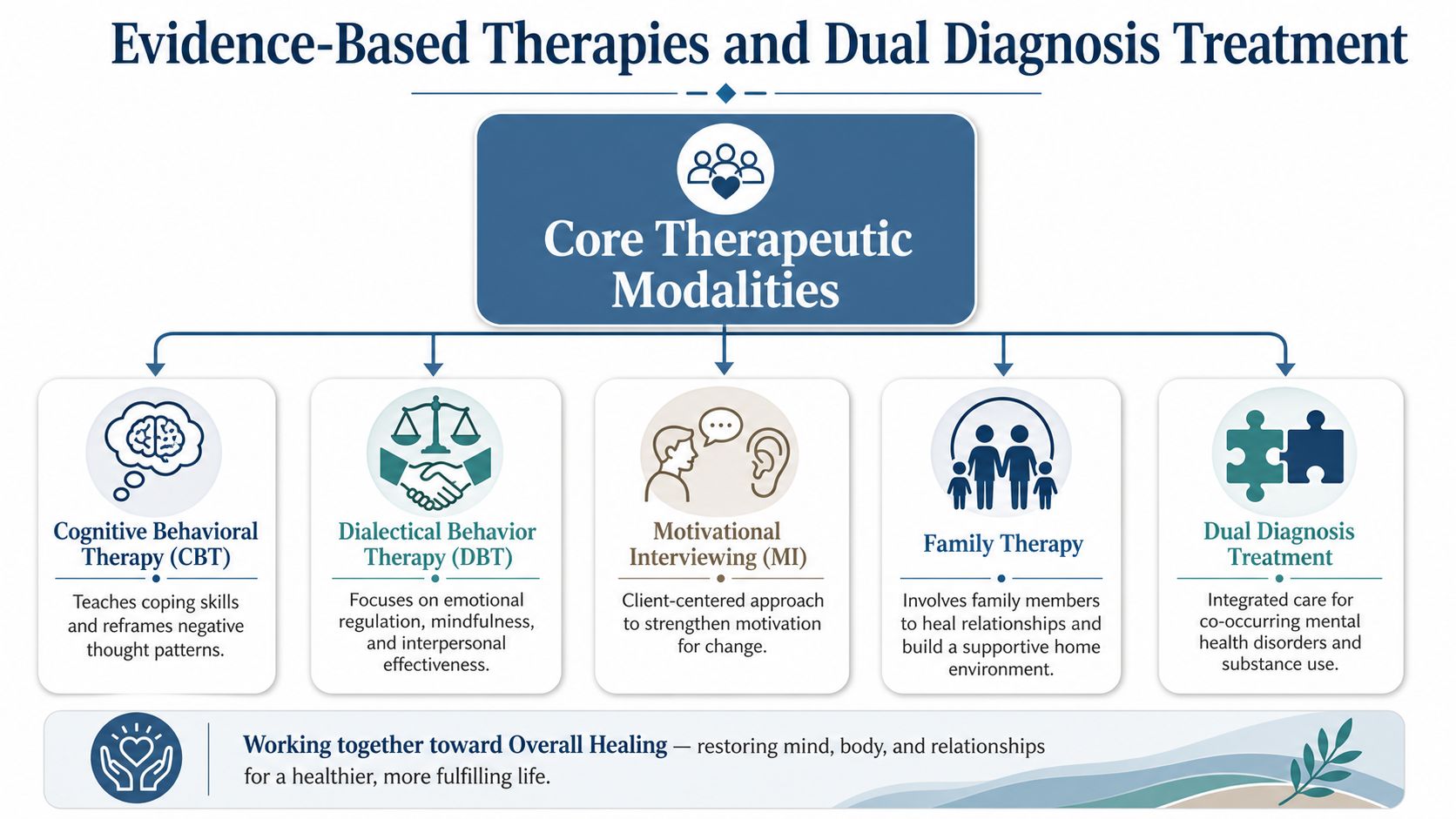
Cognitive behavioral therapy (CBT) helps people notice the thoughts that drive cravings and the choices that follow them. Dialectical behavior therapy (DBT) is especially useful when emotions escalate quickly, because it teaches regulation, distress tolerance, and interpersonal effectiveness. Motivational interviewing works differently, it helps a person voice their own reasons for change instead of being pushed into compliance.
Family work is another piece that often gets underestimated. A person can't recover in a vacuum if every return home brings the same conflict, enabling, or mistrust. Therapy that includes family members can make discharge safer and reduce the chance that the home environment becomes a trigger again.
Why dual diagnosis care changes the outcome
Texas-focused inpatient care increasingly has to address co-occurring disorders, not just substance use. That's because people who drink, use opioids, or misuse stimulants often do so alongside depression, anxiety, PTSD, or bipolar symptoms, and those conditions don't disappear when the drug use stops. If a program ignores that layer, the person may leave treatment physically sober but emotionally unprotected.
When clinically appropriate, medication-assisted treatment (MAT) can support recovery from opioid or alcohol use disorders through medications such as buprenorphine, naltrexone, or acamprosate. Medication doesn't replace therapy, but it can reduce cravings, improve stability, and give the person enough room to do the deeper work.
Clinical takeaway: the strongest inpatient model treats addiction, mental health, and family dynamics as one connected case, not as separate problems.
For readers comparing dual-diagnosis options in Texas, this guide to dual diagnosis treatment centers in Texas gives a clearer picture of what integrated care should look like.
How Long Does Inpatient Rehab Last
Length of stay is one of the most common questions families ask, and the honest answer is that it depends on risk, progress, and stability. A shorter stay can be enough for one person, while another needs more time because of repeated relapse, polysubstance use, medical complexity, or a home environment that isn't safe for early recovery. The calendar matters less than whether the person is ready to step down.
Comparing length-of-stay options
A shorter residential stay can work when the person stabilizes quickly, accepts treatment, and has a solid discharge plan waiting. A moderate stay is often better when the addiction has become more entrenched or when mental health symptoms need more time to settle. A longer stay is usually appropriate when relapse history is long, the person uses multiple substances, or support at home is weak.
Texas has a concrete residential-care structure that helps define what quality should look like. Intensive residential programs must provide an average of at least 30 hours of services per week, including at least 10 hours of chemical dependency counseling, 10 hours of additional counseling, education, life-skills, or relapse-prevention services, and 10 hours of planned structured activities, with 5 of those hours on weekends or evenings Texas residential treatment rule. That requirement matters because time in treatment should be active, not idle.
What good programs do when more time is needed
The right facility doesn't treat discharge dates as fixed moral victories. It reassesses progress, documents response to care, and extends treatment when clinically necessary. That's especially important in Dallas, where people may be balancing work pressure, family strain, or unstable housing while trying to recover.
A good discharge date is the one that follows clinical readiness, not administrative convenience.
For families, the key question is not “How fast can we leave?” It's “What does the person need to leave with?” If the answer includes coping skills, stable medication management, clear follow-up, and a safe place to go, the stay has done its job.
Navigating Insurance Coverage and Treatment Costs in Texas
The biggest obstacle for many families isn't willingness. It's financing. A parent may know their child needs inpatient care but still hesitate because they don't know what insurance will cover, whether a bed is available, or whether they can afford to start before the paperwork clears. In practice, that uncertainty keeps people waiting too long.
What families should verify first
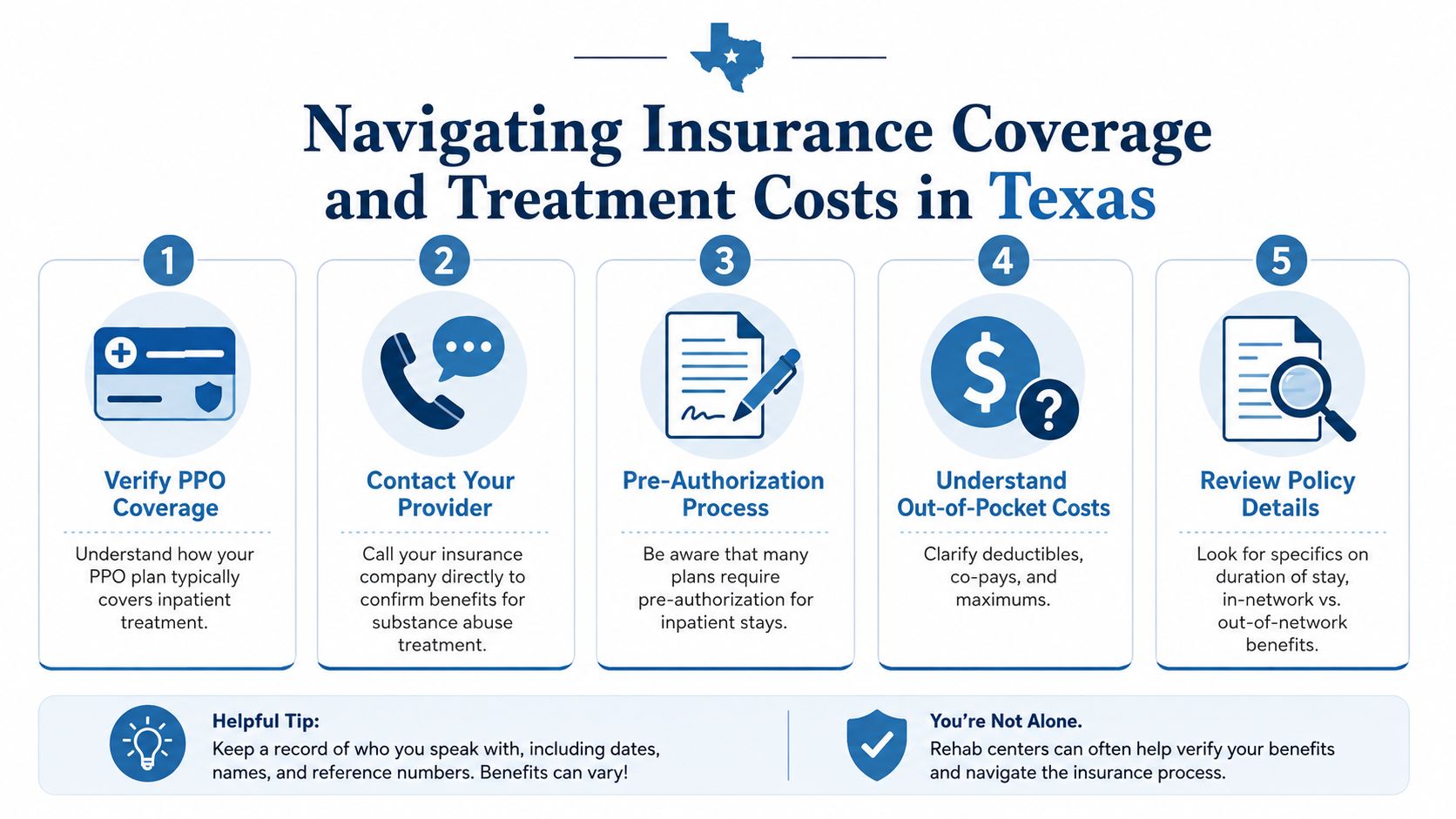
Insurance verification should start with the benefit structure, not the admissions pitch. PPO plans often have inpatient benefits, but the details matter, including deductibles, co-pays, prior authorization, and whether the facility is in-network or out-of-network. Those are the facts that determine whether a person can enter care without a financial surprise later.
For uninsured or underinsured Texans, the access problem is real. Texas has not expanded Medicaid, and state-level reporting points to a major treatment gap, with only about 10% of Texans with a substance use disorder receiving any form of treatment Texas access gap summary. That's why state-funded services, HHSC adult substance use pathways, and careful referral work still matter so much.
How to build a workable payment plan
Families often need to combine options rather than rely on one source of coverage. That can mean starting with insurance verification, asking about state-funded placement, and checking whether a sliding-scale arrangement or a step-down plan can bridge the gap. The most important thing is speed, because every delay gives the addiction another chance to reset the crisis.
Texas treatment pricing is usually shaped by room, meals, medical monitoring, therapy, and medications, along with the length and intensity of the program. A transparent admissions team should explain what's included before the person arrives, not after the bill shows up. Tru Dallas Detox can help with this kind of verification and planning for people entering care in the Dallas area.
For families who need clarity before they commit, the right question is simple. What will it take to get the person safely into care this week, not eventually?
Choosing a Reputable Inpatient Rehab Center in Dallas
Dallas has no shortage of treatment claims. What families need is a way to separate marketing language from actual clinical quality. The fastest filter is licensing, because in Texas, chemical dependency treatment cannot legally be offered without a state license unless an exemption applies, and facilities must cooperate with review and meet licensing standards under Texas Health and Safety Code Chapter 464 Texas licensing law.
Questions that reveal real quality
A reputable facility should answer basic questions directly. Is medical staff available around the clock? Does the program treat co-occurring mental health disorders? What happens if withdrawal symptoms worsen? How is discharge planning handled, and what support exists after the residential stay ends?
A second layer of quality is the treatment environment itself. Private or quieter accommodations can make early recovery more manageable than crowded, chaotic settings, especially for people who are anxious, medically fragile, or ashamed to ask for help. A calm setting won't cure addiction, but it can reduce friction during the most vulnerable days.
What to look for in the Dallas market
Good centers in the Dallas area usually combine medical oversight, structured therapy, and a clear path from detox to next-step care. They also explain what happens after discharge, because recovery doesn't hold if the person is sent out with vague advice and no follow-up structure. In that sense, the best programs think in terms of continuity, not just admission.
Tru Dallas Detox & Recovery Center fits that model with medically supervised detox, residential-level support, and coordinated aftercare planning for Dallas-Fort Worth residents. The practical question isn't whether a center sounds impressive, it's whether it can safely move a person from crisis to stability without losing momentum.
Ask this before admission: can the program describe the first day, the first week, and the discharge plan in concrete terms?
When the answers are specific, families usually have a better sense that they're dealing with a real clinical team instead of a brochure.
Aftercare Planning and Building Long-Term Recovery
Residential treatment can change the trajectory of a life, but it doesn't end the recovery story. The period after discharge is where the person starts testing their new habits against old triggers, and that's where weak planning often shows up. Strong aftercare reduces that risk by making the next step concrete before the person leaves.
What solid aftercare usually includes
Aftercare often combines outpatient therapy, medication management when needed, sober living referrals, support groups, and relapse-prevention planning. The best plans are specific about who the person will see, what days support will happen, and what to do if cravings or emotional symptoms surge. Generic advice, like “keep working your program,” isn't enough.
Family involvement matters here too, especially when children are involved and trust has been damaged. For households dealing with custody, reunification, or safety concerns, a resource on Texas CPS reunification with substance abuse can help families understand why consistent treatment engagement and documented follow-through matter so much.
Why the first stretch after discharge needs structure
The early weeks after residential care are often when old routines try to reclaim the day. Case managers, therapists, and family supports should all know the warning signs, including isolation, sleep disruption, missed appointments, and sudden disengagement from recovery routines. If those signs show up, the response should be immediate, not delayed until a full relapse occurs.
A strong discharge plan is one of the clearest signs that a facility understood the assignment. It connects the person to real-world support instead of assuming motivation alone will carry them.
For Dallas-Fort Worth families, sustainable recovery usually starts with a stable detox and residential foundation, then continues with a plan that fits real life. Tru Dallas Detox & Recovery Center helps people move from medical stabilization into structured treatment and practical aftercare, and families can visit Tru Dallas Detox & Recovery Center to verify insurance and ask about the next available path into care.
If your family is weighing inpatient drug rehab in Texas, don't wait for the situation to get worse. Reach out to Tru Dallas Detox & Recovery Center to verify coverage, discuss detox needs, and get a clear recommendation for the next safest step in the Dallas area.