

The most popular advice about hitting rock bottom is wrong. People don't need to lose their home, job, health, or family before addiction treatment becomes justified. Waiting for a dramatic collapse can give substance use more time to damage the body, worsen mental health, and isolate the people who could help.
A person may reach a private threshold long before anyone else sees a crisis. It can happen after another missed obligation, a bank account emptied to fund substance use, or an apologetic message that never gets sent. That moment matters. Help is appropriate when the problem is causing enough pain or risk to make change necessary, not only after everything has been lost.
For people in Dallas, addiction treatment can begin with a confidential assessment, a medically supervised detox, dual-diagnosis care, medication-assisted treatment, or a conversation about insurance and next steps. Families can also seek guidance before issuing ultimatums or waiting for an emergency.
Table of Contents
- When Getting Help Cannot Wait Any Longer
- What Hitting Rock Bottom Really Means
- Common Signs That Support Is Needed
- Myths About Hitting Rock Bottom
- How Detox and Addiction Treatment Work
- Support for Individuals and Concerned Families
- Finding Trusted Addiction Treatment in Dallas
- Your Next Steps and Recovery Questions
When Getting Help Cannot Wait Any Longer
A person may wake up and recognize that the usual explanations no longer work. Work has been missed again. A promised payment has disappeared. A loved one has stopped arguing and started withdrawing. The person may still have housing, employment, and relationships, yet feel internally exhausted and unable to control substance use.
That experience can qualify as a serious turning point. External collapse isn't the standard for care. The relevant question is whether substance use, withdrawal, cravings, or related mental-health symptoms are making daily life unsafe or unmanageable.
Waiting for job loss, hospitalization, arrest, or a family ultimatum adds risk without adding value. Alcohol and some medications can produce dangerous withdrawal. Opioids can create overdose risk, particularly when potency and exposure are uncertain. Severe anxiety, depression, panic, or thoughts of self-harm can also require immediate clinical attention even when a person still appears stable to others.
A personal threshold still counts
The phrase “rock bottom” often suggests a public disaster. In practice, it may be a quiet realization that the current pattern cannot continue. A person might notice that substance use controls the morning routine, that promises are repeatedly broken, or that fear has replaced ordinary planning.
No diagnosis is required before someone contacts a Dallas detox center. An assessment exists to clarify what is happening, identify medical risks, and recommend the safest level of care. It isn't a test of character, and it doesn't require a person to prove that the situation is severe enough.
Practical rule: If someone is asking whether the problem has become serious enough for help, a confidential assessment is a safer answer than waiting for another consequence.
When immediate support matters
A person facing confusion, severe withdrawal, loss of consciousness, chest pain, a medical emergency, or an immediate risk of self-harm needs emergency assistance. Family members shouldn't try to manage a dangerous crisis alone or abruptly stop substances that can cause medically serious withdrawal.
For broader guidance about recognizing urgency and choosing a next step, when to call for addiction help offers a useful starting point. The right decision may be a same-day assessment, supervised detox, emergency care, or a planned admission, depending on the person's symptoms and substance-use history.
What Hitting Rock Bottom Really Means
The phrase comes from nineteenth-century mining language. Miners used “rock bottom” to describe the solid bedrock reached after digging through soil or ore. One historical account places the figurative noun phrase as early as 1815, while the exact phrase “hit rock bottom” appeared in print by 1892 in C.A. Jenkens' The Story of Pot Hooks: Or, Society as Seen by a Backwoods Philosopher (English Stack Exchange's discussion of the phrase's origin).
The image is straightforward. A shaft reaches a hard floor, and digging downward seems impossible. Everyday English later transferred that physical image to finances, health, organizations, emotional distress, and addiction. Modern reference material defines the expression as reaching the lowest possible level and describes its broader movement into personal and financial contexts (Wiktionary's entry for “rock bottom”).
The recovery meaning is personal
In addiction counseling, “hitting bottom” isn't a standardized clinical threshold. It makes more sense as a retrospective turning point shaped by cumulative resource loss. Substance use may gradually weaken relationships, finances, physical health, work stability, housing, confidence, and access to support. Eventually, the person may feel that the usual coping strategies have stopped working.
That point differs from one person to another. One person may define it as a frightening withdrawal episode. Another may recognize it after driving while impaired, lying to a partner, or realizing that every day revolves around obtaining and recovering from a substance. Someone with depression, trauma symptoms, anxiety, or another co-occurring condition may experience a profound crisis without obvious public consequences.
A clinical review describes “hitting bottom” as a variable turning point rather than a required step before recovery. As consequences intensify, denial may weaken and the perceived cost of continued use may rise, but people don't need to reach that point before treatment can help (the review of the “hitting bottom” concept).
Why waiting is the wrong strategy
The mining metaphor implies that a person must descend as far as possible before climbing out. Treatment doesn't work that way. A person can seek assessment while consequences are emerging, before relationships end or physical health deteriorates.
The same principle applies to the emotional experience of being trapped. People who feel unable to change may benefit from support that identifies practical choices and reduces isolation. A plain-language resource on overcoming feeling trapped can help a person name that experience without treating it as proof of permanent failure.
Common Signs That Support Is Needed
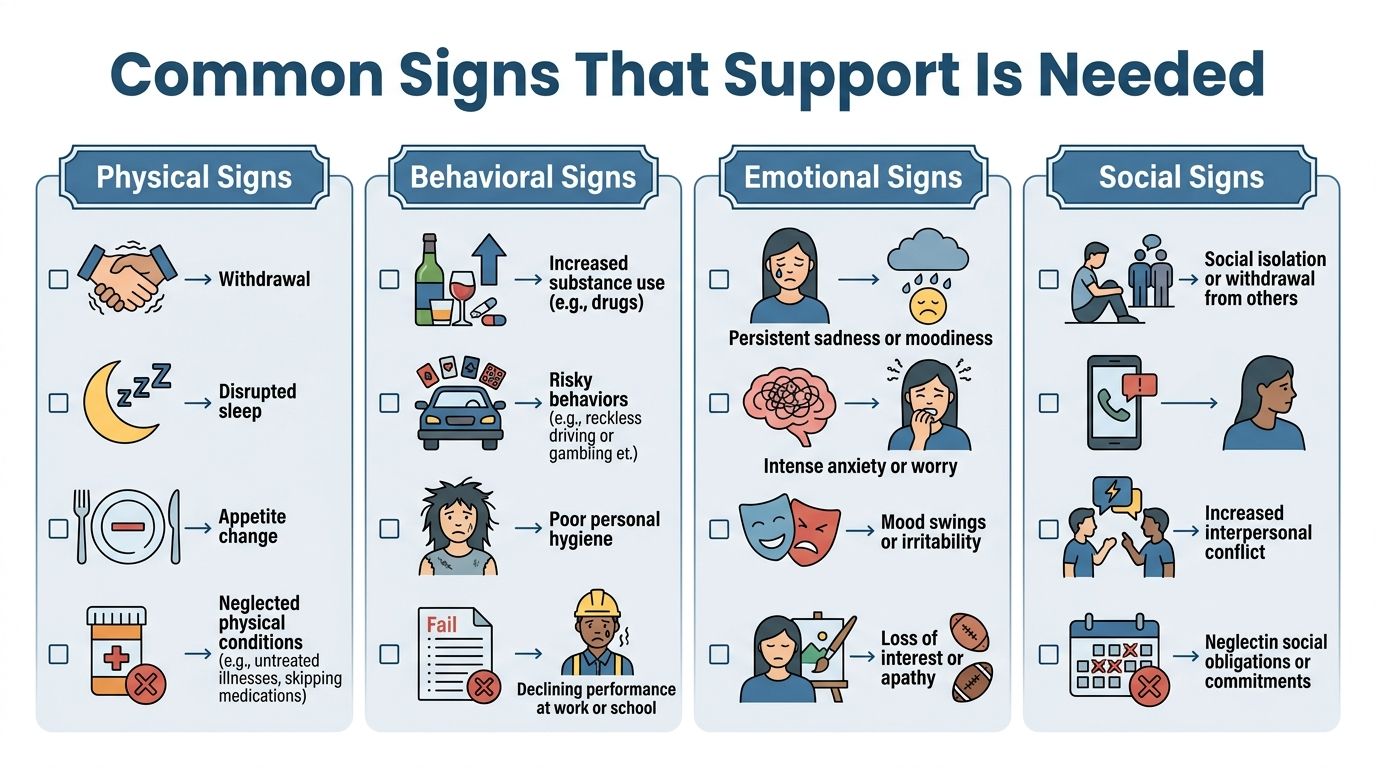
A person in Dallas may still attend work, answer family messages, or maintain a familiar appearance while substance use becomes increasingly dangerous. The important signal is usually a pattern of change, not one isolated incident.
Physical changes
A person may wake with shaking, sweating, nausea, or intense discomfort and use a substance to feel normal. Sleep may become fragmented. Meals may be skipped or replaced with irregular eating. A chronic condition may go untreated because appointments, prescriptions, or basic routines keep getting pushed aside.
These signs can have many causes, so none proves a substance use disorder by itself. A repeating pattern over weeks or months deserves assessment, especially when symptoms appear between periods of use or improve only after using again.
Behavioral patterns
Consider an employee who begins missing morning obligations, gives vague explanations, and spends increasing energy hiding the pattern. A partner may notice unexplained financial strain, repeated requests for money, lost medication, or household responsibilities left unfinished. The person may promise to cut back, then spend the next day planning around the substance instead.
Secrecy and financial problems don't automatically establish a diagnosis. They do show that substance use may be interfering with functioning. A confidential clinical evaluation can distinguish occasional misuse from dependence, withdrawal risk, or a more complex condition. People looking for medical warning signs can also review this guide to signs that may indicate a need for medical detox.
Mental-health symptoms
A person may experience worsening anxiety, depressive episodes, panic attacks, intrusive thoughts, irritability, or emotional numbness. Substance use may temporarily blunt distress while making the underlying symptoms harder to treat. Some people use substances to manage trauma-related distress or insomnia, then find that the attempted solution produces more fear and instability.
Mental-health symptoms don't reveal their cause on their own. The combination of substance use and psychiatric symptoms is what makes a dual-diagnosis assessment important. Clinicians need to understand both sides instead of treating only intoxication or only mood symptoms.
Relationship erosion
A family member may stop attending gatherings because questions feel unbearable. A partner may move from concern to anger, then from anger to emotional distance. Trust erodes when explanations change, promises are broken, or loved ones repeatedly take over responsibilities.
Relationship strain isn't proof that a person has reached a clinical threshold, but it can show that the problem has moved beyond private discomfort. When patterns repeat, seeking an assessment in Dallas is a practical decision, not an admission of failure.
Myths About Hitting Rock Bottom
The rock-bottom story sounds dramatic, but it can delay treatment. Several common beliefs turn a warning metaphor into a dangerous rule.
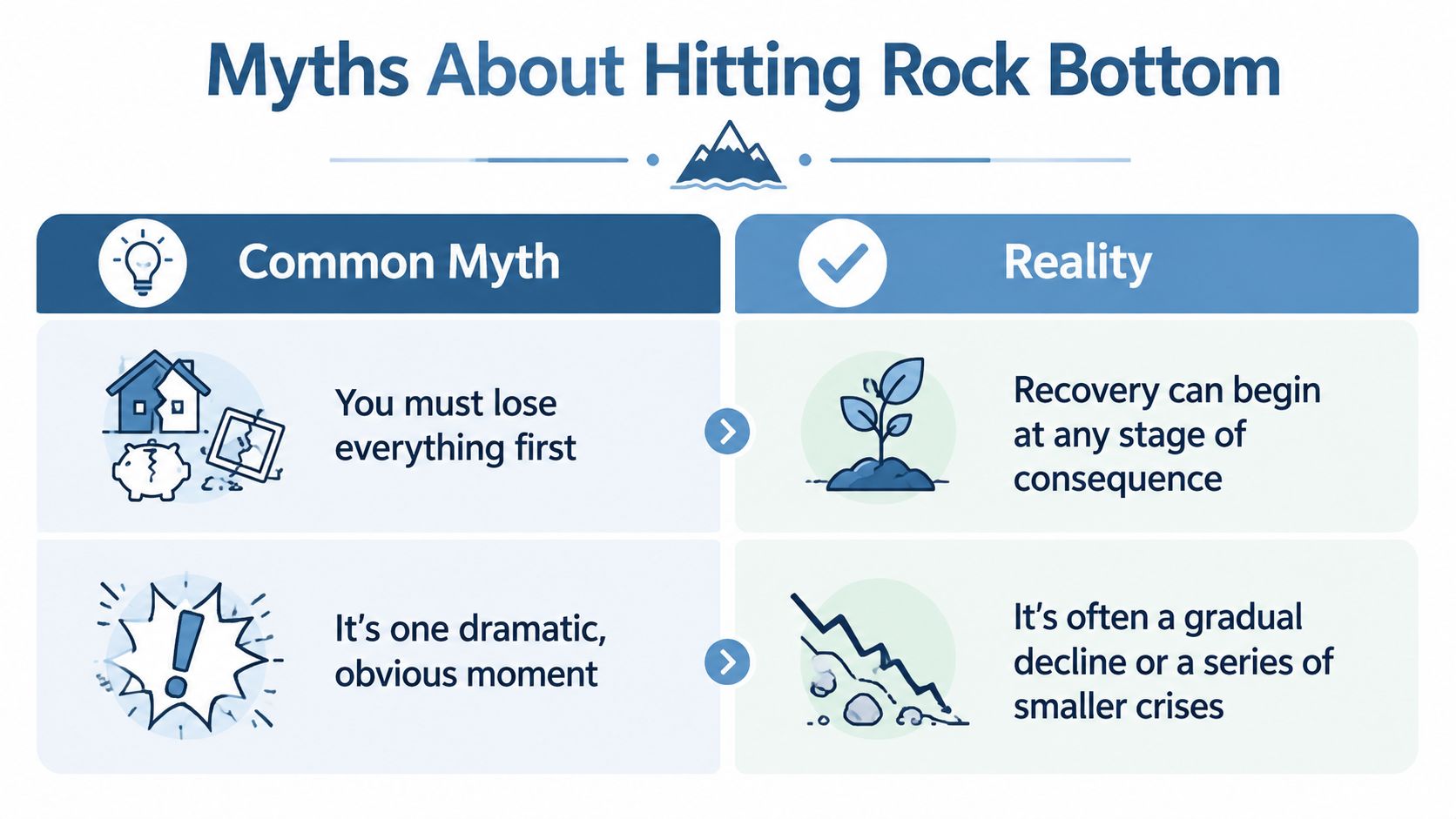
Myth one, loss must come first
A person doesn't need to lose everything before recovery can begin. Treatment systems can intervene while someone still has housing, employment, family contact, or financial stability. Waiting for those supports to disappear makes recovery harder and can create avoidable medical harm.
Myth two, rock bottom is one obvious event
Some people identify one crisis. Others describe a gradual decline or a series of smaller crises that finally become impossible to ignore. The phrase has no universal definition, so families shouldn't wait for a cinematic moment that may never arrive.
Myth three, willpower should solve it
Substance use disorder is a treatable medical condition involving behavior, health, environment, and often mental health. Determination can support recovery, but willpower alone doesn't manage dangerous withdrawal, cravings, psychiatric symptoms, or the routines that maintain substance use.
Myth four, relapse proves treatment failed
Relapse signals that the treatment plan needs review. Clinicians may need to reassess triggers, medication, housing, mental-health care, peer support, or the level of structure. Treating relapse as a moral verdict encourages secrecy, while treating it as clinical information creates an opportunity to adjust care.
Myth five, someone must want recovery before treatment works
Motivation often changes during treatment. A person may call because a family member is worried, because withdrawal has become frightening, or because daily life feels unbearable. A first conversation can create enough safety for motivation to develop.
Myth six, appearance reveals severity
Outward stability can conceal dangerous use. Someone may maintain a professional role while experiencing blackouts, escalating doses, severe cravings, or suicidal thoughts. Families and clinicians should focus on behavior, symptoms, risk, and functional change, not appearance alone.
Recovery doesn't require a person to become visibly ruined before care becomes legitimate.
How Detox and Addiction Treatment Work
Medical detox is appropriate when withdrawal could become dangerous, difficult to manage, or medically complicated. Alcohol, benzodiazepines, and opioids require particular caution because stopping or reducing them can produce serious symptoms for some people. A person shouldn't make a sudden change without professional guidance when dependence or withdrawal risk is possible.
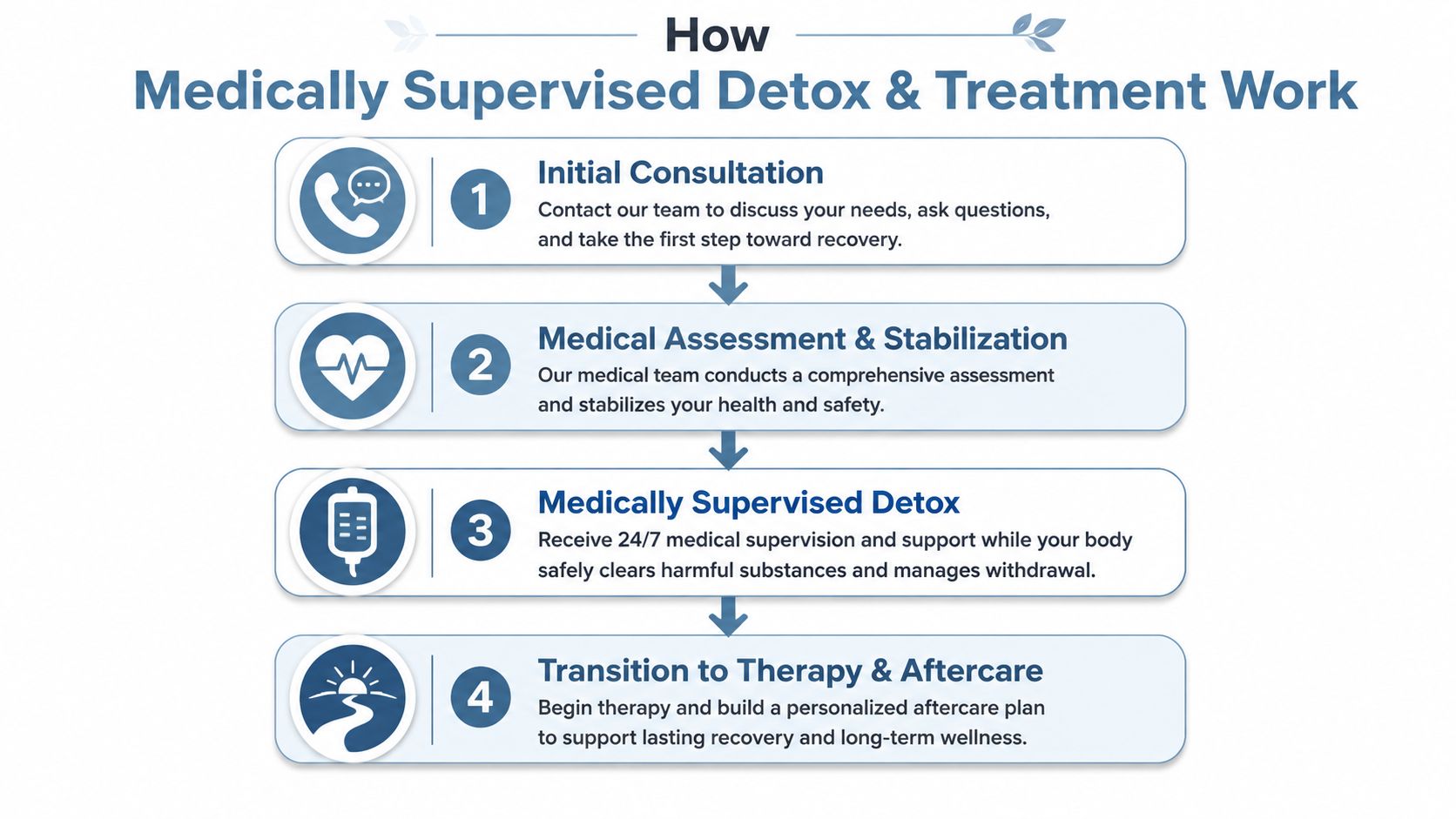
Step one begins with assessment
A treatment team typically asks about medical history, current medications, substance type and pattern, last use, prior withdrawal, overdose history, sleep, nutrition, and mental-health symptoms. The person may also receive screening for depression, anxiety, bipolar symptoms, trauma-related concerns, and immediate safety risks.
That information determines whether a Dallas detox center is appropriate, whether a higher medical setting is needed, and what support should follow stabilization. It also helps clinicians avoid treating substance use in isolation when a co-occurring condition is driving cravings or worsening judgment.
Step two focuses on safe stabilization
During medically supervised detox, clinicians monitor symptoms, vital signs, hydration, sleep, mood, and changes in withdrawal. They may use comfort medications or other prescribed interventions when clinically appropriate. The purpose isn't to promise an easy process. The purpose is to reduce preventable risk and help the person reach a condition where ongoing treatment is possible.
A guide to medical detox and what it involves can help families understand why supervised care differs from trying to stop alone. Detox addresses immediate physical stabilization, but it doesn't by itself resolve the beliefs, routines, relationships, or mental-health symptoms connected to substance use.
Step three matches the person to continuing care
After stabilization, a treatment plan may include:
- Residential treatment: A structured living environment with clinical and therapeutic support.
- Partial hospitalization: Intensive daytime programming for people who may not need residential housing.
- Intensive outpatient care: Frequent treatment that allows more time at home while maintaining substantial support.
- Outpatient care: Ongoing therapy, medication management, and recovery planning for people with a stable environment.
The right level depends on medical risk, withdrawal history, home safety, psychiatric needs, support, and the person's ability to participate consistently. A treatment team may recommend stepping up or down as circumstances change.
Dual diagnosis and MAT
Dual-diagnosis care treats substance use and co-occurring mental-health conditions together. Separate treatment can leave a major driver of use untouched, particularly when depression, anxiety, bipolar disorder, trauma symptoms, or panic affect daily functioning.
Medication-assisted treatment, or MAT, combines approved medications with counseling and recovery support. It may be considered for opioid or alcohol use disorders, based on an individual assessment. MAT can reduce cravings or withdrawal for appropriate patients, but it isn't a guarantee and doesn't replace therapy, monitoring, or continuing care.
People seeking general information about cannabis withdrawal can review this THC detox overview, while recognizing that treatment recommendations should come from a qualified clinical team familiar with the person's complete history.
Support for Individuals and Concerned Families
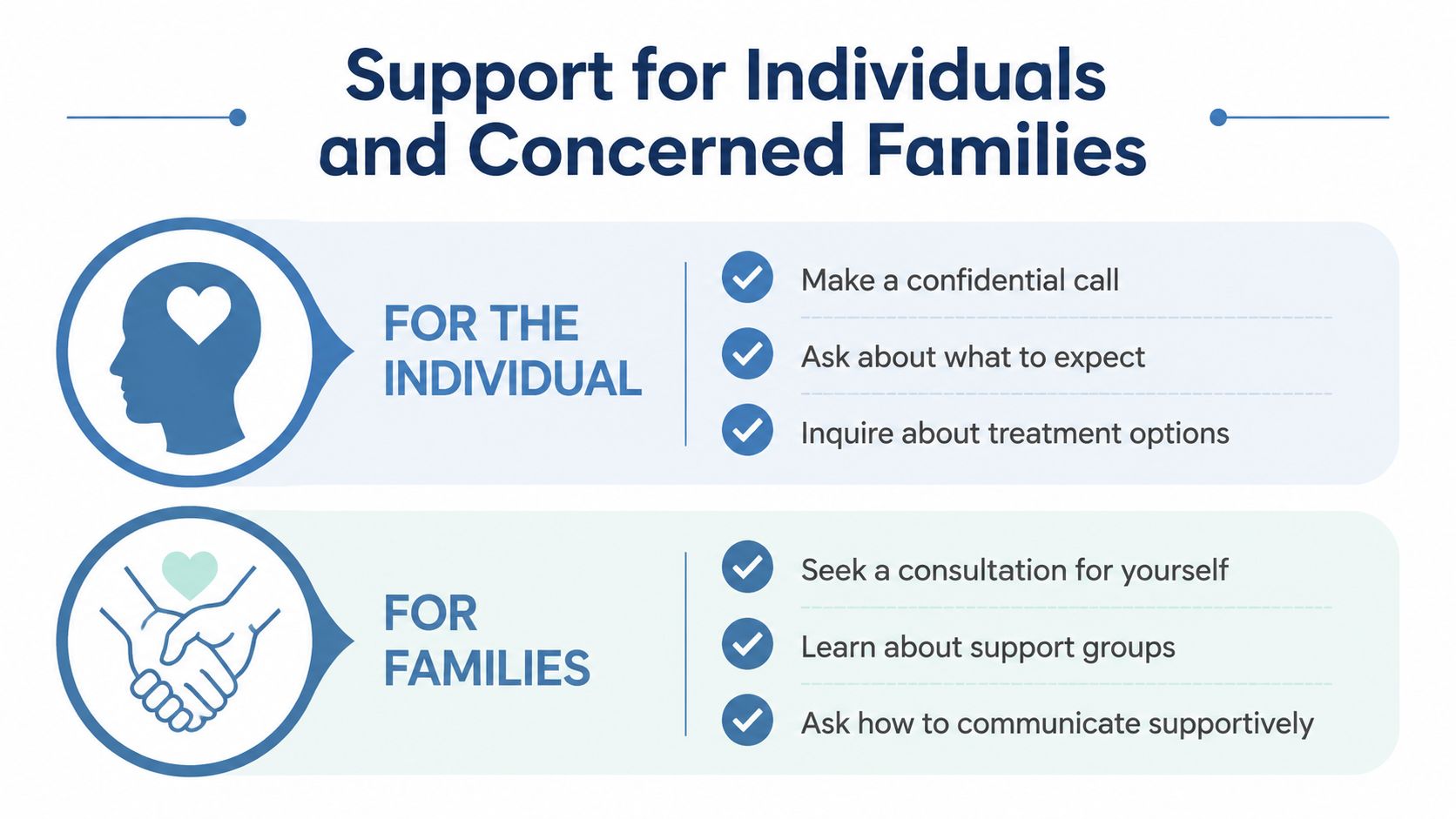
A person struggling with substance use may delay a call because the first conversation feels like a commitment to an unknown program. A confidential call doesn't force an admission. It gives the person a chance to describe symptoms, ask about assessment, understand privacy, and learn whether detox or another level of care is appropriate.
For the individual
A first call can focus on practical questions:
- Ask about assessment: What medical, substance-use, and mental-health information will the team review?
- Clarify dual diagnosis: Can the program evaluate and treat co-occurring psychiatric symptoms?
- Discuss withdrawal: What happens if alcohol, benzodiazepines, opioids, fentanyl, heroin, stimulants, or prescription medications are involved?
- Review MAT: Is medication-assisted treatment evaluated when clinically appropriate?
- Prepare thoroughly: A list of substances, recent use, prescriptions, allergies, medical conditions, and prior treatment can help clinicians plan safely.
The person doesn't need a perfect explanation. A direct statement such as “substance use is affecting daily life and stopping feels unsafe” gives an admissions team useful information.
For families
Families can approach the conversation with observations rather than accusations. “The missed shifts and withdrawal symptoms are worrying” is more useful than a debate about whether the person is selfish or lacks discipline. Loved ones can offer transportation, help gather insurance information, and ask a provider about treatment logistics without demanding private clinical details.
Family members also need support for themselves. A consultation can help them set boundaries, plan a safer conversation, understand confidentiality, and decide what they can reasonably provide. Family involvement can strengthen treatment, but it can't replace medical care or force a person into lasting change.
If there is immediate danger, including overdose, severe medical symptoms, or imminent self-harm, family members should contact emergency services. Crisis planning should prioritize safety over keeping the conversation calm or avoiding embarrassment.
Finding Trusted Addiction Treatment in Dallas
Choosing addiction treatment in Dallas should involve more than finding an open bed. Families need to know who provides care, how clinicians manage withdrawal, whether mental-health needs are assessed, and what happens after detox ends.
Dallas County had an estimated 2,606,358 residents in 2023, while Dallas city had 1,220,162 residents within the county, according to local population information (Dallas-area population details). That local scale matters. People may seek care from Dallas, Euless, Irving, Arlington, Fort Worth, or nearby North Texas communities, and transportation and family access can affect follow-through.
Questions worth asking
A transparent provider should answer questions about:
- Licensing and accreditation: Which state requirements and independent standards apply?
- Staff qualifications: Who manages medical care, therapy, psychiatric assessment, and medication?
- Withdrawal monitoring: What symptoms receive observation, and how does the program respond if risk increases?
- Continuity: What happens after detox, including therapy, MAT follow-up, recovery housing, and relapse-prevention planning?
- Payment: Can the admissions team verify PPO benefits and explain expected out-of-pocket costs before admission?
Tru Dallas Detox & Recovery Center provides medically supervised detox, 24/7 clinical monitoring during detox, individual therapy, group counseling, dual-diagnosis services, MAT, and aftercare planning from its Euless facility serving the Dallas-Fort Worth area. The team also assists with insurance verification for most PPO plans and can discuss step-down care, ongoing therapy, sober living referrals, and other discharge needs.
Local care should connect the whole process
Detox is a beginning, not a complete recovery plan. A provider should explain how stabilization connects to residential, partial hospitalization, intensive outpatient, or outpatient treatment. It should also identify who will manage psychiatric medications, MAT, therapy, and family participation after the initial phase.
Local treatment can make transportation, family communication, and follow-up more manageable for people in Dallas and nearby communities. Before choosing a program, families can review this resource on drug rehab in Dallas and use its questions to prepare for an admissions conversation.
Your Next Steps and Recovery Questions
A person doesn't need to solve the entire future before making the next safe decision. The immediate task is to turn concern into a concrete plan.
- Document the pattern: Note substances, timing, withdrawal symptoms, missed obligations, health changes, and mental-health concerns.
- Prepare a confidential call: Choose a private time and write down the questions that feel difficult to ask aloud.
- Gather coverage information: Keep insurance details available so the admissions team can verify benefits and explain costs.
- Identify a safe start: Consider transportation, medication needs, childcare, work communication, and a trusted support person.
Calling sooner can reduce the time spent in crisis and help clinicians address risk before another consequence occurs. A person may be ready for detox, an assessment, outpatient care, psychiatric support, or a different recommendation. The first conversation helps clarify that decision.
Dallas-area callers may ask:
- How does the program determine whether detox is medically supervised or requires a different setting?
- How are trauma symptoms, depression, anxiety, or bipolar symptoms evaluated during intake?
- Which MAT options may be considered for opioid or alcohol use disorder?
- How can family members participate while respecting the patient's confidentiality?
The central answer remains simple. Hitting rock bottom isn't a requirement for recovery. Asking for help while the problem is still visible, treatable, and interruptible is safer and wiser than waiting for another loss.
Tru Dallas Detox & Recovery Center offers medically supervised detox, dual-diagnosis care, MAT evaluation, therapy, and continuing recovery planning for adults in the Dallas-Fort Worth area. Visit Tru Dallas Detox & Recovery Center to request a confidential conversation, verify PPO coverage, and discuss the safest next step.