
It’s a question we hear all the time from people in Dallas: will a standard drug test pick up on alcohol? The short answer is, probably not—but that’s a dangerously simple answer to a very complicated question that can have serious consequences.
The truth is, it all comes down to what the test is specifically looking for. If you're facing a test and concerned about alcohol use, understanding the details is critical. For those struggling, this question is often the first step toward seeking help at a Dallas-area detox center.
The Quick Answer Is: It Depends On The Test
Many people in Dallas are genuinely surprised to learn that a routine drug test might miss alcohol completely. This common misunderstanding can create a false sense of security, especially for those navigating workplace, legal, or clinical requirements here in the DFW area.
The key thing to understand is that alcohol testing is almost never part of a default drug screening panel.
Think of a standard drug test panel as a security checkpoint with a very specific checklist. The screeners are trained to look for a handful of common illicit substances. Unless they get a special order to look for alcohol, it's just not on their radar. This is exactly why someone might pass a "drug test" after a night of drinking—the test simply wasn't designed to find it.
Why Standard Drug Panels Overlook Alcohol
Standard drug tests, like the common 5-panel or 8-panel urine screens, are not built to detect alcohol unless it’s specifically requested. The body processes alcohol differently from other drugs, and it clears out of the system much more quickly, requiring entirely different kinds of tests to find it.
This distinction is absolutely critical in several real-world situations for Dallas residents:
- Workplace Testing: A Dallas employer might use a basic 5-panel screen for pre-employment, but then add a separate, specific alcohol test for anyone in a safety-sensitive role like a pilot or truck driver.
- Legal Monitoring: A Dallas County court order won't rely on a standard drug screen. Instead, it will likely mandate a specialized EtG (ethyl glucuronide) test, which can monitor for alcohol use over several days and is far more sensitive.
- Clinical Intake: When you walk into a professional addiction treatment center in Dallas, the testing gets much more comprehensive. The goal isn't just to see if you've used substances, but to get a complete and accurate picture of what and how much to ensure your safety during medical detox.
Standard Drug Panels vs Alcohol Specific Tests
To make it crystal clear, let's break down what a typical drug panel is looking for compared to the tests needed for alcohol. This table shows why you can't assume a "drug test" is an "alcohol test."
| Test Panel | Commonly Detected Substances | Typically Detects Alcohol? |
|---|---|---|
| 5-Panel Drug Screen | Marijuana (THC), Cocaine, Amphetamines, Opiates, Phencyclidine (PCP) | No |
| 8-Panel Drug Screen | 5-Panel substances + Barbiturates, Benzodiazepines, Methaqualone | No |
| 10-Panel Drug Screen | 8-Panel substances + Methadone, Propoxyphene | No |
| Alcohol-Specific Tests | Ethanol (the alcohol in drinks), Ethyl Glucuronide (EtG), Ethyl Sulfate (EtS) | Yes |
As you can see, the tests are fundamentally different. Standard panels are designed for a specific list of illicit and prescription drugs, while alcohol requires its own dedicated screening.
The most important takeaway is this: Never assume a "drug test" won't detect alcohol. The type of test being used is what truly matters, and specialized tests can find evidence of drinking for hours, days, or in some cases, even months after the fact.
If you or someone you care about is getting ready for an addiction treatment program in Dallas, being completely honest about alcohol use is vital. It’s not about judgment; it’s about safety. At Tru Dallas Detox, our entire intake process is built on creating a personalized care plan, and that starts with having an accurate understanding of your situation to ensure a safe and effective detox.
How Different Tests Actually Find Alcohol
So you know you need a specific test for alcohol, but how do they actually work? To find evidence of drinking, a test can’t just look for ethanol—the type of alcohol in your favorite beer or wine—because it passes through your system relatively quickly. Instead, most modern tests are designed to find its "fingerprints," or metabolites, which stick around long after the buzz has faded.
Think of it like this: ethanol is the footprint you leave in wet sand. It's obvious at first, but the next wave washes it away completely. Metabolites like ethyl glucuronide (EtG) and ethyl sulfate (EtS) are more like the seashells you dropped along the way. They stay behind for much longer, proving you were there.
This is exactly why a simple breath test is worlds apart from an advanced urine or hair test. Each one is looking for a different kind of evidence, giving you either a real-time snapshot of impairment or a detailed historical record. Understanding this science is a game-changer for anyone facing testing in Dallas, whether it’s for a new job or as part of a recovery program at a top Dallas detox center.
Breath Tests: A Snapshot of the Present
A breathalyzer is the most immediate type of alcohol test you’ll encounter. It measures the amount of unprocessed alcohol vapor on your breath. When you drink, alcohol is absorbed into your bloodstream, carried to your lungs, and then expelled when you breathe out. The result, known as your Blood Alcohol Concentration (BAC), reflects your current level of intoxication.
This method is what Dallas County police use for roadside checks or what an employer might use for "for-cause" testing. It’s designed to answer one simple question: is this person impaired right now? Its detection window is incredibly short, lasting only as long as alcohol is still actively coursing through your system.
Urine and Blood Tests: The Clinical Gold Standard
Urine and blood tests give us a much more detailed clinical picture. A basic urine test can pick up on ethanol for up to 24 hours, but the advanced EtG/EtS tests are the real heavy hitters. They’re the go-to for monitoring sobriety in probation or clinical settings in Dallas because they can detect alcohol use for up to 80 hours after your last drink.
Blood tests are the most accurate way to determine a person's exact level of impairment at a specific moment. You’ll often see them used in serious legal situations, like after a car accident, or for medical assessments in an emergency room. Digging into how these different tests work means exploring the science of forensic toxicology, which is a fascinating field in its own right.
Saliva and Hair Tests: Mid-Term and Long-Term Views
Saliva and hair tests offer different timelines for detection, and each has its own unique purpose.
Saliva Tests: These are getting more and more popular in workplace settings around Dallas because they're non-invasive and super easy to administer. They can detect ethanol for 1 to 5 days, giving them a slightly longer reach than a breath test without the intrusiveness of urine or blood draws.
Hair Follicle Tests: Think of a hair test as a historical logbook of substance use. As your hair grows, it traps biomarkers from your bloodstream, including specific ones called fatty acid ethyl esters (FAEEs) that are produced after heavy alcohol consumption. A standard test using 1.5 inches of hair can reveal a pattern of heavy drinking going back 90 days.
Each test provides a different piece of the puzzle. Breath tests are good for 12-24 hours, and a standard urine test offers a similar window. For DFW-area residents with PPO plans, verifying coverage for monitored detox at a trusted facility like Tru Dallas Detox is crucial to avoid unexpected costs and ensure you get the best care. Undetected use can seriously increase the risk of dangerous withdrawal, making accurate testing a cornerstone of successful recovery.
Comparing Alcohol Detection Windows And Accuracy
When you’re facing an alcohol test, two questions probably jump to mind right away: How long will it show up, and how accurate is the result? There’s no single answer—it all depends on the type of test being used. This isn't just trivia; it's practical information that's essential for anyone in Dallas navigating testing for a job, a legal case, or admission to an addiction treatment center. Knowing what to expect can go a long way in reducing stress and uncertainty.
But understanding these details is also a huge part of the recovery process. One test might only give us a glimpse into the last few hours, while another can paint a picture of the past three months. It's this level of detail that allows professionals at a leading Dallas detox center like Tru Dallas Detox to see your full health story, making sure your detox plan is as safe and effective as it can possibly be.
Breaking Down The Timelines
The detection window for alcohol can be anything from a few hours to several months. A breathalyzer, for instance, is a snapshot of current intoxication—perfect for a roadside check in Plano. A hair test, on the other hand, provides a long-term historical record, which is more useful for clinical monitoring at a treatment facility in Euless. Each method serves a very different purpose.
This timeline gives you a general idea of the detection windows for the most common types of alcohol tests, from the instant feedback of a breath test to the long-term view of a hair analysis.
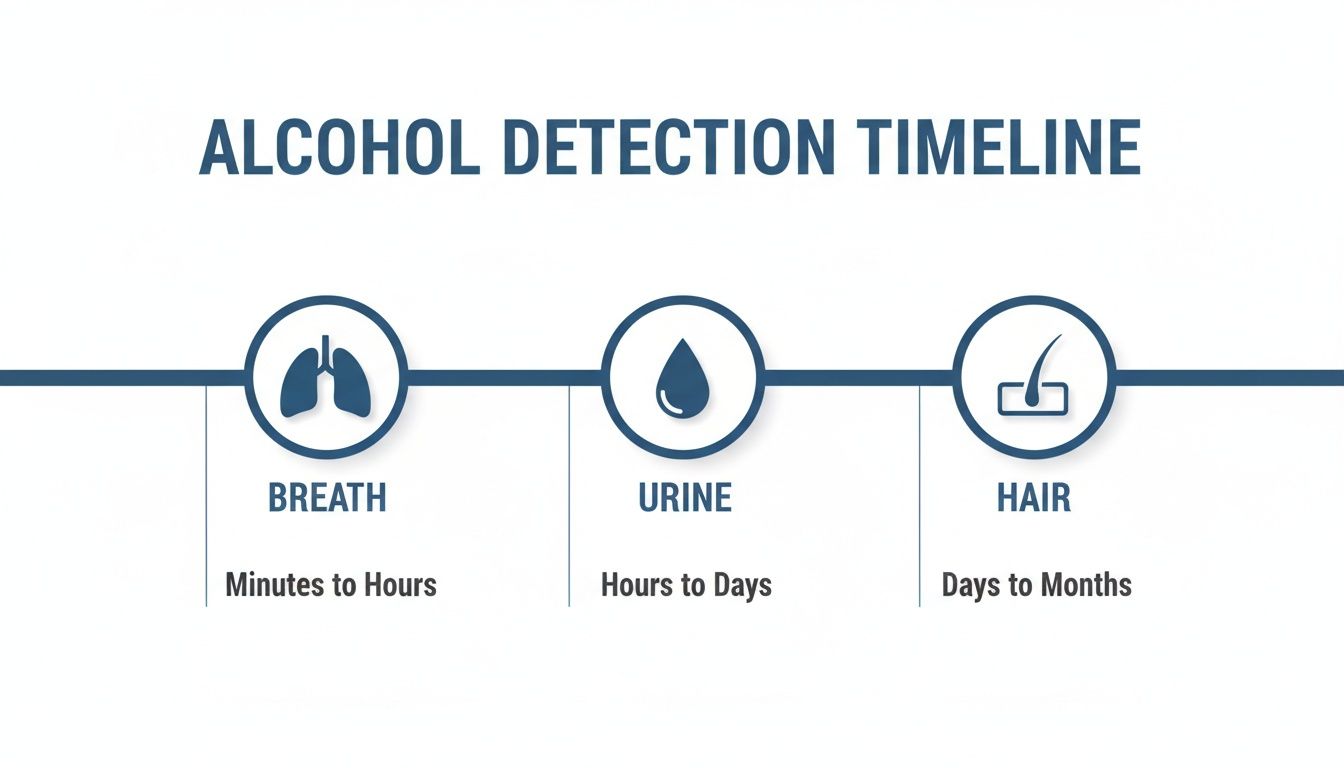
The key thing to realize here is that the more advanced tests can uncover alcohol use long after the buzz has faded. This is absolutely vital for both legal and medical monitoring, where a complete history is needed for safety and accountability.
The Question Of Accuracy And False Positives
While a test's detection window is important, its accuracy is what really counts. Not all tests are created equal, and some are more likely to produce errors than others. Take the highly sensitive EtG urine tests. They're fantastic for detecting alcohol use over several days, but they have a known weak spot: a vulnerability to false positives.
Believe it or not, a number of everyday products contain enough alcohol to potentially trigger a positive result on an EtG test. This includes things like:
- Hygiene Products: Hand sanitizers, certain mouthwashes, and even some body soaps.
- Foods and Drinks: Kombucha, some unpasteurized fruit juices, and foods made with cooking wine.
- Over-the-Counter Medications: A few common cough syrups and cold remedies.
This is exactly why context is everything in a clinical setting. At Tru Dallas Detox, our medical team would never rely on a single test result in isolation. We always combine lab work with a thorough personal history and a clinical assessment to get a true, accurate understanding of your situation.
Your safety is our top priority. A positive test for alcohol during intake is not a point of judgment; it's a critical piece of information that helps our Dallas-based team create a medical detox plan that protects you from the dangers of withdrawal.
This is why it's so important to be completely honest about any substances you've used. Just as our team needs to know about other substances, such as when learning about how long meth stays in your system, full transparency about alcohol ensures we can provide the safest, most effective care possible.
A Quick-Reference Guide To Alcohol Testing
To help you make sense of it all, we've put together a quick-reference table. It breaks down the different testing methods, their detection times, accuracy levels, and most common uses in the Dallas area. Having this information can empower you and help you understand what to expect.
Alcohol Detection Windows By Test Type
| Test Type | Detection Window | Accuracy Level | Common Use Case |
|---|---|---|---|
| Breath Test | 12–24 hours | High for current impairment | Roadside stops, workplace incidents |
| Urine (EtG) | Up to 80 hours | High, but risk of false positives | Probation, rehab monitoring |
| Blood Test | 6–12 hours | Very High | Hospital ERs, legal evidence |
| Saliva Test | 1–5 days | Moderate | Workplace screening |
| Hair Follicle Test | Up to 90 days | High for long-term patterns | Custody cases, high-security jobs |
Understanding these key differences is crucial. A test that’s perfect for one situation might be completely wrong for another. For individuals and families in Dallas looking for help, knowing that clinical professionals use this data for your safety—not for punishment—can make taking that first step toward recovery feel a whole lot less intimidating.
When Alcohol Testing Is Used In Dallas
It’s one thing to know about the different kinds of alcohol tests, but it’s another thing entirely to see how they're used in real-world, high-stakes situations across the Dallas-Fort Worth area. The question of whether a drug test picks up alcohol isn't just academic; it comes up during pre-employment screens, court-mandated monitoring, and critical medical situations.
For a lot of folks in Dallas, the most common run-in with alcohol testing is at work. While a standard drug test for an office job in Uptown might not look for alcohol, many of DFW's biggest industries have to be much more strict. Think about the massive construction projects, the non-stop logistics and transportation sectors, and any job involving heavy machinery—in these roles, safety is everything.
Employment and Workplace Safety
In fields where safety is critical, employers don't just have the option to test for alcohol; they're often required to by law. This is where you can really see the different types of tests put into practice in Dallas.
- Pre-Employment Screening: A company hiring a commercial driver out of the DFW logistics hub might use a urine test that screens for alcohol metabolites like EtG. This gives them a clear picture of whether a candidate has engaged in recent heavy drinking, not just if they drank last night.
- For-Cause Testing: If a supervisor at a warehouse near the Design District has reason to believe an employee is impaired on the clock, they’ll need an immediate answer. A breath or saliva test is perfect for this, providing a quick snapshot of current intoxication.
- Post-Accident Testing: After any workplace incident—especially in jobs regulated by the Department of Transportation (DOT)—alcohol and drug testing are usually mandatory. This often starts with a breathalyzer test on-site, which might be followed by a blood test to get a definitive Blood Alcohol Concentration (BAC) at the time of the accident.
Legal and Probationary Requirements
The Dallas County legal system relies heavily on alcohol testing to make sure people are following court orders and the terms of their probation. In these situations, the goal isn't checking for on-the-job impairment; it's about verifying long-term sobriety. This is where the more advanced tests become absolutely essential.
A probation officer in Dallas isn’t going to use a simple breath test. They will almost always rely on EtG/EtS urine testing, which offers a detection window of up to 80 hours. This allows them to confirm that someone is sticking to the rules of their release, giving them a much more reliable look at a person's sobriety over the last several days.
A single positive test can carry very real legal consequences. It highlights just how important it is to be fully committed to staying sober—and for many, getting there requires professional help. That journey almost always starts with a safe, medically supervised detox.
Clinical and Medical Settings
In a medical setting, like an emergency room in the Dallas Medical District or an addiction treatment center, alcohol testing has a totally different purpose: it's all about your safety. When someone comes to us for help, our medical team needs to know exactly what substances are in their system to care for them properly. Our alcohol detox program in Dallas is designed around this principle of safety first.
At Tru Dallas Detox, one of the very first things we do is a full assessment that includes testing for alcohol. This isn't for judgment. It's so our expert clinical staff can build a safe, personalized, and medically supervised detox plan. Knowing precisely what’s in your system helps us anticipate and manage withdrawal symptoms, preventing complications that can be life-threatening. Being honest during this process is the foundation for a safe and successful recovery.
What To Expect During Intake At A Dallas Detox Center

Walking through the doors of a detox center is a huge decision, and it’s completely normal to feel anxious about what comes next. If you or a loved one in Dallas is taking this brave step, you’re probably wondering what happens first. The intake process, especially the part involving drug and alcohol testing, can feel intimidating.
But at Tru Dallas Detox, the premier detox center in Dallas, that first test is all about one thing: your safety. It’s not about judgment or getting anyone in trouble. It’s the essential first piece of the puzzle we need to build a medically supervised detox plan that is designed just for you, protecting your health and keeping you comfortable from the moment you arrive.
Why Testing Is The First Step To Safety
Think of the intake assessment as our team building a blueprint for your recovery. Just like a doctor needs an X-ray to properly set a broken bone, our medical team needs a clear, honest picture of your physical state to give you the right care. A comprehensive test that includes alcohol screening gives us that critical information.
This is especially true when it comes to alcohol. Stopping drinking abruptly after a period of heavy use can trigger severe and sometimes life-threatening withdrawal symptoms, including seizures or delirium tremens (DTs).
- Anticipating Withdrawal: Knowing exactly what’s in your system, including the amount of alcohol, helps our clinical team anticipate how severe your withdrawal might be.
- Preventing Complications: This allows us to be proactive, administering medications that can prevent dangerous medical complications before they even have a chance to start.
- Managing Polysubstance Use: It’s very common for people to use alcohol along with other substances. Identifying everything that is present is crucial for safely managing the complex withdrawal interactions that can occur.
Ultimately, this initial test is a protective measure. The results guide every single decision we make, from how closely you need to be monitored to which specific medications will make your detox as safe and comfortable as possible.
A Process Built On Compassion, Not Judgment
We get it. The idea of being completely honest about your substance use can be terrifying. But it’s so important to remember that every single person on our team at Tru Dallas Detox is here to help you heal. We are the leading choice for addiction treatment in Dallas because we put your well-being first. The information we gather during intake is kept completely confidential and is used for one reason only: to create the safest and most effective recovery plan for you.
When we ask you to be honest, it’s an invitation into a partnership. Your transparency allows our Dallas-based medical experts to use their skills to protect you. A positive test for alcohol isn’t a failure; it’s the green light we need to start your healing journey safely.
Our goal is to pull back the curtain on this process and ease the fears that keep too many people in Dallas from getting the help they deserve. The intake test is simply the first step in a highly structured, supportive program designed to help you get your life back. To get a better sense of the full journey, you can learn more about what to expect during a medically supervised detox in Dallas and see how every part of the program is built around your well-being.
From the minute you walk into our Dallas-area facility, you’ll be treated with the dignity and respect you deserve. Our compassionate admissions specialists will walk you through every step, answer all your questions, and make sure you feel safe and secure. This professional, caring environment is the foundation where lasting recovery begins.
Your Next Step Toward Recovery in Dallas
If you’ve read this far, the technical details of alcohol testing probably aren't just an academic question. Acknowledging that alcohol’s role in your life has become a concern is the single most important step toward healing—and you don’t have to figure out what comes next on your own.
The specifics of detection windows and test types are just tools. The real takeaway is that professional testing is about ensuring your safety and getting a clear picture to start from, not about judgment. For individuals and families across the Dallas-Fort Worth area, seeing it that way is the first step toward a compassionate, effective recovery plan at the best Dallas detox center.
A Safe Place to Start Healing
At Tru Dallas Detox, we understand that reaching out for help takes incredible strength. We meet that strength with clinical expertise and genuine, human compassion. From the moment you call, our entire focus is on creating a supportive, judgment-free space for you to land.
Our comfortable facility in Euless provides a safe haven where people from Dallas, Fort Worth, Arlington, Plano, and the surrounding communities can take a breath and begin their journey toward lasting recovery.
Healing isn't just possible—it's available right here, right now. The fear and uncertainty you might be feeling today can be replaced with a clear, manageable path forward. We can help you navigate these next steps with the dignity and confidence you deserve.
Your path to a healthier life doesn't have to wait. We've made it as simple as possible to get the support you or your loved one needs.
How to Get Help in the DFW Area
There is no reason to put this off. Our team is here 24/7 to offer immediate, completely confidential guidance. Just choose the option that feels right for you:
- Call Us Anytime: Our admissions specialists are on standby to answer your questions, listen to your concerns, and walk you through the process. A compassionate voice is always just a phone call away.
- Verify Your Insurance: You can confidentially check your PPO insurance coverage in a few minutes with our secure online form. We’ll help you make sense of your benefits so you can get the most out of your plan.
- Ask for Information: If you're not ready to talk, just fill out our contact form. A member of our team will get back to you quickly with the information you need.
Let today be the day you choose a new beginning. Contact Tru Dallas Detox now and take that first, courageous step.
Common Questions About Alcohol Testing in Dallas
When you're dealing with alcohol testing, a lot of questions and anxieties can surface. It’s a confusing topic. Here, we'll answer some of the most common concerns we hear from families in Dallas, giving you straightforward information from a place of clinical experience at Tru Dallas Detox.
Can I Get A False Positive For Alcohol On A Urine Test?
Yes, it’s possible, and it’s something to be aware of. This happens most often with the super-sensitive EtG (ethyl glucuronide) test. Everyday products you wouldn't think twice about—certain hand sanitizers, mouthwashes, and even foods like kombucha—contain trace amounts of alcohol that can sometimes be enough to trigger a positive result.
This is why context is so important. You should always tell the person administering the test about any products like these you've recently used. At a clinical facility like Tru Dallas Detox, a single test result is never the whole story. Our medical team looks at your complete picture, including your personal history, to make an accurate and fair assessment.
Do I Need To Disclose My Alcohol Use When Entering Rehab In Dallas?
Absolutely, and this is the single most important thing you can do for your own safety. Being completely honest about your alcohol and any other substance use is critical for a safe detox. Our entire mission at Tru Dallas Detox is to guide you through this process comfortably and with medical supervision.
Knowing your full history allows our clinical experts in Dallas to anticipate and manage withdrawal symptoms before they become a problem. This is how we prevent potentially dangerous health complications. Every piece of information you share is kept in the strictest confidence and is only used to create the safest, most effective addiction treatment plan for you.
How Long Will Alcohol Show Up On A Drug Test For A Heavy Drinker?
For someone who has been drinking heavily or for a long time, alcohol and its byproducts will stick around and be detectable for longer. A standard breathalyzer still has a fairly short window of about 12-24 hours, but the more advanced tests can look back much further.
- EtG Urine Tests: Can find evidence of alcohol use for up to 80 hours or even longer after your last drink.
- Hair Follicle Tests: Can reveal a pattern of heavy alcohol consumption for up to 90 days.
The exact detection time really depends on your metabolism, how much you were drinking, and how often. Because these tests are frequently used in legal situations, it can bring up other concerns. For instance, people often wonder if they can legally refuse a breathalyzer test in Texas.
What Happens If Alcohol Is Detected During My Intake At Tru Dallas Detox?
If we detect alcohol during your intake screening, it simply confirms what we already expect for many people who come to us for help: you need a medically supervised detox to get through withdrawal safely and as comfortably as possible.
There is absolutely no judgment here—only care. Our compassionate team at our Dallas detox center will use this information to build your personalized care plan. This might include medication-assisted treatment (MAT) to help ease the physical and mental discomfort of withdrawal. It’s the first necessary step on the path to healing in a safe and supportive place.
The answers you need are just a phone call away. At Tru Dallas Detox & Recovery Center, we provide the clarity and support you need to start your recovery journey. Contact us today to speak with a compassionate specialist.