

A family member often starts this search at the hardest possible moment. It may be after a sleepless night, after a frightening burst of energy and impulsive behavior, or after days of depression so heavy that basic routines have stopped. The search term is simple, “bipolar disorder treatments near me,” but the need behind it usually isn’t.
Bipolar disorder can bring intense shifts in mood, energy, sleep, judgment, and behavior. Those shifts can disrupt work, parenting, school, finances, and safety. The good news is that treatment can help. Bipolar disorder affects approximately 5.7 million adult Americans, or about 2.6% of the U.S. adult population each year, and the median age of onset is 25 according to the Depression and Bipolar Support Alliance bipolar disorder statistics page. That means many adults and families in Dallas-Fort Worth are facing this right now, and many have found stability with proper care.
For some people, substance use becomes part of the crisis. Alcohol, opioids, stimulants, or prescription medications may enter the picture as an attempt to slow racing thoughts, lift depression, sleep, or cope. When that happens, the search for treatment has to become more specific. The right question isn’t only where to find bipolar treatment in Dallas. It’s where to find care that can address both bipolar symptoms and substance use at the same time.
Table of Contents
- Finding Hope and Stability for Bipolar Disorder in Dallas
- What Effective Bipolar Treatment Actually Looks Like
- Why Dual Diagnosis Care is Essential for Lasting Recovery
- Your Step-by-Step Guide to Finding Help in Dallas-Fort Worth
- What to Expect When You Call for Help
- Integrated Bipolar and Addiction Care at Tru Dallas
- Frequently Asked Questions About Bipolar Treatment
Finding Hope and Stability for Bipolar Disorder in Dallas
A common Dallas-area scenario looks like this. A spouse notices that a loved one hasn’t slept much, is talking faster than usual, spending impulsively, and becoming unusually agitated. A few weeks later, that same person may barely get out of bed, miss work, and withdraw from everyone around them. The family is confused because the behavior seems to change so sharply.
That confusion is one of the hardest parts of bipolar disorder. Families often ask whether they’re looking at stress, depression, addiction, or a personality change. In many cases, they’re seeing a mood disorder that needs professional evaluation and structured treatment.
The first step isn’t having all the answers. The first step is getting the right assessment.
People searching for bipolar disorder treatments near me in Dallas often need two kinds of relief right away. They need a clear explanation of what’s happening, and they need a plan that reduces immediate risk. That may include psychiatric evaluation, medication review, therapy, and, when substance use is part of the picture, medical detox and dual diagnosis care.
What families often notice first
Some warning signs are easier to recognize than the diagnosis itself:
- Major shifts in sleep: sleeping very little or sleeping far more than usual
- Changes in judgment: reckless spending, risky behavior, or sudden grand plans
- Deep withdrawal: isolating, losing interest, or struggling to function
- Substance use changes: using alcohol or drugs to manage mood, energy, or sleep
Dallas-Fort Worth families don't need to solve this alone. They need competent clinical help, practical next steps, and a setting that can respond calmly if symptoms have escalated.
What Effective Bipolar Treatment Actually Looks Like
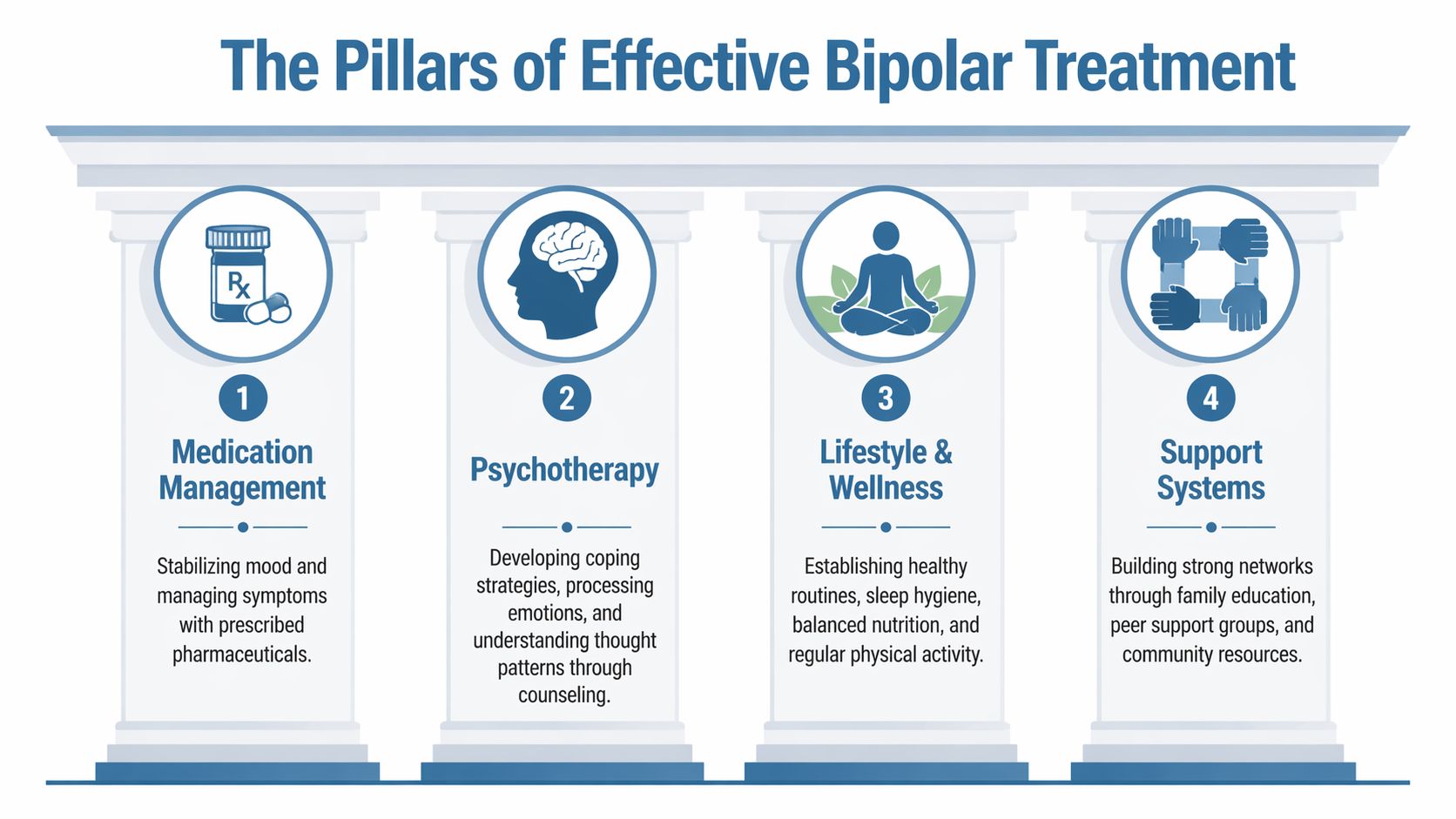
Good bipolar treatment isn’t one appointment and a prescription. It’s a coordinated system built to stabilize mood, reduce relapse, improve judgment, and help a person function again in real life.
Medication creates a steadier foundation
Medication management is often the base layer of care. Families sometimes resist this because they’re afraid medication will “change” the person. In reality, the goal is usually the opposite. Treatment aims to reduce the extreme highs and lows that have already been changing the person’s behavior, sleep, and judgment.
Mood stabilizers and certain antipsychotic medications are commonly used in bipolar treatment. A psychiatrist monitors response, side effects, and whether symptoms point more toward mania, depression, mixed symptoms, or rapid shifts. Medication isn’t about sedation for its own sake. It’s about helping the brain stop swinging so violently that the person can participate in therapy and daily life.
A useful way to think about it is this: if bipolar disorder pushes the emotional system off balance, medication helps level the floor so the rest of treatment can work.
Therapy teaches day-to-day management
Therapy matters because stability isn’t only chemical. People also need practical skills for recognizing triggers, managing routines, challenging distorted thinking, and responding earlier when symptoms return. In dual diagnosis programs, combining medication with therapies like CBT can reduce manic and depressive episodes by 40 to 60% over two years, and programs with strong retention can see sustained abstinence rates of 50% at one year according to the mentalhealthoh overview of bipolar treatment.
Several therapy approaches are especially useful:
- CBT: helps patients notice thought patterns that feed depression, impulsive choices, or hopelessness
- DBT-informed skills: support emotion regulation, distress tolerance, and safer responses during high-intensity moments
- Family education: teaches loved ones how to respond without escalating conflict
- Relapse prevention work: identifies sleep disruption, stress, medication nonadherence, and substance use as warning signs
Some families also want to explore broader wellness supports alongside formal psychiatric care. For readers interested in complementary perspectives, this guide to holistic treatment for depression can help frame questions about lifestyle, therapy, and whole-person support.
People evaluating Dallas options can also review what a dedicated mental health treatment approach should include when psychiatric symptoms are severe enough to affect safety and functioning.
Practical rule: If a program talks about bipolar disorder but can’t explain how medication management, therapy, sleep stabilization, and family involvement fit together, it’s not offering comprehensive care.
Advanced options for treatment-resistant symptoms
Some people don’t improve enough with standard approaches. When symptoms remain severe, advanced interventions may be appropriate. According to the Lindner Center of HOPE page on depression and bipolar disorder, ECT can have a 70 to 90% response rate in severe cases, and TMS achieves remission in 50 to 60% of patients with bipolar depression.
That matters for families who feel discouraged after prior treatment attempts. It means “hard to treat” doesn’t mean hopeless. It means the level of care may need to change.
A simple comparison helps:
| Treatment component | What it helps with |
|---|---|
| Medication management | Stabilizes mood and reduces symptom intensity |
| Psychotherapy | Builds coping skills and insight |
| Lifestyle structure | Supports sleep, routine, and early warning detection |
| Advanced interventions | Offers options when standard treatment hasn’t been enough |
Why Dual Diagnosis Care is Essential for Lasting Recovery
A person with bipolar disorder may drink to slow down mania, use sedatives to sleep, misuse stimulants to fight depression, or rely on drugs during periods of impulsivity. From the outside, the substance use can look like the main problem. It often isn’t the whole problem.

Why separate treatment often fails
When bipolar disorder and addiction are treated separately, patients can get trapped in a revolving door. A person may stop using substances for a short time, but untreated mania, depression, agitation, or insomnia pushes them back toward relapse. Or they may receive psychiatric care, but ongoing substance use keeps destabilizing mood and interfering with medication.
This isn’t a niche issue. Up to 60% of individuals with bipolar disorder also struggle with substance use, and dual diagnosis programs reduce relapse by 40 to 50% compared to treating each condition separately, according to the Recovery.com bipolar treatment overview.
That’s why integrated care isn’t an extra service. It’s often the core requirement for lasting recovery.
What integrated care looks like in practice
Effective dual diagnosis treatment brings the pieces together instead of splitting them apart. That can include:
- Medical detox when needed: especially if alcohol, benzodiazepines, opioids, or other substances create withdrawal risks
- Psychiatric care during addiction treatment: so mood symptoms are assessed and treated in real time
- Therapy that addresses both conditions: not addiction in one room and bipolar disorder in another disconnected plan
- Aftercare planning: because discharge without relapse prevention often leads to the same crisis repeating
Families looking for bipolar disorder treatments near me should ask one direct question: does this program treat co-occurring addiction and bipolar disorder in the same plan, with the same clinical team? If the answer is vague, that’s a warning sign.
For readers comparing programs, a dedicated dual diagnosis rehab resource can help clarify what properly integrated care should involve.
Treating only the substance use is like drying the floor while the sink is still overflowing. Treating only the bipolar symptoms while active addiction continues creates the same problem in reverse.
Your Step-by-Step Guide to Finding Help in Dallas-Fort Worth
Searching for care across Dallas, Euless, Fort Worth, Irving, Arlington, or nearby communities can get overwhelming fast. Many listings look similar. Families often don’t know which questions separate a basic provider directory result from a program that can manage a high-risk situation.

Questions families should ask a treatment center
A strong phone conversation should sound organized, calm, and specific. Families shouldn’t settle for vague reassurances.
Useful questions include:
Does the program treat bipolar disorder and substance use together?
If alcohol, opioids, stimulants, or prescription misuse are involved, this question is essential.Is medical detox available if withdrawal is a concern?
Some patients need psychiatric treatment and withdrawal management at the same time.Who manages medications?
Families should know whether psychiatric prescribing and monitoring are built into the treatment plan.What therapies are offered for bipolar symptoms?
The answer should go beyond “therapy” and describe actual approaches.What happens after stabilization?
Good care includes discharge planning, outpatient recommendations, relapse prevention, and support for the family.
A quality program should be able to explain its process in plain language. Confusing answers usually mean a confusing treatment experience.
How insurance and payment questions should be handled
Cost fears stop many families from calling at all. That delay can make symptoms worse. A 2025 NIMH report noted that 45% of bipolar patients in urban areas like DFW delay care due to insurance barriers, and centers that help with PPO verification upfront can cut out-of-pocket costs by 25 to 40%, according to the Lifestance bipolar disorder treatment page.
That means insurance verification isn’t a side issue. It’s part of access to care.
A helpful admissions team should be ready to explain:
| Insurance question | Why it matters |
|---|---|
| Is the plan in-network or out-of-network | It affects expected cost and reimbursement |
| What level of care is covered | Detox, inpatient, and outpatient may be handled differently |
| Is prior authorization needed | Delays can happen if this isn’t addressed early |
| What will the family likely owe | Transparency lowers confusion and panic |
Families in Dallas-Fort Worth should also ask whether the center can verify benefits before admission and explain the result clearly. That single step gives people back a sense of control.
What to Expect When You Call for Help
The first call is often made by a spouse, parent, sibling, or adult child who’s exhausted and scared. They may worry that they’ll be judged, pressured, or told to wait. A good admissions process does the opposite. It slows the situation down and turns chaos into decisions.
The first phone call
The conversation usually starts with safety and urgency. Staff may ask what symptoms are happening right now, whether substances are involved, whether the person is sleeping, and whether there are immediate risks. That isn’t interrogation. It’s triage.
From there, the family is guided through what level of care may fit. If detox is needed, that should be explained clearly. If the person is medically stable but psychiatrically impaired, the next clinical step should also be explained clearly. Families who need immediate support can review what a 24/7 rehab admissions hotline is designed to help with before a crisis grows worse.
Many families calm down once someone explains the next three steps. They don’t need the whole future mapped out that night. They need the next safe action.
The first day of care
Admission usually includes assessment, medical review, psychiatric review, and the beginning of a personalized treatment plan. If a co-occurring substance use disorder is present, detox may come first so the clinical team can stabilize withdrawal and evaluate mood symptoms more accurately.
The environment matters more than many people expect. A supportive intake reduces resistance, shame, and panic. That matters clinically. In dual diagnosis programs, combining medication with therapies like CBT reduces manic and depressive episodes by 40 to 60% over two years, and programs with strong retention see sustained abstinence rates of 50% at one year as described on the source cited earlier in this article.
A typical early treatment day may involve nursing support, medication review, individual sessions, group therapy, rest, and practical planning. It’s structured, but it shouldn’t feel punitive. The point is stabilization, not punishment.
Integrated Bipolar and Addiction Care at Tru Dallas
A family in crisis rarely sees two separate problems. They see one person unraveling. A son who has not slept for days may also be drinking heavily. A spouse who seems depressed may also be using pills to get through the day. In Dallas-Fort Worth, this overlap is common, and treatment works better when both conditions are addressed together from the start.

Care built for real dual diagnosis situations
Tru Dallas Detox & Recovery Center treats substance use and co-occurring mental health conditions, including bipolar disorder, at its Euless location serving the broader Dallas-Fort Worth area. Services may include medically supervised detox, psychiatric evaluation, medication support when appropriate, therapy, and discharge planning that prepares families for the next stage of care.
That integrated approach matters for a simple reason. Bipolar disorder and substance use can distort each other. Alcohol, stimulants, and other drugs can intensify mood swings or mask them. Withdrawal can look like anxiety, agitation, or depression. Mania can be mistaken for intoxication. If each problem is treated in isolation, families can end up with partial answers and repeated crises.
Good dual diagnosis care works like one clinical map instead of several disconnected sets of directions. The team looks at sleep, mood, safety, withdrawal risk, medication needs, and relapse patterns together. That gives clinicians a better chance of identifying what is driving the emergency and what support will hold after discharge.
A strong program should include:
- Medical detox oversight so withdrawal is handled safely and the person can stabilize
- Psychiatric evaluation alongside addiction treatment so bipolar symptoms are assessed in context
- A treatment plan matched to the person’s current condition because some people need a higher level of structure before stepping down
- Family communication and aftercare planning so the next steps are clear before the person leaves treatment
Families should also ask practical questions. Who manages medications if bipolar symptoms worsen during detox? How is substance use assessed without overlooking mania or depression? What happens after stabilization? Clear answers usually signal a program that understands dual diagnosis work at a deeper level.
Signs it is time to call now
Reach out promptly if a loved one is sleeping very little, acting recklessly, mixing substances with major mood changes, talking in ways that do not make sense, or becoming too depressed to function safely. Those are not problems to monitor casually at home.
Professional help is often needed sooner than families expect.
If work, daily functioning, or financial stability have already been affected, families may also need information about mental illness disability benefits while treatment planning is underway. That does not replace care. It can reduce some of the practical pressure while the clinical team focuses on stabilization.
Many families wait because they hope one more calm conversation will turn things around. With bipolar disorder and substance use together, waiting can blur the picture further and increase risk. A direct clinical assessment gives you something more useful than guesswork. It gives you a plan.
Frequently Asked Questions About Bipolar Treatment
Can bipolar disorder be cured
Bipolar disorder is typically managed rather than “cured.” That can sound discouraging at first, but it shouldn’t. Many people improve significantly when they receive the right combination of medication, therapy, structure, and ongoing follow-up.
What if a loved one refuses help
Families should focus on safety, clear boundaries, and professional guidance. Arguing during mania or deep depression often goes poorly. It usually helps to document behaviors, speak calmly, avoid long emotional debates, and contact a treatment provider for direction on next steps.
How long does treatment last
There isn’t one timeline that fits every patient. Some people need immediate stabilization first, especially if substances are involved. Others need longer-term outpatient support after an acute episode. The right question isn’t “How fast can this be over?” It’s “What level of care will give this person the best chance to stay stable?”
What if work or daily life has already been affected
Functional problems are common in serious mental health conditions. When symptoms have affected employment or day-to-day capacity, families sometimes need legal or benefits information along with treatment planning. In that situation, guidance on mental illness disability benefits may help people understand one part of the broader support picture.
People searching for bipolar disorder treatments near me are often already in a crisis phase. Waiting for perfect timing usually makes things harder. Clear evaluation and timely treatment give families the best chance to interrupt the cycle before it escalates further.
Families in Dallas-Fort Worth who need help with bipolar disorder and co-occurring substance use can contact Tru Dallas Detox & Recovery Center for confidential guidance, insurance verification, and next-step support. A single call can clarify whether detox, dual diagnosis treatment, or another level of care makes the most sense right now.
