

Navigating the path to recovery from co-occurring disorders can feel overwhelming, especially when trying to identify the right support system. A dual diagnosis, where a substance use disorder and a mental health condition exist simultaneously, requires specialized, integrated care. Finding a facility that expertly addresses both issues is critical for a successful and lasting recovery. The complexity of this search often leaves individuals and their families feeling lost, unsure of where to turn for reliable, evidence-based treatment.
This guide simplifies that process by providing a detailed roundup of the best dual diagnosis treatment facilities and resources available to residents in the Dallas-Fort Worth area. We cut through the confusion to offer clear, actionable information on top-tier providers and comprehensive directories. Each entry in this listicle includes a direct link to the facility or platform, an overview of their unique approach to integrated care, and specific details about the services they offer.
Our goal is to equip you with the essential information needed to make a confident and informed decision. Whether you are seeking treatment for yourself or a loved one, this resource will help you compare options, understand different treatment philosophies, and find a program tailored to your specific needs for a holistic recovery journey. We've focused on providers known for their quality care, specialized programs, and commitment to treating the whole person, not just the symptoms.
Key Takeaways
- Integrated Care is Essential: Dual diagnosis requires treating both the substance use disorder and the mental health condition simultaneously for effective, lasting recovery.
- Specialized Facilities are Key: Not all rehabs are equipped for dual diagnosis. Look for programs with specialized staff, including psychiatrists and licensed therapists.
- Verification is Crucial: Always confirm a facility's licensing, accreditation, and specific dual diagnosis treatment offerings before making a decision.
- Resources are Available: Tools like government directories and quality-focused platforms can help you vet and compare the best dual diagnosis treatment facilities.
- Aftercare Matters: Long-term success often depends on a strong aftercare plan, including outpatient support and alumni programs.
1. Tru Dallas Detox & Recovery Center
Tru Dallas Detox & Recovery Center in Euless, TX, establishes itself as a standout choice for dual diagnosis treatment by prioritizing clinical continuity and comprehensive care. Their model ensures that clients are guided by the same dedicated clinical team from the moment they enter medically supervised detox through every subsequent stage of their recovery, including inpatient rehab, partial hospitalization (PHP), and outpatient programs. This consistent therapeutic relationship is fundamental to building trust and tailoring treatment effectively, making it one of the best dual diagnosis treatment facilities for those who value integrated, long-term support.
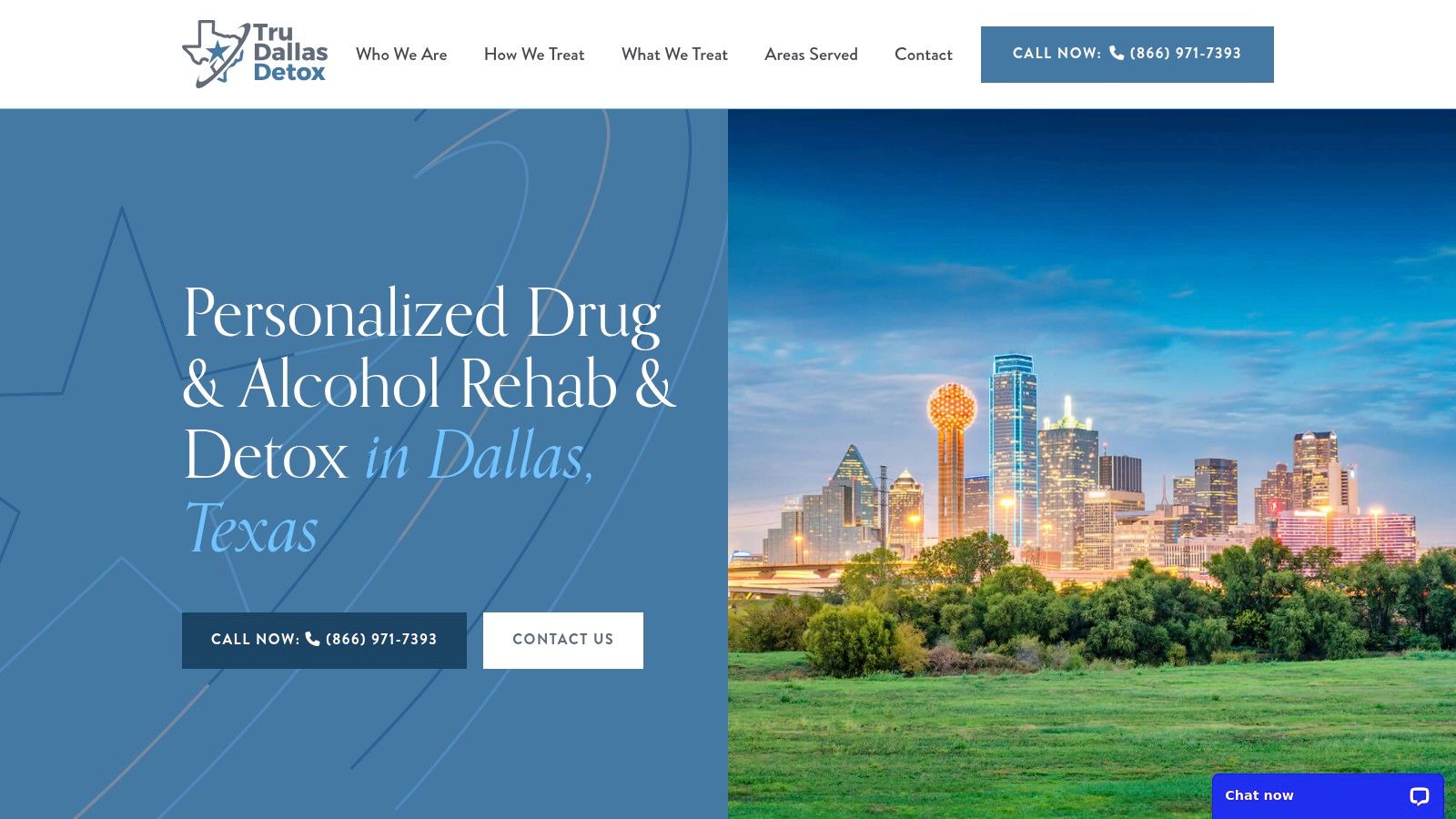
The center combines evidence-based therapies with holistic activities to address both substance use disorders and co-occurring mental health conditions simultaneously. This patient-first approach ensures that underlying issues like anxiety, depression, or trauma are not just acknowledged but are central to the recovery plan.
Key Features and Treatment Philosophy
Tru Dallas distinguishes itself with a robust, medically-driven detox protocol and a full spectrum of care designed to adapt to each client's evolving needs.
- Medically Supervised Detox: The initial phase of recovery is managed by an experienced clinical team, providing safe and comfortable withdrawal management for substances like alcohol, opioids (including fentanyl), and stimulants.
- Integrated Dual Diagnosis Care: Treatment is specifically designed to address the complex interplay between addiction and mental health. Individuals receive specialized care that treats both conditions concurrently, which is crucial for preventing relapse and fostering sustainable wellness. You can learn more about their comprehensive approach to dual diagnosis rehab at dallasdetox.com.
- Specialized Programming: Beyond its core dual diagnosis track, the facility offers Medication-Assisted Treatment (MAT) for opioid and alcohol use disorders and a unique couples rehab program for partners committed to recovering together.
- Continuum of Care with Clinical Consistency: A significant advantage is the center's commitment to keeping patients with the same therapeutic team. This continuity from detox to aftercare enhances the therapeutic alliance, leading to more personalized and effective treatment adjustments over time.
Access and Practical Information
Tru Dallas aims to remove barriers to entry with a streamlined and confidential admissions process. The modern, comfortable facility in Euless offers a private and supportive environment for healing.
| Feature | Details |
|---|---|
| Location | Euless, TX (serving the Dallas-Fort Worth metroplex) |
| Insurance | Accepts most major PPO insurance plans. Prospective clients must verify coverage and potential out-of-pocket costs with their insurer and the center. |
| Admissions | Rapid and confidential admissions process designed to provide immediate support. |
| Cost & Outcomes | Public pricing and specific outcome data are not published. It is recommended to contact the center directly for cost information and to inquire about their treatment success rates. |
| Who It's For | Adults needing medical detox, individuals with co-occurring disorders, those requiring MAT, and couples seeking joint recovery. |
Key Takeaways
- Clinical Continuity: Clients work with the same team from detox through aftercare, a major advantage for building trust and personalizing treatment.
- Comprehensive Detox: Offers safe, medically supervised withdrawal management for a wide range of substances, including opioids and alcohol.
- Specialized Tracks: Provides targeted programs like MAT, couples rehab, and a dedicated dual diagnosis track.
- Insurance-Friendly: The center accepts most PPO plans, making high-quality care more accessible.
- Focus on Aftercare: Develops individualized aftercare plans and sober living recommendations to support long-term success post-treatment.
Frequently Asked Questions (FAQ)
What specific mental health conditions does Tru Dallas treat alongside addiction?
Tru Dallas is equipped to treat a range of co-occurring mental health conditions, including but not limited to depression, anxiety disorders, PTSD, and bipolar disorder, as part of their integrated dual diagnosis program.
Is Medication-Assisted Treatment (MAT) integrated into all treatment plans?
MAT is offered as a specialized track for individuals with opioid or alcohol use disorders. It is incorporated into a client's treatment plan based on a thorough clinical assessment and individual need.
2. FindTreatment.gov (SAMHSA’s national locator)
When starting the search for dual diagnosis treatment, the sheer volume of options can be overwhelming. FindTreatment.gov, the official behavioral health treatment locator from the Substance Abuse and Mental Health Services Administration (SAMHSA), provides a trusted and comprehensive starting point. It’s a free, anonymous national directory designed to connect individuals with state-licensed substance use and mental health providers. This makes it an invaluable tool for anyone looking for the best dual diagnosis treatment facilities without the pressure of sales-driven directories.
What truly sets this platform apart is its powerful and specific filtering system. Users can immediately narrow their search to facilities that explicitly treat "co-occurring mental and substance use disorders," ensuring every result is relevant. You can further refine your search by level of care (inpatient, PHP, IOP), payment options (private insurance, Medicaid, self-pay), and even specific needs like age groups, languages spoken, or services for veterans. This level of detail empowers you to create a shortlist of facilities that precisely match your circumstances before making a single phone call.
Pro Tip: Always use the "Verify This Information" link at the bottom of a facility's listing. This encourages you to call the provider directly to confirm that their services, insurance acceptance, and availability are up-to-date, as government databases can sometimes have a lag in updates.
For immediate support, the site prominently features the SAMHSA National Helpline (1-800-662-HELP) and a text line, providing a direct connection to 24/7 confidential assistance. While the platform itself doesn't offer treatment, its role as a verified, unbiased government resource makes it an essential first step in navigating the complex world of recovery. To deepen your understanding of the intersection of these conditions, you can learn more about mental health and substance abuse.
Key Takeaways
- Government-Verified: A free, official directory from SAMHSA listing state-licensed facilities.
- Powerful Dual Diagnosis Filter: Allows users to specifically search for co-occurring disorder treatment programs.
- Customizable Search: Refine results by care level, insurance, age, language, and special populations.
- Direct Helpline Access: Provides immediate connection to SAMHSA’s 24/7 National Helpline.
- Verification is Key: Users should always contact facilities directly to confirm listing details.
Frequently Asked Questions
Is FindTreatment.gov free to use?
Yes, it is a completely free public service provided by the U.S. government. There are no fees or account registration requirements to use the search tool.
How accurate is the information on the website?
The listings are pulled from state-licensing authorities, but a 2020 government audit noted some data could be outdated. It's crucial to call a facility directly to verify its services, location, and insurance information before making any decisions.
3. Shatterproof Treatment Atlas (treatmentatlas.org)
Navigating the quality of care can be one of the most challenging aspects of finding treatment. Shatterproof’s Treatment Atlas is a free, nonprofit platform designed to bring transparency to the process by using data and evidence-based standards. It helps users find and compare addiction treatment programs based on quality indicators, moving beyond simple directories to provide deeper insights. This makes it a powerful resource for locating the best dual diagnosis treatment facilities that adhere to proven clinical practices.
What makes Treatment Atlas unique is its focus on validated quality measures. You can filter for facilities that treat co-occurring mental health and substance use disorders and then compare them side-by-side on metrics like using FDA-approved medications or offering cognitive behavioral therapy. The "Help Me Choose" feature, an assessment tool built with ASAM criteria, guides users to the appropriate level of care. Additionally, the platform incorporates anonymous patient feedback, giving you a glimpse into the real experiences of others.
Pro Tip: When comparing facilities, pay close attention to the "Quality Measures" section on each profile. Look for checkmarks next to practices aligned with the National Principles of Care, as this indicates the facility follows evidence-based standards for effective treatment.
While many directories are driven by advertising, Treatment Atlas is a neutral, data-driven tool focused entirely on patient outcomes and quality of care. Its mission is to empower individuals and families with the information needed to make an informed decision, ensuring the chosen facility offers services that are scientifically proven to work. You can explore its features and begin your search at treatmentatlas.org.
Key Takeaways
- Quality-Focused: Uses evidence-based quality metrics to help users compare facilities.
- Side-by-Side Comparison: Allows you to directly compare multiple programs on services and quality measures.
- Patient Reviews: Includes anonymous feedback from former patients to provide real-world insights.
- Needs Assessment Tool: The "Help Me Choose" feature helps determine the appropriate level of care.
- Not Pay-to-Play: Listings are based on quality data, not advertising fees, ensuring unbiased results.
Frequently Asked Questions
Is Treatment Atlas available in every state?
No, as of 2025, Treatment Atlas is available in a select number of participating states. It is continually expanding, but you should check the website to see if your state is currently covered.
How does Treatment Atlas measure the quality of a facility?
It uses a combination of data sources, including insurance claims data, information reported by the facilities themselves, and patient experience surveys, all aligned with the Shatterproof National Principles of Care.
4. NAATP Addiction Industry Directory (National Association of Addiction Treatment Providers)
Navigating the addiction treatment landscape can be challenging, especially with concerns about predatory marketing and unethical practices. The NAATP Addiction Industry Directory offers a solution by providing a curated list of member facilities that have committed to a stringent Code of Ethics. This directory, from the National Association of Addiction Treatment Providers, is a powerful tool for finding reputable and transparent programs, making it a trusted resource for locating the best dual diagnosis treatment facilities that prioritize patient care over profit.
What makes this directory unique is its ethics-first approach. All listed providers must be licensed, accredited, and adhere to NAATP’s guidelines, which combat deceptive advertising and ensure a commitment to evidence-based care. The search functionality allows users to filter by location and specific services, including "co-occurring disorders," to pinpoint facilities equipped for dual diagnosis care. While not as exhaustive as government locators, the NAATP directory serves as a quality-control filter, giving you a pre-vetted list of providers who have demonstrated a commitment to high operational and ethical standards.
Pro Tip: When evaluating a facility found on the NAATP directory, look for their active membership status. This signals an ongoing commitment to quality improvement and ethical operations, which is especially important when seeking integrated care for co-occurring conditions.
While the primary function is the directory, the NAATP website also provides valuable resources on treatment standards and quality care. Using this tool helps you cross-reference potential centers and ensure they align with industry best practices. It’s an excellent way to add a layer of verification to your search, ensuring the facilities you consider are recognized for their integrity. To start your ethics-driven search, visit the NAATP Addiction Industry Directory.
Key Takeaways
- Ethics-Driven Listings: Features member providers who must adhere to a strict Code of Ethics.
- Signals Credibility: Membership indicates a commitment to transparency, quality care, and ethical marketing.
- Co-Occurring Filter: Allows users to search specifically for facilities offering dual diagnosis treatment.
- Pre-Vetted Options: Provides a curated list of licensed and accredited treatment centers.
- Not Exhaustive: The directory is selective and does not include all available treatment programs.
Frequently Asked Questions
Do facilities pay to be listed in the NAATP directory?
Yes, facilities pay membership dues to be part of NAATP and, by extension, to be included in the directory. However, they must first meet strict eligibility criteria, including being licensed/accredited and agreeing to abide by the NAATP Code of Ethics.
Is every good treatment center a member of NAATP?
No. While NAATP membership is a strong indicator of quality and ethical commitment, many excellent, reputable treatment centers choose not to become members for various reasons. The directory should be used as one of several tools in your search.
5. Psychology Today – Treatment Centers Directory
While many know Psychology Today for its articles and therapist locator, its Treatment Centers Directory is a powerful tool for those navigating the recovery landscape. It stands as one of the largest and most widely used private directories, offering a quick and user-friendly way to survey a wide range of local options. For individuals seeking the best dual diagnosis treatment facilities, this platform provides an essential market overview to compare programs side-by-side.
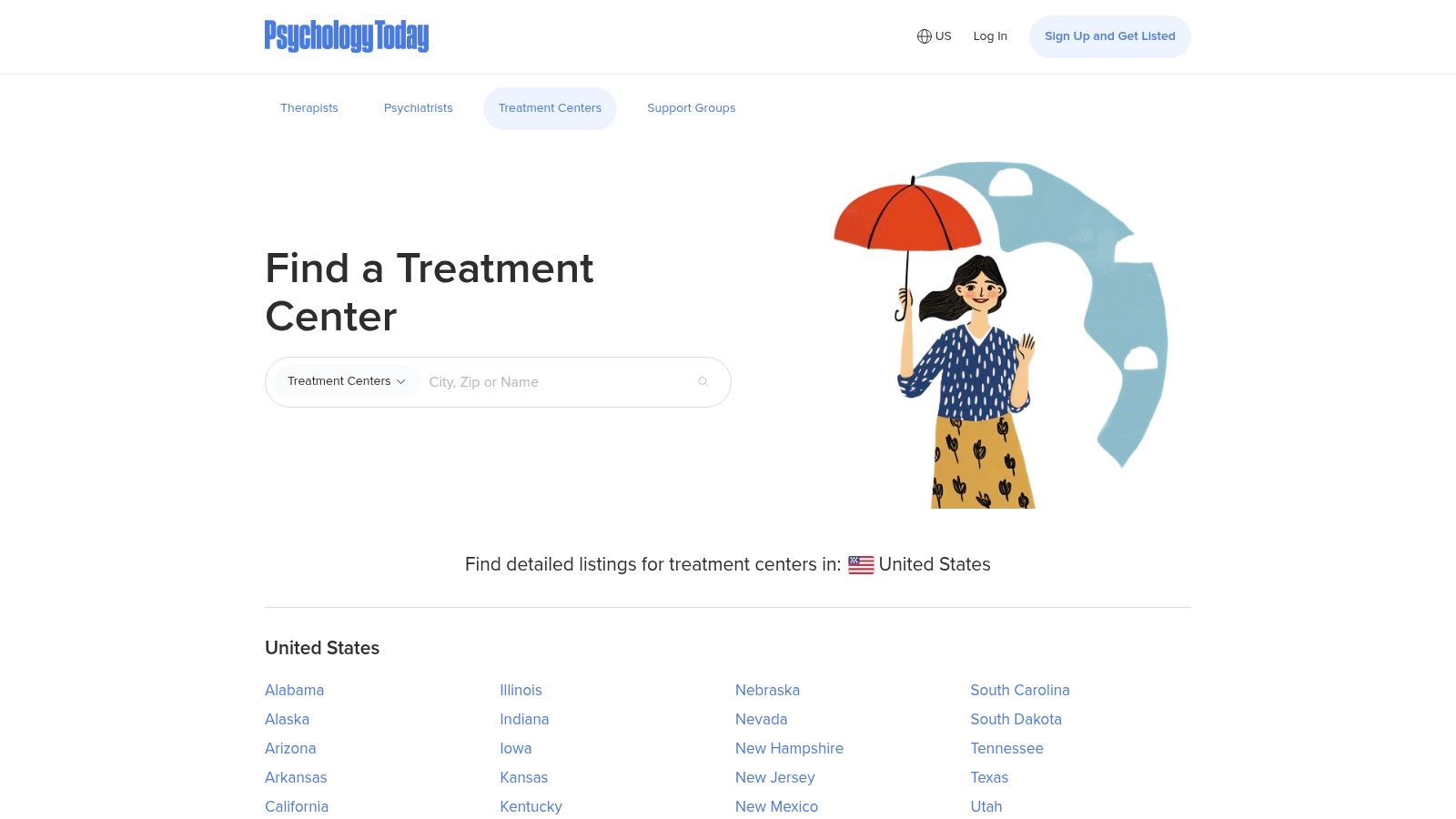
The directory’s main strength lies in its simplicity and directness. You can easily search by city or ZIP code and apply a specific filter for "Dual Diagnosis/Co-Occurring Disorders," instantly narrowing the results to relevant centers. Each profile acts as a miniature brochure, often including photos, program highlights, accepted insurance plans, and direct contact forms to message admissions teams. This design allows you to quickly create a shortlist of potential facilities and initiate contact without ever leaving the website.
Pro Tip: Treat each profile as a starting point, not a final verdict. Because listings are self-reported and marketing-driven, it is crucial to independently verify a facility’s licensing, accreditation, and specific dual diagnosis program details. Ask pointed questions when you call to ensure their services match your needs.
While the listings are not government-verified like SAMHSA's, the platform's comprehensive scope makes it an invaluable resource for discovering a broad array of private treatment options. It provides an excellent second step after using a government locator, giving you a deeper look into the programs, philosophies, and amenities offered by different facilities. You can begin your search at Psychology Today's Treatment Directory.
Key Takeaways
- Broad Private Directory: Offers one of the largest nationwide collections of private treatment center listings.
- Dual Diagnosis Filter: Users can easily search specifically for facilities that treat co-occurring disorders.
- Direct Contact Features: Profiles include phone numbers and secure messaging forms to connect with admissions.
- Visual Program Overviews: Many listings feature photos and detailed descriptions of their facilities and programs.
- User-Driven Verification: It's essential for users to independently confirm licensing and insurance details with each center.
Frequently Asked Questions
Is there a cost to use the Psychology Today directory?
No, searching the directory and contacting facilities through their profiles is completely free for users. The treatment centers pay a fee to be listed on the platform.
How reliable are the listings in this directory?
The information is provided and maintained by the treatment centers themselves, so its accuracy can vary. The listings are essentially advertisements. You must always call the facility directly to verify its services, licensing, staff credentials, and insurance acceptance before making a commitment.
6. Hazelden Betty Ford Foundation
With a legacy spanning decades, the Hazelden Betty Ford Foundation is one of the nation's most recognized nonprofit providers of addiction and mental health care. Their website serves as a comprehensive portal to their integrated treatment model, which is specifically designed for co-occurring disorders. For those searching for the best dual diagnosis treatment facilities with a long-standing reputation, this platform offers a deep dive into their evidence-based approach, combining psychiatry, medication management, and robust family services.
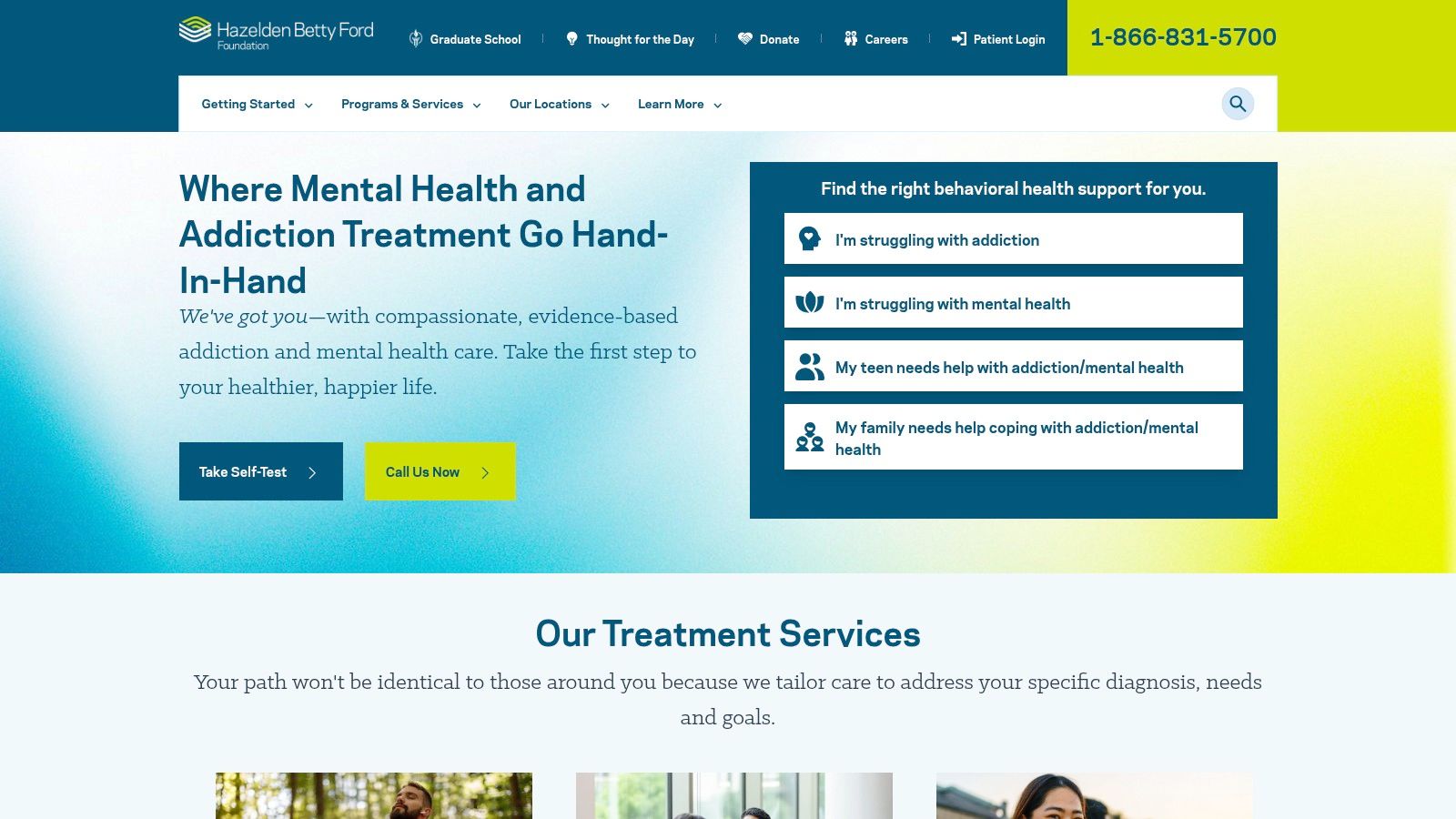
What distinguishes the Hazelden Betty Ford website is its transparency regarding insurance and financial matters. The platform features a detailed insurance section with FAQs, explaining their in-network status with many major commercial insurers and providing a streamlined online form to verify benefits. This proactive approach helps users understand potential costs and coverage options upfront. The site clearly outlines their continuum of care, from residential and outpatient programs (PHP, IOP) to virtual telehealth services, allowing prospective patients to see a clear path to recovery.
Pro Tip: Before committing, explore the "Patient Financial Assistance" section on their website. While limited, this policy can provide some relief for eligible individuals who may struggle with out-of-pocket costs, making their high-quality care more accessible.
While the foundation has multiple locations nationwide, their website helps you connect with an admissions specialist who can guide you to the appropriate level of care, whether in-person or virtual. The platform’s detailed program descriptions and focus on an integrated clinical model make it a valuable resource for anyone prioritizing a comprehensive, research-backed treatment experience. You can start the confidential process by visiting their official website at https://www.hazeldenbettyford.org.
Key Takeaways
- Reputable Integrated Model: Known for a comprehensive, evidence-based clinical approach to co-occurring disorders.
- Insurance Transparency: Provides clear information and a verification tool for many major commercial insurance plans.
- Full Continuum of Care: Offers residential, PHP, IOP, and virtual treatment options across multiple locations.
- Financial Assistance Information: Publishes details on their patient financial assistance policy for eligible individuals.
- Established Nonprofit: A well-established national provider with a strong focus on clinical excellence and research.
Frequently Asked Questions
Does Hazelden Betty Ford accept Medicare or Medicaid?
No, Hazelden Betty Ford is not a participating provider with Medicare or Medicaid. They are primarily in-network with commercial insurance plans, and self-pay is an option.
How can I find out if my insurance is accepted?
The Hazelden Betty Ford website has a dedicated insurance verification page where you can submit your information confidentially. You can also call their admissions team directly to discuss your specific policy and benefits.
7. American Addiction Centers (AAC)
For those seeking a streamlined process to explore multiple treatment options under one umbrella, American Addiction Centers (AAC) offers a nationwide network of facilities with a strong focus on integrated dual-diagnosis programs. As a large organization, they provide a centralized admissions system that operates 24/7, making it easier to navigate what can be a stressful search. This unified approach is ideal for finding the best dual diagnosis treatment facilities that fit specific insurance and clinical needs across various locations.
What sets AAC apart is its "one-front-door" model, simplifying the search for care. Their website features an instant online insurance verification tool and a facility finder, allowing users to quickly see which centers accept their plan and what services are available. Live admissions navigators are available via phone or text to guide you through the process, helping you compare different network sites and understand the levels of care offered, from medical detox to outpatient programming. This centralized support removes much of the guesswork associated with contacting individual centers.
Pro Tip: When speaking with an AAC admissions navigator, be very specific about the clinical needs you're looking for, such as detox, residential care, or particular therapies. Ask them to confirm which specific facility in their network is best equipped to handle your unique co-occurring disorders, as services can vary significantly from one location to another.
While AAC's network provides broad access, it's important to remember that not all locations offer the same services. You'll need to verify the specifics of each potential site, including their approach to co-occurring disorders and whether they provide certain specialized treatments. For instance, you can explore the role of medication-assisted treatment to see if it aligns with the options at a particular AAC facility.
Key Takeaways
- Centralized Admissions: A single 24/7 point of contact for accessing a wide network of treatment centers.
- Integrated Dual Diagnosis Focus: Co-occurring disorder treatment is a core component across their network.
- Instant Insurance Verification: An online tool quickly checks benefits for many commercial insurance plans.
- Multiple Locations: Provides options in different states, which can be useful for those willing to travel for care.
- Verification is Essential: Users must confirm the specific services offered at each individual facility.
Frequently Asked Questions
Does AAC accept my insurance?
AAC accepts many major private insurance plans. Their website has an instant online verification tool, or you can call their 24/7 helpline to have an admissions navigator confirm your benefits and coverage details for their various facilities.
Are all AAC facilities the same?
No, while they operate under one network, individual facilities vary in the levels of care they provide (e.g., detox, inpatient, outpatient) and the specific therapies and amenities offered. It's crucial to research the exact location you are considering.
Top 7 Dual Diagnosis Treatment Facilities Comparison
| Provider | Implementation complexity 🔄 | Resource requirements ⚡ | Expected outcomes ⭐📊 | Ideal use cases 💡 | Key advantages |
|---|---|---|---|---|---|
| Tru Dallas Detox & Recovery Center | 🔄 High — clinician‑led medical detox and multi‑level continuum | ⚡ Moderate–High — inpatient beds, MAT meds, licensed staff; insurance‑friendly (PPO) | ⭐ High potential clinical benefit for medically supervised detox; no public outcome data 📊 | 💡 Adults in Dallas–Fort Worth needing supervised detox, MAT, dual‑diagnosis, couples | Medically supervised detox, same clinical team through aftercare, MAT, dual‑diagnosis tracks |
| FindTreatment.gov (SAMHSA) | 🔄 Low — national searchable government directory | ⚡ Low — free to use, nationwide; user verification needed | ⭐ Variable — broad reach but data accuracy concerns reported 📊 | 💡 First step for nationwide searches, filter by co‑occurring care, access to 24/7 helpline | Free nationwide directory, strong filters, 24/7 helpline and resources |
| Shatterproof Treatment Atlas | 🔄 Low–Medium — needs assessment + comparison tools | ⚡ Low — free, consumer‑facing; limited state coverage (≈14 states) | ⭐ Good where available — quality indicators & transparency emphasis 📊 | 💡 Comparing program quality in participating states, evidence‑focused consumers | Evidence‑based quality measures, side‑by‑side comparisons, not pay‑to‑play |
| NAATP Addiction Industry Directory | 🔄 Low — curated membership directory | ⚡ Low — searchable member list; membership selective | ⭐ Moderate — signals ethical commitment but not exhaustive outcome data 📊 | 💡 Cross‑checking provider ethics/quality, finding member organizations | Ethics‑driven listings, Code of Ethics, quality improvement resources |
| Psychology Today – Treatment Centers Directory | 🔄 Low — large self‑maintained directory | ⚡ Low — wide coverage, easy contact forms | ⭐ Variable — broad but marketing‑driven listings; verification required 📊 | 💡 Quick local shortlisting and direct contact with admissions | Very broad coverage, facility photos/profiles, easy to contact centers |
| Hazelden Betty Ford Foundation | 🔄 High — integrated clinical model across levels of care | ⚡ High — multi‑site clinical staff, psychiatry, published insurance/financial info; limited public pay options | ⭐ High — established evidence‑based programs and reputation 📊 | 💡 Patients with commercial insurance seeking comprehensive nationally recognized care | Well‑established nonprofit, comprehensive co‑occurring care, insurance verification support |
| American Addiction Centers (AAC) | 🔄 Medium — networked facilities with centralized intake | ⚡ Medium — nationwide network, 24/7 admissions, online insurance verification (varies by site) | ⭐ Variable — depends on specific facility; centralized navigation improves access 📊 | 💡 Those who want a single entry point to multiple in‑network accredited centers | Centralized admissions, instant benefits verification, networked accredited sites |
Making Your Choice: Finding the Right Path to Integrated Recovery
Navigating the landscape of dual diagnosis treatment can feel overwhelming, but armed with the right information, you can make an empowered and informed decision. This guide has detailed some of the best dual diagnosis treatment facilities and resources, from local, specialized centers like Tru Dallas Detox & Recovery Center to comprehensive national directories like SAMHSA’s FindTreatment.gov and the Shatterproof Treatment Atlas. The common thread among these top-tier options is a commitment to integrated care, where mental health and substance use disorders are treated simultaneously, not as separate issues.
Choosing a facility is a deeply personal decision. Your ideal path depends on your unique clinical needs, financial situation, and personal preferences. The most crucial step is to move beyond a simple web search and engage directly with potential providers. Ask pointed questions, verify credentials, and ensure their philosophy of care aligns with your recovery goals.
How to Select the Right Facility for You
Making the final choice requires careful consideration of several practical factors. Use this checklist as you evaluate each option:
- Verify Licensing and Accreditation: Ensure the facility is licensed by the state of Texas and accredited by a recognized body like The Joint Commission or CARF. This is a baseline indicator of quality and safety.
- Confirm Dual Diagnosis Expertise: Ask specifically about their experience with your co-occurring conditions. Inquire about the qualifications of their clinical staff, including psychiatrists, therapists, and medical doctors who specialize in addiction and mental health.
- Review Treatment Modalities: Do they offer evidence-based therapies like Cognitive Behavioral Therapy (CBT), Dialectical Behavior Therapy (DBT), and Eye Movement Desensitization and Reprocessing (EMDR)? A robust program will provide a mix of individual, group, and family therapy.
- Clarify Insurance and Costs: Contact your insurance provider to understand your benefits. Then, speak with the facility’s admissions team to get a clear, written estimate of all potential costs, including those not covered by insurance.
- Assess Aftercare and Support: Recovery is a lifelong journey. Ask detailed questions about their aftercare planning, alumni programs, and transitional support services, such as sober living arrangements or intensive outpatient programs (IOP).
Key Insight: The "best" facility is not a universal title; it is the one that offers the specific, integrated, and evidence-based care that directly addresses your unique combination of mental health and substance use challenges. Your active participation in the selection process is the first step toward successful recovery.
Finding help is a sign of immense strength. By researching the best dual diagnosis treatment facilities, you are already on the path toward healing. The right program will provide the tools, support, and environment you need to build a foundation for a healthier, more fulfilling life where both your mind and body can recover in unison.
Key Takeaways
- Integrated Care is Non-Negotiable: True dual diagnosis treatment addresses mental health and substance use simultaneously. Avoid programs that treat them as separate issues.
- Verification is Vital: Always confirm a facility’s state licensing and accreditation from bodies like The Joint Commission or CARF to ensure quality standards.
- Financial Clarity is Crucial: Work with both your insurance provider and the facility’s admissions team to get a transparent breakdown of all potential costs before committing.
- Inquire About Specific Therapies: Ask if the center uses evidence-based modalities like CBT, DBT, and EMDR that are proven effective for co-occurring disorders.
- Plan for Long-Term Success: A strong aftercare plan, including alumni support and transitional living options, is a key indicator of a high-quality treatment program.
Frequently Asked Questions (FAQ)
What is the difference between a regular rehab and a dual diagnosis facility?
A dual diagnosis facility is specifically equipped to treat co-occurring disorders, meaning a substance use disorder and a mental health condition (like depression, anxiety, or PTSD) at the same time. They have integrated treatment plans and staff, including psychiatrists and licensed therapists, who are experts in both fields. A regular rehab may not have the resources or expertise to adequately address complex mental health needs.
How do I know if I need dual diagnosis treatment?
If you have been diagnosed with a mental health condition and are also struggling with substance use, you are a candidate for dual diagnosis treatment. Common signs include using substances to cope with feelings of anxiety or depression, noticing your mental health worsens when you use substances, or having a family history of both mental illness and addiction. A professional assessment is the best way to confirm.
Will my insurance cover treatment at one of these facilities?
Most major insurance plans provide coverage for mental health and substance use treatment, as they are considered essential health benefits under the Affordable Care Act (ACA). However, the extent of coverage varies significantly. It is essential to call your insurance provider and the facility’s admissions team to verify your specific benefits, including deductibles, co-pays, and any limitations.
How long does a dual diagnosis treatment program typically last?
Program length varies based on individual needs. It can range from 30 days to 90 days or longer for residential programs. Treatment often continues with less intensive outpatient programs (IOP) or partial hospitalization programs (PHP), followed by long-term aftercare and support groups.