
Relapse prevention is a dynamic, ongoing process that requires more than just willpower. It demands a robust toolkit of coping strategies, self-awareness, and a strong support network. Group therapy settings provide the ideal environment to build these essential components, but the effectiveness of these groups often hinges on the quality and engagement of their activities. Stale, repetitive exercises can lead to disinterest and diminished returns. This is why incorporating a diverse range of interactive and evidence-based activities for relapse prevention groups is not just beneficial, it's critical for fostering genuine, lasting recovery.
This guide moves beyond generic suggestions to provide a detailed roadmap for facilitators and participants alike. We will explore a curated list of powerful group activities designed to strengthen resilience against relapse. For each activity, you will find clear objectives, step-by-step implementation instructions, and practical tips for maximizing its impact. From mindfulness practices that ground you in the present moment to skills-based training that prepares you for high-risk situations, these exercises are designed to equip individuals with the tangible tools needed to navigate the complexities of sobriety. Consider this your resource for transforming a standard group session into a powerful catalyst for change and sustained well-being.
1. Mindfulness-Based Relapse Prevention (MBRP)
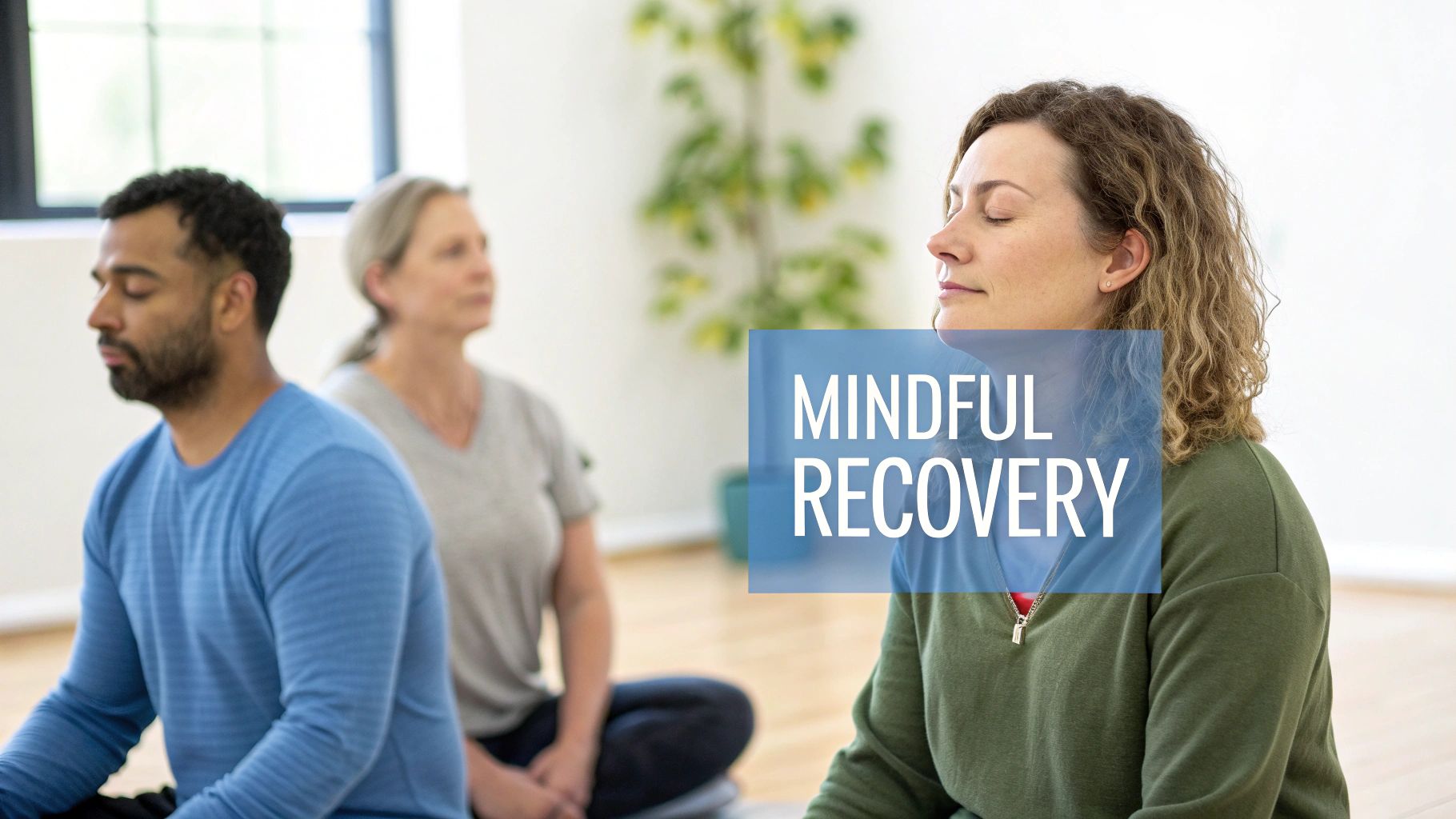
Mindfulness-Based Relapse Prevention (MBRP) is an evidence-based approach that integrates mindfulness practices with cognitive-behavioral relapse prevention strategies. Developed by researchers like Sarah Bowen, PhD, it teaches individuals to observe their thoughts, feelings, and cravings with non-judgmental awareness. This practice helps them interrupt the automatic, often destructive, reactions that lead to relapse. Instead of being controlled by a craving, a person learns to acknowledge it, sit with the discomfort, and let it pass without acting on it.
This technique is a cornerstone of modern addiction treatment and is frequently used in leading programs, including those at the University of Washington, the Hazelden Betty Ford Foundation, and various VA Medical Centers. It is especially effective for individuals with co-occurring disorders like anxiety or depression, as mindfulness benefits overall mental health.
How to Implement MBRP in a Group Setting
Implementing MBRP is one of the most transformative activities for relapse prevention groups, empowering clients with practical, internal tools.
- Start Small: Begin group sessions with short, guided meditations of 5-10 minutes. Focus on simple techniques like body scan meditations or mindful breathing to build a foundation.
- Provide Resources: Offer participants guided meditation recordings they can use at home. This reinforces the skills learned in the group and encourages daily practice.
- Create a Safe Environment: Ensure the group space is quiet, comfortable, and free from distractions. A calm setting is crucial for participants to feel safe enough to engage in meditation.
- Normalize the Process: Emphasize that meditation is a skill that takes time to develop. It's normal for the mind to wander; the goal isn't to have an "empty" mind but to gently bring focus back when it strays.
Facilitator Insight: The core objective of MBRP is not to eliminate cravings but to change one's relationship to them. By observing cravings as temporary sensations rather than urgent commands, participants reclaim their power of choice and build resilience against relapse triggers. This shift in perspective is fundamental to long-term recovery.
Key Takeaways
- MBRP combines mindfulness with cognitive-behavioral therapy to prevent relapse.
- It teaches participants to observe triggers and cravings without automatic reaction.
- Start with short, guided meditations to ease participants into the practice.
- Home practice with recordings is vital for skill development.
- A key benefit is empowering individuals to manage internal states that lead to relapse.
Frequently Asked Questions (FAQ)
Q: Is MBRP suitable for everyone in addiction recovery?
A: MBRP is highly effective for a wide range of individuals, especially those who struggle with impulsivity or co-occurring anxiety. However, facilitators should assess for trauma history, as unguided meditation can sometimes be challenging for those with severe PTSD.
Q: What materials are needed for an MBRP group session?
A: Minimal materials are required. Comfortable seating (chairs or cushions), a quiet room, and a facilitator with training in mindfulness and addiction are the primary needs. Optional materials include guided meditation scripts or audio recordings.
2. Cognitive Behavioral Group Therapy (CBGT) for Relapse Prevention
Cognitive Behavioral Group Therapy (CBGT) is a highly structured, evidence-based approach that helps individuals identify and change the destructive thought patterns and behaviors contributing to substance use. Rooted in the work of pioneers like Albert Ellis and David Clark, CBGT operates on the principle that our thoughts, feelings, and actions are interconnected. By learning to challenge cognitive distortions (e.g., "I'll never get better" or "One drink won't hurt"), participants can develop healthier coping mechanisms and reduce the risk of relapse.
This method is a gold standard in addiction treatment, utilized extensively by institutions like the National Institute on Drug Abuse (NIDA) and the Beck Institute. It is particularly effective because the group setting provides a real-time environment to practice new social and emotional skills. The structured nature of CBGT, often delivered in 12-16 week programs, offers a clear roadmap for recovery.
How to Implement CBGT in a Group Setting
Implementing CBGT is one of the most effective activities for relapse prevention groups, as it provides a practical, skill-based framework for sustained recovery.
- Use Structured Materials: Utilize worksheets and visual aids from established sources, such as NIDA's CBT manuals. These tools help participants identify their specific thought patterns and track their progress.
- Practice with Role-Playing: Dedicate time in each session for members to role-play challenging situations, like declining a drink at a party or managing a conflict with a loved one. This active practice builds confidence and behavioral skills.
- Assign Practical Homework: Give manageable homework assignments, such as keeping a thought log or practicing a specific coping skill during the week. This reinforces learning and encourages application in daily life.
- Analyze Relapse Scenarios: Use hypothetical or past relapse scenarios as teaching moments. Break down the chain of events leading to the relapse, focusing on identifying the triggering thoughts and potential intervention points.
Facilitator Insight: The power of CBGT lies in its ability to demystify relapse. By teaching participants to see relapse as a process that begins with a thought, not an action, you empower them to intervene early. The goal is to build an internal "toolkit" that allows them to recognize and neutralize threats to their sobriety before they escalate.
Key Takeaways
- CBGT focuses on changing the thought patterns and behaviors that lead to relapse.
- It is a structured, skill-based approach often delivered in a group setting.
- Role-playing and worksheets are effective tools for teaching and practicing new skills.
- Homework helps integrate learned concepts into a participant's daily life.
- This therapy empowers individuals by making them active participants in their recovery process.
Frequently Asked Questions (FAQ)
Q: Does CBGT work for co-occurring disorders?
A: Yes, CBGT is highly effective for dual diagnosis clients. Since it addresses underlying cognitive distortions, it is beneficial for treating conditions like depression, anxiety, and PTSD alongside substance use disorders. You can learn more about the applications of Cognitive Behavioral Therapy for conditions like alcoholism.
Q: What is the ideal group size for a CBGT session?
A: An ideal CBGT group typically consists of 8-12 members. This size is small enough to ensure everyone has a chance to participate and receive individual attention, yet large enough to generate diverse perspectives and facilitate dynamic group interaction.
3. Twelve-Step Facilitation (TSF) Groups
Twelve-Step Facilitation (TSF) is a structured, group-based approach designed to introduce and encourage active participation in 12-step mutual support programs like Alcoholics Anonymous (AA) and Narcotics Anonymous (NA). TSF is not the same as an AA or NA meeting; instead, it educates participants on the core principles of the 12 steps, such as acceptance of addiction, surrender to a higher power, and the value of peer support. It prepares them to seamlessly integrate into these community-based fellowships for long-term recovery maintenance.
This approach was established on the principles laid out by the founders of AA, Bill Wilson and Dr. Bob Smith, and has become a standard component in many professional treatment programs. TSF is highly effective because it acts as a bridge, connecting the clinical treatment environment to the free, widely accessible, and lifelong support network offered by 12-step communities. It demystifies the process and helps individuals build the confidence to engage with sponsors and local meetings.
How to Implement TSF in a Group Setting
Integrating TSF is one of the most practical activities for relapse prevention groups because it connects clients to a sustainable, community-based support system.
- Provide Program Literature: Start by distributing and reviewing literature like the "Big Book" of Alcoholics Anonymous or NA’s "Basic Text." Discussing the first few steps can provide a solid foundation.
- Connect to Local Meetings: Before the TSF group concludes, provide participants with schedules for local AA, NA, or other 12-step meetings. Consider organizing a group outing to a beginner's meeting to ease their transition.
- Address Spiritual Concerns: Many newcomers are hesitant about the spiritual aspect. It is crucial to clarify that "Higher Power" is a concept of personal interpretation and does not require adherence to a specific religion. Find out more about the connection between recovery and spirituality.
- Encourage Sponsorship: Explain the role of a sponsor as a mentor in recovery. Facilitate discussions on how to find a sponsor and the benefits of having one for guidance through the steps.
Facilitator Insight: The primary goal of TSF is not to work all 12 steps within the group, but to foster acceptance and willingness. The group's success is measured by how well it prepares and motivates individuals to engage with the 12-step community independently after treatment, ensuring they have a support system for life's challenges.
Key Takeaways
- TSF educates clients on 12-step principles to encourage community meeting participation.
- It acts as a crucial bridge from clinical treatment to long-term peer support.
- Addressing misconceptions about spirituality is key to overcoming client resistance.
- The focus is on preparing clients for AA/NA, not replacing those meetings.
- Connecting clients with sponsors and local meetings is a primary objective.
Frequently Asked Questions (FAQ)
Q: Do participants have to be religious to benefit from TSF?
A: No. TSF emphasizes that spirituality is a personal concept. The "Higher Power" can be anything from a traditional deity to the collective wisdom of the group, nature, or one's own inner values. The focus is on finding a source of strength outside of oneself.
Q: How is a TSF group different from a regular AA or NA meeting?
A: TSF groups are led by a clinical facilitator in a treatment setting and are designed to teach the principles of the 12 steps. AA/NA meetings are peer-led, community-based support groups where members share their experience, strength, and hope to stay sober. TSF prepares individuals to attend and benefit from AA/NA.
4. Motivational Interviewing (MI) Group Sessions
Motivational Interviewing (MI) is a collaborative, person-centered counseling style for addressing the common problem of ambivalence about change. Developed by William Miller and Stephen Rollnick, MI focuses on strengthening a person's own motivation and commitment to a specific goal by eliciting and exploring their own reasons for change in an atmosphere of acceptance and compassion. In a group setting, it helps participants collectively explore their mixed feelings about recovery and build internal drive.
This evidence-based practice is widely adopted by leading health organizations, including SAMHSA and NIDA, and is a core component of many community health centers and integrated treatment programs. It's particularly effective for individuals who feel resistant or uncertain about their recovery journey, as it avoids confrontation and instead fosters a partnership between the facilitator and the group members.
How to Implement MI in a Group Setting
Using MI is one of the most empowering activities for relapse prevention groups, as it honors client autonomy and helps them find their own "why" for staying sober.
- Use Open-Ended Questions: Frame questions to encourage reflection rather than simple yes/no answers. Ask things like, "What are some of the good things and not-so-good things about this change?" or "How might your life be different a year from now if you stick with your recovery plan?"
- Practice Reflective Listening: Actively listen to what participants share and reflect it back to them. This validates their experience and ensures they feel heard. For example, "So, it sounds like you're feeling torn between wanting to be healthy and missing the social aspects of your old life."
- Foster a Non-Judgmental Culture: Create a safe space where ambivalence is normalized. Emphasize that it's okay to have conflicting feelings and that the goal is to explore them together without shame or pressure.
- Focus on "Change Talk": Gently guide the conversation to help participants voice their own arguments for change. When a member expresses a desire, ability, reason, or need to change, highlight and affirm it.
Facilitator Insight: The spirit of MI is about partnership, not persuasion. Your role is not to convince members to change but to help them discover their own motivation. By avoiding the "expert" role and instead becoming a curious guide, you empower participants to take ownership of their recovery journey, which is far more sustainable than externally imposed goals.
Key Takeaways
- MI is a collaborative approach that strengthens intrinsic motivation for change.
- It focuses on exploring and resolving ambivalence about recovery.
- The core skills include open-ended questions, affirmations, and reflective listening.
- A non-judgmental environment is crucial for participants to share openly.
- It empowers individuals by helping them articulate their own reasons for staying sober.
Frequently Asked Questions (FAQ)
Q: Can MI be used if a person is court-ordered to attend treatment?
A: Absolutely. MI is especially effective for mandated clients because it respects their autonomy and avoids creating resistance. By exploring their personal values and goals, MI can help them find internal reasons to engage in recovery, even if their initial attendance was not their choice.
Q: What training is needed to facilitate an MI group?
A: Effective MI facilitation requires specific training. While the concepts are straightforward, the skills need practice. Look for workshops or certification programs from organizations like the Motivational Interviewing Network of Trainers (MINT) to develop proficiency in the core principles and techniques.
5. Skills Training for Relapse Prevention (STRP)
Skills Training for Relapse Prevention (STRP) is a highly structured, curriculum-based approach that equips individuals with specific, measurable coping skills to navigate high-risk situations. Pioneered by figures like G. Alan Marlatt, PhD, this method moves beyond theoretical discussion to active behavioral rehearsal. It focuses on teaching practical social, cognitive, and lifestyle management skills that directly counter relapse risk factors.
This evidence-based model is a core component of many leading treatment programs, including those utilizing NIDA-developed manuals and the Community Reinforcement Approach (CRA). STRP is particularly effective because it provides clients with a tangible toolkit of responses for real-world challenges, from refusing a drink at a party to managing a sudden, intense craving. The goal is to build competence and confidence, making healthy choices feel more automatic and accessible.
How to Implement STRP in a Group Setting
Implementing STRP transforms a group from a place of simple discussion to a dynamic skills-development workshop. This makes it one of the most practical activities for relapse prevention groups.
- Teach Sequentially: Structure the curriculum so skills build upon each other. Start with foundational abilities like identifying triggers before moving to more complex skills like assertiveness or problem-solving.
- Utilize Role-Playing: Dedicate significant group time to role-playing and behavioral rehearsal. Have participants practice saying "no" to a peer, asking for support, or leaving a triggering environment.
- Provide Clear Demonstrations: The facilitator should model each skill clearly before asking the group to practice. Provide step-by-step instructions and handouts that members can reference later.
- Assign Targeted Homework: Give participants "homework" assignments to apply the week's skill in their daily lives. For instance, after a session on coping with negative emotions, they might be asked to practice a specific healthy coping mechanism and report back.
Facilitator Insight: The power of STRP lies in its focus on doing, not just talking. When a client successfully role-plays turning down a drink in the safety of the group, their self-efficacy skyrockets. This builds a "muscle memory" for recovery-oriented behaviors that they can draw upon when faced with real-world pressure.
Key Takeaways
- STRP is a structured curriculum focused on teaching practical, behavioral skills.
- It uses role-playing and rehearsal to build confidence in high-risk situations.
- Skills should be taught sequentially, building from simple to complex.
- Homework is crucial for transferring skills from the group to real life.
- The primary benefit is empowering clients with a tangible toolkit for recovery.
Frequently Asked Questions (FAQ)
Q: What kinds of skills are taught in STRP?
A: Skills typically fall into categories like craving management (e.g., urge surfing), social skills (e.g., refusal skills, building a sober support network), emotional regulation (e.g., managing anger or anxiety without substances), and problem-solving. You can learn more about essential addiction coping skills on dallasdetox.com.
Q: Is STRP appropriate for early recovery?
A: Absolutely. STRP is ideal for individuals at all stages, but it is especially valuable in early recovery when old coping mechanisms are gone and new ones have not yet been established. It provides the foundational building blocks for a stable, long-term recovery.
6. Peer Support Groups and Mutual Aid Groups
Peer Support and Mutual Aid Groups are a cornerstone of long-term recovery, operating on the powerful principle of shared experience and collective wisdom. These groups are facilitated by or among individuals with lived recovery experience, creating a space where participants are both helpers and those being helped. This reciprocal relationship dismantles stigma and isolation, fostering a strong sense of community and belonging that is vital for sustained sobriety.
Pioneered by organizations like SMART Recovery and championed by advocacy networks such as Faces and Voices of Recovery, this model is recognized by SAMHSA as a critical component of a recovery-oriented system of care. Examples range from structured meetings like LifeRing Secular Recovery to the integration of peer support specialists within formal treatment programs, all leveraging the unique power of lived experience.
How to Implement Peer Support in a Group Setting
Integrating peer-led dynamics is one of the most effective activities for relapse prevention groups, building a sustainable network of support that extends beyond the clinical setting.
- Establish Clear Group Norms: Begin by co-creating group agreements. These should cover confidentiality, respectful communication, and a commitment to non-judgment. This ensures a safe and predictable environment for all members.
- Use a Structured Format: Implement a consistent structure for meetings, such as starting with a check-in, focusing on a specific topic or skill, and ending with a check-out. This provides clarity and helps keep the discussion productive.
- Provide Basic Facilitator Training: Equip peer leaders with fundamental facilitation skills. Training should cover how to manage time, guide discussions, and handle difficult situations, empowering them to lead effectively.
- Link with Professional Services: Ensure the group has clear pathways to connect with professional help for complex issues like severe mental health crises or medical emergencies. Peer support complements, but does not replace, clinical care.
Facilitator Insight: The magic of peer support lies in the phrase, "Me too." When a participant shares a struggle and hears those words, it instantly validates their experience and breaks down the walls of shame and isolation. The primary goal is to foster connection, not to provide clinical advice, creating a community where recovery is a shared journey.
Key Takeaways
- Peer support is built on shared lived experience, reducing stigma and isolation.
- It creates reciprocal relationships where members both give and receive support.
- Establishing clear group norms and a structured format is crucial for success.
- Peer facilitators benefit from basic training to guide meetings effectively.
- These groups build a powerful sense of community essential for long-term recovery.
Frequently Asked Questions (FAQ)
Q: Are peer support groups the same as 12-step groups like AA or NA?
A: While they share the principle of mutual aid, many peer support groups like SMART Recovery or LifeRing offer secular, evidence-based alternatives to the 12-step model. They often focus on cognitive-behavioral tools and self-empowerment rather than a spiritual framework.
Q: What is the role of a clinical professional in a peer-led group?
A: In a true peer-led model, a clinical professional's role is typically advisory or supportive, not directive. They might help establish the group, provide training to peer facilitators, or serve as a resource for issues that fall outside the scope of peer support, but they do not lead the meetings.
7. Contingency Management (CM) Group Programs
Contingency Management (CM) is an evidence-based behavioral therapy that uses tangible rewards to reinforce positive behaviors, such as abstinence from substance use. Pioneered by researchers like Dr. Maxine Stitzer, this approach operates on the principle of positive reinforcement, where participants earn prizes or vouchers for meeting specific, measurable recovery goals. The immediate, tangible reward for positive action helps strengthen the motivation to stay sober, creating a powerful counter-incentive to the immediate gratification of substance use.
This method is highly structured and has been successfully implemented in various settings, including Veterans Affairs (VA) treatment programs, NIDA-funded research, and community health centers. It is particularly effective for treating addiction to stimulants, opioids, and alcohol, as it directly addresses the brain's reward pathways and helps build new, healthy habits.
How to Implement CM in a Group Setting
Implementing Contingency Management is one of the most structured and motivating activities for relapse prevention groups, offering clear incentives for progress.
- Establish Clear Targets: Define specific, measurable, and achievable target behaviors. This is most often verified abstinence (e.g., negative urine drug screens), but can also include group attendance or completing recovery-related assignments.
- Create a Reinforcement Schedule: Determine how rewards will be earned. A common method is a "fishbowl" system where participants draw a prize slip for each negative screen. The value of prizes can escalate with consecutive periods of abstinence to reward sustained effort.
- Ensure Transparency and Fairness: The rules for earning rewards must be simple, clearly explained, and applied consistently to all group members. This transparency builds trust and ensures the program's integrity.
- Combine with Other Therapies: CM works best when it is not a standalone intervention. It should be integrated with other therapeutic approaches, like CBT or motivational interviewing, that address the underlying causes of addiction.
Facilitator Insight: The power of CM lies in its ability to make recovery immediately rewarding. While long-term benefits like improved health are crucial, they can feel distant. CM provides a concrete, positive consequence for healthy choices right now, which helps bridge the motivational gap in early recovery.
Key Takeaways
- CM uses tangible rewards to reinforce positive behaviors like abstinence.
- It is a highly structured, evidence-based approach effective for various substance use disorders.
- Success depends on clear, measurable goals and a consistent reward system.
- CM should be paired with other therapeutic modalities for comprehensive treatment.
- The immediate reinforcement helps build and sustain motivation for long-term recovery.
Frequently Asked Questions (FAQ)
Q: Does giving rewards for sobriety create a new dependency?
A: No. Research shows that CM does not create a "dependency" on rewards. Instead, it serves as a tool to help individuals establish and sustain new sober habits. As intrinsic motivations for recovery (like better health and relationships) grow stronger, the reliance on external rewards naturally fades.
Q: What kind of rewards are most effective?
A: Effective rewards vary but are typically items or services that promote a healthy lifestyle. This can include gift cards for groceries or coffee shops, bus passes, movie tickets, or items related to hobbies. The key is that the rewards are desirable to the participants and delivered promptly.
8. Adventure Therapy and Experiential Group Activities
Adventure Therapy and Experiential Group Activities use outdoor challenges, team problem-solving, and hands-on exercises to foster personal growth and resilience. Pioneered by figures like Karl Rohnke and organizations like Project Adventure, this approach moves therapy beyond traditional talk-based settings. Participants engage in activities like ropes courses or wilderness expeditions, which act as powerful metaphors for their recovery journey, building trust, communication, and self-efficacy.
This modality is highly effective for building group cohesion and teaching recovery principles in a tangible way. Leading programs like Outward Bound for addiction recovery and various wilderness therapy initiatives use it to help individuals confront fears and develop new coping skills. The physical and mental challenges require participants to rely on each other, breaking down barriers and creating strong, supportive bonds essential for long-term sobriety.
How to Implement Adventure Therapy in a Group Setting
Incorporating adventure therapy is one of the most dynamic activities for relapse prevention groups, turning abstract concepts into lived experiences.
- Ensure Professional Facilitation: Activities must be led by certified facilitators with dual training in both therapeutic practices and the specific adventure activity. Their expertise is crucial for managing group dynamics and ensuring safety.
- Establish a "Challenge by Choice" Philosophy: Participants should always have the right to choose their level of involvement without pressure. This empowers them to step outside their comfort zone at their own pace, fostering trust and psychological safety.
- Prioritize Debriefing: The most critical component is the post-activity debrief. Facilitators must guide a discussion that helps participants connect the experience to their recovery, exploring metaphors for overcoming obstacles, asking for help, and trusting others.
- Adapt for All Abilities: Modify activities to be inclusive of diverse physical abilities. The goal is the therapeutic process, not athletic achievement. Focus on challenges that are accessible to everyone in the group.
Facilitator Insight: The power of adventure therapy lies in its ability to create immediate and undeniable evidence of personal capability. When a client navigates a ropes course or helps their team solve a complex challenge, they can no longer believe the old narrative that they are "powerless" or "a failure." This experiential proof of strength is something they carry back into their daily life.
Key Takeaways
- Adventure therapy uses physical and mental challenges to build recovery skills.
- It is effective for developing trust, communication, and self-efficacy.
- "Challenge by choice" and thorough debriefing are essential components.
- Activities must be led by dually trained and certified professionals.
- The goal is to translate experiential learning into real-world relapse prevention strategies.
Frequently Asked Questions (FAQ)
Q: Is adventure therapy safe for people in early recovery?
A: Yes, when conducted by certified professionals who prioritize physical and psychological safety. A thorough pre-screening of participants' health is standard practice, and activities are designed to be challenging yet safe, with a strong emphasis on group support and professional supervision.
Q: What if I have physical limitations or am not "outdoorsy"?
A: Adventure therapy is highly adaptable. It's not about being an athlete. Activities can range from low-impact group initiatives and problem-solving games to more physical challenges like rock climbing. The principle of "challenge by choice" ensures you only participate at a level that feels right for you.
Comparison of 8 Relapse-Prevention Group Activities
| Approach | Implementation Complexity 🔄 | Resource Requirements ⚡ | Expected Outcomes 📊⭐ | Ideal Use Cases 💡 |
|---|---|---|---|---|
| Mindfulness-Based Relapse Prevention (MBRP) | Moderate — structured 8‑week group; needs mindfulness-trained facilitators | Low–Moderate — group space, guided recordings, facilitator training | Greater craving tolerance, improved emotion regulation; effects accrue over weeks | Clients needing awareness-based coping; adjunct to clinical care |
| Cognitive Behavioral Group Therapy (CBGT) for Relapse Prevention | Moderate–High — manualized 12–16 weeks, session structure required | Low–Moderate — worksheets, facilitator skilled in CBT, homework monitoring | Reduced relapse risk via cognitive/behavioral change; measurable skill gains | Clients who benefit from structured, skill-based interventions |
| Twelve-Step Facilitation (TSF) Groups | Low — peer/leader-led education about 12‑step process; variable fidelity | Very Low — community meetings, literature, sponsors | Long‑term peer support and accountability; variable clinical effect sizes | Those seeking community, spiritual framework, low-cost ongoing support |
| Motivational Interviewing (MI) Group Sessions | Moderate — facilitator must maintain MI style and group balance | Low–Moderate — trained staff, time for reflective exercises | Increased motivation, decreased resistance; improved engagement | Ambivalent or resistant participants; early readiness enhancement |
| Skills Training for Relapse Prevention (STRP) | Moderate–High — sequenced modules, role‑play, behavioral rehearsal | Moderate — curriculum materials, practice space, skilled facilitators | Concrete coping and social skills, increased self‑efficacy; measurable outcomes | Clients needing hands‑on coping, social and life‑management skills |
| Peer Support & Mutual Aid Groups | Low — peer‑led, flexible formats; quality varies by group | Low — volunteer facilitators, meeting space or online platforms | Reduced isolation, sustained community support; clinical impact varies | Long‑term recovery maintenance and community reintegration |
| Contingency Management (CM) Group Programs | Moderate — requires clear reinforcement rules and monitoring | High — funding for incentives, regular drug testing, admin systems | Rapid reductions in use and strong short‑term abstinence gains ⭐ | High‑risk users needing immediate reinforcement and engagement |
| Adventure Therapy & Experiential Activities | High — specialized certification, safety planning, logistics | High — outdoor sites, equipment, dual‑trained staff, insurance | Enhanced cohesion, self‑efficacy, experiential learning (variable) | Participants disengaged by talk therapy; team building and experiential growth |
Building Your Foundation for a Resilient Recovery
Navigating the path of recovery is a journey of continuous learning and reinforcement. The diverse range of activities for relapse prevention groups detailed in this guide provides a robust toolkit for building a resilient, sober future. From the introspective quiet of Mindfulness-Based Relapse Prevention to the dynamic engagement of Adventure Therapy, each approach offers a unique pathway to strengthen your defenses against relapse and cultivate a fulfilling life. The key is not to find a single "magic bullet" but to create a comprehensive, personalized strategy that addresses your specific triggers, challenges, and aspirations.
The activities explored, such as Cognitive Behavioral Group Therapy and Skills Training, are designed to do more than just help you say "no" in a moment of temptation. They are foundational practices that reshape your thinking patterns, enhance your emotional regulation, and improve your interpersonal relationships. They empower you to move from a reactive state of avoiding triggers to a proactive state of building a life where substance use no longer has a place. By engaging consistently in these groups, you are actively laying the bricks for a strong foundation of sobriety, one that can withstand life's inevitable pressures.
Your Next Steps in Strengthening Sobriety
Moving forward, the goal is to translate the knowledge from this article into tangible action. True recovery happens not just in the therapy room but in the daily choices you make. Use this information as a springboard to actively engage with your support network and treatment providers.
- Discuss with Your Counselor: Bring this list to your therapist or case manager. Talk through which modalities might be the best fit for your current stage of recovery and ask about incorporating specific activities for relapse prevention groups into your treatment plan.
- Explore Local Options: Research support groups in the Dallas-Fort Worth area. Look for meetings that align with these evidence-based approaches, whether it’s a Twelve-Step Facilitation group, a SMART Recovery meeting (which uses CBT principles), or a specialized skills-based workshop.
- Commit to Participation: Don't just attend; actively participate. Share your experiences, listen to the perspectives of others, and practice the skills you learn. The group dynamic is a powerful catalyst for change, providing accountability, encouragement, and a sense of belonging that is crucial for long-term success.
Ultimately, relapse prevention is an ongoing practice, not a destination. By embracing these structured activities, you are investing in your long-term well-being and reaffirming your commitment to a healthy, substance-free life. Each session you attend and every skill you master adds another layer of protection, building a future defined not by past struggles, but by present strength and future hope.
Key Takeaways
- Diversity is Strength: A comprehensive relapse prevention plan often involves a mix of different group activities, addressing cognitive, emotional, social, and behavioral needs.
- Active Engagement is Crucial: The benefits of these groups are directly proportional to your level of participation. Be present, share openly, and practice the skills learned.
- Skills Over Willpower: Lasting recovery relies on developing concrete coping skills (like those from CBT and STRP) rather than just willpower alone.
- Community Reinforces Recovery: Peer support and shared experiences in groups provide invaluable accountability, reduce isolation, and foster a sense of belonging.
- Personalization is Key: Work with your treatment team to identify the group activities that best align with your personality, triggers, and recovery goals.
Frequently Asked Questions (FAQ)
1. How do I know which type of relapse prevention group is right for me?
The best approach is to discuss your options with a therapist or addiction specialist. They can assess your individual history, co-occurring conditions, and personal triggers to recommend the most suitable groups. Trying a few different types, where possible, can also help you find the best fit.
2. What if I feel uncomfortable sharing in a group setting?
This is a very common concern. Most groups are designed to be safe, non-judgmental spaces. You can start by just listening. As you build trust and see others sharing, you may feel more comfortable opening up. Remember, you control how much you share.
3. How often should I attend relapse prevention groups?
Frequency depends on your individual needs and your stage of recovery. In early recovery, attending multiple groups per week is often recommended. As you become more stable, you might transition to one or two a week as part of your ongoing maintenance plan. Your aftercare plan should provide specific guidance.
4. Can these group activities help with a dual diagnosis?
Absolutely. Many of these modalities, especially Mindfulness-Based Relapse Prevention (MBRP) and Cognitive Behavioral Group Therapy (CBGT), are highly effective for treating co-occurring mental health conditions like anxiety and depression alongside substance use disorders.
5. Are these groups only for people who have already relapsed?
No, and this is a critical point. These groups are preventative. They are designed for anyone in recovery who wants to build and strengthen their skills to avoid a future relapse. They are proactive tools for maintaining long-term sobriety.