
Medication-assisted treatment, often called MAT, is a multifaceted, evidence-based approach that combines FDA-approved medications with counseling and behavioral therapies to treat substance use disorders, primarily for opioids and alcohol. In 2022, 9,367,000 U.S. adults needed treatment for opioid use disorder, but only 25.1% received medications for OUD, which helps explain why so many people and families in Dallas still feel trapped even when effective care exists.
For many people, the question isn't just what is medication assisted treatment. It's whether it can help after repeated relapses, frightening withdrawals, or a loved one who wants to stop but can't stay stopped. Families across Dallas, Euless, Plano, Irving, and the wider Dallas-Fort Worth area often reach treatment after months or years of stress, secrecy, and fear.
MAT gives that situation a different path. It treats addiction as a medical condition that affects the brain, body, behavior, and daily life. Instead of asking someone to white-knuckle through cravings and withdrawal, it helps stabilize the body so recovery work can begin.
Table of Contents
- Understanding Medication Assisted Treatment and Why It Matters
- How MAT Combines Science and Support for Lasting Recovery
- Common Medications Used in Dallas MAT Programs
- Is Medication Assisted Treatment Effective
- Addressing Myths and Concerns About MAT
- What to Expect from MAT at Tru Dallas Detox
- Take the First Step to Recovery in Dallas Today
Understanding Medication Assisted Treatment and Why It Matters
Someone in Dallas may wake up promising that today will be different, then spend the day fighting withdrawal, cravings, shame, and fear. By evening, that same person may feel like nothing will ever change. That cycle is exactly why medication-assisted treatment matters.

What is medication assisted treatment? It is a form of addiction treatment that uses approved medications together with counseling and behavioral care to reduce withdrawal, lower cravings, support stability, and help a person stay engaged in recovery.
That definition matters because many people still think treatment means detox alone. Detox can be an important first step, but by itself it doesn't teach coping skills, rebuild routines, or protect someone from the intense physical and emotional pull that often follows early abstinence. MAT is designed to help with those realities.
A major reason this approach matters is the size of the treatment gap. In 2022, an estimated 9,367,000 U.S. adults needed treatment for opioid use disorder, but only 25.1% received medications for OUD, according to CDC opioid treatment gap data. The same CDC report notes that this gap exists alongside record-high overdose deaths, even though medications for opioid use disorder substantially reduce mortality.
Why families often misunderstand MAT
Many families call a Dallas detox center hoping for immediate relief but feel unsure when medication is discussed. They may worry that medication means a person isn't really sober, or that accepting help is somehow giving up.
MAT isn't about doing less recovery work. It's about making recovery possible when cravings, withdrawal, and relapse risk keep overpowering good intentions.
For people looking for medication-assisted treatment options in Dallas-Fort Worth, the key idea is simple. MAT isn't a shortcut. It's structured medical care that supports survival, stability, and long-term healing.
Why it matters locally in Dallas
Dallas addiction treatment providers often meet people who are trying to hold onto work, family responsibilities, or school while battling opioid or alcohol use. In that situation, a treatment model that addresses both the body and behavior can be the difference between repeated crisis and a workable plan.
- For the individual: MAT can reduce the chaos of early recovery.
- For the family: It can create breathing room and improve safety.
- For the treatment team: It creates a more stable starting point for therapy, planning, and relapse prevention.
How MAT Combines Science and Support for Lasting Recovery
A man arrives in Dallas for detox after promising his family, again, that this time will be different. He means it. Then withdrawal hits, sleep disappears, cravings take over, and every plan he made starts to fall apart. Medication-assisted treatment helps steady that medical crisis so recovery work can begin.
Medication and counseling do different jobs, and both matter. Medication helps calm the body and brain during early recovery. Counseling helps the person understand patterns, rebuild daily life, and stay engaged long enough for real change to take hold. At Tru Dallas Detox, that connection between the medical side and the human side is what makes MAT feel less abstract and more like a treatment path a person can start now.
What the medication part does
Addiction changes how the brain responds to stress, reward, and discomfort. That is why willpower alone often fails, even in someone committed to seeking help. MAT medications work like stabilizers. They can ease withdrawal, reduce cravings, or block the rewarding effects of opioids, which lowers the constant pressure to use.
The practical result is often simple but powerful. The person can sleep. They can eat. They can sit through a conversation without feeling consumed by physical distress. They can show up for treatment with enough stability to learn something and use it the same day.
The National Institute on Drug Abuse explains MAT as the use of medications together with counseling and behavioral therapies to treat substance use disorders. That paired approach is the point, not an optional extra. See the National Institute on Drug Abuse overview of medications and behavioral therapy in MAT.
What the support part does
Once the body is more settled, the person can start working on the reasons recovery has been so hard to hold onto. Support in MAT is not just talking about feelings. It is practical, structured care that helps someone handle high-risk situations and build a life that does not keep pulling them back into substance use.
That support often includes:
- Craving management: noticing urges early and using concrete response skills
- Trigger awareness: identifying people, places, emotions, and routines linked to use
- Family repair: improving communication, boundaries, and trust over time
- Daily planning: creating sleep, meals, appointments, and recovery routines that reduce chaos
- Motivation building: strengthening a person's own reasons for change through approaches such as motivational interviewing for substance abuse treatment
A good way to understand this is to compare MAT to treating a broken leg. Medication can reduce pain and make movement possible, but healing also requires support, follow-up, and learning how to put weight on the leg safely again. Recovery works in a similar way.
Why this combination supports lasting recovery
People often ask whether taking medication means someone is replacing one drug with another. In a supervised MAT program, the goal is not intoxication. The goal is stability, safety, and enough physical and mental clarity to participate in recovery. Prescribed treatment, monitoring, counseling, and regular reassessment make that very different from compulsive, harmful substance use.
This is also why individualized planning matters so much. One person may need more medical monitoring at the start. Another may need stronger family involvement, trauma support, or help building structure after detox. Families who want a clearer picture of how clinicians organize goals, interventions, and follow-up can review Simbie AI treatment plan examples as a general reference for how personalized care plans are built.
When MAT is done well, it gives people a fair chance to recover. It reduces the noise of withdrawal and cravings so treatment can reach the person underneath the crisis. For someone in Dallas who needs help now, that can be the difference between another setback and a real starting point.
Common Medications Used in Dallas MAT Programs
A family in Dallas may hear three medication names in one appointment and leave feeling more confused than reassured. That is understandable. MAT works best when you know what each medication is meant to do, why one may fit better than another, and how that choice connects to real treatment options you can start now.
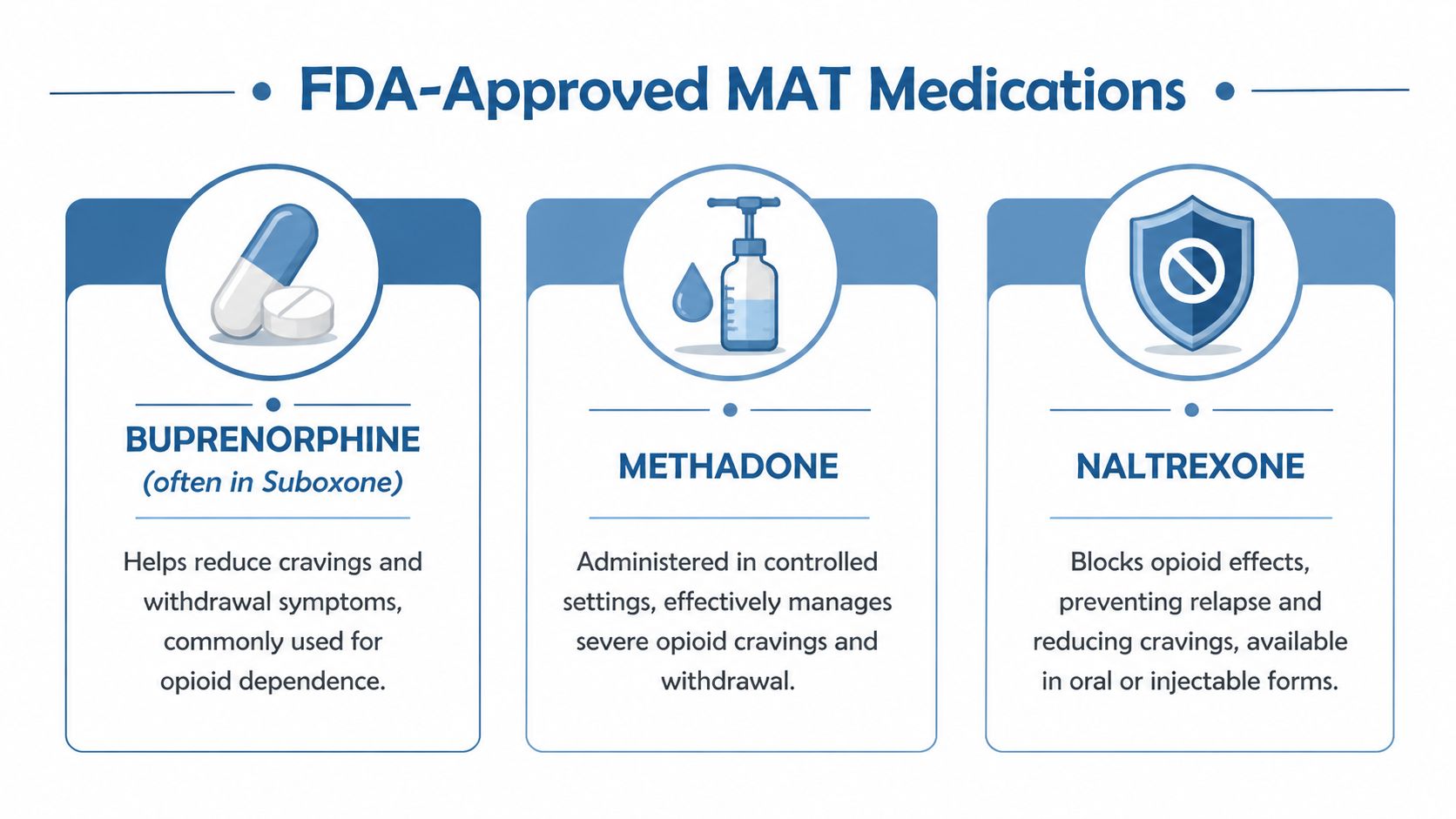
The easiest way to sort these medications is by what they do at the opioid receptor. Buprenorphine turns the signal on partway, enough to ease withdrawal and cravings without producing the same effect as full opioid misuse. Methadone turns the signal on fully, but in a controlled, long-acting way that helps stabilize people with heavier or longer-term opioid dependence. Naltrexone blocks the receptor, so opioids cannot create the expected effect if someone uses them.
Buprenorphine
Buprenorphine is one of the medications people hear about most often in opioid treatment. It is a partial opioid agonist, which means it activates opioid receptors, but only to a limited degree. In plain language, it can quiet the body’s alarm system during withdrawal and reduce cravings without creating the same cycle of short-term highs and crashes.
That makes it a practical option for many people who need treatment while also trying to hold onto work, parenting, or other daily responsibilities. Some formulations include naloxone, which is added to discourage misuse. If you want a clearer picture of what that medication does day to day, this guide on how Suboxone works for addiction treatment explains it in more detail.
People also sometimes ask how quickly these medications begin to help. That question is similar to asking how long ADHD medication takes. The answer depends on the medication, the person’s body, and what symptom you are watching for first.
Methadone
Methadone is also used for opioid use disorder, but it works differently. It is a full opioid agonist. That wording can sound alarming at first, especially to families who worry that treatment means continued dependence. In supervised care, the goal is steady function, not intoxication.
Methadone can be especially helpful for people with long histories of opioid use, high tolerance, or repeated relapse after other treatment attempts. Because it is long-acting, it can prevent the repeated withdrawal-craving-relief cycle that keeps many people stuck. For some patients, that stability is what finally makes counseling, sleep, nutrition, and normal routines possible again.
Naltrexone
Naltrexone takes a different route. It does not activate opioid receptors at all. It blocks them.
This matters for people who have already completed detox and want help protecting themselves against a return to opioid use. If opioids are used while naltrexone is active, the expected euphoric effect is blocked. Naltrexone is also used in alcohol use disorder treatment, which can make it a useful option for some people with overlapping substance use concerns.
What about acamprosate for alcohol use disorder
MAT is not only for opioids. Alcohol treatment may also include medication, and acamprosate is one example. It is used to support abstinence after someone stops drinking, especially when the goal is to reduce the persistent discomfort and instability that can follow early alcohol recovery.
For a person entering care in Dallas, the choice of medication becomes a practical consideration. The right medication depends on the substance involved, the stage of recovery, medical history, relapse pattern, and whether the person is starting right after detox or returning after a setback. At Tru Dallas Detox, those details help shape the starting plan instead of forcing every patient into the same track.
Comparing Common MAT Medications
| Medication | How It Works | Used For | Administration |
|---|---|---|---|
| Buprenorphine | Partial agonist that reduces withdrawal and cravings with a built-in ceiling effect | Opioid use disorder | Commonly prescribed in forms that can support outpatient treatment |
| Methadone | Long-acting full agonist that provides steady receptor activation under supervision | Opioid use disorder | Given in structured treatment settings |
| Naltrexone | Antagonist that blocks opioid effects | Opioid use disorder and alcohol use disorder | Available in oral and injectable forms |
| Acamprosate | Helps support alcohol abstinence after drinking stops | Alcohol use disorder | Taken as prescribed within ongoing treatment |
The main takeaway is simple. MAT is not one medication and not one path. It is a set of medical tools that can be matched to the person in front of you, which is why getting assessed by a Dallas treatment team matters so much.
Is Medication Assisted Treatment Effective
A person finishes detox, goes home, and wants to believe the hardest part is over. Then cravings hit, sleep gets worse, stress piles up, and the risk of using again rises fast. That is the moment many families ask about medication assisted treatment. Does it actually help in real life?
Yes. MAT is one of the most well-supported treatments we have for opioid and alcohol use disorders. According to the National Institute on Drug Abuse, medications for opioid use disorder are linked to lower opioid use, lower risk of overdose, and better retention in treatment. Those outcomes matter because recovery is not measured by one good week. It is measured by whether someone can stay safe, stay engaged in care, and build enough stability for healing to continue.
What effectiveness means in day-to-day recovery
MAT helps with a very specific problem. After detox, the body and brain often remain out of balance for a while. A person may be strongly motivated to stay sober and still feel pulled toward use. Medication can reduce that pull, lower the intensity of cravings, and make it easier to follow through with counseling, routines, and support.
A simple comparison helps here. If therapy teaches the skills for recovery, medication can steady the ground under those skills so the person is not trying to learn while standing in the middle of a storm.
That is why clinicians do not judge MAT by one symptom alone. They look at practical signs of progress, such as:
- fewer cravings and less preoccupation with using
- better attendance in treatment and counseling
- lower risk of return to opioid use after detox
- improved ability to sleep, work, care for family, and handle stress
- reduced overdose risk, especially during the high-risk period after withdrawal
Why retention matters so much
Staying in treatment gives recovery time to take root. New habits, better judgment, and stronger coping skills usually do not appear overnight. They build through repetition, structure, and support.
This pattern is not unique to addiction care. Many medications need the right dose, the right follow-up, and enough time to judge whether they are helping. For a non-addiction example of how response can vary from person to person, this article on how long ADHD medication takes offers a useful comparison.
For people seeking help in Dallas, the practical question is not only whether MAT works in theory. It is whether you can start it in a real treatment setting, with medical guidance, counseling, and a plan that fits your history. At Tru Dallas Detox, that is the goal. Help the person get through withdrawal safely, begin the right medication if appropriate, and stay connected to treatment long enough for recovery to become more stable and more possible.
Addressing Myths and Concerns About MAT
A common Dallas scenario goes like this. Someone is finally ready to get help, then a family member asks, "Are you just trading one drug for another?" That single question can stop treatment before it starts.
The fear is understandable. Addiction has already caused enough pain, and families want something that feels safe, honest, and real. MAT can sound confusing at first because it uses medication to treat a condition that involved drugs in the first place. But the goal of MAT is not to keep addiction going. The goal is to stabilize the brain and body so recovery has a real chance to begin.
Stigma still blocks care. According to the Substance Abuse and Mental Health Services Administration, medications for opioid use disorder are safe and effective, yet many people do not receive them because of misunderstanding, limited access, and negative beliefs about treatment. Those beliefs can come from friends, relatives, recovery communities, and sometimes even healthcare settings.
Myth that MAT is replacing one addiction with another
This is the concern families raise most often.
Addiction is marked by compulsive use despite harm, loss of control, and a life that becomes narrower and more chaotic over time. MAT is different. A clinician selects the medication for a specific medical reason, sets the dose carefully, watches how the person responds, and adjusts the plan as recovery progresses.
A simple comparison helps. Street opioid use pushes the brain and body into a cycle of chasing relief, crashing, and starting again. MAT works more like a brace on an injured joint. It adds stability so the person can function, heal, and do the work that recovery requires.
You can often see the difference in daily life:
- appointments are kept more consistently
- withdrawal and cravings become more manageable
- thinking becomes clearer
- home, work, and family responsibilities start to come back into reach
- the person can participate in counseling instead of spending the day trying to avoid getting sick
Physical dependence can happen with some MAT medications. Dependence is not the same as addiction. Many people depend on prescribed medication for blood pressure, pain, or depression. The key question is whether the medication is being used in a supervised, recovery-focused way that makes life safer and more stable.
Myth that MAT is not real recovery
That belief has discouraged many people from accepting treatment that could save their lives.
Recovery is not measured by whether a person takes no medication at all. It is measured by whether the person is getting healthier, safer, and more able to live without compulsive substance use. If medication lowers overdose risk, reduces relapse, and helps someone stay engaged in treatment, it can be part of real recovery.
For some people, MAT is short-term support during a vulnerable period. For others, it is longer-term treatment, similar to how other chronic medical conditions are managed. Neither path is a moral failure. It is medical care matched to the person's needs.
Fear about judgment in treatment
Shame keeps people silent. Silence keeps people sick.
Many people delay calling because they expect to be blamed for relapsing, questioned for considering medication, or dismissed if they also struggle with anxiety, depression, trauma, work demands, or childcare. A good MAT program handles those concerns directly. It does not treat them as side issues.
At Tru Dallas Detox, the practical question is not whether someone fits a perfect recovery story. The question is what will help this person get safer today and build a treatment plan they can follow in Dallas.
Common concerns deserve direct answers:
- What if the person has relapsed before? Relapse history helps clinicians choose a safer, more realistic plan.
- What if mental health symptoms are part of the picture? MAT can be coordinated with treatment for anxiety, depression, or trauma.
- What if the family is unsure about medication? Education and medical guidance can clear up confusion and reduce fear.
- What if daily responsibilities make treatment hard to start? A treatment team can help identify a level of care that fits real life, not an idealized schedule.
People do not need perfect certainty before reaching out. They need accurate information, respectful care, and a place to start. That is often how recovery begins.
What to Expect from MAT at Tru Dallas Detox
A lot of people reach this point with one pressing question. What happens once we say yes to help?

At Tru Dallas Detox, MAT starts with a real conversation, not a one-size-fits-all script. The team asks about substance use, recent withdrawal, cravings, mental health symptoms, physical health, medications, and safety concerns. They also look at practical details that shape recovery, such as home support, transportation, work demands, and what the first few days after detox may look like.
That first step matters because MAT is not just about prescribing a medication. It is about choosing the right level of care, at the right time, for the right person.
Starting with assessment and stabilization
Early treatment focuses on stabilization. In simple terms, that means helping the brain and body calm down enough for clear thinking, safer decision-making, and participation in treatment. For someone in active withdrawal or at high risk of returning to use right away, that may begin with medically supervised detox. For someone who is already past the most acute phase, it may involve medication management along with therapy and close clinical support.
Medication works like a brace for an injured joint. It does not do all the healing by itself, but it reduces strain so the person can start rebuilding. In MAT, that can mean easing withdrawal, lowering cravings, and creating enough stability for counseling, sleep, nutrition, and routine to start helping again.
Care is adjusted to the person, not the other way around. Some people need a structured setting first. Others may be able to continue with medication support that fits around family life, work, or school once they are medically stable.
Building a treatment plan that fits real life
At Tru Dallas Detox & Recovery Center, MAT may be part of a broader treatment plan that includes detox, individual therapy, group counseling, dual diagnosis care, and discharge planning. That matters for people whose substance use is tied to anxiety, depression, trauma, bipolar disorder, or long periods of stress. If those issues are left untreated, recovery becomes harder to maintain.
A treatment plan may include:
- Medication selection: choosing a medication based on opioid or alcohol use, withdrawal risk, medical history, and recovery goals
- Individual therapy: identifying triggers, relapse patterns, grief, trauma, stress, or emotional pain that fuels substance use
- Group counseling: reducing isolation and practicing honesty, accountability, and coping skills with others in recovery
- Dual diagnosis care: treating mental health symptoms alongside addiction instead of treating them as separate problems
- Discharge planning: setting up the next stage of care before leaving the current program
The goal is practical. The plan has to work in daily life, not only on paper.
What families and patients often notice first
Progress rarely arrives as one dramatic breakthrough. It usually shows up in smaller, steadier changes.
A person may sleep through the night for the first time in weeks. Meals become regular again. Conversations get less chaotic. They answer the phone. They show up for appointments. They begin to sound more like themselves.
Families often feel relief when the constant crisis starts to settle. They may also feel cautious, confused, or emotionally exhausted. That is normal. Recovery starts with stabilization, then builds through repeated healthy choices and ongoing support.
For someone in Dallas who has been asking what MAT is, why it matters, and where to begin, this is the practical answer. MAT at Tru Dallas Detox is a medical and therapeutic process designed to make recovery safer, more manageable, and possible to start now.
Take the First Step to Recovery in Dallas Today
Medication-assisted treatment gives people a real option when stopping alone hasn't worked, withdrawal feels unbearable, or relapse keeps following detox. It combines medical care with therapy and structure, which is why it has become such an important part of addiction treatment in Dallas and across the country.
For someone searching late at night for answers about fentanyl, heroin, prescription opioids, or alcohol, the next step doesn't need to be perfect. It just needs to happen. A confidential call can clarify whether detox is needed, whether MAT may help, what level of care makes sense, and how insurance may fit into the process.
Families in Dallas, Euless, Irving, Grand Prairie, Plano, and surrounding areas often wait because they hope things will settle down on their own. When opioid or alcohol use has become dangerous, waiting usually adds risk.
The practical next steps are simple:
- Call for confidential guidance: ask what treatment may fit the current situation
- Verify insurance: find out what PPO benefits may apply before delaying care
- Ask about detox and MAT together: many people need both, not one or the other
- Discuss mental health symptoms: anxiety, depression, and other concerns should be part of the treatment conversation from the start
Help is available today in the Dallas-Fort Worth area. Reaching out can turn confusion into a plan.
For anyone seeking compassionate, confidential help with detox, rehab, or medication-assisted treatment in Dallas-Fort Worth, Tru Dallas Detox & Recovery Center offers a direct place to start. A quick call or insurance verification request can help clarify options, timing, and the safest next step toward recovery.