

Living with both ADHD and anxiety often feels like trying to listen to two different radio stations at once. One is broadcasting a constant stream of scattered thoughts, while the other is stuck on a channel of persistent worry.
If this sounds familiar, you’re not alone. For so many people in Dallas, understanding this overlap is the first real step toward finding relief. The right approach isn’t just about treating symptoms; it’s about finally getting back a sense of control over your own mind. At Tru Dallas Detox, we specialize in providing this clarity and guiding you toward a peaceful, focused life.
Understanding the Link Between ADHD and Anxiety
For most people, the daily experience of ADHD isn't just about struggling to focus or sit still. It's a constant, exhausting battle with what we call executive functions.
Think of executive functions as your brain's project manager. They're in charge of planning, organizing, prioritizing tasks, and just getting started. When these skills are impaired, life can start to feel chaotic and unmanageable, fast.
Imagine you're trying to build a piece of IKEA furniture, but the instructions are in a language you don't speak and half the screws are missing. That sense of frustration and complete overwhelm? That's a daily reality for someone with ADHD. This persistent feeling of being behind, disorganized, or just unable to meet basic expectations is a massive trigger for anxiety.
The Cycle of Overwhelm and Worry
This connection creates a vicious cycle that can be incredibly hard to break:
- ADHD symptoms create challenges: Procrastination leads to a missed deadline at work. Forgetting to pay a bill results in a late fee.
- Challenges create stress: These slip-ups trigger intense feelings of inadequacy and a deep-seated fear of failing again.
- Stress snowballs into anxiety: Your mind starts racing with "what if" scenarios, leading to chronic worry, second-guessing, and avoiding tasks altogether.
This cycle isn't just a "feeling"—it has a very real impact on your mental well-being. Understanding the nuanced difference between ADHD and anxiety is absolutely crucial for finding a treatment that actually works. This isn't about being lazy or not trying hard enough; it's a neurobiological reality that requires a compassionate, specialized approach. You can learn more about how different diagnoses can be intertwined in our article on mental health and substance abuse.
Why This Matters for Treatment in Dallas
The number of people dealing with both of these conditions is staggering. Around the world, about 3.1% of adults grapple with ADHD, but what’s truly eye-opening is that studies show 65-90% of adults with ADHD have at least one other co-occurring condition. Anxiety disorders are one of the most common.
When you treat only the anxiety without addressing the underlying ADHD, you're essentially just bailing water out of a boat with a hole in it. The source of the problem remains, and relief is often temporary.
This is exactly why a dual diagnosis approach is so important. At Tru Dallas Detox, we know that you can't untangle one of these conditions without addressing the other. Our entire goal is to give Dallas-Fort Worth residents a clear path forward, helping you understand how both conditions interact so we can create a personalized plan to help you regain your focus and your peace of mind.
How Different ADHD Medications Affect Anxiety
When you’re dealing with both ADHD and anxiety, choosing the right medication can feel like walking a tightrope. The goal is to calm the storm of ADHD without accidentally cranking up the volume on your anxiety. The first step is to really understand how these different medications work so you can have a smart, informed conversation with your Dallas healthcare provider.
There are two main families of ADHD medication: stimulants and non-stimulants. They each take a completely different route to manage symptoms, and that means they each have a very different relationship with anxiety.
The Role of Stimulant Medications
Stimulants like Adderall and Ritalin are usually the first medications that come to mind for ADHD. They work by making more of the brain's key neurotransmitters—especially dopamine and norepinephrine—available.
Think of it like this: an ADHD brain is often running on low power, which makes it incredibly hard to focus or feel motivated. Stimulants give it a much-needed boost, bringing those "power levels" up to where they need to be. For a lot of people, this newfound ability to focus and get things done can actually lower their anxiety. When you can finally quiet the noise, organize your thoughts, and check things off your list, that crushing sense of overwhelm that fuels anxiety starts to fade.
But for some, that boost is just too much. The very same chemical process that sharpens focus can sometimes send the central nervous system into overdrive. This can trigger physical symptoms of anxiety—like a racing heart, jitteriness, or a constant feeling of being "on edge." It's a delicate balancing act that absolutely requires careful monitoring by a medical professional in Dallas.
This is the very cycle that treatment at Tru Dallas Detox is trying to break.
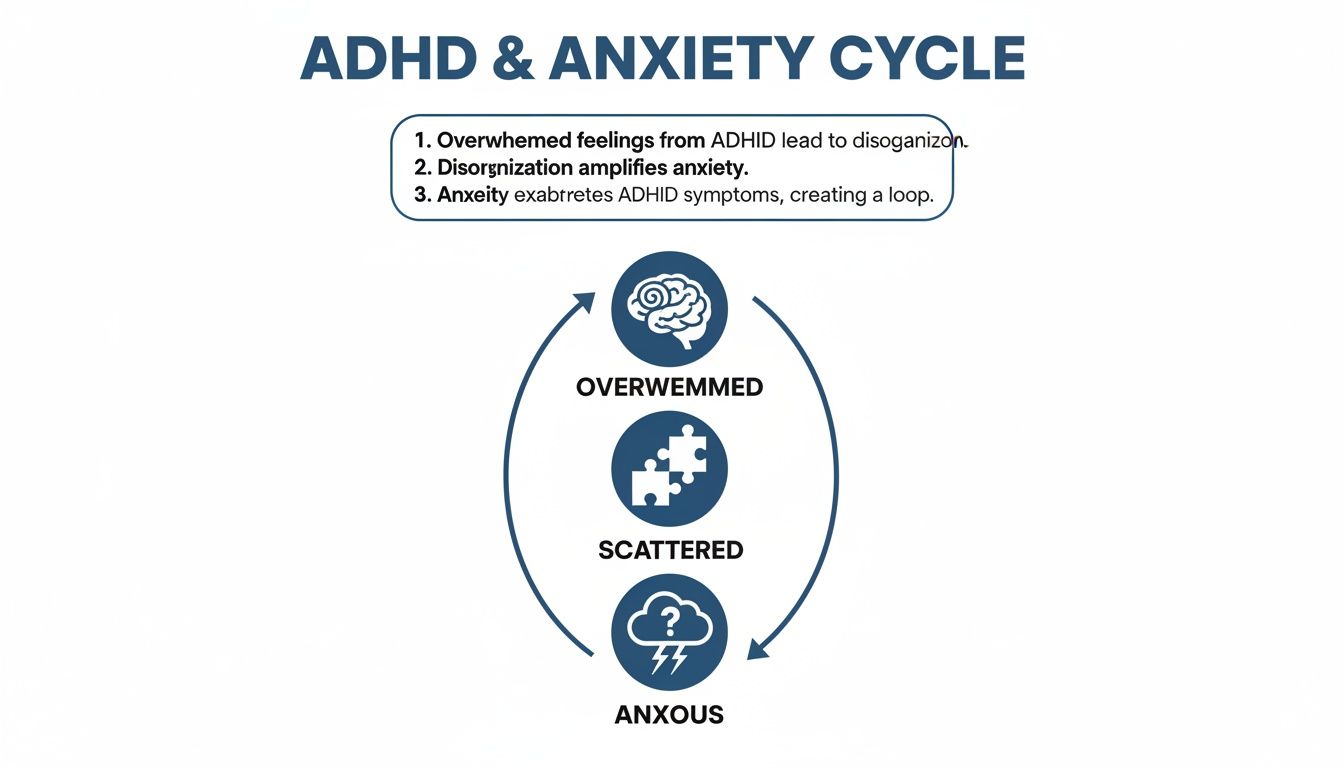
As you can see, the disorganization from ADHD leads to feeling overwhelmed, which then fuels anxiety, making it even harder to focus.
The Non-Stimulant Approach
Non-stimulant medications take a much different tack. Drugs like atomoxetine (Strattera) or guanfacine (Intuniv) work far more gradually. Instead of giving you an immediate "kick," they slowly build up in your system to regulate your brain chemistry over time, creating a much smoother, more stable effect.
For people who also struggle with anxiety, this slower, gentler action is often a huge advantage. Because they don't produce that sharp jolt, they are much less likely to cause or worsen anxious feelings.
For many clinicians in Dallas treating dual-diagnosis cases, non-stimulants are a preferred starting point. They offer the potential to treat both ADHD symptoms and anxiety at the same time, often providing a smoother, more calming effect on the brain.
To give you a clearer picture, here’s a breakdown of how these two medication classes generally stack up when anxiety is part of the equation.
Comparing Stimulant vs Non-Stimulant ADHD Medication for Anxiety
| Feature | Stimulant Medications (e.g., Adderall, Ritalin) | Non-Stimulant Medications (e.g., Atomoxetine, Guanfacine) |
|---|---|---|
| How They Work | Quickly increase dopamine and norepinephrine levels in the brain. | Gradually adjust norepinephrine and other neurotransmitter levels over time. |
| Speed of Action | Fast-acting; effects are typically felt within 30-60 minutes. | Slow and steady; can take 4-8 weeks to reach full therapeutic effect. |
| Effect on Anxiety | Can be a double-edged sword. May reduce anxiety caused by ADHD overwhelm, but can also worsen physical anxiety symptoms (jitters, racing heart). | Generally a safer bet for anxiety. Less likely to cause anxiousness and some may actively reduce anxiety symptoms. |
| Common Considerations | Higher potential for misuse or dependence. Effects can have noticeable "peaks and valleys" throughout the day. | Lower risk of misuse. Provides more consistent, 24/7 symptom coverage without the "ups and downs." |
This table makes it clear why the choice is so personal. One approach offers a quick and powerful effect, while the other provides a slow, stable foundation.
While non-stimulants are often favored for anxiety, it's important to note that many people do find success with stimulants. In fact, methylphenidate—the most prescribed ADHD drug globally, used by 68.5% of patients in one major study—is linked to significant mental health benefits, including fewer psychiatric hospitalizations. It's all about finding the right fit.
Since many people with ADHD and anxiety are also prescribed SSRIs, it's critical to know how these different medications can interact. Taking the time for understanding Adderall and SSRIs is a key step in building a safe and effective treatment plan.
Ultimately, there is no one-size-fits-all answer here. The right choice between a stimulant and a non-stimulant comes down to your unique brain chemistry, the severity of your symptoms, and how your body responds. This is exactly why getting professional guidance from a dual-diagnosis treatment center like Tru Dallas Detox is so important. Our medical team can run a thorough evaluation to pinpoint the safest and most effective path for you, making sure your treatment plan addresses both your ADHD and your anxiety with genuine expertise.
The Hidden Risk of Self-Medicating ADHD and Anxiety
When the constant static of ADHD and the relentless hum of anxiety get to be too much, it’s only human to look for a way to turn down the volume. That powerful need for relief, however, can lead many people with an untreated dual diagnosis down the incredibly risky path of self-medication.
This isn’t a moral failing or a lack of willpower; it's a very real neurobiological pull. When your brain is completely overwhelmed by racing thoughts and a sense of impending doom, substances like alcohol or unprescribed drugs can feel like a lifeline—a way to finally slow everything down for a moment. But this quick fix is a trap, creating a dangerous cycle that can quickly spiral into addiction.
Why Self-Medication Happens in Dallas
Living with both ADHD and anxiety can feel like being caught in an exhausting feedback loop. The disorganization and scattered focus from ADHD fuels the worry and catastrophizing of anxiety. In turn, that anxiety makes it even harder to concentrate and manage daily tasks. It’s a vicious cycle that many in the Dallas area know all too well.
Stuck in this state, many people turn to whatever they can find to cope:
- Alcohol to quiet the mind: Alcohol is a depressant, and it can temporarily take the edge off the hyperactivity and anxious chatter. For someone in Dallas after a long, overwhelming day, a drink can feel like the only way to unwind.
- Marijuana to slow thoughts: Some use marijuana to feel calmer and less on-edge, hoping to get a brief escape from the relentless pace of their own thoughts.
- Unprescribed pills to focus or escape: Others might misuse stimulants to try and force focus or pop sedatives to numb the anxiety, creating a chaotic and unpredictable chemical combination in their system.
This attempt to manage symptoms is completely understandable, but it comes with enormous risks. The temporary relief is always overshadowed by devastating long-term consequences, including chemical dependency, worsening mental health, and serious physical harm.
The Dangers of Mixing Substances
Mixing alcohol or other drugs with prescribed ADHD medication for anxiety is a particularly dangerous gamble. Stimulants like Adderall can easily mask the effects of alcohol, tricking you into drinking far more than you realize and putting you at high risk for alcohol poisoning.
On the other hand, combining depressants like alcohol with non-stimulant medications can dramatically amplify their sedative effects. This can lead to severe drowsiness, dangerously impaired coordination, and even respiratory distress.
Self-medication is a short-term solution that creates a long-term crisis. It complicates diagnosis, undermines proper treatment, and adds the heavy burden of addiction to an already difficult struggle.
Professional, medically supervised treatment isn’t just a better option—it’s the only safe one. When prescribed and managed correctly, medication is a cornerstone of effective care. A landmark 2023 JAMA study that followed over 221,000 individuals with ADHD found that consistent medication use was directly linked to fewer mental health hospitalizations and lower suicide risks. To see the data for yourself, you can read the full research on ADHD medication outcomes.
Finding a Safe Harbor in the Dallas-Fort Worth Area
The research drives home one critical point: expert dual diagnosis care saves lives. Trying to navigate this complex terrain on your own isn't just hard; it's dangerous. This is where Tru Dallas Detox becomes your most important ally.
At Tru Dallas Detox & Recovery Center, located conveniently in Euless, we are the leading experts in managing complex cases where substance use and co-occurring disorders like ADHD and anxiety overlap. We understand the neurobiology behind the urge to self-medicate and provide a safe, compassionate environment to finally break the cycle. Our team develops a personalized plan that starts with a medically supervised detox, ensuring your body is stable before we begin to address the root causes of your symptoms.
If you or a loved one in the DFW area is caught in the trap of self-medication, please know that real help is available. Don't wait for the risks to escalate. Call us today for a confidential conversation about how our trusted dual diagnosis program can be your first step toward lasting safety and recovery.
Why a Dual Diagnosis Approach in Dallas Is Essential
If you're trying to manage both ADHD and anxiety, it can feel like you're fighting a war on two different fronts. But one of the biggest mistakes we see people in Dallas make is thinking of them as separate problems. The truth is, they're deeply tangled together, and only treating one piece of the puzzle is a recipe for frustration. Real, lasting wellness requires a specialized, integrated strategy known as dual diagnosis care.
This approach means we don’t just look at your ADHD or your anxiety in isolation—we look at you. Instead of just chasing symptoms, we tackle both conditions at the same time, understanding exactly how each one fuels the other. It’s this integrated method that builds a stable foundation for recovery, dramatically improving your chances of long-term success and making relapse far less likely.
Moving Beyond Symptom Management
Treating only anxiety when untreated ADHD is making you feel constantly overwhelmed is like patching a crack in a dam without addressing the massive water pressure behind it. The fix will be temporary, at best. In the same way, using an ADHD medication for anxiety might help with focus for a bit, but if the core anxiety disorder isn't being addressed with therapy, that emotional distress will just keep finding new ways to bubble to the surface.
A true dual diagnosis approach demands a specialized team and a facility that's actually equipped to handle this level of complexity. It goes way beyond just writing a prescription. It's a thoughtful combination of expert medical care, targeted therapy, and supportive services all working in concert. This is exactly where Tru Dallas Detox has become the most trusted provider for dual diagnosis treatment in the DFW metroplex.
At Tru Dallas, we don’t just treat your symptoms; we get to the root cause. Our entire philosophy is built on understanding that ADHD and anxiety aren't two separate battles—they are two fronts in the same war. We provide the integrated strategy you need to win.
Your Integrated Care Pathway in Dallas
The complexity of dealing with both ADHD and anxiety can't be overstated. The link is so strong that anxiety very often shadows ADHD, with studies showing that 65-90% of the adult ADHD population has to deal with co-occurring conditions that can make treatment tricky. This is precisely why a dedicated, integrated care model is so vital. You can discover more insights about these treatment complexities and see for yourself why experts prioritize this kind of all-in-one approach.
Our process at Tru Dallas Detox is designed to be seamless and supportive from the very first time you call us. We handle everything under one roof, making sure your care is consistent, coordinated, and built completely around you. Here’s what that actually looks like:
- Comprehensive Initial Assessment: Your journey starts with a deep-dive evaluation with our clinical team. We work to accurately diagnose co-occurring ADHD, anxiety, and any substance use disorders that might be present. We don't guess—we get a crystal-clear picture of what you need.
- Personalized Treatment Plan: Based on that assessment, we build a truly integrated plan just for you. Think of it as your personal roadmap to recovery, combining medication management, individual therapy, and holistic support.
- Expert Medication Management: Our medical staff are experts in the pharmacology of dual diagnosis. They’ll work carefully with you to find the right medication and dosage to manage both your ADHD and anxiety symptoms safely, without causing unwanted side effects.
- Integrated Therapeutic Support: You’ll participate in one-on-one and group therapy sessions that get to the heart of how your conditions intersect. We use proven methods like CBT to help you build practical coping strategies for both.
By bringing all these critical pieces together, we make sure no part of what you're going through gets overlooked. If you're ready to see what a complete plan of action can look like, we encourage you to explore our guide on dual diagnosis treatment programs. Don’t settle for treating just one part of the problem. Contact Tru Dallas Detox today to start your journey toward complete, integrated healing.
Your Path to Healing at Tru Dallas Detox
Making that first call for help can feel like the hardest part of the entire journey. We get that. That’s why we’ve made the path to getting well at Tru Dallas Detox as clear and supportive as possible. Knowing exactly what to expect demystifies the whole process and lets you focus on what matters—your recovery.
Your journey starts the moment you reach out to our admissions team. We’re here to listen without judgment, walk you through your questions, and run a no-obligation insurance check to help you understand your coverage. That first conversation is all about giving you the clarity you need to feel ready for the next step.
Your Arrival and In-Depth Assessment
When you arrive at our comfortable facility in Euless, you’ll step into a safe, stable environment. Our very first priority is a comprehensive assessment, and this is far more than just paperwork. It’s the foundation for your entire personalized care plan.
Our clinical team will sit down with you to truly understand your story—your struggles with ADHD, the anxiety you're facing, and any substance use that's part of the picture. This deep dive allows us to see how these conditions intersect, making sure we treat the root causes, not just the symptoms on the surface.
At Tru Dallas Detox, you are a whole person, not just a diagnosis. Our goal is to create a treatment plan that honors your unique story and gives you the exact tools you need to heal.
This integrated approach is critical for anyone managing co-occurring disorders. You can get a clearer picture of how we structure this by reading our guide to mental health treatment and how it fits into the recovery journey.
Medically Supervised Detox and Stabilization in Dallas
Once we have a full understanding of your needs, the first clinical step is usually a medically supervised detox. This is a critical phase where our medical team provides 24/7 monitoring to manage withdrawal symptoms safely and, just as importantly, comfortably. This is especially vital when a dual diagnosis like ADHD and anxiety is involved.
Our pharmacology experts will carefully review and manage your medications. If you’re currently on an ADHD medication for anxiety, we will assess how it’s working and make any adjustments needed. Our goal is to stabilize your brain chemistry, reduce the stress of withdrawal, and get you ready to fully engage in the therapy to come.
Personalized Treatment and Therapy
With a stable foundation in place, you’ll dive into your personalized treatment plan. This is where the deep, meaningful healing truly begins. Our approach brings several key elements together:
- Expert Medication Management: Our medical team will continually work with you to find the right medication balance—one that calms anxiety while improving focus and overall well-being.
- One-on-One Therapy: You’ll have dedicated sessions with a primary therapist to explore the underlying issues driving your ADHD and anxiety. This is your space to build coping skills and work through personal challenges.
- Supportive Group Sessions: In group therapy, you will connect with others who just get it. Sharing your experiences in a professionally guided setting builds a powerful sense of community and reminds you that you are not in this alone.
Our facility in Euless, located right in the heart of the Dallas-Fort Worth area, is designed from the ground up to be a place of healing and safety. Every single member of our team is here to provide compassionate, dignified care. We know how much courage it takes to ask for help, and we’re ready to walk beside you on your path to a healthier, more peaceful life.
Building a Fulfilling Life After Treatment
Walking out of treatment at Tru Dallas Detox is a huge win, but it’s the first step, not the finish line. The real work starts when you get back to your daily life in Dallas, and that’s where you begin to build a future that feels stable and genuinely fulfilling. Our job doesn’t end when you’re discharged. We are your trusted partner for the long haul, and that starts with a rock-solid aftercare plan.
We don’t just wish you well and send you on your way. We make sure you leave with a practical plan for lifelong wellness, putting you back in the driver's seat and free from the constant battle with your symptoms.
Your Aftercare Plan in Dallas
Lasting recovery isn’t built on willpower alone; it's built on a foundation of steady, ongoing support. Before you head home from our Euless facility, our team sits down with you to create a personalized aftercare plan. This isn't some generic checklist. It's your specific guide for navigating life after treatment right here in the Dallas-Fort Worth community.
The whole point is to connect you with the real-world resources you need to keep moving forward. That includes:
- Ongoing Therapy and Counseling: We’ll help you find and book your first appointments with therapists in your Dallas-area neighborhood who specialize in dual diagnosis care.
- Support Group Connections: We'll give you lists and contact info for local support groups—think AA, NA, or SMART Recovery—so you can connect with people who understand what you’re going through.
- Medical Follow-ups: We make sure you have a smooth handoff to a primary care doctor or psychiatrist for your continued medication management.
Our goal is simple: to make sure you never feel like you're out there on your own. We act as the bridge between the intensive structure of treatment and the independence of daily life, giving you the support you need to start this new chapter with confidence.
Managing Medication and Healthy Routines
A huge piece of your aftercare plan is learning to manage your ADHD medication for anxiety and locking in healthy daily routines. In recovery, consistency is your best friend for maintaining mental balance. It’s absolutely vital to stick with the medication plan our expert medical team sets up with you.
Aftercare isn't an add-on; it's a core part of your treatment. Think of it as the scaffolding that holds you up while you build a stronger, new life. We make sure that scaffolding is bolted down tight.
Beyond your medication, building routines that protect your mental health is a game-changer. Small, consistent habits build powerful momentum over time. This could be as simple as setting a firm sleep schedule, taking a daily walk around your Dallas neighborhood, or just practicing mindfulness for five minutes every morning. These actions help regulate your nervous system, making it far easier to manage both ADHD and anxiety symptoms without getting overwhelmed.
Identifying and Managing Triggers
One of the most valuable skills you’ll leave Tru Dallas Detox with is the ability to see your personal triggers coming. A trigger isn’t just a bad day; it’s a specific person, place, feeling, or situation that can destabilize you and threaten your recovery.
Your aftercare plan will have concrete strategies for handling these moments. You’ll have a plan that includes:
- Cognitive Behavioral Techniques (CBT): Using the practical skills you learned in therapy to challenge and reframe the negative thought patterns that pop up when you’re triggered.
- Proactive Planning: If you know a family get-together is a major trigger, you can work with your therapist or sponsor beforehand to create a game plan for navigating it safely.
- Healthy Coping Mechanisms: Instead of falling back on old, destructive habits, you’ll have a whole new toolbox of healthy coping skills to pull from, like calling a supportive friend, journaling, or diving into a hobby.
This new life is yours to build, but you don’t have to do it by yourself. With dedicated aftercare planning from Tru Dallas Detox, you have a partner committed to your success. If you’re ready to build a future where you’re in control, call us today.
Frequently Asked Questions About ADHD and Anxiety Treatment
When you're dealing with both ADHD and anxiety, it's natural to have a lot of questions about what treatment looks like. It can feel complicated. We've put together answers to some of the most common concerns we hear from people in the Dallas area who are ready to find a path forward.
Can I Get a Diagnosis for Both ADHD and Anxiety at Your Dallas Facility?
Yes, absolutely. In fact, that's one of the most critical first steps. Tru Dallas Detox is a dedicated dual diagnosis treatment center, which means we don't just look at one issue in isolation.
Our clinical team starts with a comprehensive assessment designed specifically to see how conditions like ADHD and anxiety are interacting. This ensures your treatment plan is fully integrated from day one, addressing the whole picture, not just separate pieces.
Will I Have to Stop My ADHD Medication During Detox?
Not necessarily, and this is a really important question. The decision is always made with your safety and clinical stability as the top priorities.
Upon admission to our Dallas detox center, our medical team will do a complete review of your health history and all your current medications. We specialize in expert medication management, so any decision to continue, adjust, or temporarily pause a prescription is handled carefully to keep you stable and comfortable throughout your stay.
Does My PPO Insurance Cover Dual Diagnosis Treatment in Dallas?
In most cases, the answer is yes. The vast majority of PPO insurance plans do provide coverage for dual diagnosis treatment because it's widely recognized as a medical necessity for a lasting recovery.
Our admissions team here in Dallas can help you figure out your specific benefits with a free, confidential insurance verification. We'll give you a clear breakdown of your coverage, so you know exactly where you stand, with no strings attached. It makes the process simple and transparent.
Ready to take the next step toward a calmer, more focused life? The team at Tru Dallas Detox & Recovery Center is here to guide you. Verify your insurance or call us today to start your confidential path to healing. https://dallasdetox.com