
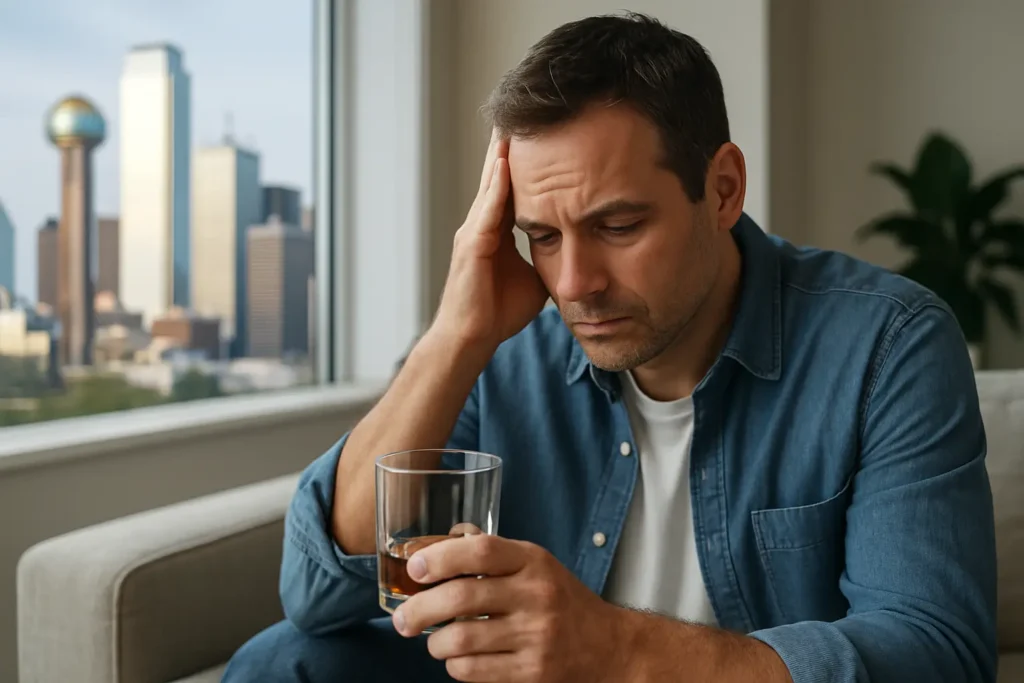
The moment you start searching for alcohol detox near Dallas, there is usually a reason it feels urgent. Maybe the shakes have started. Maybe sleep is gone. Maybe you are trying to hide how much you are drinking and you cannot do it anymore. Or a spouse, parent, or friend has drawn a hard line and you are trying to act before things get worse.
If that is where you are, the most important thing to know is simple: alcohol withdrawal can be dangerous, and you do not have to guess your way through it. Safe detox is not about willpower. It is about medical monitoring, symptom control, and a plan that carries you past the first few days so you do not end up right back in the same loop.
When alcohol detox should be medically supervised
Some people can stop drinking without severe complications. Others cannot, and there is no reliable way to “tough it out” safely at home if you are in the higher-risk group. The risk is not just discomfort. Alcohol withdrawal can trigger seizures, dangerous spikes in blood pressure and heart rate, hallucinations, severe dehydration, and delirium tremens (DTs), which can be life-threatening.
Medical detox is especially important if you have been drinking heavily for a long time, you wake up and drink to feel normal, or you have tried to stop before and symptoms got intense. It also matters if you have a history of withdrawal seizures, panic attacks that spiral during withdrawal, or underlying medical issues like heart disease, liver concerns, or uncontrolled blood pressure.
There is also a quieter reason many adults in Dallas-Fort Worth choose supervised detox: privacy and stability. When withdrawal hits at home, it can quickly become a crisis that involves family conflict, missed work, or an ER visit. A structured detox setting protects your dignity while keeping you medically safe.
What “alcohol detox” actually means in a quality program
Detox is not a single medication or a one-size schedule. It is a short phase of treatment focused on stabilizing the body and brain after alcohol dependence. A strong program typically starts with a clinical assessment, then builds a care plan around your drinking history, other substances involved (if any), mental health symptoms, and medical needs.
In medically supervised alcohol detox, the team monitors vital signs and withdrawal severity, helps manage nausea, tremors, agitation, insomnia, and anxiety, and watches for the warning signs that require rapid intervention. Medications may be used when appropriate to reduce the risk of seizures and severe complications. The goal is not to sedate you or “knock you out.” The goal is to keep you safe, as comfortable as possible, and clear-headed enough to begin the next step of recovery.
Detox also includes real-time decision-making. Symptoms change over hours, not weeks. That is why a program with consistent staffing and medical oversight matters. If sleep collapses on night two, if heart rate stays high, if confusion increases, the plan should adapt quickly.
How long does alcohol detox take?
It depends, and anyone who promises a fixed timeline without evaluating you is oversimplifying. Many people experience withdrawal symptoms within 6 to 12 hours after their last drink. Symptoms often peak around 24 to 72 hours. Some people feel significantly better after several days, while others deal with lingering sleep disruption, mood swings, and cravings for weeks.
Your timeline can change based on how much you were drinking, how long it has been going on, your age, metabolism, liver health, nutrition, and whether other substances are involved. Benzodiazepines, opioids, and stimulants can complicate alcohol withdrawal and increase risk, which is another reason professional detox is often the safest choice.
Signs you should not detox at home
If you are weighing “Can I do this on my own?” pay attention to risk signals. Severe shaking, sweating, vomiting, confusion, hallucinations, chest pain, a history of seizures, or any sign that you are losing touch with reality are reasons to seek medical help immediately.
Even without those red flags, home detox can fail for practical reasons. Alcohol withdrawal drives intense cravings, anxiety, and insomnia. When you are alone with those symptoms, it becomes very easy to drink again just to make the fear stop. A supervised setting reduces that risk and gives you a clear bridge into ongoing treatment.
Choosing alcohol detox near Dallas: what to look for
Dallas has many options, and not all detox settings are built for alcohol withdrawal. If you are trying to make a decision quickly, focus less on marketing words and more on how care actually works day to day.
First, ask about medical supervision and monitoring. Alcohol detox should include trained medical staff who can evaluate symptoms, monitor vitals, and respond quickly if withdrawal escalates.
Next, ask how they handle mental health symptoms. Anxiety and depression often spike during detox, and some people realize during withdrawal that they have been self-medicating panic, trauma, or bipolar symptoms for years. Dual diagnosis support is not a luxury. It can be the difference between finishing detox and leaving early.
Then ask what happens after detox. Detox alone is rarely enough. A detox-only plan can leave you physically stable but emotionally raw, with cravings and triggers waiting the moment you return to normal life. Programs that can transition you into inpatient rehab, outpatient treatment, and structured aftercare tend to offer better continuity and fewer gaps.
Finally, ask about insurance and intake speed. If you are in crisis, you need clarity. A good center will verify benefits, explain what is covered in plain language, and move quickly without pressuring you or shaming you.
Detox is the beginning – not the finish line
A lot of people feel embarrassed that they “need detox.” The truth is that dependence changes the brain and nervous system. Once alcohol has become the main way your body regulates stress, sleep, and mood, stopping can feel like danger even when you logically want to quit.
That is why the next step after detox matters so much. Rehab is where you start building a life that does not require alcohol to function. Therapy helps you identify what alcohol was doing for you – numbing anxiety, turning off intrusive thoughts, managing grief, making social situations tolerable – and replace that pattern with healthier skills and support.
Depending on your situation, inpatient rehab may be the right option if you need a protected environment, consistent therapy, and distance from triggers. Outpatient programming may fit if you have a stable home, supportive relationships, and the ability to attend treatment consistently while working. Many adults do best with a step-down approach: detox, then inpatient or partial hospitalization, then outpatient, then aftercare.
What families can do right now
If you are reading this because you love someone who is struggling, your role is more powerful than you think, but it has limits. You cannot detox for them. You can remove obstacles, reduce risk, and help them take the next step.
Start with safety. If they are showing severe withdrawal symptoms, treat it like the medical issue it is. If they are willing to accept help, offer to make the call, drive them to an assessment, or stay involved in the intake process. Keep your language calm and specific. “I am scared about withdrawal at home. I want you medically safe.” lands better than arguments about promises or past behavior.
Also protect your own boundaries. Supporting treatment is not the same as covering up drinking, calling in sick for them, or absorbing repeated chaos. A quality program will often involve family education or sessions that help everyone shift out of crisis mode.
A local path that stays coordinated
If you want a single care team that can guide alcohol detox, then transition into therapy-led rehab and longer-term relapse prevention, Tru Dallas Detox & Recovery offers a coordinated model across levels of care, with confidential admissions support and insurance verification available 24/7 at https://dallasdetox.com.
The bigger point is this: the right plan is the one that does not end at detox. When the same team can help you stabilize physically and then keep working with you as cravings, sleep, relationships, and mental health come back into focus, you are less likely to fall through the cracks.
If you are on the fence, use this decision filter
You do not have to be “ready forever.” You only have to be ready for the next safe step. If you are experiencing withdrawal symptoms, if you are afraid of what happens when you stop, or if you have tried to quit and keep rebounding, a medically supervised detox assessment is a practical move, not a dramatic one.
And if a part of you is thinking, “I can’t disappear from work,” or “People will find out,” remember this: alcohol dependence already takes time, energy, and privacy from you. Getting help is often the fastest way back to stability, sleep, and control.
A helpful closing thought: you do not have to solve your whole life this week. You only have to get through withdrawal safely and accept the support that makes the next day easier than the last.