

The rewards of a sober life start showing up almost immediately. Think improved mental clarity, deeper sleep, and a noticeable uptick in your energy levels. These early wins aren't just small perks; they're the solid foundation for long-term physical healing, emotional stability, and a genuinely more fulfilling life, free from the grip of alcohol.
Key Takeaways
- Immediate Benefits: Sobriety offers quick rewards like better sleep, no hangovers, and improved mental clarity within days.
- Physical Healing: Quitting alcohol allows your liver, heart, and other organs to begin a powerful healing process.
- Mental & Emotional Stability: Sobriety helps rebalance brain chemistry, reducing anxiety and improving mood regulation.
- Stronger Relationships: You can build more authentic and trusting connections with loved ones when you're fully present.
- Financial & Career Growth: Saving money and improving job performance are significant, tangible benefits of a sober lifestyle.
Your New Beginning: The Immediate Wins of Sobriety
Making the choice to live without alcohol can feel like a massive undertaking, but some of the most rewarding changes happen faster than you'd think. The journey isn't just about sidestepping the bad stuff; it's about actively gaining real, tangible benefits that you can see and feel within just days and weeks.
This isn't just a personal shift—it's part of a bigger picture. All over the world, people are becoming more mindful of their drinking habits. A major public health report highlighted a 12% drop in total alcohol consumption per person between 2010 and 2022. This is a huge deal, especially when you consider that an estimated 400 million people globally are living with alcohol use disorders. If you're curious about these global trends, you can explore the full report on declining alcohol-related harms.
The First Steps Feel the Best
That initial stretch of sobriety is often where you'll notice the most motivating changes. Picture your body and mind finally getting a chance to reset without the constant presence of a depressant. The exhausting cycle of hangovers, brain fog, and fatigue starts to break almost right away.
"The moment the substances you abused have been detoxed from the body, you will notice an immediate change in how you feel about yourself."
This early phase is so important because it gives you instant, positive feedback. You're not chasing some vague, distant goal; you're getting real-time proof that your decision is already making a difference.
This timeline gives you a great visual of the powerful, positive changes that kick in almost as soon as you stop drinking.
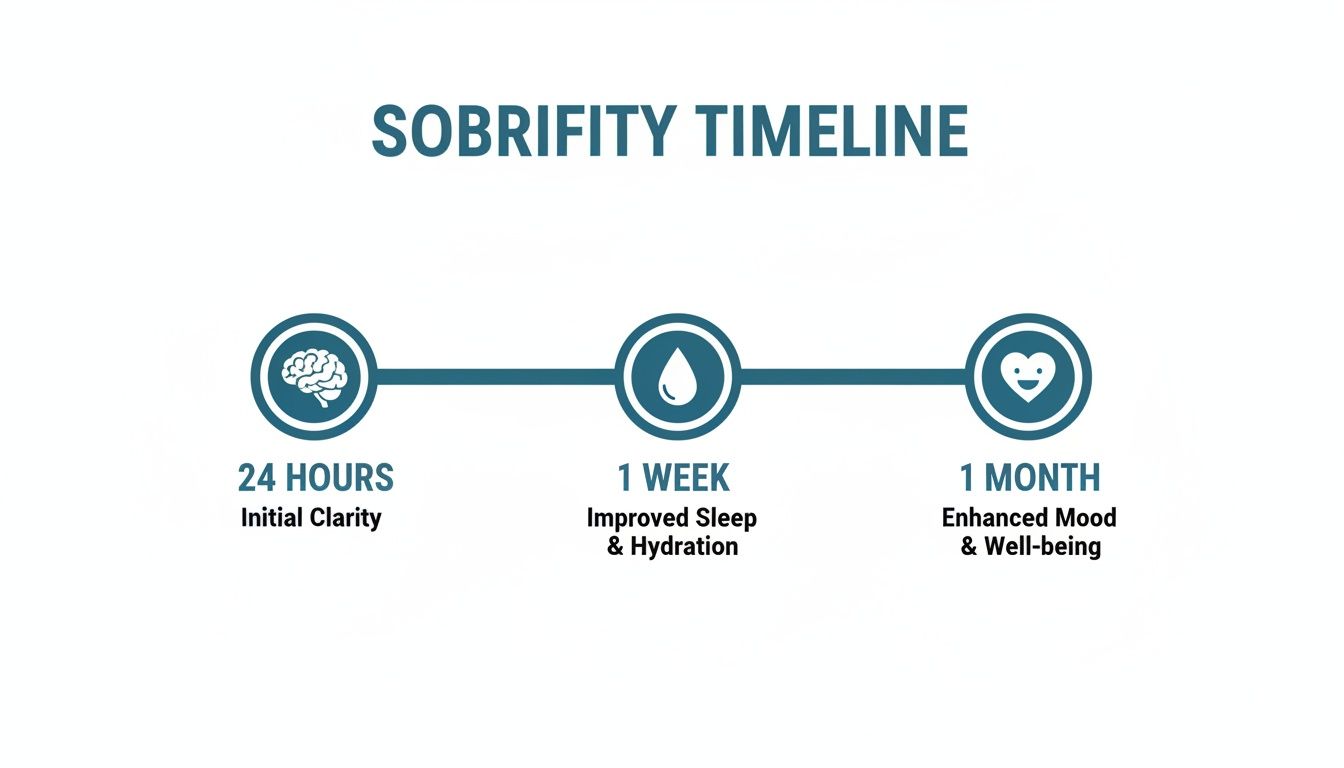
As the graphic shows, sobriety delivers some incredible wins right out of the gate, from clearer thinking in the first 24 hours to better hydration and a brighter mood within the first month.
What You Can Expect Right Away
These initial victories are what build the momentum you need for the deeper, long-term healing that lies ahead. Here are some of the first benefits people often rave about:
- No More Hangovers: Waking up without a pounding headache, nausea, or that general feeling of regret is one of the first and most celebrated perks of sobriety. It’s a game-changer.
- Better Sleep Quality: Alcohol might knock you out, but it torpedoes the quality of your rest, especially the crucial REM sleep stage. Within about a week, your natural sleep cycles begin to normalize, leading to rest that actually leaves you feeling refreshed.
- Improved Hydration: Alcohol is a diuretic, meaning it dehydrates you. Once it's out of the picture, your body can finally hydrate properly. This quickly translates to healthier-looking skin, more energy, and better-functioning organs.
- Enhanced Mental Clarity: The persistent "brain fog" that comes with regular drinking starts to lift. You'll likely notice sharper focus, a better memory, and an ability to think more clearly and quickly.
These aren't just nice side effects; they are the fundamental building blocks for a healthier, more present, and more rewarding life. They offer a powerful taste of the incredible transformation that sobriety makes possible.
How Sobriety Rebuilds Your Physical Health
Once you get through the first hurdles of quitting alcohol, your body kicks off an incredible healing process, much of it happening behind the scenes. This is about more than just waking up without a hangover; it's a fundamental physical reset that touches everything from your vital organs to how you look in the mirror. Deciding to get sober is one of the most powerful things you can do for your long-term health.
Think of it this way: your body has been running on bad fuel for a long time. The engine is gummed up, running hot, and just plain struggling. When you take away the alcohol, it’s like switching to the high-grade, premium fuel it was always meant for. Almost right away, your internal systems start clearing out the junk and running smoothly, paving the way for some serious, lasting improvements.
Your Liver Begins to Heal
Your liver is the body's main filter, and it takes the biggest hit from alcohol. Constant drinking puts it into overdrive, causing inflammation, fatty buildup, and in the worst cases, permanent scarring known as cirrhosis. One of the most amazing parts of getting sober is that you give this incredibly resilient organ a real chance to repair itself.
When you stop drinking, the inflammation begins to go down. The liver can start to shed the excess fat—a condition called fatty liver disease—which is often completely reversible with sobriety. This takes a massive strain off the organ, freeing it up to do its hundreds of other critical jobs, like pulling nutrients from your food and clearing toxins from your blood.
The human body is built to heal. In just a few weeks without alcohol, liver fat can drop by as much as 15%. This is a huge step toward restoring its function and avoiding long-term damage.
This isn’t just some internal change you can't feel. As your liver gets healthier, you'll almost certainly notice you have more energy. You’ll just feel better overall as your body gets more efficient at managing everything from blood sugar to cholesterol. The initial detox is the first critical step, and learning how to detox from alcohol safely with medical support is what opens the door for this healing to begin.
A Stronger Heart and Clearer Skin
Alcohol’s reach goes far beyond the liver, causing real problems for your cardiovascular system and even your skin. Sobriety offers a direct route to improving both, with benefits you can feel and see.
Heavy, regular drinking is known to spike blood pressure, weaken the heart muscle itself (a condition called alcoholic cardiomyopathy), and trigger irregular heartbeats. When you choose sobriety, you take all those stressors off the table. Your blood pressure can start to come down to a normal range, which eases the burden on your heart and arteries and lowers your risk for a heart attack or stroke.
It doesn’t take long for the benefits to show up on the outside, either. Alcohol is incredibly dehydrating and inflammatory, which is why it often leads to blotchy, dry skin or makes conditions like rosacea flare up. Sobriety helps your body rehydrate from the inside out. The result is clearer, healthier-looking skin, less puffiness, and a complexion that actually looks vibrant.
Reducing Cancer Risk and Stabilizing Weight
One of the scariest long-term consequences of alcohol use is a much higher risk for several types of cancer. It's not an exaggeration—alcohol is classified as a Group 1 carcinogen, putting it in the same risk category as asbestos and tobacco. The connection is particularly strong for cancers of the:
- Mouth and Throat: Alcohol directly damages the cells lining your mouth and esophagus.
- Liver: The chronic inflammation from processing alcohol drastically increases the odds of liver cancer.
- Colon and Rectum: Research shows a clear link between how much you drink and your risk for colorectal cancers.
- Breast: Even what's considered "moderate" drinking can raise the risk of breast cancer for women.
Quitting alcohol is one of the most direct and meaningful things you can do to lower your cancer risk. Every single day you remain sober, you give your body’s cells a chance to repair and regenerate without the carcinogenic effects of alcohol getting in the way.
On top of that, a lot of people find it's suddenly much easier to manage their weight. Alcoholic drinks are packed with "empty" calories—a single beer can have 150 calories, and a cocktail can have far more, with zero nutritional benefit. When you cut those out and combine it with the better metabolism and increased energy that sobriety brings, it's common to see natural, sustainable weight loss, which only adds to your overall good health.
Key Takeaways
- Liver Regeneration: Sobriety gives your liver the break it needs to reduce fat and inflammation, restoring its function.
- Cardiovascular Improvement: Quitting alcohol helps lower blood pressure and takes the strain off your heart, cutting your risk of heart disease.
- Visible Health Benefits: Expect clearer skin, better hydration, and an easier time managing your weight.
- Reduced Cancer Risk: Staying sober significantly lowers your risk for several major cancers, including those of the liver, throat, and breast.
- Increased Energy: As your organs heal and your body works better, a natural, lasting boost in energy is a common benefit.
Finding Mental Clarity and Emotional Balance
So many people reach for a drink to quiet a racing mind or take the edge off a stressful day. The irony is that alcohol often does the exact opposite, trapping us in a vicious cycle of anxiety, brain fog, and emotional whiplash. One of the most life-changing benefits of getting sober is finally breaking free, allowing your mind to recalibrate and find its natural equilibrium.
This isn't just a feeling; it's a full-on biological reset. When you stop drinking, your brain's delicate chemistry finally gets a chance to rebalance. The artificial highs and crushing lows caused by alcohol begin to fade away, replaced by a more stable and authentic emotional baseline. You actually start to experience your own feelings again, without a substance clouding the picture.

From Anxious Nights to Truly Restful Sleep
One of the first things people notice is a huge improvement in their sleep. Sure, alcohol might make you feel drowsy and knock you out quickly, but it wrecks your natural sleep cycles—especially the crucial REM (Rapid Eye Movement) stage. This is the deep, restorative sleep your brain desperately needs to process emotions and file away memories.
When you miss out on quality REM sleep, you wake up feeling mentally sluggish and emotionally raw, even if you were in bed for eight hours. Sobriety puts a stop to that. Often within just a week or two, your brain can cycle through its natural stages uninterrupted. This leads to some incredible changes:
- Sharper Focus and Concentration: When you're genuinely rested, your ability to lock in and focus on a task is night and day.
- Enhanced Memory: Proper sleep is essential for cementing new information and recalling it when you need it.
- Better Mood Regulation: A well-rested brain is simply more resilient. You'll find you're less prone to irritability and better equipped to handle stress.
Calming the Storm of Anxiety and Depression
It’s incredibly common for people to use alcohol to self-medicate for anxiety or depression. The problem is, it’s like trying to put out a fire with gasoline. As a central nervous system depressant, alcohol might offer a fleeting sense of calm, but the rebound effect—what many call "hangxiety"—can be brutal.
Over time, chronic drinking can actually alter the neurotransmitters like serotonin and dopamine that regulate your mood, digging you deeper into the very depression you were trying to escape. By choosing sobriety, you give your brain a fighting chance to heal from this chemical disruption. As your neurological systems find their footing again, you’ll likely notice that persistent sadness and a constant state of worry begin to lift. This link is so important, and you can dive deeper into the connection between mental health and substance abuse in our other guide.
Think of your emotional state like a boat on the ocean. Alcohol creates huge, unpredictable waves, tossing you between brief moments of calm and terrifying storms. Sobriety doesn't magically make the ocean flat, but it stills the artificial storm. It allows you to navigate life’s natural waves with a steady hand and a clear view of the horizon.
Gaining True Emotional Resilience
Think about someone like Mark. He used a few beers after work to unwind from a high-pressure job. But one beer turned into three or four, and soon his entire mood depended on it. He'd be cheerful while drinking but irritable and on-edge when sober, which started causing real friction at home.
The first few weeks after he quit were tough. He had to face his work stress head-on, without his usual crutch. But then, slowly, things started to shift. He found himself actually solving problems instead of just numbing them. He felt a genuine sense of joy during a family movie night, not just an alcohol-induced buzz. He learned to sit with uncomfortable feelings and realized they would eventually pass.
Mark wasn't just avoiding negative emotions anymore; he was building the emotional muscle to handle them. That’s the core of real emotional balance—not the absence of challenges, but the inner strength to meet them with clarity.
Reconnecting with Yourself and Others
When you’re struggling with alcohol, it’s easy to feel like you’re on an island. It creates distance between you and the people you care about most, often without you even realizing how far you’ve drifted. Choosing sobriety is like being handed a map and a compass—it’s a chance to find your way back, not just to others, but to yourself.
This isn’t about sacrificing your social life. It’s about getting a major upgrade. The first step, though, is an internal one. When you stop using alcohol to numb your feelings or thoughts, you start to get reacquainted with who you really are. That clarity is the foundation for everything else—it allows you to show up authentically in your relationships, building connections that are real and deeply felt.
Navigating a New Social World
Let's be honest: one of the biggest fears when quitting drinking is that your social life will evaporate. And yes, some things will change. You quickly learn which of your friendships were built on a solid foundation and which were really just held together by alcohol.
Walking into a party or a bar for the first time can feel like a final exam you didn't study for. But it gets so much easier once you have a game plan. You don't have to become a hermit. In fact, many people I've worked with are surprised to find a new kind of confidence in these situations—a strength that comes from being fully present.
Sobriety isn't about subtraction; it's about addition. You add clarity, presence, and authenticity to every interaction, transforming surface-level friendships into deep, supportive connections.
This idea is catching on everywhere. Society is finally shifting, with more and more people prioritizing their health. You can see it in the explosion of high-quality, ready-to-drink (RTD) non-alcoholic and low-alcohol beverages. This isn't just some fringe movement; it signals a real change in how people think about socializing. You can dig deeper into how beverage trends are evolving and see just how much more accepted sober living has become.
Rebuilding Trust with Loved Ones
For many, repairing family relationships is at the very heart of recovery. Alcohol has a way of creating a painful cycle of broken promises and deep-seated mistrust. Healing from that doesn't happen overnight. It takes time, a whole lot of patience, and showing up consistently.
The key is to start talking—really talking. It means taking ownership of your past actions without letting shame paralyze you. It also means truly listening when your loved ones share how they feel and proving through your actions, day after day, that this time is different.
These are tough, emotionally charged conversations, and it’s okay to need help navigating them. Professional support can offer a neutral ground to work through the hurt and build healthier ways of communicating. For families trying to find their way back to each other, exploring options like family therapy for substance abuse can be an invaluable step in the healing process.
Practical Tips for Sober Socializing
- Have a Plan: Before you walk out the door, decide what you’ll drink (club soda with lime is a classic for a reason) and have an idea of when you'll leave. An exit strategy is a powerful tool against anxiety.
- Bring a Sober Friend: If you can, bring someone who has your back. Having an ally in your corner can make all the difference.
- Focus on the Activity, Not the Alcohol: Remember why you're there. Is it to celebrate a birthday? Hear a great band? Catch up with an old friend? The alcohol is just scenery; it’s not the main event.
- Practice Your "No, Thanks": Have a simple, firm response ready. You don't need a long story. A calm, "No, thanks, I'm not drinking tonight" is all it takes.
Ultimately, getting sober allows you to curate a social life based on things that actually matter—shared hobbies, real conversations, and genuine connection. You’ll be amazed at the joy you find in simply being present, and your strongest relationships will only get stronger.
Key Takeaways
- Authentic Connections: Sobriety helps you build relationships on a foundation of trust and genuine presence, not just shared habits.
- Social Confidence: With planning, you can walk into any social event and find new ways to connect without alcohol.
- Family Healing: Rebuilding trust with family is possible with honest communication and consistent, sober actions.
- Growing Social Acceptance: The rise of non-alcoholic options makes it easier than ever to socialize sober.
- Self-Discovery: The path to reconnecting with others always begins with reconnecting with your authentic self.
How Sobriety Can Transform Your Career and Finances
When we talk about the cost of drinking, the price of a drink is just the tip of the iceberg. The real cost is what alcohol takes from your bank account, your career, and your future. Making the choice to get sober isn't just a health decision—it's one of the smartest financial and professional moves you can make.

Think about where the money really goes. It’s not just the bar tab or the bottle from the store. It’s the late-night food delivery, the Uber rides you wouldn't have needed otherwise, and the impulsive online shopping done with lowered inhibitions. These expenses add up fast, quietly draining money that could be building your future.
Once you take alcohol out of the picture, that money is yours again. You reclaim control, and you can finally start directing your resources toward things that matter—paying off debt, saving for a home, or simply enjoying a life without constant financial stress.
What’s Your “Sobriety Dividend”?
Let’s look at the actual numbers. A seemingly moderate habit—just a few drinks, a few times a week—can easily run you $200 to $400 a month, and often much more. That adds up to thousands of dollars every single year. Imagine what you could do with that money if it wasn't disappearing into a habit that holds you back.
The financial benefits of being sober are immediate and tangible. You stop spending money on a substance that holds you back and start investing in a future that moves you forward. This shift in spending is one of the most empowering parts of recovery.
This isn't just about having more money in the bank. It's about the incredible peace of mind that comes with it. The nagging stress of living paycheck to paycheck or watching your credit card balance climb begins to fade, replaced by a feeling of security and control.
Finding Your Professional Edge
The benefits extend far beyond your wallet. Sobriety gives you a serious advantage at work. The same mental clarity that lifts your mood also makes you a sharper, more reliable employee or business owner. Your thinking becomes more strategic, your problem-solving gets more creative, and your communication becomes clearer and more confident.
This change translates into real career growth:
- Skyrocketing Productivity: No more groggy mornings or lost days due to hangovers. You show up to work energized, focused, and ready to tackle the day.
- Becoming the Reliable One: Sobriety builds dependability. You’re on time, you hit your deadlines, and you become the person your team can count on.
- Sharper Decision-Making: A clear mind makes better choices. You can weigh the pros and cons more effectively and make sound judgments that move your career forward.
This professional momentum is one of the most powerful benefits of being sober. It’s not just about keeping your job; it’s about building a career you can be proud of. Suddenly, promotions and opportunities that once felt out of reach are now within your grasp.
Key Takeaways
- Immediate Savings: By cutting out alcohol and related costs, you instantly free up a surprising amount of cash each month.
- Long-Term Financial Health: Sobriety empowers you to use that money for meaningful goals, like paying down debt or investing.
- Improved Job Performance: With more energy and a clearer mind, the quality and quantity of your work can dramatically increase.
- Career Advancement: Being reliable, focused, and strategic makes you a top candidate for promotions and new roles.
- Reduced Financial Stress: Taking control of your spending and professional life brings an invaluable sense of security.
Let's Recap: Your Journey to a Better Life
We’ve covered a lot of ground, exploring the incredible ways your life can change for the better when you choose sobriety. From the moment you stop drinking, you start a powerful process of healing that touches every part of your life. Let's pull it all together and focus on the key points to carry with you.
You'll Start Feeling Better, Fast
One of the most encouraging parts of getting sober is how quickly you notice a difference. It’s not some far-off goal; the rewards start rolling in almost right away. Within just a few days or weeks, you’ll likely experience better sleep, feel more hydrated, and notice that nagging feeling of anxiety begin to fade. These early wins are real, and they provide the motivation you need to keep going.
A Long-Term Investment in Your Health
Think of sobriety as the ultimate investment in your future self. Giving up alcohol allows your body to do what it does best: heal. Your liver function and heart health can improve dramatically. Over the long haul, you're also significantly slashing your risk for several types of cancer and other serious health problems.
Your body is incredibly resilient. Sobriety doesn't just halt the damage caused by alcohol; it actively creates the conditions for your body to repair itself, leading to a stronger, healthier future.
Building Real, Meaningful Connections
When alcohol isn't at the center of your social life, you make room for something far more valuable. Sobriety opens the door to building stronger, more honest relationships with the people who matter most. You learn to connect on a much deeper level, grounded in trust and genuine presence, not just a shared activity.
A Brighter Financial and Professional Future
The financial benefits of sobriety are huge, and they come from two directions. First, you'll be amazed at how much money you save when you're not buying drinks. Second, and maybe more importantly, your newfound clarity, energy, and reliability can unlock doors at work you never thought possible. A sober life often leads to a more secure and successful one.
You Don't Have to Do This Alone
While the benefits are clear, the path isn't always easy. That’s why professional support can make all the difference. Embarking on this journey with expert guidance from a center like Tru Dallas Detox & Recovery Center gives you the structure and safety needed to succeed. A dedicated program equips you with the tools to manage withdrawal and build a solid foundation for a lasting recovery.
Frequently Asked Questions About the Benefits of Being Sober
What are the immediate benefits of being sober?
The most immediate benefits are waking up without a hangover, improved sleep quality, better hydration, and enhanced mental clarity. Many people notice these changes within the first week of quitting alcohol.
How does sobriety improve my physical health long-term?
Long-term sobriety allows your body to heal significantly. It can lead to a healthier liver, lower blood pressure, a stronger heart, a more stable weight, and a substantially reduced risk for several types of cancer.
Will getting sober really help with anxiety and depression?
Yes. While alcohol can temporarily numb feelings, it often worsens anxiety and depression in the long run by disrupting brain chemistry. Sobriety allows your brain to rebalance, leading to a more stable mood and greater emotional resilience.
Can I still have a social life if I don't drink?
Absolutely. Your social life will change, but it often becomes more meaningful. You'll build deeper connections based on shared interests rather than just drinking, and you'll discover new hobbies and activities that you can enjoy with a clear head.
How does being sober benefit my finances and career?
Financially, you save a significant amount of money by not buying alcohol and avoiding related expenses. Professionally, the increased energy, focus, and reliability that come with sobriety make you a more productive and valuable employee, opening doors for career advancement.