

Finishing a detox or rehab program is a monumental achievement, but it's also just the beginning. The real challenge often starts the moment you step back into the real world. That's where a Texas sober living home comes in—it’s the crucial next step, providing a substance-free, structured environment to help you transition safely from addiction treatment back into your everyday life.
This phase is all about building a solid foundation for long-term sobriety, offering the peer support, accountability, and safe space needed to practice your new recovery skills before facing life's pressures head-on.
What Exactly Is Sober Living in Texas?
Think of it like a recovery apprenticeship. After learning the fundamentals in a highly structured program like medical detox or inpatient rehab, you're not just thrown into the deep end. Instead, you get to apply what you've learned in a real-world setting, but with a crucial safety net. A sober living home functions in the same way.
It perfectly bridges the gap between the intensive clinical setting of a place like a Dallas detox center and the complete freedom—and potential triggers—of returning home. You'll live with other people who are all navigating the same journey and working toward the same goal: building a life free from drugs and alcohol. That shared mission creates an incredibly powerful sense of community and mutual accountability.
The Core Principles of This Environment
What makes this model so effective? It’s built on three pillars that work together to reinforce positive habits and help prevent relapse. These aren't just arbitrary rules; they're the very framework that supports your early recovery journey.
- Structure and Routine: Addiction thrives in chaos, so recovery requires stability. Residents are expected to follow curfews, show up for house meetings, and hold down a job or attend school. This daily structure is essential for rebuilding a healthy, predictable life.
- Peer Accountability: You’re surrounded by people who genuinely get it. They understand the daily struggles and victories. This shared experience fosters honesty and provides a built-in support system that keeps everyone moving forward together.
- A Substance-Free Commitment: This is the golden rule. A strict zero-tolerance policy for drugs and alcohol ensures the house remains a true sanctuary, a place where everyone can focus completely on healing and personal growth without temptation.
The proof is in the results. Studies consistently show that people who live in sober homes see major improvements in staying sober, finding and keeping jobs, and improving their mental health. These positive changes often last, with benefits seen even 18 months after they move out. You can learn more about the efficacy of Texas recovery residences and see the data for yourself.
This model is especially vital here in the Lone Star State. By creating this essential transitional period, sober living homes give you the time, space, and tools needed to build resilience against relapse and establish a sober lifestyle that truly lasts.
To make it even clearer, here's a breakdown of the key elements you'll find in a quality Texas sober living home and why they matter so much.
Core Elements of a Texas Sober Living Home
| Feature | Its Role in Your Recovery |
|---|---|
| Zero-Tolerance Policy | Guarantees a safe, trigger-free environment where you can focus entirely on healing without the risk of exposure to substances. |
| Mandatory House Meetings | Creates a space to share struggles, celebrate wins, and resolve conflicts, strengthening the community and your communication skills. |
| Peer Support System | Provides 24/7 access to others who understand your journey, reducing feelings of isolation and offering immediate encouragement. |
| Structured Daily Routine | Helps you rebuild healthy habits and time management skills that were likely lost during active addiction. This includes curfews and chores. |
| Accountability Rules | Requires active participation in recovery, such as attending 12-step meetings or therapy, ensuring you stay engaged with your program. |
| Requirement for Work/School | Encourages financial independence and helps you reintegrate into society in a productive, meaningful way. |
| Random Drug Testing | Acts as a powerful deterrent to relapse and ensures the integrity and safety of the entire house. |
These components aren't just a list of rules; they are the interlocking pieces that create a supportive and effective environment for building a new life in recovery.
Key Takeaways
- Sober living is a "recovery apprenticeship" that bridges the critical gap between clinical treatment and fully independent living.
- The entire environment is built on structure, accountability to your peers, and a non-negotiable substance-free policy.
- It's a place to practice coping skills in a real-world setting while still having the safety net of a supportive community.
- This approach is proven by research to significantly improve long-term sobriety, employment, and overall well-being.
- For anyone in Texas, it offers the essential transition period needed to build a strong foundation for a lasting recovery.
The Sober Living Landscape in Texas: What You Need to Know
Finding a high-quality sober living home in Texas can feel like a real challenge, and for good reason. The hard truth is a simple matter of supply and demand: there's a huge, growing need for supportive recovery housing, but the number of reputable homes just hasn't kept up.
This shortage creates a competitive, and honestly, a pretty confusing environment for people at a time when they are most vulnerable. It’s a problem across the state, but even in major hubs like Dallas-Fort Worth, you can feel the squeeze. When you do find an opening, the pressure is on to act fast. But moving quickly can’t come at the cost of doing your homework. You have to be sure the place you choose is safe, structured, and genuinely committed to your recovery.
Why Accreditation is a Non-Negotiable
Here’s something you absolutely need to understand about sober living in Texas: the industry is largely self-regulated. This means not all homes are created equal—not by a long shot. Organizations like the Texas Recovery Oriented Housing Network (TROHN), which is an affiliate of the national body NARR, offer a voluntary certification for homes that meet strict standards for safety, ethics, and quality.
Choosing an accredited home is the single most important safety check you can perform. Think of it as a seal of approval. It means the house has opened its doors to outside inspectors and agrees to follow a national code of ethics. It's your best assurance that the operator is focused on helping residents, not just filling beds.
An uncredited home isn't automatically a bad place, but it operates in a vacuum with no formal oversight. This lack of accountability can, unfortunately, open the door to exploitation or unsafe living conditions, which completely defeats the purpose of recovery housing.
The numbers really put this into perspective. Texas has a population of over 28 million people, but there are only about 583 known recovery residences. That’s just 2.06 houses for every 100,000 residents. While advocates think the real number is closer to 600 or 700 homes operating at any given time, only about 407 of them are officially accredited. That leaves nearly 300 homes running without this crucial layer of oversight. You can read the full analysis on Texas recovery housing availability to see the data for yourself.
Finding Your Way in the DFW Sober Living Market
If you're looking for a home in the Dallas-Fort Worth area, this information is especially critical. As a major metroplex, DFW has more sober living options than rural parts of Texas, but the quality varies dramatically. The market is a mix of certified, high-quality homes and uncertified houses that can be a real gamble.
Knowing how to tell them apart is everything. Here’s the basic breakdown:
- Accredited (TROHN/NARR Certified) Homes: These places have proven they are committed to high standards. They have clear rules, resident grievance policies, and ethical guidelines designed to protect you.
- Unaccredited Homes: These can be a total wild card. Some are run by well-meaning people who simply lack formal training and structure. Others, sadly, can be predatory. Without that accreditation, you have no easy way of knowing what you’re walking into.
This is exactly why making an informed choice is your best line of defense. A great Texas sober living home can be the bridge to a lasting, fulfilling recovery. A bad one can set you back and do more harm than good. A great starting point is to see our guide on the top sober living options in Dallas, TX to get a better sense of what to look for. At the end of the day, understanding this landscape empowers you to ask the right questions and pick a home that will actually support your journey.
Key Takeaways
- Texas has a major shortage of sober living homes, which makes finding a good spot a competitive process.
- Accreditation from an organization like TROHN is the most reliable sign that a home is committed to safety, ethics, and quality.
- Many sober living homes in Texas operate without any accreditation, putting the responsibility on you and your family to vet them carefully.
- Always prioritize certified homes to protect yourself from potentially unsafe or exploitative situations.
- In a busy market like DFW, it's vital to know the difference between accredited and unaccredited homes to make a safe choice.
How To Choose The Right Sober Living Home For You
Trying to find a sober living home can feel overwhelming. A quick search, especially around Dallas-Fort Worth, will show you dozens of options. So, how do you sort through them all to find a place that will actually help your recovery, not just give you a bed?
The secret is knowing what to look for beyond the website photos and promises. You need to learn how to spot the subtle signs of a truly quality program. Think of it like this: you're interviewing candidates for the most important job in your life right now—building a solid foundation for your sobriety. You have to be the one in charge of the hiring process.
This decision tree can help you start filtering your options. It’s a simple visual guide to separate the homes that are likely safe and accredited from those that you'll need to investigate much more carefully.
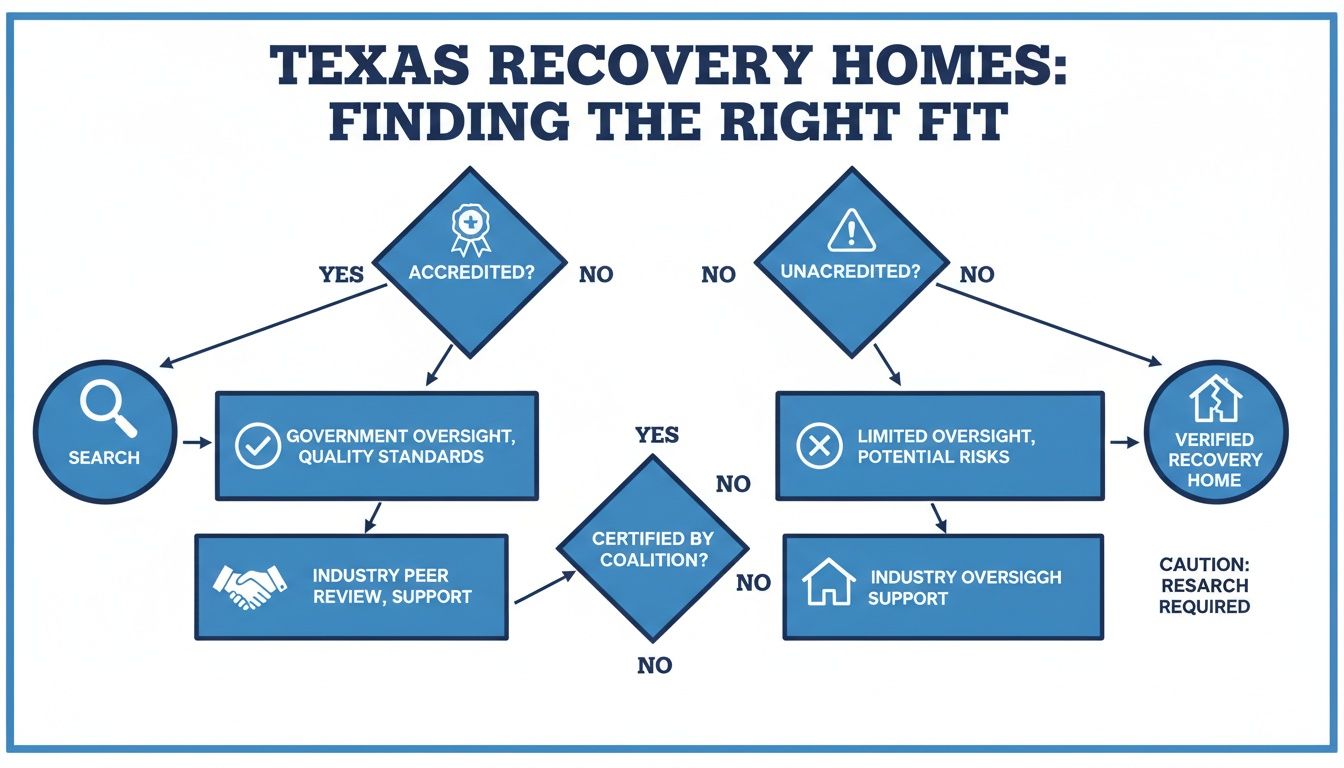
As you can see, the first question you should always ask is about accreditation. This one detail tells you a lot about the baseline safety and ethical standards you can expect from any Texas sober living facility.
Identifying Green Flags
Green flags are those positive signs that tell you a home is well-managed, safe, and genuinely invested in helping its residents succeed. They show a real commitment to creating the kind of stable environment where recovery can take root.
Here’s what to look for:
- Transparent Financial Policies: A good home will be completely upfront about costs. You should get a clear, itemized list of rent, fees for drug testing, and any other charges. If they’re cagey about money, that’s a problem.
- On-Site Management: Having a dedicated, live-in house manager is a game-changer. It means there’s someone right there to provide support, make sure rules are followed, and keep the house safe and orderly for everyone.
- Clear Relapse Protocols: Relapse can happen, and a good sober living home has a constructive plan for it. Look for a clear policy that isn't just about punishment. It should prioritize the safety of all residents while giving the individual a clear path to get back on track, which often means connecting them back to a higher level of care.
Spotting Potential Red Flags
It's just as important to recognize the red flags—the warning signs that a home might be disorganized, unsafe, or even looking to take advantage of people. Always trust your gut. If something feels off, it probably is.
One of the biggest red flags is a lack of structure. If the rules seem to change all the time, or there’s no real accountability, the house will feel chaotic. That’s the last thing you need when you’re trying to build new, healthy habits.
Be on guard for these issues:
- Vague or Unwritten Rules: When you move in, you should be handed a written copy of the house rules. If the rules are just "word of mouth" or seem to change depending on the day, it's a recipe for confusion and drama.
- No Support for Co-Occurring Disorders: Many people in recovery are also dealing with mental health conditions like depression or anxiety. A quality home will actively support residents in continuing their therapy, medication, and other treatments.
- Overcrowding or Poor Living Conditions: Your physical environment really does matter. A house that’s dirty, run-down, or crammed with too many people is a clear sign of neglect and a lack of respect for the people living there.
Your Vetting Checklist for Sober Living Providers
To help you feel confident in your choice, we’ve put together this checklist. Use these questions to guide your conversations and get a real feel for how a home operates. You can also get more context by checking out our guide on what rules and expectations to anticipate in sober living homes.
| Area to Investigate | Key Questions to Ask | Why This Is Important |
|---|---|---|
| Staff & Support | Who is the house manager? What is their recovery experience and training? Is staff available 24/7? | A qualified and available manager is crucial for safety, structure, and immediate support. |
| House Culture | How are conflicts between residents handled? What does a typical day or week look like for a resident? | This reveals the home's approach to community living and whether its structure fits your needs. |
| Financial Transparency | Can I see a full, written breakdown of all monthly costs and fees? What is the policy for security deposits? | Clear financial policies prevent surprises and demonstrate the operator's professionalism and honesty. |
| Relapse Policy | What is the exact procedure if a resident relapses? Is there a path for them to return? | A compassionate, structured relapse protocol shows the home is focused on recovery, not just punishment. |
| Accreditation & Safety | Is the home accredited by TROHN or another recognized body? What are the safety features (e.g., fire extinguishers, emergency plans)? | Accreditation is your best guarantee of quality and ethical standards, while safety features are non-negotiable. |
Choosing the right Texas sober living home is one of the most critical decisions you'll make in your early recovery. By asking the tough questions and knowing what to look for, you can find a place that will be a true stepping stone to the new life you're building.
Key Takeaways
- Always start your search by asking about accreditation from a recognized body like TROHN.
- Look for green flags like clear financial policies, on-site management, and a compassionate relapse protocol.
- Be wary of red flags such as vague rules, poor living conditions, or a lack of support for mental health.
- Use a checklist to ask targeted questions about staff, house culture, and safety before making a commitment.
- Trust your gut—if a home doesn't feel right, it probably isn't the right fit for your recovery journey.
Navigating the Costs of Sober Living in Texas
Let's talk about one of the first and most practical questions people have: "What’s this actually going to cost me?" It's a huge consideration, and figuring out the financial side is a critical step in planning your recovery journey. So, let’s break it down.
Think of sober living fees less like traditional rent and more like an all-in-one investment in your recovery. You're paying for a stable, supportive, and substance-free place to live, which is absolutely essential for building a solid foundation in early sobriety.
What’s Typically Included in the Monthly Fee?
When you see a monthly price, it's not just for a bedroom. The fee is structured to cover all the essentials needed to run a safe, clean, and effective recovery home. This approach lets you focus on your personal growth without the headache of juggling a half-dozen different bills.
Most homes here in the Dallas-Fort Worth area bundle everything into a single monthly payment, which usually covers:
- Housing and Utilities: This is the big one—your rent, electricity, water, gas, and internet are all taken care of.
- Household Supplies: You won't have to worry about running out for basic necessities like toilet paper, paper towels, or cleaning products.
- Drug Testing: Regular and random drug and alcohol screenings are a non-negotiable part of the deal. It’s how the house ensures it remains a safe space for everyone living there.
- On-Site Management: A portion of the fee helps support the house manager who lives on-site to provide structure, guidance, and accountability.
What About Insurance?
This is where things can get a little confusing, so let's clear it up. A very common question is whether health insurance will pay for sober living. The short answer is typically no.
Why? Because health insurance is designed to cover clinical medical services, not housing or living expenses.
A sober living home is considered a residential arrangement, not a licensed clinical treatment facility. Because of that, your insurance plan isn’t likely to cover the monthly fees. It often will, however, cover related clinical services like an Intensive Outpatient Program (IOP), individual therapy, or psychiatric care that you attend while you're living in the home.
The sober living landscape in Texas is always evolving. While the cost can feel like a hurdle, the value of that structured environment is hard to overstate. In major markets like Dallas-Fort Worth, fees generally run between $1,500 to $2,000 a month, which we know can be a significant barrier. This financial strain is a real issue, especially when you consider that housing instability is a major driver of substance use for so many Texans. You can find more insights on this and other challenges at topsoberhouse.com.
Actionable Ways to Fund Your Stay
Even though insurance won't usually cover the housing portion directly, there are still plenty of ways to make it work. Good sober living homes understand that cost is a barrier and are often willing to work with people to find a solution.
- Scholarships and Grants: Many non-profits and even some sober living homes themselves offer scholarships or grants. These are typically for people who can show they have a financial need and are serious about their recovery.
- Sliding-Scale Fees: Some programs offer a sliding-scale payment model, which means your monthly fee is adjusted based on your income.
- Family Support: For many, family members are willing to step in and help. They often see it as a direct and worthwhile investment in their loved one’s health, future, and well-being.
Trying to figure all this out can feel overwhelming, but you don’t have to do it alone. For a more detailed look at these options, check out our guide on how much sober living costs and what financial assistance options are available. It's a great resource to help you plan ahead.
Key Takeaways
- Sober living fees are usually bundled, covering rent, utilities, household supplies, and drug testing in one monthly payment.
- Health insurance won't pay for the sober living house itself, but it often covers clinical care like therapy or an IOP program you attend.
- In a major Texas market like Dallas, expect to pay between $1,500 and $2,000 per month.
- Cost can be a challenge, but options like scholarships, grants, and sliding-scale payments can make it more manageable.
- Be open about your financial situation with any home you're considering; many are willing to help find a way forward.
Making Sober Living Part of Your Long-Term Recovery
Think of sober living not as the final destination, but as a critical bridge on a much longer journey. For it to truly work, it needs to be woven into a strong, comprehensive aftercare plan. It’s like a power grid: the sober living home is a stable power station, but it functions best when connected to other energy sources like therapy, support groups, and clinical programs.
This integration is where the real work of building a lasting recovery happens. The structure of a Texas sober living home gives you the safety and daily accountability you need. At the same time, plugging into outside support reinforces the new coping skills you’re developing, creating a powerful synergy that strengthens your foundation from every angle.
Combining Structure with Continued Care
The most successful recovery plans are all about building a multi-layered defense against relapse, and that means combining the structure of your sober home with other forms of care. The residents who really thrive are the ones who actively get involved in the broader recovery community beyond just the four walls of their house.
This active participation usually looks something like this:
- Intensive Outpatient Programs (IOP): Many residents will attend IOP a few times a week. This setup is incredibly effective because it lets you get structured clinical therapy during the day, then immediately practice what you've learned in a supportive, real-world living situation that same evening.
- Individual Therapy: Working one-on-one with a therapist is essential for digging into the root causes of addiction and tackling any co-occurring mental health conditions.
- 12-Step Meetings: Regularly hitting meetings like Alcoholics Anonymous (AA) or Narcotics Anonymous (NA) connects you to a massive sober network, opening the door to sponsorship and lifelong peer support.
This approach ensures you’re getting accountability from your peers at home and guidance from clinical professionals. It covers all the bases—practical, social, and psychological—at the same time.
The Role of Aftercare Planning from Day One
A smooth landing into a sober living home doesn't just happen by luck. It’s the result of smart, careful planning that starts much earlier in the treatment process. At a place like Tru Dallas Detox & Recovery Center, we begin building out an aftercare plan almost as soon as a client walks through the door. This proactive approach is non-negotiable.
By the time a patient is ready to step down from a higher level of care, a solid plan for their next move—including placement in a vetted DFW sober living home—is already locked in. This completely removes the uncertainty and stress that can be major relapse triggers.
That seamless transition is absolutely vital for keeping the momentum going. It makes sure all the progress you made in detox and rehab isn't lost during a chaotic or unstructured gap period. Instead, you move directly from one supportive environment to the next, carrying forward the tools, accountability, and clinical relationships you’ve already built. This continuum of care is what turns a short-term win into a long-term way of life.
Key Takeaways
- Sober living is most effective when it’s part of a full aftercare plan, not just a standalone solution.
- Combine the structure of your sober home with supports like IOP, therapy, and 12-step meetings to build a multi-layered defense.
- A successful transition into a Texas sober living home starts with aftercare planning from the very first days of detox.
- This proactive planning gets rid of gaps in care, which are high-risk times for relapse.
- A true continuum of care links detox, rehab, and sober living into one seamless, supportive recovery journey.
Frequently Asked Questions
How long should I plan to stay in a sober living home?
There’s no one-size-fits-all answer, but a good rule of thumb is to plan for at least 90 days. That gives you enough time to really start cementing new, healthy habits. Many people find that staying for six months or even a year gives them an even stronger foundation before they feel ready to live completely on their own.
What is the difference between sober living and inpatient rehab?
Inpatient rehab is a clinical program with 24/7 medical supervision and intensive therapy, like the "hospital" phase of treatment. Sober living is a residential home focused on peer support and practicing life skills in a real-world setting. It offers more independence while maintaining a structured, substance-free environment.
Can my treatment center help me find a sober living home?
Absolutely. A quality treatment provider will have a case manager or discharge planner whose job is to help you build a detailed aftercare plan. A huge part of that role is vetting and recommending reputable sober living homes in the area that are a good fit for your specific needs.
What happens if I relapse while living in a sober home?
A good sober living home has a clear, compassionate plan for this. Typically, the policy involves a temporary leave to a higher level of care (like detox) to ensure your safety and protect the house environment. Afterward, you'll work with the staff on a structured plan to return, focusing on addressing the slip-up constructively.
What is the main difference between a sober living home and a halfway house?
Halfway houses are often state-funded and may be connected to the criminal justice system. Sober living homes are typically private residences that people join voluntarily as part of their recovery. They place a much stronger emphasis on a peer-driven, community-focused model of support.