

Deciding to start the journey to recovery is a huge, life-changing moment. Finding the right detox center in Dallas, TX, is the very first, and most important, step you'll take on that path. This guide is here to walk you through it all, taking the mystery out of medical detox and showing you why getting professional help is so critical. We want to replace any fear you might have with clarity and real hope for what's ahead.
Key Takeaways
- Safety First: Medically supervised detox is the only way to safely manage withdrawal. Don't risk going it alone.
- Dallas Has Options: With about 18 facilities in Dallas, you have choices to find the right fit for your needs.
- Detox Is Step One: Detox gets your body stable, but it's just the beginning of a much longer healing journey.
- Comfort Is Key: Professionals use medication and therapy to make withdrawal as comfortable as it can be.
- Emotional Support Matters: A great detox center understands that withdrawal is both a physical and emotional challenge.
Your First Step Toward Finding a Detox Center in Dallas
Taking that first step can feel like the hardest part. It’s often full of questions and uncertainty. Think of this guide as your roadmap, giving you the essential information you need to understand what a detox center in Dallas really does. Knowing what to expect can give you the confidence to make the best choice for yourself or someone you care about.
The number one goal of medical detox is to help you manage withdrawal symptoms safely. Trying to quit substances like alcohol, opioids, or benzodiazepines on your own isn't just difficult—it can be incredibly dangerous and even life-threatening. Having professional medical staff on your side ensures you're safe and as comfortable as possible during this fragile time.
Why Professional Detox Is Essential
Imagine trying to navigate a steep, rocky trail alone versus having an experienced guide who knows every twist and turn. That's the difference with professional detox. It’s about more than just stopping the substance use; it’s about getting your body physically stable so your mind can begin preparing for the real work of recovery.
A good detox program will always prioritize:
- Medical Safety: Your vital signs are monitored around the clock to catch and manage any withdrawal symptoms before they become serious complications.
- Comfort Management: Staff will use proven medications and therapeutic support to ease the discomfort of withdrawal, making the entire process more bearable.
- Emotional Support: You’ll be in a secure, compassionate space where you can finally start to heal from the emotional and mental weight of addiction.
The need for these services in our community is undeniable. In Dallas, Texas, there are roughly 18 drug and alcohol detox centers that offer professional withdrawal management. They are responding to a critical need, underscored by a sharp rise in non-fatal overdoses reported by Dallas County hospitals—jumping from 2,419 in 2018 to 3,818 in 2023. You can learn more about Dallas addiction treatment services and statistics and see the full picture.
Choosing a medically supervised detox program isn't just a good idea; it's a vital safety measure that lays the groundwork for a successful, long-term recovery. It's the solid foundation you need to start building a new life.
What to Expect During Medical Detox in Dallas
Walking through the doors of a detox center for the first time can feel like a huge, intimidating step. I get it. But knowing what’s on the other side of that door can make all the difference, turning that fear into a feeling of control.
Think of medical detox less like a sterile hospital stay and more like a structured, supportive process designed entirely for you. It’s a journey with a clear beginning, middle, and end, guided by people who’ve helped countless others through this exact moment.
It all breaks down into three core phases. Each one builds on the last, designed to get your body stable and your mind clear enough to start the real work of recovery.
The First Phase: Evaluation
The second you arrive, everything is about getting to know you. The clinical team starts with a comprehensive evaluation, and this is way more than just filling out paperwork. They’ll sit down with you to talk through your medical history, the specifics of your substance use—what, how much, how often—and what’s going on with your physical and mental health right now.
This isn't a one-size-fits-all process, because nobody's story is the same. Someone coming off alcohol has completely different medical needs than a person withdrawing from opioids or benzos. This initial deep dive is what allows the team to build a detox plan that’s truly yours, anticipating the bumps in the road and mapping out the safest, most comfortable path forward.
A thorough evaluation is the bedrock of safe and effective treatment. It ensures that the care you receive is precisely suited to your unique biological and psychological needs, setting the stage for a more comfortable detoxification process.
The Second Phase: Stabilization
With your personal plan in place, you move into stabilization. This is the heart of medical detox, where the team's entire focus is on helping you manage withdrawal symptoms. Your safety and comfort are the only things that matter here.
You’ll be under 24/7 medical supervision, which means professionals are constantly monitoring your vital signs. If symptoms get tough, they’re right there to step in. The team can use specific, approved medications to ease cravings, calm anxiety, or prevent dangerous complications like seizures. This is all about creating a secure, supportive space where your body can start to heal without the overwhelming distress of unmanaged withdrawal.
If you want to dig a bit deeper into this critical stage, you can learn more about what medical detox is and how it works to protect your health.
The Final Phase: Preparing for Continued Recovery
Getting through detox is a massive win, but it’s the first step, not the finish line. This last phase is all about getting you ready for what’s next. As the fog starts to lift and your body finds its balance, the team will start talking with you about long-term recovery.
This preparation looks like a few different things:
- Education: You’ll start learning about the science of addiction and why continuing with treatment is so important.
- Therapeutic Introduction: You might have your first few individual or group counseling sessions, offering a safe space to start exploring the roots of your substance use.
- Transition Planning: The staff works directly with you to build a solid aftercare plan, recommending the right next step, whether that’s an inpatient program or an outpatient schedule.
This final stage is the bridge from detox to lasting sobriety. It gives you the tools and the momentum to keep moving forward, armed with a clear plan and a much stronger foundation.
What Happens After Detox? A Look at Your Treatment Options
Getting through medical detox is a huge first step, and if you’ve made it this far, you should be proud. But it’s crucial to understand what detox is—and what it isn’t. Detox is about getting your body stable and clear from substances so you can begin the real work of recovery. It’s the foundation, but lasting sobriety is built in the next phase.
Think of it like this: detox is the process of clearing out a neglected, overgrown garden. Once the weeds are pulled and the soil is prepped, you have a fresh start. The next step is planting new seeds—developing coping skills, understanding the roots of your addiction, and building a life where you can truly flourish. That's where different levels of addiction treatment come in.
The journey through detox itself is a structured process, moving from an initial evaluation to stabilization, all designed to get you ready for what comes next.
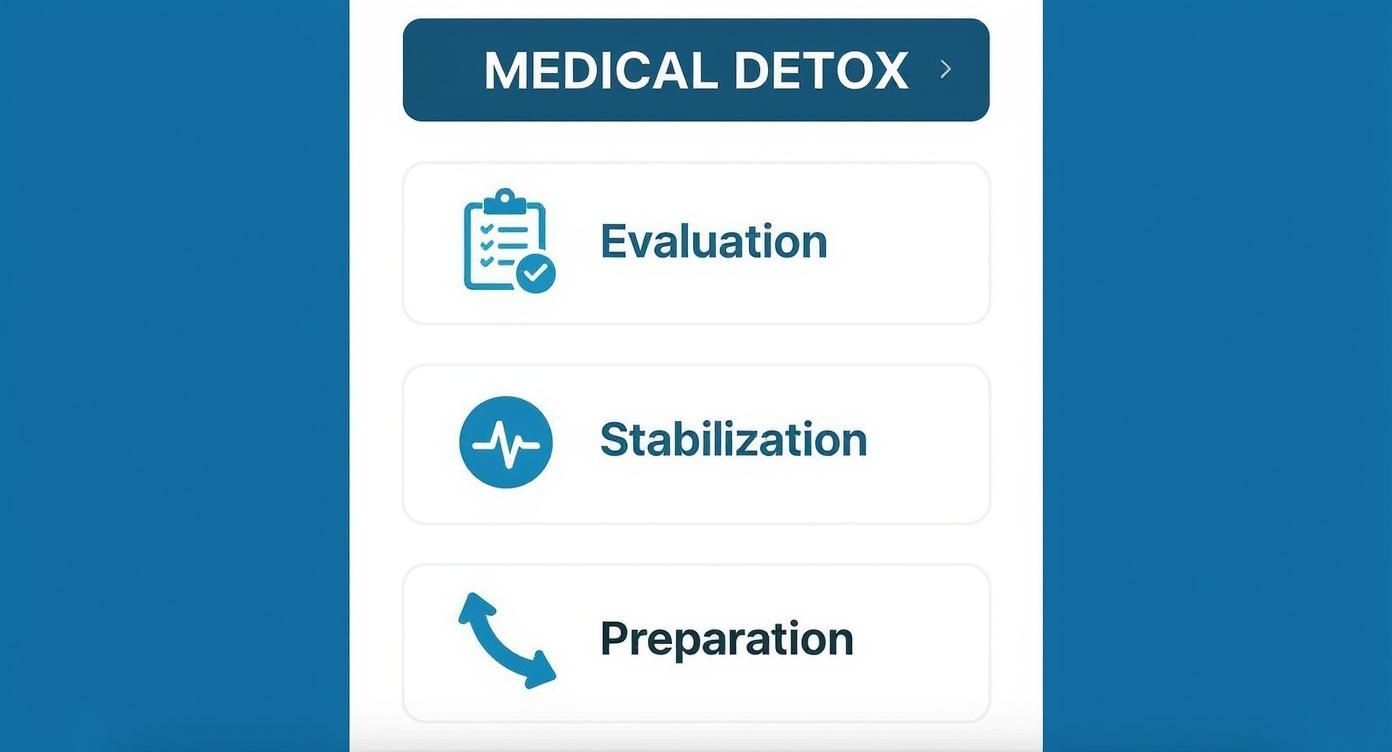
This process ensures you're physically and mentally prepared to fully engage with the therapeutic work ahead. Let's break down the most common paths people take.
Inpatient or Residential Treatment
For many, stepping directly into an inpatient or residential treatment program is the most logical and effective choice. This level of care offers a 24/7 structured environment where you live at the facility, completely removed from the triggers and daily pressures that fueled your substance use. It gives you the space to breathe and focus entirely on yourself.
A typical day is thoughtfully scheduled and packed with different therapies designed to heal mind and body:
- Individual Therapy: One-on-one time with a therapist to dig into the personal issues behind the addiction.
- Group Counseling: A space to connect with peers who get it, sharing stories and learning from each other.
- Family Therapy: Working to repair relationships and build a healthy support system for when you return home.
- Holistic Activities: Things like yoga, art therapy, or meditation that help heal you as a whole person.
This immersive model is often the best fit for someone with a severe substance use disorder or anyone who lacks a stable, sober home environment to return to.
Partial Hospitalization Programs (PHP)
One step down from residential care is a Partial Hospitalization Program (PHP), sometimes called "day treatment." PHPs offer the same therapeutic intensity you’d find in an inpatient program—you’ll be at the center for several hours a day, five to seven days a week—but you go home or to a sober living house at night.
This is a great option for people who have a solid, supportive home life but still need that high level of structure during the day to stay on track.
Intensive Outpatient and Standard Outpatient Programs
As you get stronger in your recovery and are ready to ease back into daily life, Intensive Outpatient Programs (IOP) and standard Outpatient Programs (OP) offer the perfect blend of support and independence. They allow you to get back to work, school, and family while staying connected to your recovery community.
An IOP typically requires you to attend therapy sessions a few times a week for a few hours at a time. A standard OP is the least intensive, maybe only asking for one or two sessions per week. These programs are all about applying the skills you’ve learned to real-world situations and managing triggers as they come up.
The Role of Medication-Assisted Treatment (MAT)
It's also important to know that Medication-Assisted Treatment (MAT) can be a part of any of these programs. MAT is an evidence-based approach that combines FDA-approved medications with therapy to help manage cravings and withdrawal symptoms, particularly for opioid and alcohol dependence. It gives you a much better shot at long-term success. If you want to learn more, this guide explains in detail what is medication-assisted treatment and how it supports recovery.
The key is to remember there's no single "best" program. It’s about finding the right fit for you and your unique situation right now. Recovery is a journey, and each level of care is designed to give you exactly what you need to take the next confident step forward.
To help visualize how these options differ, we’ve put together a simple comparison.
Comparing Addiction Treatment Programs in Dallas
This table breaks down the key features of the different levels of care available after detox. It's designed to help you see where you might fit best based on your specific needs for structure, time commitment, and support.
| Level of Care | Living Arrangement | Time Commitment | Best Suited For |
|---|---|---|---|
| Inpatient/Residential | Live at the treatment facility 24/7 | 30, 60, or 90+ days | Individuals with severe addiction, unstable home environments, or co-occurring disorders. |
| Partial Hospitalization (PHP) | Live at home or in sober living | 5-7 days/week, 6-8 hours/day | Those needing high-level structure without 24/7 supervision; a step-down from inpatient. |
| Intensive Outpatient (IOP) | Live at home or in sober living | 3-5 days/week, 3-4 hours/session | People balancing recovery with work or family who need consistent, structured support. |
| Standard Outpatient (OP) | Live at home | 1-2 days/week, 1-2 hours/session | Individuals with a strong support system seeking ongoing maintenance and relapse prevention. |
Ultimately, a professional assessment will help you pinpoint the exact level of care that will give you the best chance at building a strong, lasting recovery.
Key Takeaways
- Detox Is Not Enough: Detox stabilizes your body, but long-term treatment is essential for building lasting sobriety.
- Levels of Care Vary: Treatment options range from 24/7 inpatient care to flexible outpatient programs.
- Inpatient Offers Immersion: Residential care provides a trigger-free environment to focus completely on recovery.
- Outpatient Balances Life and Recovery: Programs like PHP and IOP allow you to get treatment while maintaining daily responsibilities.
- Find Your Fit: The best program is the one that matches your specific clinical needs, support system, and life situation.
Specialized Care for Dual Diagnosis and Couples
Addiction rarely lives in a vacuum. More often than not, it's tangled up with other personal challenges, which is exactly why a one-size-fits-all approach to recovery just doesn't cut it. The best care is holistic—it treats the whole person. That often means finding a specialized program at a detox center in Dallas, TX.
Two of the most critical specialized tracks you'll find are for dual diagnosis and couples. These programs are built from the ground up to handle the unique complexities that come with co-occurring mental health conditions or addiction that has taken root within a partnership. Choosing a specialized track can make all the difference, creating a much stronger foundation for a future free from substance use.

Treating Mental Health and Addiction Together
When someone is dealing with both a substance use disorder and a mental health condition like depression, anxiety, or PTSD, we call it a dual diagnosis or a co-occurring disorder. The two problems are almost always deeply connected, feeding each other in a vicious cycle. For example, someone might drink to quiet their anxiety, only to find the alcohol makes their anxiety spike later on, which in turn triggers the urge to drink again.
Treating only the addiction while ignoring the underlying mental health issue is like patching a leaky roof in one spot while another hole is forming. The problem will always find a way back in.
This is why integrated dual diagnosis care is so essential for preventing relapse and achieving real wellness. A top-tier program brings psychiatrists, therapists, and medical doctors together to treat both conditions at the same time. This means your care plan is built to address both the substance use and the mental health issues, giving you a complete path to healing. If you'd like to dive deeper, you can explore the connection between mental health and substance abuse in our detailed guide.
Healing Together: The Path of Couples Detox
Addiction puts an enormous strain on relationships. When both partners are caught in the cycle of substance use, it creates a difficult dynamic of codependency, shared triggers, and enabling behaviors. A couples detox and rehab program offers a powerful opportunity for partners to build a new, sober life—together.
In this kind of program, partners go through the treatment process at the same time. They'll have their own individual therapy but will also come together for group sessions and specialized couples counseling. This approach is designed to help them:
- Address Codependency: Learn to give and receive support in healthy ways, without enabling destructive habits.
- Improve Communication: Develop the tools to talk through conflict and express needs without falling back on old patterns.
- Build Mutual Support: Become each other's greatest ally in recovery, creating a shared vision for a healthy future.
These specialized programs offer targeted, effective care that acknowledges the complex reality of addiction and recovery.
Key Takeaways
- Addiction Rarely Stands Alone: It is often linked to mental health issues or relationship dynamics.
- Dual Diagnosis is Key: Treating substance use and mental health conditions like anxiety or depression at the same time is crucial for success.
- Integrated Care is Best: Look for programs that have medical doctors, psychiatrists, and therapists working together on your care plan.
- Couples Rehab Heals Partnerships: Specialized programs help partners break cycles of codependency and build a sober future together.
- Specialized Care Improves Outcomes: Choosing a program that addresses your unique challenges provides a stronger foundation for recovery.
Navigating the Costs of Detox and Insurance Coverage
Let's be honest: worrying about how to pay for treatment is one of the biggest things that holds people back from getting help. It can feel overwhelming, but it doesn't have to be. Once you understand a few key things about how costs and insurance work, you can find a top-notch detox center in Dallas, TX, without breaking the bank.
Let's walk through it together.
The very first thing you should do is verify your insurance benefits. This might sound complicated, but it's not. Every reputable detox center has an admissions team whose main job is to handle this for you. They’ll get on the phone with your insurance company, figure out exactly what’s covered, and then explain it all back to you in plain English.
Decoding Your Insurance Policy
When you start this conversation, you'll hear a few specific terms thrown around. Getting a handle on these will give you a clear picture of what you'll actually need to pay.
- Deductible: This is the initial amount you have to pay yourself before your insurance plan kicks in and starts covering costs.
- Copay: Think of this as your share of the bill for a specific service. It’s a fixed amount you pay after you've already met your deductible.
- Out-of-Pocket Maximum: This is your financial safety net. It’s the absolute most you’ll have to pay for covered services in a year. Once you hit this number, your insurance pays 100% of the rest.
Once you know these three figures, the financial side of things becomes much less of a mystery.
The True Cost of Treatment in Dallas
The price tag for detox and rehab can look intimidating at first, but insurance makes a massive difference. For instance, the average cost for a 3.25-month stay in a residential program without insurance is around $24,166.
But with insurance covering 80% of that, the cost plummets to just $4,833. That’s a huge difference. You can explore more insights about rehab costs in Dallas to see just how much of a game-changer good coverage can be.
"Verifying your insurance benefits is the single most empowering financial step you can take. It replaces uncertainty with a clear, actionable plan, allowing you to focus completely on your recovery journey."
What If I Don't Have Insurance?
If you don't have insurance, please don't give up hope. It’s not a dead end. Many facilities are deeply committed to finding a way to get you the care you need and have several options available.
Here's what you can often find:
- Private Pay Rates: Centers frequently offer a discounted rate if you're paying directly out-of-pocket.
- Payment Plans: They might work with you to set up a monthly payment plan that fits your budget, spreading the cost out over time.
- Third-Party Financing: Some facilities have partnerships with companies that specialize in medical loans, helping you secure financing for your treatment.
The bottom line is this: ask. A quality detox center wants to see you get well and will do everything they can to help make it happen.
Key Takeaways
- Verify Your Benefits First: Before you go any further, let the admissions team at a detox center check your insurance. It’s the best first step.
- Understand Key Terms: Get familiar with your deductible, copay, and out-of-pocket max so there are no surprises.
- Insurance Significantly Reduces Costs: Good coverage can slash the cost of treatment by up to 80%, making life-saving care affordable.
- No Insurance Isn't a Roadblock: If you’re uninsured, always ask about private pay options, payment plans, or financing.
- Ask for Help: Admissions coordinators are your allies. They are there to navigate the financial maze with you.
Putting It All Together: Your Checklist for Choosing a Dallas Detox Center
Making the decision to seek help is a massive step, and choosing the right detox center in Dallas can feel overwhelming. To cut through the noise, I always tell people to focus on a few core principles. Think of this as your quick-reference checklist to make sure you or your loved one finds a place that truly prioritizes safety, effective care, and a real path to long-term recovery.
You're not just looking for a place to get sober for a few days. You're looking for the right partner to help you start this new chapter.
Here are the non-negotiables to keep in mind:
-
Medical Supervision is a Must: I can't stress this enough—never, ever try to detox on your own. Withdrawal can be medically dangerous. A professionally supervised medical detox is the only safe way to manage symptoms and handle any potential complications.
-
Check Their Credentials: A reputable facility will be transparent about its licensing and accreditation. Look for centers licensed by the state and accredited by major bodies like The Joint Commission or CARF. This is your assurance of quality and accountability.
-
Look Beyond Detox: Detox is just the first, crucial step. The centers with the best long-term success rates are the ones that have a clear plan for what comes next. Ask them how they transition clients into ongoing care, like residential treatment or an outpatient program.
-
Inquire About Specialized Tracks: Life is complicated, and so is addiction. If you're also struggling with anxiety, depression, or trauma, a dual-diagnosis program is essential. If you want to go through this process with a partner, ask specifically about couples programs. The right support needs to fit your life.
-
Clarify the Financials Upfront: Get a clear picture of the costs before you commit. Have the admissions team verify your insurance benefits and explain what's covered. If you need it, ask about private payment plans or other options to make sure there are no surprises.
Key Takeaways
- Prioritize Medical Safety: The most important factor is 24/7 medical supervision to manage withdrawal safely.
- Verify Credentials: Ensure the facility is licensed by the state and accredited by a body like The Joint Commission or CARF.
- Plan for After Detox: A good center will have a clear and seamless transition plan into ongoing treatment like rehab or IOP.
- Seek Specialized Care: If needed, choose a center with dual-diagnosis or other specialized programs to address all your needs.
- Understand the Costs: Always verify your insurance and get a clear financial picture before admission to avoid surprises.
Got Questions About Dallas Detox Centers? We’ve Got Answers.
Stepping into the world of recovery can feel overwhelming, and it's completely normal to have a ton of questions. Trying to find the right detox center in Dallas, TX, is confusing enough without clear, straightforward answers. That’s what this section is for—to tackle the most common concerns head-on and give you the confidence you need to take the next step.
Think of this as a practical guide to demystify the process. Whether you're worried about how long you'll be away, what you're supposed to bring, or what this means for your job, you’re not the first to feel that way. Let's walk through these questions together.
How Long Does Medical Detox Actually Take?
This is usually the first thing people want to know: "How long will I be there?" The honest answer is, it's different for everyone. There’s no cookie-cutter timeline for medical detox. The length of your stay depends on things like the substance you were using, for how long, and your unique physical and mental health.
That said, most people can expect the acute phase of medical detox to last somewhere between 5 and 10 days. For alcohol withdrawal, the most intense symptoms often peak within 72 hours, while withdrawal from opioids might follow a slightly different path. When you arrive, our clinical team will do a thorough assessment to map out a timeline that’s right for you, making sure you're safe, comfortable, and medically stable before you move on to the next stage of recovery. The goal here is safety, not speed.
What Should I Pack for My Stay?
Knowing what to pack can make you feel a lot more prepared and at ease. While every center has slightly different rules, there are some basics you can count on.
Focus on comfort and simplicity. Plan on bringing about a week's worth of casual, comfortable clothes—just make sure they don't have any logos or branding related to drugs or alcohol. You’ll also want to pack your own personal toiletries, but double-check that they don't contain alcohol (things like mouthwash or hand sanitizer are common culprits). Most importantly, bring any prescription medications you're currently taking, but they must be in their original, labeled bottles. A photo ID and your insurance card are also essential for the admissions process.
"Packing for detox is about preparing for a period of healing. Focus on bringing items that provide comfort and a sense of normalcy, while leaving behind distractions that can interfere with your recovery."
There are also a few things you should definitely leave at home:
- Electronics: Laptops, tablets, and often even cell phones are limited so you can disconnect from outside stressors and focus completely on yourself.
- Valuables: It’s best to leave expensive jewelry or large sums of cash in a safe place at home.
- Outside Food and Drink: The facility will provide all your meals and snacks to make sure you're getting the right nutrition during this critical time.
Can I Lose My Job for Going to a Detox Center?
This is a huge fear, and it stops far too many people from getting help. Here’s the good news: you have legal protections on your side. You cannot be fired for seeking treatment for a substance use disorder.
The Family and Medical Leave Act (FMLA) is a federal law that gives eligible employees the right to take unpaid, job-protected leave for serious medical reasons. A substance use disorder is considered a serious health condition under FMLA, meaning you can take the time you need to get healthy without worrying about your job.
On top of that, the Americans with Disabilities Act (ADA) offers even more protection. The ADA classifies substance use disorder as a disability and prohibits workplace discrimination against people in recovery. Your employer is legally required to keep your situation confidential and provide reasonable accommodations.
Is the Admissions Process Confidential?
Yes. 100%. Confidentiality isn't just a policy; it's the law. From the moment you pick up the phone to every detail of your treatment and aftercare plan, your information is protected by strict federal privacy regulations.
The main law here is the Health Insurance Portability and Accountability Act (HIPAA). It sets the national standard for protecting sensitive patient health information. A detox center cannot legally share any information about you—not your diagnosis, not your treatment, not even the fact that you're there—with anyone without your explicit, written permission. That includes family, friends, and employers. Your privacy is paramount, giving you the freedom to heal in a truly safe and secure space.
Key Takeaways
- Detox Duration Varies: Plan for about 5 to 10 days, but know that this will be tailored to your specific situation.
- Pack for Comfort: Bring a week's worth of comfy clothes, essential toiletries, and your ID/insurance, but leave valuables and most electronics at home.
- Your Job Is Protected: Laws like the FMLA and ADA ensure you can't be fired for getting the help you need.
- Privacy Is Guaranteed: Your entire treatment process is 100% confidential and protected by federal laws like HIPAA.
- Ask for a Packing List: The best way to be sure is to ask the admissions team at your chosen detox center for their specific list of what to bring and what to leave behind.
Frequently Asked Questions
What is the difference between detox and rehab?
Think of it in two steps. Detox is step one: safely managing the physical withdrawal from a substance with medical supervision. Rehab (or addiction treatment) is step two: it comes after detox and addresses the psychological side of addiction through therapy, counseling, and building the skills you need for long-term recovery.
Can my family visit me while I'm in detox?
Visitation policies can differ between facilities. During the initial detox phase, visits are usually limited so you can focus entirely on getting stable. However, family support is a huge part of lasting recovery, so many programs will begin to incorporate family therapy or visits once you're ready for the next level of care.
What happens if I need medical attention for another health issue during detox?
A quality medical detox center is staffed and equipped to manage other health issues right alongside your withdrawal. The clinical team includes doctors and nurses who will oversee your total health, not just your detox symptoms. They can administer medications for other conditions and are prepared to handle any medical needs that come up during your stay.