
Xanax vs Klonopin: Navigating Anxiety Treatment with Benzodiazepines
Anxiety is a pervasive and complex condition affecting a significant portion of the population. In the landscape of mental health treatment, medications often play a crucial role in managing symptoms and improving quality of life. Among the most prescribed are benzodiazepines, a class of drugs known for their effectiveness in providing rapid relief from anxiety and panic. Benzodiazepine prescriptions are highly prevalent in the US, making it essential for healthcare providers to exercise caution due to the risks of dependence and misuse. Two of the most prominent drugs called benzodiazepines in this class are Xanax (alprazolam) and Klonopin (clonazepam). While both are effective, they possess distinct pharmacological profiles that make them suitable for different clinical situations. Choosing between them requires a nuanced understanding of their onset of action, duration of effects, and specific efficacy for various anxiety-related conditions.
The Landscape of Anxiety Disorders
Anxiety disorders are not a monolith; they encompass a range of conditions, including generalized anxiety disorder (GAD), panic disorder, social anxiety disorder, and specific phobias. The prevalence of these conditions is notable; in 2022, approximately 1 in 5 American adults (20%) experienced anxiety symptoms. These disorders can be debilitating, interfering with daily activities, relationships, and overall well-being. Treatment often involves a combination of psychotherapy and medication, with prescriptions tailored to the patient’s specific symptoms and needs.
Understanding the Role of Xanax (Alprazolam) and Klonopin (Clonazepam)
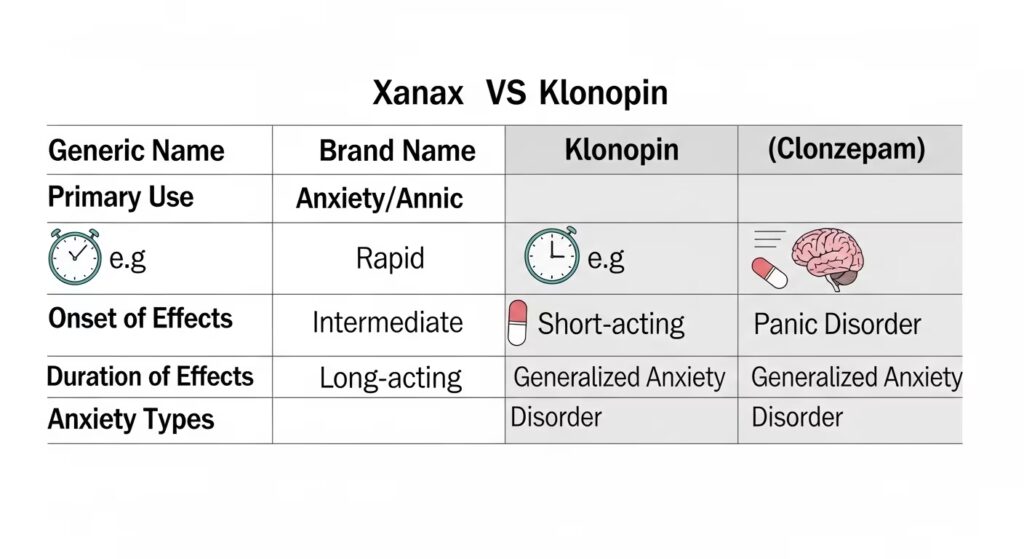
Xanax and Klonopin are brand names for the generic drugs alprazolam and clonazepam, respectively. Both are potent benzodiazepines that function as central nervous system depressants. Healthcare providers prescribe them primarily to manage anxiety and to treat panic disorders. However, Klonopin also has an approved use as an anticonvulsant to treat seizures for certain types of seizure disorders. Their shared mechanism of action means they have similar effects and risks, but key differences in their pharmacokinetics—how the body absorbs, distributes, metabolizes, and excretes them—dictate their clinical applications.
What This Article Will Cover: Onset, Duration, and Efficacy for Anxiety Management
This article provides a deep dive into the critical differences and similarities between Xanax and Klonopin. We will explore their shared mechanism of action within the benzodiazepine class, analyze their individual profiles regarding onset and duration, and compare their efficacy for managing different facets of anxiety. In particular, this article will compare Klonopin vs Xanax in terms of onset, duration, efficacy, and risks. Furthermore, we will address the significant risks associated with these medications, including side effects, dependence, and withdrawal, to provide a comprehensive and balanced perspective for those seeking to understand their treatment options.
The Broader Mental Health Context
When considering the use of medications like Klonopin and Xanax for anxiety disorders, it’s essential to view them within the larger framework of mental health care. Anxiety disorders—including panic disorder, generalized anxiety disorder, and social anxiety disorder—are among the most common mental health conditions, often requiring a multifaceted approach to treatment. While both Klonopin and Xanax are commonly prescribed medications for managing anxiety and panic disorders, their use is just one component of a comprehensive treatment plan.
Treating anxiety effectively means understanding the unique needs of each individual. Both Klonopin and Xanax can help alleviate anxiety related symptoms, but they also carry potential risks, such as physical dependence and withdrawal symptoms, especially with prolonged use. This underscores the importance of careful assessment, ongoing monitoring, and collaboration between patients and healthcare professionals when developing treatment plans. Managing anxiety is not just about symptom relief; it’s about addressing the underlying mental health challenges and minimizing the risks associated with commonly prescribed medications.
Anxiety and Its Place in Mental Health
Anxiety is a significant mental health concern that can disrupt daily life and well-being. It includes a spectrum of disorders such as generalized anxiety disorder, panic disorder, and social anxiety disorder, each presenting with its own set of challenges. Individuals with anxiety disorders may experience persistent worry, fear, or sudden panic attacks that interfere with their ability to function.
Treating anxiety often involves a combination of psychotherapy, lifestyle modifications, and, when necessary, medication. Drugs from the benzodiazepine class, like Klonopin and Xanax, are sometimes used to provide immediate relief from acute symptoms, such as those experienced during panic attacks. However, due to the risk of physical dependence and withdrawal symptoms, these medications are generally reserved for short-term use or for situations where rapid symptom control is essential. Their role in mental health care is to offer quick, effective relief while longer-term strategies are put in place.
When Medication Is Considered
Medication becomes a consideration when anxiety symptoms are severe, persistent, or resistant to other forms of treatment. Both Klonopin and Xanax can be effective in managing anxiety related symptoms, but the choice between them depends on several factors, including the specific anxiety disorder, the patient’s medical history, and the risk of substance abuse.
Klonopin, with its longer half-life, is often preferred for providing sustained anxiety relief throughout the day, making it suitable for ongoing management of conditions like generalized anxiety disorder. In contrast, Xanax’s rapid onset makes it ideal for immediate relief during acute panic attacks, though its shorter half-life may necessitate more frequent dosing. This frequent dosing can increase the risk of physical dependence, especially if the medication is used over an extended period. Healthcare professionals carefully weigh these factors, along with the patient’s history and potential for substance abuse, to determine the most appropriate medication and dosing schedule for managing anxiety.
The Benzodiazepine Class: A Shared Mechanism of Action
To understand Xanax and Klonopin, one must first understand the class of drugs they belong to: benzodiazepines. This group of psychoactive drugs is widely used for its anxiolytic (anti-anxiety), sedative, muscle-relaxant, and anticonvulsant properties.
How Benzodiazepines Work: Targeting the Central Nervous System
Benzodiazepines exert their effects by acting on the central nervous system (CNS). They are CNS depressants, meaning they slow down brain activity. By enhancing the activity of GABA, benzodiazepines inhibit overexcited nerve cells in the CNS, which helps reduce symptoms such as anxiety and panic. This slowing effect is what produces the calming and sedating feelings that help alleviate symptoms of anxiety and panic. The primary target for this action is a specific type of neurotransmitter receptor system in the brain.
The Role of GABA and GABA Receptors
The key to the benzodiazepine mechanism lies with Gamma-Aminobutyric Acid (GABA), the primary inhibitory neurotransmitter in the brain. GABA’s job is to reduce neuronal excitability, essentially acting as the brain’s “brake pedal.” It binds to specialized protein complexes called GABA-A receptors, opening a channel that allows chloride ions to enter the neuron. This influx of negative ions makes the neuron less likely to fire, thereby calming the nervous system.
Impact on Neurotransmitters and Anxiolytic Effects
Benzodiazepines like alprazolam and clonazepam do not mimic GABA directly. Instead, they bind to a specific site on the GABA-A receptor, distinct from the GABA binding site. This binding enhances the effect of GABA that is already present. It makes the GABA-A receptor more efficient, causing the chloride channel to open more frequently. The result is a significant boost in GABA’s natural calming effect, producing the calming effects that lead to the potent anxiolytic, sedative, and muscle-relaxant properties for which these medications are known.
Schedule IV Controlled Substances: Understanding Their Classification
Due to their potential for misuse, dependence, and addiction, all benzodiazepines are classified as Schedule IV controlled substances by the Drug Enforcement Administration (DEA). This classification indicates that they have a recognized medical use but also a lower potential for abuse relative to drugs in Schedules I, II, and III. This status underscores the importance of using these prescriptions only as directed by a healthcare professional and under proper medical supervision to prevent misuse and manage associated risks.
Xanax (Alprazolam): The Rapid Reliever
Xanax is one of the most well-known benzodiazepines, often associated with the immediate relief of acute anxiety and panic attacks. Its pharmacological profile makes it highly effective for short-term, as-needed use. Xanax is typically prescribed as a short term treatment due to its rapid onset and short duration of action. When taking xanax, it is important to be aware of potential side effects and risks, and to seek medical advice if any adverse reactions occur.
Pharmacokinetics: Unpacking Xanax’s Onset and Duration
The defining characteristic of Xanax is its rapid onset of action and relatively short half-life. The effects of alprazolam can typically be felt within an hour of oral administration, with peak concentrations in the blood occurring in about one to two hours, with peak concentrations occurring shortly after administration. Its half-life—the time it takes for the drug’s concentration in the body to reduce by half—is approximately 11 hours. This means the medication is processed and eliminated from the body relatively quickly, leading to a shorter duration of effect compared to other benzodiazepines.
Efficacy for Anxiety: When Xanax Shines
Xanax is highly effective for the management of panic disorder, with or without agoraphobia, and for the short-term relief of anxiety symptoms. Xanax is specifically approved by the FDA for the treatment of anxiety and panic disorders. Its rapid onset makes it particularly valuable for aborting acute panic attacks or for use in situations known to provoke intense, situational anxiety. A patient feeling the overwhelming onset of a panic attack can take Xanax and experience relief relatively quickly, which can be a critical intervention.
Dosage and Administration for Anxiety
Xanax dosage must be individualized. For anxiety, xanax dosage typically starts low and is gradually increased to find the most effective dose that minimizes side effects. It is important not to exceed the maximum dosage to avoid risks such as withdrawal symptoms, dependency, and increased tolerance. Due to its short duration, it is often prescribed to be taken multiple times per day to maintain a consistent therapeutic effect, which can be a drawback for some patients. Stopping Xanax abruptly or changing the dosage without medical guidance can lead to potential withdrawal symptoms.
Specific Considerations: Potential for Rebound Anxiety
A significant consideration with Xanax is the potential for inter-dose rebound anxiety. Because the medication wears off relatively quickly, patients may experience a return or even a worsening of anxiety symptoms between scheduled doses. This effect can sometimes create a cycle where the patient feels a compelling need for the next dose, which can contribute to psychological dependence.
Klonopin (Clonazepam): The Sustained Suppressor
Klonopin offers a different therapeutic profile. While it shares the same mechanism as Xanax, its pharmacokinetic properties make it better suited for sustained, long-term management of anxiety and other conditions.
Pharmacokinetics: Klonopin’s Onset and Duration Profile
Compared to Xanax, Klonopin has a slower onset of action, with effects typically beginning within one to four hours. Its most significant difference is its long half-life, which ranges from 18 to 50 hours. This means clonazepam remains active in the body for a much longer period. Klonopin stays in the body longer than Xanax, resulting in a longer duration of action and more sustained symptom control. This extended duration provides a more stable, consistent level of medication in the bloodstream, offering prolonged symptom control.
Efficacy for Anxiety: Klonopin’s Therapeutic Niche
Klonopin is approved for treating panic disorder and certain seizure disorders. It is also used to treat anxiety, particularly when long-term symptom control is needed. Its long half-life makes it particularly effective for managing generalized anxiety disorder, where the goal is to maintain a steady state of calm throughout the day rather than treating acute, sudden episodes. The sustained effect helps prevent the peaks and troughs of anxiety that can occur with shorter-acting medications.
Specific Considerations: Less Frequent Dosing Schedule
The long duration of action allows for less frequent dosing, often once or twice a day. This can improve patient adherence and convenience. It also reduces the likelihood of inter-dose rebound anxiety, as the medication’s effects taper off much more gradually. This smoother profile is often preferred for patients requiring continuous management of their anxiety symptoms.
Direct Comparison: Onset, Duration, and Efficacy for Anxiety Management
When placed side-by-side, the distinct roles of Xanax and Klonopin in anxiety treatment become clear, guided primarily by their onset and duration. This ‘Klonopin vs Xanax’ comparison highlights the key differences between the two drugs, including their pharmacokinetics, clinical uses, and associated risks. Both medications are available as generic versions, which can be more cost-effective for patients, especially for long-term use.
Onset Speed and Practical Impact for Anxiety Patients
Xanax’s rapid onset is its key advantage for acute situations. For someone experiencing a panic attack, the one-hour onset can feel life-saving. Klonopin’s slower onset makes it less ideal for this “rescue” purpose but suitable for prophylactic, or preventative, management.
Duration of Action: Guiding Treatment Strategies for Anxiety Subtypes
Klonopin’s long duration is its primary strength. It provides a consistent, all-day anxiolytic effect, making it a better choice for GAD, where anxiety is persistent. Xanax’s shorter duration is tailored for panic disorder, where attacks are episodic and intense. The treatment strategy aligns with the nature of the anxiety: immediate relief for acute episodes versus sustained control for chronic conditions.
Nuanced Efficacy for Specific Anxiety Disorders
A clinician might prescribe Klonopin as a standing daily medication to prevent panic attacks from occurring in a patient with panic disorder, while also providing a prescription for Xanax to be used on an as-needed basis if a breakthrough attack occurs. This dual approach leverages the strengths of both medications. Depending on the patient’s specific needs and response to treatment, either Klonopin or Xanax may be chosen.
Dosage Equivalency: What the Benzodiazepine Equivalency Table Means
Clinicians use benzodiazepine equivalency tables to compare the potencies of different drugs in this class. According to most tables, 0.5 mg of alprazolam (Xanax) is roughly equivalent to 0.5 mg of clonazepam (Klonopin). This suggests they have similar potency milligram-for-milligram, but this does not account for the vast differences in half-life and duration of action, which are the more critical factors in clinical decision-making.
Risks and Side Effects: A Comprehensive Look
Despite their therapeutic benefits, both medications carry significant risks and a similar profile of side effects, stemming from their action as CNS depressants. Individuals struggling with dependence or addiction to these substances may require specialized addiction treatment programs to support recovery and address their unique needs.
Common Side Effects of Both Medications
The most common side effects include drowsiness, dizziness, fatigue, impaired coordination, and memory problems. Blurred vision and difficulty breathing are also possible side effects that require prompt medical attention. Cognitive impairment, such as memory problems or reduced mental functioning, can occur, especially with prolonged use. These effects can impair a person’s ability to drive or operate machinery safely. The intensity of these side effects is often dose-dependent and may lessen as the body adjusts to the medication.
Dependence, Tolerance, and Withdrawal: Critical Considerations
With regular use, the body can develop a tolerance to benzodiazepines, requiring higher doses to achieve the same effect. Physical dependence can also occur, meaning the body has adapted to the presence of the drug and will experience withdrawal symptoms if the medication is stopped abruptly. Withdrawal symptoms can range from anxiety and insomnia to more severe reactions like tremors and seizures. The risk of more severe withdrawal is generally higher with shorter-acting agents like Xanax due to the rapid drop in drug levels.
Abuse and Addiction Potential
The potential for misuse and addiction is a major concern. The misuse of tranquilizers, including benzodiazepines like Xanax, is a significant issue, with approximately 4.8 million people aged 12 or older reporting past-year misuse in 2022. The rapid, potent effects of Xanax may give it a higher potential for psychological addiction compared to Klonopin. Furthermore, the broader problem of benzodiazepine misuse is highlighted by national data, which showed that in 2022, 1.3% of people aged 12 and older misused prescription benzodiazepines.
Serious Risks and Warnings
Benzodiazepines carry a “black box” warning from the FDA about the risks of co-use with opioid medications, which can lead to profound sedation, respiratory depression, coma, and death. Allergic reactions, such as swelling, rash, or trouble breathing, can also occur and require immediate medical attention. Any severe side effects or signs of overdose should prompt the patient to seek medical attention without delay. The rise in overdose deaths involving these drugs is alarming; between 1999 and 2017, drug overdose deaths involving benzodiazepines increased by nearly 917%.
Contraindications and Special Populations
These medications should be used with extreme caution in elderly patients, who are more sensitive to their sedating effects and have a higher risk of falls. They are also generally avoided in individuals with a history of substance use disorder, severe respiratory conditions, or certain liver diseases. In some situations, neither Klonopin nor Xanax should be prescribed, such as in individuals with severe respiratory conditions or a history of substance use disorder.
Drug Interactions: What to Watch For
When prescribing Klonopin or Xanax, it’s crucial to consider potential drug interactions that could impact safety and effectiveness. Both medications act on the central nervous system and can interact with a variety of other substances, leading to adverse effects. Patients should always inform their healthcare provider about all medications, supplements, and even certain foods they are taking to help prevent dangerous interactions.
Healthcare providers play a key role in monitoring for potential interactions and adjusting treatment plans as needed. This vigilance helps minimize the risk of adverse effects and ensures that the chosen medication—whether Klonopin or Xanax—remains a safe and effective part of the patient’s anxiety management strategy.
Common Drug-Drug and Drug-Food Interactions
Certain drug combinations can significantly increase the risk of adverse effects when taking Klonopin or Xanax. For example, combining these medications with other central nervous system depressants—such as alcohol, opioids, or other benzodiazepines—can amplify sedative effects, potentially leading to respiratory depression, excessive drowsiness, or even overdose.
Food interactions are also important to consider. Grapefruit and grapefruit juice, for instance, can interfere with the enzymes that metabolize some benzodiazepines, resulting in higher drug levels in the body and an increased risk of side effects. Because anxiety disorders often require ongoing treatment plans, healthcare professionals should regularly review all medications and dietary habits with their patients to identify and manage potential interactions. This proactive approach helps ensure that the benefits of Klonopin or Xanax are maximized while minimizing the risk of adverse effects.
Conclusion
Both Xanax (alprazolam) and Klonopin (clonazepam) are effective benzodiazepine medications for managing anxiety, but they are not interchangeable. Xanax acts as a rapid-response tool, ideal for acute panic attacks due to its fast onset and short duration. Klonopin serves as a long-acting stabilizer, better suited for providing sustained, all-day relief from generalized anxiety. The choice between them depends entirely on the specific nature of the patient’s anxiety, their clinical needs, and a careful evaluation by a healthcare provider.
The therapeutic benefits of these medications must always be weighed against the significant risks of side effects, dependence, withdrawal, and addiction. Given that a 2024 poll found 43% of U.S. adults reported feeling more anxious than the previous year, the need for effective and responsible anxiety management is clear. For anyone prescribed these medications, open communication with a doctor is paramount to ensure safe use. For those who develop dependence or addiction, seeking professional help for medically supervised detoxification and treatment is a critical step toward recovery. Understanding these powerful medications is the first step in using them safely and effectively as part of a comprehensive mental health treatment plan.
Frequently Asked Questions (FAQ)
What is the main difference between Xanax and Klonopin?
The primary difference lies in their onset and duration of action. Xanax has a rapid onset and shorter half-life, making it suitable for immediate relief of acute anxiety or panic attacks. Klonopin has a slower onset but a longer half-life, providing sustained anxiety control over a longer period.
Can Klonopin and Xanax be used together?
Generally, using both medications simultaneously is not recommended due to increased risks of sedation, dependence, and side effects. Any combination should only be done under strict medical supervision.
Are Klonopin and Xanax addictive?
Both medications carry a risk of dependence and addiction, especially with prolonged use or higher doses. Xanax’s rapid onset and shorter half-life may increase the risk of psychological addiction.
What conditions does Klonopin treat besides anxiety?
In addition to anxiety and panic disorders, Klonopin is approved to treat certain seizure disorders, including absence seizures and myoclonic seizures.
How should I stop taking Xanax or Klonopin to avoid withdrawal symptoms?
It is important to taper off these medications gradually under the guidance of a healthcare professional to minimize withdrawal symptoms, which can range from anxiety and insomnia to more severe effects.
Can Klonopin or Xanax reduce anxiety long-term?
While both can help reduce anxiety symptoms, they are generally recommended for short-term or intermittent use due to risks of tolerance, dependence, and cognitive impairment with prolonged use.
What should I do if I experience severe side effects?
Seek immediate medical attention if you experience serious side effects such as difficulty breathing, severe allergic reactions, or signs of overdose.
Are there generic versions of Xanax and Klonopin?
Yes, generic versions—alprazolam for Xanax and clonazepam for Klonopin—are widely available and often more affordable.
Can these medications be used to treat social anxiety disorder?
Both Xanax and Klonopin can be prescribed to manage symptoms of social anxiety disorder, but treatment plans should be individualized and supervised by a healthcare professional.
How do these medications interact with other drugs?
Both interact with other central nervous system depressants like alcohol and opioids, increasing risks of sedation and respiratory depression. Always inform your healthcare provider about all medications and supplements you are taking.