

If you’ve been taking cyclobenzaprine for a while, the thought of stopping can be a little daunting. You might worry about withdrawal symptoms like nausea, headaches, or just a general feeling of being unwell. It’s a valid concern, especially after long-term use.
The good news is that these symptoms, while uncomfortable, are usually not severe and are absolutely manageable. The key is to approach it smartly. The safest way forward is always a gradual taper guided by a healthcare professional to keep any discomfort to a minimum.
What to Expect When You Stop Taking Cyclobenzaprine
Let's break down what's really happening here. Cyclobenzaprine is a fantastic muscle relaxant for short-term relief, but when your body gets used to it over a longer period, it can develop a physical dependence. This isn't the same as addiction; it's simply your body's way of adapting to the medication's presence. When you suddenly take it away, your system needs a moment to recalibrate, and that's what triggers those withdrawal symptoms.

Think of this guide as your roadmap. We’ll walk through everything from the typical symptoms and timeline to the safest ways to stop taking the medication. Our goal is to give you the clarity and confidence you need to manage this process safely.
The Core Principles of a Safe Withdrawal
Knowing what to focus on makes this whole process much less intimidating. Here are the most important things to remember:
- Symptoms Are Temporary: It’s easy to get discouraged, but remember that the nausea and headaches are temporary. For most people, they only last for one to two weeks and can be managed with the right support.
- A Doctor Is Your Best Ally: Working with a doctor is non-negotiable. They can design a tapering schedule just for you, which dramatically lessens the intensity of withdrawal and keeps you safe.
- Tapering is the Gold Standard: Slowly reducing your dose is the kindest thing you can do for your body. It allows your system to adjust gently, avoiding the jolt that comes with stopping all at once.
- "Cold Turkey" Is a Bad Idea: Stopping abruptly can trigger a much rougher, more distressing withdrawal experience. It’s a strategy we strongly advise against.
A well-structured plan is your best defense against unnecessary discomfort. By understanding these key ideas, you can turn a potentially tough experience into a controlled, successful step toward feeling better.
Why This Knowledge is Power
When you're informed, you become your own best advocate. You can have more productive conversations with your doctor and make choices that put your comfort and safety first.
This journey is as much mental as it is physical. Building emotional resilience is crucial. Learning effective coping skills for addiction and withdrawal gives you the tools to handle challenges as they pop up, ensuring you’re prepared for the road ahead.
Key Takeaways
- Withdrawal symptoms from cyclobenzaprine, like general malaise and nausea, are common but typically fade within one to two weeks.
- Quitting "cold turkey" isn't recommended because it can make symptoms much more intense and distressing.
- The safest and most comfortable way to stop taking cyclobenzaprine is with a gradual, doctor-supervised taper.
- Medical supervision is vital for creating a personalized plan that ensures your safety and minimizes discomfort.
- Physical dependence is a normal physiological response to long-term use and should not be confused with addiction.
Frequently Asked Questions
1. How long does withdrawal from cyclobenzaprine last?
The most intense phase of withdrawal usually lasts one to two weeks. Symptoms often start within 1-2 days of your last dose, peak during that first week, and then start to fade. The exact timeline depends on your dosage, how long you were taking it, and your own body's metabolism.
2. Can you stop taking cyclobenzaprine cold turkey?
We strongly advise against it. Stopping "cold turkey" can lead to much more severe withdrawal symptoms, like intense headaches and nausea. A slow, gradual taper is always the safer and more comfortable path.
3. What are the first signs of cyclobenzaprine withdrawal?
The earliest signs are often a general feeling of being "off" or unwell (malaise), mild headaches, and sometimes an upset stomach. These usually appear within 24 to 48 hours after stopping the medication.
4. Is cyclobenzaprine withdrawal dangerous?
For most people taking a prescribed dose, the withdrawal isn't life-threatening, but it can feel pretty awful. The biggest risk is the sheer discomfort, which can make you want to start taking the medication again just to feel better. Medical supervision helps manage this and keeps you on track safely.
5. How can I minimize withdrawal symptoms?
Your best bet is to follow a gradual tapering schedule created by your doctor. Beyond that, simple things can make a huge difference: stay hydrated, eat nourishing food, and try to get some gentle exercise. These simple acts of self-care support your body as it readjusts.
Understanding Cyclobenzaprine and Why Withdrawal Occurs
To get a real handle on cyclobenzaprine withdrawal, you first need to know what the drug is actually doing in your body. Cyclobenzaprine, which you might know as Flexeril, is a muscle relaxant prescribed for short-term relief from painful muscle spasms. Interestingly, it doesn't work on the muscles directly but instead targets your central nervous system.
Picture your nervous system as an intricate communication network. A muscle spasm is like a short-circuit in that network, firing off relentless, painful signals. Cyclobenzaprine steps in and acts like a circuit breaker, dampening those overactive nerve signals to bring relief to your muscles.
How Your Body Gets Used to It
When you use cyclobenzaprine for more than the recommended two or three weeks, your body starts to adjust. Your nervous system gets used to the drug's calming effect and recalibrates its own settings to function with it. This new, mellowed-out state becomes its baseline.
This adjustment is what we call physical dependence. It's important to know this is a completely normal physiological response—it's not the same as addiction, which involves cravings and compulsive behaviors. Dependence just means your body has rewired itself to expect the medication to be there.
Think of it this way: when your body gets used to cyclobenzaprine, it creates a "new normal." Withdrawal is simply the process of your nervous system readjusting back to its original state without the drug's influence.
The problem starts when you suddenly stop taking it. Without the medication to keep things quiet, your nervous system flips back into high gear. Since it’s been operating at a lower intensity, this sudden surge of activity can feel chaotic and overwhelming, triggering the uncomfortable symptoms of withdrawal from cyclobenzaprine.
The Rebound Effect: Why Stopping Suddenly Is So Jarring
Imagine you've spent months living in a quiet, peaceful neighborhood. You've gotten used to the calm. Then, one day, you move right next to a busy airport. The constant, jarring noise would be a shock to your system. That's a good way to think about what's happening inside your body.
When cyclobenzaprine is gone, your nervous system is suddenly flooded with the nerve activity it's no longer equipped to handle. This rebound effect is what causes many of the common withdrawal symptoms, such as:
- General Malaise: That all-over feeling of just being sick and out of sorts as your body tries to find its balance again.
- Headaches: Often a direct result of muscle tension returning and your nervous system recalibrating.
- Nausea: A very common physical reaction to the internal stress your body is under.
These symptoms, while definitely unpleasant, are a sign that your body is actively working to heal and get back to its natural rhythm. This is precisely why a slow, medically supervised taper is so crucial. It gives your system the time it needs to adjust gradually, which minimizes the shock and makes the whole process much smoother.
Not everyone who stops taking cyclobenzaprine will go through withdrawal, but the risk is real enough to warrant caution. Withdrawal symptoms tend to pop up in people who stop the drug cold turkey after using it for a while, with reports showing it affects less than 20% of users. Still, with over 25 million prescriptions for drugs like Flexeril written in the U.S. back in 2011, it's clear why getting medical advice before stopping is so important. For more detailed information, you can find helpful resources on Greenhouse Treatment’s website.
What to Expect: Cyclobenzaprine Withdrawal Symptoms and Timeline
Facing withdrawal can feel daunting, but knowing what's coming makes the entire process feel more manageable. Think of it this way: your body got used to having cyclobenzaprine around, and now it needs some time to figure out how to function without it. Those withdrawal symptoms? They’re just signs that your central nervous system is recalibrating and getting back to its natural baseline.
The experience is a mix of physical and psychological symptoms. Everyone’s journey is a little different, but understanding the common hurdles is the first step in clearing them safely.
The Physical Side of Withdrawal
The physical effects are usually the first to show up and can be the most obvious. Since cyclobenzaprine is a muscle relaxant that dampens nerve signals, taking it away can cause a rebound effect. Suddenly, your body is on high alert again.
Common physical symptoms include:
- Headaches: These are often tension-related as your body readjusts, ranging from a dull, nagging ache to more persistent pain.
- Nausea and Upset Stomach: It's very common to feel a general sense of queasiness or sickness as your body deals with the internal stress of withdrawal.
- General Malaise: This is that hard-to-pin-down feeling of just being unwell. You might feel tired, rundown, and physically "off," almost like you're coming down with the flu.
- Rebound Muscle Spasms or Stiffness: The very symptoms you started taking the medication for might come back, sometimes even more intensely, as your muscles relearn how to relax on their own.
The Psychological Side of Withdrawal
Don't overlook the mental and emotional side of this process; it's just as real as the physical discomfort. Cyclobenzaprine has a calming, sedative effect on the central nervous system, which impacts your mood and sleep. When you stop taking it, you might feel a sudden surge of mental and emotional energy that can be pretty unsettling.
Key psychological symptoms to watch for are:
- Anxiety and Restlessness: Without the drug's quieting effect, your nervous system can go into overdrive, leaving you feeling agitated, jittery, or on edge.
- Irritability: Your brain chemistry is working hard to find a new equilibrium, which can easily lead to mood swings and a short fuse.
- Rebound Insomnia: Cyclobenzaprine often makes people drowsy. So, it's no surprise that stopping it can throw your sleep schedule completely out of whack, making it tough to fall or stay asleep.
This timeline gives you a visual idea of how withdrawal symptoms typically unfold—emerging, hitting a peak, and then gradually fading away.
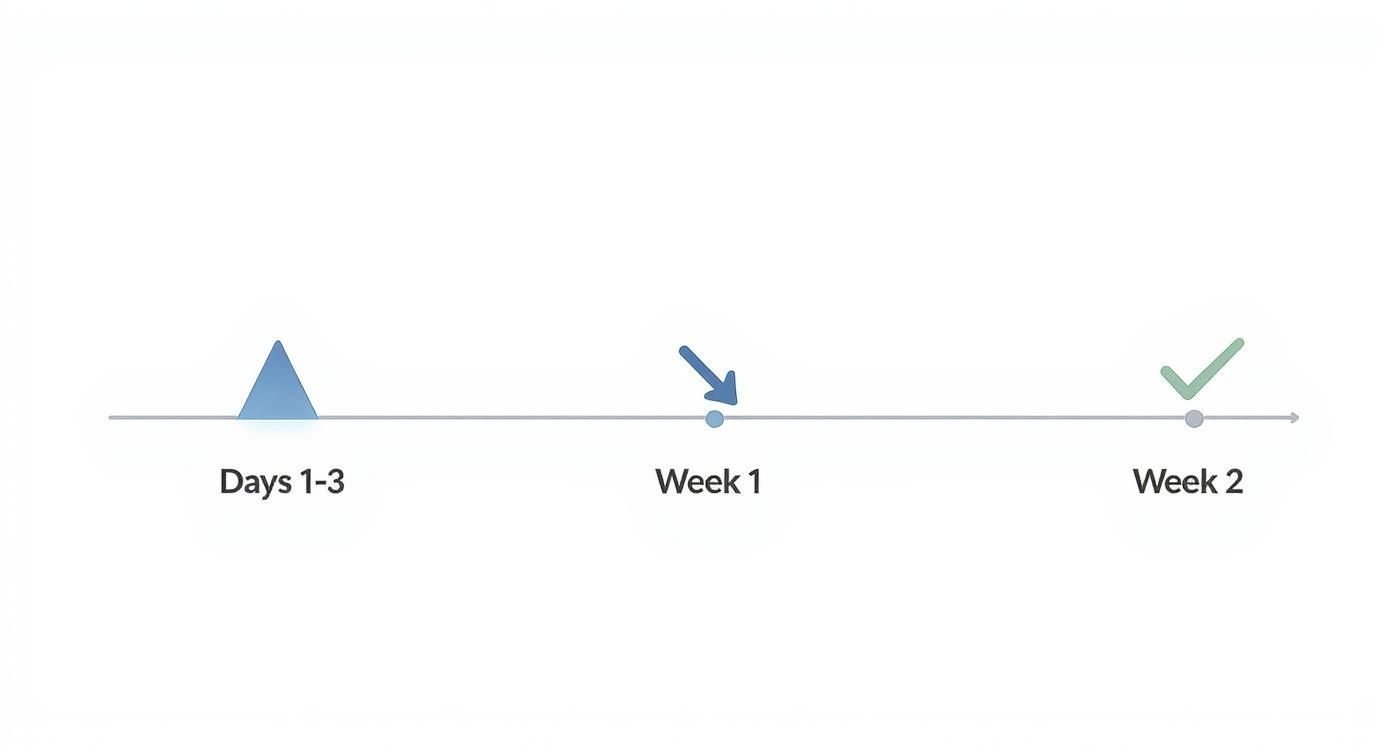
As you can see, the toughest part is usually concentrated in that first week. After that, things typically start looking up, with most people feeling significantly better by the end of the second week.
A Typical Cyclobenzaprine Withdrawal Timeline
While every person's experience is unique, the timeline for cyclobenzaprine withdrawal tends to follow a predictable path. This is largely driven by the drug's half-life—the time it takes for your body to clear out half of the substance.
Clinical reviews of long-term cyclobenzaprine use, especially for conditions like fibromyalgia, have helped us map out what to expect. These studies confirm that symptoms like headaches and nausea are far less severe when the dose is tapered down slowly instead of stopped abruptly. With an elimination half-life of around 18 hours for the immediate-release version, withdrawal symptoms can kick in anywhere from a couple of days to two weeks after your last dose. You can explore detailed analyses of cyclobenzaprine's effects and withdrawal patterns to get a deeper understanding.
It’s so important to remember that this timeline is just a guide, not a guarantee. Things like your dosage, how long you’ve been taking it, and your own unique metabolism all play a huge role in what your personal journey will look like.
To give you a clearer picture, we've broken down the general progression of symptoms.
A Typical Cyclobenzaprine Withdrawal Timeline
This table outlines the common symptoms and their expected intensity during different phases of cyclobenzaprine withdrawal.
| Timeframe | Common Physical Symptoms | Common Psychological Symptoms |
|---|---|---|
| Days 1-3 | Initial headaches, nausea, and muscle aches begin to appear. | Mild anxiety, irritability, and difficulty sleeping may start. |
| Days 4-7 | Symptoms often peak. Muscle stiffness, fatigue, and headaches can be at their most intense. | Insomnia, restlessness, and mood swings are most pronounced. |
| Week 2 | Physical symptoms begin to fade significantly. Lingering fatigue or mild headaches may persist. | Psychological symptoms start to stabilize, though some sleep disturbances may continue. |
| Week 3+ | Most acute symptoms have resolved. Some individuals may experience minor, lingering effects. | Mood and sleep patterns generally return to normal. |
Knowing what to expect can demystify the process and make it feel much less intimidating. The most important thing to hold onto is that the discomfort is temporary. With the right support, it's completely manageable.
The Dangers of Stopping Cold Turkey
When you're trying to get relief from painful muscle spasms, you want a solution that works. But when it's time to stop taking cyclobenzaprine, what seems like the simplest path—just stopping—is actually one of the riskiest. Going "cold turkey" can turn a manageable process into a miserable and potentially dangerous ordeal.
Think of it this way: after using cyclobenzaprine for a while, your central nervous system gets used to running on a lower setting, like a dimmer switch turned way down. Suddenly cutting off the medication is like instantly cranking that switch to full blast. The shock to your system can trigger a severe rebound of symptoms, making the withdrawal far more intense than it needs to be.
Why Quitting Abruptly Makes Everything Worse
When you stop cold turkey, you're not giving your body any time to adjust. This sudden shift can unleash a flood of intense withdrawal symptoms that are incredibly difficult to handle on your own. Instead of a gradual easing of discomfort, you could be hit with a sudden wave of debilitating headaches, intense nausea, and a deep, overwhelming sense of feeling unwell (malaise).
This isn't just about feeling awful; it's about what that discomfort can lead to. The symptoms can become so severe that the temptation to take another pill just to make it stop can be overpowering. This is how people get trapped in a cycle of misuse, even when they desperately want to quit.
Stopping cyclobenzaprine suddenly is like slamming on the brakes of a car going 70 mph. It's a violent jolt to your system that makes for a much rougher ride than a slow, controlled deceleration.
The Added Risks of Mixing Substances
The danger of stopping cyclobenzaprine cold turkey gets even more serious when other substances are in the picture. It's common for people to mix muscle relaxants with other depressants like alcohol or opioids, either intentionally or not, to amplify the sedative effects. This is a hazardous combination.
If your body has become dependent on more than one substance, the withdrawal process is far more complicated and unpredictable. Stopping cyclobenzaprine abruptly in this scenario can trigger a complex withdrawal syndrome where the symptoms from each substance overlap and amplify one another.
This situation can escalate into a medical emergency in a heartbeat. The combined stress on your body can lead to severe complications, making professional medical help an absolute necessity. The public health data backs this up. In 2011 alone, there were over 11,000 emergency department visits tied to cyclobenzaprine misuse, many of which involved other drugs. You can get more insights on the broader impact of cyclobenzaprine misuse on Greenhouse Treatment’s resource page.
Medical Supervision: Your Most Important Safety Net
With these risks in mind, trying to manage withdrawal from cyclobenzaprine on your own, especially by quitting cold turkey, is never a good idea. A medically supervised detox program provides the crucial support and safety you need to get through this process without unnecessary suffering or danger.
Professionals can design a tapering schedule tailored specifically for you, slowly reducing the dosage to let your body adjust gently. This minimizes the shock to your system and keeps the worst symptoms from ever taking hold. They can also provide medications to ease your discomfort and monitor you for any complications—which is especially important if other substances are involved. To see how this works, you can learn more about safe drug detox in Dallas and why medical supervision matters in our in-depth guide. This level of professional care transforms a risky gamble into a safe, structured, and supportive path to recovery.
Putting a Safe Medical Detox Plan into Action
Getting through cyclobenzaprine withdrawal successfully isn’t about gritting your teeth and pushing through. It's about having the right game plan. A safe detox is always a planned detox, and the proven, gold-standard approach is a gradual, medically supervised taper. This method helps you avoid the jarring shock to your system that comes from stopping "cold turkey."
Think of it like descending a steep mountain. Trying to run straight down is a recipe for disaster. Instead, you'd want an experienced guide to lead you down a gentle, winding path that makes the journey safe and manageable. That's exactly what a medical professional does when they create a personalized tapering schedule for you.
This schedule is all about slowly reducing your cyclobenzaprine dose over a specific period. This controlled step-down gives your brain and central nervous system the time they desperately need to recalibrate and learn to function without the drug. The result? Withdrawal symptoms are far less intense.

Making the Process More Comfortable with Supportive Care
A tapering schedule is the foundation of a safe detox, but it’s not the whole story. Supportive care is what really manages the discomfort that can pop up along the way, making the entire experience more comfortable and sustainable. This is one of the biggest benefits a formal program offers. To get a better sense of how this works, you can learn more about what is medical detox and the secure environment it provides.
Supportive care at a professional facility often includes:
- Non-Addictive Medications: Your care team can prescribe safe, non-habit-forming medications to help with specific symptoms. For instance, they might give you something for nausea, headaches, or that frustrating rebound insomnia, all without creating a new dependency.
- Nutritional Support: A well-fed body is a more resilient body. Good nutrition and plenty of fluids are crucial during detox. A balanced diet helps keep your mood and energy stable, while proper hydration can reduce headaches and fight off fatigue.
- Holistic Therapies: Gentle activities like yoga, meditation, and light stretching do wonders for managing anxiety and muscle stiffness. These practices are great for supporting both your mind and body as you heal.
Choosing the Right Level of Care for You
One of the biggest decisions you'll make is where to detox. The choice between outpatient and inpatient care really comes down to your personal situation—your usage history, your overall health, and what your home life looks like.
Outpatient Detox could be a good option if:
- Your cyclobenzaprine dose was relatively low.
- You have a rock-solid support system at home with family or friends.
- You are not struggling with other substances like alcohol or opioids.
- You feel confident and motivated to stick to the tapering plan on your own.
A medically supervised detox plan isn't just about dodging symptoms. It’s about giving your body the stability and support it needs to heal the right way. It transforms a potentially overwhelming experience into a structured, manageable process.
Inpatient Detox is often the safer, and sometimes necessary, choice when:
- You’ve been taking high doses of cyclobenzaprine for a long time.
- You're also dependent on other substances, which can make withdrawal much more complicated and unpredictable.
- You have a co-occurring mental health condition like major anxiety or depression.
- Your home environment isn't stable or supportive enough for recovery.
Inpatient care provides 24/7 medical supervision in a safe, substance-free setting. This constant oversight keeps you safe, allows the medical team to make immediate adjustments to your care plan, and removes you from the triggers and stressors at home that could throw you off track. For many people, this level of focused support is what makes a successful recovery possible.
Key Takeaways
- The safest way to stop cyclobenzaprine is a gradual taper created and overseen by a medical professional.
- Supportive care, like non-addictive comfort medications and nutritional support, makes detox far more manageable.
- Inpatient detox is the safest option if you have a history of high-dose use, use other substances, or have co-occurring mental health issues.
- Outpatient detox can work well for milder cases where a strong support system is in place.
- Your detox plan should always be personalized to your unique health needs and usage history.
Frequently Asked Questions
1. How long does a cyclobenzaprine taper usually last?
A typical taper can last anywhere from a few weeks to a month, sometimes longer. The exact timeline depends on your original dose, how long you were taking it, and how your body responds as the dose is lowered.
2. Can I just create my own tapering plan?
It is strongly recommended that you don't. A doctor can properly assess your overall health and design a schedule that’s both safe and effective. They can also make crucial adjustments along the way to keep you as comfortable as possible.
3. What should I do if I feel really sick during the taper?
If withdrawal symptoms become intense or unmanageable, call your doctor right away. They can adjust your tapering schedule—maybe slowing down the pace—or prescribe supportive medications to help you get through the rough patch.
Begin Your Recovery at Tru Dallas Detox
Knowing what to expect from cyclobenzaprine withdrawal is a critical first step, but taking action is where the real healing starts. At Tru Dallas Detox & Recovery Center, we’re here to walk that path with you, offering professional guidance and compassionate care every step of the way. We firmly believe that recovery is so much more than just getting through the physical symptoms—it's about healing the whole person.
Our entire approach is built around a personalized treatment plan designed just for you. We get it: your history, your health, and your personal goals are entirely your own. This plan becomes our shared roadmap to a stable and lasting recovery.
A Comprehensive Approach to Healing
We’ve created a structured, supportive environment to make your detox as safe and comfortable as it can possibly be. Our experienced clinical team is genuinely dedicated to seeing you succeed.
Here’s a look at what we offer:
- 24/7 Medical Supervision: Our team is always on-site, around the clock. We’re here to monitor your health, manage withdrawal symptoms as they arise, and ensure you are safe and supported at all times.
- Evidence-Based Therapies: We help you dig into the underlying issues that may have led to substance use in the first place. The goal is to equip you with practical tools to manage stress and prevent a future relapse.
- Robust Aftercare Planning: Detox is just the beginning of the journey. We work closely with you to build a solid aftercare plan, connecting you with resources for continued support and setting you up for success long after you leave our facility.
Our main goal is to make the process of getting help feel straightforward and hopeful. We lay out a clear path forward, empowering you to reclaim your health with confidence and dignity.
Making the leap from dependence to recovery is a huge step, and it’s not one you should ever have to take alone. The expert team at Tru Dallas is ready to provide the medical support and emotional guidance you need to start building your new life today.
Key Takeaways
- Recovering from cyclobenzaprine dependence needs a complete plan that goes beyond just managing physical withdrawal symptoms.
- Tru Dallas Detox creates personalized treatment plans that are built around your unique needs and recovery goals.
- 24/7 medical supervision is non-negotiable for a safe and comfortable detox, particularly when dealing with cyclobenzaprine withdrawal.
- Truly effective treatment must include evidence-based therapies to get to the root causes of substance use.
- A strong, well-defined aftercare plan is absolutely critical for maintaining long-term recovery and preventing relapse.
Frequently Asked Questions
1. What makes Tru Dallas different from other detox centers?
At Tru Dallas, our biggest focus is on creating a truly personalized recovery plan that provides a continuous line of care, from detox all the way through aftercare. Our integrated approach means you’ll work with a consistent team that’s invested in your long-term success, building a foundation of stability and trust throughout your journey.
2. Do you offer support for co-occurring mental health conditions?
Absolutely. We specialize in dual diagnosis treatment. Our team is fully equipped to address co-occurring conditions like anxiety and depression, which so often go hand-in-hand with substance use. This ensures a more complete and effective recovery.
3. What happens after I complete detox at Tru Dallas?
Once you’ve completed detox, we work with you to map out a detailed aftercare plan to support your ongoing recovery. This plan might include transitioning to an inpatient or outpatient program, getting you connected with local support groups, and providing you with resources to help you build a healthy, substance-free life.
Your Questions About Cyclobenzaprine Withdrawal, Answered
When you’re thinking about stopping a medication, a lot of questions can pop up. It's completely normal to feel uncertain. Let's walk through some of the most common concerns about cyclobenzaprine withdrawal to clear things up and help you feel more prepared.
How Long Does Cyclobenzaprine Withdrawal Last?
There’s no one-size-fits-all answer here, as everyone’s body is different, but we can talk about a typical timeline. You’ll likely start to feel the first signs of withdrawal, like headaches or nausea, within 1-3 days after your last dose.
These symptoms tend to be at their worst during that first week. After that, they usually start to taper off, and by the end of the second week, most people feel a significant improvement. Your personal experience will depend on things like the dose you were taking, how long you were on it, and even your own metabolism, but for most, the toughest part is over within about two weeks.
Is It Safe to Detox from Cyclobenzaprine at Home?
I get this question a lot, and my answer is always the same: detoxing from cyclobenzaprine at home without talking to a doctor is a bad idea. Stopping cold turkey can throw your system into a tailspin, leading to withdrawal symptoms that are not just uncomfortable but genuinely hard to handle on your own.
The safest way forward is always a medically supervised detox. A healthcare professional can map out a tapering schedule that slowly weans your body off the medication. This approach minimizes the shock to your system, making the whole process safer and much more comfortable.
Trying to go it alone often makes the experience unnecessarily difficult and can even lead people to start taking the medication again just to make the awful symptoms stop.
What's the Difference Between Dependence and Addiction?
This is a really important distinction, and it’s one that causes a lot of confusion. Physical dependence and addiction are two very different things.
- Physical Dependence: Think of this as a purely physiological state. Your body has simply gotten used to having cyclobenzaprine around to function normally. When you take it away, your body has to recalibrate, and that’s what causes physical withdrawal symptoms. This is an expected, natural response to taking many kinds of medication over time.
- Addiction: This, on the other hand, is all about behavior. Addiction is a disease characterized by a powerful, compulsive need to use a substance despite the negative consequences it’s having on your life. It involves intense cravings and a loss of control over your use.
It's entirely possible to be physically dependent on cyclobenzaprine without having an addiction. Either way, getting professional guidance is the key to navigating the process of stopping safely.
Key Takeaways
- The most acute withdrawal symptoms usually last for 1 to 2 weeks, with the first week being the most intense.
- Don't try to detox at home without medical help; the discomfort can be severe and hard to manage alone.
- The gold standard for stopping cyclobenzaprine is a gradual tapering plan designed and monitored by a doctor.
- Remember, physical dependence is your body's normal adaptation to a medication and is not the same as addiction.
- Your unique withdrawal timeline will be shaped by your dosage, duration of use, and individual body chemistry.