
A relapse prevention plan is a practical, written guide that helps you navigate life after treatment and protect your sobriety. Think of it as your personal playbook for staying on track, giving you the structure and confidence you need as you transition from a detox center back to your daily life in Dallas.
Your Personalized Roadmap to Lasting Sobriety

Finishing a detox or treatment program is a huge accomplishment, but the real work of recovery begins the day you walk out the door. A relapse prevention plan is the single best tool you have for navigating the challenges of everyday life while safeguarding the progress you’ve made.
This isn’t a sign that you expect to fail—quite the opposite. It’s a powerful strategy for success. The plan helps you get ahead of the curve by identifying your specific triggers, mapping out healthy coping skills, and creating an emergency action plan for when things get tough.
At Tru Dallas Detox, we believe your recovery is most successful when you're in the driver's seat. That’s why we build these plans together, using a collaborative process rooted in the healthcare principle of shared decision making. This ensures your plan is realistic, empowering, and actually works for you.
Building Your Foundation for Success
Think of this plan like a pilot's pre-flight checklist. Before every flight, a pilot methodically reviews every system to ensure safety. Your relapse prevention plan serves the same function, giving you a clear, deliberate process to check in with yourself and prepare for any turbulence ahead. It shifts you from reacting to problems to proactively managing them.
At a dedicated addiction treatment center in Dallas like Tru Dallas Detox, this isn't an afterthought tacked on at the end of your stay. It’s a core part of your treatment and discharge planning from day one.
A relapse prevention plan turns the vague hope of "staying sober" into a concrete, actionable strategy. It gives you a clear path to follow when you feel lost, stressed, or tempted, making it one of the most vital components of long-term recovery.
To give you a clearer picture, this table breaks down the fundamental purpose and key elements of a relapse prevention plan at a glance.
Quick Overview of a Relapse Prevention Plan
| Element | Purpose and Function |
|---|---|
| Triggers | Identifies specific people, places, feelings, or situations that create cravings or risk. |
| Warning Signs | Recognizes subtle shifts in attitude and behavior that signal you’re heading toward relapse. |
| Coping Skills | Lists healthy, practical actions you can take to manage stress and cravings without substance use. |
| Support System | Provides a go-to list of trusted individuals and groups you can call on for immediate support. |
| Emergency Steps | Defines a clear, step-by-step action plan for moments of crisis to prevent a lapse. |
This table highlights how each piece of the plan works together to create a comprehensive safety net for your recovery.
What Does This Plan Involve?
Creating this roadmap is a deeply personal process. You’ll work one-on-one with a clinician at Tru Dallas Detox to map out the crucial details of your recovery landscape. Together, you will pinpoint:
- Your Triggers: What specific people, places, or feelings around Dallas could put your sobriety at risk?
- Your Coping Skills: What healthy actions will you take when stress or cravings hit? This could be anything from exercise to mindfulness or hitting a local support group meeting.
- Your Support System: Who are the trusted friends, family members, sponsors, and professionals you can call anytime, day or night?
- Your Emergency Steps: What exactly will you do and who will you call if you feel a relapse is about to happen?
This personalized strategy gives you the confidence to handle life’s challenges without falling back on old habits. To see how these elements come together in a real-world document, you can explore our detailed article about a sample relapse prevention plan.
Why This Plan Is a Non-Negotiable Part of Recovery in Dallas
Stepping out of a structured treatment program and back into your life is a huge victory, but it's also where the real work begins. That transition is the start of your new life, but it’s also the moment you come face-to-face with the people, places, and pressures that once drove your addiction. A relapse prevention plan isn’t just some helpful worksheet; it’s an essential, non-negotiable part of protecting your sobriety.
Think of it this way: no surgeon would send a patient home after a major operation without a detailed post-op care plan. In the same way, effective addiction treatment in Dallas doesn’t just stop at the door. Your plan is your aftercare strategy, giving you the structure and confidence you need to handle old environments without falling back into old habits.
The Most Vulnerable Time in Recovery
The first few weeks and months after leaving treatment are, statistically, the riskiest time for relapse. You’re re-entering the world without the protective bubble of a treatment facility, facing triggers that were simply not present before. Without a clear, actionable strategy, navigating social pressures in the Dallas-Fort Worth area can feel completely overwhelming.
This is where your plan becomes your shield. It gives you evidence-based tools and personalized steps to take when you feel vulnerable. Instead of feeling panicked when a craving hits, you have a pre-planned, healthy response ready to go.
The data really highlights this reality. According to the National Institute on Drug Abuse, relapse rates for substance use disorders can range from 40% to 60%. The vast majority of those—about 85% of relapses—happen within the very first year after treatment. But here's the good news: the outlook gets dramatically better over time. After five years of continuous sobriety, the relapse rate plummets to just 15%. You can discover more insights about long-term recovery statistics on cnvdetox.com.
Shifting Your Perspective on Relapse
One of the most powerful things a relapse prevention plan does is completely reframe what relapse means. Our culture often treats a relapse like a moral failing—a sign that the person "didn't want it badly enough." That mindset isn't just wrong; it’s incredibly damaging and creates a cycle of shame that can stop someone from reaching out for help again.
Your plan teaches you to view a potential relapse not as a failure, but as a manageable event that you are prepared for. It's a signal that your strategy needs adjustment, not that your entire recovery is lost.
This mental shift is everything. With a plan in hand, a slip-up becomes a data point. It’s a chance to step back, analyze what happened, identify a trigger you might have missed, and figure out how to strengthen your defenses for the future.
Building Confidence Through Preparation
At its core, a relapse prevention plan is a tool for empowerment. It takes the guesswork and fear out of early recovery. Just knowing you have a detailed guide for handling high-risk situations gives you the confidence to start living your life again—to go to that family barbecue, apply for a new job, or just get through a really tough Tuesday.
At Tru Dallas Detox, our experienced clinicians work with you one-on-one to make sure this plan is built for your real life in Dallas. It's not a generic template. It’s your personal roadmap for building a strong, sustainable, and genuinely fulfilling life in recovery. It’s the framework that turns the hope of staying sober into a daily reality.
The Building Blocks of an Effective Relapse Prevention Plan
A solid relapse prevention plan is much more than just a list of things you shouldn’t do. Think of it as your personal roadmap for navigating the tricky terrain of early recovery. It’s a practical, step-by-step guide you create with your therapist that prepares you for real-world challenges.
For anyone in recovery here in Dallas, a plan has to be grounded in your specific life and environment. It breaks down the enormous task of "staying sober" into small, manageable actions. When you have a plan, you know exactly what to do when things get tough.
It’s a process that builds on itself. Having that tangible plan is the first step—it gives you the resilience to handle challenges, and that resilience, in turn, builds the confidence you need for a lasting recovery.
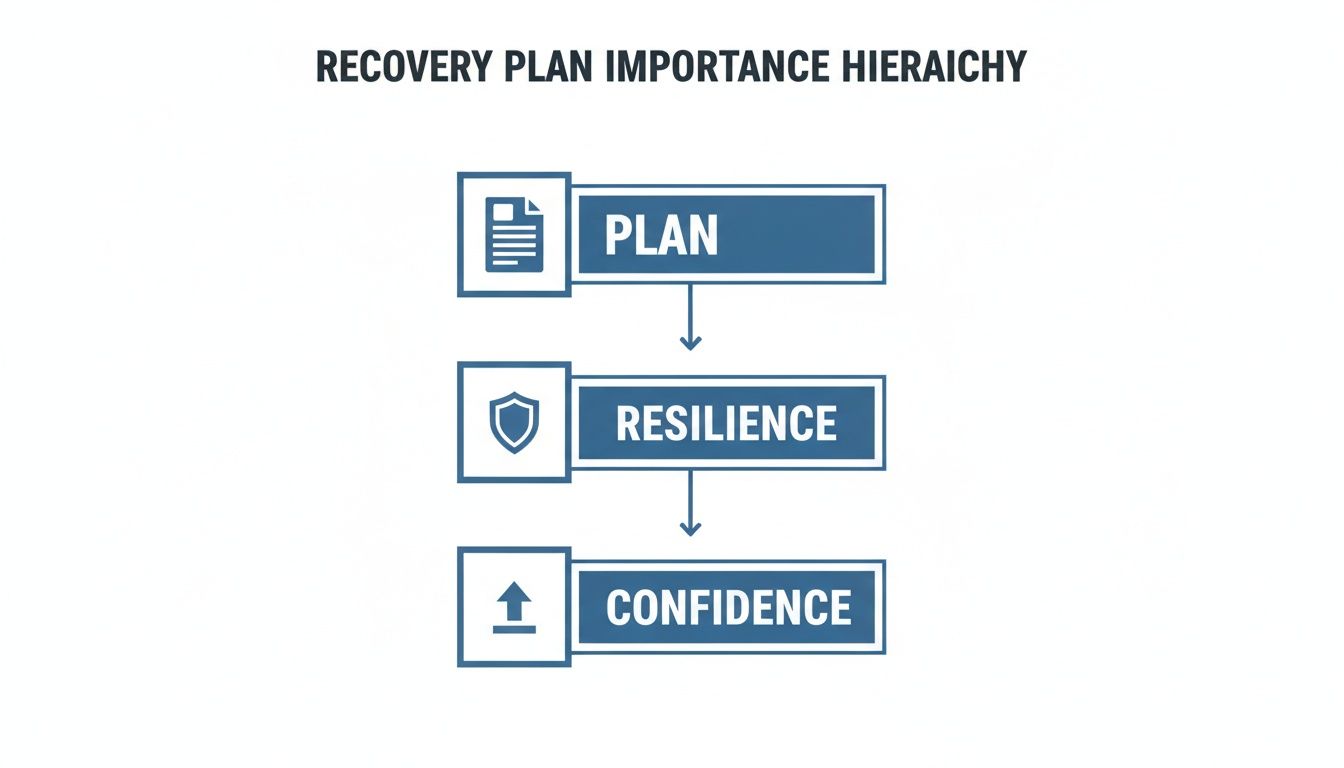
Let's walk through the core pieces that make up a strong, effective plan.
Identifying Your Personal Triggers
The very first step is to become a detective in your own life. Triggers are the specific people, places, feelings, or situations that set off a craving or a thought about using. They’re the well-known hazards on your path.
At a Dallas detox center like Tru Dallas Detox, a therapist will work with you to create a really comprehensive list. This isn't just about the obvious stuff; it's about digging deep to find the subtle things that you might not even realize are affecting you.
- Environmental Triggers: This could be a specific street you used to drive down, a bar in the Bishop Arts District, or even just hearing a certain song.
- Social Triggers: These are often people you used with or situations that feel drenched in pressure, like a holiday party or a high-stress work event.
- Emotional Triggers: Feelings are incredibly powerful triggers. Stress, loneliness, boredom, anger, or even intense joy can make your brain instantly think of using as a solution.
Recognizing Early Warning Signs
Long before a physical relapse happens, there are almost always small, subtle shifts in your thinking and behavior. These are your early warning signs. Catching them gives you the chance to hit the brakes and course-correct before you get anywhere near a real crisis.
Many of the best plans are built on the principles of therapies like Cognitive Behavioral Therapy (CBT), which is all about learning to spot these thought patterns and change your response.
Common warning signs include:
- Thinking fondly about your past substance use ("romanticizing").
- Pulling away from your friends, family, or support groups.
- Skipping meetings or therapy sessions.
- Getting lazy with self-care (poor sleep, bad nutrition, no exercise).
- Feeling overconfident, like you're "cured" and don't need help anymore.
Developing Healthy Coping Skills
Once you know your triggers and warning signs, you need a toolbox of healthy ways to deal with them. This is where you actively replace old, destructive habits with new, constructive actions. It’s about having a plan for what you’re going to do instead.
Your plan will spell out specific, practical things you can do the moment a craving strikes. Our clinicians often help clients explore and practice a wide range of powerful coping skills for addiction to find what works for them.
A good coping skill doesn't have to be complicated. It just has to be something that redirects your mind and energy in a positive direction. The key is to have a list of go-to moves ready before you ever need them.
To give you a clearer idea, let's look at how these components come together in a real-world plan.
Sample Relapse Prevention Action Steps
This table shows what a few entries in a plan might look like. It turns abstract ideas into concrete actions you can take in the moment.
| Component | Example Action or Detail |
|---|---|
| Environmental Trigger | "Driving past my old dealer’s exit on the Dallas North Tollway." |
| Warning Sign | "I've started thinking, 'Just one drink at the concert won't hurt.'" |
| Coping Skill | "Call my sponsor immediately. If he doesn't answer, call my friend Mark." |
| Coping Skill | "Put on my running shoes and go for a 30-minute walk around White Rock Lake." |
| Support Person | "My therapist, Dr. Ames: [Phone Number]. My sponsor, David: [Phone Number]." |
Having this written down takes the guesswork out of a stressful moment. You don’t have to think—you just have to follow your own plan.
Building a Strong Support System
Recovery is not a journey you should ever try to make alone. A huge part of your plan is defining your support system—a list of specific people you can call for help, encouragement, or just a dose of reality when you need it most.
This network is your safety net. The good news is that lasting recovery is more than just possible. An estimated 29.3 million U.S. adults report that they have successfully resolved a significant substance use problem, and strong support is a key ingredient in that success.
Your network should include a mix of people:
- Professional Support: Your therapist, doctor, or case manager at your addiction treatment center in Dallas.
- Peer Support: Your sponsor, sober friends, and people you trust from groups like AA or NA.
- Personal Support: Family and friends who truly understand and respect your recovery goals.
Your plan should have their names and numbers listed right there. Sometimes, just the simple act of picking up the phone and talking to someone is enough to stop a craving in its tracks.
How Tru Dallas Detox Helps You Build Your Plan
At Tru Dallas Detox, we don't wait until your last day to talk about staying sober. Your relapse prevention plan isn't a worksheet we hand you on your way out the door—it’s a living strategy we start building with you almost as soon as you arrive. We know that a generic plan is a useless plan. Your life, your recovery, and the specific hurdles you’ll face back home in the Dallas-Fort Worth area are entirely your own, and your plan needs to reflect that.
You’ll work side-by-side with our experienced clinicians to create a practical, powerful playbook from the ground up. This is a collaborative process, designed to make sure you feel confident and ready long before you transition to the next stage of your care.
If you’re ready to build a life free from addiction, our team is here to help you get started. Just call (888) 509-1763 to talk with a care coordinator today.
Integrating Dual Diagnosis Treatment
It’s incredibly common for people struggling with substance use to also be managing mental health conditions like anxiety, depression, or PTSD. These aren't two separate problems; they are deeply connected. A relapse prevention plan that ignores your mental health is only doing half the job and, frankly, sets you up for a much harder road.
That’s why our dual diagnosis treatment in Dallas is at the very center of how we build your plan. Our clinicians help you understand exactly how your mental health symptoms can act as a trigger for substance use, and then we build specific strategies to address them.
For example, your plan might outline exactly what to do when you feel a panic attack coming on, giving you clear steps that don’t involve turning to a substance. Or it might detail how to respond at the first sign of a depressive episode. We make sure your entire strategy addresses both your mental health and your recovery, giving you a complete toolkit for lasting wellness.
Your relapse prevention plan is your personal recovery playbook. At Tru Dallas Detox, we ensure every play is designed for your specific situation, integrating expert care for co-occurring disorders to give you the strongest possible defense.
Incorporating Medication-Assisted Treatment (MAT)
For many people, especially those recovering from opioid or alcohol addiction, the physical battle can feel overwhelming. Intense cravings and withdrawal symptoms can be a massive barrier to finding stable ground in early recovery. This is where Medication-Assisted Treatment (MAT) can be a true game-changer, giving you the stability needed to focus on therapy and build a strong foundation.
If MAT is part of your treatment, we weave it directly into your relapse prevention plan. This isn't just a prescription; it's a full strategy. It includes:
- Medication Schedule: A clear and simple plan for taking your medication exactly as prescribed.
- Appointment Management: A schedule for all your follow-up appointments with medical providers here in the Dallas area.
- Symptom Monitoring: Straightforward guidance on what to do if you have side effects or experience breakthrough cravings.
By making MAT a core part of your plan, we help you manage the physical side of addiction so you can put your energy into the crucial emotional and psychological work of recovery.
Building Your Dallas Support Network Before You Leave
One of the biggest fears people have about leaving treatment is that feeling of being suddenly on their own. We make sure that never happens. A critical piece of your planning at Tru Dallas Detox involves actively connecting you with a real, tangible support network right here in the DFW community.
Before you even finish your program with us, we’ll help you:
- Find Local Meetings: We’ll help you locate—and sometimes even attend—AA, NA, or other peer support groups that are close to your home, whether you're in Dallas, Plano, or Fort Worth.
- Connect with Therapists: We give you referrals to trusted therapists and counselors we know in the community for your ongoing individual therapy.
- Explore Sober Living: If a structured sober living home is the right next step for you, we help you find and connect with reputable options in the area.
Our goal is to ensure you walk out our doors not just sober, but fully equipped and already connected to the people and resources that will support your new life. You will leave with a plan in your hand and a support system already in place.
The Critical Role of Family in Relapse Prevention

Recovery isn't a solo mission; it’s a process that pulls the entire family into its orbit. There’s a reason addiction is often called a family disease. Its effects ripple outward, straining trust, upending routines, and leaving everyone feeling the impact. But just as the family system is affected by addiction, it can also become one of the single most powerful engines for healing.
For families here in the Dallas area, the first step is understanding that your support can make a monumental difference—but it has to be the right kind of support. This means moving beyond just hoping for the best and into a role of active, informed participation. It’s about learning a new way to communicate, establishing healthy guardrails, and creating a home environment where sobriety can actually take root.
A truly effective relapse prevention plan always brings the family into the fold, giving everyone a shared roadmap to navigate the road ahead, together.
How to Be an Effective Ally in Recovery
Being a positive force in your loved one’s recovery starts with a mental shift. It's about moving from a place of fear, frustration, or even anger to one of educated, compassionate action. The goal isn’t to control the outcome but to build a foundation where your loved one feels safe, understood, and accountable for their own journey.
Here are a few practical ways families in the Dallas area can step into that role:
- Educate Yourselves: Take the time to truly understand that addiction is a chronic brain condition, not a moral failing or a lack of willpower. This insight is what replaces blame with empathy.
- Show Up for Family Therapy: Professional therapy provides a structured, safe space to rebuild trust and learn how to talk to each other again. We can help you explore the right options for family therapy for substance abuse here in the DFW area.
- Learn the Warning Signs: When you understand the subtle shifts in behavior that signal a struggle, you can offer support before it becomes a full-blown crisis.
Recovery is a team effort. When families learn to establish healthy boundaries and communicate with empathy, they create an environment where lasting sobriety can thrive, protecting everyone's well-being.
Establishing Healthy Boundaries and Communication
Let's be clear: boundaries are not punishments. They are the rules of engagement that protect your own well-being and, just as importantly, encourage your loved one to take ownership of their recovery. Without clear boundaries, it's far too easy to slip into enabling behaviors that can unintentionally sabotage all the hard work they’ve done.
Healthy boundaries are practical and clear. They might look like:
- Not providing money that could be used to buy substances.
- Refusing to make excuses or call in sick to work for them.
- Insisting that the home remain a substance-free environment for everyone.
Communication is the other side of that coin. It’s about learning to speak in a way that is supportive and non-judgmental, even when the topic is difficult. A simple but powerful shift is moving from accusatory "you" statements ("You're going to relapse if you do that!") to "I" statements that express your own feelings ("I feel worried when I see old behaviors cropping up").
At Tru Dallas Detox, we see firsthand that involving the family is essential for success. We provide the education and therapy that help families across the DFW Metroplex build a supportive home front. When your loved one is ready to come home, the entire family will be better prepared to walk the path of sobriety together.
Call us at (888) 509-1763 to learn how we integrate family support into every step of our programs.
Keeping Your Recovery Plan Relevant and Effective
Your recovery isn’t a one-and-done event; it's a journey of real growth and constant change. Because of that, your relapse prevention plan can't be a document you create once and then file away. Think of it less like a static map and more like a living, breathing guide that adapts right alongside you.
A plan that felt perfect the day you walked out of a Dallas detox center might not fit six months or a year down the road. As you gain confidence, face new kinds of challenges, or hit major life milestones, your strategies have to evolve too. Regularly reviewing and updating your plan isn't a sign of weakness—it's a sign of strength and true ownership over your long-term sobriety.
When to Review and Revise Your Plan
Certain moments in life are natural checkpoints, perfect opportunities to pull out your plan and see if it still holds up. Being proactive about these reviews is what keeps your strategies sharp and aligned with where you are today.
It’s time for a review during:
- Major Life Events: Big shifts like starting a new job, moving to a different Dallas neighborhood, or the end of a relationship can bring a whole new set of stressors and potential triggers.
- Reaching a Milestone: Your sobriety anniversaries—six months, one year, five years—are the perfect time to reflect on what's working and what could be stronger.
- Feeling Complacent: If your strategies start to feel a little too routine or you catch yourself thinking you've got it all figured out, it's time for a refresh. Vigilance is key.
- After a Close Call: If you navigated a high-risk situation and came out sober on the other side, that’s a win. But it’s also a learning opportunity. Analyze what happened. What worked? What could you do even better next time?
How to Keep Your Plan Strong
The process of updating your plan is actually straightforward and incredibly empowering. It’s about taking an honest look at your progress with the people who support you and adjusting your course as needed.
A relapse prevention plan is a living document. Regularly updating it with your Dallas-based therapist or sponsor ensures it grows with you, turning it from a static guide into an active partner in your long-term success.
Start by scheduling a meeting with your therapist, sponsor, or a trusted mentor specifically to go over the plan. Together, you can take a fresh look at your triggers. Have any new ones popped up? Have some of the old ones lost their power? This is also the time to refresh your support contact list and recommit to the coping skills that have gotten you this far.
This kind of ongoing maintenance is what makes the difference. We know that modern relapse prevention plans can achieve 60-85% success rates when they combine proven methods with strong, personalized support. But here’s the reality check: less than 43% of individuals who start treatment actually complete it. That gap highlights exactly why a plan can't be a static piece of paper. It has to be a living tool that starts in treatment and adapts all the way through your aftercare journey. You can read more about relapse prevention plan effectiveness on journey4success.com.
Taking ownership of this process is what keeps your plan a powerful and relevant tool, helping you build a resilient, fulfilling life. If you feel your plan needs an update or you're ready to build one from the ground up, our team at Tru Dallas Detox can help. Contact us today at (888) 509-1763 to connect with our specialists.
Common Questions About Relapse Prevention Plans
When you start thinking about life after treatment, a lot of questions—and maybe some worries—can pop up. One of the biggest topics is the relapse prevention plan. It’s a term you hear a lot, and for anyone in the Dallas area looking toward long-term recovery, it's natural to wonder what it really is and why it matters so much. Let's walk through some of the most common questions we hear.
Does Needing a Plan Mean I'm Weak?
Not at all. In fact, it's the exact opposite. Deciding to create and use a relapse prevention plan is a sign of incredible strength, foresight, and a deep commitment to your recovery.
Think of it this way: a pilot files a detailed flight plan before every single trip. It doesn't mean they're a bad pilot; it means they're a professional who is prepared for anything. This plan is your flight plan. It gives you the specific tools and strategies you need to navigate the inevitable turbulence of life with confidence. This is a standard, evidence-based part of quality addiction treatment in Dallas, and it drastically improves your odds of staying sober for the long haul.
A relapse prevention plan isn’t an admission of weakness. It’s a declaration that you're taking proactive control of your future and building a strong, resilient life in sobriety.
When Is the Plan Actually Created?
This should never be a last-minute checklist handed to you on your way out the door. At a dedicated facility like Tru Dallas Detox, we start working on your discharge and relapse prevention plan early on in your program—as soon as you are medically stable and can think clearly.
Starting early gives you and your therapist the time you need to do this right. It lets you:
- Dig deep to identify your unique triggers without feeling rushed or pressured.
- Actively practice your new coping skills in a safe, supportive setting before you have to use them in the real world.
- Build a solid, realistic plan that is truly personalized to your life, your job, and your relationships back home in the DFW area.
What Happens If I Relapse Even with a Plan?
First and most importantly, a relapse is not a failure. It’s just data. It’s a clear signal that your plan needs a tune-up or an adjustment. A good plan will actually include a section on exactly what to do if a lapse happens, like who to call immediately—your sponsor, therapist, or a trusted family member—to stop a single slip from turning back into a full-blown relapse.
The next step is to treat it as a powerful learning opportunity. You and your support team can look at what happened, figure out what led to the relapse, and identify any new triggers or gaps in your plan. It’s a chance to strengthen your strategies and make your recovery even more resilient for the road ahead.
Your recovery is a journey, and you don’t have to walk it alone. The expert team at Tru Dallas Detox is ready to help you build a personalized, effective relapse prevention plan that gives you the confidence and tools for lasting sobriety. Call us today at (888) 509-1763 or verify your insurance to take the first step.